Up next in 10

British historian claims young white men are being 'pushed out of media and culture'
Jan 15, 2026


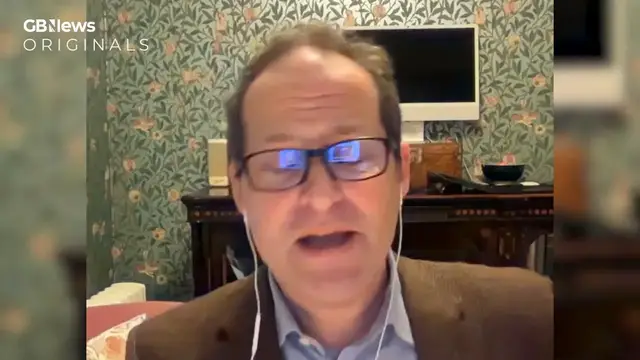
Young white men have been systematically pushed out of America’s “prestige” industries from media to academia sparking a wave of frustration and alienation, according to British historian Dominic Green. Technological shifts, rising education costs, and DEI policies accelerated the decline of traditional meritocracy, leaving many disillusioned.Speaking about this to GB News Originals, Mr Green said: "What concerns me, of course, is on the political, the social front is that you can't have millions of angry young men dropping out of the system, being hostile to the society. "That's a recipe for disorder and distress that will spread and affect everybody."WATCH THE GB NEWS ORIGINAL INTERVIEW ABOVE
Show More Show Less View Video Transcript
0:00
And people told me multiple times to my face, often because they thought they were doing me a favour, saying, you're never going to get hired
0:07
We cannot hire any white males. J.D. Vance, the vice president, recently tweeted out an article that went viral all over America discussing discrimination against white men, particularly in the arts
0:21
I want to spend the next few minutes talking about the article with you
0:26
And I'm going to quote some of the sections and get you to respond. So let's start with this
0:33
The doors seem to close everywhere and all at once. In 2011, the year that I moved to Los Angeles, white men were 48% of the lower TV level writers
0:44
By 2024, they accounted for just 11.9%. The Atlantic's editorial staff went from 53% male and 89% white in 2013 to just 36% male and 66% white in 2024
1:02
He reels off a load of other statistics about the decline of white men in these industries
1:08
Why do you think this was happening? What was driving it? Well, that's a very complicated question, Steve
1:13
And the first thing I would say is this. all of these industries that are described in this article, which is a very good article
1:19
they're all described as prestige industries. They're all actually communications industries. You know, they are the media, academia, TV writing. These are all the kind of industries
1:30
that came under a pressure from changes in technology, which leveled the old media model
1:38
to the rising price of education, which turned colleges into finishing schools for foreigners
1:44
rather than for Americans. And of course, downstream from that, the fact that comedy
1:48
became no longer funny and the kind of way we watched it changed to clips on our phones
1:54
So in other words, there are big changes happening in all these things. Why we think of teaching English literature to stoned teenagers is a high prestige activity
2:04
I don't understand. I've done it. It's not a high prestige activity. I would say that this
2:09
represents, in other words, big social changes. And I should add that in my limited experience
2:14
this description is absolutely right. I was in American universities in the early to mid 2000s
2:20
and people told me multiple times to my face, often because they thought they were doing me a
2:25
favour, saying, you're never going to get hired. We cannot hire any white males. So I think the
2:31
broad pattern definitely is true. Whether it counts for that much in the long run is another question
2:36
He was describing a particular discrimination against a subset of white men
2:42
So he says in the article that Generation X and older, they were the ones who had these senior positions in the arts, in the media
2:51
and the people who weren't getting hired, the people who were being discriminated against were the millennials
2:57
Do you think that's right, that he's sort of blaming the older white men
3:00
for locking out younger white men in these industries? I can certainly say it's true in academia and publishing and in the news business, these fields where I've been working
3:12
I'm of Generation X and I think Generation X, as on most things, is actually quite split
3:18
I didn't start going into academia until I was in my 30s
3:23
So the article is describing people who graduate from college and then pursue a straight career path
3:27
And he's right. If you did that 20 years later, when he came to what the article calls the hinge year of 2014, you were probably high enough up the ladder to be spared the axe
3:39
On the other hand, if you were sort of late comer like me, and I didn't even go into journalism until I was in my 40s, then yes, it was a very, very different business
3:48
The interesting thing is here, if you're looking at very regulated, and use the word we all now use, gatekeep, you know, gatekept fields like that, unquestionably, it's an open policy. DEI is everywhere and it's stated
4:04
But if you're running your own business, if you're a plumber, a tiler, an electrician, a plasterer, you set up a small company doing those things
4:11
Not only are you probably earning more than a college professor, not only do you have more job security than a comedy writer, but you're largely immune to these kind of pressures and regulation
4:23
And this brings us, I think, to a very important point. the prestige industries that we read about in this article. Yes, this is a living doctrine
4:31
and people have conducted a kind of cultural revolution through the American institutions
4:37
But what they've also done is they've projected that ideology onto the rest of society as a
4:42
doctrine of contempt, in effect. And that, I think, is perhaps the reason that Vice President
4:49
Vance is so interested in it. He's as much interested in the unofficial, informal workings
4:54
of a general mood that tells young white men that they're not required, that they are inheritors of
5:01
particular and unique historic evils and are therefore the bad guys, the bad Americans
5:06
And that has been done in a very subtle way. It's not like you get given a little booklet like they
5:11
do in a college telling you how to behave. These are just shifts in the unspoken code of the ruling
5:17
class. And I think this is a lot to do with class as well as race, because we have lived in an era
5:22
where Peter Turchin called it elite overproduction. Too many people coming out of too many graduate schools
5:29
with worthless but very expensive degrees in too many subjects you don need a degree in in the first place leading to an absolute glut of people who call themselves journalists or call themselves comedy writers or would like to be professors
5:44
That oversupply classically produces a radical disaffected class, and I suspect the author of this piece is one of them
5:51
I certainly am. But it also more broadly produces a larger alienation
5:57
and a larger knock-on effect, which is you don't have to go to college to be treated like a thought criminal
6:02
You don't have to go to college to be treated like you have a hereditary guilt for whatever historical sin you care to mention
6:08
That was something which has been inflicted upon everybody, regardless of class or economic status
6:14
And I do believe that there is a lot to be said for that. And although the article goes a little soft on this, I do believe it is a prime explainer for why you have a generation of extremely angry, extremely radicalised and often quite despairing young white men in America
6:30
The author explicitly says in the piece that he doesn't blame women or people of colour, as he calls them, for this change. He blames older white men. But isn't it true that the people who were really driving the DEI activism were these black activists, were these women, and in some cases, white people as well, who were all trying to put a load of pressure on to these older generations
6:56
it's you know you can't just let the activists off i guess in a way no i think he's a little easy on
7:01
them and again i can only talk from my experience all of these fields in the early 2000s 2000s and
7:06
10s you had a bunch of sleazy old white men basically running things and they were very
7:12
happy to sort of feed their junior and less powerful white men into the wood chipper in the
7:18
hope that they would go in last in other words the industry in hollywood for instance where this
7:23
the author Jacob Savage was working, Hollywood was already DEI-ing away for a very long time
7:28
before it came to Harvey Weinstein's turn. And that seems to be the pattern across the field
7:33
Absolutely. This was a cultural revolution. And to mount one of those, you have to have highly
7:38
motivated avant-garde, vanguard groups, as we would call them. And yes, Black Lives Matter is a very
7:44
good example of one. That was a hustle formed for the specific purpose of exploiting the opportunity
7:49
to take over decaying, unproductive institutions and capitalise upon their assets and status
7:57
The intergenerational struggle in feminism's advance is another factor in this. If you have universities where a white man
8:06
who probably wasn't that great at his job could write a thesis in 1974
8:10
and then stay on forever until he dies simply because he did that then
8:16
well, no wonder you would think this isn't fair. You know, even middle aged white men couldn't get a job
8:22
And so women figured, well, this is one weapon we have, which is the weapon of equity and inclusion
8:28
And people will use the legal instruments that they're given. Again, it's worth noting it's not as though the law was broken
8:34
In fact, the law was used in many of these cases. And that law was created by liberal guilt
8:40
And also, as we say, the older generation being prepared to fill out the younger generations in order to maintain its position
8:47
And that's classical revolutionary stuff. You mentioned Black Lives Matter. I think 2020 really was another hinge year, as Jacob Savage describes it
8:57
This is a quote in his piece. In the aftermath of George Floyd's death, newsrooms tripped over themselves to stage a reckoning
9:04
The New York Times solemnly promised sweeping reforms on top of the sweeping reforms they'd already promised
9:10
The Washington Post declared it would be the most diverse and inclusive newsroom in the country
9:15
CNN pledged a sustained commitment to race coverage, while Bon Appetit confessed that our mastheads have been far too white for far too long
9:25
and that the magazine had tokenized many bi, POC, that's people of color, staffers and contributors
9:33
What do you think of this? What do you make of the impact of BLM on the news industry from a hiring perspective
9:40
but also from an editorial perspective? well i mean i should say as a freelancer i was able to avoid the worst of it and also to be
9:49
honest i was writing for writer center publications which were generally full of people willing to say
9:54
and actually often rewarded rather than punished for saying this is ridiculous these people are
9:58
obvious scam artists um the majority of the media and the majority of american media does lead left
10:05
i'd say about 80 20 uh took this as an opportunity in a way as they had taken uh the election of
10:10
Donald Trump in 2016, they took it as a chance to boost their numbers and boost their revenue
10:15
They got behind the mood and it moves units and it increases the traffic on your website
10:21
The news industry has been in a state, well, some people would tell it's been on its deathbed
10:26
other people in the state of panic and others in the state of ongoing transition ever since the
10:31
late 90s and the arrival of the commercial internet. So again, if you're one of the senior
10:36
white men in the boardroom, you think, well, this is not only is this going to let me stay
10:40
in position if I allow the kids to run amok in the museum, it might actually be good for the
10:45
bottom line. And at first it was. And in the longer run, you have the logic of go woke, go broke
10:51
So now museums are not putting on shows that are effectively a political propaganda, or they're not
10:58
finding marginal figures from the past who happen to be dark-skinned rather than light
11:04
If you look at what the major art museums across the US and across Europe they putting on the greatest hits they back to the Renaissance and the Oppressionists because that what people actually want to see And we seeing a similar thing across the board I believe in most forms of media and entertainment But the damage has been done And one of the things which is an
11:22
unnoticed part of this damage is this. When I was reading this article, I thought, I've read this
11:27
before. And it wasn't just the fact that, you know, in the last few years, I've been one of many people
11:32
to describe all of these things as they were going on. It's that I had read an earlier article by the
11:37
same author at Tabnet magazine. And he had written it specifically about the displacing of Jews from
11:43
these prestige industries. And you would expect Jews being good talkers, being knowledge workers
11:48
to be, you know, prevalent in them. And of course they are. I would say two things. One is that
11:55
TV was not that funny before when there were 48% of white people in the room. I mean, Friends was
12:01
not exactly hilarious. I was bored off my face when Friends came out. I thought it was the end
12:06
So there's a lot of slack built in these institutions generally. But this is also a long running thing
12:12
In Harvard, say in the early 2000s, a fifth of the students were Jewish
12:17
Now, Jews may be smart, but they're not that smart. The reason there were so many of them there is because of extraneous factors such as they came from stable
12:25
two parent families with parents focusing on their kids' education and getting them extra tutoring and all the rest of it
12:31
There are now 5%, perhaps, and falling Jews at Harvard. have the Jews become suddenly stupid in the space of a generation? Well, of course not
12:40
There are lots and lots of different factors about this. There are some industries in which
12:44
you can mess around with it and it might not make a difference. The fact is, as he said
12:48
that lots of disenchanted but educated white men went into crypto and gaming and all other kinds of
12:54
podcasting, in fact, goes to show that people create new value and new purpose. And I would
12:59
rather listen to a good podcast than watch the news or read the New York Times. But also there
13:05
is a risk here, and I think it's actually happening, of the left-right division becoming
13:11
not just a class division, as it often is, but also a racial division, in that there are no
13:17
statistics in this piece for the racial or ethnic breakdown of right-wing media. But as we both know
13:24
it's heavily white, and a lot of the people in it are there because they are right liberals
13:29
who got mugged and became conservatives, you know, in the classical formulation. And I don't think
13:34
it's a good thing for American society to have a situation with all the whites in one party and
13:38
everybody else in another. And that's actually a trend which, you know, the Democratic Party has
13:42
done its best to encourage. Let's talk about pop culture, movies, but also novels. So there's two
13:49
quotes I want to read from Jacob Savage, the author. The Disney writing programme, which prides
13:54
itself on placing nearly all of its fellows as staff writers, has awarded 107 writing fellowships
14:00
and 17 directing fellowships over the past decades, none to white men
14:06
Not a single white American man born after 1984 has published a work of literary fiction in the New Yorker
14:14
At least 24 and probably closer to 30 younger millennials have been published in total
14:19
So when it comes to, say, a company like Disney, which is producing vast amounts of pop culture movies and TV shows
14:25
but also novelists we have seen there seems to have been an exodus or a mass discrimination
14:32
against young white men yeah there has and I recently uh had a meeting in New York with my
14:38
agent there and he said you know given the things you've written I cannot uh take your ideas to the
14:44
major publishing houses and I said but you know I'm uh I write for you know reasonable publications
14:49
and not only that but I think they're reasonable not only that the ideas I'm talking about the
14:54
books set 500 years ago. Are you telling me they won't have me in the room because of my, not my
15:00
opinions about the 16th century, which is actually the idea, but my opinions about last week? And he
15:05
was like, yes. So I changed my age. And I think it's disgusting what's happened there. If you have
15:11
industries which are genuinely built on merit, and as I said, a lot of educational admissions were not
15:16
merit at all. There is a serious problem. Meritocracy was originally invented as a negative term
15:23
You know, Michael Young, who came up with it in Britain in the 60s, said that merit based economies inevitably create a new class, a new class of people who will look after each other and then form a hard class, much like the old one that they displaced
15:38
And that's, of course, what we've seen in America. So merit alone is not enough
15:44
Then again, trying to make propaganda out of children's cartoons, as Disney have done, is just ludicrous and embarrassing and an insult to the intelligence
15:53
trying to say, read this novel because it's written by a black woman rather than, you know
15:59
I mean, admittedly, someone like Michel Welbeck is not pretty to look at. But Michel Welbeck
16:03
ugly though he may be, is probably the most important novelist in Europe. And he would no way
16:09
you know, the Michel Welbeck of America wouldn't get through the door. He's not photogenic. He's
16:14
white. He's a reactionary. It's just never, ever, ever going to happen. And the result has been the
16:19
throttling of one version of the writing and publishing business. On the other hand, I think
16:25
the most important book published in America in 2025 was probably the new translation of The Camp
16:30
of the Saints. And that was by Vorban Books, which is, you know, a cottage industry that people have
16:35
started on their kitchen table simply because this major book is not available. So again, part of this
16:42
is a cultural revolution. Part of it is that revolution trying to squeeze the last rewards from these industries which are either dying or trying to hold off the full effects of digital transition
16:56
And a big part of it is how those communications industries, because we live in a connected society
17:02
how those communications industries communicate the values of official society. So that, as we were saying, ordinary young men who are not going to Harvard
17:12
not thinking of going into the media, not thinking of writing a French novel
17:17
ordinary young men suddenly come to understand that they are worth less, if not nothing
17:22
That is another factor. And it's the critical one because, you know, prestige industries
17:27
the answer is prestige to whom? To whom even? But you tell everybody that they're worthless
17:33
then you have an insurrectionary situation. And if you spend any time online in particular
17:38
or in the new media that has grown up in the gap
17:42
podcasting and its drift into its insanity in recent months being a good example
17:47
you'll see that we are in an insurrectionary situation where the Cultural Revolution created a generation of enemies
17:55
and yet they too are in possession of the same weapons, which are the weapons of mass communication
18:01
I want to ask about novels as well. I mean, if you look at some surveys
18:05
young men are much more likely to read non-fiction than fiction. Why do you think that is
18:11
Well, there are two reasons. I mean, one is that non-fiction has always been more male than female
18:16
in terms of readership. There is a reason why the kind of chunky history books
18:20
that I write when I can afford to do it, in publishing they're called dad books
18:24
It's the sort of thing you get your dad for Christmas or birthdays because you know he really does want to read a 600-page reconstruction of D-Day
18:31
or that new biography of John Jay or Hamilton and so on
18:35
So there is a genuine preference here. Fiction, funnily enough, in the 18th century
18:40
when it really got going and also well into the 19th century, was, as we say, female coded
18:45
It was thought of as women's reading. In the 20th century, because fiction suddenly started being studied in universities
18:53
because no one studied English lit before about 1900, once fiction went into universities, which are high status
18:59
then writing it and reading it became high status activities as well
19:03
Suddenly Hemingway is a high status kind of guy. So in a way, if most fiction is being read by women and written by women for women
19:11
that's actually how it has historically been. I'm not too bothered about that. I'd rather read a good book than a bad book
19:18
And I don't really care about people's political opinions or their colour or their background or their biography
19:24
You know, there are writers that we know nothing about and we read them and it's fine. We don't know much about Chaucer, for instance. For a long time, people thought he was a terrible criminal. But in the last few years, it turns out we had him wrong. Beyond that, we really don't know a great deal about him. I would much rather read Good, Bad Book than Good, Bad Person, because the criteria changes too quickly. And it is a form of propaganda
19:46
Okay, final question. Assessing the impact of this exodus of young white men from these industries, Jacob Savage writes
19:55
This raises uncomfortable questions. Is the media more trusted now than a decade ago? Is Hollywood making better films and television? Is academia more respected? Have these institutions become stronger since they systematically excluded an entire cohort? Or did abandoning meritocracy accelerate their decline
20:16
What do you think? That's a hard one to call. The fact is that newspapers were not particularly
20:23
trustworthy 30 years ago. In fact, if you look at the surveys, public trust in the media has
20:28
declined steadily since LSD became widely available. The Warren Commission report came out
20:34
and then there was, of course, Watergate as well. You know, distrust in the media is the norm
20:39
The Academy has, especially, well, not in the sciences, obviously, but in the humanities, has been publishing rubbish for about 50 years
20:45
This is a long-term decay. And I feel much the same about comedy. Nobody has been as funny as the writers in Sid Caesar's room
20:53
And Mel Brooks, for instance, is one of the survivals of that. You know, that's a long-term decay
20:59
So all of these things were rotting. All of these things, yeah, meritocracy was a big factor in it
21:03
But the decay of meritocracy was a long, slow rot. It did hasten the decline
21:09
But I'm not wholly pessimistic. And I wonder if we should instead look at it like this
21:14
We are seeing a great democratization in the information industries. It's no longer the case where there's two or three places to go for news
21:24
two or three, the big five publishing houses who determine what comes out
21:28
We're seeing a huge, huge redevelopment of the whole thing. A whole new world of information is being formed
21:35
And some of it is being formed by the people who've been locked out and felt that they didn't have a part in it
21:41
And they have literally done the most American thing you could do, actually, which is make out for the territory and set up on your own and create something new
21:48
And of course, this article by Jacob Savage appeared in one of those new publications
21:52
Compact, which is precisely the kind of thing that was brought into life
21:56
because it would never have been accepted in the old media structure
22:00
So on that front, I'm quite optimistic. We're seeing people creating new things and working out even how to make a living by doing them
22:07
That's great. What concerns me, of course, is on the political, the social front, you can't have millions of angry young men dropping out of the system, being hostile to the society
22:17
That's a recipe for disorder and distress that will spread and affect everybody
22:22
So again, the cup half empty, half full. OK, Dominic, thank you so much for joining us
22:27
Thank you
#news
#Politics
#Discrimination & Identity Relations
#Media Critics & Watchdogs