Up next in 10



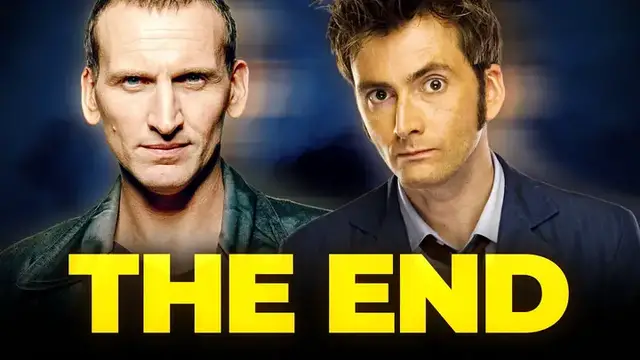
Despite new Doctors and companions, the creative heart of Doctor Who has been beating to the same drum for nearly two decades. Join us as we break down why the series is facing a monumental shift that could redefine it for a new generation of viewers.
Show More Show Less View Video Transcript
0:00
I'm Ellie for Who Culture and today we're going to talk about why Doctor Who is about to change forever
0:15
So let's go all the way back to the early 2000s. Doctor Who is a dormant yet still very popular franchise that's about to make a comeback under the guidance of acclaimed drama writer Russell T. Davis
0:28
Working alongside him, not just on that first series, but in subsequent series
0:33
were writers like Mark Gatiss, Paul Cornell, and Stephen Moffat, all of whom had some sort of Doctor Who pedigree in one way or another
0:41
be it contributing to the expanded Who-niverse, writing comedy sketches, or simply just being known as a big fan of the show
0:49
Russell was also joined by composer Murray Gold, who he'd worked with previously on Queer as Folk and The Second Coming
0:56
and producers Julie Gardner and Phil Collinson, who would all go on to have significant impact on Doctor Who across the modern era
1:05
Ever since 2005, it's been this general ballpark of creatives that have been at the core of Doctor Who
1:13
Literally right up to the present day. Russell is still here. Murray is still here
1:17
Julie and Phil are still here. And Stephen Moffat was just here
1:21
Billy Piper and David Tennant are also here. Even the show itself still using a 45-minute Monster of the Week format feels a bit archaic at this point
1:30
when a lot of its peers have moved on to more complex, serialised narratives
1:35
Again, despite all the change we've seen over the last 21 years, Doctor Who has sort of stayed the same
1:41
I think a perfect example to compare this to would be Star Trek
1:45
If you look at how Star Trek used to be in the 60s, in the 90s, and in the early 2000s
1:52
it still followed that same structure that Doctor Who is following still. 45-minute episodes
1:58
Monster of the Week episodes, very episodic. Not a lot of crossover across its stories
2:04
And that absolutely did work. But where Doctor Who hasn't, Star Trek has then moved into the more
2:11
serialized format. Some of those shows, it really, really worked for. Others, they've attempted to
2:17
kind of create a combination of both. Strange New Worlds is a perfect example of where they're
2:21
trying to stick to that episodic formula, but also introducing elements of that serialised
2:27
storytelling as well. And for me, I would actually say that that's probably the best structure of all
2:33
of the more modern Star Trek shows, and it is something that I feel Doctor Who could embrace
2:38
more in the future. Trying to find a good balance of having an episodic of sorts structure
2:45
and making sure we do have Monsters of the Week and aren't sticking to the same monster across
2:49
all of the episodes, but also finding a way to have more of a through line. And it is something
2:54
we have seen explored in Doctor Who, but not necessarily as much as we need to, to kind of
2:59
embrace the modern landscape of television storytelling. Now, before I continue, I do want
3:05
to talk to you about a great offer we have on the channel at the moment from the good people over at
3:10
Norton VPN You know that we love VPNs here at Who Culture You get a safer and more secure online experience which is crucial in this day and age You don want to get trapped in the Wi now do you You could also use Norton VPN with multiple devices
3:26
So your phone, your PC, and your tablet, they're all covered. And best of all, it allows you to unlock content that may not be available in your part of the world
3:34
by simply changing your virtual location. So even if you're away from home, you can still access all your favourite shows and movies
3:41
So just scan the QR code or use the link down below to get up to 54% off Norton VPN standard
3:47
which works out as little as $3.33 per month or about £2.50 if you're here in the UK
3:53
And there's even a 60-day money-back guarantee, so honestly, you can't go wrong
3:57
now i know what some of you are saying what about the moffat era what about the chibnall era and
4:14
the disney era those are all big changes too and on the surface it does seem that way if you really
4:20
think about it they actually weren't that different at all the handover from russell t davis to moffat
4:25
brought a fresh, enchanting vibe to the show and a new lead cast, but it was very much a continuation
4:31
Storylines like River Song, the best character, and things like The Time War helped maintain a
4:37
sense of rhythm with what had come before. And behind the camera, it was a similar story as well
4:42
Moffat, of course, having penned some of the most acclaimed episodes already in the Russell T. Davis
4:47
era, and Murray Gold continuing his brilliant work into the Moffat era as well. And there was even a
4:53
brief period where David Tennant was going to stick around for one more series under Moffat
4:59
demonstrating how close-knit everything was at that time. The Chibnall era brought with it probably
5:04
the biggest change in the show since 2005 with a vastly new creative team and a completely
5:09
different direction for the Doctor. But with Chibnall himself being raised in the house that
5:15
RTD built, having written Doctor Who episodes like 42 and The Power of Three and contributing
5:20
significantly to Torchwood, that DNA still remained. Particularly as the era progressed
5:26
You know, it started off with, we're not going to be bringing back any known monsters, we're going
5:31
to be doing new things. But then it kind of got to all the Gallifrey being destroyed again
5:35
Captain Jack Harkness returned, and so did the Bronze Daleks. And then we have the Disney era
5:40
It was billed as a seismic change for Doctor Who in just about every way. But really? It was
5:47
basically 2005 volume 2. Hey look I'm not complaining about that it was absolutely great
5:51
to see all of my childhood favourites come back to our screens whether that was David Tennant
5:56
whether that was Catherine Tate or whether that was Murray Gold or even Russell T Davies himself
6:01
But all of this undeniably contributed to the feeling that there's been a bit of stagnation
6:05
around Doctor Who for a while now with the show seemingly stuck in the past. Old storylines
6:11
old characters, old villains were a plenty and that tried and true monster of the week format
6:16
with hints at a wider arc had never felt more tired than in the Disney era
6:21
You could not have picked a more perfect lingering note for an era that many have
6:26
accused of being unable to move on from the glory of those early revival years
6:30
than the face who set that glory in motion. Now don get me wrong maintaining all these familiarities has made the show feel safe and it probably a really big reason why Doctor Who has become this comfort show for many of us who really don deal well with major changes in our
6:48
lives. On the other hand if the creative well becomes dry even that familiarity just becomes
6:53
less comforting and more predictable and unsatisfying especially when it feels like the
6:59
safety of what's familiar and nostalgic has almost been twisted into a form of lazy storytelling
7:06
as opposed to being a genuine desire to provide comfort to the audience
7:10
and this brings me to the now why i think this will be the biggest change doctor who has seen
7:30
in over 20 years assuming things pan out how we all expect them to that is now for one thing it's
7:36
Widely expected that the upcoming Christmas special will see Russell T. Davis's departure from the show
7:42
Now you can imagine the Christmas special wrapping everything up from the last few years
7:46
and then leaving a clean slate for whoever comes next. So if Russell does leave, I can see Murray Gold probably following suit as well
7:54
and even potentially Bad Wolf Studios along with producers Julie Gardner and Jane Tranter
7:59
Now whether you enjoyed the Disney era or not, nobody can argue that it clearly hasn't gone as well as everybody expected it to
8:07
And that falls at the feet of the people who made it. So it does feel a little bit like there's a thank you but goodbye moment going on behind the scenes right now
8:16
With the BBC ushering the previous era out of the door and taking its time to decide what will come next
8:24
Big change has to be stirring. How else do you explain such a long period of deafening silence? We have heard absolutely
8:31
nothing. Anything you've heard is a rumour. Speculation. Doesn't matter how many times
8:38
you've heard it, there is no concrete information about the future of the show. The last we heard
8:43
was a Christmas special. Almost a year of silence. Basically, Doctor Who looks set to lose all of
8:51
its ties to the 2005 revival for the first time since that revival began. Without Russell T. Davis
8:57
without Murray Gold, without Stephen Moffat, without Chris Chibnall and without all their
9:01
adjacent creatives who've jumped in and out of the show for the last 21 years, Doctor Who will be
9:07
the most different it has ever been since 2005. Now there are rumours of Jack Thorne taking the
9:14
reins as showrunner which does feel like just as bold a swing as getting Russell T. Davis in the
9:19
early 2000s was. Now whether that happens or not, it's not going to be a case of Russell T. Davis
9:24
handing the baton back to one of his mates. It's going to be someone completely new with a completely
9:30
new vision for the show. You can picture whoever comes in ditching that 45 minute episodic format
9:36
and going for full serialisation. And there are even murmurs of three 90 minute specials a year
9:42
akin to Sherlock, which would certainly be interesting, although I'm not sure if that's
9:46
the route I would like the show to go down. But even away from the creative side, the current
9:50
turmoil over getting big budget television funded actually dictates that Doctor Who will need to adapt in the future which is surely one of the reasons why it taking the BBC so long to decide what comes next It sad in a way because 2027 onwards will likely be the first time since
10:09
I and probably many of you started watching the show that it won't have that sense of familiarity
10:16
No familiar Murray Gold music, no returning characters or storylines, no Moffat or Russell
10:21
T Davies episodes to look forward to. Look, I've got nothing but respect for everyone who's made
10:26
the modern era of the show what it is. And without Russell T Davies and Stephen Moffat in particular
10:31
I mean, Who culture literally wouldn't exist. I would not be sat here today. My childhood would
10:35
be entirely different without these creatives. But at the same time, I am excited and ready
10:44
for something massively different. And now that I've said all that, cue the announcement that
10:49
Stephen Moffat will be returning a showrunner. Look, it does feel like it's time for some changes
10:55
As I say, Star Trek is the prime example to compare to
10:59
They made changes when they brought the show back with Star Trek Discovery
11:03
They opted for something a little bit more serialised. They opted for different ways of storytelling
11:10
that just showed the evolution of storytelling in television in the years since the previous Star Trek series had aired
11:18
And although Doctor Who is slightly different in terms of its budget
11:23
in terms of its audience, it also has to follow the same formula and format of all of its competitors on television
11:30
otherwise it's going to get left behind. Now that's not to say that I want it to become this
11:35
big budget program, in fact that's completely the opposite of what I want. I don't want things to
11:40
change in terms of the kind of foundations of what Doctor Who is, but if it wants to survive
11:45
in the current climate of television it has to adapt. An experiment at the very least of trying
11:51
to approach something more serialised would be definitely a good move. Obviously they did approach
11:57
that with Flux, but Flux came at a very odd time, which had other things playing against it, and it
12:02
would be interesting to see if they tried to approach that way of storytelling again, if it
12:07
would have the same results as Flux, or whether it actually would perform pretty well. Don't get me
12:12
wrong, I still want to see multiple aliens in multiple episodes. I don't want to completely
12:17
eradicate the monster of the week formula. Not at all. I love that. It's nice that you can just
12:22
come in one week and not necessarily need to have seen all of the previous episodes. But we know
12:27
from what we saw in the previous two seasons that with a reduced episode count you have to
12:34
reconfigure your way of looking at how you're telling the stories because eight episodes was
12:38
just not enough time to cram in all the things they were trying to cram in and that's not going
12:44
to change. Unfortunately, we're not going to go back to having series that are 14 episodes long
12:51
It's just not the way television works anymore. So there has to be some sort of change. How do we
12:57
tell the stories in a way that feels satisfying when we don't have as many episodes to tell the
13:02
story? Maybe we need to simplify things, cut things back a little bit, not try to tell five
13:07
great major stories all at once and not have enough time to flesh it out. Big changes are needed
13:12
I sense big changes are coming and I'm hoping that sooner rather than later we will hear about
13:19
some of these changes and then we can get excited about them