Up next in 10



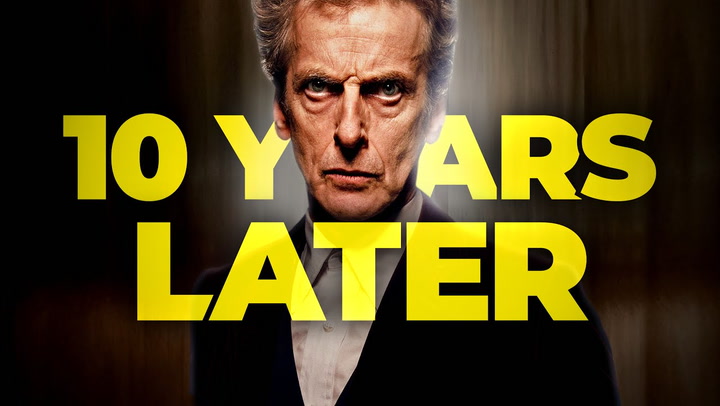
Some call it Doctor Who's greatest episode ever. It's hard to believe that Heaven Sent is now TEN years old, but it's also the perfect time to reflect on the episode, why it's so beloved, and how the powerful ordeal the Twelfth Doctor is forced through makes for one of the most richly unique Doctor Who stories ever.
Show More Show Less View Video Transcript
0:00
It is the 10th anniversary of the airing of one of the greatest episodes of the Peter Capaldi era
0:06
for sure, Heaven Sent. How has it been 10 years already? Honestly at this point time is meaningless
0:14
because sometimes it feels like it was even longer than 10 years ago and then other times
0:18
it doesn't feel like it's been that long at all. It's very wibbly wobbly timey wimey
0:22
So I want to start with memories of when the episode aired and I would love to give you this
0:26
really lovely story about how I remember the day it aired like it was yesterday and I can give you
0:31
all the details of what happened. If I'm being truthful with you I don't remember if I even
0:38
watched this episode on its air date or not. I think like a lot of fans especially ones perhaps
0:44
around my age at this point in the modern era I had kind of dropped off of Doctor Who for a while
0:50
and I think part of that comes down to the fact that I was around 17 at the time and you know
0:54
most of my friends had well and truly grown out of Doctor Who by this point and I was still
0:59
clinging in there but I do feel like at 17 when you're in college maybe watching Doctor Who on a
1:06
Saturday evening wasn't your priority but also more than that I think and again especially because
1:10
of my age and I think a lot of people my age found this as well is that we were the generation
1:16
of kids that grew up watching the modern era the revival era from the beginning and the majority
1:23
of that up until then was was a much younger bubbly doctor you know obviously there was
1:29
Christopher Eccleston at the beginning but we kind of grew up surrounded by David Tennant and
1:34
Matt Smith as the doctor that's what we kind of knew as the doctor we didn't know classic who and
1:38
so I think when Matt Smith regenerated into Peter Capaldi there was a shift in the personality of
1:46
the doctor that was far greater from Matt Smith to Peter Capaldi than from David Tennant to Matt
1:52
Smith and it just wasn't what we were used to and although it was a step more towards the classic
1:57
era of the show in Peter Capaldi's performance I think for perhaps people my age at the time
2:02
it just didn't feel the same to us and we it didn't sit well with us this change this shift
2:07
in tone of the Doctor and the early series of Peter Capaldi were very dark so it just kind of
2:13
felt like it wasn't the same show anymore so I'd love to give you this lovely story of I remember
2:18
the day I watched it but I don't remember if I watched it on the day of airing. I obviously did
2:23
watch it. If I'm being totally honest I think when I did watch it I didn't fully appreciate what this
2:29
episode was doing and how significant this episode was not just in terms of exploration of the Doctor
2:35
and what the storyline is but also just in terms of being a different approach to a Doctor Who
2:41
episode than anything we'd seen before. I just don't think I fully appreciated that at the time
2:45
It's only more recently, as I've got older, as perhaps my job has more focused around that sort of thing
2:52
that I've watched that episode again and kind of gone, actually, yeah, I did not get the significance of this episode at the time, but now I see why it's so hyped
3:02
Because it really is a brilliant episode. Before I do go any further, I do want to just mention, of course, it is Black Friday weekend
3:09
And we do have a link on the channel, which you can use to get deals on a bunch of streaming platforms
3:15
including Apple TV and Disney+, which could be quite handy for our non-UK viewers when the war
3:22
between the land and the sea drops on Disney+, in the near future. So just scan the QR code or click
3:28
the link down below and you can save yourself some money. Yeah, helps you out, helps us out as a
3:34
channel, everybody's happy. Except for maybe the doctor in this episode. So it's always very
3:40
interesting to kind of hear where certain inspiration comes when writing an episode
3:46
And the thing that I find really interesting about this particular episode is that it was
3:49
actually inspired by some criticism of the earlier Moffat series. More specifically
3:56
there was a lot of criticism for the fact that particularly with Amy and Rory and the
4:00
fact that they had lost their daughter, their baby had been kidnapped. There didn't really
4:04
seemed to be much exploration of the personal impact that that had the emotional impact that that had on Amy and Rory You know the kind of nature of the show at the time basically said that by the next episode they had to be fine with it
4:18
kind of got over it, and let's get on with the next adventure. And there was criticism that there was an exploration of the deeper meaning
4:25
and the deeper impact of these very, very traumatic events that were happening to these people
4:31
And so Stephen Moffat basically was determined to prove that they could write deeper, more sophisticated episodes
4:37
and especially with regards to exploration of grief and loss. And that is what inspired him to write this particular episode
4:45
which is very interesting and kind of reassuring to know that, at least at that point, the writers were taking on board
4:52
the comments and criticism and critique that were coming from the viewers and the fans
4:57
I think, obviously, there comes a time where the writer has to do what they think is best for the show
5:02
and they generally do know what is best for the show. But I think it is also important they listen to their audience because sometimes their audience, well, most of the time the audience is the most important, are the most important people
5:15
And if you don't listen to your audience, you kind of end up creating something that nobody's very interested in because you're just falling into the same traps and not listening to the things they want to see or the issues that they are having with what is currently happening
5:28
So it's very, very good that Moffat took that criticism and ran with it and went, right, let's do something about this
5:37
So, of course, Moffat has had this criticism. He's then got this idea that he is going to explore grief in the Doctor by killing off Clara
5:46
What's great about this as well is that he didn't wait until the final episode of the series to kill off the companion
5:53
by doing it earlier in the series it meant that we had time to explore this grief and loss much more
6:00
complexly i think complexly is a word much more in depth without just rushing through it because
6:06
we haven't got time anymore by doing it kind of the third episode from the end you had two episodes
6:12
to really explore what this meant to the doctor and go into some real go to some dark places
6:17
um so yeah I'm glad that he listened to that criticism and that's what leads us into this
6:23
episode where the doctor as we see is trying to deal with that grief trying to deal with that loss
6:30
uh trying to accept that Clara is gone because obviously we see right from the beginning of the
6:34
episode that he still talks to her like she's there and kind of it's a really really deep
6:39
exploration of the different stages of grief and as I say when I first watched this episode
6:45
whenever that might have been. I don't think I fully grasped that at the time. I think when I
6:49
first watched it I basically thought this is not like Doctor Who. This is different. I don't like
6:55
change. Where's all the action and monsters? Where's the companion? Obviously she'd been killed but
7:01
it just it wasn't like any Doctor Who episode we'd seen before and I think I didn't fully
7:05
appreciate what it what it actually was. And then as I said earlier when I've re-watched it since
7:11
I've really appreciated it not not just from a story standpoint but also from a performance
7:16
standpoint from a directing standpoint from a writing standpoint I think for Peter Capaldi to
7:23
have carried this entire episode single-handedly and it never feel boring never feel too repetitive
7:31
and for an episode that's literally based around a time loop that's very impressive and then you've
7:37
got the directing from Rachel Talalay which is I mean it's just it's different from most Doctor
7:42
Who episodes but it's also very stylistic it's it's dramatic all these things that you would
7:48
take for granted in any other episode in this episode are heightened by the fact that you've
7:53
removed so many elements of what what you would usually rely on when making a Doctor Who episode
7:59
so you know from from an in-universe perspective the Doctor has had all the things that he uses
8:04
to hide behind stripped away he's not got a TARDIS he's not got a sonic screwdriver he's not
8:09
got a companion there all the things he would usually use to mask his fears to hide behind
8:16
to use to kind of give himself confidence are stripped away so that he is left with nothing which you know is the point of the confession dial that he trapped in is to kind of reduce him down to the point where he is so scared that he confesses all of his sins confesses everything he knows but then if you also look at that from a production
8:36
point of view you've also removed those elements from a production standpoint as well you've not
8:41
got the TARDIS which means we don't have any scenes we can bulk the plot out with with regards to
8:46
using the TARDIS somehow to save the day or those scenes you usually bookend an episode where we're
8:51
in the TARDIS to start with and we're in the TARDIS at the end. Likewise you don't have a
8:54
companion there so you don't have any scenes you can bulk out where the Doctor and the companion
8:59
are having a little conversation here or there or and then even beyond that yes there is the veil
9:05
but there's no predominant alien or monster that is really driving the narrative and so you don't
9:11
have lots of room for massive set pieces or the things that usually would bulk out a Doctor Who
9:18
episode and as I say this episode still manages to not ever feel too repetitive or boring or
9:23
or any of those things despite the limitations put on it that's literally the point of this episode
9:29
to strip away all those things and to look at the bare bones of what the doctor is facing now you
9:35
knew it was only a matter of time before I came to it but another thing that really drives this
9:39
episode and I honestly it wouldn't be as powerful without is Murraygold's music now I know I go on
9:45
about Murray Gold all the time and you're probably sick of hearing me talk about him but this episode
9:50
in particular is such a strong example of how powerful his music can be with a lot of it being
10:00
about reflection and obviously a lot of repetitiveness going on it's so important that
10:05
the emotion is right and the music is just perfect throughout it just drives everything forward it
10:13
drives moments of motivation for the doctor it drives moments of reflection for the doctor
10:18
and of course you then do have that that powerful climax at the end that gives a little bit of hope
10:24
for not just the doctor but the audience as well obviously the doctor can't hear the music but it
10:28
drives the emotional narrative of the episode so well without it having to rely on the doctor's
10:34
the dialogue or you know that is a very important part as well and as I say Peter Capaldi absolutely
10:40
carries this episode single-handedly but the music really drives the emotional narrative of this
10:46
episode. So then we have this element of the episode which I like to call the mind palace
10:51
element of the episode which is in the TARDIS which kind of breaks up the repetitive use of
10:56
the castle setting. I really feel like you can tell from this episode in particular that this
11:02
was written by the same person who was writing the Sherlock series at the same time because there are
11:07
so many similarities especially with this mind palace idea you can see if you didn't know that
11:12
Moffat wrote for Sherlock Holmes this episode would make you go you should write for Sherlock
11:16
Holmes because there is a lot of that kind of mystery solving going on and then yes the mind
11:22
palace that kind of freezing time around yourself going into your own mind and finding a solution
11:27
in the moment yes it is a bit of reusing ideas from other projects but that that's not an issue
11:33
in some regards that might not work but in this instance it definitely works because the doctor
11:36
is almost like Sherlock Holmes in a way and it does make sense that he would have this inner
11:42
conversation going on and again it's an exploration of grief so even without any consideration of him
11:47
being really smart and clever and using his mind to solve problems if you just look at it as an
11:53
examination of grief he's using that voice of that person he's lost in his mind to motivate him and
12:00
help him move forward and deal with that and what I really like about these scenes in the TARDIS
12:04
is actually that you don't see Clara's face. I like that she's shrouded
12:08
because it's important that he knows she's gone, but that doesn't mean that she's gone from his mind
12:16
from his memory. So I think the imagery of her having her back to him
12:21
the whole time worked really, really well. And she didn't speak to him
12:25
because she's no longer there as a voice, but she is there as this constant
12:29
constant kind of metaphorical voice in his head. so I think those scenes worked really really well if I being honest I think the moment where Clara actually becomes visible and comes towards him and starts talking to him I think that bit was unnecessary I don think we needed that I think it worked quite well just not seeing her It kind of helped to highlight the fact that
12:48
she really was gone. Obviously, the following episode then brought her back and changed all of
12:53
that up. But I think in this episode, it actually worked better with her being shrouded and not
12:59
being there. I understand why they did it and it doesn't harm the episode in any way. I just
13:04
personally I actually don't think that bit was necessary but you know it's a great episode if I
13:09
was going to do an ups and downs for this episode I think we would struggle for downs so hence why
13:14
we haven't done it it'd be a pretty boring video the only other strong memory I have of watching
13:20
this episode and something that comes to mind every single time I watch it is is the flies
13:26
around the veil I it makes me feel horrible I'm not I don't enjoy flies I don't think anyone really
13:32
likes flies but the fact that they're so the noise they make what they imply the fact that
13:38
it's from the doctor's memory of a rotting corpse and that just makes it all the worse
13:42
i don't enjoy the flies and there were scenes where i mean i don't know whether they were real
13:47
or cgi i'm assuming they weren't real the fact that they were so close to him and he's breathing
13:51
his mouth's open i'm thinking close your mouth the flies the flies oh no so i didn't like that
13:57
bit but not from a point of view of that's a bad part of the episode that's a good thing in the
14:01
episode that made me feel uncomfortable. So let's flip it now. Let's look at the things I really did
14:05
enjoy. If I had to pick a favourite moment in this episode, I think it would be probably similar to
14:10
most people's. It has to be that the climax of the episode where he begins to figure out what he's
14:16
got to do. He finds the wall, he recalls the story, and we get into the time loop of him slowly
14:23
breaking his way through the wall. And the thing I really like about this moment or this sequence
14:28
is the fact that the story is told, gets fuller and fuller as he gets further and further into the wall
14:35
as the time gets, as more and more time is allowed because he's getting further and further away from the veil
14:42
and just those few seconds each time, I think that's really powerful
14:46
and I think of all the elements in that loop sequence, that is the most important part
14:51
That's the part that tells you that time is progressing, apart from the very obvious
14:55
I've travelled this far in the future, I've travelled this far in the future. You know, that bit's kind of very exposition-y
15:02
whereas the storytelling, I think, is the most important part of telling us that time is slowly progressing
15:08
because the story is literally being told second by second each time
15:13
and that's, I think, the most powerful part of it, that it takes him that long to save a few lines of a story
15:20
So, yeah, that is my favourite part of the episode. it's hard to pick just a single thing because it is a overall a very very good one so yeah that
15:29
moment murray gold's music and a standout performance from peter capaldi just a strong
15:35
episode that stands up even now 10 years later some episodes you watch and you go yeah that
15:40
hasn't aged so well this episode is still such a strong episode and i think part of that is
15:48
almost the simplicity of it in as much as you're not relying much on anything other than performance
15:55
um and you know there's not nothing major in terms of set pieces or anything like that so
16:00
I think that is part of it but also the fact that it's such a deep examination of something that
16:07
almost everyone has experienced and I think that is a real contributing factor as to why it's such
16:13
a strong episode as well. I'd love to hear your thoughts on this episode with some reflection of
16:19
the last 10 years, whether you think it still stands up today, your memories of watching it
16:23
when it first aired, if you can remember if you weren't like me and had kind of dropped off a
16:27
little bit. And of course, we do have, if you'll remember, a video on the channel that goes into
16:32
even further exploration of this episode as an examination of the stages of grief. It was a
16:37
really interesting deep dive that I would highly recommend you checking out if you haven't watched
16:42
that video. So that is now linked on the screen and go check that out. In the meantime, I've been
16:48
Ellie for Who Culture and in the words of Riversong herself, goodbye sweeties
#TV Shows & Programs
#Drama Films