Up next in 10



Ratings board says no? Cheat code says yes.
Show More Show Less View Video Transcript
0:00
Platformers, shooters, and sandbox titles like Grand Theft Auto 3, Skyrim, and The Last of Us
0:05
aren't just touted as classics, but rule-breakers, since they redefined what a game could do
0:11
Having said that, there are a few titles that took breaking the rules way too literally
0:17
I'm Jess from WhatCulture, and here are 10 video games that broke the rules
0:21
10. Hid a rant in the game's code, the new Tetris After the unprecedented success of Tetris, the iconic puzzle title was ported to every single system imaginable
0:33
Hoping to milk the property for as long as possible, Nintendo hired H20 Entertainment to work on an N64 game which captured the spirit of the original
0:43
Although the new Tetris was certainly solid, Nintendo were horrified to learn that the lead programmer, David Pretty, left a swear-filled rant in the game's code
0:52
In this hidden message, Pretty complains about his co-workers, assuming them of being cowardly, deceitful and lazy
0:59
He says the game itself sucks, but could be good with another, quote
1:03
month to finish this thing off after all the bugs are fixed. At the end of this long-winded speech, Pretty warns readers not to publish the text without
1:11
his consent or they will, quote, feel my wrath. Unsurprisingly, readers who found the text did not take this threat seriously and uploaded
1:19
it online and it only took them a mere three days after the new Tetris launched. Nintendo was so
1:25
outraged that they recalled every cartridge in the US, replacing them with copies that removed
1:31
the rant. It goes without saying that Nintendo never worked with H20 Entertainment ever again
1:36
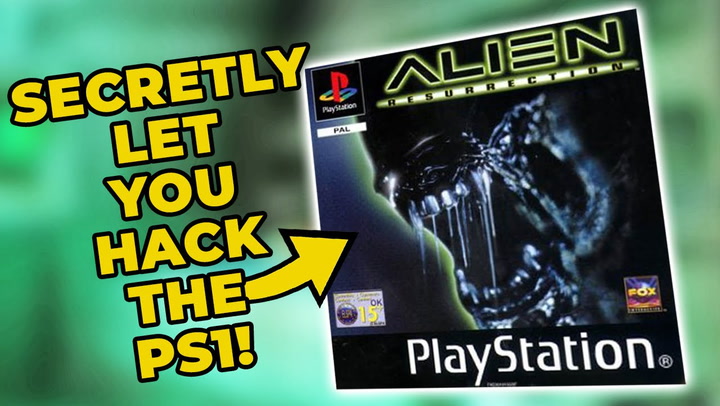
Number nine, the game is a secret boot disc, Alien Resurrection. Much like the film of the
1:42
same name, PlayStation's Alien Resurrection was a bit, eh, that, that noise, it was eh. In fact
1:48
the most interesting aspect about the movie tie-in game isn't the game itself, but the fact that the
1:53
disc harbors a cryptic secret that's only come to light recently. 23 years after its release
2:00
one of the developers, Martin Piper, revealed that there's an elaborate cheat code that lets
2:04
Alien Resurrection be swapped for any burned PS1 game. Although this naughty trick can be performed
2:10
with certain games with a mod chip or a soft mod, Alien Resurrection didn't need any external
2:16
devices to do so. At the time, it might have been the only commercial game with this feature
2:21
though it wasn't public. Piper admitted that he turned the game into a boot disk just to see if
2:27
he could. When his little experiment proved successful, he decided not to tell anyone
2:31
since it was frowned upon and possibly illegal. When a game's development is complete
2:36
the developers are expected to submit all cheat codes to the publisher. And wanting to keep his
2:42
job, Piper decided to keep hush-hush about his little operation. That said, if Piper's actions
2:47
were common knowledge during Alien Resurrection's heyday, owners would have had a lot of fun fooling
2:52
around with the feature. 8. Creating multiplayer without telling anybody GoldenEye 007 It's hard to believe that there was any cynicism
3:00
towards Rare's GoldenEye 007, considering it revolutionized the genre and proved movie tie-ins
3:07
didn have to be crap even though a lot of them were However Nintendo had no faith in the James Bond shooter whatsoever believing it was too violent and glitchy They were so unhappy with the project that they cut funding for three months placing GoldenEye 007 future in jeopardy
3:24
Since Rare knew they were on thin ice at this point, it would have been unwise for them to make drastic changes or additions to the game without keeping their bosses in the loop
3:33
But as GoldenEye 007's development was drawing to a close, one programmer called Steve Ellis decided to implement a multiplayer option
3:42
Although Rare's management was against the idea, Ellis didn't listen and put it together in six weeks
3:48
Certain that Nintendo would reject the notion, GoldenEye 007 director Martin Hollis didn't mention the multiplayer mode to the higher-ups
3:55
until it was fully functional. If Nintendo had caught wind of Ellis' plan earlier
4:00
they could have canned the beloved multiplayer, which would have caused millions of N64 owners to miss out on what was one of the 90s' greatest gaming experiences
4:10
Number 7. Copying another game, Flappy Bird Plenty of mobile games have taken the world by storm, including Angry Birds, Candy Crush, and Pokemon Go
4:20
But in 2013, it was all about Dong Nguyen's Flappy Bird. In this mobile title, the player needs to tap the on-screen bird to maintain his flight
4:29
If the bird collides with any of the pipes surrounding the stage, it's game over
4:34
When summarized like that, it doesn't sound great. And, well, to be honest, it wasn't
4:38
Nevertheless, Flappy Bird was the most downloaded free game on the App Store in January of 2014
4:44
earning $50,000 daily from ads. That's why it was bewildering when Nguyen removed it from online stores while it was still raking in money
4:53
According to the creator, he had Flappy Bird pulled after learning that young gamers were becoming dangerously addicted to it
5:00
However, it's more likely that he pulled the plug to avoid legal trouble
5:04
since his creation is a clone of Pew Pew vs. Cactus, released the previous year
5:09
Side by side, it's obvious that the pair have the same premise, design, and mechanics
5:15
The only thing about Flappy Bird is the titular character navigates around pipes instead of cacti
5:20
But since the pipe's aesthetic was also ripped off from Mario, it does make the potential plagiarism more apparent
5:27
Number 6. The First Gaming Secret. Adventure. As has been explained in Ready Player One, 1980's Adventure for the Atari 2600 was the first video game that ever harbored an easter egg
5:39
If the square-shaped hero makes its way into a supposedly inaccessible room
5:44
they'll find text that reads, Created by Warren Robinette, which is the name of the lead designer
5:50
This room is so well hidden that Atari didn't know about it until Adventure was released
5:55
Although the secret itself seems pretty simple, it's Origins or anything but
5:59
In the early days of gaming, publishers rarely credited their employees to ensure that they couldn't be recruited by competitors
6:05
When Atari refused to credit Adventure's creators or pay them royalties, many of them walked away and formed their own company, Activision
6:14
Just before Robinette stormed out, he decided to embed his name into Adventure without his
6:20
superior's knowledge. When Atari discovered Robinette's cipher a year later, they realized
6:25
it would cost a small fortune to have it removed One of the company directors Steve Wright believed secrets like this would encourage players to play more and thought it was best to leave the Defiant signature in
6:36
Sadly, this was not the last time that publishers refused to acknowledge the developers' work
6:41
which leads us to the next entry. Number five, snuck in credits, Sonic the Hedgehog
6:48
Even though Sega's mascot isn't as popular as he once was, 1991's Sonic the Hedgehog is still one of the most celebrated games
6:55
of all time. Due to the legacy the blue-furred speedster has maintained over the last 30 plus
7:00
years, you'd think that working on the original would have been a blast. But the development on
7:05
the original Sonic the Hedgehog was heartbreaking, according to its creator, Yuji Naka. As was
7:11
standard policy at the time, the developers weren't allowed to be credited for their work
7:15
Naka found this policy so disrespectful that he left Sega of America immediately after the
7:21
development of Sonic the Hedgehog wrapped. Similar to Adventure, the legendary programmer defied his
7:26
employer's wishes and inserted the development team's names in the opening screen before it reads
7:32
Sonic Team Presents. The credits are written in black text on a black background, so it's impossible
7:38
to see them without using a code. Since Naka flagrantly disobeyed Sega's rules, he could have
7:43
found himself in legal trouble, but due to Sonic the Hedgehog's astounding success, Sega of America
7:49
rehired Naka, gave him a promotion, and credited his team in all future projects
7:56
Number 4. Nudalities, The Apprentice Thanks to the woeful Legend of Zelda games on the Philips CD-i, the doomed console has never had a
8:05
great reputation. With that said, the system did have a few solid titles, including The Apprentice
8:11
The 2D side-scroller follows a young wizard called Marvin, who needs to perform a series of magical
8:16
trials for his master. Due to the kid-friendly aesthetic, The Apprentice looks like the last
8:22
game that would be considered controversial. But just before release, the creators decided
8:26
to do something a little bit, well, cheeky. Literally. During development, there were
8:31
rumors surrounding Mortal Kombat suggesting that fighters could perform nudalities. That is, causing their opponents to take off their clothes. Although this rumor was debunked
8:42
it incentivized the developers behind The Apprentice to implement the idea into their own game
8:48
If the player punches in a certain code just before the game over screen
8:52
it'll play a secret scene that depicts Marvin using magic to undress a woman
8:57
If that wasn't inappropriate enough, then one of the secret scenes is of Marvin decapitating a monkey
9:03
Just to remind you, this was a children's game. Even though The Apprentice is still remembered by fans, it's not for the gameplay
9:11
Number three, releasing the same game under four different names, Ninja Breadman
9:17
During the millennium, Data Design Interactive were tasked with creating a sequel to the Amiga
9:22
series Zool. When this plan fell through, the developers retooled the project into a new IP
9:28
called Ninja Breadman. Due to the sporadic camera, clunky controls, and the insultingly
9:33
short campaign mode, this buggy mess was deservingly eviscerated by critics. When a sequel was cancelled it looked like this abomination was gone for good Though that marked the end of Ninja Breadman its software lived on Rather than making new games from scratch Data Design tweaked the art and character design of
9:53
Ninja Breadman and just repackaged it as three separate games, Anubis 2, Rock and Roll Adventures
10:00
and Myth Makers Trivia in Toyland. This means these games are a repackage of a repackage
10:06
Though these duds look different on the surface, the awful gameplay and level layout was
10:11
identical. Although this practice isn't illegal, it's a deceitful way to encourage innocent
10:16
consumers to spend their money, not just on garbage, but on the same garbage they may have
10:21
already bought. Due to Date Design's reliance on asset flipping, it was no surprise when the
10:27
infamous company went out of business soon after. Number two, not getting the rights to make your
10:33
game. Liquid Kids, Commodore Amiga. Taito's adorable platformer centers around a heroic
10:39
platypus, erroneously referred to as a hippo, who must use an endless supply of water balloons to
10:44
save the land of Woody Lake. Okay, the plot isn't exactly Shakespeare, but Liquid Kids was a lot of
10:50
fun. Too bad most gamers never got a chance to experience it, since its initial release was
10:55
extremely limited. Although Liquid Kids could have been available on the Commodore Amiga
11:00
it hit a major snag. The game was considered a pseudo-sequel to The New Zealand Story
11:06
which was ported by Ocean Software. When Liquid Kids was being ported from the arcade
11:11
Ocean had their French subsidiary work on the Amiga version. There was just one issue with that
11:16
In the 10 months it took to port Liquid Kids, none of the developers double-checked if they actually had the rights for the Taito title
11:24
This means Ocean France spent almost a year making a game despite the fact nobody okayed the deal
11:30
Even though Liquid Kids has been released on multiple systems since, including the PS4 and Switch
11:35
it never saw the light of day on the Amiga. Number 1. The Blood Code. Mortal Kombat. Genesis Version
11:42
Even though Mortal Kombat popularized digital sprites and secret characters, it's been immortalized for over-the-top violence
11:49
Ed Boon and John Tobias' fighting title may be tame by today's standards
11:54
but the excessive blood and finishing moves were shocking back in the day
11:59
Since MK depicted combatants ripping out hearts and pulling out spines, there were concerns that the content could negatively affect players, especially children
12:08
Ed Boon himself thought the outrage was somewhat justified, saying, I wouldn't want my 10-year-old kid playing a game like that
12:15
Due to Nintendo's family-friendly policy, the SNES port of Mortal Kombat toned down the finishes and had the blood replaced with sweat
12:24
Sega, on the other hand, relied on a sneakier tactic to avoid controversy
12:29
When Mortal Kombat was released for the Genesis, the blood and fatalities were seemingly absent
12:35
However, all the gore became accessible by punching in A-B-A-C-A-B-B in the opening screen
12:42
This crafty trick worked since the Genesis port outsold the SNES version exponentially
12:48
proving to some degree that violence makes money. To maximize their profits, Nintendo and Sega left the gore uncensored in the sequels
12:55
I have no idea what kind of message or moral takeaway we have there, but it's definitely something
Games
Computer & Video Games
Gaming Reference & Reviews