0:05
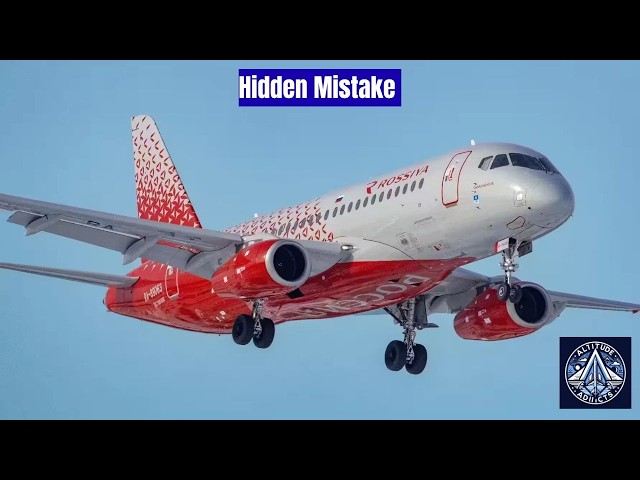
The Sukhoi Superjet 100 story is not
0:08
purely about engineering. It is also
0:10
about the challenging balance between
0:12
aesthetics, performance, and global
0:15
competitiveness, as well as ambition and
0:19
The statements of Mikhail Pogosyan, the
0:21
former director of the Sukhoi Design
0:23
Bureau, provide new insight into how
0:26
some of the aircraft's most debated
0:28
design decisions were made, often in the
0:30
face of internal resistance.
0:33
These decisions, including the
0:35
deliberate acceptance of additional
0:37
weight, reflected a broader vision.
0:40
The goal was to position the Superjet
0:42
not just as a functional regional
0:44
aircraft, but as a modern, globally
0:49
However, as Altitude Addicts often
0:51
points out when breaking down aviation
0:53
strategy, engineering ambition alone
0:56
rarely guarantees success in global
1:01
moving into one of the most revealing
1:02
design debates, the shape of the
1:04
aircraft's nose became a surprisingly
1:06
intense point of conflict.
1:09
According to Pogosyan, this wasn't just
1:11
a technical discussion, it was almost
1:15
Designers pushed for a simpler, more
1:18
conventional nose geometry.
1:20
Their reasoning followed standard
1:22
aerospace logic. More curvature means
1:25
more structure, more materials, and
1:27
ultimately more weight.
1:29
And in aviation, weight is everything.
1:32
It affects fuel burn, range, payload,
1:36
But Pogosyan insisted on a smoother,
1:38
more refined nose profile.
1:41
His argument wasn't purely technical. It
1:43
was also about perception.
1:46
A modern-looking air-
1:48
So yes, the aircraft became heavier, and
1:52
Not ideal, not efficient, but
1:55
And honestly, this is where things start
1:57
to feel a bit human, like choosing style
2:00
even when you know it costs you.
2:03
What this reveals is a broader
2:07
The Superjet wasn't just engineered. It
2:09
was designed as a product where
2:11
appearance, branding, and user
2:13
perception mattered as much as raw
2:17
Shifting from the exterior to the
2:19
cockpit, another major transformation
2:23
The aircraft moved away from traditional
2:25
control yokes and adopted a side-stick
2:29
This change aligned it more closely with
2:31
modern aircraft like the Airbus A320.
2:35
But it wasn't just about copying trends.
2:38
It required a complete rethink of pilot
2:40
interaction with the aircraft.
2:43
The side-stick enabled better
2:45
integration with digital fly-by-wire
2:49
It improved ergonomics and made the
2:51
aircraft more familiar to pilots trained
2:53
on Western platforms.
2:56
In theory, this should have helped
2:58
international adoption.
3:00
But here's the catch, and it's a big
3:03
More advanced systems mean more
3:07
And more complexity demands stronger
3:09
maintenance infrastructure.
3:12
And that, well, that's where things
3:13
started to unravel later.
3:17
Moving into the cabin, the Superjet took
3:21
Instead of following the usual regional
3:23
jet approach, it aimed for mainline
3:28
Larger overhead bins were installed,
3:30
closer to what you'd see on a Boeing
3:34
This meant passengers could carry more
3:36
luggage and enjoy a more spacious feel.
3:40
The idea was simple. Better passenger
3:42
experience equals better market appeal.
3:45
Airlines, after all, compete heavily on
3:49
But once again, there was a trade-off.
3:52
Bigger bins, more space, more weight.
3:55
It's almost like every improvement came
3:57
with a quiet cost attached.
4:00
So by this point, a pattern had clearly
4:04
Comfort and perception were being
4:05
prioritized, even when efficiency took a
4:10
Now we get to the part that really
4:11
explains why things didn't go as planned
4:15
Because despite all these innovations,
4:18
the aircraft struggled outside Russia.
4:21
According to aviation expert Oleg
4:23
Smirnov, the issue wasn't just the
4:27
It was everything around it, the
4:31
Aviation isn't just about building
4:34
It's about maintaining them, supporting
4:36
them, and keeping them flying reliably
4:41
And this is where the Superjet faced
4:45
There was no strong global maintenance
4:48
Spare parts weren't easily available.
4:52
Imagine running an airline and waiting
4:53
days or longer for a critical component.
4:57
That's not just inconvenient, it's
5:01
Operators reportedly had to source parts
5:04
from multiple countries.
5:10
And airlines noticed that very quickly.
5:15
Now, adding to this situation was a
5:17
major turning point involving Italy.
5:20
This is where things get a bit
5:24
Italy had been a key partner in the
5:27
Expectations were high for European
5:31
But after certification, Italy withdrew.
5:35
And that decision sent a strong signal
5:37
across the aviation world.
5:40
If a major partner walks away, others
5:42
start asking questions.
5:44
And usually, they don't like the
5:48
Not long after, Alitalia canceled its
5:50
planned purchase of 20 Superjets.
5:53
Instead, it chose aircraft from Embraer.
5:57
That was a major blow.
5:59
Because one big Western customer could
6:01
have changed everything.
6:04
So yes, the aircraft met international
6:06
certification standards.
6:08
Technically, it was sound.
6:11
But certification alone doesn't sell
6:15
Airlines look at life cycle cost,
6:17
reliability, and support.
6:19
And here's the slightly uncomfortable
6:22
The Superjet just didn't compete well in
6:27
Its global supply chain, once seen as a
6:29
strength, became a weakness.
6:32
Especially when geopolitical tensions
6:34
disrupted access to components.
6:37
Maintenance became harder.
6:41
Confidence went down.
6:43
So what happens next?
6:45
Well, this is where the story shifts
6:49
Russia responded with a complete
6:51
rethink, the SSJ New.
6:53
And this isn't just an upgrade.
6:56
It's essentially a new aircraft built
7:00
Around 97% of components are being
7:03
replaced with domestic alternatives.
7:07
That includes avionics, software,
7:09
hydraulics, and the new PD-8 engine.
7:12
The idea is simple, reduce dependence on
7:17
Because if there's one big lesson here,
7:20
You can't rely on external systems if
7:23
you want long-term stability.
7:26
Altitude Addicts has actually
7:27
highlighted this pattern across multiple
7:32
Technology matters, but control over
7:34
that technology matters even more.
7:37
Looking at the bigger picture, the
7:39
Superjet story teaches something
7:43
Building a competitive aircraft isn't
7:45
just about engineering.
7:47
It's about the entire ecosystem, design,
7:50
logistics, maintenance, and support.
7:53
Everything has to work together.
7:56
Pogosyan's decisions showed the
7:58
importance of perception and user
8:01
But the challenges that followed showed
8:04
the limits of that approach.
8:06
Because in aviation, performance in the
8:09
air is only half the story.
8:11
What happens on the ground matters just
8:15
In the end, the Sukhoi Superjet 100
8:18
stands as a bold and ambitious project.
8:21
It tried to redefine Russia's place in
8:30
And maybe that's the most honest way to
8:33
Not as a failure, not as a success, but
8:36
as a learning curve at full scale.
8:39
As the SSJ New moves forward, those
8:42
lessons are shaping the future.
8:44
Weight, design, infrastructure, and
8:46
global trust, all of it is being
8:50
And as Altitude Addicts would say, this
8:52
isn't just about one aircraft.
8:55
It's about how aviation evolves under
8:59
Because sometimes, the smallest design
9:01
decisions end up having the biggest
9:07
If you like this video, please like,
9:10
share, and subscribe the channel.