0:04
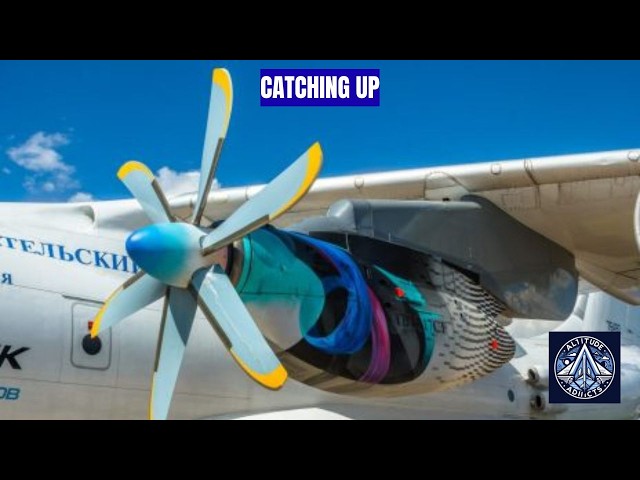
The turboprop engine TV7-117ST-01
0:08
has marked a significant technological
0:10
milestone for the Russian aviation
0:13
Developed by UEC Klimov under the United
0:16
Engine Corporation, this engine has now
0:19
been approved to extend the service life
0:21
of its main components to 777
0:26
This achievement is not just a technical
0:28
upgrade, but but a clear signal of
0:30
Russia's ongoing push to improve
0:32
reliability, reduce operational costs,
0:34
and strengthen self-sufficiency in
0:39
As this development unfolds, the engine
0:41
is set to power the modernized Ilyushin
0:46
an aircraft specifically designed for
0:48
regional routes, especially in remote
0:51
and challenging environments.
0:53
For Altitude Addicts, this marks an
0:55
important moment where engineering
0:57
ambition meets real-world aviation
1:01
To better understand the significance of
1:03
this milestone, it becomes important to
1:05
explore what a cycle actually means in
1:09
A cycle represents a complete
1:11
operational sequence of an engine,
1:13
starting from ignition and taxi, moving
1:16
through takeoff and cruise, and ending
1:18
with descent and landing.
1:21
Unlike flight hours, cycles reflect the
1:23
true stress experienced by an engine,
1:25
since the most intense wear occurs
1:28
during takeoff and landing.
1:30
With the increase to 777
1:33
cycles, the engine can now endure a
1:35
greater number of stress events before
1:37
requiring its first major overhaul.
1:40
This translates directly into
1:42
operational and economic benefits.
1:45
Regional aircraft, which operate short
1:48
and frequent flights, accumulate cycles
1:50
much faster than hours, making this
1:52
improvement especially important.
1:56
As a result, maintenance frequency is
1:58
reduced, operational costs decrease, and
2:00
aircraft availability improves.
2:03
Airlines benefit from higher efficiency
2:05
and better profitability, particularly
2:08
on routes with frequent takeoffs and
2:12
Moving forward from this milestone, the
2:16
cycle certification is not the final
2:18
destination, but rather an intermediate
2:21
step in a broader reliability roadmap.
2:24
Engineers are already aiming for 2,000
2:26
cycles in the next phase, with long-term
2:29
ambitions to match global standards.
2:32
This gradual and structured approach
2:35
reflects a cautious, data-driven
2:37
certification philosophy.
2:39
Instead of rushing toward higher limits,
2:41
designers validate performance
2:43
step-by-step through testing and
2:45
real-world operations.
2:48
For Altitude Addicts, this is where
2:50
engineering discipline becomes just as
2:52
important as innovation.
2:55
Each increase in service life is backed
2:56
by rigorous validation, ensuring reduced
2:59
risk of failures and building long-term
3:02
confidence among operators.
3:05
Looking deeper into the technology
3:06
behind this progress, the TV7-117ST-01
3:11
incorporates several key engineering
3:15
One of its most important features is
3:17
its modular architecture, which allows
3:19
individual components to be replaced
3:22
without dismantling the entire engine.
3:25
This significantly reduces maintenance
3:29
In addition to that, the engine uses
3:31
advanced digital modeling and predictive
3:34
diagnostics, often referred to as a
3:36
digital twin approach.
3:38
Engineers can simulate operating
3:40
conditions, monitor wear patterns, and
3:43
optimize maintenance schedules,
3:45
improving reliability over time.
3:48
The engine also features a free turbine
3:50
design, separating the turbine that
3:53
drives the compressor from the one that
3:55
drives the propeller.
3:57
This improves efficiency, reduces
3:59
mechanical stress, and enhances
4:01
operational flexibility.
4:04
All these advancements have been
4:06
validated through extensive testing.
4:09
The engine has undergone endurance
4:10
trials, extreme climate testing, and
4:13
simulations that replicate real-world
4:18
Beyond controlled testing environments,
4:20
the engine has also proven itself in
4:22
real-world operations.
4:24
It has successfully powered
4:26
certification flights of the Il-114-300
4:30
across a variety of conditions.
4:33
In early 2026, the engine demonstrated
4:36
its reliability during a long-distance
4:38
flight to India, maintaining stable
4:41
performance across diverse climates.
4:44
It has also been tested extensively in
4:46
northern regions, operating in extremely
4:50
These real-world validations are
4:52
critical, as regional aircraft often
4:55
operate in remote areas with limited
4:57
infrastructure and challenging weather
5:01
The engine is paired with the advanced
5:05
propeller, which enhances thrust and
5:08
improves takeoff and climb performance.
5:11
This allows the aircraft to operate
5:13
effectively from shorter and less
5:17
To truly understand where this engine
5:19
stands, it is essential to compare it
5:22
with established global turboprop
5:26
The Pratt & Whitney Canada PW127
5:29
is widely regarded as a benchmark in
5:30
regional aviation, offering high
5:32
durability and long maintenance
5:36
With a time between overhaul ranging
5:38
from 10,000 to 14,000 hours and cycle
5:42
capabilities often exceeding 10,000 to
5:44
20,000 cycles, the PW127
5:48
has benefited from decades of
5:52
Similarly, the General Electric CT7 has
5:55
built a strong reputation for
5:56
reliability across both civil and
6:00
It typically operates with a time
6:02
between overhaul of 8,000 to 12,000
6:06
and cycle capabilities ranging from
6:09
8,000 to 15,000 cycles.
6:12
In comparison, the TV7-117ST-01
6:16
is still in the early stages of its life
6:22
cycle limit is lower than these mature
6:24
engines, but this is expected for a
6:27
newer design undergoing certification
6:31
What truly sets it apart is the pace of
6:35
While western engines reached high cycle
6:37
limits over decades, this program aims
6:40
to accelerate progress through advanced
6:42
simulations and intensive testing.
6:46
From an economic perspective, the
6:48
increase in cycle life has major
6:50
implications for airlines.
6:52
Maintenance is one of the largest costs
6:54
in aviation, and extending service
6:57
intervals directly reduces expenses.
7:00
Fewer overhauls mean aircraft can remain
7:03
in service longer, improving utilization
7:07
This is especially important for
7:08
regional routes, where profit margins
7:13
The modular design further enhances
7:15
efficiency by enabling faster repairs
7:18
and reducing downtime.
7:20
Operators can avoid the logistical
7:22
burden of full engine overhauls.
7:25
For Altitude Addicts, this is where
7:27
engineering meets economics, shaping the
7:30
real-world viability of an aircraft
7:34
On a broader scale, this engine plays a
7:36
strategic role in Russia's aviation
7:40
It supports the goal of technological
7:42
independence, reducing reliance on
7:44
foreign suppliers for critical
7:50
powered by this engine, is central to
7:52
that strategy, offering a domestic
7:54
solution for regional connectivity.
7:58
By controlling production, maintenance,
8:00
and supply chains, Russia strengthens
8:02
its aviation sector and reduces
8:04
vulnerability to external disruptions.
8:08
Looking ahead, the next major milestone
8:10
is reaching 2,000 cycles.
8:13
Achieving this will bring the engine
8:15
closer to global standards and increase
8:17
its appeal to operators.
8:20
Future improvements are expected to
8:22
focus on materials, cooling
8:24
technologies, and aerodynamic
8:27
Continued operational data will be key
8:30
in validating higher limits.
8:33
In the long term, the engine could
8:35
become a competitive option, not just
8:37
domestically, but also in export markets
8:39
seeking cost-effective turboprop
8:43
Ultimately, the extension to 777 cycles
8:47
represents more than a technical
8:51
It reflects a broader transformation in
8:53
the aviation industry, combining
8:55
traditional engineering expertise with
9:00
While the engine has not yet reached the
9:01
maturity of its western counterparts,
9:04
its steady progress highlights strong
9:08
The journey ahead will determine whether
9:10
it can truly compete on the global
9:14
In the end, this milestone is not the
9:16
destination, but the foundation for
9:18
future growth, reliability, and
9:21
long-term competitiveness.
9:25
If you like the video, please subscribe,
9:28
share, and like. Also, please take the
9:30
membership of the channel to encourage