0:05
Russia's aviation ambitions have reached
0:07
an important milestone with the
0:09
successful end of extreme weather
0:11
certification trials for its new
0:13
generation aircraft engine. The United
0:16
Corporation, a subsidiary of Rosstec,
0:19
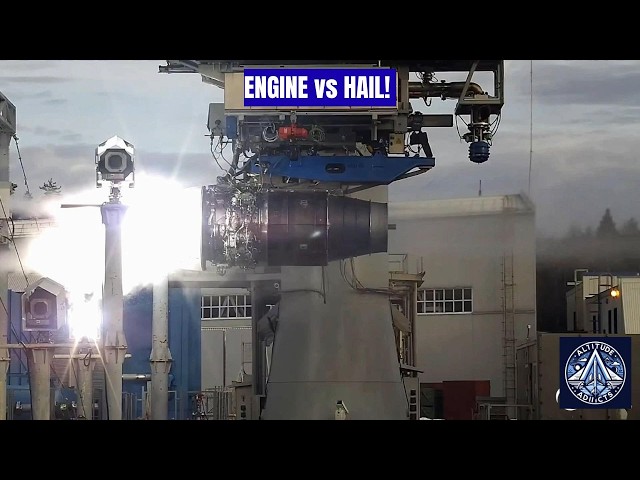
has successfully tested the PD8 Turboan
0:21
against one of the most hazardous
0:23
natural threats in aviation, severe hail
0:28
Moving into what becomes a crucial stage
0:30
in certification, Russia is positioning
0:32
the PD8 engine as a core component of
0:35
its push to localize aviation
0:37
technologies and reduce dependence on
0:40
foreign systems. The engine is mainly
0:43
intended for short hall aircraft like
0:45
the Sukcoy Superjet 100 and the
0:47
amphibious Beriv B200.
0:50
Environmental resilience trials,
0:53
especially those simulating hail
0:54
ingestion, remain among the toughest
0:57
parts of certification.
0:59
Hail ingestion is not just a theoretical
1:01
risk. Ice particles can hit fan blades
1:05
at extremely high speeds, causing
1:07
mechanical damage, compressor stalls, or
1:09
even total engine failure. Regulators
1:13
require proof that engines can survive
1:15
such conditions without catastrophic
1:17
consequences. And that requirement is
1:20
where this test becomes critical.
1:23
The latest ispatania focused on squall
1:25
hail, a particularly intense and sudden
1:28
storm phenomenon. These trials were
1:31
conducted at an open air facility
1:33
operated by UEC Saturn, one of the key
1:36
production hubs within the United Engine
1:40
It's the kind of place where engineering
1:42
meets controlled chaos.
1:45
Shifting into how engineers actually
1:47
recreated a storm on the ground. The
1:49
process is anything but simple.
1:52
Specialists at UEC Saturn developed a
1:54
test setup capable of simulating ice
1:56
impacts under varying flight conditions.
2:00
Altitude, air temperature, engine modes,
2:02
and flight speeds were all adjusted to
2:04
mimic real world scenarios.
2:07
Over three tons of artificial hailstones
2:10
were produced, each around 16 mm in
2:14
That's roughly the size of large natural
2:16
hail, the kind pilots actively try to
2:18
avoid. About 2 and 12 tons were used
2:22
just to calibrate the system before the
2:24
real test even began.
2:27
Then came the main event. In just 30
2:30
seconds, the engine was blasted with
2:32
approximately 220 kg of ice. A
2:37
multiarrel launcher fired the hail at
2:39
speeds reaching 240 m/ second. Honestly,
2:44
that's basically like getting hit by a
2:46
frozen storm cannon repeatedly.
2:50
Transitioning into performance under
2:52
stress, the results were surprisingly
2:54
strong. The PD8 engine maintained stable
2:57
operation throughout the Espatania and
3:00
showed no signs of failure. No
3:03
compressor surge, no flame out, just
3:05
steady performance under extreme impact
3:09
Post- test inspections confirmed that
3:11
the engine's structural integrity
3:15
Fan blade edges and critical components
3:18
retained their strength.
3:20
This indicates that the materials and
3:22
design philosophy behind the PD8 can
3:25
handle high impact hazards without
3:30
As highlighted in coverage by Altitude
3:32
Addicts, these result validate key
3:35
engineering decisions made during
3:38
According to UEC representatives, the
3:41
robustness of the engine reflects both
3:43
design precision and manufacturing
3:47
Turning toward materials and design,
3:49
modern turboan engines rely heavily on
3:52
advanced alloys and composits. These
3:55
materials must withstand extreme
3:56
temperatures, pressures, and mechanical
4:00
Fan blades in particular are engineered
4:03
to balance strength with weight
4:05
efficiency since they are the first to
4:07
face incoming debris.
4:09
The geometry of these blades also
4:11
matters. Engineers designed them to
4:14
deflect or absorb impacts in a
4:17
controlled way, preventing small damage
4:19
from becoming catastrophic.
4:21
It's a bit like controlled resilience.
4:26
The engine's control systems add another
4:28
layer of protection. Even when air flow
4:31
is disrupted by hail ingestion,
4:33
combustion must remain stable. This
4:36
requires rapid adjustments in fuel flow
4:39
and compressor behavior guided by
4:41
advanced monitoring systems.
4:44
Expanding into the broader significance
4:46
of the PD8 program, this engine
4:48
represents more than just a technical
4:52
It is part of Russia's wider effort to
4:54
achieve technological independence amid
4:57
global supply constraints.
5:00
The PD8 belongs to a family that
5:02
includes the PD14 engine used on the
5:07
Together, these engines aim to compete
5:09
globally in efficiency, reliability, and
5:12
environmental performance.
5:14
That's the goal at least, and it's a big
5:16
one. For the Superjet 100, the PD8 is
5:20
especially critical. Earlier versions
5:23
relied on the SEM146 engine developed
5:26
with foreign partners. Replacing it with
5:29
a domestic alternative is seen as
5:32
essential for long-term sustainability.
5:35
The Bereve B200 will also benefit from
5:37
this shift. As an amphibious aircraft
5:41
used in firefighting and maritime
5:43
operations, it often operates in harsh
5:45
environments where reliability is
5:47
crucial. And yeah, you really don't want
5:51
engine trouble when scooping water mid-m
5:54
Looking ahead to certification, the hail
5:57
test is only one part of a much larger
5:59
process. Engines must also pass bird
6:02
strike simulations, water ingestion
6:04
trials, endurance testing, and
6:07
performance checks across extreme
6:10
Eachspatania targets specific risks to
6:13
ensure safe operation under all expected
6:17
Aviation authorities impose strict
6:19
standards and meeting them is
6:23
With this successful test, the PD8 moves
6:26
closer to operational deployment.
6:29
However, additional validation will
6:31
still be required before full
6:33
certification is granted.
6:35
Broadening the lens to global aviation
6:38
trends. Resilience is becoming as
6:40
important as efficiency.
6:42
Climate change is increasing the
6:44
frequency of severe weather, making
6:46
durability a top priority for engine
6:51
Advanced testing facilities like UEC
6:53
Saturn allow engineers to simulate
6:55
extreme conditions in controlled
6:59
These experiments provide insights that
7:01
would be nearly impossible to gather in
7:06
As discussed by altitude addicts, this
7:08
push toward domestic capability mirrors
7:10
trends seen worldwide. Many nations are
7:14
investing in local aerospace development
7:16
to reduce reliance on external
7:20
Wrapping it all together, the PD8
7:22
engine's performance in simulated
7:24
hailtorm conditions marks a major
7:28
It demonstrates durability, stability,
7:30
and engineering maturity under one of
7:33
aviation's toughest challenges.
7:36
Beyond the technical success, the
7:38
program carries strategic weight. As
7:41
Russia advances its aerospace sector,
7:43
engines like the PD8 will play a central
7:46
role in shaping its future capabilities.
7:50
And as altitude addicts would put it,
7:52
this is where engineering meets real
7:54
world espadania and actually survives
7:57
them. The road ahead still includes
8:00
further testing, but the trajectory is
8:02
clear. The PD8 is steadily moving toward
8:05
becoming a key pillar of next generation
8:16
We are performing detailed tests on the
8:18
PD8 engine by simulating real flight
8:20
conditions in a school town. This
8:22
scenario involves the engine enduring
8:24
heavy hail weighing 220 kilos which must
8:27
be managed within 30 seconds. Such tests
8:30
replicate airplane flight and assess
8:35
when hitting the cloud of the school
8:36
fence. This is not a one-time test. This
8:39
is a test cycle of several engine starts
8:41
and several hail shots. That is the
8:44
engine will receive this shot both in
8:46
steady state modes. That is on the set
8:49
of revolutions at the reset of
8:51
revolutions. Which means we must confirm
8:54
strictly speaking the performance of the
8:56
engine the ability to restore it the
8:58
specified parameters after the engine
9:01
hit the charge. Here is the school fence
9:03
that we have according to the rules.
10:19
The Saturn team proudly concluded
10:22
thorough testing of school hill
10:23
simulations here in Ribbons at the
10:25
renowned Polo F stand. These trials
10:27
showcase the engine's reliability once
10:29
again. This achievement validates that
10:32
the engine design fully adheres to the
10:34
established certification criteria
10:36
surpassing benchmarks for functionality
10:40
>> If you like the video, please subscribe,
10:43
share and like. Also, please take the
10:45
membership of the channel to encourage