Up next in 10

Russia’s MC-21, SJ-100 & Il-114 Clear Extreme Arctic Icing Tests + Official Statements Translated
Apr 1, 2026

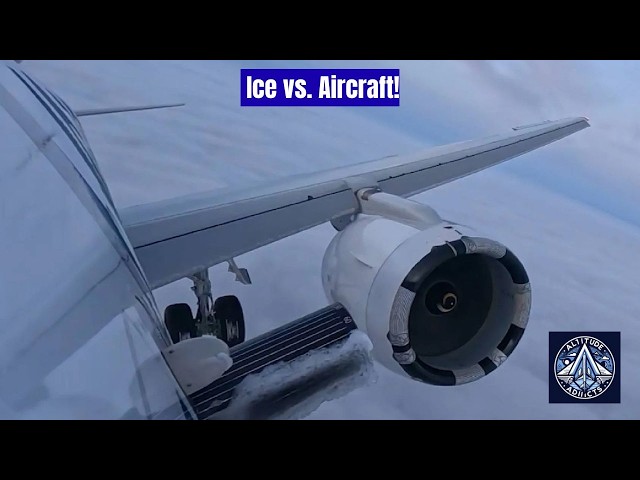
In March 2026, Russia carried out one of the most challenging aviation certification programs in recent years—natural icing trials in the Arctic region. Operating from Arkhangelsk’s Talagi Airport, three major aircraft—the MC-21-310, the import-substituted SJ-100 Superjet, and the Il-114-300—were pushed into real atmospheric icing conditions over the White Sea and surrounding regions.
These were not simulated lab tests. Pilots actively searched for real cloud systems capable of forming dangerous ice buildup on aircraft surfaces. Once inside, the planes were tested for stability, control, and system performance as ice accumulated on wings, engines, and sensors.
The results were significant. All three aircraft successfully demonstrated compliance with Russian and international aviation standards. The SJ-100’s new PD-8 engine, tested in natural icing conditions for the first time, performed reliably. The MC-21’s PD-14 engines confirmed robust anti-icing system performance, while the Il-114-300 proved the effectiveness of its turboprop systems in harsh environments.
These trials represent more than just certification—they are a key milestone in Russia’s effort to reduce reliance on foreign aviation technology and build a fully domestic aerospace ecosystem.
From engine validation to real-world flight endurance, this video breaks down how these aircraft performed, why icing tests are so critical, and what this means for the future of Russian aviation.
#RussiaAviation #MC21 #SJ100 #Il114 #AviationNews #AircraftTesting #Arctic #IcingTest #Aerospace #JetEngines #PD14 #PD8 #FlightTesting #CivilAviation #altitudeaddicts
Be a Member for exclusive privileges - https://www.youtube.com/channel/UCviEFTf1xIPKsjmyF_zvFug/join
Twitter : https://x.com/AltitudeAddicts
Website: https://www.altitudeaddicts.com
Show More Show Less View Video Transcript
0:04
The successful completion of additional
0:06
certification flight tests for three key
0:08
domestically produced passenger
0:10
aircraft. The MC213110,
0:13
the import substituted SJ100 Superjet
0:16
and the IS114300
0:19
in March 2026 marked a significant
0:22
milestone in Russia's civil aviation
0:24
revival program. Between March 12th and
0:27
March 30th, 2026,
0:30
these tests were conducted under natural
0:33
icing conditions, which are one of the
0:35
most challenging operational
0:37
environments for aircraft. The primary
0:40
operational base was Arangulk's Talagi
0:42
airport.
0:44
This development is not just a routine
0:46
certification step. It is indicative of
0:49
Russia's overarching strategic objective
0:51
to achieve aviation self-reliance in the
0:54
face of continuous industrial and
0:56
geopolitical challenges.
0:58
The successful trials serve as a
1:00
testament to the maturation of domestic
1:03
aircraft programs and the growing
1:05
assurance in Russia's indigenous engine
1:07
technologies.
1:09
As we move deeper into why these trials
1:11
matter, the significance of natural
1:14
icing certification becomes impossible
1:16
to ignore.
1:18
One of the most dangerous circumstances
1:20
in aviation is the presence of natural
1:23
icing conditions. The accumulation of
1:25
ice on control surfaces, engine inlets,
1:28
and wings can result in a major decrease
1:30
in aerodynamic performance, an increase
1:33
in drag, and the potential for a loss of
1:35
control.
1:37
Consequently, it is imperative that any
1:39
commercial aircraft that is intended for
1:41
regular passenger operations,
1:43
particularly in regions with frigid
1:45
climates, undergo certification under
1:48
such conditions.
1:50
Building on that, natural icing tests
1:53
necessitate that aircraft actively
1:55
pursue genuine atmospheric conditions in
1:58
which super cooled water droplets
2:00
solidify upon contact with aircraft
2:02
surfaces as opposed to artificial or
2:04
simulated icing environments.
2:07
This renders such trials inherently
2:09
unpredictable, complex, and
2:11
operationally demanding. The March 2026
2:15
campaign illustrated that all three
2:17
aircraft types satisfy both Russian and
2:19
international aviation standards for
2:22
secure operation in icing environments.
2:25
This is a vital phase in the direction
2:27
of complete certification and eventual
2:30
commercial deployment.
2:32
This naturally leads to the importance
2:34
of location and why archangels emerged
2:37
as the ideal testing ground. Archangelsk
2:40
and its Tagi airport were intentionally
2:43
selected as the testing facility. The
2:46
region is situated in close proximity to
2:49
the Arctic Circle and the White Sea
2:51
which provides optimal meteorological
2:53
conditions for the formation of natural
2:56
freezing.
2:57
The test flights encompass the White Sea
3:00
literal, the Cola Peninsula, and the
3:02
vicinity of Narian Mar which are
3:04
renowned for their frequent icing
3:06
conditions in the late winter.
3:09
During these missions, crews conducted
3:11
an active search for cloud formations
3:14
that met the necessary temperature and
3:16
moisture profiles in flights that
3:18
typically lasted between 4 and 7 hours.
3:22
Aircraft entered these zones to
3:24
facilitate controlled ice accumulation
3:27
once suitable conditions were
3:29
identified.
3:30
Upon completion of the tests, all
3:32
aircraft were returned to their primary
3:34
certification base in Jukovski, which is
3:37
located near Moscow.
3:39
There they are currently undergoing
3:41
additional evaluation and documentation
3:44
procedures.
3:46
From here, understanding how these
3:48
flights were structured helps reveal the
3:50
depth of the testing process. Each
3:53
flight conformed to a meticulously
3:55
organized profile that was intended to
3:58
assess a variety of aircraft performance
4:00
characteristics in icing conditions. The
4:03
procedure started with the
4:05
identification of appropriate cloud
4:07
systems.
4:09
Upon entering these clouds, specialized
4:11
onboard instruments monitored the
4:13
thickness and rate of ice accumulation.
4:17
As conditions intensified, the pilots
4:19
conducted a sequence of maneuvers to
4:21
evaluate the aircraft's responsiveness,
4:23
controllability, and stability after it
4:26
reached predefined icing thresholds.
4:29
Anti-icing and deicing mechanisms were
4:32
subjected to testing in both automatic
4:34
and manual modes. The aircraft were
4:37
subsequently ascended to higher
4:39
altitudes to assess their efficacy in a
4:42
variety of atmospheric conditions. The
4:45
results were constantly favorable with
4:47
no reported deviations from operational
4:49
norms, strengthening confidence in
4:52
engineering and design, a point also
4:54
emphasized by altitude addicts in their
4:56
analysis.
4:58
Turning toward aircraft specific
5:00
outcomes, the SJ100 Superjet delivered
5:03
particularly important results. Nine
5:06
flights were conducted by the SJ100
5:08
Superjet as part of the Icing
5:10
certification program. It is important
5:13
to note that this was the first time the
5:16
PD8 engine was tested under natural
5:18
frost conditions.
5:21
The PD8 engine, which was developed as
5:23
part of Russia's import substitution
5:25
initiative, replaces foreign components
5:28
that were previously in use. The engine
5:31
exhibited consistent performance
5:33
throughout the trials, thereby
5:35
validating both computational models and
5:38
previous groundbased testing.
5:40
Additional flights were conducted to
5:42
assess landing approaches that
5:44
incorporate stall warning systems and
5:46
goarounds.
5:48
These tests are essential for
5:50
guaranteeing safety in situations of
5:52
elevated workload and adverse weather
5:54
conditions.
5:56
The data accumulated from these flights
5:58
will significantly influence the type
6:01
certification of the PD8 engine,
6:04
representing a major milestone for
6:06
Russia's aviation industry. something
6:08
Altitude Addicts also highlighted as a
6:10
turning point in domestic engine
6:12
development.
6:14
Alongside this, the MC21-310
6:17
program demonstrated equally strong
6:19
performance under icing stress. Six
6:22
icing test flights were conducted by the
6:24
MC21310.
6:27
The aircraft exhibited consistent and
6:29
dependable performance powered by the
6:31
PD14 engine.
6:34
Engineers focused on assessing the
6:36
anti-icing systems integrated into
6:38
engine inlets and wing structures.
6:41
Both automatic and manual activation
6:43
mechanisms were evaluated to ensure
6:45
redundancy and pilot flexibility.
6:48
All planned parameters were successfully
6:51
achieved, further reinforcing the MC21's
6:54
role as Russia's flagship narrowbody
6:56
aircraft.
6:58
Completing the trio, the L114300
7:01
showcased turborop resilience in extreme
7:04
environments.
7:05
Eight flights were undertaken by the
7:07
L14300
7:09
equipped with TV717 ST01 engine engines.
7:14
Unlike jet aircraft, turborops face
7:17
unique aerodynamic and mechanical
7:19
challenges in icing conditions due to
7:21
propeller dynamics.
7:23
The tests evaluated both in-flight
7:25
behavior and ground performance in cold
7:28
weather conditions.
7:30
Results confirmed strong operational
7:32
reliability and effective anti-icing
7:35
performance across all phases of flight.
7:38
Supporting all these efforts was a
7:40
coordinated industrial backbone led by
7:42
the United Engine Corporation.
7:45
Specialists from Avid Vigodol, Per
7:47
Motors, ODK Saturn, and ODK Climov
7:50
monitored performance in real time.
7:52
Their work included diagnostics,
7:55
post-flight inspections, and maintenance
7:57
validation.
7:59
This collaborative structure ensured
8:01
that both aircraft and propulsion
8:03
systems were thoroughly evaluated,
8:05
highlighting the integrated strength of
8:08
Russia's aviation sector.
8:10
Overseeing this entire process was the
8:13
Aviation Register of Russia.
8:15
Certification authorities analyzed
8:18
flight data, verified compliance, and
8:20
ensured adherence to aviation standards.
8:23
Beyond flight tests, certification
8:26
includes simulation validation and
8:28
detailed documentation, accelerating the
8:30
path toward final approval.
8:33
Looking at the broader implications,
8:35
these successful trials hold major
8:38
significance for Russia's aviation
8:39
future. The industry has faced
8:42
sanctions, supply disruptions, and
8:44
reliance on foreign technology in recent
8:47
years. The development of domestic
8:49
aircraft and engines is key to
8:52
overcoming these barriers.
8:54
The MC21310,
8:56
SJ100, and Ford4* 300 together cover
9:00
multiple aviation segments from
9:02
narrowbody to regional and turborop
9:05
operations. Their certification will
9:07
allow fleet modernization using locally
9:10
built aircraft while also boosting
9:12
export potential, a development closely
9:15
followed by Altitude Addicts as part of
9:18
the shifting global aviation landscape.
9:21
As the program progresses, focus now
9:24
shifts toward final certification and
9:26
commercial entry. Additional testing,
9:29
operational evaluations, and long-term
9:31
reliability studies will continue in
9:33
Zukovski.
9:35
The insights gained from Arangelsk will
9:37
guide future aircraft design and
9:40
innovation.
9:41
In conclusion, the March 2026 icing
9:44
trials represent a decisive step toward
9:47
a fully self-sufficient Russian aviation
9:49
ecosystem.
9:51
By proving performance in some of the
9:53
harshest natural conditions, Russia has
9:55
reinforced both its technical capability
9:58
and industrial resilience.
10:00
As certification nears completion, these
10:03
aircraft are poised to shape the future
10:05
of civil aviation both domestically and
10:08
globally.
10:11
As for the aircraft MC21, it is indeed
10:14
two times in our two times on test in
10:18
conditions of natural icing. The only
10:20
difference is that one time it was the
10:22
aircraft MC21300.
10:25
Now we have arrived with the MS21,310
10:29
aircraft with domestically produced
10:31
systems. [music] The test program
10:33
provides for flights under various
10:35
conditions of ice ice which builds up on
10:37
the glider structural elements of the
10:40
aircraft on the KRY
10:42
on the landing gear rack on the antennas
10:44
in general on almost all surfaces of the
10:47
aircraft on which it is only [music]
10:48
possible to build up. We were lucky. We
10:51
caught low temperature ice, practically
10:53
[music] minus 26 - 28°. The ice that
10:56
builds up on the plane and the icing
10:59
conditions that the plane gets into do
11:01
not have a bad effect. Let's say on the
11:04
characteristics of the aircraft and from
11:06
the point of view of the crew,
11:08
the aircraft replenishes its full
11:10
functionality and further the most
11:13
difficult work of test engineers. This
11:15
is the analysis of materials, the
11:16
development of reporting documentation.
11:18
Well, in the subsequent certification of
11:20
the aircraft so that it can safely
11:22
transport passengers in our country.
11:41
The aircraft coped with conditions of
11:43
natural icing in conditions [singing] of
11:45
severe icing up to 7 cm to [music] 70 m.
11:49
The plane behaves confidently is
11:52
controlled comfortably. Why do we fly to
11:55
Arangels? So we are flying MS21 and L114
11:59
arrived here because here
12:03
and from the northwest of Gulfream a
12:05
fairly warm moisture richch air mass
12:08
over the Norwegian sea approaches over
12:11
the white sea. They collide with the
12:13
cold air of Siberia and are formed
12:18
the most optimal icing conditions.
13:02
For us, the register of Russia is the
13:04
lead expert organization which is
13:06
responsible for assessing compliance
13:08
with the requirements of the Russian
13:10
Federation for the civil aviation
13:12
equipment under development. And then
13:14
our passengers will fly for as long as
13:17
the equipment is in operation.
13:28
What functions does the register
13:30
perform? This is control over the
13:32
conduct of service tests and examination
13:36
of materials that the developer receives
13:38
based on the results of these tests. We
13:42
have a structure which includes the
13:44
aircraft certificate management,
13:47
helicopter certification management,
13:50
engine certification management,
13:52
component certification management
13:56
powers.
13:58
The government of the Russian [music]
13:59
Federation on certification issues
14:01
transferred to the Federal Air Transport
14:04
Agency at the end of 15 years. A little
14:06
later, the Aviation Register of Russia
14:09
was created on the basis of the state
14:12
center for flight safety, which strictly
14:15
speaking took over all issues related to
14:17
the certification of aircraft equipment
14:20
and equipment included in aircraft
14:22
engines for certification.
14:26
Certification. Now for example if we
14:28
talk about flight tests then it begins
14:30
with the fact that
14:32
the registry shall consider [music] the
14:34
program of these flight tests as the
14:37
purpose of flight tests. This is still
14:39
an establishment
14:41
correspondence
14:43
aircraft to the requirements of the
14:45
social bases and other requirements.
14:48
Airworthiness has requirements. For
14:50
example, well, the aircraft must be
14:53
stable. But how to prove that the
14:56
aircraft is stable? There are
14:58
explanatory materials, so-called
15:01
circulars. If the American way or
15:04
methods of determination correspond,
15:06
that is each requirement must have its
15:09
own method of determining compliance
15:12
based on the results of consideration of
15:14
the Reggie program. votes disapproves
15:17
the program more precisely after which
15:20
you can move directly to the flight test
15:24
group of companies. Okay. Yakov in
15:27
particular we by and large began our
15:30
interaction from the first days we have
15:32
a super jet aircraft in operation for a
15:35
long time which also periodically
15:37
undergo various modifications.
15:40
Changes are taking place in the
15:41
interests of already operating
15:43
organizations. A little later, it was
15:45
already receiving a type certificate for
15:47
the MC21 aircraft.
15:55
K2 is truly important to us as an
15:57
individual.
16:00
The level of competence should not be
16:02
lower than the most competent
16:04
specialists of all our organizations and
16:06
our aviation industry. They must be able
16:09
to objectively evaluate other people's
16:12
results, interact with people,
16:14
communicate which means there are
16:16
requirements for ethical behavior which
16:18
means [music] you correctness of the
16:21
comments issued that is he must not only
16:23
be a technical specialist he must also
16:26
have an additional set certain qualities
16:28
that would allow [music] him to work in
16:30
a team.
16:32
The expert holds a specific
16:34
accreditation area just like I do.
16:38
Aerodynamics are experienced power plant
16:41
specialists. [music] Each expert has his
16:43
own. As for quality, one quality, I can
16:46
honestly say decency. I have a lot of
16:50
specialist employees who not only work
16:52
for money say, but simply love their
16:55
work. And it's important here, you know,
16:58
not
17:02
so to speak, make some unjustified
17:05
concessions. Do not close your eyes to
17:09
shortcomings. This is the main thing.
17:11
I believe that the quality that every
17:14
ABI expert should have is to do his job
17:17
honestly and conscientiously because the
17:20
price of such a mistake is
17:26
well you yourself understand [music]
17:28
that you can miss something and then it
17:30
will backfire in operation.
17:35
If you like the video please subscribe,
17:37
share and like. Also, please take the
17:40
membership of the channel to encourage
17:42
us.
#News
#Science