0:07
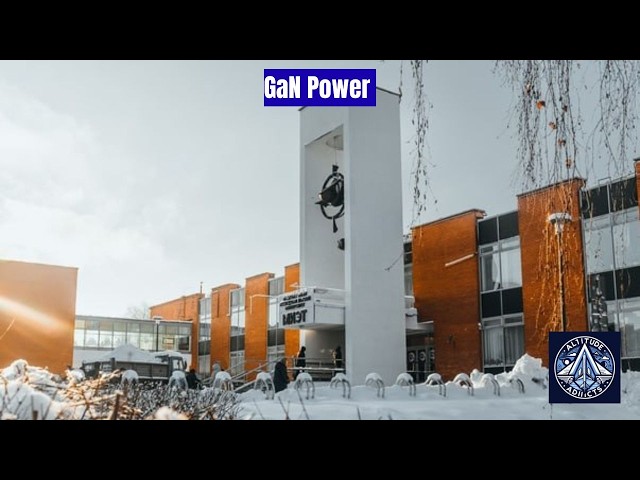
A new agreement between the Moscow
0:09
Institute of Electronic Technology and a
0:11
leading research center under the
0:13
Russian Academy of Sciences marks
0:15
another step in Russia's push toward
0:17
technological independence in micro
0:22
This collaboration focuses on advanced
0:24
materials used in power electronics, one
0:26
of the most critical areas in modern
0:30
Altitude Addicts, the YouTube channel
0:33
presenting this analysis, explains that
0:35
this initiative is part of a broader
0:37
national effort. The goal is to
0:40
strengthen domestic semiconductor
0:42
capabilities in strategic sectors.
0:46
At the center of this project is the
0:48
scientific and technological center for
0:50
micro electronics and submicron
0:54
This institution has contracted the
0:56
Moscow Institute of Electronic
0:58
Technology, often known as MIT, to carry
1:01
out a key part of the research.
1:04
This is not just an academic exercise.
1:07
It is directly linked to building
1:09
practical semiconductor technologies for
1:11
real world applications.
1:14
To understand the scope of this work, it
1:16
is useful to look at what MIT is
1:18
expected to do. The project involves
1:21
developing test elements and measuring
1:24
electrophysical properties of
1:25
semiconductor structures.
1:28
These structures are based on materials
1:30
such as gallium nitride and aluminum
1:33
gallium nitride. These materials are
1:35
commonly abbreviated as GN and Galn.
1:39
Altitude Addicts explains that these
1:42
materials are widely used in advanced
1:46
They are essential for devices such as
1:48
high efficiency transistors.
1:51
Such devices are found in electric
1:53
vehicles, renewable energy systems,
1:55
radar technologies, and
1:57
telecommunications infrastructure.
2:00
Their importance continues to grow
2:03
The research will focus on growing
2:05
semiconductor layers on two types of
2:09
These are silicon carbide and silicon.
2:13
Silicon carbide offers excellent thermal
2:15
performance and high voltage tolerance.
2:19
This makes it ideal for high power
2:23
Silicon on the other hand is more
2:24
affordable and widely used in
2:28
It provides compatibility with existing
2:30
industrial processes.
2:33
Altitude Addicts notes that using both
2:35
substrates allows researchers to balance
2:38
performance and scalability.
2:41
This is important for future industrial
2:44
A key part of the project involves a
2:46
process known as epitexi.
2:49
This is the controlled growth of thin
2:51
semiconductor layers.
2:54
The specific method used is organo
2:56
metallic gasphase epoxy.
2:58
This technique allows precise control
3:00
over material composition.
3:03
These layers form what are known as
3:07
These are engineered combinations of
3:09
materials with different electronic
3:13
Altitude addicts explains that
3:15
heterosructures are the foundation of
3:17
modern high-performance transistors.
3:21
They enable advanced electronic
3:24
The project will also examine two types
3:27
of transistor operation.
3:29
These are normally open and normally
3:33
Normally open transistors conduct
3:35
electricity by default. They require a
3:38
signal to switch off.
3:41
Normally closed transistors behave in
3:43
the opposite way. They require a signal
3:48
Altitude Addicts notes that both types
3:50
are important depending on safety and
3:52
control requirements.
3:54
Different applications demand different
3:59
MIT will create test structures and
4:01
measure key properties. These include
4:04
conductivity, carrier mobility, and
4:08
These measurements help engineers
4:10
understand how the materials perform.
4:14
They also guide improvements in
4:17
To understand why these materials
4:19
matter, it is important to look at
4:21
gallium nitride itself. GN has become
4:25
one of the most important materials in
4:29
It can operate at higher voltages,
4:31
temperatures, and frequencies than
4:33
traditional silicon. This makes it ideal
4:36
for next generation power systems.
4:40
Altitude Addicts explains that adding
4:42
aluminum creates GALN.
4:45
This allows engineers to tune the
4:47
materials electronic properties.
4:50
This flexibility enables highly
4:52
efficient and specialized devices. It is
4:55
a key advantage of these materials.
4:58
One advanced aspect of the research
5:00
involves structures with and without a
5:02
ptype GN layer. This layer is important
5:06
for certain transistor designs.
5:09
In particular, it enables normally off
5:13
This is often preferred for safety in
5:18
Altitude Addicts notes that controlling
5:20
these structures is technically
5:21
challenging. It requires precise
5:24
manufacturing techniques.
5:26
The project itself has a relatively
5:31
Work is scheduled between February and
5:36
This suggests a focused research effort.
5:39
It likely builds on existing
5:41
infrastructure and prior studies.
5:44
The budget for this phase is about 3
5:46
million rubles. While modest globally,
5:49
it is targeted for specific experimental
5:53
Altitude Addicts explains that this
5:56
reflects a broader strategy. Multiple
5:59
smaller projects are coordinated across
6:03
The choice of MIT for this work is
6:06
significant. The institute is one of
6:08
Russia's leading centers for
6:10
semiconductor research.
6:12
It has extensive experience in power
6:15
electronics and transistor design. This
6:18
includes both theoretical modeling and
6:21
practical fabrication.
6:23
Altitude Addicts notes that MIT has
6:26
pioneered work on both normally open and
6:28
normally closed transistors in Russia.
6:31
This dual capability is rare and
6:35
The project must also be viewed within a
6:37
larger national context.
6:40
Russia has been working to build a
6:42
self-sufficient semiconductor industry.
6:45
Global supply chain disruptions and
6:48
geopolitical tensions have increased the
6:50
importance of domestic capabilities.
6:53
Micro electronics is now seen as a
6:57
Altitude addicts explains that
6:59
institutions under the Russian Academy
7:01
of Sciences are playing a key role.
7:05
Universities and research centers are
7:07
being mobilized together.
7:10
The focus is not only on theory but also
7:12
on practical development.
7:14
The goal is to support industrial
7:18
The emphasis on GN technologies is
7:21
especially important. These materials
7:24
are critical for power electronics and
7:26
highfrequency systems.
7:28
While Russia may lag in advanced
7:30
processor manufacturing, it has
7:32
strengths in specialized areas. Power
7:35
electronics is one of those areas.
7:39
Altitude Addicts highlights several
7:41
potential outcomes of this project.
7:44
First, it will improve testing and
7:46
measurement capabilities.
7:49
Second, it may lead to better
7:50
manufacturing processes.
7:53
This could improve efficiency and
7:56
Third, it could expand applications for
8:01
This includes both industrial and
8:05
In conclusion, this agreement represents
8:07
a focused but important step. It
8:10
strengthens the link between research
8:12
and practical application.
8:15
Altitude Addicts concludes that
8:17
collaborations like this are essential
8:19
in the global race for semiconductor
8:23
They help build the foundation for
8:25
future innovation and technological
8:31
If you like the video, please subscribe,
8:34
share, and like. Also, please take the
8:37
membership of Altitude Addicts to