live_tv
Livestream Starting Soon
00
Hours
:
00
Minutes
:
00
Seconds
Up next in 10


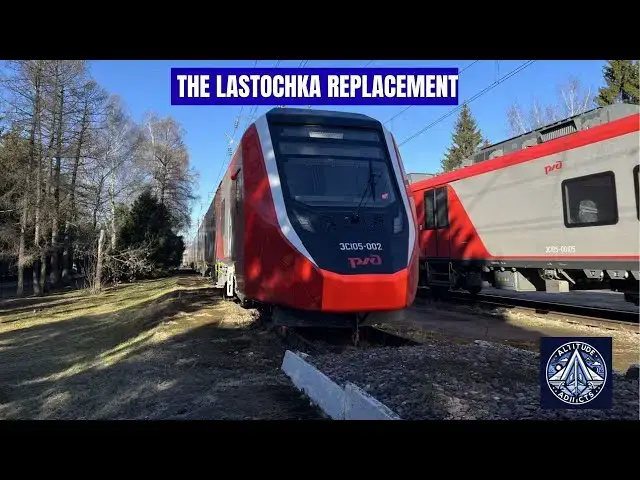
The Finist electric train marks a decisive shift in Russian railway history. Developed as a fully domestic replacement for the Siemens-based Lastochka, Finist represents Russia’s response to sanctions, import substitution, and the need for long-term technological independence.In this video, we break down the origins of the Finist platform, its technical capabilities, passenger comfort upgrades, and how it differs from its foreign predecessor. From its ES104 and ES105 variants to dual-system operation and future autonomous ambitions, Finist is not just a train—it is a strategic infrastructure project.We also explore where Finist is already operating, why it matters for regional and intercity transport, and what it reveals about the future of Russian rail engineering.
#Finist #RussianRailways #RZD #Trains #RailwayEngineering #Lastochka #Siemens #ImportSubstitution #RussianIndustry #HighSpeedRail #EMU #TransportInfrastructure #RailTech #Russia
Be a Member for exclusive privileges - https://www.youtube.com/channel/UCviEFTf1xIPKsjmyF_zvFug/join
Twitter : https://x.com/AltitudeAddicts
Website: https://www.altitudeaddicts.com
Show More Show Less View Video Transcript
0:06
In recent years, Russian railways has
0:09
been undertaking extensive modernization
0:11
of its rolling stock, driven by both the
0:14
pursuit of import substitution and the
0:16
objective of enhancing passenger service
0:19
quality and convenience.
0:21
One of the principal initiatives within
0:23
this program has been the development
0:25
and deployment of the fully Russian
0:27
electric multiple unit Finn, a
0:30
modernized and technologically
0:32
sophisticated train engineered to
0:34
address current passenger requirements.
0:38
The train is now extensively operating
0:40
on routes ranging from suburban lines to
0:42
interreional corridors.
0:45
The name Finnist originates from Russian
0:47
folklore and refers to a legendary
0:49
heroic firebird symbolizing rebirth,
0:52
agility, and power. The name was
0:55
selected through a public poll conducted
0:57
on the official Russian railways website
1:00
with participation from tens of
1:02
thousands of respondents.
1:04
This choice emphasized the transition
1:07
away from foreign platforms toward a
1:09
completely domestic product that has
1:11
emerged as a new symbol of Russian
1:13
railway engineering.
1:16
Before the introduction of Finn, Russian
1:18
railways widely operated the Laska
1:20
electric trains which were based on the
1:22
German Seaman's Desyro platform.
1:26
Introduced during the 2010s, these
1:28
trains were used on suburban and
1:30
interreional roads and became known for
1:33
their speed, reliability, and passenger
1:35
comfort. They were adapted for Russian
1:38
climatic and operational conditions and
1:41
became a familiar site across the
1:43
network.
1:45
Over time, sanctions pressure and the
1:47
withdrawal of seammens from the Russian
1:49
market made long-term support for
1:51
foreign technologies increasingly
1:54
difficult.
1:55
In response, Russian manufacturers,
1:57
primarily Sonara Transport Machines and
1:59
the Euro Locomotives plant, launched a
2:02
fully domestic development program based
2:04
on the ES104
2:06
platform.
2:08
This new approach incorporated
2:10
exclusively Russian traction equipment
2:12
and components.
2:14
The objective was not partial
2:16
localization, but complete import
2:18
substitution with the share of
2:20
domestically manufactured components
2:22
approaching 100%.
2:25
As a result, by the end of 2023, the
2:28
first Finnish electric trains entered
2:31
regular service. These trains formally
2:34
replaced the foreign derived Lasachchka
2:37
within the Russian railways fleet.
2:40
The finished electric train is built on
2:42
the ES104 platform and features a modern
2:45
fivecar configuration.
2:48
It offers an increased capacity of
2:50
approximately 416 passenger seats,
2:53
exceeding that of its predecessors.
2:56
Seating is arranged in a three and two
2:58
layout without face-to-face
3:00
configurations in line with contemporary
3:03
standards for passenger comfort and ease
3:05
of movement.
3:07
The train set includes three lavatory
3:09
modules, which is one more than on the
3:11
last.
3:13
Each seat is equipped with USB charging
3:16
ports and advanced climate control
3:18
systems maintain stable temperatures
3:20
throughout the train. Elevators and
3:23
designated spaces for passengers with
3:25
limited mobility are included,
3:28
significantly improving accessibility.
3:31
Expanded luggage storage areas address
3:33
the evolving needs of modern travelers.
3:37
The maximum design speed of the Finnish
3:39
train is 160 km hour.
3:43
This makes it suitable for high-speed
3:45
suburban and interreional services.
3:48
As a result, Finn occupies a competitive
3:51
position among modern electric multiple
3:53
units intended for medium distance
3:55
routes.
3:57
In addition to the standard ES104
4:00
version, testing has begun on the ES105.
4:04
This dual system variant is designed to
4:06
operate on both alternating current and
4:09
direct current electrified lines.
4:12
Such capability substantially increases
4:14
operational flexibility, particularly on
4:17
routes with mixed power supply systems.
4:20
The first Finnish trains entered service
4:23
on the Sverloofsk railway where they
4:25
replaced aging rolling stock on suburban
4:28
roads.
4:29
This included services linking
4:31
Yakatarenburgg and Kmenskerolski.
4:34
Deployment expanded rapidly and by the
4:36
end of 2024, Russian railways had
4:40
received 16 train sets with additional
4:43
deliveries planned for subsequent
4:45
periods.
4:46
Finist has also proven effective on
4:48
interreional services.
4:51
One notable example is the
4:52
Yakatternburgg to Kirran route where the
4:55
train operates under designated
4:57
interreional service numbers. This
5:00
demonstrates its suitability for longer
5:02
routes and its ability to meet a wide
5:04
range of passenger demands.
5:08
Looking ahead, Russian Railways plans to
5:10
procure additional finished train sets
5:12
during 2025 and 2026.
5:16
These will include both ES104 and ES105
5:20
variants. The trains are expected to be
5:23
deployed across numerous regions
5:25
including Nishni Nograd, Chelabinsk,
5:27
Yaruslav, Leningrad, Rosttov, Perorski
5:30
and Alai regions as well as Bosch
5:32
Cordistan and Dagistan.
5:35
The Finn program emphasizes not only
5:37
technological independence but also a
5:40
strong focus on passenger experience.
5:43
Travel on Finn offers a distinctly
5:45
modern environment aligned with current
5:48
expectations for comfort and
5:49
convenience.
5:51
Passengers benefit from more spacious
5:53
interiors, improved ergonomics, and
5:55
upgraded onboard amenities.
5:58
Particular attention has been given to
6:00
accessibility.
6:02
The inclusion of elevators, dedicated
6:05
wheelchair spaces, and specialized
6:07
facilities allows passengers with
6:09
limited mobility to travel with greater
6:11
comfort and dignity.
6:13
This reflects broader trends in
6:15
inclusive transport planning, especially
6:18
important for large metropolitan areas
6:20
and long-d distanceance regional
6:22
services.
6:24
Development of the Finnest platform
6:26
extends beyond conventional electric
6:28
train designs.
6:30
According to Russia's Ministry of
6:31
Industry and Trade and representatives
6:33
of the railway sector, work is underway
6:36
on an autonomous or driverless version
6:39
of FINST.
6:40
Key development milestones are expected
6:43
to be reached by 2025, marking a
6:46
significant step in the digitalization
6:48
and automation of passenger rail
6:51
transport.
6:52
At the same time, engineers are
6:54
evaluating potential adaptations such as
6:57
hybrid propulsion systems, increased
6:59
onboard autonomy, and solutions for
7:02
operation on partially electrified or
7:04
non-electrified routes. These
7:06
developments are intended to expand
7:08
operational flexibility and reduce
7:11
dependence on fixed infrastructure.
7:14
The introduction of FINST represents
7:16
more than a simple fleet upgrade. It is
7:20
a strategic industrial initiative aimed
7:22
at strengthening domestic engineering
7:24
capabilities and reducing reliance on
7:27
foreign technologies.
7:29
The exit of international suppliers
7:31
accelerated the creation of a fully
7:33
independent platform, demonstrating the
7:36
adaptability of Russian industry to
7:38
external pressures.
7:40
From an economic perspective, the
7:42
Finnish program supports skilled
7:44
employment, reinforces domestic supply
7:47
chains, and advances expertise in
7:49
railway engineering. Over the long term,
7:52
this contributes to the resilience and
7:54
sustainability of Russia's industrial
7:57
base.
7:58
The Finn electric train has emerged as a
8:01
new symbol of Russian railway
8:03
development. Combining modernization,
8:05
passenger comfort, and strategic
8:07
technological independence.
8:10
Operating on both suburban and
8:12
interreional routes, Finn meets current
8:14
transportation needs while laying the
8:16
foundation for future innovations,
8:19
including autonomous rail operations.
8:22
As the fleet expands and deployment
8:24
widens, Finist is set to become a
8:26
central element of Russia's passenger
8:28
rail system for many years to come.
8:34
If you like the video, please subscribe,
8:36
share, and like. Also, please take the
8:38
memberships to encourage us.
#Long Distance Bus & Rail