0:01
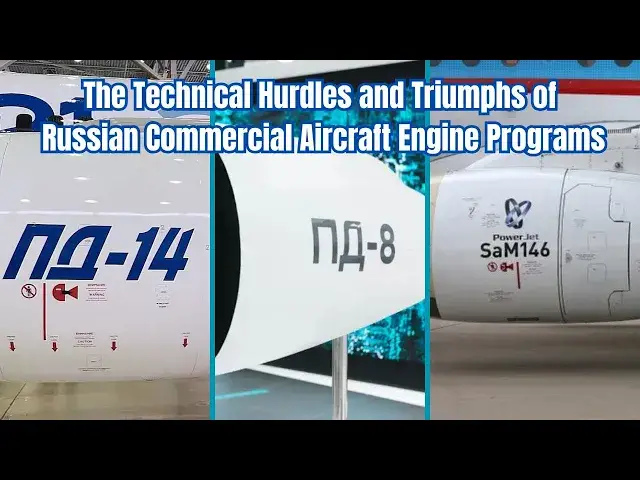
the pd14 its derivative pd8 and the
0:04
internationally developed Sam 146 are
0:07
three of the most intriguing case
0:09
studies in aerospace engineering that
0:11
represent the development of modern
0:13
aircraft engines in Russia different
0:16
challenges in the development of modern
0:18
Aero engines are illustrated by each
0:20
program ranging from technical obstacles
0:23
to the intricacies of international
0:26
collaboration the pd14 is the most
0:28
recent success in the development of
0:30
commercial aircraft engines in Russia
0:32
and it was mainly designed for The mc21
0:36
Airliner this engine is the
0:38
technological foundation for the pd8
0:40
program and represents Russia's return
0:42
to the production of exclusively
0:44
domestic engines for commercial
0:46
airliners the program has successfully
0:49
completed certification and entered
0:51
service thereby establishing a new
0:53
technological foundation for Russian
0:55
engine manufacturing and demonstrating
0:58
the ability to manufacture comp
0:59
comptitive modern turbofan engines
1:02
derived from the pd14 the pd8 is an
1:05
attempt to reduce the size of successful
1:07
technology for smaller aircraft
1:09
applications notably the ssj new
1:12
aircraft the technical challenges the
1:14
development process faced mainly
1:16
centered on the complexity of scaling
1:18
down pd14 technology and meeting
1:21
specified thrust to weight requirements
1:24
these challenges have been significant
1:26
the certification process has been
1:28
exceedingly challenging needing a
1:30
demonstration of reliability that is
1:33
comparable to that of Western
1:35
counterparts while operating under
1:36
shorter deadlines adapting pd14
1:40
Technologies to A reduced scale
1:42
developing domestic components and
1:44
meeting stringent performance targets
1:46
have been the complex tasks that the
1:48
program has had to address in contrast
1:51
the Sam 146 which was created through a
1:54
partnership between Saturn of Russia and
1:56
safron of France represents a distinct
1:59
approach to engine development that
2:01
presents its own set of obstacles the
2:04
program encountered substantial
2:05
structural challenges as a result of its
2:08
organizational complexity the division
2:10
of responsibilities between Russian and
2:12
French Partners necessitated intricate
2:15
coordination which led to increased
2:17
development and production costs the
2:20
program was further Complicated by
2:21
market issues which resulted in higher
2:24
per unit costs that impacted commercial
2:26
viability this was due to the limited
2:29
production number that were a result of
2:31
the ssj100 aircraft's sole application
2:34
particularly evident were the technical
2:36
challenges encountered by the Sam m146
2:39
in its heated section where turbine
2:41
blade durability and coating degradation
2:44
were problematic poor cooling system
2:47
performance resulted in maintenance
2:49
requirements that exceeded
2:51
expectations Heating and Cooling caused
2:53
additional stress on components which
2:56
resulted in operational challenges
2:58
during cold weather performance
3:00
overall durability was also influenced
3:02
by environmental factors the maintenance
3:05
frequency was higher than anticipated
3:07
due to the support and maintenance
3:09
structure which was significantly
3:11
reliant on an international supply chain
3:14
and foreign components clear
3:16
distinctions in the development
3:18
approaches of these programs are evident
3:20
When comparing them the pd14 and pd8
3:24
program are a wholly domestic
3:25
development initiative that emphasizes
3:28
technological Independence and an
3:30
evolutionary design approach in contrast
3:33
the Sam 146 is a prime example of
3:35
international collaboration as it shares
3:38
technology and expertise however this
3:41
collaboration was accompanied by
3:42
inherent dependencies on foreign
3:44
Partners Additionally the technical
3:47
obstacles encountered by these programs
3:49
differ considerably the pd8 challenges
3:52
were predominantly identified during the
3:54
development and certification phases
3:57
with a focus on scaling issues result in
4:00
from the larger design and the need to
4:02
meet new requirements nevertheless the
4:05
Sam 146 encountered its most significant
4:08
issues during inservice operations
4:11
particularly in the areas of heated
4:12
section durability and maintenance
4:15
complications the diverse experiences of
4:17
these engine programs offer valuable
4:20
insights into the intricacy of
4:22
contemporary aircraft engine development
4:24
the pd1 14's success as a foundation for
4:27
future development the pd8 challenges in
4:30
scaling and certification and the Sam
4:33
146s operational and support issues all
4:36
provide a deeper understanding of the
4:37
factors that influence the successful
4:40
execution of engine programs these
4:42
experiences underscore the significance
4:44
of incorporating not only technical
4:46
aspects but also operational maintenance
4:49
and support requirements into the
4:51
planning of engine programs the
4:53
trajectory of Russian Aerospace
4:55
development is still being influenced by
4:58
the lessons learned from these programs
5:00
which underscore the potential and
5:02
challenges of various approaches to the
5:04
development of modern aircraft
5:07
engines the multifaceted nature of
5:09
successful engine development and the
5:11
significance of comprehensive program
5:13
planning that addresses both Technical
5:16
and operational considerations are
5:18
demonstrated by the experiences of these
5:21
programs regardless of whether they are
5:23
pursuing domestic capability development
5:26
or International collaboration now do
5:29
you think Bill a smaller Turbo Jet is
5:31
more challenging than a medium or large
5:33
engine let us know in the comments
5:36
please like and share our videos and
5:38
subscribe to our Channel please also
5:40
take membership of our channel to