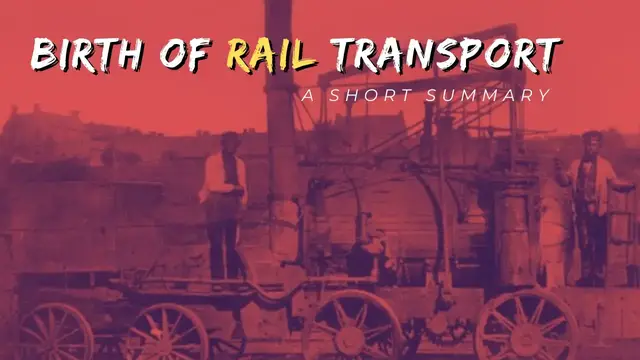

The Birth of Rail Transport.
Nov 3, 2023

The birth of rail transport, also known as the railway or railroad, can be traced back to the early 19th century in England. Prior to this, transportation of goods and people was mainly done through horses, carts, and boats.
In 1804, an Englishman named Richard Trevithick built the first steam-powered locomotive, which was used to haul iron and coal along a short track in Wales. However, it wasn't until the development of the steam engine by George Stephenson in the 1820s that rail transport began to take off.
In 1825, the Stockton and Darlington Railway opened in England, becoming the world's first public railway to use steam locomotives. This was followed by the Liverpool and Manchester Railway in 1830, which was the first intercity railway to carry passengers.
The railway revolutionized transportation and helped to fuel the Industrial Revolution by making it easier and cheaper to transport goods and raw materials. It also led to the development of new technologies such as signaling systems and track maintenance equipment.
Today, rail transport remains an important mode of transportation for both goods and people, with high-speed trains and bullet trains connecting cities across the world.
Show More Show Less #Books & Literature
#Shipping & Logistics
#Freight Transport
#Rail Transport
#Radio Control & Modeling
#Model Trains & Railroads
#Long Distance Bus & Rail
#Transportation