Up next in 10



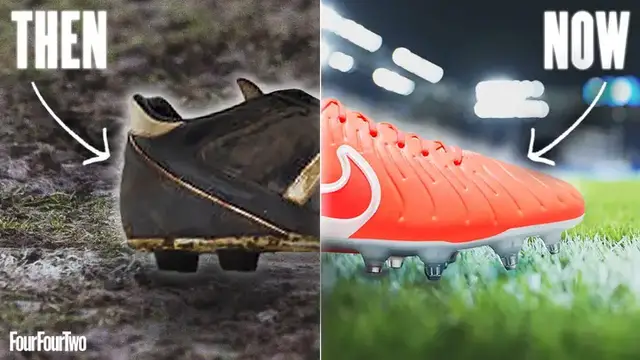
The football boot business is a money spinning global phenomenon. But with demand for new models and constantly developing technology, other factors are also dictating how and where boots are being made. From environmental pressures, to strategic moves and more - these are the the real reasons leather football boots are dying!
Show More Show Less View Video Transcript
0:00
Leather photo boots used to be king. Every legend from Pelé to Beckham to Ronaldinho wore them
0:04
But if you look at today's boots, there's almost zero leather. Nike killed it, Puma killed it
0:08
and now even Mizuno are phasing out the most famous natural material of all, kangaroo leather
0:14
But why our brand sacrifice is tradition? Today we're diving into the four key reasons around
0:18
the switch. This is why the Leather Photo Boot is dying. The best-selling Leather Photo Boot of
0:25
all time is the Adidas Coppa Mundial, a boot traditionally made in Germany from kangaroo
0:29
leather. To many, it is more than just a boot, but a symbol, class, simplicity, tradition. Models
0:36
like the Puma King and the Lotto Stadio evoke similar feelings, and the icons until about the
0:40
90s likely wore kangaroo leather boots, whether it be the aforementioned or boots like the Predators
0:45
or the Nike Premiers. But times change and technology progresses, and the first kind of
0:50
move away from leather was based primarily in innovation. Even the most ardent of leather for
0:55
boot lovers would accept that the material does have a tendency to do things like retain water or
0:59
potentially to overstretch both obviously undesirable for elite performance products like football boots the response in addition to of course better quality leather was to build lighter
1:09
better performing materials and arguably what developed was a material divide based on types
1:14
of boots boots built for speed aimed at being tech forward such as the nike mercurial adidas
1:19
f50 were built with thin lightweight materials and boots such as the nike tmpo or the adidas
1:25
Predator with less emphasis on these things were able to continue to be made from leather
1:29
This wasn't hard and fast as there were iterations of both the Tien Bo and the Predator that were made
1:34
from synthetic materials. As the trend of lightweight boots continued and intensified
1:39
the distinction became less and less clear. And although the kind of race we had about a decade
1:44
ago with brands seeming to kind of like compete to make the lightest boot ever seems to be over
1:50
boots are clearly significantly lighter and less bulky than they were even 20 years ago
1:54
meaning inevitably leather has been utilised less. Technology has also allowed brands to develop materials that imitate the fit and feel of leather but evite some of the downside The Nike CTR 360 was extremely popular even leading to a remake of the boot and this featured a Kanga light leather aimed at replicating the feeling of kangaroo leather To this day there
2:12
are people who don't even realise that that boot wasn't made from leather at all. In recent years
2:16
some of these leather alternatives have really picked up steam with the Silky Rat from A6 being
2:20
the favourite of many and Puma recently releasing the latest Puma clean with Total Touch Plus
2:24
replacing the K-Better that was first introduced when the brand moved away from leather in 2023
2:29
Recently, Nike unveiled the Nike Tiempo Maestroise HQ in Portland and the tech leather that makes this up has been extremely well received
2:36
This is particularly significant off the back of some of the negative response to the Tiempo Legend 10
2:40
the first since Nike decided to do away with leather around the same time as Puma did. If brands are able to engineer products with all of the upsides of leather
2:47
but with all the downsides, then there's no real reason to use it. The question from many, of course, is whether these materials are actually able to replicate leather
2:54
and whether they do so to an extent that's great enough to justify their existence and the exclusion of leather
3:01
Natural leather is, of course, an animal product. Care leather has been so branded largely to shy away from the fact that it is, in fact, kangaroo leather
3:08
At a time where there's pressure on brands to act ethically and in a way that respects the environment
3:13
there's inevitably pushback on the use of a material that necessitates the death of animals
3:17
Cynics may say that the concern that brands have with the ethical element of anything
3:21
is driven more by needing to be seen to have these as a priority than the actual concern
3:25
But either way, it makes a difference and it means that leather has been used less as its use has become harder to justify, particularly in the face of pressure from activist groups
3:33
We have also seen the emergence of brands that are concerned with these ethical questions
3:37
most notably Soquito. The Soquito de Vista Vegan was the first boot ever to be certified vegan
3:42
and the brand has followed up with the impressive Scudetta model. They now boast an impressive and ever-growing list of investor athletes
3:48
including the likes of Millie Bryant and Ashley Westwood. that the brand has been able to manufacture elite boots
3:52
not just without leather but without animal products at all increases the scrutiny on bigger brands with bigger budgets
3:57
whose failure to do so then begins to look a little bit more like a deliberate choice
4:02
This is something that won have gone unnoticed by said bigger brands and will likely then play a greater role in the development of all boot tech going forward The pressure from activist groups and societal attitudes in general has a wide reaching impact
4:14
Tied to ethical concerns of the user level are changes in law that undoubtedly have played a role in the changing approach from brands, particularly in the last few years
4:21
A law was introduced in California in 1971 outlawing the import and sale of kangaroo products
4:27
but a moratorium meant that these could be traded in the state from 2007 until in 2015 when the ban
4:33
was reimposed. In 2020, the government of California admitted that it had been unable to enforce the ban
4:39
and there were calls from the Centre for Humane Economy for a crackdown. Obviously the US market
4:43
is massive but the California market specifically is significant with it being the largest single
4:48
market in the world for the boost. Releasing models that simply cannot be sold in their biggest market
4:53
is clearly an unattractive proposition for any brand. So for this, the lead to a transition away from kangaroo leather is unsurprising
4:59
There is also the possibility or indeed probability that other states and nations may follow suit with similar legislation
5:05
making the incentive for brands to get ahead of the game in terms of alternatives all the greater
5:10
Lo and behold, the Kangaroo Protection Act 2025 has been proposed and would ban the import and sale of leather across the United States
5:19
If this does eventually take effect, any boot brand still reliant on kangaroo leather would immediately see a significant drop in their
5:25
market share with the large economy in the world a no-go zone for a large section of its products
5:30
This may even have played a role in Mizuno arguably the biggest proponent of kangaroo
5:34
leather in the market announcing a letter to the center for a humane society that they were to
5:39
phase out the material and instead use more ethical alternatives earlier this year. The
5:44
picture that begins to develop is one where leather appears to be more of a hassle than it's
5:48
work for brands. Adidas' role in this is very interesting. While Nike and Puma have left it
5:53
behind, Adidas continues to use leather, but in recent years has begun making boots from
5:57
calfskin leather rather than kangaroo leather. This decision is one that bridges two of the
6:02
reasons we are seeing brands make these moves Much of the legislation both proposed and enacted centers on kangaroo leather specifically so the use of calfskin leather allows brands to continue to make boots in a similar fashion to that which people love but to neatly sidestep the changes in the law We even now see calfskin leather used on limited edition remakes of Adidas
6:19
boots from yesteryear and on the Copa Mundial. But this subtle change has allowed Adidas to at
6:24
least maintain the appearance of business as usual in the midst of significant change
6:29
Substituting K-Level for calf leather also allows for the boots to be made more cheaply. So when
6:33
sold at the same price represents a significant increase in margin the leather used on models such
6:38
as the modern copper range and boots such as the rotiro predator 24 and obsidian strike predator 25
6:44
are of a quality and softness that makes them it makes it irrelevant whether they kangaroo or cow
6:48
but then the cost factor is also then likely to partly drive brands to create their own leather
6:53
alternatives rather than continuing to buy leather for their football boots an interesting spanner
6:58
in the works has come in the shape of the puma king platinum pantera negra recently released to
7:03
celebrate the legacy of Portuguese legend Eusebio. As mentioned Puma took the step of moving away from
7:08
using leather in 2023 but the recent special edition release is made from you guessed it
7:13
leather though calf leather rather than kangaroo. This has made Puma stance on leather in boots
7:17
unclear and also heightened anticipation of the just released remake of the iconic Ronaldinho
7:23
Nike Tiempo Legend boot from 2005. Boot lovers looked on with bated breath to see whether this
7:28
boot would be made from leather just as the original was and the remake in 2015 that the
7:33
latest release is molded on. The answer was no, as the boot is made from a version of Nike's new
7:38
tech leather, signaling emphatically that Nike appeared to completely be done with animal leather
7:42
even if Puma may not be. It's clear that going forward we'll continue to see less and less boots
7:47
made from leather as all of these factors, cost, societal attitudes, law and technology combined to
7:52
make the use of leather harder and harder for brands to justify as more than anything other
7:57
than a niche offering. In the end, it's of course primarily a business decision. So despite the pain
8:03
cries of traditionalists up and down the country and indeed all over the world, leather will continue
8:07
to be on the way out. So what do you think of leather boots? Do you like them? Not like them
8:11
Don't care? Let us know in the comments and I'll see you soon
#Sports
#Sporting Goods
#Soccer
#Soccer Equipment