Up next in 10



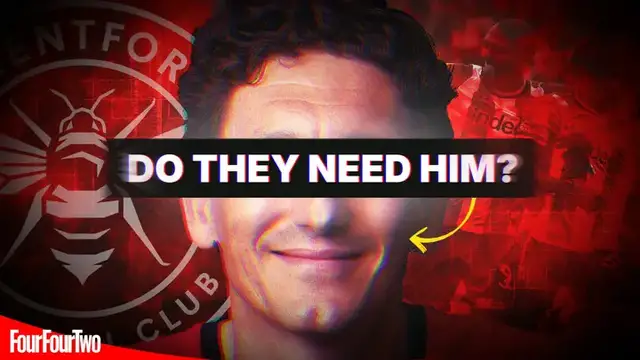
From closing their academy to promoting from within, Brentford has consistently prioritized their analytical model over tradition. We explore how this unique philosophy challenges the very essence of modern football management.
Show More Show Less View Video Transcript
0:00
Back in February, just eight months into the job, Brentford boss Keith Andrews has handed a
0:04
six-year contract extension. Whatever he's doing, it's working, and it's allowed him to follow in
0:09
the footsteps of those Brentford managers before him, who also effortlessly stepped into the role
0:14
So either Keith Andrews is a genius nobody saw coming, or Brentford have built something so good
0:19
behind the scenes that it might not matter who stood on the touchline. Because right now, in
0:24
2026, their data department is good enough to tell them who to sign, how to set up a corner routine
0:29
and how to bypass the opponent's press and so much more than what's actually left for the manager to do
0:35
Keith Andrews, this isn't an indictment on your managerial ability, but I do have a big question
0:40
Do Brentford even need a manager? First off, let's look at the club themselves from an identity perspective
0:50
Brentford owner Matthew Benham has made a career of building ytical data-driven models
0:54
so it's no surprise he implements similar strategies at the club. But you already know the broad strokes of this in the transfer market
1:01
Recruitment driven by data, not reputation, prioritizing value over vanity. Be honest, who knew a huge amount about Nbermo, Visser, Igor Thiago or Sangare before they even joined
1:11
Think less of a scouting department with a laptop and a subscription to a stats website
1:15
but more of a research institute that happens to have a football club attached to it. They're using their expertise to cook up the sort of insight that is baked directly into how the team plays
1:23
in whichever way works best for them. just look at the numbers from Keith Andrews first full season in charge. First for the most long
1:31
balls in the entire league, 47.4% average possession, lower than Spurs, and the fifth
1:36
worst record for shots attempted. Yet, an XG higher than Liverpool's, the second highest goal
1:42
scorer in the league in Igor Thiago, and an impressive ninth place finish, missing out on
1:46
European football on goal difference. There's a reason that Brentford are one of the poster
1:50
children for the antidote to modern football. Despite those numbers seeming fairly contradictory
1:55
or random though, this isn't accidental. That's a deliberate modelled answer to the question of how
2:01
to win football matches. It's moving the ball into the most dangerous area of the pitch as efficiently
2:05
as mathematically possible and the same thing goes for their recruitment. Players are identified not
2:11
only for their individual ability but their ability to slot into the system that's been
2:15
engineered with the structure barely changing. Amid their 2024 injury crisis at fullback
2:20
then boss Thomas Frank praised the club's business in finding versatile, capable players
2:25
and the work from director of football Phil Giles, saying, So if the model is already dictating how the ball moves who gets recruited and how the structure holds together regardless of personnel I wondering where does it stop Because there a version of this club history
2:54
that tells you Brentford genuinely don't have a ceiling on how far they'll let their model
2:58
override tradition. Back in 2016, in the middle of building all this in the championship
3:08
Brentford closed their entire academy in favor of a B team. They didn't restructure it. They
3:14
didn't scale it back. They closed it on the basis that developing homegrown talent from age eight
3:19
simply wasn't an efficient use of resources in their aims of promotion and more revenue compared
3:24
to identifying undervalued data verified talent already out there in the football pyramid
3:29
Think about how radical that is. Every club in English football treats this academy as untouchable
3:34
it's heritage, it's community, it's the stuff clubs put in their mission statements and the fans go
3:39
absolutely wild for when a youngster makes the first team. Brentford went about the number
3:43
crunching as rigorously as Michael Coyote prepares for long throwing, bashed their club shop calculator
3:48
about a bit, then shut it down like sceptre. Upon reaching the Premier League they then allocated
3:52
the revenue to reopen it in order to adhere to Premier League rules, adhere to UEFA rules if they
3:57
ever wanted to compete in European competition and to make more money with the demand for British
4:01
players at an all-time high from within the UK due to post-Brexit rules limiting foreign player
4:06
registration. But the fact that a club was willing to do something as extreme as axe its own academy
4:12
well the next question basically writes itself. If tradition can lose to the future in all aspects
4:17
of the club's operations, why would something as integral as the managerial hot seat be treated
4:22
any differently? And as it turns out, it might not be. Here's part of the Brentford club's statement upon sacking manager Mark Warburton in 2015
4:35
As part of a remodelling of the club's football management, a head coach will be appointed to work alongside a new sporting director
4:42
The club wants the new structure to be a long-term way of working, which is independent of whoever is in the head coach role
4:49
So, this explains why when Dean Smith had Brentford pushing for the playoffs before leaving for Aston Villa in 2018
4:55
Brentford didn't go shopping for an experienced championship name with a reputation to sell to the fan base
5:00
They promoted his assistant, a largely unknown Danish coach called Thomas Frank, from within
5:06
Frank then spent seven years turning Brentford into one of the most respected, tough-to-beat sides in the Premier League
5:11
before putting in the sort of shift at Spurs that might make him regret ever having left the GTAC in the first place
5:17
But that's a whole other topic. As he swapped West London for North London, Brentford yet again stuck to their guns and promoted from within
5:23
bringing us to the aforementioned Keith Andrews On paper it might look a little reckless First job replacing arguably the club best manager in recent history having just sold your goal scorers in Visor and Bermot and your club captain in Christian Norgar Every football instinct says the appointment should have blown up in their faces within a few months
5:41
Instead, Andrews took Brentford to ninth in the Premier League, plus a Carabao Cup quarter-final
5:46
and an FA Cup fifth-round run, and he's followed that up with a good start to the new season
5:50
including a 3-0 demolition of a Tottenham side that has spent close to £300 million rebuilding
5:55
over the summer. Smith to Frank to Andrews, it's not three separate stories. It's the same story
6:00
told three times over, where every time Brentford chose continuity, the internal candidate who
6:05
already understands the machine. And that pattern only makes sense under one explanation. The
6:11
tactical identity of the team doesn't live in the manager's head. It lives in the club. The manager
6:16
is just the person the club trusts to carry it forward without breaking it. So if the club already
6:22
knows their transfer policies, their identity, the shape of the team, increasingly the optimal
6:26
way to set up against any given opponent, which most teams do these days with extensive scouting
6:31
ytical departments. What is Keith Andrews actually doing? Now I must state, this isn't a
6:40
shot Andrews specifically, never in a million years. It's a genuine structural question about
6:45
where the sport is heading and bear with me because we're about to talk about something that
6:49
there's also a real-world problem too. Technology and the obsession with optimisation
6:54
We've already established that the club is founded on predictive ytical models from owner Matthew Benham
6:59
supplemented by the football minds that know the intricacies of the game. But if that infrastructure can already tell recruitment
7:05
exactly who represents value to a decimal point, can already model which passing pattern or set-piece routine
7:11
produces the highest expected goals against a specific opponent's defensive set-up, then picking a starting XI is, on paper
7:19
Technically, just one more optimization problem. 11 names, one formation, thousands of historical data points on players' skill
7:26
form, history, fatigue, the opponent, this precise moment of the season, perhaps
7:31
It's not remotely ridiculous to imagine the model spitting out a highly competent lineup
7:35
with zero human input at all. So ask yourselves honestly, what's actually stopping that from happening completely
7:42
If the technical capability already exists, why hasn't a club just handed the info to an algorithm
7:48
them and let that pick the team and if any club was going to do that based off what I've explained
7:53
why wouldn't it be Brentford? The truth is that the further the club and football or even society
8:02
in general put their trust and work into computer models the more they'll need to lean into the
8:06
human essence of things to counteract it and that that is exactly where Keith Andrews comes in
8:12
He has two massive tasks and arguably the real reasons for his touchline training ground and dressing room presence The first is communication A model can tell you which centre forward statistically
8:23
is the best source of goals, but what it can't tell you is that he rolled his ankle in the warm
8:28
up and didn't mention it, that the away end has gone quiet and the atmosphere is flat
8:32
or that your right back is one reckless tackle away from losing the plot completely and getting
8:36
sent off. None of that shows up in a data set because it's happening in real time. It shows up
8:41
in a tense dressing room, in gut feelings, in eye contact, in body language, in the 30 seconds
8:46
before kickoff when the manager decides whether or not to say something or nothing at all
8:51
That's not a modeling problem the club can eventually solve with better data. That's a fundamentally human problem and it needs a human answer every single week
9:01
The second one is translation. Somebody has to take the cold, precise output of a data department
9:06
the best angle to press from in the first 10 minutes, or how many short passes to make down
9:11
the left-hand side before the ideal switch becomes available and translate it into easily digestible
9:17
clear and concise instructions that the 11 out on the pitch can personally believe in
9:22
execute under real pressure and trust each other enough to do as well. Those two things are Andrew's
9:28
down to a team and it's completely by design. Explaining why Andrew's got the job over more
9:33
experienced outside candidates, the director of football said, as a leader, he's a very good
9:38
communicator. He's a perfect fit for what we're looking for. He understands the players in the
9:43
building, the principles, and the way we've played and trained under Thomas Frank. He will bring his
9:48
own evolution, but it's not starting from scratch. We're not trying to change everything and go in a
9:53
totally different direction. This all then brings us right back to the start of this video and the
10:02
title. And the honest answer isn't quite the one the data-obsessed post-apocalyptic football version
10:07
of this story wants you to land on. Do Brentford even need a manager? Yes, absolutely. Just not for
10:16
the reason that the football ecosystem has spent decades assuming. They don't need a tactical
10:20
mastermind reinventing the game plan from scratch every single week. The data models have already
10:25
done the heavy lifting on that front. What they need and what Smith and more so Frank and definitely
10:30
Andrews have now each supplied in turn is a human being who can take a brilliant plan built in the
10:35
office and put it into practice, on the training pitch and at the exact moment when it matters
10:40
most in the Premier League. Brentford haven't proven that a football club can be run without a manager, they've
10:45
proven something far more interesting, that the job itself has quietly changed shape underneath
10:50
everyone's feet. From tactical masterminds to a human translator standing between a machine that can calculate
10:56
almost anything and a group of players who still need someone in the room to make them
11:02
believe it
Sports