Up next in 10


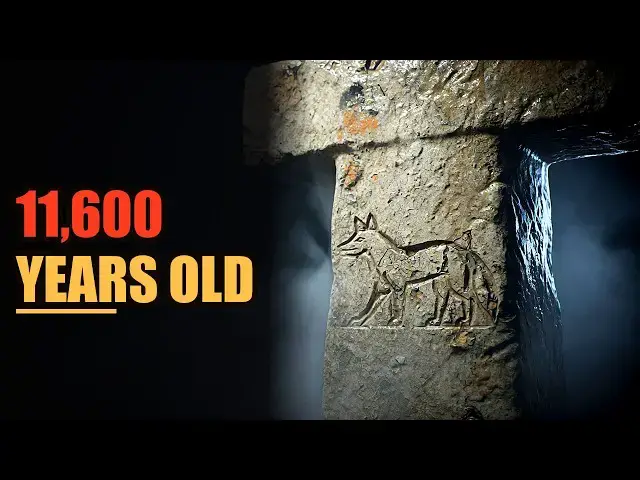
In October 1994, Klaus Schmidt walked a limestone hill near Şanlıurfa and recognised T-shaped stones a 1963 survey had written off as grave markers. Enclosure D plaster dates to about 9745–9314 BCE. The people who cut those pillars had no metal, no pottery, and no domesticated wheat in the first rings.
This is public-record archaeology, not a lost-empire story. Dates are calibrated ranges. Labour and bone counts are published estimates.
0:00 The stones they walked past
0:48 October On The Hill
2:02 Two Stones In The Middle
3:18 How You Cut Ten Tons
4:28 What They Carved
5:40 The Temple Before Farming
6:55 If You Believe It Happened
8:05 The 2017 Cut
9:22 What Does Not Happen Tomorrow
10:18 The Weight That Stays
#GobekliTepe #AncientHistory #Archaeology #Neolithic #Turkey #Prehistory #UNESCO #LifeIsEasy
Disclaimer: Figures use about where the published range is wide. This is not a claim of a lost ice-age empire, non-human builders, or a single inventor of religion.
Visuals are original AI-generated stills. Audio may be synthetic. Not medical, legal, or financial advice.
Show More Show Less View Video Transcript
0:00
October 1994, a German archaeologist
0:03
named Klaus Schmidt walks a limestone
0:05
hill about 15 kilometers northeast of
0:08
Shanurfa in southeastern Turkey and
0:11
stops at stones a 1963 survey had
0:14
already seen and written off as grave
0:16
markers. Those slabs are the tops of
0:19
T-shaped pillars. The central pair in
0:22
the best preserved circle later measured
0:24
about 5 1/2 m tall and about 8 to 10
0:27
tons each. Organic material in the wall
0:30
plaster of enclosure D dates to about
0:32
9745
0:34
to 9314 B.CE. That is roughly 11600
0:39
years before you. Stonehenge is about
0:41
6,000 years younger. The Great Pyramid
0:43
at Giza is about 7,000 years younger.
0:47
The people who cut these stones had no
0:49
metal, no pottery, no writing, and no
0:52
domesticated wheat in the layers that
0:54
hold the first rings. That is the turn.
0:57
The monument is older than the farm.
1:00
October on the hill. In 1963, a joint
1:05
team from the University of Chicago and
1:07
Istanbul University surveyed this ridge
1:10
under Holllet Chambell and Robert
1:12
Braidwood. They saw flint in a density
1:15
that should have stopped anyone. Peter
1:17
Benedict logged limestone slabs and took
1:20
them for cemetery markers. The hill is
1:23
called Gobeci
1:25
potbelly hill about 800 meters above sea
1:28
level looking over the Haron plane.
1:31
Schmidt had spent years at Neville where
1:34
smaller teapillars had already come out
1:36
of a settlement later drowned by a dam.
1:40
In October 1994 he walks this hill with
1:43
that picture in his head. He does not
1:45
see graves. He sees the heads of
1:47
megaliths sticking through the soil.
1:50
Digging starts in 1995 with the Sha
1:54
Lurfa Museum and the German
1:55
Archaeological Institute. You are on a
1:58
mound about 300 m across and up to 15 m
2:02
high, about 9 hectares, and the whole
2:04
thing is people, rubble, bone, flint,
2:08
broken grinding stones, a tell made of
2:11
work. Two stones in the middle. If they
2:15
let you into enclosure D, you walk an
2:18
oval about 14 to 20 meters across on the
2:20
inside. A ring of about 11 Tpillars sits
2:23
in a thick stone wall with a bench
2:26
running between them. In the center
2:28
stand two taller pillars numbered 18 and
2:31
31 set on pedestals carved about 20 to
2:34
30 cm out of the bedrock floor. Those
2:37
two have arms in low relief, hands, a
2:40
belt, a loin cloth, no faces. The
2:43
crossbar of the tea is a blank head. The
2:46
surrounding pillars run about 3 to four
2:48
meters. Foxes, snakes, birds, boar, wild
2:52
cattle. Pillar 43, the one people call
2:55
the vulture stone, carries a vulture, a
2:58
scorpion, and a human body with the head
3:00
gone. Enclosures A through D were the
3:03
first circles opened in the main trench.
3:05
A has snakes. B has foxes. C has boar. D
3:10
is the richest and the oldest dated.
3:13
Magnetometry and ground penetrating
3:15
radar suggest about 20 large enclosures
3:18
still under the mound and on the order
3:20
of 200 pillars. As of 2021, about 10% of
3:24
the site is excavated. You are looking
3:26
at a sample. How you cut? 10 tons. The
3:30
quarry is the same limestone plateau
3:33
about 100 to 500 meters from the rings.
3:36
You do not float a stone from another
3:37
country. You pick a bed, cut a channel
3:40
with flint, drive wooden wedges, and
3:42
free a tea. An unfinished pillar still
3:45
lies on the western plateau, about 7 m
3:49
long, about 50 tons if it had been
3:51
finished, abandoned in the cut. The
3:54
central pair that made it into enclosure
3:56
D weigh about 8 to 10 tons. A 1917
4:00
account from the island of NAS in
4:02
Indonesia had 525 men hauling a smaller
4:06
megalith about 3 kilometers in 3 days on
4:09
a wooden sledge. That is not a
4:11
reconstruction of Shanurfa. It is the
4:14
labor math. If you have no wheel, no
4:16
metal, and no pack animal trained for
4:18
this. You show up in numbers. You eat.
4:22
You pull. You set the stone in a socket
4:25
cut from living rock. Then you carve the
4:27
fox while the limestone is still the
4:29
color of bone. What they carved. The
4:32
animals are the dangerous and the eaten.
4:34
Cut in relief so a hand can follow the
4:37
outline in low light. Snakes coil up the
4:40
shaft. A fox stretches along a belt.
4:43
Orox, the wild cattle with horns that
4:45
could open a man. Cranes. Vultures.
4:49
On pillar 43, the vulture holds a round
4:52
shape on a wing. A scorpion sits under a
4:55
headless human and a row of handle
4:57
shapes runs the top like bags nobody has
4:59
explained. Zoo archaeology on the bone
5:02
dump is blunt. Gazelle dominates about
5:05
58% in the published counts, then Arox
5:08
at about 18%, then wild boar and the
5:11
rest. The gazelle in this region moved
5:14
seasonally. Midsummer into autumn, the
5:16
herds would have been on the Piedmont.
5:18
That is when you could feed a crowd.
5:20
Analysts went through 7,268
5:23
grinding tools from this mound, more
5:26
than any other published Neolithic
5:28
assemblage of this kind, and most of
5:30
them were used on cereals that were
5:32
still morphologically wild. No storage
5:35
silos on the scale of a later farming
5:37
town. Food for now, a work feast, not a
5:40
granary.
5:42
The temple before farming.
5:45
Here is the famous version told as if
5:47
you are on the ridge while it is
5:49
happening. Bands of hunters climb the
5:51
hill. They have no farms, no pottery, no
5:54
village with a street. They raise a
5:56
temple anyway. People come in from the
5:59
plane when the gazelle run. They feast.
6:02
They carve. They stand between two
6:04
faceless stone persons. Then when the
6:07
use is over, they bury the whole
6:09
enclosure on purpose under hundreds of
6:12
tons of rubble, bone, and broken tools.
6:15
A ritual closing. Klaus Schmidt called
6:18
it a sanctuary, a pilgrimage site, the
6:21
world's first temple. He said the old
6:23
textbook had the sequence backwards. The
6:26
textbook said first, surplus second,
6:29
priests and monuments third. Schmidt
6:32
said the monument came first and farming
6:35
followed because you needed bread to
6:37
feed the crews. In 1997, Manfred Hoon
6:40
and colleagues published a genetics
6:42
paper in science tracing all
6:44
domesticated eorn wheat to wild stands
6:48
on Caracada, a volcanic massif about 30
6:51
kilometers from this hill temple on the
6:54
ridge. Wheat on the next mountain. The
6:56
story clicks so hard it goes around the
6:58
world. If you believe it happened, if
7:01
you believe it happened that way, the
7:02
last 11,000 years of classroom order
7:05
reverse. First you get shared pictures
7:07
in stone, then you get fields, then you
7:10
get towns. And it gets worse for the old
7:12
model because the early layers really do
7:15
lack domesticated plants and animals. No
7:18
pottery, no metal, no plow. The dates
7:21
are not a blog rumor. The plaster sample
7:24
from enclosure D, laboratory code
7:26
KIA44149,
7:28
sits at 9984 plus or minus 42
7:31
radiocarbon years, which calibrates to
7:34
97405 to 93 BCE at 95% confidence. That
7:39
is pre- pottery Neolithic A. Schmidt
7:42
died on 20th of July 2014 of a heart
7:44
attack while swimming in Germany. He was
7:46
60. UNESCO listed Gobeci in 2018 as one
7:52
of the first manifestations of
7:54
human-made monumental architecture. The
7:56
phrase world's first temple did the
7:59
rest. That famous version is not a
8:01
cartoon. It is what the first 20 years
8:03
of the trench seemed to say. The 2017
8:06
cut. Then the part that actually
8:09
matters. In 2017, crews cut deep
8:12
soundings to plant the steel columns of
8:14
a protective roof. Those holes were
8:17
engineering. They became evidence. Lee
8:19
Clare Morates Kinsel and colleagues at
8:22
the German Archaeological Institute
8:25
started publishing a messier formation
8:27
history. The smaller rectangular
8:30
buildings Schmidt had treated as later
8:33
lesser shrines look like houses,
8:35
hearths, grindstones, rainwater
8:38
channels, the debris of people cooking
8:40
and sleeping and repairing. People were
8:43
living on this hill, not only visiting
8:45
it. The special circles still sit in the
8:48
hollow. The houses climb the slope
8:50
around them. Over centuries, the houses
8:52
stack. Rain hits a steep tell, a slide,
8:56
rubble, bone, and old tools pour into
9:00
enclosure D. Some packing by hand still
9:03
happened. The fill is not clean silt. It
9:06
is full of feast waste and flint. But
9:09
the tidy ritual burial of a pure temple
9:11
is no longer the only reading. Clare has
9:14
said he does not buy Gobeclete as the
9:17
smoking gun of the Neolithic. He reads
9:20
it as a last stand of hunter gatherers
9:23
used and repaired for centuries while
9:25
farming took hold on the plains below.
9:28
The special buildings are still special.
9:30
They are not the whole hill. What does
9:33
not happen tomorrow? Your textbook does
9:37
not get pulped in the morning. Wheat was
9:40
still domesticated in this corridor.
9:42
Karakada is still about 30 kilometers
9:45
away. Communities across the fertile
9:47
cresant still move from foraging to
9:50
fields through the 9th and 8th millennia
9:52
B.C.E. Gobocllete does not prove a lost
9:56
ice age empire, a single inventor of
9:58
religion or visitors from anywhere else.
10:01
It does not make Stonehenge a copy and
10:04
it does not redate the pyramids. About
10:07
90% of the mound is still in the ground.
10:09
So any speech that explains the whole
10:11
site is running on a corner of the
10:13
evidence. Occupation tapers out around
10:16
8,000 B.CE which is when hering and
10:19
farming are becoming ordinary in the
10:20
region. You can argue that coincidence.
10:23
You cannot turn it into a prophecy. The
10:25
hill does not erase Jericho or Tatal
10:28
Hoyuk later or the slow ugly work of
10:31
saving seed. The weight that stays.
10:35
Stand between the two central pillars
10:37
anyway. 5 1/2 m 8 to 10 tons arms folded
10:41
above a carved belt. Around you a ring
10:43
of animals that can kill you. Cut by
10:45
people whose wheat was still wild about
10:48
11,600 years ago on a hill a survey
10:51
walked past in 1963.
10:53
Schmidt was right that this should not
10:55
exist in the old sequence.
News