0:00
Do you remember schedule F? That first
0:02
came up, I guess about six years ago now
0:05
under the first Trump administration.
0:07
Well, as you probably know, it's back
0:10
and it's back in force under the second
0:12
Trump administration and it's taken
0:14
another sign significant step forward
0:17
this week when President Trump issued a
0:19
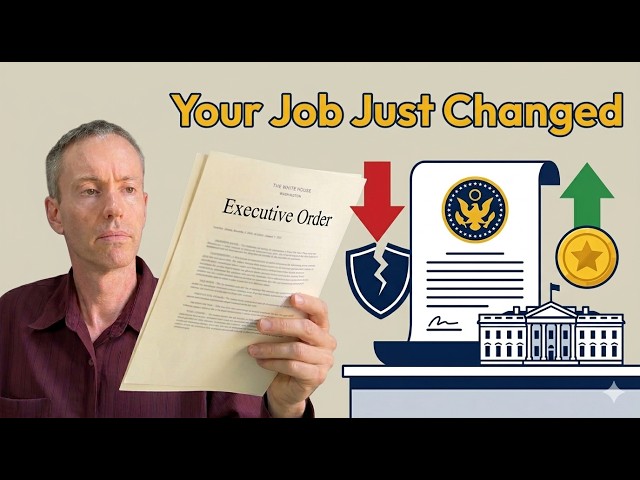
new executive order. I'm gonna go over
0:21
the highlights of that with you right
0:23
now because it has the potential to
0:26
impact uh or to have a significant
0:28
impact on the federal employees whose
0:30
jobs it will apply to. Here are the
0:35
On June 3, that was uh let's see,
0:37
Wednesday of this week. I'm recording
0:39
this on Thursday, June 4th, President
0:41
Trump signed an executive order and it
0:44
will affect about 8,000 senior federal
0:47
employees. That's account according to
0:49
Reuters. And there are two big things it
0:52
does. It will make these federal
0:53
employees easier to fire. However, it
0:56
will also set up a bonus pool to reward
1:00
um top performing federal employees who
1:02
are impacted by this. So, what's
1:04
changing under this order? It's moving
1:07
um a group of named positions into
1:10
schedule policycareer.
1:12
That's what was formerly known as
1:15
schedule F. In the second Trump
1:16
administration, it's called schedule
1:18
policy career. So, pretty much the same
1:20
thing, just a different name. And um
1:24
traditional civil service removal
1:26
protections will no longer apply to
1:28
these 8,000 or so employees. An agency
1:31
only needs to provide written notice to
1:33
fire someone. So, in essence, it just
1:35
makes it easier to uh fire employees for
1:41
And so there won't be any more lengthy
1:43
um performance improvement plans, appeal
1:48
that sort of thing. But there are four
1:51
grounds for removal. Poor performance,
1:53
misconduct, corruption, or subversion of
1:56
presidential directives.
1:59
And as justification for this, um the
2:01
White House issued a fact sheet about
2:03
the executive order. And one of the
2:06
things in this fact sheet is it cited a
2:08
poll as a basis for why uh the Trump
2:11
administration is doing this and why
2:13
they feel it's necessary. There was a
2:16
poll that indicated a significant number
2:18
of senior federal employees in the
2:20
Washington DC area said they would
2:22
ignore a lawful order from President
2:24
Trump that they considered to be bad
2:27
The fact sheet on the executive order
2:29
states, quote, "Federal employee removal
2:32
procedures are lengthy and burdensome.
2:34
Removals and subsequent appeals often
2:37
take a year or more to process. As a
2:40
result, agencies seldom remove career
2:42
employees, even at senior levels,
2:44
including for egregious conduct or
2:46
subversion of presidential priorities.
2:49
The fact sheet then goes on to add,
2:51
quote, officials must be able to hold
2:54
policymaking career employees
2:55
accountable for their performance and
2:57
conduct in order to operationalize the
3:00
policies that voters elected them to
3:02
pursue. So that in essence is the
3:05
reasoning behind this executive order.
3:08
The the bonus pool, I wanted to talk
3:10
about that a little bit too. Um in
3:13
addition to making it easier to fire
3:15
these 8,000 or so employees, it's also
3:18
bringing in a pay per pay for
3:20
performance system essentially because
3:23
um the same order requires agencies to
3:26
set up a dedicated bonus pool for those
3:28
employees. It will be separate from the
3:30
regular agency award budget and it
3:32
directs OPM to create a new presidential
3:35
award program exclusively for this
3:37
group. Um the Trump administration is
3:40
framing it as a true merit system with
3:43
real consequences for poor performance
3:45
and real rewards for outstanding work.
3:48
So for these employees, it's instead of
3:51
the u the old civil service protections,
3:54
again, it will be easier to fire them
3:55
for performance reasons. But if they
3:58
work hard, do an excellent job, they're
4:00
also likely to make more money. Uh kind
4:02
of the same principle in the private
4:04
sector. You um you work hard in your job
4:07
and you do an outstanding job and you'll
4:08
get more money. If you don't, you may
4:10
lose your job. That's the philosophy the
4:13
administration is applying here.
4:15
So who is actually affected by this?
4:18
Well, according to the White House fact
4:20
sheet, it'll be about 97% of
4:22
reclassified pos of the reclassified
4:24
positions are GS15 or senior level. The
4:27
roles include positions like directors,
4:30
deputy directors, senior policy
4:32
adviserss, chiefs of staff, budget
4:34
officials, legislative affairs, and
4:36
communications leaders. So it's higher
4:38
level positions primarily.
4:41
and it covers um around 248 organiza
4:45
organizational units across uh virtually
4:48
every federal agency.
4:50
Also, the affected employees to whom
4:53
this applies must be notified within 7
4:55
days according to the details of the
4:58
executive order. It's about 8,000
5:01
employees now. However, the White House
5:02
says it could eventually be up to 50,000
5:05
positions that are reclassified.
5:08
As I mentioned at the start of this
5:10
video, this this concept of schedule F
5:12
first came up at the end of the first
5:16
um in October of 2020
5:19
at the end of Trump's first term. It was
5:21
it was called schedule F then and um
5:25
after President Biden took over, he
5:28
revoked the executive order that
5:30
President Trump had issued right before
5:32
um the election that year. So it never
5:35
came to pass in other words. But
5:38
President Trump reinstated it on his
5:40
very first day back in office in his
5:41
second term. And the executive order
5:44
that was issued this week is just
5:46
another step in the process. It's
5:47
further formalizing it by naming some of
5:50
the specific positions to which it will
5:52
apply. Federal employee unions have been
5:54
vehemently opposed to this. They've been
5:56
fighting the Trump administration on
5:58
this and pretty much everything it's do
6:00
uh the administration's doing at every
6:02
step along the way. So, I suspect
6:05
further legal action on this matter is
6:07
likely. I've written an article on
6:09
fedsmith.com that goes into a lot more
6:11
details on this. I'll leave a link to
6:13
that in the description and um it's got
6:16
a link to the executive order itself,
6:18
more details about it. And there's also
6:20
a link in the article to an appendix
6:23
that was included with the executive
6:25
order that lists it. It's it's quite
6:28
lengthy, 229 pages or thereabouts, but
6:31
it it's a listing of the affected
6:33
position positions to which this order
6:36
will apply. So, please check all of that
6:38
out. Again, much more detail if you uh
6:41
if you want to look at it. Thank you for
6:44
watching and listening today. Um I hope
6:47
you found this video helpful and we will
6:49
continue to give you more updates on
6:51
this and other important news items that
6:54
impact you and your federal career. Have