0:00
Have you ever wondered what really
0:01
shapes the education your child
0:05
Curriculum is the backbone of our
0:10
It determines what students learn and
0:12
how they engage with knowledge.
0:14
Curriculum defines what schools teach.
0:18
It includes everything from subjects to
0:22
Understanding it is crucial for parents
0:27
Let's explore what a curriculum entails.
0:31
First, it represents a structured series
0:34
of learning outcomes showing a clear
0:36
path of anticipated results.
0:40
Next, it is a deliberate plan to shape
0:44
Schools aim to develop individuals into
0:47
responsible citizens through education.
0:50
Curriculum encompasses three main
0:52
components. Programs of studies for
0:55
subjects like math and science, programs
0:58
of activities that involve clubs and
1:00
social engagements, programs of guidance
1:03
focusing on personal and social
1:04
development through counseling.
1:08
This framework supports learners in
1:09
their growth and integration into
1:13
For example, consider a history class.
1:17
It's not just about dates and events.
1:20
It teaches students critical thinking
1:23
and societal values, preparing them for
1:28
To understand curriculum better, let's
1:30
distinguish it from related terms.
1:33
A syllabus details what should be taught
1:38
However, it is a smaller component of
1:40
the overall curriculum.
1:43
A scheme of work breaks down what a
1:45
syllabus contains into manageable
1:47
timelines and specific lessons.
1:50
A course of study represents the overall
1:53
educational program leading to a
1:57
While a lesson note guides teachers in
1:59
delivering daily lessons, it is just a
2:02
component of a broader curriculum.
2:05
Now, why is curriculum essential?
2:09
It ensures that students learn skills
2:11
necessary for living in society.
2:14
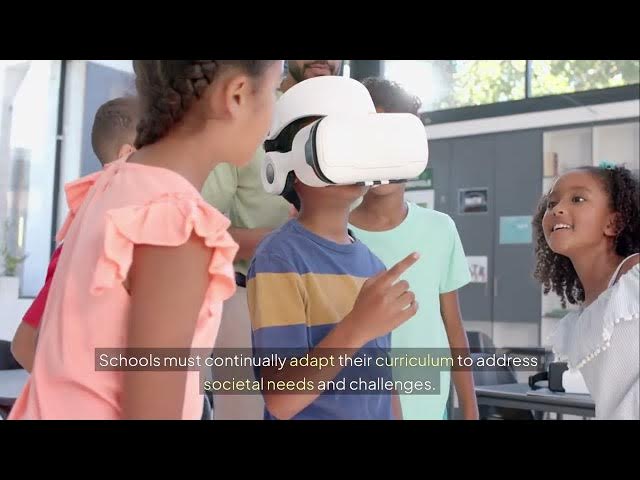
Schools must continually adapt their
2:16
curriculum to address societal needs and
2:21
Renowned educator Ralph Tyler emphasized
2:23
four key questions when developing a
2:26
curriculum. One, what should schools aim
2:31
Two, what experiences can provide those
2:35
Three, how should those experiences be
2:39
Four, how can we assess whether
2:44
Understanding these aspects is vital for
2:49
Curriculara can be categorized in
2:51
various ways. Formal or informal,
2:54
explicit or hidden, and electronic or
2:58
Formal curriculara involve intentional
3:01
planning and structured lessons.
3:04
In contrast, informal curriculum covers
3:06
life lessons from society outside
3:11
Hidden curriculum represents the
3:12
unspoken rules and values taught through
3:17
The electronic curriculum involves
3:19
learning from online resources
3:21
reflecting modern education shift toward
3:26
Lastly, the phantom curriculum
3:28
highlights the influence of media on
3:30
learners perspectives.
3:33
So, how can one engage with the
3:37
Whether you're a parent or an educator,
3:39
be active in discussions about what is
3:43
Advocate for transparency in curriculum
3:48
Engage with educators to understand how
3:53
This will help ensure that students are
3:55
wellprepared for their futures.
3:58
In summary, the curriculum is a
4:00
comprehensive framework guiding
4:04
It shapes students into informed,
4:06
responsible citizens.
4:09
Evaluate who contributes to curriculum
4:11
discussions and ensure all voices are
4:15
You have the power to shape educational
4:18
experiences. So get involved today.
4:22
Explore resources and engage with your
4:24
child's educational journey.
4:27
Let's build a better education for