Up next in 10

Read the full article at http://www.foot-pain-explained.com/bone_spur.html
A bone spur is an overgrowth of bone which may or may not be painful.
@marcbarry1000
Show More Show Less View Video Transcript
0:00
bone spur what is a bone spur this
0:04
condition is an overgrowth of bone this
0:07
problem is not unique to the foot but it
0:09
does occur quite commonly in the Foot
0:11
and Ankle they are also commonly known
0:14
as osteophytes or
0:16
exostosis an exostosis can be large or
0:19
small it may or may not be
0:21
painful what causes a bone spur an
0:25
exostosis is an overgrowth of bone most
0:28
commonly seen at a joint the place where
0:30
two bones come together and allow for
0:32
movement abnormal motion at the level of
0:35
a joint if the movement of the joint is
0:37
not optimal over time there will be bone
0:40
erosion and formation of
0:42
osteophytes excessive tension on a bone
0:45
from a tendon attachment the pulling of
0:47
the tendon on the bone may cause the
0:49
bone to form excess growth trauma as
0:52
severe as a fracture or multiple traumas
0:54
to the same area may end up causing
0:57
osteophytes to form every day where and
1:00
here over the course of years to an area
1:03
of bone will cause bone to once again
1:06
overproduce to form a Spur bone diseases
1:09
such as osteomyelitis bone infection and
1:13
Charco foot may also cause excess bone
1:15
to form normal aging will also cause
1:18
osteophytes to form bone spur symptoms
1:23
pain pain is usually the result of the
1:25
exostosis pressing on a nerve tendon
1:27
muscle or getting in the way of the
1:29
function of a joint the pain can range
1:32
from mild discomfort to severe pain
1:35
every time the patient takes a step the
1:38
pain can quickly disappear once the
1:40
patient is at rest or the pain can
1:42
persist even Beyond activity stiffness
1:45
if the spur limits the motion of a joint
1:48
there will stiffness as the joint is not
1:50
able to go through its full range of
1:52
motion inflammation such as mild
1:54
swelling and redness over the area loss
1:57
of function if a piece of the spur
2:00
breaks off and lodges in the joint the
2:02
affected joint will lock and it will be
2:04
very painful to try and move the joint
2:07
bone spurs in the foot spurring in the
2:10
toes will generally cause corns or even
2:13
inflame the surrounding tissue causing
2:15
aitis to form a corn in between the toes
2:19
soft corn more often than not is the
2:22
result of an exostosis on one toe
2:24
pressing into the adjacent toe
2:26
especially in closed shoes thus causing
2:28
excessive pressure and the formation of
2:31
a corn the most common cause is due to
2:34
overlapping toes a small red swollen
2:37
area either on the top of one of the
2:39
toes especially the fifth toe May often
2:41
be the result of bone overgrowth which
2:43
is irritated by shoewear and causes a
2:45
berstis to form pain on the top portion
2:49
of the big toe joint commonly known as
2:51
hu rigidus Halu limitus is the result of
2:54
exostosis formation usually on both the
2:57
first metatarsal bone and the base of
2:59
the proximal faank the base of the big
3:01
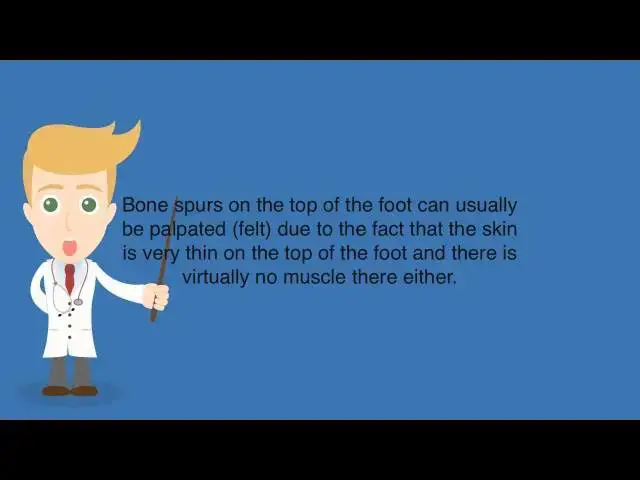
toe bone spurs on the top of the foot
3:04
can usually be palpated felt due to the
3:07
fact that the skin is very thin on the
3:09
top of the foot and there is virtually
3:11
no muscle there either the most famous
3:14
exostosis on the foot is probably the
3:16
heel spur heel spurs can occur both on
3:20
the bottom of the heel and the back of
3:21
the heel although the classic heel spur
3:23
is the one occurring on the bottom of
3:25
the heel lastly perhaps the most serious
3:29
side effect from a bone spur on the foot
3:31
is the formation of an
3:33
ulcer since this condition is an
3:35
overgrowth of bone it can create
3:37
friction or pressure points against the
3:39
shoe in individuals who are either
3:42
diabetic or have circulation compromised
3:44
feet the skin between the spur and the
3:46
shoe may break down and form an ulcer
3:49
treatment of bone spurs changing to a
3:53
conservative shoe to a less restrictive
3:54
shoe which takes pressure off the spur
3:58
generally a laced ox which offers a high
4:00
and wide toe box is the most comfortable
4:03
shoe Orthopedic padding over the
4:05
affected area will keep shoe pressure
4:07
off the area and relieve the pain
4:10
cortisone injections into the inflamed
4:13
area can be very useful in eliminating
4:15
the
4:16
pain sometimes more than one injection
4:18
is
4:19
necessary anti-inflammatory medication
4:22
both prescription and over-the-counter
4:24
for short durations may be
4:27
helpful Physical Therapy May help reduce
4:30
the
4:31
symptoms heat and ice therapy done at
4:33
home may also be
4:35
useful surgery as it relates to the foot
4:38
bone spur formation May quite possibly
4:40
be the number one reason people seek
4:42
foot
4:43
surgery if conservative care does not
4:46
alleviate the pain in most cases
4:48
surgically removing the bone spur will
4:51
in cases where an ulcer has formed in
4:53
many instances the underlying exostosis
4:56
will have to be surgically removed in
4:58
order to get the ulcer to close read the
5:01
full article at
5:04
www.f t-p a i n- XP i n d.com /b
5:11
ncorp .html
Pain Management
Science
Other
Injury