Up next in 10

Let me tell you why so many people search for thefluffiest dogs every single day.
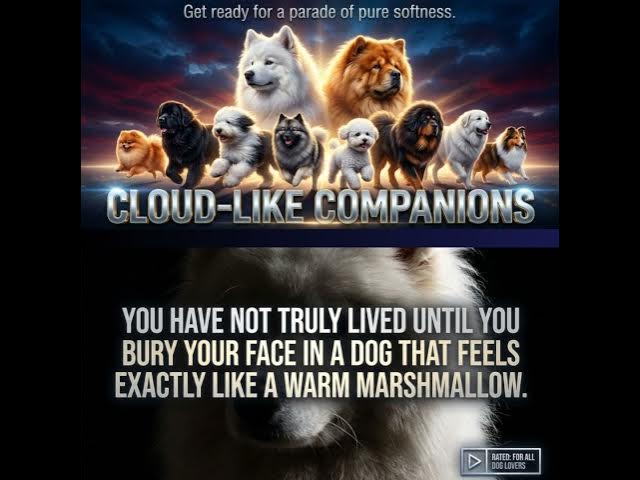
These cloud-like puppies bring more than just good looks to your home. They offer comfort, joy, and a whole lot of fur to love.
Whether you already own a fluffy pup or you are just dreaming of one, this guide will walk you through everything you need to know.
From the best breeds to the science behind those soft coats, we have got you covered.
Key Takeaways:
• Fluffy coats come from three specific genes. Scientists have mapped them clearly.
Show More Show Less View Video Transcript
0:00
Welcome to another episode of the Bark
0:01
Brigade podcast by Dogazilla magazine.
0:04
Today we will talk about important topic
0:06
and offer you a guide to help all
0:07
families that owns a dog or other pet.
0:10
So I want you to just imagine for just a
0:12
second that you were standing right in
0:15
the middle of a Siberian winter.
0:17
>> Oh wow.
0:18
>> Yeah. It's um it's -40° outside. Yeah.
0:21
The wind is just howling. The snow is
0:23
blinding. And the air is so unimaginably
0:26
cold that if you were to like drool,
0:29
your saliva would instantly freeze into
0:31
solid ice.
0:32
>> That sounds absolutely miserable,
0:34
>> right? Surviving in that environment
0:35
does not just require endurance. It
0:37
requires a complete physiological
0:38
masterpiece. And for the Samoy dog,
0:41
surviving that brutal cold did not
0:43
require, you know, building a fire. It
0:45
required, of all things, a smile.
0:47
>> A smile. Yeah. It's wild to think about.
0:49
>> It totally is. That is exactly the kind
0:51
of mind-bending reality we are getting
0:53
into today. We are taking a deep dive
0:55
into an absolute mountain of research
0:57
specifically focusing on this really
0:59
comprehensive text called Cloudlike
1:01
Companions, the science and care of
1:03
fluffy dogs.
1:04
>> Such a great source.
1:05
>> It really is. Yeah.
1:06
>> So, our mission today is to look way
1:08
beyond the cute Instagram posts and
1:12
truly understand the science, the
1:13
history, and frankly the intense daily
1:16
reality of living with the world's
1:18
fluffiest dog.
1:19
>> Yeah. The daily reality is a big one.
1:20
>> Huge. So if you have one of these living
1:23
clouds hogging your sofa right now, or
1:25
you know if you are dreaming of bringing
1:27
one home, we are going to explore the
1:30
genetic code that built them, the
1:32
climates that forged them, and what it
1:35
actually takes to maintain that
1:36
unbelievable coat.
1:37
>> It is such a rich subject because um as
1:40
we dig into this, you really start to
1:42
realize that these fluffy coats are so
1:44
much more than just a, you know, an
1:45
aesthetic preference.
1:46
>> They're not just about looking cute.
1:47
>> Exactly. We are talking about a deeply
1:50
ingrained biological blueprint. When we
1:53
pull back the curtain on this, we are
1:54
looking at real time genetic evolution,
1:57
historical survival in some of the most
1:58
unforgiving climates on Earth, and like
2:01
a modern economic boom that is entirely
2:04
centered around dog hair.
2:06
>> Dog hair right there,
2:07
>> it is. Once you understand the
2:09
underlying mechanics of why a dog is so
2:11
fluffy, it completely shifts your
2:13
perspective. You stop seeing just a cute
2:15
pet and you start seeing a literal
2:17
marvel of evolutionary engineering.
2:19
>> Okay, let's unpack this right from the
2:21
foundational level. Let's look at the
2:22
actual blueprint of fluff because I
2:25
think there was a common misconception
2:27
that fluffy dogs just I don't know sort
2:30
of happened.
2:30
>> Yeah, like it was an accident,
2:32
>> right? Like it is just a random roll of
2:34
the genetic dice. But it is not random
2:36
at all, is it? There is a very specific,
2:39
highly mapped genetic recipe for
2:42
creating these coats.
2:43
>> Very specific.
2:44
>> The data isolates three specific genes
2:47
that control this entire spectrum.
2:48
Right.
2:48
>> That is right. Geneticists have mapped
2:50
the domestic dog genome with incredible
2:52
precision. Now, and it turns out that
2:54
almost the entirety of coat variation
2:56
comes down to just three main genetic
2:58
switches.
2:59
>> Just three?
3:00
>> Just three. The first and arguably the
3:02
most important for a discussion today is
3:03
the FGF5 gene.
3:04
>> FGF5. Got it.
3:06
>> Yeah. You can think of this as the
3:08
master switch for long hair. It is a
3:10
gene that regulates the hair follicles
3:13
growth cycle in almost all mammals. So
3:15
when this specific gene mutates in dogs,
3:18
it essentially extends the growth phase
3:20
of the hair.
3:21
>> Oh, I see.
3:22
>> Instead of the hair falling out when it
3:23
reaches, say a couple of inches, it just
3:26
keeps growing, giving you that long,
3:28
incredibly thick coat.
3:29
>> Wait. So when we see a massive sweeping
3:31
coat on a dog, we are actually looking
3:34
at a genetic mutation that just tells
3:36
the hair follicle to forget its normal
3:37
stop sign
3:38
>> essentially. Yes, that's exactly it. It
3:40
delays the signal that tells the hair to
3:42
stop growing and fall out. That is FGF5.
3:45
The second key player is the RSPO2 gene.
3:49
Breeders and geneticists refer to the
3:51
result of this gene as furnishings.
3:53
>> Furnishings. Like a couch or a rug.
3:55
>> Kind of. It's a funny term, but it
3:57
refers to the extra facial hair. Oh,
3:59
okay.
3:59
>> If you picture a schnowzer with those
4:01
very distinct bushy eyebrows and that
4:03
long distinguished mustache war.
4:05
>> Oh, yeah. The grumpy old man look.
4:07
>> Exactly. The old man look. You are
4:09
looking directly at the expression of
4:11
the RSPO2 gene. It alters the growth
4:14
pattern specifically around the face and
4:15
the lower legs. And finally, you have
4:18
the KRT71 gene.
4:20
>> KRT71,
4:22
>> right? This is the curl controller.
4:24
KRT71 alters the actual structural
4:27
protein of the hair, the keratin causing
4:29
the hair shaft to grow asymmetrically,
4:31
>> which makes it curl.
4:32
>> Exactly. It forces it to bend and curl.
4:35
That is the gene responsible for the
4:36
tight, dense curls of a poodle or the
4:40
wavy texture of a Portuguese water dog.
4:42
>> I love thinking about this like a
4:43
massive mixing board in a music studio.
4:46
You know, you are the breeder or nature
4:48
is the producer and you are sitting
4:50
there sliding these faders up and down.
4:52
That is a great way to visualize it,
4:53
>> right? Because if you push the FTF5
4:55
slider all the way up for maximum
4:57
length, but you leave that KRT71 curl
4:59
slider at zero, boom, you get a samoid.
5:01
You get this long, straight, incredibly
5:03
thick double coat.
5:04
>> Perfectly straight. Yeah.
5:05
>> But if you take that same FGF5 slider
5:07
for length and you also crank up the
5:08
KRT71 slider for curl, you get a
5:10
completely different instrument. You get
5:12
something like a Bon Freeze,
5:13
>> which is basically a cloud,
5:15
>> literally a cotton ball. It has that
5:17
long curly single coat. The physical
5:20
variations are practically infinite, but
5:22
they all route back to those same three
5:24
sliders on the genetic mixing board.
5:26
>> That mixing board analogy is spoton, and
5:28
it perfectly illustrates the next major
5:31
point from the deep dive, which is that
5:33
humans are actively sitting at that
5:34
mixing board today, completely remixing
5:36
the tracks.
5:37
>> Oh yeah, we really are.
5:39
>> We have recent data that proves this in
5:41
real time. There is a fascinating
5:43
peer-reviewed study from 2025 that
5:45
focused entirely on the genetic drift in
5:47
Aikido dogs. Oh, this study completely
5:49
blew my mind. When I was looking at the
5:51
methodology, I couldn't believe what
5:53
they managed to track. Walk us through
5:55
what happened when they compared modern
5:57
Aikitas to the ones from the 1970s.
5:59
>> Right. So, the researchers managed to
6:01
sequence the genetic makeup of modern
6:03
Aikitas and cross reference it with
6:05
preserved genetic samples from Aikitas
6:07
that lived 50 years ago back in the
6:09
1970s,
6:10
>> which really isn't that long ago in
6:11
evolutionary terms.
6:12
>> It's a blink of an eye. The Akita is
6:14
historically a working breed from Japan
6:17
known for a dense but relatively
6:19
moderate coat. But the study found that
6:21
modern Akitas carry that fluffy FGF5
6:24
mutation at a vastly higher frequency
6:26
than the dogs from the 70s did.
6:28
>> Meaning the breed is fundamentally
6:30
transformed at a molecular level in just
6:33
half a century.
6:34
>> Yes, exactly. This is not natural
6:35
selection. It is direct undeniable
6:38
evidence of human preference driving
6:40
evolution. Oh,
6:41
>> breeders observed a shift in the market.
6:43
People wanted dogs that looked like
6:44
giant teddy bears. They wanted that
6:46
short and fluffy aesthetic. So, breeders
6:48
actively selected the dogs that happened
6:50
to carry that FGF-5 mutation and bred
6:52
them together.
6:53
>> So, they just kept doubling down on the
6:55
fluff.
6:55
>> Yes. By chasing that aesthetic demand,
6:58
they completely rewired the genetic
7:00
trajectory of the entire breed. In just
7:02
a few decades, the public types
7:04
fluffiest dogs into a search engine. The
7:06
breeders respond and the actual DNA of
7:08
the animal changes. Okay, let's unpack
7:11
this because this raises a massive red
7:12
flag for me. Yeah.
7:13
>> If we have the power to just isolate
7:16
that FGF5 gene and crank the fluff
7:19
slider to 11.
7:20
>> Is there a limit? Like, can we take this
7:22
genetic mixing board too far and
7:24
actually hurt the dog in the process?
7:26
>> We absolutely can. And unfortunately, we
7:29
currently are. This brings us to one of
7:31
the most highly controversial and
7:32
concerning trends in the veterinary
7:34
world right now.
7:35
>> I think I know where you're going with
7:36
this.
7:36
>> The rise of the fluffy French bulldog.
7:39
Right. If you have been on social media
7:42
in the last year, you have seen these.
7:43
They look almost unreal, like little
7:46
fuzzy gremlins.
7:48
>> They really do. And their appearance is
7:49
entirely due to breeders intentionally
7:52
introducing that exact long-haired FGF5
7:55
mutation we just discussed into the
7:57
French bulldog gene pool
7:59
>> just for the aesthetic.
8:00
>> Purely for the aesthetic. Now, the
8:02
official breed standard for the Frenchie
8:04
demands a short, smooth coat. So this
8:06
fluffy variation completely violates
8:08
those standards. But you know the breed
8:11
standard is just an arbitrary human
8:12
rule. The actual terrifying problem is
8:15
the severe health implications this
8:17
creates for the animal.
8:19
>> Because French bulldogs are already
8:21
dealt a really tough biological hand to
8:23
begin with. Right.
8:23
>> Precisely. Frenchies are what we call
8:25
brachyphalic dogs. That means they have
8:28
those flattened faces, shortened snouts,
8:30
and compressed airways.
8:32
>> Which sounds miserable.
8:33
>> It is. Because of this anatomy, they
8:35
notoriously struggle with severe
8:36
breathing problems. And here's the
8:39
crucial connection. Dogs do not sweat
8:41
like humans do.
8:42
>> Right. They pant.
8:44
>> Exactly. They regulate their body
8:46
temperature primarily by panting. A
8:48
brachisophalic dog already cannot pant
8:50
efficiently, meaning they are incredibly
8:52
prone to overheating. So, you are taking
8:55
a dog that already has a compromised
8:57
cooling system. A dog that literally
8:59
struggles to breathe on a hot day and
9:01
you're genetically strapping a permanent
9:04
heavy winter coat onto it.
9:05
>> It is a physiological disaster. You are
9:07
sacrificing the dog's fundamental
9:09
well-being, its ability to just exist
9:11
comfortably for a designer gimmick that
9:13
gets likes on an app.
9:14
>> That's awful.
9:15
>> It really is the dark side of that
9:17
genetic mixing board
9:18
>> that is so deeply unfair to the dog. It
9:21
really highlights how important it is
9:22
for you, the listener, to approach this
9:24
with your eyes wide open. If you are
9:27
determined to bring a fluffy dog into
9:28
your life, it is vital to choose a breed
9:31
where that fluff is a natural,
9:33
historically healthy trait that actually
9:36
serves a biological purpose.
9:37
>> Exactly. Not a social media experiment,
9:39
>> right? Rather than supporting an
9:41
experiment that forces an animal to
9:43
suffer. That is a brilliant point to
9:45
pivot on actually because while modern
9:47
humans are manipulating these genes for
9:49
aesthetics, the original fluffy coats
9:52
were not designed in a vacuum. Nature
9:54
was the original breeder and it used
9:56
geography and brutal freezing climates
9:59
as its mixing board.
10:00
>> Let's transition into that history
10:02
because the environment literally built
10:03
these animals from the ground up.
10:05
>> If we look at the true Arctic survivors,
10:07
the Samoid has to be the ultimate
10:09
example of this natural engineering.
10:11
>> It really is. The samoid originates from
10:13
the Siberian tundra, which is arguably
10:15
one of the harshest, most unforgiving
10:17
environments on the planet.
10:18
>> Just ice and wind.
10:20
>> Yeah. These dogs were bred over
10:22
thousands of years by the nomadic
10:24
Samoetic peoples to pull sleds across
10:26
the ice, herd reindeer, and even sleep
10:29
on top of their owners at night to keep
10:31
them from freezing to death.
10:32
>> Wow. Literally serving as living
10:34
blankets.
10:34
>> Exactly. Their coat is an absolute
10:37
marvel of thermodynamics. It is a
10:40
massive double coat specifically
10:41
designed to insulate the dog's core
10:44
temperature against weather that
10:46
routinely drops to -40°
10:48
>> -40.
10:50
>> It It's hard to even conceptualize that
10:52
level of cold. Yeah.
10:53
>> And going back to what I mentioned in
10:54
the very beginning, the famous Sammy
10:56
smile.
10:57
>> Yes, the smile.
10:58
>> I always just assume they were bred to
11:00
look happy or that it was just a cute
11:02
quirk. But the research explicitly
11:04
points out that the smile is an
11:05
evolutionary survival tool.
11:07
>> It is. Yeah. The anatomy of their mouth
11:09
is fascinating. The corners of their
11:11
lips naturally curve sharply upward.
11:13
This didn't evolve to make them look
11:15
friendly. It evolved to prevent them
11:16
from drooling
11:17
>> because of the cold.
11:18
>> Right. In 40° weather, the physical
11:21
properties of water are lethal. If a dog
11:23
drools, that moisture will freeze the
11:26
second it hits the air. Their mouth
11:28
would literally freeze shut and they
11:30
would die.
11:30
>> That is terrifying.
11:32
>> It is. The smile pulls the lips tight,
11:34
sealing the mouth and preventing the
11:36
formation of icicles on their face. It
11:38
is a beautiful aesthetic trait born
11:40
entirely out of geographic life or death
11:43
necessity.
11:43
>> It blows my mind. The dog is literally
11:46
smiling to survive. And then if you
11:48
travel away from the frozen flat lands
11:50
of Siberia and move up into the extreme
11:52
altitudes of the Himalayas, you find
11:54
another incredible survivor, the Tibetan
11:56
Mastiff.
11:57
>> Oh, the Tibetan Mastiff is the
11:59
undisputed mountain king.
12:00
>> They are massive.
12:01
>> Huge. Their coat is universally
12:03
recognized as one of the thickest and
12:05
most impenetrable in the canine world.
12:07
They possess this massive dense
12:10
lion-like mane around their neck and
12:12
shoulders.
12:12
>> But they weren't sled dogs, right?
12:13
>> No. Unlike the Samoy, which was a sled
12:16
dog and a herder, the Tibetan mastiff
12:18
was bred to be a stationary imposing
12:20
guardian. Their job was to protect
12:22
flocks of sheep and nomadic monasteries
12:24
from severe predators
12:26
>> like wolves.
12:27
>> Wolves, snow leopards, bears.
12:30
>> Bears. And that coat acts like physical
12:32
armor, right? It is not just about
12:34
staying warm.
12:35
>> Exactly. If a wolf tries to bite the
12:37
neck of a Tibetan mastiff, it is going
12:39
to get a mouthful of dense, coarse hair
12:42
before it ever reaches the skin. The
12:44
coat is both thermal insulation and
12:47
battle armor.
12:48
>> That's incredible.
12:48
>> It really is. Because of that incredible
12:50
fur, a Tibetan mastiff can calmly sleep
12:53
outside entirely buried under a snow
12:56
drift in the middle of a roaring
12:57
Himalayan snowstorm and remain perfectly
13:00
warm.
13:00
>> Here is where it gets really interesting
13:02
to me. I love looking at how these
13:04
extreme environments created not just
13:06
physical traits, but entirely different
13:08
temperaments.
13:09
>> Temperament is huge.
13:10
>> Yeah. Because you have these massive
13:11
thick coats,
13:12
>> but the dogs wearing them can be
13:14
psychological opposites.
13:16
Let's contrast two incredibly fluffy
13:18
breeds that share these long-haired
13:20
genetic traits but have completely
13:22
wildly different personalities. The New
13:24
Finland and the Pomeranian.
13:25
>> It is a study in extremes for sure.
13:28
Let's look at the New Finland first.
13:30
This is widely considered the ultimate
13:32
gentle giant of the dog world. They are
13:35
massive, heavily bone dogs with a
13:37
profoundly thick, water-resistant double
13:40
coat.
13:40
>> And their historical purpose is so
13:42
incredibly noble. They were essentially
13:44
built to be canine lifeguards, rescuing
13:47
drowning people from the freezing waters
13:49
of the North Atlantic.
13:50
>> That is their origin. Yeah. Their coat
13:52
is fascinating because it naturally
13:54
secretes oils that repel moisture,
13:56
allowing them to swim in icy, freezing
13:58
conditions without the cold water
13:59
penetrating to their skin.
14:01
>> Wow. Like a built-in wet suit.
14:02
>> Exactly like a wet suit. They even have
14:04
webbed feet to act like flippers.
14:06
>> I did not know that.
14:07
>> Yeah. But what truly stands out is the
14:10
temperament that was bred into them
14:11
alongside that coat. To rescue a
14:14
panicking, drowning human, a dog cannot
14:16
be aggressive or hyperactive. They must
14:18
be incredibly gentle, intuitive, and
14:20
calm.
14:21
>> Right. You don't want a dog panicking
14:22
while it's trying to save you.
14:24
>> Exactly. Newfoundlands are famously
14:26
referred to as nanny dogs because they
14:28
possess this boundless patience,
14:30
especially with children. They are calm,
14:32
loving, massive creatures whose instinct
14:36
is to pull you to safety.
14:37
>> And then on the exact opposite end of
14:40
the behavioral spectrum, wrapped in a
14:42
very similar type of fluff, you have the
14:44
Pomeranian.
14:45
>> Oh, the Pomeranian.
14:46
>> It's just this tiny vibrating ball of
14:49
immense energy.
14:50
>> Right. And the historical context here
14:52
is key. A lot of people don't know this,
14:54
but Pomeranians actually descend
14:56
directly from large Arctic sled dogs,
14:59
similar to the samoid or the malamute.
15:01
Wait, really? You take this giant stoic
15:04
working sled dog and breeders over
15:06
generations just selectively shrunk them
15:08
down, but they managed to keep the
15:10
magnificent enormous fur coat and that
15:12
classic plume tail that arches over
15:14
their back like a fan.
15:15
>> That's exactly what happened. They kept
15:17
the aesthetic architecture, but the
15:18
temperament went in a completely
15:19
different direction
15:20
>> completely.
15:21
>> The Pomeranian is smart, sassy, and
15:23
incredibly brave. They are a toy breed
15:25
weighing maybe 4 to seven pounds, but
15:27
they possess the ego and the personality
15:30
of a much larger dog.
15:31
>> It is that classic Napoleon complex.
15:33
>> Oh, 100%. A tiny Pomeranian will
15:36
fearlessly bark at a Great Dane or a
15:38
delivery driver without a single second
15:40
of hesitation. It is just incredible to
15:43
sit back and observe that the exact same
15:46
genetic fluff mechanism, that FGF5
15:48
mutation we talked about, exists in a
15:51
giant, drooling, calm water rescue dog
15:55
that wants to gently carry a toddler.
15:58
And it also exists in a tiny persized
16:00
alarm system that wants to fight a dog
16:03
10 times its size.
16:04
>> Human selection took that one genetic
16:06
trait and applied it to wildly different
16:08
behavioral canvases.
16:10
>> That's a good way to put it. And if we
16:11
connect this to the bigger picture, this
16:13
is why understanding a dog's historical
16:15
purpose and their natural wired
16:16
temperament is absolutely crucial for
16:18
you before you even think about bringing
16:20
one into your modern home.
16:21
>> Yeah. You can't just pick based on
16:23
looks.
16:23
>> You really can't. You cannot just look
16:25
at a photo online and pick a dog based
16:27
on how fluffy it is. You have to match
16:29
the dog's internal wiring to your
16:31
external lifestyle. Let's get deeply
16:33
into that practical application because
16:35
I know there are people listening right
16:37
now who might be preparing to get their
16:39
very first dog. They know they want that
16:41
fluffy aesthetic, but they do not have
16:44
the experience to handle a complex
16:46
working breed. What does the data
16:48
suggest are the absolute best fluffy
16:51
breeds for a beginner?
16:53
>> The research consistently highlights two
16:55
specific breeds as the gold standard for
16:56
firsttime owners who want that fluffy
16:58
look without the overwhelming behavioral
17:00
challenges. the Bishon Freeze and the
17:02
Cavaliier King Charles Spaniel.
17:04
>> Okay, let's break down exactly why.
17:06
Starting with the Bishon.
17:07
>> The Bishon Freeze is practically
17:09
universally recommended because of their
17:11
exceptionally cheerful, adaptable
17:12
nature. They are naturally friendly.
17:15
They socialize well with strangers and
17:17
other animals and they are eager to
17:18
learn.
17:18
>> They just seem happy all the time.
17:20
>> They really are. But from a purely
17:22
practical maintenance standpoint, they
17:24
possess a curly single coat. This is
17:26
crucial.
17:27
>> Why is a single coat better for
17:29
beginners? Because unlike a husky that
17:31
sheds clouds of fur everywhere, the
17:33
Bichon's hair grows continuously, very
17:36
much like human hair. This means they
17:38
shed very little, which makes them a
17:40
premier choice for people who suffer
17:42
from mild pet allergies.
17:43
>> Oh, that makes sense.
17:44
>> You get the look of a fluffy white cloud
17:46
with a dog that is eager to please and
17:48
will not leave a layer of fur on your
17:50
black pants. and the Cavalier King
17:52
Charles Spaniel.
17:54
>> The Cavalere offers a gorgeous silky
17:56
medium length fluffy coat, but their
17:59
primary selling point is their true lap
18:01
dog temperament. They were historically
18:03
bred to be companions to British
18:05
royalty, literally serving as
18:07
footwarmers in drafty castles.
18:09
>> Footwarmers. I love that.
18:11
>> Right. They are incredibly gentle,
18:13
affectionate, and deeply attuned to
18:15
their owner's emotions. Plus, their
18:17
silky coat, while it does require
18:18
brushing, demands far less intensive
18:21
daily maintenance than the massive
18:23
woolly double coats of the giant breeds.
18:26
>> So, both the BAW and the Cavalere offer
18:28
the fluffy aesthetic without imposing an
18:30
overwhelming behavioral or grooming
18:32
burden on a novice owner.
18:33
>> Exactly. They are fantastic starters.
18:35
>> So, those are the clear green flags.
18:37
What about the red flags? What are the
18:39
fluffy breeds that a firsttime owner
18:42
should actively intentionally avoid?
18:45
>> If you are a beginner, you must avoid
18:46
the highmaintenance, fiercely
18:48
independent guardian and working breeds.
18:51
The Chow Chow is the perfect cautionary
18:53
tail here.
18:54
>> Oh, they are so pretty, though.
18:55
>> Aesthetically, they are stunning. They
18:57
have an incredibly dense woolly double
18:59
coat that forms an actual lion's mane
19:01
around their head. And they are famous
19:03
for having a unique blue black tongue.
19:06
>> Right. But the ChowChow is an ancient
19:08
Chinese breed with a deeply ingrained
19:11
guardian instinct. They are notoriously
19:14
independent, highly aloof with
19:16
strangers, and can be remarkably
19:18
stubborn.
19:19
>> So, they aren't going to just play fetch
19:20
with anyone at the park.
19:21
>> Definitely not. They bond fiercely with
19:23
their immediate family, but they are not
19:24
golden retrievers. They do not beg for
19:26
your attention, and they require a very
19:29
firm, experienced, and consistent hand
19:31
in training to prevent them from
19:33
becoming overly territorial. And I
19:35
imagine the Tibetan Mastiff falls right
19:36
into that same category.
19:38
>> Absolutely. The Tibetan Mastiff is
19:40
strong willed, highly intelligent,
19:43
fiercely independent, and incredibly
19:45
protective of its property. They are a
19:48
magnificent breed. But matching that
19:50
intense guardian temperament with an
19:52
owner who has never trained a dog before
19:54
is a recipe for absolute disaster.
19:56
>> That makes total sense. Lifestyle is not
19:59
just about your experience level,
20:01
though. It is also heavily dictated by
20:03
where you live. Oh, for sure. Space is a
20:05
huge factor.
20:06
>> What if you live in a 600 foot apartment
20:08
in the city? Can you still ethically
20:10
have a fluffy dog?
20:11
>> Yes, you can successfully balance a
20:13
fluffy pet's needs with apartment
20:15
living, provided you are brutally honest
20:18
about the dog's energy requirements,
20:19
>> right? Honest with yourself.
20:21
>> Exactly. Obviously, the tiny breeds we
20:22
just discussed like Pomeranians,
20:24
Bishons, and Cavaliers thrive in
20:27
apartments. Their physical footprint is
20:28
small and their exercise needs can often
20:31
be met with indoor play and a couple of
20:33
moderate walks a day.
20:34
>> But it is not strictly limited to the
20:36
toy breeds.
20:37
>> Right.
20:37
>> I was looking at the notes on
20:38
medium-sized dogs and there is one that
20:41
actually adapts really well to small
20:42
spaces.
20:43
>> You are thinking of the Kshand.
20:45
>> Yes, the Keyshand.
20:46
>> They are an absolutely stunning
20:48
medium-sized dog with a massive rough of
20:50
silver gray and cream fluff. And they
20:53
have these distinct dark spectacle
20:56
markings around their eyes that make
20:57
them look like they're wearing glasses.
20:59
>> They always look so intelligent.
21:01
>> They are. Historically, they were the
21:03
18th century Dutch barge dog because
21:06
they were bred for generations to live
21:08
on small cramped river barges serving as
21:11
watchd dogs and companions. They have a
21:13
genetic predisposition to adapt very
21:15
well to smaller living spaces today.
21:17
>> That is fascinating. So they're used to
21:18
a floating apartment basically.
21:20
>> Precisely. However, the non-negotiable
21:22
caveat is that they still require
21:24
rigorous daily walks and significant
21:26
mental stimulation. An apartment is fine
21:29
as long as they're not locked inside it
21:31
for 12 hours a day.
21:32
>> But you have to be realistic about the
21:33
space. There are certain fluffy breeds
21:36
you explicitly have to rule out if you
21:37
live in a thirdf flooror walk up.
21:39
>> You must unequivocally rule out the
21:41
giants. A New Finland physically takes
21:43
up too much space for a small apartment.
21:45
They need room to move without knocking
21:46
over your furniture.
21:48
>> Right. A wagging tail could clear off a
21:50
coffee table in one swoop.
21:51
>> Exactly. And you also have to avoid high
21:54
energy hurting fluff like the old
21:55
English ship dog. The research
21:58
wonderfully describes them as a walking
22:00
shag rug.
22:01
>> That is the perfect description.
22:02
>> They are goofy, lovable, and covered in
22:05
an explosion of hair, but they possess
22:07
incredibly strong hurting instincts and
22:10
boundless energy. They need a yard.
22:13
>> What happens if you put one in a small
22:14
apartment? If you put a bored, energetic
22:17
old English sheep dog in a small
22:19
apartment, they will lose their minds.
22:21
They might start trying to herd your
22:22
cat, excessively bark at every noise in
22:25
the hallway, or completely tear up your
22:27
drywall out of sheer frustration.
22:29
>> Oh, wow. Yeah. No drywall tearing,
22:30
please.
22:32
>> So, we have talked about the space, the
22:33
time, and the temperament, but what does
22:35
this all mean for someone's wallet?
22:37
>> Uh, the economics of fluff,
22:39
>> right? Because when we talk about these
22:41
specific purebreds, your samoids, your
22:42
Tibetan mastiffs, the research notes
22:45
that a purebred puppy from a reputable
22:46
breeder can cost thousands and thousands
22:49
of dollars.
22:50
>> This brings us to a vital point about
22:51
the ethical and economic choices
22:53
available to the listener. There is a
22:56
massive misconception that if you want a
22:58
dog with a specific beautiful fluffy
23:01
look, you are required to hand over
23:03
$3,000 to a breeder. Tell me more about
23:06
the reality of that because I think
23:08
people picture shelters as only having
23:10
like short-haired mixed breeds.
23:12
>> That is simply not true. Right now,
23:15
mixed breed dogs are actually the single
23:17
most popular type of dog in America. And
23:20
because so many of these dogs combine
23:22
the genetic traits of several different
23:24
breeds, you frequently find shelter dogs
23:26
with incredibly lush, unique, fluffy
23:28
coats.
23:29
>> And economically, it's totally
23:30
different.
23:30
>> The difference is night and day.
23:32
Adoption fees typically only run between
23:34
$50 to $300 and that usually includes
23:36
their initial vaccinations,
23:37
microchipping, and spaying or neutering.
23:40
>> And beyond the sheer economics of it, it
23:42
is fundamentally an ethical choice.
23:44
>> Exactly. When you adopt, you are giving
23:46
a deserving animal a second chance at
23:48
life. But crucially, you are actively
23:50
choosing not to support the darker side
23:52
of the pet trade,
23:53
>> like puppy mills.
23:54
>> Yes. High demand for fluffy puppies
23:57
often fuels puppy mills commercial
23:59
breeding facilities that prioritize
24:01
rapid profit over the health, genetic
24:03
testing, and humane treatment of the
24:05
animals.
24:05
>> Heartbreaking
24:06
>> it is. Furthermore, if your heart is
24:08
absolutely set on a specific breed,
24:11
there are dedicated rescue organizations
24:13
for almost every breed imaginable. You
24:15
can easily find Samoid rescues,
24:17
Pomeranian rescues, and Chowchow rescues
24:20
full of dogs waiting for homes. Whether
24:22
people are buying expensive purebreds or
24:24
adopting gorgeous mixed breeds from
24:26
shelters, it is undeniably clear that
24:29
the demand for these dogs has created an
24:31
absolute cultural and economic
24:33
explosion.
24:33
>> Oh, absolutely.
24:34
>> The fluff economy, for lack of a better
24:36
term, is real and it is massive.
24:38
>> It is a multi-billion dollar ecosystem.
24:41
Yeah.
24:41
>> And if you trace the root cause of this
24:43
recent explosion, it is largely being
24:45
driven by social media and search
24:47
trends.
24:48
>> Oh, without a doubt. But if you spend 5
24:49
minutes scrolling through Instagram or
24:51
Tik Tok, fluffy dogs absolutely dominate
24:53
influencer culture.
24:54
>> They really do.
24:55
>> A video of a Samoid smiling into the
24:57
camera while getting brushed or a chow
24:59
chow looking like a grumpy little lion
25:02
can generate millions of views and go
25:04
viral almost instantly.
25:05
>> Yeah,
25:05
>> it creates this intense feedback loop of
25:07
desire.
25:08
>> The search data backs up your
25:09
observation entirely. People are
25:11
actively aggressively seeking this
25:14
aesthetic out. If we look at Rover's
25:16
2026 pet trend report, the miniature
25:18
poodle is seeing a massive surge in
25:20
popularity, largely because it offers
25:22
that highly desirable fluffy look, but
25:24
with a non-shedding coat that fits into
25:26
urban lifestyles.
25:28
>> Right.
25:28
>> And data from the American Kennel Club
25:30
consistently shows fluffy breeds like
25:32
golden retrievers and shetland sheep
25:34
dogs. The Shelties anchored firmly in
25:36
the top 20 most popular breeds year
25:38
after year. The sheer volume of internet
25:41
searches for fluffiest dogs in the world
25:43
proves that this aesthetic is no longer
25:45
just a bonus trait. It is a primary
25:47
driving factor in consumer
25:49
decision-making.
25:50
>> But there is a real tangible danger in
25:52
that social media feedback loop, isn't
25:54
there?
25:54
>> This raises a profoundly important
25:56
question, and it requires sharp critical
25:58
thinking from anyone looking at these
26:00
viral trends. A perfect 15-second Tik
26:03
Tok video is an illusion.
26:05
>> Yeah, it hides a lot.
26:06
>> It completely hides the reality of
26:08
owning these dogs. It hides the hours of
26:10
grueling daily grooming required to make
26:12
that coat look perfect for the camera.
26:15
It hides the mud they track in, the
26:17
expense of the tools, and the physical
26:18
effort required.
26:19
>> Right?
26:20
>> If you adopt a dog purely for the
26:22
aesthetic, purely because it looks cute
26:24
online, it almost inevitably leads to a
26:26
tragic outcome. An overwhelmed owner and
26:28
a neglected, matted pet,
26:30
>> right? Because that fluff does not
26:32
magically maintain itself.
26:33
>> Yeah. And that harsh reality, the sheer
26:35
labor of maintenance has actually
26:37
birthed a booming economic sector all on
26:40
its own. The pet grooming market is not
26:42
just growing, it is exploding.
26:43
>> The numbers are staggering when you look
26:45
at the projections. The global pet
26:47
grooming market is projected to jump
26:48
from 17.09 billion in 2025 to an
26:52
estimated 24.54 billion by 2030.
26:56
>> Wow. Over 24 billion.
26:58
>> Yes. That represents a compound annual
27:01
growth rate of 7.5%.
27:04
And dogs alone account for 45% of this
27:07
entire market share driven heavily by
27:10
the intense bathing, brushing and
27:12
trimming required for these thick
27:13
doublecoated breeds.
27:15
>> Why is it growing so rapidly right now?
27:17
Like what changed in the culture?
27:19
>> There are a few key converging factors.
27:22
The first is what economists call the
27:24
premiumization of pets. 65% of owners
27:28
now explicitly consider their pets to be
27:30
literal family members.
27:31
>> Oh, absolutely. They're part of the
27:32
family.
27:33
>> They aren't just the family dog that
27:34
sleeps in the yard anymore. They are
27:36
part of the household. Because of that
27:38
emotional shift, owners are willing to
27:40
spend premium money on their care just
27:42
as they would for a child.
27:43
>> That makes total sense. What's the
27:44
second factor?
27:45
>> The second factor is the rapid rise of
27:47
mobile grooming. Time is the ultimate
27:49
luxury, and busy owners want the
27:51
convenience of a customized grooming van
27:54
pulling directly into their driveway. So
27:56
the dog never has to leave home.
27:57
>> It is so convenient.
27:59
>> And third, the industry experiences
28:01
massive seasonal peaks. Groomers are
28:04
booked solid for weeks in the spring
28:06
when dogs are undergoing their massive
28:08
shed of their winter coats. And again in
28:10
December when families are desperate to
28:12
have their pets looking pristine for
28:14
holiday cards and family photos.
28:16
>> And I think it's really important to
28:18
point out that professional groomers are
28:20
not just, you know, artists making your
28:23
dog look good for a family portrait.
28:25
They actually play a vital frontline
28:27
role in the dog's healthcare.
28:29
>> I am so glad you brought that up.
28:30
Professional groomers are often the
28:32
unsung heroes of pet health
28:34
>> because they're seeing the dog up close.
28:36
>> Exactly. While they are washing and
28:38
drying the dog, their hands are
28:40
constantly moving over every inch of the
28:42
animal's body. They are checking the
28:44
condition of the skin, looking deep into
28:46
the ear canals, and checking the nail
28:48
beds,
28:48
>> finding things owners might miss.
28:50
frequently. They frequently spot early
28:52
signs of melanoma, hidden ticks, or
28:55
severe ear infections long before an
28:57
owner might notice them. Furthermore,
28:59
they have access to commercial grade
29:01
equipment
29:01
>> like those giant blow dryers.
29:03
>> Yes, the high velocity dryers. They use
29:06
powerful high velocity dryers that
29:08
physically blow out the dense, impacted,
29:11
loose undercoat that an owner simply
29:13
cannot reach or remove with a standard
29:16
handbrush at home. Which brings us
29:18
perfectly to the most practical hands-on
29:20
part of our deep dive today. Yeah.
29:21
>> The master class in maintenance. Because
29:24
even if you take your dog to that
29:25
professional groomer every month, you
29:27
cannot outsource all of the work.
29:29
>> No, definitely not.
29:30
>> If you were going to own one of these
29:32
magnificent dogs, you have to accept
29:35
that you are becoming part of a daily
29:37
grooming routine.
29:38
>> It is absolutely non-negotiable. Fluffy
29:40
dogs do not stay fluffy by accident.
29:42
Left to their own devices, their coats
29:44
are massive magnets for dirt, burrs,
29:46
loose, dead hair, and moisture.
29:48
>> Here's where it gets really interesting,
29:50
and this is something I think a huge
29:52
percentage of the population gets
29:53
totally wrong. I always assumed that if
29:56
you have a massive thick coated dog like
29:58
a great Pyrenees, a husky, or a semoid,
30:01
you are doing them a favor by giving
30:03
them a short summer haircut, like you
30:05
shave them down to cool them off when it
30:07
gets to be 90 degrees outside. Why is
30:09
that actually a terrible dangerous idea?
30:12
>> It is one of the most common
30:14
well-intentioned but ultimately
30:16
dangerous misconceptions in the dog
30:18
world. The golden rule of doublecoated
30:20
dogs revolves around a concept called
30:22
thermore regulation. You must never
30:25
under any circumstances shave a
30:27
doublecoated dog.
30:28
>> Break down the mechanics of that for me
30:30
because it seems completely
30:31
counterintuitive. Less hair should equal
30:33
less heat trapping, right? It seems
30:35
logical, but a double coat does not
30:38
function like a heavy wool sweater. It
30:40
functions much more like the advanced
30:42
insulation in a Yeti thermos or the dual
30:44
pane glass in your house.
30:45
>> Oh, interesting.
30:46
>> The coat consists of two layers, a soft,
30:48
dense undercoat and longer, harsher
30:51
guard hairs on top. In the winter, the
30:53
undercoat traps the dog's body heat to
30:55
keep them warm. But in the summer, those
30:57
long guard hairs reflect the sun's harsh
30:59
rays, while the undercoat traps a layer
31:02
of cool air directly against the dog's
31:04
skin, insulating them from the ambient
31:06
heat. So, when you shave that coat away,
31:09
you strip away their only defense
31:10
mechanism. You ruin the dog's natural
31:13
ability to regulate its own temperature.
31:15
>> So, by trying to cool them down, you are
31:18
actually exposing them to the heat and
31:20
making them dangerously hotter.
31:21
>> Yes. You expose their sensitive skin
31:23
directly to UV rays, leading to severe
31:26
sunburns and heat stroke.
31:27
>> I had no idea dogs could get sunburned
31:28
like that.
31:29
>> They absolutely can. Furthermore,
31:31
shaving can permanently destroy the
31:33
coat's biological ability to grow back
31:35
properly.
31:35
>> Really? How so?
31:36
>> Because the soft undercoat and the
31:38
coarse top coat grow at entirely
31:40
different biological rates. So, shaving
31:43
them down to the same length causes them
31:44
to violently tangle and matt together as
31:46
they grow back.
31:47
>> That sounds awful.
31:48
>> It is. This condition is sometimes
31:51
called coot funk or alipcia x. Worse
31:53
still, a shaved or improperly maintained
31:56
thick coat traps environmental moisture
31:59
directly against the skin without
32:00
allowing air to circulate, which creates
32:02
a dark, damp breeding ground for painful
32:05
hot spots and severe bacterial skin
32:07
infections.
32:08
>> Okay, so shaving is completely off the
32:10
table. The only alternative is regular,
32:12
thorough, manual grooming.
32:16
Let's build a professional home toolkit
32:17
for the listener right now. What do they
32:19
actually need to buy to manage this
32:21
correctly?
32:22
>> To do this right, you need to invest in
32:24
four primary tools. First, a high
32:26
quality slicker brush.
32:28
>> A slicker brush. What makes it special?
32:30
>> This is a wide brush covered in fine,
32:32
densely packed, angled wire bristles. It
32:35
is designed specifically to penetrate
32:37
the top coat and pull out the loose,
32:39
dead undercoat without scratching the
32:41
dog's skin.
32:42
>> Okay, got it.
32:43
>> Second, you need a metal greyhound comb.
32:45
This is a steel comb with wide teeth on
32:47
one end and narrow teeth on the other.
32:49
You use this after the slicker brush to
32:51
dig deep down to the skin and find any
32:53
hidden tangles.
32:54
>> So, the brush is step one, the comb is
32:56
step two.
32:57
>> Exactly. Third, for those heavy shedding
32:59
seasons, you want a specific deshedding
33:02
tool like a firminator, which is
33:03
designed to grab and remove massive
33:05
amounts of loose hair safely.
33:07
>> Those things are amazing.
33:08
>> They are lifesavers. And fourth, if you
33:10
have a curlycoated dog like a bishon or
33:13
a poodle, you want to pivot to pin
33:15
brushes and wide tothed combs as a
33:17
slicker brush can sometimes pull and
33:19
break the curly hair.
33:20
>> And the shampoo you use matters just as
33:22
much as the brushes, right? You can't
33:24
just use whatever is in your shower.
33:26
>> Critically so. You must use dog safe
33:28
shampoo, specifically pH balanced for
33:31
canine skin. Ideally formulated for
33:33
double coats
33:34
>> because their skin is different from
33:36
ours.
33:37
>> Very different. Human skin is more
33:38
acidic than dog skin. If you use harsh
33:41
human shampoos or even cheap, lowquality
33:44
dog shampoos, you will chemically strip
33:47
the vital natural oils from the dog's
33:49
fur,
33:49
>> which causes what?
33:50
>> This leaves the hair brittle, prone to
33:52
breaking, and severely damages the
33:54
skin's moisture barrier, leading to
33:56
constant itching and flaking.
33:58
>> Okay, so we have our professional tools,
34:00
we have the right shampoo.
34:02
>> What is the golden schedule? Like how
34:04
often should the listener actually be
34:05
running these tools through their dog's
34:07
hair?
34:08
>> The baseline non-negotiable schedule for
34:10
a fluffy dog is thorough brushing at
34:12
least every other day.
34:13
>> Every other day.
34:14
>> Yes. You combine that at home
34:16
maintenance with professional grooming
34:18
appointments every 6 to 8 weeks. Now, if
34:20
you have a dog with continuously growing
34:22
curly hair, like a Bishawn or a poodle,
34:25
you need to see that professional
34:26
groomer every four weeks without fail
34:28
because that specific hair texture mats
34:31
incredibly quickly. What about the
34:33
specific times of the year when they
34:35
blow their coat? I have seen those crazy
34:37
videos online where people are just
34:39
punting massive cloudlike handfuls of
34:42
loose fur off their husky or their
34:44
malamute.
34:44
>> Oh yeah, that phenomenon happens twice a
34:47
year for doublecoated breeds. They
34:49
undergo a massive shedding event to
34:51
prepare for the changing symptoms. They
34:53
literally drop their entire undercoat
34:55
over the course of a few weeks.
34:56
>> This sounds like a lot of vacuuming.
34:57
>> It's an unbelievable amount of hair.
34:59
During blowing coat season, your
35:01
schedule changes. Brushing goes from an
35:03
every other day task to a strict
35:05
rigorous daily requirement.
35:07
>> Daily.
35:08
>> Daily. If you skip even one or two days
35:10
during this period, the immense volume
35:12
of loose undercoat will act like velcro
35:15
tangling with the top coat and forming
35:17
massive solid mats close to the skin.
35:19
>> Let's give the listener an actionable
35:22
step-by-step daily guide to prevent that
35:24
matting. Because matting isn't just
35:26
messy hair, it is actually a medical
35:28
issue.
35:29
>> It really is a medical issue. A mat is
35:31
essentially a dreadlock that tightens
35:33
over time, constantly pulling on the
35:35
dog's skin, restricting blood flow, and
35:38
causing extreme pain and bruising.
35:40
>> That sounds so painful. So, how do we
35:42
prevent it?
35:43
>> To prevent it, here is your daily
35:45
routine. Step one, start with the
35:47
slicker brush. Work through the coat
35:49
systematically, section by section,
35:51
starting from the bottom of the dog and
35:53
working your way up to remove all the
35:55
loose undercoat.
35:56
>> Okay, bottom to top.
35:57
>> Right. Step two, follow up immediately
36:00
with the metal greyhound comb. The comb
36:02
acts as your lie detector.
36:04
>> I love that phrase, lie detector.
36:06
>> It's true. The brush might make the top
36:08
look smooth, but the comb will catch the
36:10
hidden tangles lurking near the skin
36:12
that the brush missed.
36:13
>> Step three is about location, right? You
36:15
have to target specific physical areas
36:18
on the dog.
36:19
>> Yes. Step three is relentlessly
36:22
targeting the high friction areas. These
36:24
are the physical spots where the dog's
36:26
daily movement causes the fur to
36:28
constantly rub against itself.
36:30
>> Where are those spots exactly?
36:31
>> She must pay special focused attention
36:33
to the fine hair behind the ears, the
36:35
hair under the legs and the armpits, and
36:38
the thick fur around the neck where the
36:40
collar sits.
36:41
>> Ah, because the collar is always rubbing
36:42
there.
36:43
>> Exactly. Because of the constant
36:45
friction, these areas will form tight
36:47
mats exponentially faster than the flat
36:50
areas on the dog's back or sides. And
36:52
step four is maybe the most important
36:54
part of this whole process, at least for
36:56
the dog's mental health and your
36:58
relationship with them.
36:59
>> Step four is using heavy positive
37:01
reinforcement. Grooming should not be a
37:04
battle. Give them high value treats.
37:06
Speak to them softly. Take breaks if
37:08
they get stressed. And actively work to
37:11
make the grooming session a calm bonding
37:13
ritual rather than a stressful wrestling
37:16
match.
37:16
>> Because if it's a wrestling match,
37:18
you're not going to want to do it every
37:19
day.
37:19
>> Exactly. and the dog will start to hate
37:21
the brush. If you keep up with this
37:24
gentle daily routine, you are quite
37:26
literally saving the dog from the severe
37:29
physical pain of having tight mats pull
37:31
on their skin. And you are keeping that
37:33
incredible coat functioning exactly as
37:35
nature intended.
37:36
>> This has been such an incredible journey
37:38
through the science, the history, and
37:40
the intense daily reality of living with
37:42
these dogs. We started by looking at how
37:44
human preference managed to radically
37:47
alter the Aikita's genetic makeup in
37:49
just 50 years to make them fluffier. And
37:51
we ended with the absolute physical
37:53
necessity of maintaining what we have
37:55
created.
37:56
>> Which leaves us with a truly fascinating
37:59
somewhat provocative thought to consider
38:00
as we wrap up.
38:01
>> I love these. Let's hear it.
38:03
>> We have seen the data. We know that
38:04
human demand is driving the evolution of
38:06
these animals faster than ever before.
38:08
With the absolute explosion of this $ 24
38:11
billion grooming industry and the
38:13
rapidly increasing desire for apartment
38:15
friendly, hyper fluffy pets, what will
38:18
the dogs of 2075 look like?
38:20
>> Oh wow.
38:20
>> Right. 50 years from now, will we
38:23
eventually use advanced genetic crisper
38:25
tools to intentionally create dogs that
38:28
possess massive cloudlike fluff but
38:30
biologically cannot shed or mat. As our
38:34
science catches up with our aesthetic
38:35
desires, the future of the fluffy dog is
38:37
entirely unwritten.
38:38
>> It is wild to think about. From the
38:41
freezing life or death survival of the
38:42
Siberian tundra to a high-tech genetic
38:45
mixing board manipulating the very
38:47
building blocks of hair, the journey of
38:49
the fluffy dog is far from over. Thank
38:51
you for listening, dear brigaders. And
38:53
if you have any questions, visit the
38:54
source article on Dogazilla magazine at
38:56
dogazila.com. That was all for this
38:58
episode. And until the next time, bye to
39:00
all listeners of the Bark Brigade
#Pets & Animals