Up next in 10

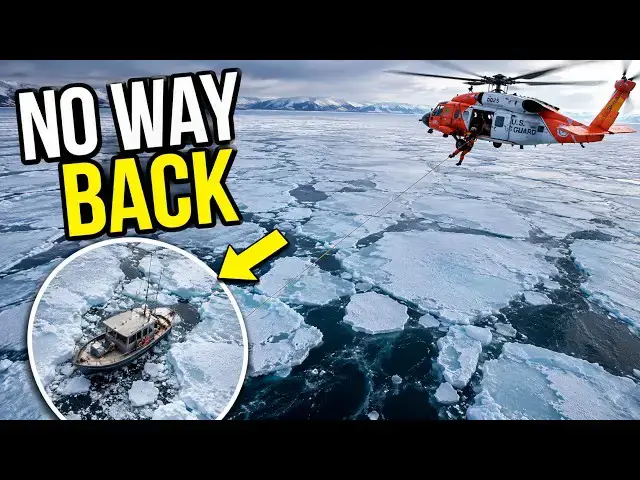
Four people were stranded on Alaska’s moving ice for more than 24 hours after their boat became trapped near Chefornak.
To reach them, the Coast Guard had to fly more than 800 miles through darkness, blowing snow, icing, mountains, and freezing conditions.
The boat had been freed once… but the ice kept moving, cutting them off from shore and turning the frozen landscape into a dangerous trap.
This is the true story of a dangerous Arctic rescue, a trapped vessel, and the Coast Guard helicopter crew that refused to let the ice decide the ending.
In Alaska, a short trip can turn into a survival story fast — and sometimes the only thing between being stranded and being saved is whether rescuers can find you in time.
What would you trust more in that moment — the shore in the distance, or the sound of a helicopter above you?
Sources + images:
https://www.alaskasnewssource.com/2026/04/15/coast-guard-rescues-child-three-adults-stranded-ice-floe-near-chefornak-most-challenging-mission/
https://www.foxweather.com/extreme-weather/coast-guard-rescues-4-people-trapped-boat-through-challenging-mission-alaska
https://www.bairdmaritime.com/security/incidents/video-four-people-rescued-from-ice-trapped-vessel-in-alaska
Show More Show Less View Video Transcript
0:00
April 2026, somewhere over Western
0:02
Alaska. A Coast Guard helicopter was
0:05
flying through the dark, pushing deeper
0:07
into one of the most unforgiving places
0:09
in America. Below them, almost
0:11
everything looked the same. Snow, ice,
0:14
wind, frozen water stretching into the
0:17
distance, and somewhere inside that
0:19
white landscape, a small boat was
0:21
trapped with four people on board, three
0:23
adults [music]
0:24
and one child. They had already been
0:26
stuck for more than 24 hours. Their boat
0:28
was caught in ice near Chefornak, a
0:30
remote village in Western Alaska, where
0:32
land, water, and weather can change
0:34
faster than most people can react. At
0:37
first, the group managed to free the
0:38
boat. For a moment, it may have felt
0:40
like they were finally getting out, but
0:42
then the ice began to move. And that
0:45
changed everything. The shore was close
0:47
enough to see, but not close enough to
0:49
reach. People were waiting for them on
0:52
land with snow machines. Help was there,
0:55
but the shifting ice had turned the
0:56
space between the boat and the shore
0:58
into a moving wall. Not a wall made of
1:00
stone, a wall made of broken ice,
1:03
freezing water, and a surface that could
1:05
crack, drift, or separate beneath them
1:07
at any moment. So now, surrounded by ice
1:10
and open water, they could not safely
1:12
get back. And the only people who could
1:14
reach them would have to fly more than
1:15
800 miles through Alaska's darkness,
1:18
snow, mountains, and freezing air.
1:20
Near-zero visibility, blowing snow,
1:23
icing, mountainous terrain, and a rescue
1:26
mission so difficult that the helicopter
1:28
crew would later call it one of the
1:29
hardest they had ever faced. So, how did
1:31
a small boat become trapped on moving
1:33
ice? Why did the Coast Guard have to fly
1:35
so far to reach it? And how did all four
1:38
people make it home without a single
1:39
reported injury?
1:40
>> [music]
1:41
>> Let's get into it.
1:42
The story began near Chefornak, Alaska.
1:45
Chefornak is not a place where rescue is
1:47
simple. It sits in a remote part of
1:49
Western Alaska, in a region shaped by
1:52
rivers, ice, open water, and brutal
1:54
weather. Out there, distance means
1:57
something different. A problem that
1:58
might be manageable near a city can
2:00
become dangerous very quickly. There are
2:02
no easy roads to every location, no
2:05
rescue team waiting around every corner,
2:07
no guarantee that help can arrive fast.
2:10
And when ice starts moving, even a short
2:12
distance can become impossible. That is
2:14
what happened to the four people on the
2:15
boat. They were out on the water when
2:17
the ice trapped them. For more than a
2:19
full day, they were stuck. Imagine that
2:21
for a second. You are not on solid land.
2:24
You are not safely docked. You are in a
2:26
small boat surrounded by ice that can
2:28
shift, crack, open, and close around
2:30
you. The temperature is below freezing.
2:33
The wind is cutting across the open
2:35
landscape, and every movement of the ice
2:37
can change your situation. During the
2:39
night, the group managed to free the
2:41
boat, but freedom did not mean safety
2:44
because the ice kept moving. Even though
2:46
they were no longer trapped in exactly
2:48
the same way, they still could not reach
2:50
the people waiting on shore. That is the
2:52
terrifying part. They had a boat. They
2:55
had help waiting nearby. They had land
2:58
in sight. But the ice turned the route
3:00
back into something they could not
3:02
cross.
3:03
If they tried to walk, the ice could
3:05
break. If they tried to push forward,
3:07
the boat could become trapped again. If
3:09
they waited too long, the weather could
3:11
get worse. They were no longer just
3:13
stuck. They were stranded in a place
3:15
that would not stay still. Eventually,
3:17
Alaska State Troopers alerted the Coast
3:19
Guard, and once the Coast Guard
3:21
understood what was happening, the
3:22
rescue became a race against distance,
3:25
weather, darkness, and ice. A crew from
3:28
Coast Guard Air Station Kodiak was sent,
3:30
but Kodiak was far away.
3:32
This was not a short flight. To reach
3:34
the trapped boat, the crew would have to
3:36
cross hundreds of miles of Alaska. They
3:38
would have to navigate through darkness.
3:40
They would have to deal with poor
3:41
visibility. They would have to fly
3:43
through blowing snow. They would have to
3:45
watch for icing on the aircraft, and
3:47
they would have to cross mountainous
3:49
terrain where bad visibility can turn a
3:51
difficult flight into a dangerous one.
3:54
The crew had to stop twice to refuel
3:56
before reaching the area, twice. That
3:58
detail tells you how remote this rescue
4:01
really was. Somewhere out there, four
4:03
people were waiting on the ice, and
4:05
every hour mattered. As the Coast Guard
4:07
aircraft pushed through the conditions,
4:09
the world below them was almost
4:11
completely white. That might sound
4:13
beautiful, but for search and rescue, it
4:15
is a nightmare. When everything is
4:17
white, details disappear. A boat can
4:20
blend into snow. People can vanish
4:22
against the ice. Shadows can trick the
4:24
eye. Blowing snow can make distance hard
4:26
to judge. And in a frozen landscape, one
4:29
small boat can become almost invisible.
4:32
The crew was searching for something
4:33
tiny in a massive white world, a boat,
4:36
four people, a sign of movement, a shape
4:38
that did not belong. Then, around 5:00
4:41
a.m. on Sunday, they reached the area.
4:43
But finding the boat was not the end. It
4:45
was the beginning of the most dangerous
4:47
part. Now, they had to get everyone off
4:49
the ice. The helicopter hovered above
4:52
the frozen surface. Below it, the boat
4:54
sat trapped in a landscape that could
4:56
not be trusted. This was not solid
4:58
ground. It was not a landing pad. It was
5:01
not a safe rescue platform. It was
5:03
moving ice, broken by water, wind, and
5:06
cold. A Coast Guard rescue swimmer was
5:08
lowered near the boat. The crew above
5:10
had to hold position. The rescuer below
5:12
had to move carefully, and the people on
5:14
the ice had to trust every step. One
5:17
mistake could have changed everything.
5:19
The rescuer helped them reach the
5:20
basket. One by one, they were lifted up.
5:23
First one, then another, then another,
5:25
then the last. Three adults, one child.
5:28
After more than 24 hours trapped by ice,
5:31
after an 800-mi mission, after two
5:33
refueling stops, after flying through
5:35
darkness, snow, and freezing conditions,
5:38
all four people were pulled into the
5:40
helicopter. No injuries were reported.
5:42
They were taken safely back to
5:43
Chefornak. And that is what makes this
5:45
story so powerful. It could have ended
5:47
very differently if they had not been
5:49
able to call for help. If the weather
5:51
had closed in harder, if the ice had
5:53
moved the wrong way, if the helicopter
5:55
had not been able to reach them, if the
5:57
rescue swimmer had not been able to work
5:59
safely near the boat, any one of those
6:01
things could have changed the ending.
6:04
But one detail may have made all the
6:06
difference. The group had multiple ways
6:08
to communicate. Three communication
6:10
devices, including satellite-based
6:13
communication. And in Western Alaska,
6:15
that matters. Because far from roads,
6:18
far from cities, and surrounded by ice,
6:20
a normal phone signal is not something
6:22
you can trust. But a working emergency
6:25
communication device can turn a
6:26
desperate situation into a rescue
6:28
mission. It can give search crews a
6:30
location. It can tell them people are
6:32
alive. It can help rescuers understand
6:35
what kind of help is needed. In this
6:37
case, communication helped the Coast
6:39
Guard find them. And finding them was
6:41
everything. Later, the Coast Guard
6:43
described the mission as one of the most
6:45
challenging the crew had faced. And
6:47
after everything they flew through, it
6:49
is easy to understand why. This was not
6:51
one problem. It was distance, darkness,
6:54
snow, icing, mountains, moving ice, a
6:57
trapped boat, a child on board, and a
6:59
rescue that had to happen from the air.
7:01
That is the kind of mission where every
7:03
decision matters, every minute matters,
7:05
every movement matters. And yet, when it
7:08
was over, all four people were alive.
7:10
That is the difference between a tragedy
7:12
and a rescue story. Not luck alone.
7:14
Preparation, communication, fast
7:16
reporting, skilled pilots, a trained
7:19
rescue crew, and the kind of courage it
7:21
takes to fly into conditions most people
7:23
would never want to face. Ice can look
7:25
solid until it moves. Water can look
7:27
calm until the wind changes. A short
7:30
trip can become a survival story. And
7:32
help can be hundreds of miles away. But
7:34
on that morning near Chefornak, the
7:36
Coast Guard made the distance smaller.
7:38
They crossed the weather. They They the
7:40
boat. They lowered the rescuer. and they
7:42
brought everyone home. So, the next time
7:45
you see a frozen landscape from above,
7:47
remember this story. Somewhere in all
7:49
that white, four people were waiting.
7:51
Three adults, one child, and somewhere
7:54
above them, a helicopter crew was
7:55
refusing to let distance, darkness, or
7:58
ice decide the ending. Because sometimes
8:00
the difference between being lost and
8:02
being saved is not how close help is. It
8:04
is whether help can find you at all. If
8:07
you enjoyed this story, like the video,
8:09
subscribe for more real rescue stories,
8:11
and hit the notification bell so you
8:13
never miss the next one. And tell us in
8:15
the comments, if you were trapped on
8:17
moving ice, what would you trust more?
8:20
The shore in the distance, or the sound
8:21
of a helicopter above you?
#Jobs & Education