Up next in 10

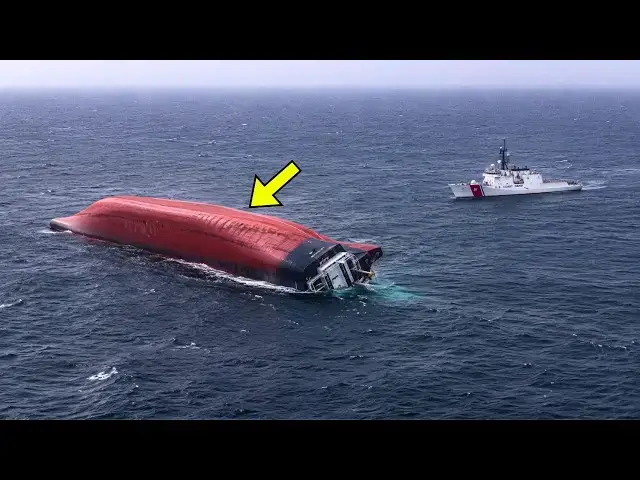
Container Ship Vanishes in a Typhoon—Coast Guard Finds It Upside Down Days Later
Jul 4, 2026
Cargo Ship Vanishes in a Typhoon—Coast Guard Finds It Upside Down Days Later.
Two days earlier, the 145-foot vessel had reported engine failure while Super Typhoon Sinlaku was tearing across the Northern Mariana Islands.
#DidYouKnow
Show More Show Less View Video Transcript
0:00
April 18th, 2026. [music] Somewhere over
0:03
the dark Pacific Ocean, a US Coast Guard
0:07
HC-130
0:08
Hercules was searching the waters north
0:11
of Saipan. For hours, there was nothing
0:14
below them but ocean. No signal, no
0:17
crew, no sign of the missing cargo ship
0:20
Mariana.
0:21
Two days earlier, the 145-ft vessel had
0:25
reported engine failure while Super
0:27
Typhoon Sinlaku was tearing across the
0:31
Northern Mariana Islands. Then,
0:33
communication went silent. The first
0:36
search plane had already been forced
0:38
back by heavy winds. But now, as the
0:41
aircraft passed northeast of a small
0:43
island called Pagan, the crew spotted
0:46
something in the water. At first, it
0:48
looked like debris. Then, they realized
0:51
what they were seeing. It was a ship,
0:53
upside down, floating in the open
0:55
Pacific. And somewhere around that
0:58
overturned hull, six crew members were
1:00
still unaccounted for.
1:03
So, how does a cargo ship vanish in the
1:05
middle of a typhoon? How does it drift
1:08
almost 100 nautical miles from its last
1:11
known position? And what happened after
1:13
the final call went silent? Let's get
1:15
into it.
1:17
The story began on April 15th, 2026.
1:21
The Mariana was a US-registered dry
1:23
cargo vessel, about 145-ft
1:27
long, operating near the Northern
1:29
Mariana Islands. On board were six crew
1:32
members. That day, the ship reported a
1:35
serious problem. Its starboard engine
1:37
was disabled. At sea, an engine failure
1:40
is never just a mechanical issue. A ship
1:43
that can move can fight the waves. It
1:46
can turn into the weather. It can adjust
1:48
its position. But a ship that loses
1:51
power becomes vulnerable. And the
1:53
Mariana was not facing ordinary weather.
1:56
Super Typhoon Sinlaku was moving through
1:59
the region, bringing violent winds,
2:01
dangerous seas, flooding, and damage
2:04
across the islands. The vessel was
2:07
roughly north to northwest of Saipan,
2:10
far from easy help, far from safe
2:12
harbor, and with the storm still
2:14
affecting the area, every hour mattered.
2:17
The Joint Rescue Coordination Center in
2:19
Honolulu was notified. At first, there
2:22
was still communication. Coast Guard
2:25
watch standers set up regular contact
2:27
with the vessel through its manager.
2:29
Every hour they checked in. Every hour
2:32
they waited for signs that the Mariana
2:34
was still holding on. At that point,
2:37
there were no public reports of medical
2:39
emergencies, no final message released,
2:42
no dramatic last words, just a disabled
2:45
engine, a powerful storm, and a ship in
2:48
the wrong part of the ocean at the wrong
2:50
time.
2:52
Then communication was lost. That is the
2:55
moment everything changed because when a
2:57
ship goes silent in the middle of a
2:59
storm, the ocean becomes the enemy. It
3:02
scatters debris. It shifts search areas.
3:06
It moves vessels miles away from where
3:08
they were supposed to be. And with every
3:11
passing hour, the place rescuers need to
3:13
search becomes larger.
3:16
The Coast Guard launched an HC-130
3:19
Hercules from Air Station Barbers Point.
3:22
This aircraft was made for long-range
3:24
search and rescue. It could fly for
3:27
hours. It could cover huge sections of
3:30
ocean. It was exactly the kind of plane
3:32
you send when a vessel disappears far
3:35
offshore.
3:36
But even that was not enough at first.
3:39
The aircraft had to turn back to Guam
3:41
because of heavy winds in the search
3:43
area. Think about that for a second.
3:45
[music] The same storm that may have put
3:48
the Mariana in danger was now stopping
3:51
the search plane from reaching it.
3:53
Somewhere out there, the ship was
3:55
silent. Somewhere out there, six people
3:57
were missing.
3:58
>> [music]
3:58
>> And the first major attempt to find them
4:01
had been pushed back by the weather.
4:03
When conditions allowed another search,
4:06
the aircraft returned to the sky. Below
4:08
the crew was the Pacific, huge, dark,
4:12
restless. They scanned the water north
4:15
of Saipan looking for anything, a hull,
4:18
a flare, a raft, a field of debris. But
4:22
at sea, even a ship can be hard to see.
4:25
Cloud shadows move across the water.
4:27
White foam can look like wreckage.
4:30
Wreckage can disappear between waves.
4:33
Then, northeast of Pagan, the crew
4:35
spotted a shape. It was not where they
4:37
expected the Mariana to be. It was about
4:40
34 nautical miles northeast of Pagan and
4:43
roughly 100 nautical miles from the
4:45
vessel's last known position.
4:48
At first, they could not treat it as
4:50
confirmed. Search crews do not assume,
4:53
they verify. But the shape matched what
4:56
they were looking for, a vessel
4:58
overturned, floating upside down. The
5:01
Mariana had been found. But finding the
5:04
ship did not solve the mystery. It made
5:06
it more urgent because now rescuers had
5:09
to answer the question nobody wanted to
5:11
ask, where was the crew?
5:14
Once the overturned vessel was spotted,
5:17
the mission expanded. The Coast Guard
5:19
was not alone. Aircraft, cutters,
5:22
military rescue teams, and international
5:25
partners joined the search.
5:27
The USCG Frederick Hatch moved toward
5:30
the area. US Air Force rescue personnel
5:33
joined the operation. A US Navy P-8A
5:37
Poseidon helped search from above. Japan
5:40
sent aircraft and a patrol vessel. New
5:43
Zealand also contributed a P-8A
5:45
Poseidon.
5:47
This was no longer a simple search for a
5:49
disabled ship. It had become a
5:51
multinational mission across open ocean
5:55
after a violent typhoon tore through the
5:57
region.
5:58
And the ocean was still moving the
6:00
evidence. The overturned hull drifted
6:03
more than two dozen nautical miles from
6:05
where it was first spotted. That meant
6:08
search crews were not working with a
6:10
fixed scene. They were chasing a moving
6:12
puzzle.
6:13
Then came another important detail.
6:16
Search aircraft spotted debris far from
6:18
the capsized vessel. Among it was a life
6:21
raft, partially inflated, partially
6:24
submerged. And it was found far away
6:27
from the ship. That one detail raised
6:30
more questions than answers. Had the
6:32
crew tried to abandon ship? Had the raft
6:35
broken free? Was it deployed before the
6:37
vessel overturned? Or had the storm
6:40
ripped it loose and carried it away?
6:43
Public reports did not give a final
6:45
answer. And that is what makes this part
6:47
of the story so haunting. At sea, a life
6:50
raft can mean hope, but it can also mean
6:53
uncertainty. A clue floating in the
6:56
wrong place. A sign that something
6:58
happened, but not enough to explain
7:00
exactly what.
7:02
When rescue teams reached the overturned
7:04
Mariana, the work became even more
7:07
dangerous. US Air Force pararescuemen
7:10
and divers were sent to the scene. They
7:13
deployed small boats. They entered the
7:15
water. They moved around the hull. But
7:17
an overturned vessel is not easy to
7:20
search. The ocean is moving. The
7:22
structure may shift. There may be lines,
7:25
debris, sharp metal, or trapped pockets
7:28
inside. And even if divers find a
7:30
possible entrance, going inside is never
7:33
simple. A capsized ship is confusing,
7:37
dark, unstable. The layout is upside
7:40
down. A floor becomes a ceiling, a
7:43
hallway becomes a trap. Every movement
7:46
has to be slow, careful, and controlled.
7:49
The teams examined the outside of the
7:51
vessel and looked for safe access
7:54
points. They also considered using an
7:56
underwater remotely operated drone to
7:58
search inside.
8:00
Eventually, searchers confirmed what
8:02
everyone feared. One crew member was
8:05
recovered from the vessel. The other
8:07
five were still missing.
8:10
From that moment, the mission became
8:11
even heavier because rescuers were not
8:14
only searching around a ship, they were
8:16
searching an ocean that had already
8:19
carried debris far from the wreck.
8:21
They searched by air. They searched by
8:24
sea. They searched around islands and
8:26
open water across the Northern Marianas.
8:30
Every aircraft pass mattered. Every
8:32
possible object in the water had to be
8:35
checked. Every hour changed the odds.
8:38
By April 26, crews had already searched
8:41
more than 85 hours and covered more than
8:44
127,000
8:46
square nautical miles.
8:48
That is almost impossible to imagine. A
8:51
search area so large, it becomes hard to
8:54
picture on a map. And still, they kept
8:57
going because somewhere in that massive
8:59
area, five crew members remained
9:02
missing. But the ocean was not making it
9:04
easier. A typhoon does not simply pass
9:07
and leave everything normal again. It
9:10
damages ports. It floods communities. It
9:13
throws debris into the water. It changes
9:15
currents, conditions, and visibility.
9:18
While the search for the Mariana
9:20
continued, the region was also dealing
9:22
with the aftermath of Sinlaku. Homes had
9:25
been damaged. Power had been knocked
9:27
out. Communities were recovering. And in
9:30
the middle of all that, one missing
9:32
cargo ship became one of the most urgent
9:35
stories in the Pacific.
9:37
The Mariana had started as a mechanical
9:39
emergency, a disabled engine, a ship in
9:42
trouble, but the storm turned it into
9:45
something far larger. A missing vessel,
9:48
an overturned hull, a drifting wreck, a
9:51
life raft far from the ship.
9:53
One crew member recovered, five still
9:56
missing, and a search area growing
9:58
larger than California. On April 29th,
10:01
after more than 100 hours of searching
10:05
and more than 135,000
10:07
square nautical miles covered, the Coast
10:10
Guard made the decision no rescue
10:12
service ever wants to make. They
10:14
suspended the active search.
10:17
That does not mean the story became less
10:19
important. It means time, weather,
10:22
survival chances, and the size of the
10:25
ocean had all been weighed. It is one of
10:27
the hardest decisions in search and
10:29
rescue because for families, suspension
10:32
does not feel like an ending. It feels
10:35
like silence.
10:37
The same kind of silence that began when
10:39
the Mariana stopped responding. And that
10:42
is what makes this story so powerful.
10:44
There was no clear final message
10:46
released to the public. No complete
10:49
explanation of the exact moment the ship
10:51
overturned. No full answer for what
10:54
happened to the remaining crew. Just
10:56
fragments. An engine failure. A massive
10:59
typhoon. A lost signal. A search plane
11:03
forced back by wind. A ship found upside
11:06
down. A life raft drifting far away. And
11:10
thousands of miles of ocean searched by
11:12
people who did not want to give up. The
11:15
Mariana was not a famous ship. It was a
11:18
working cargo vessel. The kind of ship
11:20
most people never think about. But ships
11:23
like that cross dangerous waters so
11:25
islands can keep moving. And sometimes
11:28
their stories only become known when
11:30
something goes wrong.
11:32
The Pacific can look beautiful from
11:34
above. Blue, endless, almost peaceful.
11:38
But during Super Typhoon Sinlaku, it
11:41
became something else. A place where a
11:44
disabled ship could disappear. Where
11:46
rescuers could search for days. Where a
11:49
vessel could be found upside down miles
11:52
from where it was last known to be. And
11:55
where some questions may never be fully
11:57
answered. So the next time you see a
11:59
cargo ship on the horizon, remember the
12:02
Mariana. Remember the six people on
12:04
board. Remember the search crews flying
12:07
over the Pacific looking for anything in
12:09
the water. Because sometimes the ocean
12:12
gives back the ship, but not the whole
12:14
story. If you enjoyed this video, like,
12:17
subscribe, and hit the notification bell
12:20
for more real stories from the strange
12:22
and dangerous corners of our world. And
12:25
tell us in the comments, if you were
12:27
flying over the ocean and saw a ship
12:30
floating upside down, what would you
12:32
think happened?
#Jobs & Education