Up next in 10

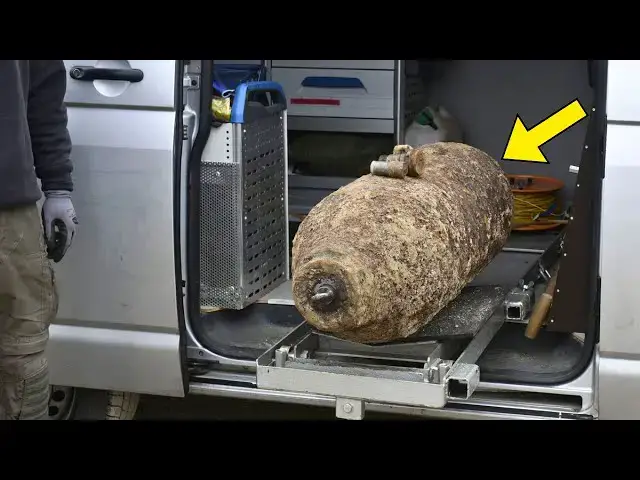
Workers Find A Strange Object. When Police Arrive, They Shut Down the Entire Area
Jul 7, 2025

Workers Find a Strange Object. When Police Arrive, They Shut Down the Entire Area.
Working on a construction site, it’s not unusual to find objects that might seem out of place. Whether it’s jewelry, antiques, or in some cases, even ancient artifacts, it’s easy for things to become buried under the ground, only to be discovered years later by the construction workers digging into the earth.
🔔 Hit the bell next to Subscribe so you never miss a video!
❤️ Like, Comment and Subscribe if you are new to the channel!
Join Our Family For More Exclusive Content and Perks :
https://www.youtube.com/channel/UCOaD4JxNYk29LHbHTOx3SQA/join
🔗 More Amazing Stories from Our Channel:
✅ Man Walks 20 Miles To Work Until One Day Cop Follows Him And Sees Why
https://www.youtube.com/watch?v=AHlFcQ0OF8g
✅In 1997, She Got Septuplets — See What They Look Like 21 Years Later! https://www.youtube.com/watch?v=0dQpSkmEv_Y
#story #storytime
#did_you_know
Show More Show Less View Video Transcript
0:00
Working on a construction site, it's not
0:02
unusual to find objects that might seem
0:04
out of place. Whether it's jewelry,
0:06
antiques, and in some cases, even
0:09
ancient artifacts, it's easy for things
0:11
to become buried under the ground, only
0:13
to be discovered years later by the
0:15
construction workers digging into the
0:16
earth. However, one construction crew in
0:19
Germany couldn't believe their eyes when
0:21
they uncovered a deadly item that was
0:24
buried deep beneath the ground of a
0:26
bustling city. Once they realized what
0:28
it was, they knew it wasn't just their
0:30
lives that were in danger. But before we
0:32
start, smash the like button and make
0:34
sure to subscribe if you haven't and hit
0:36
that notification bell so that you won't
0:38
miss any new stories. Back in 2016, a
0:41
construction team was working hard in
0:43
Augsburg, one of the oldest cities to
0:45
ever exist in Germany. At the time, they
0:47
were in good spirits as the job was
0:49
going well and they hadn't run into any
0:51
major issues at that point, something
0:53
that's rare when working on a
0:54
construction site. However, once their
0:56
digging tools struck a large object,
0:58
they halted their work. It was at this
1:00
point they knew they had found something
1:02
out of the ordinary. The construction
1:04
crew was in anticipation of Christmas,
1:07
which was just one week away. Many of
1:09
them were looking to get some time off
1:10
work to spend with their families. A lot
1:12
of their relatives were also visiting
1:14
from out of town. Yet, once the crew
1:16
learned what they had found beneath the
1:18
Earth, they wished that all of their
1:20
loved ones were as far away from the
1:22
city as possible. But what had they
1:23
found? Being safe rather than sorry, the
1:26
crew knew that the only thing to do now
1:28
was to bring in a specialist to examine
1:30
the object. With no other options, they
1:32
made the call. 5 days after the
1:34
specialist visited the site and ran some
1:36
tests, officials were forced to make the
1:38
decision whether to evacuate the whole
1:40
city or not. At this point, the public
1:43
was unaware as to what was going on. So,
1:45
what could have been so terrifying to
1:47
the specialist and the city officials?
1:49
To everyone's horror, the object they
1:51
unearthed turned out to be an unexloded
1:53
two-tonon bomb right in the heart of the
1:56
city. Judging by the type of bomb, it
1:58
was concluded that it was one that was
1:59
supposed to be detonated during World
2:01
War II, a horrifically deadly conflict
2:04
that lasted between 1,939
2:08
and 1,945.
2:10
If the bomb had in fact gone off when it
2:13
was supposed to, it's likely the city of
2:15
Augsburg may not have existed today.
2:17
During World War II, there was certainly
2:19
no shortage of bombs. Throughout the
2:21
conflict, more than 2.7 million tons of
2:24
bombs were dropped on Europe by both the
2:27
British and United States air forces,
2:29
wreaking havoc on the Axis forces.
2:31
Incredibly, 1.35
2:34
million tons of these bombs were dropped
2:36
on Germany alone, devastating the major
2:39
parts of the country. Regardless, the
2:41
Axis forces in Europe refused to
2:43
surrender regardless of the relentless
2:45
bombings until May 1,945.
2:49
By the time the Nazis finally waved the
2:52
white flag, their country was in utter
2:54
ruins. In fact, the majority of their
2:57
country had been reduced to nothing more
2:59
than rubble. The Nazi soldiers had
3:01
suffered defeat from the Allies, and in
3:03
the process, entire cities had been
3:05
decimated by relentless bombings by the
3:08
Allies. Incredibly, while some areas of
3:10
certain cities had been reduced to dust,
3:12
some other parts remained eerily
3:14
untouched by the bombings. Unbelievably,
3:17
it's estimated that around 10% of the
3:19
millions of tons of bombs that were
3:21
dropped never exploded and were buried
3:24
by the piles of ash that made up the
3:26
newly named East and West Germany. After
3:28
the conclusion of the war, German cities
3:30
began to slowly rebuild under the
3:32
watchful eye of the occupying Allied
3:35
soldiers. However, builders and soldiers
3:37
couldn't keep track of where some bombs
3:39
had fallen that had never detonated.
3:41
This made rebuilding far more
3:43
complicated. The city officials of
3:44
Augsburg gave the bomb's location and
3:47
the retrieval responsibilities over to
3:49
the camp middleby sight gungs de KMBBD
3:53
in hopes they would be able to solve the
3:54
problem. The KMBBD forces are a bomb
3:57
disposal unit made of trained police
3:59
officers and firefighters whose job is
4:01
to handle situations exactly like this.
4:03
But how would they be able to diffuse a
4:05
two-tonon bomb that nobody was sure if
4:08
it could explode at any second? Everyone
4:10
was holding their breath. Even in 2020,
4:13
the KMBBD is still hard at work removing
4:16
thousands of tons of bombs that remain
4:18
covered under the earth in Germany.
4:20
Unfortunately, many of them still
4:22
haven't been found, which makes building
4:24
and working on construction particularly
4:27
hairy in some parts of Germany. When Hor
4:29
Reinhardt, the chief of the Brandenburgg
4:31
State KMBBD, joined the force in the
4:33
1,980s,
4:36
he never imagined that he would still be
4:38
doing the same job more than 30 years
4:40
later. Incredibly, every year, the KMBBD
4:43
teams still discover close to 500 tons
4:46
of weaponry and have to regularly
4:48
diffuse bombs that were dropped by
4:50
Allied strategic bomber planes. Horst
4:52
expressed his concern when he stated,
4:54
"People simply don't know that there are
4:56
still many bombs that are under the
4:58
ground. The hardest part is both finding
5:00
these unexloded bombs as well as
5:02
informing the public to be extremely
5:04
cautious when they are digging into the
5:06
ground in order to avoid a catastrophe.
5:09
As you can imagine, being a member of
5:11
the KMBBD takes a lot of training and a
5:14
lot of bravery considering they're
5:16
diffusing old bombs. According to HT,
5:18
you need a clear head and calm hands. If
5:21
you're afraid, you can't do it. For us,
5:24
it's a completely normal job. In the
5:26
same way that a baker bakes bread, we
5:28
diffuse bombs. Clearly, it's not a job
5:31
for everyone, and it takes a certain
5:33
type of person to do it. Although Horst
5:35
and his team do a lot of work on their
5:37
own, they are only a small part of the
5:39
German bomb retrieving effort.
5:41
Nationally, KMDB teams have located
5:43
2,000 tons of unexloded materials, which
5:46
is a frightening number. Over 70 years
5:49
have passed since the bloody conflict
5:50
that was World War II has ended, and
5:53
there's still no end to finding these
5:55
unexloded bombs in sight. More likely
5:57
than not, we will continue to keep
5:59
finding bombs for decades to come.
6:01
Today, in many parts of Germany, before
6:04
a new construction project breaks
6:06
ground, typically there's a survey
6:08
completed of the area, although they
6:10
aren't always precise. For example, at
6:12
one point, 20,000 people were evacuated
6:15
from Cologne, Germany, when a one-tonon
6:18
bomb was found in the city during a
6:19
construction project. Incredibly, the
6:22
bomb found in Auxburg was twice that
6:24
size. How many people would need to be
6:26
evacuated then if the bomb proved to be
6:28
a serious threat? However, the bomb
6:31
found in Cologne isn't the only one that
6:33
resulted in an evacuation of the
6:35
surrounding population. Another 20,000
6:37
Dortmund citizens were evacuated while a
6:40
half-tonon bomb was in the process of
6:42
being diffused. On top of that, 45,000
6:45
residents in Cooblins were also
6:47
evacuated in 2011 when a bomb was
6:50
discovered at the bottom of the Ryan
6:52
River. Luckily, none of the evacuations
6:54
took place during the holiday season,
6:56
which was the case in Augsburg. When the
6:57
KMBBD arrived on the scene in Augsburg,
7:00
they were eerie about what they were
7:01
looking at. As it turns out, the bomb
7:04
that had been uncovered belonged to the
7:06
British Royal Air Force. Concerned for
7:08
the safety of the whole population of
7:10
the city, they prompted the largest
7:11
evacuation since World War II. 54,000
7:15
people in Augsburg would be forced to
7:17
leave their homes. What's worse is that
7:18
it would have to be on Christmas
7:20
morning. The construction team
7:21
discovered the bomb on the 20th of
7:23
December, but the city waited until
7:26
Christmas to enforce the evacuation for
7:28
specific purposes. City officials
7:30
claimed that on a working day, the
7:32
evacuation would be much more difficult
7:34
since the whole work and business life
7:36
would be disrupted. On a holiday, there
7:38
is also less traffic. Even though this
7:40
would surely put a damper on the city
7:42
residents Christmas, it was the best
7:44
possible solution. In order to ensure
7:46
that the evacuation went as smoothly as
7:48
possible, the city used over 100 buses
7:51
and trams to help the citizens of
7:53
Augsburg out of the city as quickly as
7:56
possible. At the same time, police and
7:58
other officials walked the streets with
7:59
air horns and megaphones to notify
8:02
anyone that hadn't heard about the
8:03
evacuation order. It was imperative that
8:05
they got everyone out of the city as the
8:07
bomb could still be armed. At 300 p.m.
8:09
on Christmas Day, two bomb diffusing
8:12
experts from Vertzburg got to work on
8:14
the explosive. At the time, they were
8:16
the only two people let within a mile of
8:18
where the bomb had been found at the
8:20
construction site. With all of the
8:22
citizens safely out of harm's way, it
8:24
was time to get to work. However, even
8:26
though the citizens were out of the
8:28
city, they still didn't want to risk the
8:30
explosive detonating and destroying the
8:32
surrounding area. Considering that both
8:34
of the men's lives were at risk, as well
8:36
as the safety of the surrounding
8:38
buildings, the two bomb experts worked
8:40
tirelessly for hours to make sure that
8:42
the job was done right. The experts also
8:44
were surrounded by a wall of sandbags
8:46
just in case an explosion to happen. It
8:49
was a stressful 4 hours, but in the end,
8:51
they were successful. Everyone breathed
8:53
a big sigh of relief that nothing went
8:56
wrong. Luckily, the twoman bomb team was
8:58
successful in their mission thanks to
9:00
their skill and bravery they
9:01
demonstrated through their work. The
9:03
Auxburg bomb was diffused and the city's
9:05
residents were allowed to return to
9:07
their homes just in time for Christmas
9:08
dinner. Although it was an incredibly
9:10
stressful day for most, everything
9:12
worked out in the end. This experience
9:14
also helped to raise awareness about the
9:16
dangers of unexloded bombs throughout
9:18
the country of Germany.
#Public Safety
#Emergency Services