
Up next in 10

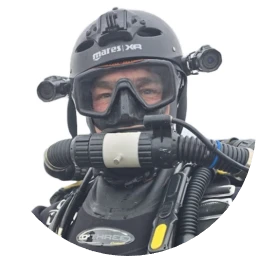

What is the best wreck in Scapa Flow?
Many divers point straight to the battleships, but there is one cruiser that consistently stands apart. In this video, I dive the German light cruiser SMS Brummer and explain why so many experienced divers quietly rate her as the number one wreck in the Flow.
Lying on her side, Brummer presents her features clearly and accessibly, from guns and superstructure to machinery spaces and fine details rarely seen elsewhere. Her manageable depth and compact size allow longer run times with less decompression, making it possible to slow down and really explore rather than rush between landmarks.
I also look at what Brummer was designed to do, her role as a fast mine layer and convoy raider during the First World War, and how deception and speed made her one of the most effective surface raiders of the conflict. Finally, I explain why she lies here today after the scuttling of the German High Seas Fleet in June 1919.
This is a dive that combines history, engineering, and exceptional underwater visibility into how a warship actually worked. If you want to understand why Brummer offers something different to the battleships, this dive explains it.
If you enjoy in depth wreck diving, maritime history, and seeing features that most divers swim straight past, this one is for you.
━━━━━━━━━━━━━━━━━━━━━━
OPERATOR
I dived from MV Clasina (Halton Charters) owned and operated by Bob Anderson - https://www.clasina.co.uk/
━━━━━━━━━━━━━━━━━━━━━━
THANKS
Show More Show Less View Video Transcript
0:00
What is the best wreck in Scapplow? Many people would immediately point to
0:07
one of the great battleships. Massive holes, huge guns, and an
0:13
undeniable sense of scale and history. But ask that question to people who've
0:20
dived scapper an awful lot, and you'd be surprised how often a different answer
0:26
comes up. Brum. While the battleships are impressive,
0:32
the cruisers offer a very different experience. And Brummer is often singled
0:38
out as the highlight. Like all the cruisers in Scapper Flow, it's lying on its side, and that changes
0:46
everything about how the wreck can be dived. Instead of an inverted hull with much of
0:53
the detail hidden below, deck guns, fittings, superructure, and
0:59
bridge features are all laid out clearly in front of you. The dive becomes about
1:05
observing and understanding the ship rather than trying to get underneath the hull to see anything of interest. Its
1:13
depth and size also play a major part. Sitting shallower than the battleships
1:19
and being far more compact, Brummer allows longer run times with less
1:25
decompression. That gives you the opportunity to slow down, spend time in key areas, and
1:32
really absorb the wreck rather than rushing from one bit to the next trying
1:38
to get everything in in a single dive. Features survive here that are missing
1:43
on many Scappere. The brass bridge is still in place and
1:49
even the delicate iris mechanism of one of the search lights can be seen.
1:55
These small details are really rare underwater and add a huge amount of
2:00
character and interest to the dive. These make the dive special, but also
2:06
raise an obvious question. What kind of ship was the Brummer? Why
2:12
was she built the way she was? and how did she end up here on the seabed?
2:17
Bromemer was built during the First World War. She was launched in 1915 and
2:22
commissioned in early 1916 at a point when Germany was looking for fast, flexible warships that could
2:30
operate independently rather than as part of the main battle fleet.
2:35
She wasn't just another light cruiser. She was designed for speed, deception,
2:41
and mine warfare. She was designed to resemble British cruisers,
2:47
carried powerful guns for her size, and was fast enough to outrun most opponents. That made her ideal for
2:54
offensive mine laying and for striking Allied shipping by surprise.
3:00
That role came into sharp focus during her convoy raiding operations.
3:06
In late 1917, operating with her sister ship, Brahma attacked escorted North Sea
3:12
convoys by posing as a British warship. The Ruse allowed the cruisers to close
3:18
in before opening fire at short range. The convoys escorts were overwhelmed and
3:25
multiple merchant ships were sunk in a single action. It was one of the most successful
3:31
surface raiding operations carried out by the German Navy during the First World War and exposed just how
3:38
vulnerable convoy routes could be, but also how effective Brummer could be.
3:45
After the armistice, she was interned at Scappa Flow along with the rest of the German high seas fleet. And famously on
3:54
the 21st of June 1919, rather than allow the ships to be seized
3:59
and divided up by the Allies, the German crew scuttled them. Brummer settled onto
4:06
the seabed where she still lies today, preserved by cold water and depth. She
4:13
was also fortunate that she escaped much of the heavy salvage that stripped so
4:18
many of the other wrecks. I'm going to see a bit of that as we go through the dive. But as you can see
4:25
here, just arriving on the top of the wreck. There's actually three of us on this dive. Uh the guy there you can see
4:31
in a yellow box, that's Bob. He's the skipper of MV Clina and he's going to be
4:37
taking us around for this dive. The other diver that you've seen on the way down is James. He's the guy in the
4:43
Liberty. He's also got a GoPro on a selfie stick, so you're going to be
4:49
seeing a little bit of that as well. Now, we've landed kind of on the middle
4:54
of the wreck, basically. And what we're doing now is we're heading forward. So, the majority of the wreck is off to my
5:01
left hand side here. And the first thing that Bob is going to show me is one of the guns.
5:08
The Brummer had four 150 mm crop guns mounted to it. Those are the same ones
5:14
that we used as secondary armorament on a lot of the battleships. And if you have a look now, Bob is just about to
5:20
shine his torch on the actual turret. You can see it's covered in a lot of plate and stuff that's come down from
5:25
above. But there is the actual gun uh moving kind of left to right. This one
5:32
is pointing to the stern, although in operation it would being used to fire either off to the port or to the
5:38
starboard. It's actually fallen out of its mount and is now resting on the seabed. Most of the guns on the Brahma
5:45
have done that simply, you know, obviously they're really heavy. The weight of the armor on the weight of the
5:51
gun itself pulls the gun away from the ship and then onto the seabed. So, what
5:56
I'm doing here is I'm looking into the rear of the gun and you can see in there, you can see the breach, you can
6:01
see some of the mechanism. I always think it's incredible when you look at something like this to think of the
6:07
history that those were involved with. So those guns there, they took part in
6:12
the famous battle of Lurwick, which is probably something that very few people have heard of, but it was celebrated by
6:20
the Kaiser at the time who drunk champagne because of the success. So this was after the battle of Jutland and
6:26
they sent two of the cruisers uh Brummer and its sister out to go and find some
6:31
convoys and attack them which is exactly what it did. It was disguised as a
6:36
British cruiser. It fooled the destroyers and the armed troller escorting the convoy and then it was
6:43
able to attack and sink nine merchant ships with about 250 sailors going down.
6:49
It was viewed by the German Navy as an incredible success at a time when they
6:54
probably needed a bit of a boost to morale. Oh, I guess I should also add that they sunk a Royal Navy destroyer
7:01
HMS Strong Bow, although three of the merchant ships did manage to escape. I
7:06
mean, it's still a pretty impressive achievement. And it was so successful that the German Navy considered using
7:14
Brummer and sending it out into the Atlantic where they hoped it could wreak even more havoc on uh British shipping.
7:22
Now, as you can see here, we are just moving forward and this is the one of the masts and down there is going to be
7:29
the iris. In fact, you can see it there, the iris of one of the search lights. Now, this is a really well-known feature
7:37
of this uh the Bremer, and it's one of the things people always look for. What's not often known though is how
7:43
important this piece of military technology was, and it really came into its own at the Battle of Jutland. Search
7:50
lights weren't just tools for seeing in the dark. They were actually used as weapons, and sometimes they were also
7:57
death sentences. When the daylight faded on the 31st of May 1916,
8:03
two enormous fleets slipped into hours of night fighting, confused, fragmented,
8:10
dangerous. In that darkness, identifying a ship even a few hundred meters away
8:16
was almost impossible without light. So, search lights were really important. But
8:22
how you use them mattered even more. And this is where there was a crucial difference between the British and
8:29
German navies. The Royal Navy generally treated search lights as an identification and control
8:36
tool. When a suspicious shape appeared, a light was switched on and kept on long
8:42
enough to confirm what it was and allow multiple ships to engage. That sounds
8:47
quite sensible, but in reality and actually at the battle, it proved
8:52
catastrophic because a search light doesn't just illuminate a target. It
8:58
also marks the exact position of the ship using it. In the blackness of a
9:04
North Sea night, the light source itself became the aiming point.
9:10
Now, the Imperial German Navy used their search lights very differently. They
9:16
were fitted with the iris that you can see here. And this worked just like the
9:21
aperture in a camera. The beam could be tightly controlled. It could be
9:26
narrowed, dimmed, or opened for just a small moment.
9:32
German crews were trained to flash the light briefly, identify the target, and
9:38
then close the iris almost immediately. So, the exposure lasted seconds, not
9:44
minutes. And that difference in control was decisive. At close range, German ships could
9:52
confirm a target and fire almost instantly without leaving a bright
9:58
beacon in the darkness. By contrast, British ships illuminated
10:04
continuously and they paid the price, most famously with the loss of HMS Black
10:10
Prince. During the night action, Black Prince illuminated German battleships at very
10:17
short range. Within moments, multiple heavy ships fired directly into the
10:23
light source. The result was overwhelming and immediately the ship was destroyed with almost all hands
10:30
lost. Now, this wasn't bad seammanship. It wasn't, you know, a lack of training.
10:36
It was a doctrine colliding with reality.
10:42
The German restraint with search lights reflected a wider philosophy of night
10:47
fighting. Short exposure, rapid engagement, minimal signaling. Survive
10:53
the encounter rather than dominate it. Now, the search lights didn't decide the
10:59
battle on their own, but they magnified the difference. And in the end, the
11:05
British paid the price. And by the end of Jutland, navies around the world had
11:10
learned a really hard lesson in night combat. Sometimes the most important
11:16
thing is not what you can see, it's what you choose to show.
11:22
Now, so that was a bit of an interlude there. And you can see I've been um
11:28
James has been illuminating the Irish there and you've seen it all there. But we've now moved on and this is the
11:34
bridge. And you can see there the the railings. You can see there's various cables and wiring and stuff. And this
11:40
bridge is made of brass. It's another one of the really distinctive features of the Brummer. And one of the things
11:46
that people really look forward to seeing. It's incredible, frankly, that it has
11:51
survived and it's not been salvaged. The reason it was made of brass is, of course, for its lack of magnetic
11:58
signature. And up front here on that pedestal there, that is where the main ship's compass would have been because
12:06
this ship, like most of the ships of the period, had an open bridge. I don't know
12:11
why they did that, but they all had open bridges. So sailors would would be out here. This was where they commanded and
12:19
operated the ship from. About the only time they didn't do that was during battle when they would move into armored
12:25
citadels. I mean, still absolutely crazy. I don't understand why you would
12:31
try and manage a ship, you know, on the North Sea from an open bridge. It must have been absolutely horrendous. But
12:38
they they all did it not just on warships. They did it on merchant ships as well. So there must have been a good
12:43
reason for it because people aren't stupid. They do, you know, they make rational decisions. So there must have
12:49
been a reason for it. Maybe they thought they would get better. They'll be able to see things better from it. I I don't
12:54
know. I mean, the other mystery with this, of course, is is how come this bridge is still here? How come it's not
12:59
been salvaged? And once again, unfortunately, I don't know the answer to that. I've gone back to my uh various
13:06
different books. I've even asked Chat GPT to come up with a reason to see if it knows why why it wasn't salvaged, but
13:13
but it doesn't. You know, maybe it just wasn't worth the effort, but that's doesn't, you know, can't seem right.
13:19
There's quite a lot of brass and stuff there, but the simple fact is it wasn't and it never will be because all the
13:26
wrecks at Scappaflow are legally protected under UK law and there is to
13:32
be no further salvage of them. So that's obviously good news. That means that this will stay here uh forever or at
13:39
least probably until the rest of the wreck collapses on it. But hey um that's
13:45
uh that's another issue. But it is great to see something like this still here and makes you imagine what the rest of
13:52
the wrecks would have been like if they hadn't been salvaged. Now you can see I've just switched off
13:58
my tray mounted video there. I'm back on the paral lens off to my right hand side with the big uh the big video light
14:05
there. That's Bob. He was obviously keen to ensure that I'd seen the bridge. Keen to ensure that I'd seen the iris. And
14:12
we're now going to move forward and have a look at the bow. Whilst we do that,
14:18
one of the things to understand I think with all the cruisers is that because they're lying on their side, what has
14:24
happened is stuff has slow has fallen off and you know onto the seabed. But
14:30
that doesn't just include things like guns um and the bridge. What has also
14:35
happened is the decks have started to peel away as well. So the decks almost like I don't know opening a tin I guess
14:42
have come off peeled away and in some cases have folded over in some cases of
14:47
I've obscured things. So that's what I'm doing here is I'm videoing through a piece of the deck and you can see there
14:53
that's James uh who likes to have a good ferret round into things. So he's been under that bit of folded over deck plate
15:00
and he's gone and uh and to see what he can see. I think somewhere in there is probably the armored citadel. So that's
15:08
what he's been I would imagine that's what he's been to look at. But what we're going to look at now is I think
15:14
the forward gun slightly unusually most ships tend to have as you know most of their guns pointing forward but the
15:21
Brummer doesn't. It's only got a single one of those 150 mm guns. And you can
15:27
see it there just coming up um in front of me there. I'm looking at obviously the back of the back of the turret which
15:34
was open. And I'm going to look inside and you can see uh the breach. You can see all the loading mechanism and all
15:41
that kind of stuff. Now, one of the things that I don't really know is why
15:46
the turrets on these vessels were open at the back. And there must have been a
15:51
good reason for it. You know, maybe it was to reduce weight. Maybe it was to make loading easier. Maybe it was to
15:57
keep make sure they didn't fill with smoke. Maybe it was for all those things. I don't know. The simple fact is
16:02
that all the cruisers have got very similar gun uh turrets, which is these kind of open ones. Armored at the front,
16:09
armored at the sides, open at the back. The other thing to mention with these
16:14
guns, I think, is how long they lasted. So this variant of guns served all the
16:21
way from the first ones being produced in 1906 all the way until the end of the
16:27
Second World War 1945 which when you consider the amount of change in the developments and all the kind of stuff
16:34
that happened in that period. It's really impressive but also I think testimony to how effective these guns
16:41
were. Supposedly, they were really accurate, easy to reload, and that
16:46
presumably accounts for their longevity. We're getting another really good view of the turret here and the the breach
16:53
mechanism. And I think one of the things you can see from this is that it's on the seabed, so it's kind of partially
16:59
buried in mud. Supposedly, until about 2003, this gun was up on the wreck. It
17:07
was still in its place, but then something happened then. It fell out, ended up on the seabed, dragged a load
17:14
of the the deck with it, and obviously this is where it's going to be forever more. Next item on the agenda is to go
17:22
to the bow. And the bow of the Brummer is really interesting because it was designed to mimic the bow of those
17:29
British cruisers. It was raaked rather than the standard German vertical one.
17:35
And that allowed it to mimic the Arusa class of cruisers. I might have
17:41
pronounced that wrongly, but they were a British class of light cruisers very very similar to the Brummer. In fact,
17:48
the Germans were concerned that the British would find out. So they during the construction, they actually
17:54
disguised the bow by putting extra plates on. Now what we can see here is Bob as you can see there is illuminating
18:01
with his torch the two capston at the very front of the bow and these are
18:06
steam powered capston. One of the things we'll see in a second is the actual bow has come uh away and that will allow us
18:14
to see inside and we'll see the mechanism for operating the capston.
18:19
Capston's obviously used for raising and lowering the anchor. The Brummer was
18:24
anchored off its starboard side. So you can see here the captains that we're actually looking at is the starboard
18:30
captains. Uh it's the one that's nearest the seabed because the Brumummer's on the starboard side. And you can actually
18:35
see uh we'll see in a second is the anchor chain moving out to the right. And if you follow that along uh as I'm
18:42
not going to, you would eventually find the anchor. But you know, they're they're interesting things. They're
18:49
quite iconic. They're, you know, easy to distinguish and, you know, important bits of kit, particularly in the context
18:56
of the Scappa Rex because all of them were at anchor when they were scuttled. And there you go. You can see the anchor
19:02
chain there. You can also see where some of the decking has come down on top of it. Now, Bob, as you can see, is no
19:09
longer illuminating what I can see. Um, and the reason is that he thinks he's
19:14
done his job here. So, he's he's actually headed off somewhere else. It's great diving with Bob, but he does like
19:20
to fin and he does fin relatively quickly. So, I'm spending my time getting to know the captains, getting
19:26
some to take some more video. And Bob, unfortunately, has swam off thinking
19:31
that I'm following him. Unfortunately, I'm not. So, here's uh what I haven't
19:36
realized at the moment is actually I'm by myself. But there you can see um you can see I'm looking uh into uh this is
19:43
between the decks now. So, there's a big chunk of hole plating missing. You can see uh that shaft there. That was for
19:49
turning the capston. These were steam operated and it's going down. We're actually in the the deck beneath the top
19:58
of the the bow here. And that shaft goes down to a further deck where no doubt the mechanism for actually turning the
20:04
capston lives. I think this next bit of video is going to really show how the deck has kind of
20:12
peeled away from the from the structure and how effectively, you know, the wreck is being ripped apart. So, you can see
20:18
off to the left hand side, I think that's that's the deck. Off to the right hand side is the rest of the wreck. Uh,
20:24
obviously, it's collapsed down in it in it as well. I think just shows how these wrecks are degrading. You speak to
20:31
people from um you know years gone by and they will you know tell you that these wrecks were far more intact and
20:38
you know the sort of stuff that we can see now once upon a time you either wouldn't have been able to see it or you
20:43
would have to get right inside the wreck to to to go and see it. That's obviously a double-edged sword. It's kind of great
20:50
that you can see a load of stuff you might not have been able to see otherwise. It's bad because it's a sign
20:55
that the wrecks are in decline and that, you know, one day they are going to end up completely flat on the seabed. Having
21:02
said that, they're still in far better condition than the vast majority of the wrecks that I dive in the English
21:08
Channel, which are absolutely flat. These things are still, you know, they
21:14
look like ships. You can see that they're ships whereas mine, you know, they tend to look a bit more like
21:19
scrapyard. Right. I've also been swimming back along the wreck. You can see there, this is me above the the
21:25
bridge now. You can see the the brass railings there. And off in the distance, you can see a torch. So, I'm catching up
21:31
with the other divers. And we're going to head towards the stern. Now, the stern is obviously where the engines and
21:38
the props would have been, but like all the wrecks in Scappa, it has been
21:43
salvaged. And that area was explosively salvaged. So, they blew their way in. They salvaged the turbines, all the
21:50
non-fer stuff they could get out of there, and therefore it's frankly a bit of a mess. But what there is is a great
21:57
bit where we can go inside it. And I'm going to do a lovely bit of really easy
22:04
penetration. So, you're going to see that in a in a in a bit. But at the moment, I'm just, you know, continuing
22:10
to head towards the stern. So, this is close to where that gun was that we saw
22:15
earlier. That looks like it could even be a port hole down there. Um, surprised it hasn't been salvaged, but I guess
22:22
getting that out would have taken an awful lot of work. For those of you who've been watching the depth in the
22:28
right hand side, you can see there, this is all shallower than 30 m. Because I'm on a rebreather, it's means that I'm a
22:36
long way from any sort of deco. It's a really nice depth. It's and it's one of
22:41
the reasons why diving a rebreather in scapper makes a lot of sense. You can see there that I'm just looking up at
22:48
the side of the uh hull. So I'm looking up. In fact, I'm coming up over the side of the hull here now. And you can see so
22:54
obviously the hull stretches off to my right hand side. Looking down, that's where all the stuff that has fallen off
23:01
the deck is. So down there are masts and funnels. That gun that we saw at the beginning, that is all down there. You
23:08
can also see there's kind of various hatches going into the lower decks. There's some sort of interesting piece
23:14
of machinery here. I have no idea what that is, but it looks, you know, perhaps
23:20
electrical. I don't know, maybe some sort of pump. Uh I don't know. If you know, then please stick it in the
23:26
comments. I'll be really interested to get your views in it. And then there's a load more uh plate and decking and all
23:32
that kind of stuff down there. Now, when I do my penetration, I'm going to be
23:37
coming back this way, and I'm actually going to be inside the bit that is currently to my right. So, you can see
23:43
there is a few small holes and stuff into it. And actually, that's great because what it does mean is there's a
23:48
level of ambient light when I'm doing my penetration. The other thing is, you know, I'm also
23:53
fairly confident that if I needed to at any point, I could always get out. And talking of ambient light, you've
23:59
probably seen that this dive is not pitch black. I'm at 26 m here. There is ambient light and even a little fish
24:06
there as well. So, there's ambient light reaching down to this depth, which once again is another way that it is
24:11
different to the the battleships. When you're at the bottom of the battleships, it is normally pitch black. Very, very
24:19
rarely you'll get ambient light. Whereas these kind of cruisers, particularly the Brummer, which is the, you know, pretty much the shallowest of them all, you get
24:26
you get nice, you do get an element of light, and that's always good. It, you know, makes you feel a bit better. But if you're doing any sort of photography
24:32
or videoing or whatever, it's better as well. Now, one of the things that you might be thinking is, but the wreck's
24:39
pretty bashed about. So, why am I going to the bit where it's not only bashed about, but it's also been blown apart by
24:46
explosive salvage? And that is a really good question. But one of the things is
24:51
that when they explosively salvaged it, they left a whole load of stuff down there. So, we're going to go and see
24:58
that in a bit. And we're going to see some really interesting uh bits and pieces. Well, they're interesting to me
25:04
anyway, but they're the remains of the steam turbine. So, the thing that actually made this so powerful, so fast.
25:11
We're going to be seeing some of them, you know, really interesting to me. Anyway, mechanical objects. But before
25:18
we do that, we're just coming to the bit that is really the the start of the
25:23
salvage. You can see here the hull is all is all smashed up and kind of blown open. And you can see down to my kind of
25:30
left hand side there, there's all sorts of uh bits and pieces. But what I'm doing is I'm coming round on myself. And
25:36
the reason is because I'm going to uh go up and I'm going to go up inside it and
25:41
I'm going to do a bit of penetration. You might also have seen that the other guys aren't with me. Um I've lost them.
25:48
Although I did briefly see that light. um it showed up on the video, but I don't think in person I actually saw
25:53
that light on when you kind of go back and you look at video again, you
25:58
sometimes see things that you don't see in real life, and I don't think I I saw those in real life.
26:05
So, basically what I'm doing is is I'm kind of I've been diving by myself now for for for probably five or so minutes.
26:11
Uh just enjoying it. It's quite nice. Bit disappointed, obviously, because it would be nice to be with the other two.
26:17
Bob, I'm sure, would be showing me stuff that I wouldn't see otherwise, but what I do know is I I know that this wreck
26:25
you can get inside it. I have dived it before a few years ago. Um, and I know that you can get in this bit here. So,
26:32
that's what I'm doing now. You can see that I've just got my torch on my left hand. I've put it on there. It's got
26:37
kind of like a double beam. It's got one that's kind of wide like a video light. And then it's got that one in the middle
26:43
that you can see there. That obviously uh is is exactly where I'm looking. I'm shining that on, you know, whatever it
26:49
is I want to see. Now, the interesting thing you might see here is that there's a whole load of coal in here. So, this
26:55
this must be either the coal bunker or the coal bunker has fallen into this bit here. Now, that kind of surprises me
27:01
because I don't know why, but I have it in my head that all the wrecks at Scappa, one of the issues the Germans
27:08
had was they didn't have enough coal to operate the ships, but also to keep
27:14
warm. So, they they didn't, you know, they couldn't keep the steam the boilers and stuff going. They couldn't keep the ships operational. It would appear not
27:21
to be the case with the Brummer because obviously there's a load of coal down there. The other thing you can probably
27:26
see is on the left hand side you can see the uh the boiler tubes and the the
27:32
Brummer had I think six boilers. It had two of them were oil fired, four of them
27:37
were coal fired. So really interesting you know kind of transition between technologies there. I don't know why it
27:44
had that but what you can see here is is that we're actually in between the the
27:49
decks here. I'm inside the wreck. So, the bit that we were I was swimming past earlier on is is on my kind of right
27:54
hand side. And you can see it actually looks relatively intact here. You can see there's a boiler off to my left hand
28:00
side. You can see the curve of it. And I'm just kind of moving forward. So, I'm kind of I guess on the port side above
28:07
the boilers. I'm just moving through the the kind of space here. I don't know whether there have been partitions at
28:13
some point. I suspect there probably would have been, but you you can see that I'm I'm kind of going between them.
28:18
You can also see the vents for the funnels. Um, I've gone over one already, but there's actually another one in the
28:24
floor there. You can just see it just above where my my GoPro housing is. Um,
28:29
and you can also see it's getting a bit tighter in here as well. There's all sorts of other uh bits and pieces. But
28:35
I'm I'm really enjoying this bit now because up until this point on this trip, I've not actually got inside
28:40
anything. And I suspect like most divers, I do enjoy a bit of a bit of penetration.
28:46
But I'm getting to the point now here where I think I'm going to run out of opportunities. You can see there's a
28:51
boiler to my left hand side there. It's uh cylindrical shaped as the German ones
28:56
were. They didn't use um didn't use the yarrow boilers that the British ships of
29:02
this kind of size did. So I'm just going to have a quick look down here and see if there's any way that I can either get
29:09
any further down or get any further forward. I'm going to spoil it for you by saying that I'm not going to be able
29:15
to do that, but you can probably see why. It's pretty easy, even though I've
29:20
managed to, you know, get a bit further on from where I am. You can see it's all looking a bit tricky from here on in.
29:27
So, there's whatever that cable is down there. There's a whole load of rusticles. There's just general silt and
29:34
stuff everywhere. So, this is as far as I'm going to go. I'm going to turn around here and then I'm going to head back. But there's all sorts of
29:40
interesting bits in of pieces in here. There's there's kind of wire. There is valves. There's some gauges. I think I'm
29:47
going to see one in a bit. You can also see there I've just managed to get my the top of my uh housing or top of my
29:53
video light rather stuck uh underneath something. So, it's it's getting quite tight as well. And it's it's one of
29:59
those things you can kind of I can talk about how tight it is. is I can tell you how tight it is, but unless you're
30:06
actually in there, it's uh it's difficult to kind of to get a sense for what it's like. What I have done,
30:11
though, is I've turned round. So, so my feet are actually going first now rather than my head, which it was up until this
30:18
point. And that's obviously so that it's going to make it easier for me to get out if I want to. I'm relatively
30:25
pleased. I've not managed to kick up too much silt. Um, there's obviously quite a lot of silt in here, but my my control
30:31
has generally been okay. The thing that you might be asking is
30:38
obviously I've penetrated in here. I have not lined off and you know that's a
30:43
bit of a no no. I know that people will kind of frown on that because I'm probably I don't know 15 20 m inside the
30:51
wreck. The reason for that is because it's actually really straightforward to
30:57
navigate out of here because you have that uh that light, the
31:03
ambient light coming in from the the stuff. You probably just saw one up in the ceiling. In fact, there you go. You
31:08
can look up there. You can see a bit up in the ceiling. So, that ambient light is a really good marker. The obviously
31:14
the other things things like the boilers as well provide a really good um uh
31:20
orientation. So, even if I was to kick up the silk really badly in here, I am
31:26
confident that those features would allow me to navigate out. And you can see I'm heading out now. You can probably just see at the top of the
31:32
screen there. There was a glimpse of kind of green water. So, there you go. I know where the exit is as well. And um
31:39
we saw one of those vents again, the the vents for the funnel. There's one on the left hand side. Um there's going to be
31:45
another one in a bit. I'm just kind of squeezing myself in between here. So, for those of you who who who don't know
31:50
what I'm wearing, I'm in a closed circuit rebreather. I have got a uh 7 L
31:57
cylinder on. In fact, what I thought was was green wasn't green at all. It was
32:02
another diver coming the other way. And this is going to be James who was wondering what I've what I've got up to.
32:09
But it's going to be nice to see him in a bit. I don't think I've kicked up the viz too badly for him. You can see this
32:15
is the area that I've already been over. And you can see there isn't there's very little sediment in the water. We're back
32:21
to that bit with all the coal. Now, so not a million miles away from the entrance, but it is a good opportunity
32:29
to get a bit of video of a diver inside a wreck. In fact, two divers inside a wreck because you can see both James and
32:36
Bob are there. I think James is trying to figure out whether he can get down in
32:41
there or not. Good effort to him if he can, but I think he's given up on that idea. So, he's just probably a bit
32:48
unhappy with me because those video lights are really bright. And when you get them in your face, it's not a great
32:55
experience at all. They they never seem particularly bright when you're behind the camera as I am now. But when they're
33:01
coming towards you, they are super super bright. Uh you can see there James is is
33:07
heading back the way I've come. I've not kicked up the silt too badly for him. So, he's going to get down there and
33:13
probably I think he gets about as far as I do before he decides to turn around. But I'm using the opportunity to get a
33:20
little bit of uh video for him. It's of him rather. So, what it does is it I
33:25
think nicely shows what it's like when you are sort of swimming around in here. It's not super tight. There's a
33:32
reasonable amount of room, but at the same time, you feel like you're actually diving inside of something, which is
33:38
which is really nice. So, I've left James to uh his explorations to go down
33:44
there. I'm heading back towards the exit, not least because I realized there's a significant chunk of the wreck
33:51
that I haven't seen. So, I haven't been to this salvage area yet. I'm 30 odd minutes into the dive and I want to go
33:58
and see the remains of the steam turbines. On the route there, you can see there's one of the boilers. You can see the water tubes inside it. You
34:05
probably saw just on the right hand side of it, you could see where the casing has gone. Um, so the the casing on this
34:12
one, uh, there you go. You can see it really nicely there. You can see the curve of the where the casing would have been. So that has rotted away or fallen
34:20
off or gone somewhere or maybe the explosion or whatever took it out. But those water tubes wouldn't have been
34:27
visible when the ship was intact. And now you can definitely for certain now
34:33
you can see some green water. or maybe even a light blue water in front of me. So, that's a good sign that I am getting
34:39
towards the exit. You can also see there's a bit of a torch beam there. So, Bob is up there somewhere. Behind me,
34:47
heading towards the bow of the uh ship is James. Bob is just on the other side
34:52
of whatever this big lump of metal here might be another boiler, maybe part of the engine room machinery, may just be a
34:59
bit of deck that's fallen down. It's often difficult to uh difficult to tell.
35:04
And I think all of these wrecks benefit so much from having multiple dives on
35:10
them. You just come back to them over and over again and trying to figure out what the particular thing is that you're
35:17
looking at. I'm back out of the wreck now and in the area that has been salvaged, which was where all those
35:23
explosives were used. And it's a good time to talk about, you know, the insane amount of power that was produced on
35:30
this ship. So, it could do 34 knots, which is just incredible when you think
35:37
about it. Many ribs, speedboats, whatever these days
35:42
will struggle to make that speed. Certainly, our club rib won't do it. Now, Bob here, as you can see, has been
35:50
waiting for me outside and he is showing me uh bits of the wreck. And that there is part of the steam turbine.
35:57
What we can see here is the blades from the steam turbine. So when it was
36:03
salvaged, when it was blown apart, obviously fragmented into lots of different bits. And these are some of
36:09
the remnants. They work just the same as any turbine. So gas uh compre, you know,
36:16
passing over the top of it from a high pressure to a low pressure causes um the blades to spin causes the shaft to spin
36:24
and that produces the 33,000 shaft horsepower which uh if you use a
36:31
metric system is 25,000 kW and that was produced by each steam turbine. Those
36:38
obviously went into a shaft onto a screw and that's what drove the ship forward and gave it that insane speed which is
36:45
even more insane when you consider that the Brummer was 140 m long or 460 ft had
36:52
a beam of 13.2 m 43 ft and a draft of 6
36:58
m which is I don't know 20 ft. It weighed or displaced nearly 4 1/2,000
37:05
tons. To me, that's absolutely amazing that a ship that was built, I don't
37:10
know, 110 years ago, can generate that much power, can travel that fast, and
37:18
all of that energy produced by burning well, I guess probably mainly coal, but a bit of oil as well. I don't know how
37:24
fast modern ships go, but I suspect that unlikely that similarly sized ships go
37:30
much faster than this. So, I think it's easy to see why the German Navy wanted
37:35
these ships and also, you know, given their success at Lurwick, why they thought it might be a good idea to send
37:42
them into the Atlantic and to try and sink more merchant ships, try and, you
37:47
know, cut off the supplies to the British Isles that they were also trying to do with submarines. Uh, I'm told that
37:54
the thing that prevented them doing it in the end were challenges with refueling. I think they just couldn't
38:01
get enough supplies, enough fuel, enough coal or whatever it was into the Atlantic. So, past the British Isles,
38:08
which meant that the plan got um got koshed, which is a pity because or from
38:13
the German point of view anyway, because convoys out there would have been much um less heavily protected than they were
38:20
closer to the British Isles. So, I'm no doubt that a ship like the Brummer and its sister ship would have had an
38:26
absolute heyday out there. But good news from the British side that that didn't happen. The Brahma was also meant to
38:33
have been part of that last final sorty by the high seas fleet. The kind of the
38:38
moment when they were they were you know they all went out and they were meant to you know die gloriously. I think
38:44
unsurprisingly the German sailors weren't wildly keen on that idea. There was also a lot of upset within the fleet
38:51
anyway due to uh political agitation the kind of wider problems that Germany was
38:56
facing at that time. And so the crews mutinied, the sorty didn't take place
39:02
with the end result that the Brummer along with the rest of the fleet ended up being interned at Scappa Flow and
39:08
then scuttled by her crews in 1919. And I have to say, I'm very pleased that
39:14
that did happen because without it, we wouldn't be doing what we're doing here, which is looking inside, looking at a
39:21
piece of machinery. I suspect in fact that is that's another part of a steam turbine. You can see the blades on the
39:27
top. It might just be me being, you know, incredibly geeky, but I I love the
39:33
idea that this technology is here and is were able to see it because otherwise
39:39
we'd have, I think, completely forgotten that it was in use by people all this
39:45
time ago. And obviously, it wasn't just used on military ships. Famously, the Lucatania had steam turbines as well.
39:52
Now, one of the disappointments from this dive is that I don't actually go to the stern of the Brummer. Not only don't
39:59
I go to the stern, I don't see the two rear guns as well, which I have to say I
40:05
was hoping to do, but I guess that was my bad. I spent all that time doing the
40:10
penetration going inside when in fact I could have probably used it a little bit
40:15
more profitably which would have also given you guys a better feel for what the wreck of the Brummer is like. Having
40:22
said that, one thing that has just happened is you've probably seen that James is pointing out something. What
40:27
he's spotted is a gauge there. So it be some sort of pressure gauge almost certainly. And the impressive thing
40:34
about it is not just that it survived the explosive salvage, but that it's
40:40
also survived, you know, lots and lots of divers coming down here, because that is the kind of thing that people could
40:46
very easily unscrew and take away and do whatever else they wanted to with it.
40:52
I'm not a big fan of steam gauges personally. They don't look particularly nice unless they've got glass in them,
40:59
and you know, clearly that one doesn't. So, uh, I'm glad it's been left down there. You know, people will have a look
41:04
at it. And as I think I've mentioned already, this wreck is protected along with all the other ones in Scappa. And
41:11
the guardians of the protection really are the boat skippers. They don't allow stuff on their on their boats. And
41:18
unless a skipper allows you to bring something up, you're never going to get it back in. So, it's quite nice that the
41:23
skippers are really good about it. They make sure that stuff stays down there. And I guess that's good because it'll be
41:29
there for people to see in the future. Now, I'm not 100% certain what that thing is there, but it looks like it's
41:35
got to be some sort of shaft for driving something. So, that may be part of the prop. Not 100% certain. What I do know,
41:43
though, is that my dive on the Brummer is coming to an end. As you can see here, I've been uh in at about 27 28 m
41:51
for quite a long time, which is a really good depth on a rebreather. you're not really incurring much in the way of
41:56
extra deco. And that's why this wreck is often done as a second dive. So people
42:02
will do one of the big ones, you know, the crown prince or the margraph in the morning and then they'll come to this
42:08
one for a shallower second dive, which in some ways does a bit of a disservice
42:14
actually because it's almost like it's a secondass citizen when it shouldn't be
42:20
treated that way because of course for me Brummer has got all sorts of stuff.
42:26
It's got that fantastic history, you know, the Battle of Lurwick, you know,
42:31
the fact it engaged and sunk so many ships, made such a contribution to the war effort. It's also got these
42:37
incredible artifacts down here for us to see. You know, the iris so important at
42:43
the Battle of Jutland, the brass bridge, you know, which you see nowhere else. So, quite frankly, I think Brummer
42:50
deserves a bit more respect than perhaps it's often given. And having watched this video, I hope you'll understand my
42:57
reasoning. And frankly, I hope you'll agree with me. What I would say is if you want to see some more videos about
43:03
Scapper Flow, I'm going to stick a link uh above me here and they're going to be in the description. I also, it would be
43:09
great if you could leave us a like, if you could drop us a comment. Those things are so important to me. You know,
43:15
share it with other people if you think that's appropriate. Most of all, of course, what I hope
43:20
you'll do is watch another one of my videos. I'm Dom Robinson, Deep Wreck
43:26
Diver. Thank you very much for your time, and I'll see you on the next one.