Up next in 10


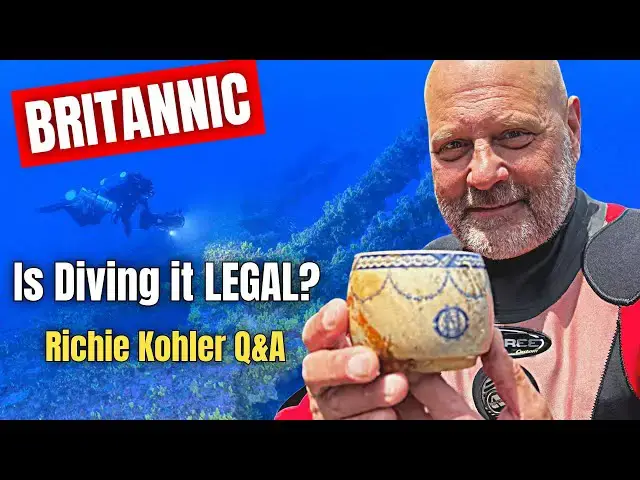
Legendary wreck diver Richie Kohler answers YOUR questions about diving the HMHS Britannic. From artifact recovery to the legality of diving Titanic's sister ship at 120 metres deep, Richie reveals the truth about technical wreck diving on protected sites.
In this community Q&A, you asked the tough questions about diving one of the most controversial shipwrecks in the world. Richie Kohler shares his expertise on the technical challenges, legal complexities, and ethical considerations of exploring the Britannic wreck in the Aegean Sea.
Your questions answered in this video:
• Is it legal to dive the Britannic wreck today?
• What artifacts have been recovered and where are they now?
• Legal protections for war graves and historic shipwrecks
• Technical diving techniques required for 120m depth on CCR
• Rebreather setup and gas planning for deep wreck penetration
• Ethics and regulations around artifact recovery from protected sites
• Trimix diving protocols for extreme depth wrecks
• Future access and preservation of the Britannic
Thank you to everyone who submitted questions on Facebook and Instagram. Richie Kohler brings decades of experience diving Britannic and navigating the complex legal landscape of historic wreck diving.
━━━━━━━━━━━━━━━━━━━━━━
*Inside the Britannic by Simon Mills*
You can purchase "Inside the Britannic: Uncovering the wreck of the Titanic's sister ship" by Smon Mills here 👉 https://amzn.to/46X6bwf
━━━━━━━━━━━━━━━━━━━━━━
*Thanks*
A massive thanks to the Greek Government, Simon Mills, Kea Divers, Richie Kohler and the other members of the team.
━━━━━━━━━━━━━━━━━━━━━━
*Timestamps*
00:00:00 Introduction
00:00:15 Is it Legal to dive Britannic?
00:05:09 Who owns Britannic?
00:08:18 How do I dive Britannic?
00:12:38 Are the Hospital Crosses Still Visible?
00:16:22 Are some areas deteriorating more quickly?
00:20:00 Artefact Recovery
00:24:24 What is being recovered next?
00:31:01 Did you recover the ACTUAL Bell?
00:36:46 Is the Pool Still Full of Water?
00:39:30 What is Richie's Favourite Part of the Wreck
00:41:50 Are the civilian fittings still installed?
00:45:23 What would you like to explore next?
00:48:05 Did the crew do their job during the sinking?
00:54:16 Has anyone visited the Captain's quarters?
00:57:44 How do you plan your dives?
01:03:00 Do you believe in the Helium Penalty?
01:09:00 Are we going to dive together?
01:11:47 Is Richie going to stop deep diving?
01:15:58 The value of a day off
01:24:00 The joy of team
01:25:24 More Britannic videos!
━━━━━━━━━━━━━━━━━━━━━━
*Kit I Use*
Note, some of these are affiliate links so help support making my videos:
👉 Gloves are Ansell Alphatec 87-063 - https://amzn.to/4jDHhX4
👉 Drysuit is an O-Three Ri2-100 - https://www.othree.co.uk/drysuit-range/ri-2-100-drysuit/
👉 CCR is an AP Diving Inspiration (XPD) - https://www.apdiving.com/
👉 Backup computer is a Shearwater Perdix v2 - https://amzn.to/42FXZOW
👉 Reels are by Kent Tooling - https://www.divingproducts.co.uk/
👉 Phone housing is Divevolk Seatouch 4 Max - https://s.click.aliexpress.com/e/_omJlNKL
👉 Stickers for gear by Dive Signs - https://www.divesigns.com/
*Video Gear*
I use the following gear (also affiliate links)
👉 Action Camera is Insta360 Acep Pro 2 - http://bit.ly/4nkMEwA
👉 Helmet mounted cameras are Paralenz Vaquita
👉 Video light is LetonPower Sealion L24 (10% off!) - http://bit.ly/4nFLCva
*Strobes*
I use two different strobes (also affiliate links)
👉 Prozhaozhu 3000 Lumen Diving Strobe - https://s.click.aliexpress.com/e/_oBMRF3X
👉 Prozhaozhu 4000 Lumen Diving Strobe - https://s.click.aliexpress.com/e/_oCTEses
👉 Jon clip - https://s.click.aliexpress.com/e/_oDqq0RW
━━━━━━━━━━━━━━━━━━━━━━
📱Follow My Socials!
Instagram 👉 https://www.instagram.com/deepwreckdiver/
Facebook 👉 https://www.fb.com/DeepWreckDiver
Buy Me A Coffee 👉 https://buymeacoffee.com/d33puk
Email 👉 [email protected]
#Britannic #RichieKohler #TechnicalDiving #ShipwreckExploration #Titanic #WreckDiving #DeepDiving #MaritimeHistory #CCRDiving #underwaterarchaeology
#britannic #RichieKohler #WreckDiving #TechnicalDiving #CCR #Rebreather #ArtifactRecovery #MaritimeLaw #DeepWreck #TitanicSisterShip #WarGrave #ScubaDiving
Show More Show Less View Video Transcript
0:00
Hello again everybody and welcome to my deep wreck diver channel. I've got another absolute treat today. With me is
0:07
Richie Cola who is going to be answering a whole load of questions that have been posed by you guys about his dives on the
0:14
Britannic. So the the the first set of questions that we've got Richie are largely around
0:19
the kind of legal and moral aspects of of diving Britannic. So few people have
0:24
said you say that they believe it's forbidden to dive Britannic or it's a war grave so you should be on the Britannic. So I guess do you just want
0:31
to pick up the kind of legal element of diving it and then the moral element of diving it where where you feel those things are
0:37
these these are really really great questions. As a matter of fact, I've kind of looked at all of them and I
0:43
think that uh your viewers and audience have really picked some great questions
0:49
regarding the legality of diving the wreck and its status as a war grave. The legality of diving has changed over the
0:57
last 20 years that I've been diving the wreck. So 20 years ago, you needed to get a permit from the effort. you had to
1:04
put a cash bond uh to to to basically say, you know, at the time it was 20,000
1:10
euro um to prove you're not going to steal anything or damage the wreck and
1:15
as long as you obeyed the law, you got your bond back. Um you no longer do need
1:21
to do any of that nowadays. Since uh Giannis has opened up Kia Divers, um he
1:28
has created a um marine sanctuary around the
1:34
shipwrecks of around Kia. And um him and other dive uh shop owners can be the
1:41
wardens, if you will, of these these sites. And what that means is that he's
1:47
put his business reputation and name um to make sure that you will obey the
1:54
rules, meaning no entering the shipwreck, no touching the shipwreck, no taking anything from the shipwreck. And
2:00
so when you dive the wreck now, instead of having a permit, um you do have to have
2:07
a guide. So there are no unguided shipwreck dives on Britannic. So the
2:13
legality issues have changed, I think, for the better. I think diving a wreck
2:19
as big as uh the Britannic or the Berdigalia or the Patrice uh the
2:25
Patreas, excuse me, um any one of these wrecks around the island of Kia, being with the guide is going to make your
2:32
experience that much better because they know they're going to know the short distance to get to whatever it is you
2:38
want to see. So being with a guide is is is a win-win. Um, when it comes to the
2:44
status of the wreck as a war grave, uh, this is one that most people don't seem to understand because number one, she
2:51
was conscripted by the British military. Uh, she did have a British naval officer
2:58
crew. Uh, she did have British military army officers as part of her doctors.
3:04
Um, she had uh, Royal um, army nurses. So there was total military aspect to
3:13
the Britannic and there was fatalities in the in the sinking but
3:20
none of the fatalities occurred inside the ship. In other words, uh the fatalities occurred when people in a
3:27
panic launched the lifeboats. Their lifeboats were drawn into the stillmoving propeller. The propeller
3:33
chopped up three of the lifeboats uh horribly wounding and killing many people in those lifeboats. Many people
3:39
did escape but about 30 uh people died in that event. Um almost all of the
3:45
bodies uh were recovered and interred in military funeral and and grave sites on
3:52
land. So nobody went down with the ship. So therefore, although there were
3:58
fatalities uh associated with the Britannic, nobody's on the wreck, nobody's in the
4:03
wreck, the bodies were all recovered. So she is not by the letter of the law a
4:08
war grave. Not only that, when uh the war ended, the British um
4:15
government paid off the White Star line for it, held title to it for many years
4:20
and then decided with many other shipwrecks that had occurred during the Great War. They sold them in block to
4:27
Salvers. So Salver bought the rights to many shipwrecks, one included the
4:34
Britannic. Of course, at that time um and even today, it's very difficult to even think about recovering anything
4:41
from 400 ft from with commercial value. So, Britannic just languished until
4:47
eventually a gentleman named Simon Mills bought the rights. So, she's no longer a
4:52
military ship. She's not a war grave. She's privately owned, but now she's a
4:58
historic shipwreck. She's over a hundred years old and she's in Greek waters. So the complexities of the legalities of
5:06
Britannic fall under this. She's privately owned by a British citizen named Simon Mills, but she's also in
5:13
Greek waters embedded in the Greek bottom and therefore as a historic ship, she's the property of the Greek
5:19
government and the Greek people. But they do recognize that Mr. Mills has certain rights on the ship. So I hope
5:26
that kind of answers everybody's questions regarding the legalities of it and the war grave. Thanks a lot for
5:32
that, Richie. You make some really interesting points there. I think this idea that shipwrecks could be sold is
5:37
one that a lot of people aren't necessarily aware of. So, I mean, there's some excellent examples, really
5:43
big ships that were sold after, well, both wars by the British government. And Lucatania is an excellent example of
5:49
that. I'm glad you mentioned Lucatania because Lucatania was commercially salvaged. They actually brought up the
5:55
propellers. They brought up other objects from from her and they did it from a commercial standpoint, not for
6:02
historic purposes, not to put things in a museum. They were commercially salvaging the Lucatania and then
6:08
ultimately I think um you know the people on Ireland got their Irish up so to speak and that kind of stopped. But
6:15
my understanding is a couple of the propellers were sold for scraps. Some of them one of them is in Texas. So my
6:21
point is that even a shipwreck with grievous loss of life like the Lucatania
6:27
could be sold, could be salvaged. And so therefore, when we get into these legalities, you've got to know where you
6:33
are in the world and what's the historic precedent is regarding that shipwreck. But absolute certain, Richie, the simple
6:40
fact is that we are here today are dealing with the legacy of decisions that were made before us. And often
6:47
those decisions incorporate attitudes that that are probably very different to the ones that that we have today.
6:54
Doesn't kind of really matter. We just have to kind of move on. And the fact is that shipwrecks are property in the same
7:01
way that anything else is a piece of property. And we have to, you know, treat them in in that sense.
7:07
So you can't apply a different rule to a shipwreck to you would to a car or a house or or anything else like that. I
7:13
think it's, you know, it's kind of mischievous, I think, for for sometimes people to suggest that that shipwrecks
7:19
should be treated differently to any other property and and to put those kind of attitudes on the owners. You know,
7:24
people like Simon, for instance. You know, um I don't want to take too
7:30
much time on the legality, but you know, there's no matter where you are, the Admiral T law rules. That's pretty much
7:37
the way it goes. Now, if it if it falls in the the the
7:43
property line, if you will, of a certain country or territory, and that ship uh
7:48
uh can be claimed by that country, well, you know, there's an old expression here in America, you can't fight city hall.
7:54
Meaning, if you think you're going to win by fighting the uh British government over the rights of a shipper,
7:59
you're going to lose. You don't have as much money. You don't have as many lawyers. So, the reality is, you know, don't don't swim up don't swim uh up
8:07
current. you know what I mean? Go with the flow. It's a great piece of advice there, Richie. Thank you very much. Um, so I
8:14
think that we've I think we've kind of done the legal and the moral issues uh of it there. So, so the next thing to uh
8:21
questions about diving Brutanic and various people have asked, you know, how did they get to dive it? You know, how
8:28
uh somebody Peter Karen has asked, can he come on the next trip? Uh, so, uh, you know, I guess the answer to that
8:35
one's probably no, but if somebody does want to dive the Britannic, how would they go about it? Well, um, I think that the the the first
8:44
question is anybody can dive Britannic as long as you're willing and have the
8:49
the requisite training, experience, and equipment. And and how do you dive it?
8:54
Well, then you contact Kia, Kea, Kia Divers. Um, the owner is a gentleman
9:00
named Giannis. He basically has two weather windows. Uh, it's going to be
9:05
spring and fall. They don't dive during the height of summer for many different reasons. And it it's not only because
9:12
the island becomes packed with local Greek tourists. Um, and and you know,
9:17
it's just the harbor is so busy, everything is so busy. Um, the weather is actually better for you in the spring
9:24
and the fall. The winds are much more accommodating. Um,
9:29
so that's your weather window. Um, I'm not going to get into costs. I will tell you that it is not an inexpensive
9:36
undertaking. Um, Kia is a small island. It is a very, um, quiet idelic place. It
9:45
is not a big city. Everything you need. Uh, he has. Kia Divers has your helium,
9:51
your oxygen, your softenol lime, um, cylinders to be rented. If you wanted to
9:56
rent a scooter, you can rent a scooter. He's got uh all of the analyzing
10:02
equipment. Basically, you show up with your kit and you're ready to go. Um but
10:08
you pay for that because it is an island. It means everything that comes there has to come and go on the ferry.
10:13
And so, you know, this kind of adds up to things. Um he has crew that uh uh,
10:18
you know, getting into the minutia of diving. I have to say that and I and I'm proud to say that my friend Giannis does
10:26
dangerous things safely. And what I mean is if you think that diving to 120
10:32
meters in an active shipping channel is anything other than dangerous, you're a
10:38
fool. So it is dangerous, but you can do dangerous things safely. And how do you
10:44
do that? You do that with preparation. You do that with experience. you go with
10:49
people that have experience that know what the conditions are going to be like. Um they know when to push it, when
10:54
not to push it. You know, you may look at it and go, "Well, it's great now, but Giannis is looking at the forecast and
11:00
he's like, "You know what? In three hours from now, the wind's going to pick up and nobody's going to be wanting to get out of a 120 meter dive, 4 hour
11:07
decompression, and be beat up trying to get back into the boat. So, you have to trust the experience of the people that
11:13
you're dealing with. And that's one of the things you're paying for. paying for a guy who now has a decade of diving
11:20
experience and leading dive expeditions to the wreck of the Britannic. Um, one of the things that divers who want to
11:26
visit Bratannic should expect is that he's going to mandate you're going to do a couple of checkout dives. You know,
11:33
you're not just going to show up there and and and dive Britannic. Um, we and
11:38
I've been going there for 20 years. We always do a checkout dive. Um, so what
11:44
that does is for the people that he hasn't met, it gives him the ability to to make sure that your kit and you are
11:51
dialed in. If you're an inexperienced um diver to him, he may say, "We're not
11:57
going to dive Britannic right away. We're going to go to a wreck called the Bertagalia, which is only in 70 meters."
12:03
So that way he can see you in the water, check your buoyancy, check everything how things are going. So, this is kind
12:08
of a a standard operating procedure for these type of technical destination
12:13
dives. Uh, especially when you're not known to the operator. But, of course,
12:19
if you dove with them this year and then next year, maybe he'll be a lot more relaxed because now he knows you. So,
12:24
you have to go there with your your hat in your hand and and understand that um
12:30
they know what they're doing and as I said, they're going to do their utmost to do dangerous things safely.
12:38
We're going to move on now to uh to questions about the uh the sort of status of the wreck. And a couple of
12:43
people have asked if you can see the hospital crosses. Are they still visible on the side of the wreck or anywhere on
12:48
the wreck? So, when um when I commissioned Ken
12:54
Marshall to make the cover of my book, Mystery of the Last Olympian,
12:59
um I asked him to have a diver in a red suit, that would be me, shining his
13:05
light down on the side of the wreck illuminating one of the red crosses that
13:10
would have been painted on the white hole. Um, unfortunately, that was
13:16
artistic license. Ken wrinkled his nose at me because he knew that you're not going to be able to see that.
13:22
But again, being um the cover of my book, I wanted to, you know, somehow sew
13:28
the shadow or the ghostly image of her hospital ship pedigree. So the truth is
13:33
no. Even the the framework for the lights that were on the upper decks that
13:41
there was these frameworks for um red crosses that would be lit up at night.
13:47
Um all of that framework is gone. So you can't see the framework for the lights. You can't see any of the paint. She's
13:54
covered by inches of shell and marine growth. And I'd bet dollars to donuts
14:01
that long before that the paint had flaked away. And so there is no at you
14:07
can't read any of the writing. You can't read the name Britannic on the stern.
14:12
You can't read it up on the bow. Um people have asked, can you remove the
14:18
overgrowth? Um no. The answer is absolutely no. the owner of the ship,
14:24
the Greek Ephrit, and Giannis would have your guts for guarders if you impact the ship in any way. You're not allowed to
14:32
chisel, remove, alter, do anything to the ship. So, and and I don't think
14:38
there's any advantage to doing that. I mean, would it be cool to see if you could read it? Yeah. But now you've just
14:45
exposed the steel and it's going to rust at a the iron, excuse me, and it's going to uh decay at a greater rate. The I
14:53
think one of the things that people don't recognize is that this wreck is
14:58
over a hundred years old and still intact. And I believe this is because of
15:04
the cocoon of this marine growth that has affixed itself and concreted itself
15:11
to all of the iron, basically mummifying the exterior of the ship. And then on
15:16
the interior of the ship, the decay inside has been arrested as it absorbed
15:23
the oxygen and made it in an increasingly anorobic environment. So
15:28
that from inside and outside, like I jokingly say on the outside she's
15:34
mummified and on the inside she's pickled and that's why she's still intact. I mean it it it it I I can't say
15:42
it enough. It just is mindboggling that you can swim down these hallways, doorways, ladders, staircase, all of
15:50
this stuff is still intact in a shipwreck that's over a hundred years old. and and and that's because of this
15:56
growth that's covering any paint, any writing, all of that. So, I I think in
16:02
the big scheme of things, I'd rather have an intact ship that you can't read or see the crosses um than one that, you
16:10
know, kind of r just turns to rubble for certain. actually does nicely lead
16:16
me onto another question by the epically named Fauler 234 who's asked um if there
16:23
is more deterioration around the bow where the damage is.
16:29
You noticed anything like that? Where we've seen a little bit of accelerated um decay, believe it or not,
16:36
is at stress points and and there are places where
16:41
we can start to see sagging. Now, there the jury is out on why
16:47
they're sagging. And I'll give you an example. When we finally went into the engine room, we noticed that bulkheads
16:54
were wrinkled and crumpled. And when we saw these wrinkled and crumpled bulkheads, one of which allowed us
17:01
access into the engine room, um, the ship's owner was under the belief that that and the skylight was blown out by a
17:09
combination of water rushing through the compartment as she flooded and sank. And
17:17
then the impact with the bottom, which kind of made it like a little bit of a bellows motion. And that that created
17:24
such a positive pressure that these thin steel and when we say thin, we're talking quarter inch quarterinch steel
17:30
interior bulkheads, you know, kind of wrinkled like paper. But then we also
17:35
travel down some of the decks and we can see some of the vertical support stansions are starting to have a bow.
17:42
And so what we don't know is is she starting to sag under her own weight.
17:50
you know, realize she's been laying on her side for over a hundred years. She
17:55
was never supposed to lay on her side in a under any circumstance. She was supposed to be upright. Herru her
18:02
structural beams are everything was never designed to bear the load that
18:08
direction and yet she has. And you think about these engines, think about the boilers, all of these things that weigh
18:14
tons and tons and tons all sitting in place. you know that that does have an
18:20
effect over time and so we are seeing and again it's subject to interpretation
18:28
sagging and movement in the ship and when I say movement I don't mean physical movement I mean like things
18:35
getting concave or or starting to have a bow that is indicating that the stress
18:40
of being in a certain direction is is kind of bending the ship if you
18:47
And I think that that's, you know, what we don't know is did it bend that way
18:52
the day she sank or is this um of attrition over time. So to answer your
18:58
question, yes, we do see the effects of being underwater for so many years. What
19:06
we can't answer is, you know, how much longer she's got. Um, you know, is there
19:12
areas of rust? Well, yeah. you know, every now and then something breaks off, something breaks free, and then it
19:18
exposes um a little bit of steel. Not that it has anything to do to us, but you know, we do see occasionally little
19:26
bits of iron decking that that because maybe something buckled or it just rotted away, a lot of the con in
19:33
crustation falls away, but most of the wreck on the exterior is totally
19:38
covered. And if you if you watch any of the videos of some of the recent uh dive
19:43
expeditions that go out there, you'll see that she's totally covered from head to toe bow to stern.
19:49
Thanks a lot for that, Richie. And I guess nothing lasts forever. So it's inconceivable that Britannic won't fall
19:56
apart at some point. I think we've just got to enjoy it while we can really, haven't we? Now moving on, there's uh
20:02
questions about artifacts and some of the artifact recovery and some of the stuff that you're planning to do. And
20:07
there's a couple of questions in particular about the Maronei radio which I think is probably tied into interest
20:14
in a similar item on the Titanic there. There is and um although there
20:20
was talk for many years of the possibility of recovering the Maronei
20:25
radio from the Titanic, my understanding is that um as of now because there would
20:32
be impact to the ship um they have sheld those ideas. they are no longer thinking
20:38
of recovering it. Um, I don't even know if it's actually been videoed. Um, I'm sure there are
20:44
some of our listeners that are more clued in to Titanic and her Marone Radio
20:50
than I am. Um, I can tell you that from Britannics's uh perspective,
20:56
the Marine Radio is a um A-list item.
21:01
And the only reason why it was not recovered this year and it is still
21:07
slated for recovery um is because we need to confirm 100% that we can not
21:14
only remove it but bring it up and hand it to the archae archaeological team in
21:23
as good if not better condition than it was on the bottom. And when you're
21:28
talking about a device made of copper, iron, wood, brass, and some form of
21:35
belite or 1900's plastic, um that has been stewing in saltwater
21:44
for over a hundred years. You don't want to be the guy to break it. So what Evan
21:50
Kovac um and and I have envisioned and and what we're actually doing is
21:56
creating a plexiglass case. So what we've done the last few years is we've
22:02
done photoggramometry and done a an incredible uh scale model of the
22:08
maronei. So we have a scale model that we've made based on the photoggramometry. So with the scale
22:13
model of the actual marone that's the actual radio. So, you've been down there, you found the radio room,
22:19
you found the radio, you know exactly where it is. We absolutely do and and and and um
22:25
there are images online and I sure I thought that I had given you one that you could have shown, but it has been
22:31
well documented. We've even gone so far as to very gently confirm that it's loose. It's not fused.
22:39
It is loose. It is able to be picked up. As a matter of fact, uh Evan was the only one to touch it and he confirmed
22:45
it. It's not as heavy as we think, which is good. Um, because we were afraid that
22:50
with these big copper coils on the top of it, it would be, you know, a couple of kilos, but it doesn't seem like
22:57
that's the case. So, what we are doing is creating this plexiglass box that
23:02
will be cushioned on the inside that will be exactly the same dimension, just
23:07
a little bit bigger, that we can put the Baronei radio in and then seal it inside
23:13
of it. Um, and then bring it up in the same water it's sitting in and hand that
23:20
in that water to the archaeological team for them to then take whatever steps
23:27
they need to try and either uh restore it or keep it in its present state and
23:34
arrest any further deterioration. So in short, if you look at, let's say, the
23:39
anti-ther device, which is obviously in in the Greek museum in Athens, they've
23:44
done nothing to it. They they've arrested its corrosion, but they've not cleaned it. They've not polished it.
23:50
They've not taken it apart. There's a good chance they may do that with the Maronei. They may leave it just as she
23:56
is and like freeze it for all time or they may try to clean it and restore it.
24:03
That's not my job. And Evan's job is to bring it up and give it to them. And to
24:08
answer the question, yes, it is on the list of objects and we are slated to try
24:14
and recover it. Fingers crossed, weather permitting, funding and all that um very
24:21
soon. That's great to hear and good good luck. Does nicely bring me on to another question that we got from Jacob Baitman,
24:28
which is about other plans. What other what other things are on the list for next year?
24:33
Well, you know, the everything comes down, I hate to say it like this, to
24:38
dollars and cents. Most of the objects with the exception of the bell
24:44
that we've recovered were able to be recovered with uh only divers using uh
24:51
small collection bags, hand carrying the objects up and then handing them to a
24:59
support diver who then hands them to the archaeologist in their rib where they're
25:05
now placed in water and conserved. Uh the two exceptions to that would be the
25:11
running lamp that was sent up again in a wrapped up in a canvas bag protected
25:18
nothing removed from it then sent it up on a lifting bag. The process there is
25:23
um quite um elaborate. It's it's not just a lifting bag. There was a whole
25:29
process so that at any given time if a lifting bag was to fail, there was always a line from the surface to the
25:36
artifact so that we at no point would we ever lose control of the artifact. So
25:43
the bell and a lantern were two objects, the only two objects that were recovered
25:48
by lifting bag. So the reason why I gave this in-depth and explanation is that
25:54
there are many other objects that are on the list that we would like to recover, but they're very heavy. And that means
26:00
that we would need a larger boat with a small David or crane or lift so that
26:08
these heavy objects once they get to the surface are not trying to be It took five men everything we got and two ribs.
26:16
So, we had two ribs and five men to lift a 70 kilo bell out of the water. And
26:26
we don't want to do that again. We don't want to even We don't want to take First off, you and I both know a bell is a
26:33
huge bronze object. You're not going to damage it. But if you're talking about something like the telegraph that has a
26:39
glass face that is incredibly fragile in certain aspects, these objects need to
26:44
be protected on the bottom, sent up, and then lifted gently with a lift or a
26:50
davit and then placed in a cushion box for restoration um by the archaeological
26:57
team. So that means we need a bigger boat. We need a bigger boat that's got a dabbit and that only comes with funding.
27:05
you know, somebody's going to have to step up and and and want to help us um
27:10
recover some of these objects uh for the museum. Um because, you know, the the
27:16
they the the museum is is dedicating all of their energy towards conservation.
27:22
They send out the team. Um but there's not a lot of funding on their behalf for
27:27
the recovery. So we're that's another reason why we're trying to seek out media because media is a great place to
27:34
get funding. You get a bigger boat now you have more assets more things can come up. So things that I know Simon
27:41
Mills would love to see come up as well as some of the the people from the Greek effort probably the main helm a
27:48
telegraph some of the beautiful um deck benches the brass ends for the deck
27:54
benches. Um, there's a deck telephone. I, you know, I could go on and on. The
28:00
Simon Wilton Mills's Christmas list is longer than my arm and and and as a
28:06
wreck diver, I love doing this. I love it. I've spent um most of my adult life
28:12
picking up bits and pieces for various reasons and for various agencies, but I've spent a long time picking up bits
28:18
and pieces. So, this is an enjoyable aspect of of this project is that we're finally able to bring things up for
28:26
other people to enjoy and share and tell the story of Britannic. So, I would say stay tuned. Um, as time goes on, I'm
28:34
sure that we'll be able to share more information about the the recovery process, where we are with the Maronei,
28:41
and what other things are on the list. I will add one caveat to all of this. Um,
28:46
we were under a strict mandate from the uh museum of excuse me, from the uh
28:52
effort and the museum of antiquities, the head of antiquities, I should say, that we were to do no harm to the
28:58
shipwreck. And what that means is we are not allowed to use tools. If it's a
29:03
fixed or secured to the wreck, we cannot wrench it or hammer it off. So, the
29:09
thing about the helm and the telegraph is they've broken free. The telegraphs are hanging by a chain. a bicycle chain.
29:18
If you can imagine this, I don't even know how many kilos, probably a 100 kilo weight of these massive telegraphs is
29:26
hanging by a bicycle chain. All four of them. And and and same thing with the
29:31
main helm. It's knocked over and being held by I think one bolt. So, my point is those are items that we could with
29:38
minimal absolute minimal impact um recover them and and we're not going to
29:45
damage the wreck. We're not going to remove any incrustation. We're not going to expose any steel or or iron. So,
29:52
these are the mandates. We cannot impact the wreck, use tools, crowbars, hammers, saws, any of that. So, recovering the
29:59
telegraphs would maybe require just using a bolt cutter to cut the chain. Same thing with um with with the helm
30:08
stand. So those are objects that could technically be lifted. Um and then
30:14
there's other objects that we would like to see that aren't so heavy, but they're inside the wreck and will require
30:19
multiple dives to get out. Things like a gurnie. um because a gurnie or a
30:26
wheelchair. These things tell the story of Britannica as a hospital ship and
30:32
they would be an incredible part of the museum display to tell the ship's story,
30:37
but they're very fragile and they're inside the wreck and they're going to recover require quite a bit of
30:43
conservation to get them back to a point where they could be displayed. So, I I
30:48
hope that answers everybody's questions about where we are with recovery regarding the Maronei and other future
30:54
objects um that are on the list for possible recovery.
30:59
Oh, that's really interesting, Richie. Now, just going back to the question about bells. We have got one where
31:05
somebody has asked if it's the original bell. They believe that Jack Kustoau removed one. Now, I know that it is the
31:11
crow's nest bell, but it would be use great if you could give us some more information about the bells because
31:17
obviously um Britannic would have had more than one. Oh, yes. We we know there were a minimum of three bells um and and this was as
31:25
per the Harland and Wolf plans. There was a main bell that was at the step of the mast which may or may not be buried
31:33
underneath shell hash. Um, and it would be massive. If the crow's nest bell was
31:39
se at 21 in was 70 kilos and the main mass bell was at 28 in diameter, that's
31:47
got to be over 100 kilo bell. So, this is not a little bell. And that bell
31:53
probably broke free off the main mast, hit the gunnel, and then fell under the
31:59
the side of the ship, and now is buried under about probably five to six feet of
32:05
shell ash. So, we'd have to go under the mast and and dig away. See, now that's
32:10
impacting the ship, that's impacting the site. So the difference between trying
32:16
to excavate the main bell and this particular signal bell is the fact that
32:22
for many years people went looking for the bells. Nobody found them. And then in 2015 and 2016 we did a series of um
32:32
uh submersible dives. One of which we went under the mast and we were filming and the submarine submersible went under
32:38
the mast and came round. And we believe that as we came round, our prop wash
32:44
removed some of the shell off the top because just two years later in 2019, a
32:51
dive team of Joe Maserani and Ricky Simon uh were out there just sport
32:57
diving the wreck. They they didn't have a permit to go in. They weren't part of an archae archaeological recovery, but
33:03
they spotted the bell. They had eagle eyes, man. They you know, you got to give them their props. They saw the bell
33:10
under the mast. Now, lots of guys, me included, had looked for it. So, it's
33:15
not like it just grew there. We we kind of figured that as the sub went by, it blew the um the shells away enough so
33:23
that they were able to see just the the gooseeneck on the top of it and the very crown of the bell. And so, when they
33:30
came up and they told Simon Mills, the owner, that they had found the bell, this kind of put a little bit of a fire
33:37
under This put a little bit of a fire under both Simon Mills and the effort because
33:43
now that the bell had been seen and they knew it was outside the wreck. There's a possibility it could be
33:49
dragged away by a fisherman's net, a fishing line. Um, I don't want to think that somebody would steal it, but the
33:55
possibility is always there. So they were concerned that such an iconic item as Britannic's crow's nest bell should
34:02
be one of the very first things to be recovered and and it was. The third bell
34:08
would be the bridge bell. And again, much like the main bell, there's the
34:14
debris of the entire bridge area has fallen down to the seafloor. And it's just a a huge mlange, if you
34:20
will, of twisted beams, broken bits of wood and copper. And again, everything's
34:27
there. The bell is there, you know, the chronometer is there. all of these
34:32
plaques that said, you know, uh, officers only, everything's there. It's
34:37
just it's buried in debris. And, you know, the impact of of of removing that
34:43
debris, of digging through the shell hash is going to in some ways posit
34:48
probably have a negative impact on the wreck. And so therefore, we're not supposed to do any excavation.
34:56
If something is loose, if something is visible, if something is able to just be picked up, then it's fine. They do not
35:04
want us digging, excavating, using scooters to move debris. The only
35:10
thing that we ever did was um we were able to clear a little bit of the shell hash around the crow's neck bell, which
35:16
was already exposed, just to get it into the bag to send it to the surface. Yeah, thanks for that, Richie. There's
35:22
obviously always a suggestion that Jack Kustoau had it away. We It's funny you
35:27
should say that. I'm glad you said it and not me, but that we all went in the water always thinking that Jacqu Kustoau
35:33
had had the bell and and you know he did recover we know that that for a fact
35:39
because it's part of his television show. He recovered the the ring from the
35:45
helm wheel and a sex was recovered from the bridge of Britannic during his
35:51
television program. And you know back then nobody said nothing to him and you know I don't know where those things are
35:58
today. Um but uh there was rumors that he had had the bell as well. Um
36:05
obviously those rumors were wrong. You'd have imagined that if Jack Kustau had had it away we'd have heard about it
36:11
by now because he wasn't a man to keep his light under a bushel or to keep things hidden. I don't think I agree. I I agree. if the family had
36:18
it, um, they would they would probably have donated it to a museum long time ago.
36:23
So, we're now on to some questions about exploration and the areas that you've been into and you haven't been into. I
36:29
think quite a lot of these are going to be answered already in the other video that we've done which shows which has
36:35
some video that Richie really kindly provided showing him going into various different spaces and some spaces where
36:41
he can't show us the video. So, that's uh really good. If you haven't watched that, I would really encourage you to do
36:47
so. The first question is whether access to the pool has been attempted uh via
36:53
Scotland Road through what's described in the question as the dirty linen. So the the problem with that is from
37:00
Scotland Road from the main staircase going forward the watertight doors closed. We can't access it there. That
37:07
means that we would have to come in from the other side of the watertight bulkhead, which means a zigzag pattern.
37:14
You know, I'm not going to go into too great a detail, but you know, when people who look at deck plans go, "Well,
37:20
it's so simple. Just, you know, go down this hallway, down the staircase, make a left." If you think that that's what it's like as a diver, good luck, because
37:28
that's not what it's like as a diver. First off, the ship's on its side. That's number one. Number two, what
37:34
looks like a staircase on a blueprint is now just a hole in the floor because the stairs might be wood and long gone. So,
37:41
they'll just be two rails that used to hold the wooden treads. So, long story short, what you um looking at blueprints
37:49
think might be an easy path is never as easy for us as a diver. And that's why
37:55
um as I mentioned in our previous video, other teams had looked for access to the
38:00
Turkish bath and despite being incredibly talented divers, um they
38:06
weren't able to find it. It just took sometimes, you know, five feet of of of
38:12
elevation or to the left or to the right can make all the difference of whether or not you find the doorway or the
38:18
hallway. So sometimes, especially when a ship is on its side, um the ability to
38:24
follow blueprints is not as beneficial as you're being able to intuit it where
38:31
you are and where you need to go. And I can't explain that. If you're not a diver, you're not going to understand it
38:38
because we work in a three-dimensional environment. and we can't turn our head and body sideways into the correct
38:44
perspective to look at a ship the way she would be if she was upright. So, um
38:50
it can be quite challenging, but we do have plans. We've it has been on our
38:55
list to go to the the pool because as many of you have probably asked, we all
39:01
want to know, is the swimming pool still filled with water?
39:07
And you know, that's that's a that's a great line, Richie. Although I think if I'm honest, mate, I think that's about the third time I've heard you say it. So
39:13
I think we probably we probably we probably probably need some new material.
39:19
Hey, I'm an old dog. You know how hard it is to teach an old dog new tricks? No, no, no. It's it's a great line. The
39:27
um so the next question, the kind of two of them are together. So So uh Matt Rivet has asked what your favorite part
39:33
of the wreck is, you know, and why. and Eric Stodd has said, "There appears to be unreleased information videos of the
39:39
dives to the Britannic, why the cloak and dagger." And what I'm going to say to both of those people is you need to watch the other video with the
39:45
unreleased footage in because we cover both of those in quite a lot of depth, don't we? And um so so go and watch that
39:52
other video, guys, and you you will understand exactly the answers to those questions.
39:58
There's another question about the turbine engine and electric dynamo rooms, whether you've managed to get in
40:04
there. We Okay. So, yes, we did when we very fir on my very first trip down Scotland
40:10
Road, which we do allude to and as Dom said is in our previous um video uh that
40:17
you can go watch and we talked about getting into the engine room down Scotland Road. We passed the open door
40:23
that goes into the dynamo room. Um, one of the more interesting dives I did with Evan uh was we went into the dining room
40:30
and then we exited uh through the uh the
40:36
the ventilation access port which was basically the fourth funnel. So everybody knows that
40:43
Titanic and her sister ships had four funnels and the last was considered a
40:48
dummy. The first three, uh, the smoke would come out out of the six boiler rooms, but the last one, any smoke that
40:54
came out of that was only from the cooking area and the kitchen. It was more ventilation going down to the lower
41:00
decks, especially for the heat in the areas of the turbine. So, it was basically just a ventilation shaft. And
41:07
so, Evan and I did swim in. We did a um image uh all of the turbines and the th
41:13
those huge collectors. And then we swam out. And there is video of me um
41:19
swimming out into the blue water, you know, out the square hatch, if you will, or through the through the the the
41:26
funnel uptake. And Evan is behind me singing Elvis Presley. So yeah, that
41:32
video is out there on the internet. Uh you can see it and he's serenating me at 360t
41:38
or at 110 meters. Great. So that is that is fantastic. Um,
41:45
one of the uh the questions uh next questions is about whether any of the
41:51
areas you've been to and suggest like the grand staircase or the public rooms that look like they've had their
41:56
civilian fittings installed. I mean, I guess the Turkish baths in the other video looks as though it's got the
42:01
civilian fittings. Are there any other bits that are like that? So, you know,
42:07
as much as I have been diving the wreck, remember I'm I'm just one of many of the
42:12
team and we have tasked other members of the team to go into the smoking room. My
42:19
wife was one of them, Stewie Andrews. She also went into the first class gymnasium. Um, and so I can speak on
42:26
their behalf and say that they did see some of the fittings from the gymnasium.
42:32
in the first class smoking room. It was wide open and um I don't believe that
42:37
they saw any furnishings or fittings. None of those things um seemed to have
42:44
survived a hundred years. Now, does that mean they were there? They weren't
42:49
there. Your guess is as good as ours. Um because without having
42:55
remains that we could film, how can I answer that question? But we have, you
43:01
know, there's been people have asked, "Have you gone down the secondass stairwell in the back?" Yes, we have.
43:06
Have we seen the elevators? Yes, we have. Have you filmed them? Yes, we have. You know, there's a limit to how
43:12
much material I could share with you guys. Not only because, you know, we're holding on to some of it for media
43:19
purposes. A lot of it is in Simon Mills's book. So, for the folks that are asking me, have we seen the elevators?
43:25
Have we seen the staircases? All of this is in Simon Mills's book, Inside the
43:31
Britannic. So, you'll get your answers, you'll get your video, excuse me, your still photographs there, but you know,
43:37
it it's just, you know, I can't take a 900 foot ship and show everybody every picture that we took over five years.
43:44
So, I you're going to have to trust me if I say yes, we've been there. Yes, we've seen it. Um there are photographs.
43:50
They are in the book. Um, some of the spaces like the smoking room, um, we
43:56
were disappointed because, you know, there's no fittings, there's no, you know, the the upholstered chairs, the
44:02
bookcases, if they had been there, they're gone now. They have rotted away.
44:08
They've been deteriorated. A lot of the spaces that you're asking about have huge windows. Any place that had huge
44:15
windows now has water flow. any place with water flow. Um although to worms uh
44:21
would you know and marine organisms would just have their lunch and and eat all that stuff up. So um I don't know
44:29
what lays on the downside. Um what I mean is that because the
44:35
ship's on its side and you you know when ships lay on their side contents have a
44:40
tendency to go to the the deep side. They fall down there. So, I can't answer to what the teams may or may not have
44:47
seen. But if there was anything of huge note, I would know and it will be in Simon's book, but nothing um stands out.
44:55
I do know that somebody cited a Spatoon, which is a very unusual thing. Um but um
45:02
you know, when you go back in in that time period, there were people who did chew tobacco and so there were these
45:09
spatons on board. So there was a brass platoon uh cited in the smoking room. So
45:15
in that area. So that lends me to believe that it was still used as its
45:21
primary function. That quite nicely brings me on to another question. What areas of the ship
45:27
have you not been to that you would like to go to? Well, we've heard me uh say that the swimming pool is on on our our
45:35
idea of uh a place that would be interesting because there were really nice marble walls in there and a very
45:42
ornate tile pattern in the swimming pool. So, I think that getting in there with that white tile and and and uh
45:50
white tile and green marble is is what our understanding is it was supposed to be that would light up really nice, you
45:57
know, in a camera. Um, and then there were these individual changing rooms with teak walls. So if if it's an
46:05
anorobic environment like the uh Turkish baths, well maybe those wooden changing
46:11
rooms would be, you know, with the bench for changing your clothes would still be there. Kind of a a really cool thing to
46:17
be able to look at a historic photograph and then compare it to a contemporary photograph. So that's one big one that's
46:23
going to be a challenging dive to get to. Um, you know, Evan and I wanted to
46:29
see if any of the other boiler rooms, we've only been as far back as boiler
46:35
room number four. So, we've traveled through boiler room six, through boiler
46:40
room five, and then we've seen the open door at four. We don't know if the door going from three to two and two to one
46:46
are open. And you know, we my personal theory,
46:52
which is meant as no insult uh uh to the to the reputations of the crew of
46:58
Britannic, is that the boiler room crew were not military officers or military
47:04
crew. They were civilians. And when the ship started sinking, they uh were being
47:10
flooded by water from the bow. So, you either tried to climb out through these ladders and scuttles. And at the point
47:16
of this exact exchange, you had one crew trying to leave and
47:23
another crew coming in. So you had an exchange of crews going on. So there was
47:28
twice as many people in these compartments as was supposed to be. And at that exact moment in time, all the
47:35
doors are open. All the watertight doors are open. And water, there's an explosion and water is flooding from the
47:41
bow coming after. So, you can imagine as the ship is going down by the head,
47:47
lifting and leaning at the same time, men have to make a decision. What's the quickest way out? Well, it's going to be
47:53
the way the water isn't. So, you know, they're going to run back towards the engine to get to a room that's dry and
48:01
then maybe try to climb out. So, you know, without pointing an
48:08
accusatory fing finger, you know, the fact that we found so many watertight doors open indicates that one of three
48:14
things. You can go with, well, the damage was so great that it the doors
48:20
didn't work. I don't buy that because adjacent to every one of these watertight doors is a is a cage lamp
48:26
with the glass and the light bulbs still intact. So if the force of the explosion was so great that it jammed a watertight
48:34
door from closing, yet it wasn't great enough to break a light bulb. I don't find and then when we talk about being
48:41
200 feet back from the episode epicenter of the explosion I find that
48:50
getting inside the boiler rooms seeing if more doors are open just tells us this the pathos if you will of of this
48:58
moment where these civilians were faced with am I going to die here or am I going to get out and it's interesting to
49:04
note nobody died there everybody got out. Well, how' they all get out? I
49:11
believe it was through these open watertight doors, which also facilitated the rapidity in which the ship sank. So,
49:19
them saving their own skin in a way helped Britannic sink faster. And the
49:26
reason why I stress they weren't military, they were civilian is in any military, the first thing you do is
49:33
you're trained to fight the ship. You're trained to close the doors. even if your brother's on the other side of it, you
49:39
close the door. You save the ship. That's your job. And so civilians aren't
49:46
trained like that and they don't have that mentality. They don't have that military bearing. So, I think that that
49:52
getting back to Britannic, getting back in those boiler rooms, which is the the ugliest, darkest, nastiest place next to
49:59
the Turkish baths that you could possibly want to be in for the sole purpose of just seeing if a door is open
50:06
or closed would probably be next on my list of things that I would like to do.
50:11
I absolutely love that, Richie. The idea that the next thing you want to do is go into the most difficult part of the
50:17
ship. That's kind of what you're saying, isn't it? Pretty much. It's a really interesting suggestion of
50:23
yours, Richie. The idea that maybe the crew as they abandoned the ship didn't do things that maybe you might have
50:30
expected them to do. No. Again, it's subjective. You know, we'll never we'll never know. But the
50:37
truth will be in the camera. You know, if you get there and the doors are open,
50:42
it's like, well, why are they opening? We may never have a really definitive answer of well they didn't work because
50:50
remember these doors didn't just shut because of an electrical switch. There
50:56
was three different ways these watertight doors can close. The first was an electrical switch from the bridge
51:04
would be flipped and it would pull by electricity, a pin, and the door would
51:09
roll shut as it does in the film Titanic under its weight by gravity.
51:15
If the wires were cut, if the power was out and the room started to flood, each
51:21
one of these compartments adjacent to the door had a small float. It's called
51:26
a dead man switch. the float, much like the float that work works in a toilet tank, as the compartment would flood,
51:34
this float would go up and flip a manual lever that would pull the pin and allow
51:40
the door to close by gravity. And by the way, the doors were tested at over 25
51:46
degrees. So when people go, "Oh, because the ship was listing or leaning, that's why the doors didn't close." That
51:52
doesn't work. It doesn't buy because we're talking about ships. Ships are supposed to go back and forth listing to
51:59
side to side. So the gravity doors had to be able to work even on a on a pitched angle. And so the the listing of
52:07
the ship should not have affected their ability to close. And then the last way was a manual lever. And this is a
52:15
double-edged sword because the manual lever could be used to either lock the door from closing or allow it to close.
52:24
So let's just say men are going under the door as a safety. This lever could
52:29
be placed so that the door can never close on a human being. So imagine as
52:35
you're as you're escaping, somebody locks all the doors open. Now it doesn't
52:41
matter whether the float works. Doesn't matter whether you hit the lever switch. There is a pin blocking the door from
52:48
coming down. Now we've tried to document this but you know trying to document the
52:56
events forensically a hundred years later when you know it's it it's quite
53:02
difficult. It but the bottom line is it's quite difficult. So anyway the one
53:08
of the things that I'll I'll close about this boiler room is you know what there's no pretty artifacts. There's
53:13
some cool things to see down there, gauges and and instruction placards and
53:18
things like that, but it is the nastiest, dirtiest place. Um, really
53:24
super scary with no like really beautiful visuals. You know, it's not
53:29
like a big pile of china or swimming in the engines or even down a cool hallway
53:34
where you're able to look in and out of doors. The boiler rooms are a very preunctionary space filled with nothing
53:41
but coal, coal dust, wheelbarls, shovels, rakes, um, and all of the the
53:49
the nastiness that a boiler room has on its
53:54
best day. That that is that is absolutely brilliant. And it and it probably uh it
54:02
probably says a lot about you as an explorer because you know that's why you're going there, isn't it? the exploration and to answer the questions.
54:09
Exactly. Yeah. No, great great stuff, mate. I have to say that is that's super impressive. So, we're going to um I
54:16
think I got one last question on exploration, which is has anyone been to the captain's quarters? I reckon the
54:21
captain's quarters is not dirty and horrible and gungy and full of full of coal and stuff. And I reckon it's
54:26
probably easy to access. So, I guess I guess lots of people have been in there.
54:31
It is. As a matter of fact, many people have had um people today who don't have
54:37
to have an a permit can actually see the outline of Captain Bartlett's cabin because his day cabin
54:44
was directly aft of the bridge. And directly after the bridge, up on the
54:51
port side, you can see his bath. Um, and interesting enough, the the plugs uh the
54:57
the drain plugs are still in in the bathtub. And I'm not going to
55:02
make a joke about water, but it's funny because it is a it is historic fact that
55:09
he was taking a bath and um at the moment or washing I should say he w he
55:16
was doing his morning uh uh absolutions um when the when the mind detonated. And
55:25
so in many films we've worked on that you see him in in in in his uh
55:31
in in a robe shaving, you know, when all of a sudden there's the massive explosion and he runs out to the bridge,
55:38
you know, with shaving cream still on his face. Um my understanding is there's a lot of truth in that. And so his
55:45
cabin, his all of his fixtures and fittings of his bed, all of that stuff
55:52
is now gone. It's it's it is a pile of debris on the seafloor. The walls, the
55:58
ceilings of his cabin are all gone because those upper structures right after the bridge were all wood. The um
56:07
the radio room, the maronei room is one deck down and then above that um there's
56:12
a a little steel walls that would have probably been the chart room. Um I'd
56:18
have to look at the blueprints to remember, but all of that is open. And so the the casual wreck explorer without
56:26
going inside the shipwreck can see all of that. You can shine your light and you're looking right into Captain
56:31
Bartlett's Cabin. You can swim forward. Right there is the tele motor still bolted to the deck. You go forward of
56:38
that. You can see the actual um rail uh helm wheel um hanging down by a bolt.
56:46
And of course all four telegraphs laying down on their side hanging by a chain. You can see the wooden bulkhead, the
56:54
remains of the wooden bulkhead that would have been the front with the glass windows. Again, it's it's easy when you
57:01
get there and you look at the big bridge wings. You you see I see Titanic. Yes, I
57:07
love her for who she is. She has her own identity. She has her own beauty as Britannic, but it's hard to look at
57:13
those iconic lines and not know, my gosh, this is Titanic sisterhip. Yes,
57:20
that is one of the uh Britannic will always live in the shadow of Titanic, won't it? Um, but even right, it does
57:27
have its own story and its own character to be honest in lots of ways. You know,
57:33
it's just as interesting, isn't it? So, um, but maybe not quite as well known.
57:39
So, I'm I'm going to move you on there to talk a bit about diving and have got some some diving questions. And the
57:45
first one is somebody asked about gas's bottom time and deco and very kindly provided me with with
57:52
two sort of sets of dive plans. I did this one this one here is uh is for a 30
57:58
m sorry 30 minute bottom time at 120 m with 1070.
58:06
Yep. As your daily. So, um, we're going to make a couple of assumptions and I'm putting on my glasses so that I can
58:12
clearly read and I've I've got them right here as well. You know, um, we're going to make a few assumptions that the
58:20
people listening to this are all closed circuit rebreather divers and that you understand certain terms and and that
58:26
we're using, but for the sake of those who may not, you know, when we say we're using 1070 dilluent, that is the
58:34
dilluent gas we're using in our rebreather. Um and then if you look you'll see that there are going to be
58:41
set points on the right side which is indicating the amount of PPO2 or oxygen
58:47
the level of oxygen that we are willing to have at depth. And then as you go
58:52
down these this is a representation we do not dive
58:58
um paper or lineal tables anymore. We're oral diving computers. The purpose of
59:04
this document is part of our SOP or standard operating procedure so that the
59:09
dive marshall or the dive supervisor who's on deck would know when to expect
59:16
divers at a certain time. So if you look, you'll see that there's two ways
59:21
of looking at time. There's stop time, which is in seconds, and then there's minutes all all the way down. And so
59:28
what that does is if you were running a clock, you can see it's going to be four minutes, then 7 minutes, then 30
59:33
minutes, 32 minutes. So you would see that your stop, if we were to jump and stop at 72 meters, you would see your
59:41
clock, you should be at 42 minutes, you should be at 72 meters. Well, to then me as the dive marshal, that's when I would
59:47
like to know where are my divers in the water column if they played by the rules if they did their
59:55
dive according to plan. So, um, as as Dom mentioned, I gave him two different
1:00:02
ones. I gave him one for a 30 minute bottom time and I gave him another one for a 40m minute bottom time. Um,
1:00:09
generally we never try to exceed a 40-minute bottom time because the run times at that point, if you were at 120
1:00:17
meters for 40 minutes, you're going to have a 4 to 5 hour run time. If you went
1:00:22
in the water at 10:00 in the morning, that means you're not going to get out until 3:30 in the afternoon.
1:00:29
We still have to get all the divers up. We've got to get the deco station. We got to get the boat back. Now you're thinking it's 4:35.
1:00:36
you're back at the dive center. These are long days.
1:00:41
And so we try to limit our exposures. We try to limit how many divers are um
1:00:48
doing these longer dives consecutively. We try to rotate divers out. And so at
1:00:54
the end of this particular dive profile, you can see that that run time was 283
1:01:00
minutes for a 30 minute dive. Okay? And that's using a 1.2 two set point during
1:01:06
entire dive. Okay. Um other information that you'll see on these is that we're
1:01:12
giving people their equivalent air depth so they understand their narcosis level at any given point
1:01:19
um based upon the gases that they're using. And uh this is again part of dive
1:01:24
planning. Um I can't think of anything else that is more relevant to a generic diving
1:01:31
audience. Um you'll notice that also in some of the language it says that uh we
1:01:38
will use a different dilluent. You'll notice that it says dilluent air. Um
1:01:43
back in 2006 um when I started doing these type of
1:01:51
dives, I literally would carry a small bottle of air for suit inflation and I
1:01:57
would do an air switch of dilluent. um roughly in 2007 I stopped doing that,
1:02:05
but we still tell our computers we've done this. So, this gets back to something that um Dom and I talked about
1:02:12
in our very first video, which is number one, don't follow me. Don't listen to
1:02:18
me. I don't know what I'm doing. This is all dive theory. It is not fact. You can
1:02:25
do everything right and get bent horribly. Um, and so everything that I'm
1:02:31
doing is or or talking about is experimental and subjective at best. And
1:02:38
if you follow me, you're a fool. Yeah, that's why words, isn't it? Make
1:02:44
make your own decision. Make your own make your own decisions. Don't believe, you know, got to got to make your own
1:02:50
choices. But yeah, it's interesting to see that you are doing that, Richie, which is effectively you are um
1:02:58
lying to the computer. You're lying to the you're saying that uh the kind of
1:03:03
so-called helium penalty doesn't exist. And I know there's that's a kind of live area of discussion came out at things
1:03:09
like rebreather and you know quite a lot of discussion about it in various different forums. Well, you see the
1:03:16
here's the here in lies the rub with it. And and this is me and Dom talking and you guys listening on the side. There's
1:03:23
a lot of people that we know, our contemporaries, our peers, our friends, um that in one shape or form are
1:03:31
misinforming their computers as to what they're actually doing. We are either
1:03:36
telling them we're breathing the gas we're not really breathing. We're telling them we switched to a gas that we didn't really do. Um, we uh play with
1:03:45
our conservation levels during the phases of a dive, different things to
1:03:53
lower our decompression obligation. Now, the minute you've done any of that,
1:04:01
you've now thrown the rule book right out. You have now basically lied to your computer. So, if you've li if you've
1:04:08
lied to your computer and then you get bent, who's the fool? That's why I said if you listen to me and you get bent,
1:04:13
it's on you because you're breaking the rules. This is not what they teach you in in in your classes. As an instructor,
1:04:20
I can tell you this is not anything that I've ever taught any of my students. Um
1:04:26
but you know when you are doing exploration when you're taking uh risks
1:04:31
and you're pushing the edge of the envelope sometimes you find that there are things that you can get away with
1:04:37
and you get away with them and then we justify them and that being said um you know you can
1:04:45
look into it. Dom mentioned something excellent which is rebreather the forum. a lot of these subjects came up. Um I
1:04:51
did present at Rebrea the Forum 4 um on some of the projects that I've worked on, not on decompression theory. Um let
1:04:59
the buyer beware and and and you know, don't listen to me. Don't follow me. I
1:05:04
ain't leading. Yeah, absolutely. And we also know quite a lot of people who have stuck, you
1:05:11
know, religiously to the rules, have done all the things you're meant to do, and they've got bent. It's just
1:05:17
uh you know it is one of those things isn't it? This as you I think the point that you made uh on one of the other
1:05:22
videos this is decompression theory not not decompression exact hard science.
1:05:29
Yep. Yeah. So um I hope that answers what we're doing the gases we're using. Um, as a matter of
1:05:35
fact, you don't have to put it back up, but um, you know, we we dive a plan uh,
1:05:41
getting to emergency uh, ideas that, you know, when we're when we're diving from an emergency standpoint, the gases that
1:05:48
we're carrying are a dilluent of 1070. Um, for deep bailout, we're carrying a
1:05:53
trimeix 1070. Our intermediate travel is 2040.
1:05:59
Um, that and that'll get you all the way up to um, roughly 39 mters. And then at
1:06:04
at 36 mters, you're going to change over to 30 mini 3020 triiox. Um, and you're
1:06:11
going to take that all the way up to about uh 18 meters at which point or 21 m where you'd get on nitrox 50 and then
1:06:19
oxygen. So basically the the the bailout gases that we carry are 1070, 2040, 3020
1:06:28
and 50% nitrox and of course 100% oxygen. Now, when I say carry, we don't
1:06:33
carry them. We only carry two, deep and intermediate. So, deep and intermediate.
1:06:38
Some people may sling um an oxygen bottle or put a third oxygen cylinder on
1:06:45
their back uh as part of their closed circuit rebreather um platform.
1:06:52
We dive in teams. We never dive same ocean, same day. And I'm talking about Britannic. On Britannic, we never solo
1:07:00
dive. We're always the twoman team. If we're in the wreck, it's a two-man team. Outside the wreck, we'll have a three-person team. We dive in sticks.
1:07:09
And what I mean by that is divers go in the water no more than three to five minutes apart. Boom. Boom. Boom. Boom.
1:07:15
Think like paratroopers. The reason we do that is so that they're traveling down the line together and they're
1:07:21
traveling up the line together. So that way if there was a gas management problem, I've got not two, not four,
1:07:28
I'll have six people there to lend that person assistance. Not only that, on
1:07:33
board the boat, I have a deep support diver, a rebreather diver who has their
1:07:39
gear on. They're literally sitting in their dry suit with their rear breather ready for the first 90 minutes of the
1:07:46
dive profile. After 90 minutes, I know where my divers are in the water column. I can have that person stand down and we
1:07:54
then use just open circuit support divers who will go down trade bottles,
1:07:59
take away their deep mixes, bring them if if required, bring them other emergency gas. We stage gas on the
1:08:07
decompression station so that if there was emergency, the gas is already there. It's already in the water waiting for a
1:08:14
diver. Heaven forbid they should need it. So we um use a lot of planning for
1:08:22
the uh for the things that we never really want to happen. But we can never
1:08:28
assume. You know, the funny thing about this is that in my career of deep diving,
1:08:34
I could tell you on one hand how many times there have been a gas management issue which required these emergency,
1:08:40
but those were five times that if the gas wasn't there, somebody'd be dead. So you say, "Oh, you've made a thousand
1:08:47
dives in that period, but five of them. So do you want to be the one time that
1:08:52
you don't have that gas?" You I think you understand where I'm coming from. So it's a lot of work. There's all this
1:08:58
mixing, all of these cylinders being carried, being slept, being placed, being unplaced, being put back in the
1:09:04
boat, being carried off the boat, on the boat that are never used. And thank God they're never used, but thank God
1:09:11
they're there if they have to be used. And I think that's the most important thing when you need him
1:09:18
and it all all becomes worthwhile there. So yeah, no that's great Richie. Thanks a lot. That's um hopefully that is
1:09:24
useful people listening. Hope the um that answers the question and I guess
1:09:30
that nicely brings me on to um a question from Eric Scott. He says uh are
1:09:36
you two planning on diving together? Well, of course we have dived together. Yes, we have. And it was great. We uh we had a
1:09:43
fantastic time um last year 2024 on the the Dark Star 25 uh expedition and I
1:09:49
think you're coming over to the UK again next year. We are. We are. As a matter of fact, you
1:09:54
know, you always got to give the devil is due and and you know there's a wreck. I'm not going to mention the wreck's
1:09:59
name, but there's a wreck that Dom has got great experience on. I had never
1:10:05
been on. I wanted to go on for the longest time. I finally got on it. I
1:10:10
asked Dom. I'm like, Dom, where you know where should I go? I got to give you your props, Ba. You you you painted the
1:10:18
picture and did I find the spot? You found the spot, Richie. You absolutely did. Yeah, there is no doubt
1:10:25
about that. But you get the props for that because if you didn't give me the your your ability, you know, when to to
1:10:32
the person who doesn't understand what we're talking about, you're on a a six or 700 foot ship, you know, that's been
1:10:38
underwater for, you know, close to 100 years. Um, and I had never been on it.
1:10:44
And Dom gave me direct. And by the way, this isn't that he went diving and knew where the hook was. We have no idea
1:10:51
where the hook shot landed. So, we have no idea where you're going to wind up on the wreck. But from that perspective, he
1:10:58
gave me the lay of the land and I was able to find this spot that I really wanted to go to and see the things I
1:11:04
wanted to see. And, you know, that's the kind of level of expertise and and and
1:11:09
you know, familiarity with diving and with shipwrecks that just really makes a
1:11:14
big difference. And kudos to you for that. My it was my pleasure, Richie, and I'm
1:11:20
I'm really pleased. And I have to say I'm looking forward to seeing uh you know Katie and yourself again next year.
1:11:26
And fingers crossed we uh we have another good trip. I'm sure we will. It's with the Dark Star boys. So uh that's always regardless of what
1:11:33
happened. That's that's good fun. Yep. Um right. So so that moves me on to um
1:11:40
another load of questions from uh from Eric. He wants to know he said you were
1:11:45
going to give up the super deep dives. I think maybe you was that something on on your previous video and I guess Yeah.
1:11:51
Um, you know, some people have uh asked me this question and um the reality is
1:11:56
I'm 63 years old and um when you say super deep uh to me 120 140 meters of
1:12:04
super deep. So um I think I'll be more than happy diving for the next decade
1:12:12
and staying in 70 maybe even 80 meters just saying. And the reason for that is
1:12:18
the physiology of the deeper dives is really exhausting. Um, and I I know Dom
1:12:25
knows what I'm talking about, but for those people who don't do 120 meter dives,
1:12:30
um, when you go on a week-l long trip and you're diving 120 meters, even
1:12:35
though you're only doing one dive a day, let me tell you, they're long days.
1:12:40
You're knackered. And I'm getting to the point now where I'm borrowing from a guy like um Stewie Andrews and and basically
1:12:49
um saying to myself, I'm not going to dive more than two days in a row. You know,
1:12:55
I'll dive two days and then I'm taking a day off because you know what? If I'm
1:13:00
physically exhausted, number one, it's not fun. Number two, I'm 63 years old
1:13:06
and my physiology isn't the same as I was when I was 25. And so therefore, it
1:13:11
might be an accident waiting to happen, and I don't need that to happen. So, I'm going to back down. I I I know that in
1:13:18
26, 2026, I'm going to do um at least one more Brutanic trip. And then I can
1:13:25
honestly tell uh myself, I could look in the mirror and say, you know what, I've made my mark on this wreck. I've really
1:13:31
done uh um I've achieved some really wonderful things alongside some really
1:13:36
great people having fun the entire way. There's nothing that I no stone left
1:13:43
unturned on Britannic. Now, are there deeper wrecks? Absolutely. Are there
1:13:49
other wrecks? I'd love I'd love to see Victoria off in Lebanon. There's so many other wrecks I would love to see. You
1:13:55
know, there's the old expression, so many wrecks, so little time. But the reality is that you know what, I I think
1:14:03
quality is better than quantity. And so I'm going to just kind of focus on
1:14:08
quality and have a lot more dives in the 70 to 80 meter range that I want to do
1:14:15
that are real quality dives and rather than, you know,
1:14:20
I've never liked the term bucket list, you know, oh, I got to do this before. I
1:14:25
just if there's things I've wanted to do, I do them. And so there's no bucket list here. It's just the things I want
1:14:31
to do, places I want to see. Um, so I I I feel very comfortable in telling
1:14:37
people that, yeah, at 63 years old, I think that I have nothing to prove in my diving career. I've done very well. Um,
1:14:43
I'm very proud of the things I've accomplished and the people I've been so lucky to work alongside
1:14:50
and and so backing away from deep diving and and again deep diving is a relative
1:14:56
term, right? It is. It's a some people would go really cooler 70 you're going
1:15:02
to do 70 meters. It's like yeah you know 70 meters is not that bad.
1:15:08
Yeah, I know. I've I've long ago come to the term come to realization that I I
1:15:14
use words and I use depth in ways that most people kind of look at you though you're mad but it's all about what's
1:15:20
normal for you isn't it and exactly I think you make a really good point Richard that people often look at the
1:15:26
dive and they consider the dive in isolation they go okay so you're in the water for two and a half or three or four hours or whatever and they go yeah
1:15:32
that's not that bad but actually what they people rarely realize is that is absolutely the tip of the spear isn't
1:15:39
all the stuff that goes on and that is you know preparation the travel out
1:15:45
there the coming back sorting stuff out you know at some point you've got to eat and sleep as well you know it does take
1:15:52
a lot out of you and um that's why I think you know sort of point that you made there about you know having a day
1:15:59
off every now and again or you that's that's really important I think
1:16:04
well if you had said to Richie Kohler 10 years ago um all right you why don't you take it, you know, you're here for five
1:16:10
days. Why don't you take a day off in the middle? I'll be like, are you crazy? I'm diving every day.
1:16:16
I'm not that guy anymore. I I'm like, no, you know what? It's just not going to be fun. You know, I
1:16:21
I'll be absolutely honest with you, Richie. I am still that guy. And uh it's one of the things one one of the things
1:16:26
I need to do is I need to kind of I need to learn a bit of wisdom from from people like yourself and uh some of the
1:16:32
other guys out there who do kind of, you know, use the it's the it's the thing about the the old bull and the young bull at the top of the hill. Not that
1:16:38
I'm saying you're the old bull and I'm the young bull, but it's it's that kind of philosophy. You you know where I'm coming from.
1:16:43
Yeah. Yeah. Let's go down and date some of those cows.
1:16:48
I think we I think we've all seen that film. Yeah. Absolutely right. Um it's uh
1:16:54
but no, it's that's that's really interesting. So uh there's a few more diving ones with with Eric. I'm not sure we're going to get to all of them
1:17:00
because I'm I'm aware that we've been going been going for quite a long time and it's been it's been brilliant. But I'm going to I'm going to finish up with
1:17:06
uh the uh the uh the last one here, which is um it's a question you may not
1:17:12
want to answer. You may want may want to answer. It's um it's have you ever been bent?
1:17:18
Well, that's a great question. The answer is yes, I've been bent. Now, the second answer is did I ever go to a
1:17:25
chamber? The answer is no. I've never been to a chamber. So the the first time
1:17:31
I was bent was probably when I was about 25 years old. Didn't really really realize I was bent. I just thought that
1:17:37
because I was working so hard underwater with a crowbar and a hammer that, you
1:17:43
know, that's why my shoulder hurt. And then all of a sudden, you know, you take some aspirin and stuff and after a
1:17:49
couple of days it went away. And then of course you go on in your life and then
1:17:55
that same exact pain in the same exact way comes back another time under a different condition. So yes, I've had
1:18:02
Benz um I've only one time been in such
1:18:08
discomfort from a pain only let's just call it a shoulder elbow problem which
1:18:15
was you know it's always the same arm in the sha same area. So, it seems that,
1:18:21
you know, I'm right-handed. Go figure that one out. Um, but, uh, on a on a
1:18:27
recent trip, which I will not mention the place or where and why, um, I did manage to then go and do some inwater
1:18:34
recompression. Um, I stopped diving. Um, except for the inwater
1:18:40
recompression, I did two cycles and then I took a few days off of diving. All my
1:18:46
symptoms went away. I was fine. After a few days, I went back to diving. Um, I h
1:18:52
I I was not overtly aggressive on that particular dive that I got bent, but I
1:18:59
will say I was super cold and I was not prepared for how cold the water was. I
1:19:05
was not thermally prepared, protected, and so therefore I believe that that was
1:19:11
a contributing factor. Um, I have never had a physiological
1:19:17
or or a neurological, excuse me, um, Ben's issue where my my my equilibrium,
1:19:24
my sight, um, anything like that, speech problem. The only Ben's issue I've ever
1:19:31
had has been in my shoulder and my elbow. Uh, again, uh, at its very worst,
1:19:38
feeling like someone was driving an ice pick into my joint. Um, and and when that happened, when the pain was that
1:19:44
level, I would generally go back in the water with oxygen, go down to 30 feet,
1:19:50
it would go away. I'd come up, my arm would be sore, I would take aspirin, I'd breathe oxygen the rest of the way back.
1:19:57
I would hy hydrate and um then, you know, long story short,
1:20:04
um, everything worked out well. But then again, don't follow me. If
1:20:10
you're bent, go to a chamber. Don't listen to me. I'm crazy. Once again, it's it's wise words there,
1:20:17
Richie. I think one of the pe things that people sometimes forget is everybody who's doing this knows the
1:20:22
risks and understand the risks and have made their own peace with them. So, nobody's, you know, nobody's going into
1:20:28
this blind. And the simple fact is that the choices I make or the choices you make or choices somebody else might make
1:20:35
might not work for them or me or somebody else. simple fact is it's a bit
1:20:41
of a lottery really and that's something that we're all by and large very happy with because for us the benefits um the
1:20:49
things that we get to see and do and everything they outweigh the potential uh risks
1:20:55
at the risk of scaring anybody who doesn't really know this um which you should if you're listening to this
1:21:01
podcast um there have been people I know that have done everything right we we've
1:21:07
dove together in in a group of four people. Four people go in the water. They are diving the exact same profile,
1:21:13
the exact same gases, everything the same. They all come up. One guy gets bent, has to go to the chamber. So, what
1:21:21
was the difference? It was his physiology. It was his day. If you want to say it that way, his day. But, you
1:21:26
know, that's the reality is that something was a miss with his physiology because that person who got bent had
1:21:32
done that dive dozens of times and never had a problem. Now, it could be a PFO. It could have been he was cold. It could
1:21:38
have been he he had too much curry the night before. Who the hell knows? I don't know. I haven't gotten it figured
1:21:45
out. If I did, you'd be the first one to know because I'd be a millionaire telling everybody how they don't have to
1:21:51
get bent. Yeah, for absolutely certain. And there's there's a kind of I think once again go back to re the forum four.
1:21:56
There was a great presentation. I can't remember who did it, but it was one of the, you know, the the big names in in
1:22:02
diving medicine. And they said, you know, look, you know, here's what we know about decompression and, you know,
1:22:07
here's about the level where we where the knowledge becomes a bit sketchy and this is where everyone's diving, which
1:22:12
is miles below where that's happening. So they effectively said, you know, all we're doing is a whole load of experimentation on on live subjects and
1:22:19
it's you guys. And he pointed out to the room and and and that is kind of it, isn't it? It is. It is. And that's why um getting
1:22:26
back to Britannic, one of the things that we've always done is invited Divers Alert Network to come out and do um
1:22:34
physiological neurological uh physical testing on the dive team before and after dives uh breathing uh
1:22:42
all sometimes, you know, sometimes I regret having invited them because
1:22:48
you're knackered after this killer dive and now they're like, "Okay, take the spirometer and I want you to breathe as
1:22:53
hard as you can as fast as you can. Okay, now now that you're done with that, get up and give me a pea sample.
1:22:59
Okay, now that you're done with that, take this laptop and do this neurological test, which is sometimes they're fun and then sometimes they're
1:23:05
really frustrating, you know, and and then um I want you to answer this 100
1:23:11
questionnaire. How do you feel? Uh how did you feel this morning? Like it gets
1:23:16
even more exhausting at the end of an exhausting day. The only bright spot
1:23:22
that I'll share with you guys is on our dive teams when which is different than when I'm diving with Dom. When we dive
1:23:29
and we have uh support divers and we have nondiving team members, our deep
1:23:36
divers when they come up, we take their gear off, we give them a a drink and a sandwich, and then they never touch
1:23:42
their gear again. They never carry anything off the boat. We carry their gear. We carry their cameras. They do
1:23:49
any there's no physical activity for them. And this is not just because we're doing it uh experimentation or uh data
1:23:57
collection for divers alert network. That's SOP. We don't want our guys getting bent or hurting themselves
1:24:04
because they're exhausted trying to get their crap out of the boat. We do it. So
1:24:09
that's that's a benefit to being in a in a in a cohesive team where today you're
1:24:14
diving, tomorrow you're not diving. today you're the uh dives marshall, the
1:24:19
next day you're not. So, it kind of all all hands wash the other and it's it's a
1:24:25
great team of people and even when I'm diving with you, Dom, and we're diving on Darkstar, I see the same kind of
1:24:31
spirit where it doesn't matter whose kid it is, if it needs to get down to the boat, somebody's carrying it down for
1:24:36
you. You know, when it comes time to unload the boat, you know, it's a bucket brigade. Everybody's working together.
1:24:41
So, um, that's one of the best things about diving for me has been the people. Honestly, been the people.
1:24:49
Yeah, it's difficult to argue with that, Richie. The people and the teams that we dive with absolutely make it. But I
1:24:55
wanted to say a massive thank you to you on behalf of everyone else for taking the time to do this and offer those uh
1:25:00
and give us those answers to the questions people have asked. If you haven't already, you certainly deserve a
1:25:06
drink or two. I earned it. I earned it. And the thing
1:25:11
I want to say to you in particular, Richie, is thank you for bringing your knowledge, your experience, and your
1:25:17
honesty, which is really refreshing in an age when that isn't always the case. It's really nice you to hear you say
1:25:23
things that people say behind closed doors or in small groups. So, thank you so much for doing that. And what I would
1:25:30
say to everyone out there who's who's listening, who's still with us at this point, there's two more Britannic videos
1:25:36
with Richie in that are full of information and knowledge and videos and all sorts of stuff. So, uh there'll be a
1:25:42
link somewhere around here to go and have a look at them. I'd encourage you to do that. Um can you also please do
1:25:48
all the uh YouTube things. Uh leave a comment, say thank you to Richie for taking all the time for taking the time
1:25:55
to do this. Like, subscribe, all that kind of stuff. go to Rich's channel, do the same on there. That would be
1:26:01
absolutely fantastic. And as always, please if you can watch another video,
1:26:06
that would be absolutely fabulous. Cheers everyone. Thank you for your time.