Up next in 10


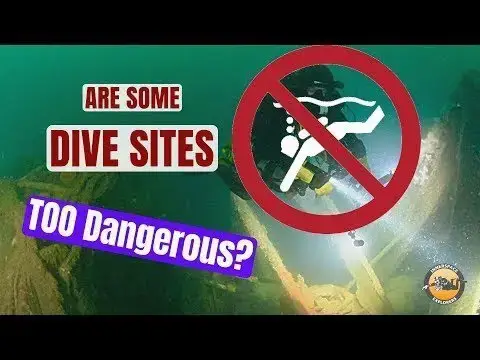
In our next livestream, Achim and myself will discuss whether the number of fatalaties at some well known diving sites means that authorities should prevent diving. If not, what can be done to reduce the number of deaths?
As always, we'll also take questions on any other topics that take your fancy - perhaps my most recent video on checklists - https://youtu.be/mZPk5qXFtWo
*Support what I Do*
If you'd like to support what I do then please consider joining my channel - http://bit.ly/4kMVqCB
*Giveaway*
If you want to win the Orcatorch DC710 (https://youtu.be/LVJ3RnWYBHk) then you need to like my Deep Wreck Diver page or join the Deep Wreck Diving group. Anyone who does both will be entered twice!
Facebook page - https://bit.ly/3I0zPb2
Facebook group - https://bit.ly/45tDgkl
Terms & Conditions
- Ends 1800 hrs GMT on 30 Jun 25
- Prizewinner will be notified via Facebook
- Winner must provide a valid postal address
- Global entries welcomed!
*Kit I Use*
Note, some of these are affiliate links so help support making my videos:
- Gloves are Ansell Alphatec 87-063 - https://amzn.to/4jDHhX4
- Main torch is an Orcatorch D630 - https://amzn.to/4jlT4tA
- Backup torch is an Orcatorch D710 - https://amzn.to/4jhddRk
- Drysuit is an O-Three Ri200 - https://www.othree.co.uk/drysuit-range/ri-2-100-drysuit/
- CCR is an AP Diving Inspiration (XPD) - https://www.apdiving.com/
- Backup computer is a Shearwater Perdix v2 - https://amzn.to/42FXZOW
- Reels are by Kent Tooling - https://www.divingproducts.co.uk/
- Cameras are Paralenz Vaquita
- Video light is NiteScuba NSV60 - NiteScuba NSV60 - https://s.click.aliexpress.com/e/_onHEKQZ
- Phone housing is Divevolk Seatouch 4 Max - https://s.click.aliexpress.com/e/_omJlNKL
- Stickers for gear by Dive Signs - https://www.divesigns.com/
*Strobes*
I use two different strobes (also affiliate links)
-- Prozhaozhu 3000 Lumen Diving Strobe - https://s.click.aliexpress.com/e/_oBMRF3X
-- Prozhaozhu 4000 Lumen Diving Strobe - https://s.click.aliexpress.com/e/_oCTEses
- Jon clip - https://s.click.aliexpress.com/e/_oDqq0RW
*Like this video?*
If you enjoyed this deep wreck diving video then check out my other ones 👉 / @d33puk 🙏
You also may wish to consider buying me a coffee 👉 https://buymeacoffee.com/d33puk ☕☕☕
📱Follow My Socials!
Instagram: https://www.instagram.com/d33puk/
Facebook: https://shorturl.at/BfPe4
Buy Me A Coffee: https://buymeacoffee.com/d33puk
Email: [email protected]
Don't forget to subscribe to this channel for more updates. Subscribe now ( https://www.youtube.com/@DeepWreckDiver/playlists )
Show More Show Less View Video Transcript
0:00
Uh, good evening everybody. I'm hoping that
0:05
um this is now live and everybody can hear us. If we're live and and and everybody can hear us, could somebody
0:11
just put something in the chat, please?
0:16
Right. So, in the meantime, hello from my side as well. Good to be back.
0:21
Looking forward to this quite a bit. Seems like seems like quite a while
0:26
since we did our last one, actually. Yeah, that was a quite a bit of a of a
0:32
break actually. Yeah, true. Uh almost for weeks. Yeah. And uh I think that was
0:38
uh that was on my that was on my part really. I I didn't have any availability until today. But um I'm seeing people
0:45
saying that they can hear us in the chat. So that is absolutely fantastic. So always a bit of a worry when you
0:51
start one of these things, especially with two people, you know, just to make sure you've got all the technical prevalence sorted. But thank you to
0:58
everyone who's putting stuff in the chat and uh you know hello everybody. Um it's
1:03
it's great to have you all um all with us uh tonight. So we thought for this
1:09
evening as a bit of a um you know I guess a starter for our chat we would
1:15
talk about whether there are some dive sites that are inherently dangerous. And you know obviously often you know
1:21
governments and other organizations try and restrict diving at these these sites. So that's what we're going to kind of focus our initial bit of
1:28
discussion on, but then we're going to um kind of uh you know move on and and
1:33
talk about other things as well. So if you've got questions, it would be great to have them in the chat, please.
1:40
Exactly. So, um, yeah, we have a few of these dive sites
1:46
in Germany. And, uh, actually, I can't even remember, was it you or was it me, uh, who came up with the idea, but it
1:53
was, we recently had one on a dive site in Germany as well as one in Austria.
1:59
And it is always the same thing. Then you have all the press, all the media like, oh, this is super dangerous. This
2:04
should be forbidden because there's all these people dying. And it's this super dangerous dive site that is basically
2:10
killing the people which obviously it's not um but it always leads to these
2:15
discussions and uh I actually have been crucified and burned a couple of times
2:21
because I gave my opinion on that and um so now you can do that as well and we
2:27
get crucified and burned together. So um we're just getting a couple of questions coming in the chat. What I
2:34
would say guys is put your questions in the chat whenever you want and we will we will get we'll probably pick them up
2:39
at the end but we will go through the chat and if if we don't cover anything we'll do another you know if we don't cover all the questions we'll do another
2:46
we'll do another one later on. So just stick your questions in there. It's kind of uh it's great to have. But I guess
2:52
going to to the point there, you know, your point is that you know what what tends to happen is there are certain I
2:57
guess locations that are particularly well known and maybe more people dive at them and something will happen and then
3:04
people will go, "Oh, it's terrible. We shouldn't allow people to use these places." And and you've obviously um you
3:10
know I think you know there's a place in Germany I think that is particularly where where this happens. There are some
3:16
places in the UK as well. So there's a a quarry called Doraththa here in the UK and obviously there's you know the one I
3:23
guess we all know particularly well in America is the Andrea Doria which is um
3:28
clearly a really well-known um uh wreck on which which lots of people have died
3:33
and and there's always this kind of suggestion you know people have died therefore we should stop them stop them
3:39
going on it. Um and and you know I guess there's there's uh things both ways
3:46
really isn't there? Well um I think there's a lot of factors
3:52
to that. So um there's one very very well-known example here close to Munich
3:58
um that actually portrays it quite well. So first of all it's a steep wall. It's cold water. So I mean even in summer if
4:05
you go below 6 8 mters it's 4° Celsius all year long sometimes the visibility
4:11
is not so great and um at the same time it's a very popular lake for recreation.
4:17
So a lot of people go there for swimming for hanging out for having a coffee etc.
4:23
So on one side it's obviously the government the local government who doesn't want to be in the news with dead
4:29
divers every once in a while. So it's just bad publicity. That's one thing. And then on the other hand, um a lot of
4:36
this is made up by the press in my opinion. So, um if you don't mind, I have there's
4:42
a real example that's a couple of years ago and um it was three guys that met in
4:48
the morning um for what the Germans call a flu shop. So, you have a couple of sausages and a couple of beers and
4:55
that's your Sunday breakfast, so to speak. So, that's what these guys had. And then and I think it was January or
5:02
February, so it was bitter cold. And then all of them in a wet suit with a single 15 L cylinder and a single
5:08
regulator decided to do a 50 m air dive in this lake in 40° of water, which in
5:15
the end um resulted in one person ending in a wheelchair and one of them uh
5:20
drowning. And um the next day you had all these um articles in the media and
5:27
one side was like this is so super dangerous. It's the dive site because
5:33
all of these people were super highrained, very responsible, great uh family people, great divers, and it's
5:40
completely nobody knows how this could happen. And um back then I actually wrote a letter
5:46
to that newspaper and said, "Well, it seems like everybody once he's dead becomes a hero and the
5:53
best diver ever." And in fact, when you look at the facts of this dive, I mean, it has nothing to do with the dive. It
5:58
was plain stupidity that killed these people. And as bad as it is, especially for the relatives and the people involved, it's it's not the dive site.
6:06
It's clearly the divers. And it it doesn't matter in which accident you look, it's normally not the dive site.
6:11
But I mean, unless you have a cave collapse or something like that or a wreck that collapses or something like that that's happening, um, it's always
6:18
the divers's fault. Lack of training, lack of experience, violating the rules, etc. I mean, you
6:25
name it. So, so I guess putting a slightly different perspective on that. I mean, I guess driving is a bit like
6:32
this, isn't it? you know, is is that you know, like you know, somebody who's who's trained to drive a Formula 1 car,
6:38
for instance, could drive can drive extremely quickly and they're probably going to have low risk. Um, but not
6:45
everybody is at that level. So, we kind of put like 70 mph speed limits or or whatever the equivalent is in Germany. I
6:51
know obviously the autobarss are unlimited, but other roads have speed limits on and stuff as well, don't we?
6:56
and we go, you know what, for for most people most of the time, this is a
7:01
sense, this is a sensible limit. So, you know, I guess that that's the the other side of the equation. So if you've got
7:06
like a a really cold dive site for instance or it's really deep or you know the visibility is really poor or the
7:13
strong currents or whatever else it is you should therefore you know maybe there's you know a way of putting other
7:19
you know other kind of uh maybe not banning it but maybe
7:25
putting restrictions on it or regulations on it or those kind of things.
7:30
Well that's what we have in some places like there's the you probably heard about it. called Hemo. It's uh close to
7:37
Hamburg in the north of Germany. Very famous. Um great dive site by the way.
7:43
And they had a lot of issues as well. And um they have regulations. So you have to have two first stages. You have
7:50
to be in a buddy team. You you um must not violate your depth limits uh depending on your guess and on your
7:56
training limits. And there's actually somebody running around that sometimes like checks the computer like, "Hey, I want to see your certification. uh how
8:03
deep have you been etc. So um limits like that obviously make sense
8:09
especially on a privately run uh place which basically is a is a is a business
8:14
so these guys actually have to cover themselves and that makes sense to a certain um
8:21
to a certain level. I mean you can actually overregulate everything but um
8:26
so these these these ideas are there um on a on a public water um where basically everybody can dive it's
8:33
probably really hard to establish something like that. Yeah I I guess you know we probably have
8:39
something similar. So the site that I mentioned Dorothier in the UK very similar. Um it's it had a reputation for
8:46
people dying. I mean it's it's I've not been there but my understanding is it's it can be 100 it's 100 meters deep in
8:51
the bottom of it. It's it's an old quarry. They uh it was on private land and you know people would go in there
8:57
and dive and they would have problem and they would end up dead. And then what the land owner said is um he granted a
9:04
organization permission to use it and they effectively self police it. So there's an organization called Northwest
9:09
Technical Divers and they do something very similar to what you you've just talked about there. But you know and I
9:16
think that you know by and large works well. Um, I guess it's it's a form of uh
9:23
self-p policing, isn't it? Whether it's by a business or whether it's by a community organization like that. And I
9:29
guess for me that is I think an important part of this discussion and perhaps the bit that gets missed if you
9:35
involve a government is you actually need to have people frankly who know what they're talking about involved in
9:42
the discussion. You know, hence your kind of point there, you know, the things that you mention, you know, you
9:47
tick those off. Those are all sensible diving things, aren't they? To have a proper certification, have redundancy,
9:54
you know, to have spare gas, all those kind of things. Those are all um, you know, really, you know, sensible risk
10:01
reduction measures. Yeah, this is actually where the press comes in because I actually had this I
10:07
mean, I don't know if you ever talked about it, but I did quite a few body recoveries over my career and so
10:13
obviously had to talk with officials quite a bit. Um, and that's what you
10:19
say. I mean, you need people that are that know what they talk about when it comes to diving. And a lot of the
10:25
knowledge that you get presented by um representatives of the government or the law enforcement, etc., is based on
10:32
media, is based on stuff they read. And sometimes it's terrible. I mean, the there belief of this this wall that I
10:39
mentioned before is that there's a suction that is actually sucking divers down. And I've been I've been asked
10:45
about this quite a few times. We're like, "Why are you diving there? This is so dangerous that there is this current
10:52
that's sucking you down." I was like, "What are you talking about?" And u but but these people believed it because
10:58
obviously I mean for us as divers. But somebody who never had his head below the water reads in a in a more or less
11:05
um well-known newspaper, that's a fact, right, for these people.
11:10
And that's sometimes what they base their decisions on and
11:16
brings us into trouble. So it's not easy. Yeah, absolutely. And and I guess
11:21
what we've just talked about there really are sites. Um we we I think we've mainly talked about
11:28
um land sites, haven't we? So quaries and um you know, ones where governments
11:33
can control access to it and those kind of things. Um I guess the other part of this is is is
11:40
sea sites isn't it is you know so you know and people doing things. So uh we
11:45
mentioned the Andrea Dora but there's a wreck near us um called the Silla which was purpose sunk for divers. I it's not
11:53
very deep. The bottom's about 25 m. It was prepared before it sunk. So you know they went in and they they welded a load
12:00
of places you know to to prevent you getting access to them. they they removed a whole load of stuff and
12:06
everything, but that was 20 odd years ago and it's now kind of falling apart. Um, and uh some of the stuff that was
12:13
put in place to prevent people going in places has come off or has been removed. And um you know at one point the the
12:21
owner of the wreck, which is the local aquarium actually, they um they commissioned a risk assessment on it and
12:28
the risk assessment said people shouldn't be allowed to dive on it. um and you know that that was their recommendation. Now they couldn't
12:34
enforce it, they couldn't stop it, but you could see how um something like that
12:39
could gain a bit of traction perhaps and then you know once again you know um in the same way that government
12:46
organizations you know focus on things like you know people dying and you know
12:53
don't apply measures that are kind of you know I think both of us would view as appropriate.
12:59
Yeah. Um but I mean generally speaking seaside will be difficult. I mean you
13:04
have certain wrecks that belong to people like um the Britannic for example that has an an owner um or actually I
13:12
think you own one as well. Um um same with me by the way the Fesus. So um
13:19
theoretically you could probably prevent that from happening. On the other hand I mean how do you control it? on. Yeah. I
13:25
mean, in the UK certainly ownership of wrecks doesn't doesn't preclude people from diving on them. The only thing that
13:31
prevents people diving on them is a is a uh you know, we have in the UK we have protected wrecks which um are in law,
13:40
you know, you have to there's two levels of protection. One level is you actually have to physically get permission to
13:46
dive it. So up in Scappa Flow there's a wreck called the Royal Oak which is uh um a lot of guys died on it and so you
13:54
can only dive it if you have permission to to dive it. So you know whether whether though how effective those
14:00
things are um is is debatable but they do exist but they're not there for safety. They're they're there for kind
14:07
of because they're sensitive sites um slightly randomly mainly.
14:13
There's a few of these in the Baltic as well that I know of and um they I mean people go there anyway because again the
14:20
the the government or the law enforcement that put this rule on is basically not able to control it or uh
14:27
or enforce it. So pretty sad actually. Yeah. And I guess not a priority for
14:33
governments. Yeah. Yeah. So, uh, they're not in the,
14:38
uh, they're not in the least bit interested by and large in enforcing these things. And they'll only do something, I guess, if somebody comes to
14:44
them and gives them, uh, information. So, um, I guess, you know, where where
14:49
have we ended where have we ended up with this in terms of, um, should diving be banned on on dive sites? I think we
14:55
we're both firmly in agreement. It shouldn't be. But what they should be
15:00
is perhaps um if there are, you know, there are sites
15:05
I think we both agree that there are sites that are higher risk than other ones.
15:12
Yeah. And the question is always what's the higher risk? Um that's probably the the main discussion. I mean um some of
15:18
these places have higher accident rates because there's just way more divers. I mean, when you think about Hmore, the
15:25
place in in the north of Germany, it's just I mean, in summer, it's packed with divers. And I if you compare that to a
15:32
lake around Munich, I would say there's probably a
15:39
than on more divers. I mean 1% let's say that
15:45
has an accident more and and so it may look to the public as hey there's more
15:51
bad things happening in that particular place but nobody's talking about the fact that there's probably way more
15:56
people going there so um it's not that the place itself just creates more accidents and then um the question is of
16:04
course also who dives there I mean for me for example coming from the south of
16:10
Germany from the natural lakes deep dark stuff. That lake is like an aquarium.
16:16
It's beautiful. It's all perfect visibility. It's not colder than of what
16:21
I used to. Uh but somebody that I don't know did his course in Egypt, did 20
16:26
dives in Egypt, comes back and jumps in this lake, it's probably pure horror. So um so for that particular person with
16:34
the amount of training and the experience, it might be more dangerous. Whilst for somebody else, it's just
16:39
like, well, it's like at home just with better visibility. So um I don't think that there is a
16:46
is a is that particular risk factor. I mean on the other hand of obviously I
16:51
mean you can have restrictions if there's swim throughs or penetration on wrecks so that create a real hazard of
16:58
course but just the site itself I don't think so.
17:04
You don't you don't feel that some sites are inherently more risky than others. So for instance, you know, a site that
17:10
is colder than another site is going to, you know, potentially have a higher risk. You know, a site that doesn't, you
17:17
know, a wall site, for instance, may be more risky than a a site that isn't a wall. You know, tide versus non- tide.
17:24
You know, I think those things these things all add to the to the uh to the level of risk. I mean, obviously, they
17:30
can all be mitigated, but you need to have the experience and the knowledge and and those kind of things to mitigate
17:35
them. Yeah. But then can you generally say that site's more risky than the other
17:40
one? Because think about it. You visit me in Germany and we go to this to this lake close to Hamburg. I mean
17:47
it it it would not be more risky for you than doing a 100 meter recive um
17:53
somewhere in the in the English Channel. Um if I invite a friend that did his
18:00
training somewhere warm and nice and he comes there with his wets suit in his 10 liter tank, it is. So um of course you
18:06
have these what you just said tight um heavy surf stuff like that that is makes
18:13
that site more risky than another one but then again I mean who's diving there so in the end it's always you can always
18:22
okay it's common sense
18:27
okay so uh so I guess what was what we're saying there is is we you know we
18:34
I think that the the factor the factors uh
18:41
the things that um each dive site should be treated in in its own merits and the
18:47
things that are make that dive site unique should be considered and you know
18:53
appropriate things taken to to address whatever they are. So for instance if you're diving in a freezing cold lake a
18:59
dry suit makes far more sense than a wet suit for instance. Yeah.
19:05
Yeah. And in my opinion, I mean, what could be a good um
19:10
rule of thumb, there's um and actually I don't want to want to want to advert here any any organization or whatever,
19:17
but there's this insurance company out there that's specialized in in dive insurance, and they say you are insured
19:23
as long as your dive is within the limits of your training. So, it's not like you don't exceed certain depth or
19:29
don't exceed certain P2 or this or that. It's it's very simple. If you dive within the limit of what's in your
19:35
certification, you're insured. And um I mean, hard to believe, but there's still
19:42
plenty of people diving and they have not. Um if you look at it, or if that
19:48
person's a little bit more serious, um then the person probably has dive insurance and that should be that
19:55
basically says it all, right? I mean, you do a dive, we just talked about cold water, heavy surf, tights, whatever, and
20:02
you're not certified for it, then you shouldn't be there because it is dangerous for you. So, if you're certified and you you have the proper
20:08
experience, you can dive it. The insurance would pay, which would be would be a good uh good measurement
20:13
line. So, can I do this dive or not? Yeah, I'm certified for it. Yeah, it's interesting. I I think you link those
20:19
two things together. Linking those two things together is really good because it's not just certification, isn't it? It's also the experience as well. And um
20:27
and you know often I think people will will get a qualification somewhere you
20:32
know warm or or whatever and then they will bring that qualification back to you know and try and do the same dive in
20:39
conditions that are incredibly different from where they learned and you know not all not all things are equal.
20:46
Not all dives are equal. Yeah I actually can remember recovery was exactly what you just described. Very very sad. Um
20:53
but on the other hand a little bit of Darin awards. I mean, if you have eight dives in 10 m of water in 30° water
21:00
temperature and then you come back and do a 70 m air dive in a lake in Germany, you kind of ask for it, right? Yeah.
21:08
Yeah. That's absolute certain. It's uh it's all about making sensible decisions.
21:14
Yeah. So, do you do you have keep track? There's actually a lot going on in that
21:20
chat, but me without glasses, that's perfectly as well. Um, this probably
21:25
needs another video at some point. So, I'm gonna pick up I'm
21:31
gonna pick up a few of these. So, I'm I'm gonna go The first one is is um sort of going through is um Oh, we've got a
21:38
question. Here you go. When is a dive talk go coming to the UK? You you you may you may know more about that than
21:44
me. Save that. Um
21:49
I I again I basically don't want to use these um these chats with you to promote
21:55
any stuff. So if you're interested in the go and you're in the K contact me please um via email and uh we can talk
22:02
about it. Generally UK is Europe and that means um I would be the person to
22:08
talk to. That's what I suggest. There we go. That's an easy answer to that one.
22:14
Phillip um has asked uh what is to you guys your reasonable deco to diving
22:20
ratio time and please break it down as well as the evolution of it through the years. Um
22:28
I'm not 100% certain what that means. That's an extra video. Sorry,
22:33
that's nothing that that you can probably answer in in one sentence. That's probably that that would be a video in itself. Yeah, I guess that's
22:41
that's about how much, you know, I guess that question is about how much
22:46
experience you need to have before you start doing significant amount of decompression. I think that's where that
22:51
question's going. Um, yeah, maybe. Um,
23:00
I I don't really think that there's you you can answer this with a number. Um, I
23:06
think it I mean people you I mean I see this in courses and you've probably seen the same. You get this guy who has a 100
23:12
dives and this other guy who has 100 dives as well and they are there's world
23:17
in between worlds in Yeah. Absolutely. Absolutely. There's I
23:25
mean one it's about individuals isn't it? It's about individuals and it's about instructors giving people
23:31
reasonable feedback on their competence, actually telling them where they are. Um, you know, not trying to sugarcoat it
23:37
or sell them another course or whatever, just, you know, being really honest with them. So, um, so what I always ask for
23:45
people asking me for stuff like that and I haven't seen them before, I always offer a check dive. I was like, "Hey,
23:50
just come along. Let's jump in the water. Let me see where you are." uh and then I can answer that question because
23:56
just talking to somebody on the phone or just reading some numbers, I have this certificate and I have this many dives
24:01
doesn't tell you anything about that person. Yeah. No, I would I would absolutely agree with you on that one.
24:06
So, the next two questions also from Philly um are about um he's asked me one about CO2 sensor on the inspiration. So,
24:14
um I did use one for a long time um until um I killed it when I uh when I
24:19
flooded my rebreather. So, my uh my CO2 sensor died last year and I haven't got a replacement through them, but I know
24:25
that the CO2 sensor on the Inspiration is something that lots of people have uh has been talked about lots of times. And
24:31
and the bottom line is I am um I'm actually quite a big fan of them. I do like them. I think they um they're a
24:38
really useful tool and they're I mean the only thing is they're quite expensive so that's why I haven't I
24:45
haven't replaced mine. But do I think they work and do I think they give you a good indication of when um you know you
24:52
are potentially in a in a hypercapne situation? Yes, I do. Um do I think
24:58
there's also some you potentially some problems with them? Yes, you you know that you do occasionally have issues
25:04
with them. So I had a guy I was diving with a couple of weeks ago who had a CO2 sensor and he had there's two levels of
25:10
alarm on the AP CO2 sensor. he had the the warning um come up at the bottom of
25:15
a dive and that's not uncommon at the bottom of dives to get that and it's sometimes to do with whatever posture
25:20
you're in or I think it's to do with it warming up as well or levels of moisture or something. So, um I think you you
25:28
know you kind of have to manage it a bit as well, but I'm I'm a big fan. I don't know if if you got anything you want to
25:34
add about CO2 sensors. I only dove one unit once who uh that that had a CO2
25:41
sensor. So I have actually no real experience with them. So I think it's a cool concept, but um none of the
25:47
rebreathers that I frequently dive has one. So um I had a couple of bad CO2
25:53
hits. So it's always an interesting experience. Yeah. But um I've I've not had a CO2 two
26:01
hit, but I hear it's really really unpleasant. Yeah, it is.
26:07
Okay. Um and uh Okay. So the next question is about mouthpiece retaining
26:12
straps or gag straps. So um once again from Phipe. So yes, I I use one on my
26:17
rebreather. Um I am quite a big fan of them. Um I know not everybody is and I
26:23
know they look a bit geeky, but um you know, I think the idea of keeping your loop in your mouth is is fundamentally a
26:29
good one. Uh what are the potential issues with them? Well, I guess um if
26:34
you need to bail out onto open circuit, which um which I I do. I don't have a um a bob on mine. So, you you've got to be
26:41
able to break the the the MRS, although I can actually pull it out enough of my mouth to get it down here. So, uh that's
26:47
that's a potential issue. But overall, I'm I'm a fan. I think the the obviously there's two implementations on the AP.
26:54
There's the old one and the new one. I think the the current one is which my understanding is is very similar to the
27:00
one on the Revo is I I like it. I think it's a good implementation. So I'm a
27:05
fan. Okay. Actually, I've been in the water today with an oxygen rebreather with
27:10
another five. So it has a strap as well. So I used it. Um
27:16
there's nothing wrong with them. I personally am not the biggest fan on the oxygen re breathers. Uh if they have
27:21
one, I usually use it. Um the important thing is just what you what you said. I
27:26
mean if you use one then use it properly and just not have it hanging around your neck but tighten it so in case you need
27:32
it it really works. Um and uh yeah I mean if you need to go to
27:38
open circuit obviously you should be able to remove it from the mouse because otherwise it becomes an issue. But uh
27:44
I'm pretty sure actually we talked about this in one of the first videos. Yeah. Okay. Okay. I mean, I guess maybe
27:50
not everyone's listened to to the videos, which is why we why we get um you know, some of the questions again,
27:55
which is which is I guess I'll keep saying to people go back and watch all our other videos. Yeah, there's loads of
28:01
good stuff in them. Definitely that. No, it seriously know entirely happy to to
28:06
get stuff on that people may have missed or whatever. So, um it looks as though Darren Smith had a bit of a problem with
28:12
a um uh some issue there. A few people have um
28:17
have kind of um sort of offered some suggestions and everything. Um
28:24
yeah. Uh right. Okay. Oh. Um
28:32
there we go. What else? Um I was just working through the questions
28:38
at the moment then. So lots of lots of chat about um different um regulation
28:43
everything. So, so that's all there. Lots of people going to Scapper, which is which is absolutely fantastic. It is
28:49
a a great location. Although, it has to be said, um, if you want to go and dive
28:54
a really really good battleship, you shouldn't go to Scapper. You should go and dive HMS Audacious, which is which
29:00
is a subject of my latest video. Um, yeah, actually, I've been in Scapa, so a
29:07
very long time ago, but uh, great memories. Yeah, I know it is. It's it's fantastic. Um
29:14
um oh I've asked uh uh Levi here has asked uh how was it diving with Tony
29:20
Cook down in Kerno. So so Tony was was my buddy when I was diving in Kerno. He was actually the guy who had the uh the
29:26
CO2 warning. I had a great time with him actually Levi. It was it was it was
29:31
fantastic. We did two dives 50 odd meters and I think he really enjoyed himself. So that was that was really
29:38
nice. Um
29:43
right so there's there's quite a bit bit of
29:49
chat um oh sorry Philip to come back on my question I was asking for you yourself guys where would you not dive
29:56
because too much deco for too few bottom time and what will be the times okay I've got it so it's at what point does
30:03
the amount of decompression you need to do mean that it's not worth doing the dive um and I Yes. Well, you're you're
30:10
the man with a 170 180 me dive recently, mate. So, um how how deep are you happy
30:16
to go before um before there's too much deco? Depends on the size of the bell, right?
30:22
Um well, to to be honest, um
30:31
the the 170 meter dive you just you just spoke about was um as my wife likes to call it, the last stupidity.
30:39
Um it was it was damn long. So belly um
30:44
being in in in in blue water basically um with no support it was basically too
30:50
long. So um on the way up I would say the last four hours I was asking myself
30:56
constantly what the heck am I doing here? Um so if you ask me would I do it
31:01
again? No. Um I wouldn't. So for me actually cold is the big issue. So,
31:08
generally speaking, I mean, if it's warm, nice water and there's something to see,
31:13
I actually enjoy being in the water. If it's a couple of hours, it's fine as well. But, uh,
31:19
that particular dive, it was more or less I wanted to prove to myself that I can still do stuff like that. Um, I was
31:25
looking for that for 12 years for that permission and then suddenly it was there and I was like, either I do it now
31:31
or I'm getting too old and I can probably not do it anymore. So, okay, do it. Don't tell my wife. Go.
31:39
And um what was your total run time again? Just just remind everyone who who who doesn't know.
31:46
Um it was 173 m or something like that and I think it was 530 minutes or so. So
31:54
um was Yeah. So just under 9 hours total 13 minutes on the bottom. So um
32:02
yeah. So so interesting. So your thing is about the cold. Um, which is which is
32:07
really interesting. Uh, my thing is is is slightly different. So, so my thing is um I can't pee underwater. Um, and
32:14
it's a really it's a really odd thing. I've got all the, you know, I've got all the stuff and everything. I just have a
32:20
a mental block about actually doing it underwater. And what that means is I found is about 4 hours is the maximum
32:27
run time I can do before it gets gets too painful for me to do it. And that's that's me kind of, you know, doing
32:34
things like not drinking before I go in the water and various other bits and pieces which which which are probably not a good idea. So um I I um I I have
32:43
this kind of I have this block. So, so what that means is that that puts some absolute constraints on my diving, which
32:51
means that about 130 m is about my m and 4 hours is about my, you know, my
32:57
maximum unless I can figure out a way to solve to solve this problem. In terms of being bored on Deco, being cold on Deco
33:05
is is absolutely horrendous. And I I really do feel the cold. So, um I've just bought myself actually a uh uh one
33:12
of one of the new Quark heated undersuits and I've got a big I've got a big battery and it is a thing of heated
33:19
socks. It's absolutely beautiful thing. So, um I don't worry I don't think I'm going to worry about the cold anymore.
33:25
What I do worry about though, and I've got that that dive voke um housing thing
33:31
and I put a phone in there so I can watch films underwater so I don't get bored on Deco. Um so it's just that it's
33:38
just that between 3 and 4 hours it gets really really painful. So um that's um
33:45
that's my kind of constraint. Um so I hopefully that kind of that kind of you
33:51
know gives you two completely different perspectives on what limitations there are. I mean you look at the guys for
33:57
instance what did you do about scrubbers by the way? Oh, you have two.
34:03
Well, um, let me let me just, uh, go on that again. So, the the P thing is
34:09
interesting because I had the same issue and I can't do while I'm horizontal. So, I basically have to either kneel down or
34:16
go into an upright position. I can remember a dive back in the day with the GE guys on a wreck and I was actually on
34:22
the side of the wreck on the railing like kneeling down and he was like, "What the hell are you doing there?" man
34:27
was a little. So, um I basically managed to to get that done over the years. Um and yeah,
34:35
heating would be awesome, but but for me really, but I mean I froze my my fingers
34:41
when I was a teenager to a point where they were close to amputating them. So,
34:46
when my hands get cold, it's like really really uncomfortable. So, to a point where I cannot use them properly
34:52
anymore. And so, that's that's my weak point clearly. Um, scrubber time is an
34:59
interesting one and probably again one for a video in itself. I mean I want to
35:05
I want to give you a practical example. So when I was uh doing the channel dive which was 11 something hours um I was
35:14
more than 10 hours on one breather and when I opened it up the first three or four centimeters were discolored. saw
35:21
where you could see the color change in the soap. And um with the same rebreather, I did a working dive in one
35:28
of our lakes in 6 m of water hexawing through a big wooden lock. And after 45
35:35
minutes, I actually had a CO2 breakthrough and that canister was completely deep purple. So what I want
35:42
to say, there's so many factors that influence the scrubber time from cold to
35:48
exertion to um there there is no real answer to
35:54
that. So um if you know your breather, if you have um a lot of hours on it and
36:00
you you get a feeling of what's possible and what's not. Um so on that particular
36:05
dive, I actually had no issues with the scrap at all. Okay. And it was way
36:10
beyond the recommendation of the manufacturer. Yeah. Know I was going to get I guessed I guessed it pro I guessed
36:15
it probably was. Um, which is obviously why I asked asked the question. And I think you're right. We should do we'll
36:22
do a chat about scrubbers, shall we? Should we do a should we do we'll put because I know that that is I've been
36:28
asked that question several times in comments on my videos and stuff. So, um, we'll do we'll do that um at some point.
36:34
Um, I've also I've just got another question in here. I get this one quite a lot actually uh about my yellow gloves.
36:40
Um, and um, and I don't know why people people seem to really be interested in
36:46
yellow gloves. Um, I'm a huge fan of yellow gloves for a few reasons. So, the
36:52
first reason I'm a big fan is because they always stand out really well and obviously everyone sees in my vid my
36:57
videos. My buddies, other people on the dive site, nobody ever misses a hand signal from me because I've got these
37:02
big yellow gloves on. Whereas people, you know, most people tend to have black gloves and they have black dry suits and
37:07
that, you know, they they you lose that you lose that, you know, really um really quickly. So, I love my yellow
37:14
gloves because everybody sees them and they kind of slightly become my thing now as well. So, um you know, people
37:20
recognize me because of my yellow gloves, which is which is kind of nice. But the other thing with them is is that they're actually the ones I use actually
37:27
quite cheap. Um and if you're like me, you're always fiddling around with bits on wrecks. you you you puncture your
37:32
gloves quite often. So, what I do is in the description on most of my videos, I put a link to Amazon. So, where you can
37:40
go and find the gloves that I dive with that they're mainly used for like chemical um the chemical handling
37:45
gloves. So, they're a bit thicker than um sort of washing up gloves or something like that, but they're they're
37:50
relatively cheap and you you can buy them you can buy them on there. And then underneath what I do is I wear a pair of
37:56
um uh thin sort of two mil wets suit gloves. And then if I ever puncture my
38:02
puncture my dry suit gloves, I've got the wet suit gloves underneath. And I got a little tube obviously that goes up
38:08
my sleeve and I and it's like um surgical um surgical tube and I can pull
38:13
I've I'm quite good at it. I can crack my gloves, roll the the neoprene, pull the tube out and put my glove back on.
38:19
And I can do that probably in about 30 seconds. So it means I don't get a absolutely soden sleeve. Um you don't
38:26
get it all up my arm. So anyway, sorry that's a complete uh that's a complete segue. I don't if you got any thoughts
38:32
on on dry gloves and and colors and stuff. Yeah. What what's the normally
38:37
the coldest temperature that you dive in? Oh, um I've used them. I've gone up to
38:44
Scotland where it's probably five or six, but only at the bottom. It would be warmer than that on the deco stops. So,
38:52
um I don't do really cold um really cold water.
38:58
Okay. Yeah. For me, the thing is there seems to be a magical um line at 16°
39:04
Celsius. So, everything below I have to wear dry gloves. If it's warmer than 16 and I'm warm, the the body is good, I
39:12
can actually dive with these cut off um thin 1 mm like biker gloves or something
39:18
like that. um which I like a lot because obviously you have way better um sensitivity in your fingers etc. Well um
39:27
dry gloves I use um these gray scitec gloves that uh that have this um
39:38
not very even. They have a like a texture and um I use them with this ring system
39:45
um to click on so I can switch between the seal and the glove and actually they
39:50
stand quite a bit of papio use. So I normally can dive a pair of these for two years or so before I have to change
39:56
them out. Okay, that's uh that's pretty that's pretty impressive. I guess um the
40:01
thing that kills my gloves is is is fiddling around with stuff on you know sharp stuff on Rex. That's that's
40:07
normally that's normally how I puncture my gloves. Um and you know my own fault really. If I leave things if I left
40:13
things alone then then I wouldn't puncture my gloves. But um interesting and interesting there's quite a lot of
40:19
people in the chat I can see putting different stuff about their different gloves and you know the different things that they use everything which is uh
40:25
which is which is absolutely great. Um uh what I did, let let me just with the
40:31
with the gloves. What I did a lot um years ago when we were diving on a specific wreck that had a lot of broken
40:36
glass um actually was Mediterranean so relatively warm water. I was using one of these spot gloves, these uh the one
40:43
from made from stainless steel. Okay. Um um where you um like these tiny little
40:50
rings, tons of them um that make the glove. Um, and that was great for
40:56
digging in the mud because I cut my hands and my gloves a couple of times really bad and then suddenly that became
41:02
a thing. So, relatively expensive, but that was awesome if you handle really
41:07
sharp stuff. Yeah. I mean, not quite the same, but that one thing that at one point there was a trend in the UK for
41:13
people wearing coveralls over the top of dry suits. Yeah, I remember that. Yeah.
41:19
So, so it was kind of the idea was you would protect your dry seat by wearing something that kind of you could you
41:24
could wear out. And in fact, there's a there's still a guy around here who still kind of he rocks that look. I
41:30
think it's it's his equivalent of of my yellow dry gloves. Um he just, you know,
41:35
it's his kind of thing these days. But, you know, once again, you know, kind of makes sense. And and I have seen um I
41:42
have seen people put kind of like workman's gloves on top of dry gloves. So, you know, the kind of things that
41:47
you can you can buy for I mean, you're a mechanic. I guess you may use them when you're at work, dear.
41:53
Yeah. Yeah. So, you can get kind of these days you can get relatively cheap quite tough um ones as well. I mean, my
42:00
thing is always what I don't want to do is restrict my dexterity. So it's it's exactly yeah it's really important for
42:07
me that I that I have a glove that kind of keeps my fingers warm but also doesn't mean you know doesn't prevent me
42:13
from feeling things like you know inflators and knives and you know whatever else it is you need to touch.
42:20
Yeah especially also when you start working with line. So same for me it actually it took me quite a couple of
42:25
years to test different dry gloves till I found one that um really fits. So what
42:32
I find horrible when you have them and the fingers are too long and then suddenly like you handle a bolst or
42:37
something and you have this little flip on top that always gets in the way and then at some point you tear it off uh
42:43
accidentally and flood the suit. So um and then obviously it depends what you have underneath. So I have these white
42:49
fluffy tinsulate suit. They have a name I don't I have no idea but they are perfect but it took me quite a while to
42:55
find these. And you have you have an inner seal as well though, don't you?
43:00
Um, no. Oh, really? Okay. No. Okay. Um,
43:07
that probably has has to do with the fact what I said before, my my hands are super um sensitive to cold and whenever
43:15
I had the seal on in a dry glove, the um the air exchange was not good and I
43:21
still had cold hands. And then at some point when I found the system that I'm diving today,
43:26
um that was like a year before the channel dive and I started to really experiment because my biggest fear on
43:32
that channel dive again was cold and um so I started to play around with that
43:38
and I figured out okay the best way to to mount these gloves and that's different than what the manufacturer
43:43
recommends um is to replace the seal with the glove basically. Um, I don't
43:49
know if that makes sense in case I can I can can show that at some point. Um, and then I realized they don't come off. And
43:56
actually that was 2011 and since that I'm diving it like that. So even in the channel dive I had no inner seals and I
44:02
never had a flooded suit. Works perfectly all right. And if these these um
44:08
these uh gloves start like tiny holes in that you have a wet glove but some but
44:14
it's not like it fs the suit unless you get like a real bad cut in them or something like that. But um
44:21
yeah I can't complain. And actually to be honest like real deep stuff or long stuff I wouldn't do in cold water
44:27
anymore. I'm too old for that. So like on the on the 170 I had these cut off biker gloves. So uh in a normal seal so
44:35
nothing uh would have happened if I was like um cutting something. It would have been my hands. So I was bleeding anyway.
44:42
So it didn't matter. Yeah. Okay. Okay. That's kind of uh interesting. So So
44:47
when you say cold water, what would you what would you consider cold water? Well, for for me, as I said before,
44:54
everything below 16° I need a dry suit and dry gloves.
44:59
Everything above 16 I can use like bare hands. Basically, um, what I don't like
45:05
anymore is like real cold stuff like in winter at our legs when the surface is like 2°, bottom is 4°. I mean, I still
45:13
go diving, but I don't do any decompression diving in this in Yeah. Okay. Yeah. I know. Okay. No, I was I
45:19
was kind of I was I was wondering, you know, so what I guess what water temperature, let's say you were doing
45:24
100 meter dive, what water temperature would you consider too cold, you know,
45:30
roughly? Uh on the last one it was 8 degrees at the bottom which was completely fine
45:35
because it was a very limited amount of time. So for me interesting is that part of the water column where I spent most
45:41
time. So obviously decompression. So and if that is in the let's say 10° range
45:46
that's all good. So the the channel dive for example was between 10 and 13 degrees and that was perfect. So and
45:53
that was as I said it was my biggest fear but it was no problem at all. Yeah. Okay. Yeah. No interesting. Yeah. I
46:00
mean, I think I think sea by and large, you know, unless you're diving in somewhere like the Baltic, tends to be
46:05
warmer than than pretty much anywhere in land, doesn't it? So, um yeah, I mean, I just I just try and stay in the sea and
46:12
avoid avoid quaries, frankly. That's my uh that's that's my kind of uh
46:18
philosophy. Same same with me. I mean, back in the day, we like did a deep dive in one of these lakes every weekend. So
46:25
that's I mean first of all I know all those stones by name and second uh yeah it's the code thing and obviously also a
46:31
little bit age and time. So if I go for like an expedition style dive then it's
46:37
always in the sea. Yeah. Okay. Okay. So um I think uh we we kind of we digressed
46:43
slight quite a lot there didn't we from our from our original topic picking up the question of dry gloves took us took
46:49
us quite a long way. I think we have um here we go. We've just got a uh we've
46:55
got a question here wondering what you guys do to keep yourself dive fit. Do you work out, do any cardio, etc.
47:04
Um well, first of all, I dive a lot. Yes.
47:10
And you know what? That was exactly the thing that I was going to say. The number one thing to keep dive fit is to do lots and lots of diving. That and
47:18
that in that is so important, isn't it? Yeah. So to be to be honest with you uh
47:25
the last three or four years actually the number of dives per year decreased quite a bit for me to work and family
47:31
and moving etc. So there was a lot of stuff going on. So the the total number of dives in the last three years was the
47:38
lowest I ever had. But uh before that I cannot remember a year where I had not
47:44
at least 150 dives. Yeah. And um so the last couple of years it was I mean not
47:52
talking about training dives, just diving for myself, not teaching anybody. Um it was probably something between 50
47:59
and 80 which is super low for me. And um
48:04
other than that, I do a lot of kayaking. Um I mean a lot. I like to kayak and
48:10
it's a it's a great way to to do a bit of sports and relax a little bit. I'm in the fortunate position that I can
48:16
actually kayak off my property. Uh, which is awesome. And um then sometimes
48:22
swimming and I recently um bought myself one of these stands where you can put a
48:28
bicycle on top but indoors with these with these rollers on the back actually
48:33
this winter because as you said I'm a mechanic so I do a lot of restoration work and cars, bikes, boats, whatever.
48:40
and I found this beautiful old uh racing bike and I was like, "Oh, that's that's
48:45
you shouldn't put that on the street. Um it's too nice for that." So, I put it in this thing and now I can watch a movie
48:50
or whatever and go on the bicycle for an hour. Um especially if it's
48:58
[Music] in Germany, you know, bad weather. So, it became a little bit of a thing. But
49:03
I'm not like going to a gym or something like that. So, there's no special fitness routine. But that's of course
49:09
because I don't have an office job. So I'm on my feet all day long working with tools, running around. So I generally
49:15
consider myself a relatively fit person. Yeah. I mean, so so I would echo that particular thought as well, which is
49:21
that, you know, I'm I've I've always been relatively fit. I my time in the military. So I joined the military when
49:27
I was a young man and, you know, I obviously did quite a lot of stuff, which has given me a reasonable base
49:33
level of fitness. And then I I uh I go for a run once a week. So I I'll I'll do
49:38
a five mile run once a week is kind of my um it's kind of my fitness. But I think the most important thing I don't
49:45
do as much as many dives as you, but I do pretty much all my dives are gas dives. So I'll do 50 or 60,
49:53
you know, twohour decompression dives um a year, which is which is I would say, you know, quite a lot. Um and they're
50:00
all they're all at sea and they're all, you know, um Yeah. So, so, so I I think
50:07
that allows me to keep and I dive all the way through the winter as well. So, I don't really, you know, ever have a
50:13
break. So, um, not that came out wrong. Not having a break sounds bad, doesn't
50:18
it? What I I mean is I I don't ever stop stop diving. So, I keep my diving fitness. I keep my diving currency by
50:25
just diving all the time. So, that's my kind of approach. And I would say particularly with rebreathers
50:32
um because of the investments that you have to make in them in terms of the
50:37
knowledge. Yeah. I think it is so important to keep diving them you know.
50:43
Yeah. It because you know your knowledge does go down you know and your skills go
50:49
down relatively quickly. So so that's why it's it's so important to keep on them. You know, lots of rebreather
50:55
instant stories start off with Bob hadn't dived his rebreather for six months and blah blah blah and then they
51:02
found his body. Yeah. Yeah. I absolutely agree on that. Yeah. So, um it's an open
51:10
circuit I think is very different to that because I I think it's just it's a order of magnitude
51:17
lower in terms of uh you know technical challenge.
51:22
ABS. Yeah, absolutely. I mean, generally um I think diving skills
51:29
like trim buoyancy, fin techniques, etc. um do not really go away. So, I recently
51:36
had a guy that haven't that hasn't been in the water for 17 years actually for a
51:42
pretty funny reason, but I don't want to go into that here. But um so he did his
51:47
class with me like 20 years ago then was diving for 3 years then had a break of 17 came back to me we went in the water
51:54
and I was actually expecting him to be like start all over again and it was not
51:59
it took him like two three minutes to like readjust and then I was just diving
52:05
along. So um it was not that he lost a lot of that uh in a rebreather that's
52:10
basically not possible. Yeah. Yeah. Okay, cool. We've we've uh dived with
52:15
Roland has said, "I'm a new diving instructor. What suggestions do you have for teaching students? He's doing recreational teaching for now in Latvia,
52:23
Pors, cold lakes, quaries mostly." Sounds sounds awesome, I have to say. Um
52:29
first of all, well, um
52:35
well, I mean, I don't know. Um teach teach as much as you can. And
52:41
um the question indicates a little bit that you're not 100% sure yet how and
52:46
what to do. So I would like in like in technical diving, get a mentor, get an experienced instructor, ask them to come
52:54
along or an instructor on your level, but share a little bit um for ICO into
53:01
um one of you guys being like the guardian angel. Um then switch roles and
53:07
film all of your of your training. So have at least one person in the water filming your training so you can review
53:14
it afterwards. I mean beside from using it with the students, use it for yourself um to see what you're doing and
53:21
you will see your own mistakes. So I did that for example a lot when I was presenting because I had a few stupid
53:27
things with words and hands and like something like that and you watch yourself on the video and you're like oh
53:33
my god that's me and that helps you a lot to get rid of these things and also about positioning in the water. So the
53:39
key elements of teaching um is something that you will figure out if you see yourself on video that would be my first
53:45
recommendation. Yeah and that is you know from my perspective that's a really good suggest really good suggestion. I
53:51
mean the other thing I would add is um is is think you know think about things
53:57
from your students perspective. So um you know kind of
54:03
discuss with them afterwards you know try and find out you know how they found it. You know get that get that two-way
54:09
feedback because it's easy for us as instructors to forget what it feels like being a being a student. You know
54:15
particularly focus on on their experience. Um and you know I think that will help you being a better instructor.
54:21
So things that we all take for granted students find particularly challenging you know getting in and out of the water
54:28
um you know simple skills like mass clearing all those kind of things they just find really difficult particularly in the kind of conditions I think you
54:34
highlighted they probably don't have a dry suit that fits very well they probably don't have decent undergarments
54:40
you know they will get cold quicker than you you know etc etc so so please focus
54:45
on your students and that will obviously help um them and that will because it
54:52
helps them it will help you. So there there's a little top tip from me as well. There was an interesting one just from
54:58
the same guy Ders Rolland. He said my biggest dilemma is finding balance between quality and speed. Speed is the
55:05
focus here. It seems due to the financial aspect for most instructors. Well, yeah, I I've been there.
55:13
But uh there's a very very simple solution to that. Quality costs money. So don't let yourself get drawn into
55:20
this money-making. I have to be cheaper than the next guy and the third guy has to be cheaper than you and this I mean
55:28
value your own time. Think about what you want to earn if you go for a proper job. And that's what you have to earn
55:35
when you go diving because it's not a proper job where you sell something or where you repair something. This is
55:40
taking responsibility for the health and life of other people. So it should be
55:45
well paid. So, uh, don't sell yourself underpriced because that's that's what in the end bites you in the ass, if I
55:52
may say that, because that means you have
55:57
Yeah. Okay, there we go. Don't don't don't engage in a race to the bottom in all senses of the word. Uh, financial
56:05
and debt and all those kind of things. So, uh, great great advice there. And it is the curse of the industry, isn't it?
56:10
Everybody's trying to be cheaper than everyone else. Um, so I've got a question here as well.
56:16
from Ben M asking me if I do quarry diving through the winter. Um I think he's saying that he's not a big fan of
56:22
bobs. I'm not a big fan of bobster either, mate. And uh I live in Plymouth. That means the sea is right next to me.
56:28
And I can tell you that although the weather is bad for significant chunks of the winter, there is a large chunk of
56:35
there is always moments in the winter when the sea drops. It goes absolutely
56:40
flat. you get stunning visibility out there and what you have to do is just go
56:45
and go and dive and that that's what I do. So I'm lucky we our dive club here has got a boat there. People are willing
56:50
to to go out and you know I just go out with a couple of people and we go and we go and find somewhere to dive off a rib
56:56
and uh it is absolutely fantastic. So I avoid bobster and other quaries like the
57:02
plague. Um, yeah.
57:08
It's um, so, so there we go. That's that's how come I don't. Um, here you go. Uh, another one for Philly. Do you
57:15
guys use the recommendations from latest studies doing some stronger exercises 24 hours uh before a deeper dive? Well, I
57:22
mean, I I'd say anybody who's moved gear on and off of a dive boat has probably done a fair amount of exercise before a
57:28
dive, but I don't think that's what you meant. Are you familiar with that
57:33
recommendation, Akim? I'm just trying to find it. Uh, but as I have to look for
57:40
it, probably not. Okay. So, I don't think either of us does does do that. Um, so it might be a
57:48
um it might be uh something we should look at and see whether it's a good idea or not.
57:55
What What was it? You don't want to to work out hard before the dive or something like that? No, I think the
58:00
study suggests you should do um exercises 24 hours before a deeper dive.
58:07
That's my understanding of what he's written. Okay. I have to I have to have a look
58:13
into that. Yeah, I don't think either of us is familiar with that research. I'm sorry. Um
58:20
I'm just kind of scrolling down through the chat and um Oh yeah.
58:29
Uh uh yeah, Ben's coming to Plymouth. Yeah. Well, enjoy enjoy your trip to Plymouth,
58:35
Ben. Obviously, it's the best diving location in the UK. Uh I guess I I I would say that. And no, there aren't
58:41
very many quaries. Although there is one in Cornwall that you can get access to. Um which is um I have taught a mod one
58:48
course in there that was that was kind of okay, but but not particularly brilliant. I'm just just thinking we're
58:53
kind of coming up to the hour mark, which I think is normally where we we draw stumps. So, um I think yes,
59:01
hopefully people have found it useful as always and um I've really enjoyed it.
59:08
Hopefully you have aim. Absolutely. As always, it was a great pleasure. Uh that was just one two of my
59:15
favorite diving YouTubers. Love you guys. Well, we love you too. Thank you very much. Um that's
59:22
a very Thank you. Great. Um, so I think uh we should
59:28
probably go through that and see if we do like a follow-up video to answer some questions that we didn't. Um, if there
59:33
is any and uh then next time I'll be the host again. So we uh discuss a little
59:40
bit if it's scrubbers or if we find some other topic and uh then we may have
59:48
something to say next time but we have to discuss a little bit. So there might be something cool coming up. for these
59:55
tun bit of a teaser. Bit of a teaser there, guys. We may have something that that I think people are going to be
1:00:00
interested in, but we just need to work through some stuff first of all. Um but hopefully hopefully we'll tell you about
1:00:05
that about that next time. But um other than that, just want to say thank you all very much to everyone for
1:00:12
for joining us and we will see you next time.
1:00:18
Right. So the connection I think I lost the connection for a moment.
#Sports