Up next in 10



How Bike Gears Work (And How To Shift Them)
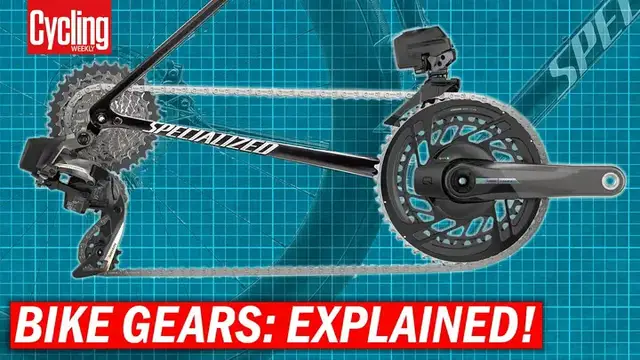
Road bike gears can be tricky to understand. There's often lots of buttons, paddles and things to interact with and knowing what to press and when to ensure you get the most out of your bike can take a while to learn. In this video, Sam Gupta explains how bike gears work, what all the drivetrain components are called, what gear ratios are, how to shift gear correctly, which gears are best and common mistakes to avoid.
Show More Show Less View Video Transcript
0:00
Have you bought a road bike and been left wondering what the deal is with the gears
0:04
Well, you're in the right place. In this video, I'm going to cover everything you need to know
0:09
from what everything is called, which gears are best for you, how to operate them
0:14
and finally, some important do's and don'ts. First off, we're going to name all of the important parts that go into making your bike gears work
0:26
These are your shifters. This is what you hold when you're riding and they both operate your
0:32
brakes and your gears. Later in this video we're going to go into detail about how to operate them
0:38
This is your chain set. It is made up of crank arms and usually one, two or sometimes three
0:44
chain rings. This is your cassette. It's a collection of different size sprockets which
0:51
enable you to fine tune the gear that you want to ride in. This is your chain. It connects your
0:57
chain set to your cassette. This is your rear derailleur. Its job is to literally derail your
1:04
chain so that you can move it across the different size sprockets on your cassette. This is your
1:09
front derailleur. It has the same job, but it just has to move the chain between two or three chain
1:15
rings. If you only have one chain ring, then it's likely you won't have a front derailleur because
1:21
there's nowhere for the chain to go. This means you'll just be controlling the gears at the back
1:26
of your bike. All of these components together, namely your chainset, chain and cassette
1:32
are often referred to as your drivetrain and you may hear me use that word a little bit later on
1:41
When talking about gearing, there's often a lot of numbers being thrown around
1:45
The ones that you should be aware of are the chainring sizes and the cassette sizes
1:50
These numbers relate to the number of teeth found on either the chainrings or the sprockets
1:56
For example, if I talk about having an 11-28 tooth cassette, that means the smallest sprocket has 11 teeth and the largest has 28
2:06
Likewise, if I talk about having a 50-34 tooth chainset, that means my largest chainring has 50 teeth and my smaller ring has 34
2:15
It's the relationship between these two groups of numbers that will impact the spread of gear ratios that you have at your disposal
2:23
When you pair a large chain ring with a small sprocket, you will have a gear which will be great for going really fast
2:29
and you might select this gear when riding downhill or on some fast flat roads
2:34
On the other hand, if you pair a small chain ring with a large sprocket
2:38
you will have a gear that's great for using when going uphill or when you're facing more resistance
2:43
It's worth knowing, chain ring sizes often come along with a few names and I'll pop them on screen
2:50
now for you A 50 chain set is referred to as a compact a 52 is called a semi and a 53 is called standard SRAM does things a little bit differently because it offers smaller chainrings
3:05
Available options are 50-37, 48-35, 46-33 and 43-30. You might be wondering how you work out what size you have on your bike. You can either take a close
3:21
look at the chain rings and cassette. Usually the size will be printed on the side. Like here for
3:27
example you can see that I have a 52 36 tooth chain set and an 11 30 cassette. Or if you cannot
3:36
see any numbers the next best option is just to count them. My method is pretty simple. Being
3:41
careful not to cut my finger. I'll leave my finger on a tooth and then count around leaving the tooth
3:47
my finger is on as the last one to count. Simple. The gears that are best for you depend on a number
3:54
of variables. Ultimately, the role of your gears is to keep your legs spinning at a comfortable
3:59
cadence. For most people, this is around 80 to 90 revolutions per minute. You'll need to consider
4:06
the area in which you will do most of your riding. If that's somewhere fairly flat, then you may find
4:12
running a cassette like an 1128 best. You could also size up your chain rings to give you a similar
4:18
effect. However, if you live somewhere hilly, you may want to stick with a compact chain set
4:23
and consider using an 1132 or 1134 tooth cassette. This will make it easier to spin your legs at a
4:31
higher cadence and makes it less tiring to ride up steep gradients
4:35
So hopefully you now have a good understanding of what all the parts are called, what relationship
4:45
the chainset and cassette have with each other and which sizes are best for different types of
4:51
terrain. So how do you actually use them? Well we're going to start with mechanical Shimano gears
4:57
and then move on to electronic gears from SRAM and Shimano. If you have mechanical Shimano gears
5:04
then the lever which you hold onto with your right hand will control the rear derailleur
5:10
This is the shifter to use if you want to move the chain up and down the cassette. The shifter
5:15
in your left hand controls the front derailleur and will move the chain between your different
5:19
chain rings. Let's focus on the right hand shifter first. If you want to move the chain
5:24
into a larger sprocket, something you'll likely want to do when riding uphill, then push the whole
5:30
lever over to the side. One click means you've moved up one sprocket
5:35
If you want to move the chain onto a smaller sprocket, something you'll likely want to do when going faster
5:41
then push this smaller shift button, which can be found just behind the brake lever
5:46
One push means you gone down one gear Let move over to the left shifter now If you want to move the chain into a larger chain ring something you likely want to do when going downhill then push the whole lever over
5:59
to the side. If you want to move the chain to a smaller chain ring, something you may want to do
6:05
when approaching a hill, then push the smaller shift paddle once. Lots of bikes now come with
6:14
electronic group sets and we're seeing them come on more and more affordable models. Again
6:19
we'll start with Shimano group sets before moving on to SRAM. Much like the mechanical group sets
6:25
the right-hand shifter controls the rear derailleur and the left-hand shifter controls the front
6:30
To move the chain into a smaller sprocket on the cassette, push the button closest to the handlebars
6:36
once for one shift. To move it into a larger sprocket, push the raised textured button once
6:42
to move it up one. If you hold either of these buttons down continuously then the derailleur
6:49
will continue to shift in whichever direction that you have selected until you release the button
6:54
It's a similar story for the left hand shifter. Either push the button closest to the bars to move
6:59
the chain into the smaller chain ring or press the raised textured button to move it into the larger
7:04
one. If you have an electronic SRAM groupset then things do change so listen up. If you want to move
7:11
the chain into a smaller sprocket then push the right hand shift button once. If you want to move
7:16
it to a larger sprocket then push the left hand shift button once. Again if you hold either of the
7:22
shifter buttons down the chain will continuously move in the direction that you have selected until
7:28
you release the button. On to the front derailleur and if you want to move the chain to the other
7:32
chain ring no matter where it currently is then just push both shift buttons at the same time
7:41
That's my crash course on how to operate your gears, so I'm now going to share some advice on best practice and how to set yourself up for success while you're out riding on the road
7:52
Knowing when to shift gear is important and can save you a lot of hassle. The goal is to maintain a comfortable cadence so that you're not spinning your legs really fast, but also so you're not grinding along trying to push a gear that is just too hard
8:07
Being prepared for when you're about to go uphill is arguably the most crucial time to ensure you're in the right gear
8:14
It's a good idea to move the chain into a smaller chain ring before you start climbing, just as the gradient of the hill starts to eat into your speed
8:22
I'd recommend shifting gear while your legs are at a reasonable cadence, again around 80 or 90 RPM
8:29
This will ensure the shift itself can happen smoothly. If you try to shift when your cadence is too low then the shift may end up being really clunky
8:38
If you've been riding uphill and you have reached the top then now is a good time to drop the chain
8:43
into a smaller sprocket and depending on whether or not you about to go straight back down you may also want to move the chain into the bigger chain ring While you riding on the flat it a good idea to choose a chain ring that allows you to keep
8:57
the chain roughly in the middle of the cassette. This will reduce wear on components and again
9:03
aid in smooth shifting. Another good time to change gear is in the last 10 to 20 metres before a
9:09
junction, a set of traffic lights or any time you're coming to a stop. By moving the chain to a larger
9:15
sprocket or by dropping it down onto a smaller chain ring means that when you set off again
9:20
you'll be able to pull away with ease much like you would in a car. Trying to set off in a really
9:25
hard gear is not a fun thing to do so thinking ahead can really save your legs especially when
9:31
you're tired. There are also bad times to change gear and I've touched on some examples already
9:41
but to expand you don't want to change gear when stationary. This will result in lots of crunching
9:47
noises and potential damage to components when you set off again. You don't want to change gear
9:54
when you're riding out of the saddle and putting out lots of power. It can be done safely but it
9:59
takes some practice to get right and requires some careful timing to ensure the shift happens
10:04
smoothly. You don't want to change gear when your cadence is too low. In a similar vein to changing
10:10
gear when stationary you'll be met with lots of crunching noises and risk damage to your components
10:16
Lastly, you don't want to shift both front and rear derailleurs at the same time. This
10:22
can result in your chain falling off. It's best to do your front derailleur first
10:28
followed by your rear to then refine your cadence. We've now covered all the basics on how to use your road bike gears
10:39
but I'm going to end the video on one final warning. That warning is do not cross chain
10:46
By that I mean, do not use both your big chain ring and your biggest sprocket at the same time
10:52
And do not use your smallest chain ring and your smallest sprocket at the same time
10:57
This is called cross chaining and is in effect putting your chain
11:01
at quite a drastic angle. If you find that you're working your way
11:05
to the bottom of the cassette and you're still in the small chain ring, then move it to the big one and move the chain into a larger sprocket
11:13
Likewise, if you've approached a hill and you're still in the large chain ring
11:17
and you're now on the largest sprocket of your cassette, then drop yourself into the smaller chain ring and bring the chain into a smaller sprocket
11:25
Doing this will ensure your drivetrain runs smoothly. You don't needlessly wear out your components and you'll save yourself a fair bit of headache
11:34
because cross-chaining can be quite noisy. There we have it! That's everything I think you need to know to get you started using the gears
11:43
on your new road bike. If you have any questions then just let me know down in the comments
sports