Up next in 10



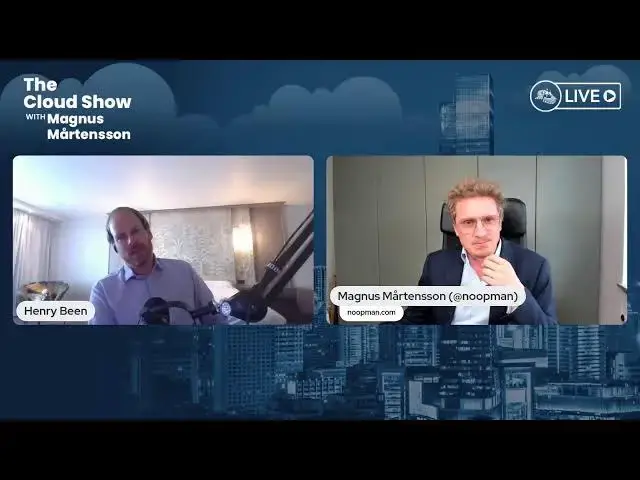
Join this live session with Magnus Mårtensson ft. Henry Been for the next episode of The Cloud Show with Magnus Mårtensson on May 14, at 01:05 PM (EST).
The show is about cloud leadership and all the important questions relating to cloud projects. Certainly, many matters when a company is going to and wants to be successful in the cloud are about technology. However, there are many additional matters, adjacent to technology, that we also need to tend to regarding business strategy, human resources, organizational change, planning for a technical cloud approach, and many more questions. These conversations are critical for a healthy cloud and for a swift and accurate cloud approach.
Guest Speaker
Henry Been works as an independent DevOps and Azure architect based in the Netherlands. He typically takes on one or two long-term contracts at a time. In addition, he offers consulting services in DevOps and/or Azure, with flexible options starting from just a single day.
Outside of his client work, he actively contributes to the tech community by sharing his knowledge. He does this through conference speaking, blogging on his personal site, and more recently, offering training sessions.
📺 CSharp TV - Dev Streaming Destination http://csharp.tv
🌎 C# Corner - Community of Software and Data Developers https://www.c-sharpcorner.com
#CSharpTV #csharpcorner #TheCloudShow #CSharp #interview
🎙️ New to streaming or looking to level up? Check out StreamYard and get $10 discount! 😍 https://streamyard.com/pal/d/5348850450038784
Show More Show Less View Video Transcript
0:01
hello everyone welcome to another
0:03
episode of the cloud show today we're
0:05
going to talk about such an important
0:08
topic it's a it's a topic very near and
0:10
dear to my heart as well i support all
0:12
kinds of learning initiatives i I I
0:15
participate in global learning
0:16
initiatives to to to further your your
0:19
skills and and knowledge as a as a
0:22
professional but we're going to take
0:24
this uh community effort thing thinking
0:26
that I mentioned and take it into the
0:30
companies into the business what place
0:32
does training and education have in your
0:35
business and and why is it so overlooked
0:37
and how do you actually make that work
0:39
we're going to talk to someone who has
0:40
been giving this a lot of thought the
0:42
star of the show tonight is Henry
0:45
[Music]
0:48
Hello
0:54
there hello
0:57
Henry nice to see you uh you're on mute
1:01
now he's coming back there we go hey
1:04
Magnus nice to be here thank you very
1:05
much yeah it's good to have you sir it's
1:08
good to have you um so uh we we have to
1:12
of course I mean this is such a
1:13
fascinating topic oh my god I'm we only
1:15
have 20 minutes but we do want to know
1:17
first who are you sir and why do you
1:19
have anything to say on this topic
1:23
so my name is Henry uh I'm a developer
1:25
and architect from the Netherlands and I
1:28
deliberately say developer and architect
1:30
because I do try to be hands-on on code
1:33
every single day because I believe that
1:35
the best architectures are built um so I
1:38
create software for the cloud uh running
1:40
on Azure i focus only on and Azure um
1:45
and one of the things that I've been
1:46
doing for a while now is creating
1:47
training courses for Pluralsight on
1:49
these two topics uh which got me
1:51
thinking about training right the topic
1:53
of today um and some of the things that
1:56
I that I encounter around this topic uh
1:59
in the industry doing both in in company
2:02
trainings and also pluralite trainings
2:05
yeah all right that's that's good and
2:08
and you are professionally sorry where
2:10
do you work did you say
2:13
oh I am an independent so I'm a I'm a
2:15
freelancer i'm not ass associated with
2:17
any company uh I I work exclusively with
2:20
Microsoft technology but I don't work
2:22
for Microsoft and I'm well enthastic
2:25
about some of the technology but it's
2:27
not like I sell that stuff all right
2:29
right now that's that's similar to
2:31
myself as well so I I know exactly what
2:33
you mean all right brilliant so um you
2:36
have been engaging in in in in creating
2:39
training materials of course you it'd be
2:41
nice if people like bought your courses
2:43
on Pluralsight yeah that'd be cool um
2:45
but there is a there's a larger stake
2:48
here right there is this there is this
2:50
challenge of furthering your education
2:52
as a professional technologist and also
2:55
for a company to um support or enhance
2:59
or empower this right this this can be a
3:03
big challenge there are some problems
3:04
with this all over the industry to to
3:06
enable this
3:10
absolutely i I think there are a number
3:12
of things going on so if I start with
3:14
myself um I've I've had a great
3:17
education um but I still remember the
3:20
first day I walked into the office and
3:22
people said to me "Oh we're going to
3:23
start with the daily standup." And I was
3:26
like "What's the daily standup?" I will
3:30
remember that for the remainder of my
3:31
life the first thing said to me in my
3:33
very first job I had no idea what they
3:36
were talking about and the first couple
3:38
of weeks but months in that company
3:40
everything I encountered I found out I
3:43
didn't learn anything about it in
3:45
university so for some reason I had a
3:48
very good education but on the other
3:50
hand I didn't know anything about what
3:52
was happening in real companies doing
3:55
real work and I see that with so many
3:58
engineers entering like the workforce
4:01
they have a great they have a degree
4:03
they may they had excellent marks and
4:05
then they walk into a company and it's
4:07
like what's the strategy pattern or
4:10
they're like what's entity framework
4:12
core and companies have to deal with
4:16
this how do we train people up that have
4:18
a good education to be able to
4:21
practically apply that in their job y
4:25
and I don't know if we think enough
4:26
about that as companies no I don't think
4:28
we do I definitely don't think we do But
4:31
I mean it's it's
4:33
um it's also about being hungry for it
4:38
and I don't know uh that I've seen in in
4:41
some cases some people some engineers or
4:43
people are not necessarily there to to
4:47
do any training you say like you said
4:48
they go hand head hand head hand head
4:49
hand head hand head hand head hand head
4:49
hand head hands down only
4:52
so yeah I think as a company you you
4:55
have to think about how do we you know
4:57
when people come in how do we train them
4:59
and I don't think companies do that
5:01
enough they really have to prepare for
5:02
people coming in not knowing any
5:04
practical skills yet and really have to
5:06
train them up hands-on guidance sending
5:09
them on trainings having mentorship in
5:11
place um but yes you're right there is
5:13
also something funny when it comes to
5:15
engineers i mean when I take another
5:17
example from experience uh at a company
5:19
I'm currently engaging with we organize
5:22
uh knowledge sessions every four weeks
5:24
and it's not the boring kind we had
5:26
somebody talk about cloud computing uh
5:28
of a quantum computing we had somebody
5:31
talk about AI we had somebody talk about
5:33
how to build a compiler yourself like
5:36
interesting challenging topics and we
5:39
have an attendance of around 33%
5:42
for so for some reason engineers on the
5:45
clock can go on and learn about
5:48
interesting topics that they maybe not
5:50
can apply tomorrow but somewhere in the
5:52
next few weeks or months in their job
5:54
probably and they get the time from
5:56
their employer and they don't show up
5:58
instead they go hands down and continue
6:01
just you know implementing an update on
6:03
the DTO on some kind of line of business
6:05
application
6:07
I don't know what's happening there no
6:09
and me neither but I mean A lot of
6:11
companies can
6:13
be you know say that they're supportive
6:17
but they have also very high pressure on
6:19
people they're they're mostly it seems
6:21
sometimes a lot of of I've I've had you
6:24
know I've been consulting with a lot of
6:26
companies and also have been employed
6:28
previously in previous years in a
6:29
previous lifetime before I went
6:31
independent that um companies are are
6:34
more seem to be very you know eager to
6:37
to uh have that high billable rates and
6:40
whatever and they're not super
6:42
interested in in the training stuff
6:46
so yes I mean there are companies that
6:48
are saying like we really want you to
6:51
learn and you know keep educating
6:53
yourself and here's a plural plural site
6:55
account and you should absolutely
6:57
educate yourself but also be billable 40
7:00
hours a week yes that's a a problem
7:05
yes and I mean there has to be some kind
7:07
of trade-off right you cannot expect
7:09
your uh employer to arrange everything
7:11
for you to give you all the time you
7:13
need you also need to do something
7:14
yourself but going back to that pressure
7:17
that you mentioned sometimes I really
7:20
wonder if that pressure is there like
7:22
all the time or if it's just perceived
7:24
pressure i mean if we look at our job we
7:27
are always working on a problem that we
7:30
have not fixed yet cuz once we have
7:33
fixed it it's behind us and for some
7:35
reason we forget to look back so there
7:37
is always something in front of us
7:39
always all the time it's part of of our
7:41
job and how we work for some of we
7:45
should learn to look at that in front of
7:47
us and say
7:49
well that's for tomorrow and then do
7:52
some learning take some time it doesn't
7:54
have to be today just take 20 minutes
7:57
and try something new look at I don't
8:00
know Aspire is a new thing that's
8:01
happening in the net world right you
8:03
don't necessarily have to have a very
8:05
concrete use case on how to apply that
8:08
but why don't you go into Visual Studio
8:10
file new project control
8:14
FPire next next finish and see what's
8:17
happening that's right
8:20
make the time is never going to be
8:22
falling into your
8:23
lap so the there is of course a
8:29
uh a really really strong part in there
8:32
for the uh employee to to make the time
8:36
and to actually do it um I've seen
8:40
companies do like every other Friday or
8:42
whatever it is that they have for you
8:44
know it'll be different in different
8:46
companies right where they in the
8:49
company invests some time that could
8:51
have been billable hours into actually
8:54
you know letting these u consultants or
8:56
or you know their their employees uh do
8:59
some training and lab work and stuff
9:01
together
9:02
so I think companies do that to to try
9:06
and relieve that pressure that's
9:07
perceived pressure that engineers maybe
9:09
even just apply onto themselves
9:12
but and that's that's a great thing but
9:14
it also has a downside if you say every
9:17
last Friday of the month you can work on
9:19
things that you find important or that
9:21
you can need to learn or want to learn
9:24
it kind of also says but the other time
9:27
that's not for learning all the
9:30
remaining time you have to be billable
9:32
you have to focus on organizational
9:33
goals and you cannot deviate from the
9:35
hallowed path i believe that learning
9:38
and trying new things should should
9:40
interle with your work all the time um
9:43
right when you're waiting for a build
9:45
build to complete just just five minutes
9:48
I mean check a newsletter if there is
9:49
something in there that that you can use
9:51
the next week it should be part of who
9:54
you are how you work so I've seen a lot
9:57
of scenario or a lot of persons
9:59
individual people you know let's not we
10:01
can't mention anyone right but I' I've
10:03
seen tech people who kind of I perceive
10:07
them as having stopped being that
10:10
curious they they just do their job um
10:12
kind of disillusioned and then they go
10:14
home and they don't really care about
10:17
that stuff anymore um it's a bit of a
10:21
challenge
10:23
shame yes so I am not necessarily
10:25
neessarily advocating for everybody to
10:27
work from 7 a.m to 700 p.m that's that's
10:31
not what I'm saying it's absolutely not
10:34
because I think using your brain
10:36
requires you also to have time to you
10:38
know recharge that brain yeah yeah and
10:42
yet so yes it's not wrong to just have a
10:44
job and and and quit call it quits at
10:46
5:00 p.m or 5:30 right but I do wish it
10:50
upon everybody to to find their job
10:53
inspiring inspiring challenging um
10:58
there is a reason we went into this
11:00
right
11:02
yeah i I hope we did you go into it just
11:05
to get shitloads of money well that I I
11:09
like money
11:13
nothing wrong with that
11:15
but there was right that I like it that
11:18
I think it's it's it's inspiring and
11:20
that that I I get to be curious and I
11:22
get to learn things and I I you know get
11:24
to solve problems you know Sherlock Holm
11:27
style right
11:29
sometimes I mean when I look at myself
11:32
sometimes I'm I'm busy all day working
11:35
on plans thinking about stuff and then
11:37
it's 3 p.m and I'm like screw this i am
11:42
just going to open Visual Studio and I'm
11:44
going to code something
11:46
um because that's what drives me
11:48
building something creating something so
11:50
I try to go back every every day at
11:52
least to why I got into this job what I
11:55
enjoyed and I wish it upon everybody to
11:59
find it i mean you cannot force it for
12:01
people but I'm really curious why would
12:03
people burn out is their curiosity is
12:06
that beaten out of them because they
12:09
went astray too often or there must be a
12:13
reason people lose that curiosity right
12:15
i I would think so that that there must
12:18
be um this is a this is a tough topic
12:21
because being constantly um driving uh
12:25
learning in in like everything that we
12:28
do also requires energy of course and
12:31
there's only so much energy I
12:33
guess so it needs to be included in in
12:36
in in a natural way in into what we do
12:40
doesn't it yes but you say it takes
12:43
energy yes but on the other hand I think
12:45
there's a lot of research that shows
12:46
when you have to do something it takes
12:49
energy and when you want to do something
12:53
it gives energy so for example I am I'm
12:58
uh painting my house right now and I do
12:59
that sometimes before or after work and
13:02
I enjoy doing that i'm building
13:03
something i'm creating something for my
13:05
wife and for myself um but for somebody
13:08
who's a professional painter I think at
13:11
4:30 they're very happy that they can
13:13
put uh the paint thingy what do you call
13:14
it in English the brush away and uh and
13:18
call it quits whereas I at the end of
13:20
the day am very happy that I can pick up
13:22
that brush so I think it boils down to
13:24
wanting to learn enjoying that learning
13:28
new things Magnus new things they're so
13:30
magnificent
13:32
that's true that's true i new things um
13:35
and and and I think I feel that same way
13:37
because I mean imagine if you have a
13:40
company of people who see their their
13:44
work just as their job they're
13:46
uninspired they they just do whatever
13:48
they're told to do and so on as compared
13:51
to having a company full of people who
13:53
are inspired and inspirational and and
13:57
curious and you know turned on um I
14:01
would say that that has a lot of value
14:04
to any business to have the the the
14:06
latter rather than the former
14:09
i think so because I think every company
14:11
will see that uh the
14:13
output which is a a bit of a bad word
14:16
the output of everybody who is a
14:18
knowledge worker closely correlates to
14:20
how driven they are how much they are
14:22
enjoying their work how much you know of
14:25
their yourself they can put in their
14:26
work um the best conversations at the
14:29
place I'm currently working a lot of the
14:31
time happen after 5:00 pm when most of
14:34
the people are home and only us
14:36
engineers are left in one corner of the
14:38
office and it's like did you read this
14:40
article last week um or I have done this
14:42
amazing thing with caching you know let
14:44
me show you um it's when we connect
14:46
about the thing that drives us the
14:48
engineering that really get us going and
14:50
if I go back to younger engineers people
14:53
that just joined the team or how are we
14:55
going to train them up how are we going
14:56
to teach them things that they didn't
14:58
get in school and that happens then as
15:00
well hey I saw you do this thing today
15:03
and it works and and wonderful but hey
15:06
what if we together sit down for like 30
15:08
minutes and you know refactor this a
15:10
little bit to a strategy pattern or hey
15:13
you know infrastructure as code right
15:15
but I see you're still creating RO
15:16
assignments in Azure manually did you
15:18
know you can also create those three
15:20
infrastructure as code those small
15:22
points of you know 15 maybe 20 minutes
15:24
where you sit down with somebody in the
15:26
team and give them a very practical
15:28
thing that they can practice and then
15:29
can apply the next day in their work
15:31
that happens you know because we enjoy
15:33
it yeah yeah that's that that's totally
15:36
fair and and I think that um now you're
15:39
you're getting into the area of of
15:40
mentorship of course uh and that's
15:42
really important too to have that as a
15:44
natural piece of that keeps you know I
15:47
try to mentor and and help um people a
15:51
lot of that has turned into to actually
15:52
being me helping them with presentations
15:54
and presentation skills because you know
15:56
somebody else will say whether I'm good
15:58
but I I do have experience in this field
16:01
at least right so I've done it a lot and
16:03
I try to help um you
16:05
I don't know younglings but you know
16:07
they're oftentimes younger than myself
16:09
right to and and maybe haven't got the
16:12
the mileage in this space i I have it
16:14
and so I I try to share in this as as I
16:17
can as I may right and I think that's
16:20
that's really great that you do and I
16:22
just talked today to an engineer because
16:23
I knew I was going to be here right and
16:25
and she told me that she had this uh
16:28
when she started the job um right out of
16:30
school as well there was somebody in the
16:32
team who was helping her like on a not
16:34
necessarily daily but maybe even hourly
16:36
basis at the start nudging her in the
16:39
right direction all the time but when we
16:41
when we talked about that more we
16:42
discovered that it was more or less by
16:45
accident uh the person was you know
16:48
helpful and experienced and they they
16:51
connected pretty easily uh this was
16:53
during COVID so that was even harder
16:55
remote but it worked out in the end but
16:57
we concluded it was more or less by
16:59
accident it was not very deliberate
17:01
after her hiring and that's something
17:04
that we try to do differently when we
17:06
hire somebody we look at them and we
17:07
make a program for the first week so you
17:10
have to meet this person you have to
17:11
meet this person hey you have to read
17:13
this document hey do you know how this
17:15
works so you need to follow this
17:17
training on Pluralsite about you know
17:18
Azure DevOps because that's what we use
17:20
so we very deliberately planned their
17:22
first month full of topics that we
17:24
believe will you know rocket them into
17:26
working in our team good and not a lot
17:29
of I think very large companies have
17:31
this in place but when you look at
17:32
smaller or medium-sized companies they
17:34
don't and I think a lot of companies can
17:36
improve in this area very deliberately
17:39
think about how can you get people you
17:41
know to to get the best out of
17:43
themselves because you will benefit as a
17:45
company but the engineer will benefit as
17:47
well and if the engineer is benefiting
17:49
in your organization they're probably
17:51
going to stay all right right so so so
17:55
we've kind of we kind of I mean I think
17:57
everybody who who is listening on this
18:00
episode now kind of feel recognition
18:02
here that that you know am I doing
18:05
enough am I do I have energy or do I
18:07
prioritize correctly can I like how can
18:10
I even learn in this there's so much to
18:11
learn it's overwhelming and also as an
18:14
employer you know um how how can I
18:17
empower how can I help uh and and get a
18:20
a sort of a natural order where people
18:22
feel inspired or feel eager to learn um
18:26
so what do what are your key what are
18:28
your thoughts on this how do you how do
18:30
you like foster a good relationship I
18:34
guess uh with learning both from an
18:36
employer and an employee uh standpoint i
18:40
think it's one of the most difficult
18:42
questions that we have in our field it's
18:44
the most rapidly changing field in the
18:46
world right um I don't have the answer
18:51
um but I think if there is one thing
18:53
that that people should take away it's
18:55
be deliberate so much of our life and
18:58
especially our working life happens to
19:01
us but if you are a people manager be
19:04
very deliberate about the people in your
19:05
team how do I every single day inspire
19:09
them to learn and you know um manage new
19:12
skills and improve and help others or if
19:15
you are an employee employee what I what
19:17
did I learn today what did I screw up
19:21
where is the room for improvement what
19:23
did I learn that I can share with others
19:25
and if you are deliberate about this
19:27
every day or maybe every week I think
19:31
you can make small steps but a lot of
19:34
steps every year um so that's my advice
19:38
be deliberate be deliberate and take
19:41
small steps and and try to include good
19:44
learning in in in every aspect of of
19:48
what you do don't confine it to Fridays
19:51
before yeah well I think that I think
19:54
that you know weirdly but I I think that
19:57
we sometimes uh skip over the uh the
20:01
review part uh of a um of of a pull
20:05
request very much right we we don't take
20:08
the time to reflect on it and and really
20:11
sit down and discuss it it's it's like a
20:13
thing that it's just like oh we need to
20:15
get this feature done and we need to
20:17
send it out real quick whoop off it goes
20:20
and but you don't really reflect on what
20:22
could I have done I have done
20:23
differently or you know
20:26
um way huh if you if you do pull
20:29
requests why don't you let your most
20:31
junior engineer uh do pull request
20:34
reviews nine out of 10 times they will
20:36
pick something up that they're like "Oh
20:38
wow let me try this." Um pull requests
20:42
goes goes go two ways it's not just
20:44
about being reviewed it's also about
20:46
learning from the person you are
20:47
reviewing um right sorry just one of my
20:50
pet peeves no it's a good it's a good
20:52
pet peeve i love it no it's it's I've
20:54
seen that too much that we just we skip
20:57
the part of learning and we just move on
21:00
to the next task and then the next task
21:02
and then continues and month and week
21:04
and month and year of the next task and
21:07
we don't deliberately baby steps take
21:10
time to learn
21:13
yes I think it's one of the biggest
21:16
flaws or risks in our field of work this
21:18
pile of problems that we still have to
21:20
solve um and I think if you're really
21:23
honest in almost all companies and with
21:26
almost all managers yeah if you finish
21:29
something and then say "Hey I'm going to
21:31
spend 30 minutes on preparing for the
21:33
next thing or looking something up or
21:36
I'm figuring out how to approach this."
21:38
Nobody will object so as an engineer
21:43
take those 30 minutes every now and then
21:46
to approach your new problem think about
21:48
your new problem or maybe just try
21:50
something and don't know yet how you're
21:52
going to use it but learn that's really
21:55
good point all right well I really
21:57
really enjoy this topic and I think you
21:59
and I can like next time we have to sit
22:01
down with with a couple of glasses of
22:03
some beverage and and uh discuss this
22:05
for a long long time maybe just put a
22:08
camera up and we'll talk
22:10
no but really talk for hours i know that
22:13
it's a big topic we can talk about this
22:14
for hours but unfortunately this uh
22:17
episode is running out of time but you
22:19
know um I guess the takeaway is um stay
22:22
curious and take baby steps and put
22:24
learning into everything that you do
22:26
sort of right as much as you can i want
22:29
to thank you so much for being on the on
22:30
the cloud show today i think this is a a
22:33
worthy topic a really good one to talk
22:35
about it's so important um everybody
22:37
wants to be happy in their work because
22:40
we spend so much time there
22:42
and I don't
22:46
lost you there a little bit Henry oh
22:48
you're back yes
22:52
you're back yes I think my connection is
22:54
breaking up so this is great timing this
22:56
is great timing
22:58
hey thank you for being on the show and
23:00
and audience we'll see you guys next
23:02
time on the cloud show
23:04
[Music]
#Arts & Entertainment
#Training & Certification
#Vocational & Continuing Education