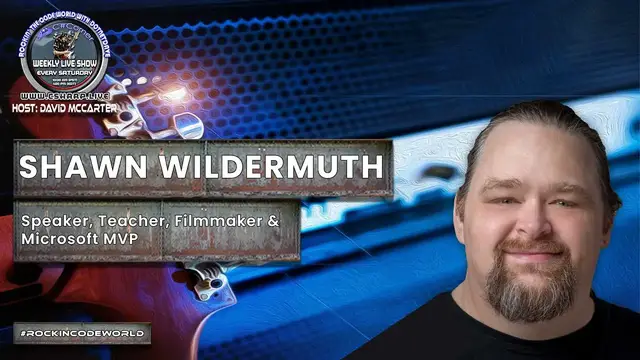
Up next in 10



Join David McCarter with Shawn Wildermuth, today at 10:00 AM(PST) for the next episode of Rockin' The Code World - a weekly live show focused around .NET technology.
AGENDA
• Careers in Software
• Diversity/Inclusion in Software
• Microsoft's Web Stack
• Client-Side JavaScript (Angular/Vue)
• Azure for small companies (e.g. App Services, et al.)
All Episodes: https://www.c-sharpcorner.com/live/rockin-the-code-world-with-dotnetdave
C# Corner - Community of Software and Data Developers
https://www.c-sharpcorner.com
#CSharpCorner #rockinthecodeworls #live #dotnet
Show More Show Less View Video Transcript
0:00
Thank you
0:29
Thank you
0:59
Thank you
1:29
Thank you
1:59
Hey, geeks. Welcome to another episode of Rockin' the Code World with Donna Dave
2:11
I'm glad you're all here. And I changed my background today because we're getting a heat wave
2:17
and I kind of wanted to show you where I live. So this beach right here behind me, I took this picture a number of years ago
2:25
and it's only a couple miles from where I could walk there if I really wanted to
2:30
but I'm too lazy for that. But I just want to kind of show you summers here, at least in America
2:35
And we're all looking forward to, you know, our COVID free summer. You know, last summer kind of
2:43
really sucked. So hopefully, at least in America, we can have a better summer. So I kind of wanted
2:47
to start with a happy picture of the beach and people having fun and the sunset. Sunsets here
2:53
in San Diego. I remember when I first joined the Navy back when I was 18, I'm sorry, 19. And
3:02
I remember standing in line in boot camp, waiting to get food and watching the sunset
3:08
you know, in the evenings. And I was just floored by the beautiful sunsets we have in San Diego
3:14
And we still have them. And so I have a lot, if you go to my photography site, there's a lot of
3:19
pictures of beaches around this area because it's so it's just so pretty here especially in the you
3:24
know the sun you know the the early evening times when the sun goes down there was one time i was
3:31
actually really close to this beach and i saw the sunset and i sat there going i gotta get my camera
3:36
i gotta get my camera and i ended up saying no because a camera won't even capture what i'm
3:42
seeing so why even try but anyway i hope you're all doing well where you are i know things are
3:49
not going great in some parts of the world with COVID. I'll talk about that in a sec, but I'm
3:53
really happy to see, to have Sean Wildermuth, sorry, Sean, I'm going to mispronounce your last
4:00
name, here for our 27th show. So I'm really excited to talk about, to talk with Sean, all the stuff
4:06
he's up to, including his filmmaking endeavors. That's going to be great. So I hope you all hang
4:11
out and have your questions ready for Sean, because this is your time to ask him questions
4:17
of good feedback. So, so, you know, India is still having, you know, a terrible time with the COVID
4:25
pandemic. And so I hope you'll support people in India by going to this link and donating money
4:33
You know, when I first started talking about this, you know, right after the show, I donated $100
4:38
and I, and I challenged all the other software engineers out there, not in India to either match
4:44
or beat my donation. And people have been doing that, including some of my guests on the show
4:51
So I'm really happy that I'm raising some money to help out with the COVID relief in India
4:57
They're doing a really bad time. And I mean, they're having a really bad time and the world needs to help them fix this
5:03
because this is a worldwide pandemic. You know, it's not an American pandemic
5:07
or an Indian pandemic. It's a worldwide pandemic. We all have to solve it together
5:12
So please donate. Please listen to your local officials. And let's get this thing gone by the end of this year completely so we can, you know, get back to going to conferences and doing more fun things
5:27
I can't wait till I go to my first concert. It's been so long
5:33
anyway I want to plug next Friday this coming Friday is the world's first code quality
5:40
and performance virtual conference hosted here on C Sharp Corner by C Sharp Corner Live
5:46
I'm super excited about this conference I've been wanting to do this conference for over 10 years
5:52
so I'm really glad that Mahesh and the team and Simon and the team at C Sharp
5:58
Corner asked me to do this and so it's going to be a really fun conference
6:03
I have awesome speakers lined up from all over the world. If you go to my blog, donatips.com, and even register for the conference, you can see all the topics
6:14
If you go to my blog, it'll list not only all the sessions and their descriptions, but it will list all the speakers and all their information, too
6:25
And so I hope you go check that out and see the great line of speakers we have coming up
6:32
including the one guy at Microsoft I really, really wanted to get for this conference
6:37
And I nabbed him. He's going to be on towards the end
6:41
before my keynote speech. And I'm really, really looking. I'm really excited about this conference
6:47
And I hope you are too. So I hope you'll take some time out next Friday and watch some sessions or the whole thing
6:53
It's going to be eight hours. of lots of lots of tips on how to make your code better
7:00
and make it more performant. And performance is a big deal nowadays
7:04
especially in the cloud. And so we all have to think about that a lot
7:08
And so anyway, hope you'll join me and everybody else next Friday
7:18
You know, I want to plug the HoloWorld cookbook. You know I been plugging this thing for over a year and a half now and it an idea I had a year and a half ago to try to raise some more money for the NGO that I visited in India the last time I was there
7:38
Because these kids really, really need your help, especially right now during COVID and dealing with this horrible pandemic
7:44
I mean, the, you know, the two founders of the Voice of Slum are so inspiring to me that, you know, they came from the slums and they've been doing so much hard work to help the kids even pre-pandemic
7:59
But now they're, you know, working overtime. So one way you can help support them is to go to their website and donate
8:07
Or if you cook, if you know, if you have your own custom food recipes, you can donate to the holoworldcookbook.com
8:18
And 100% of the proceeds of this book will be donated monthly to The Voice of Slum
8:24
And but I have to tell you honestly that, you know, if I don't get some more recipes really quick, this project's going to die
8:34
And I really hate I would really hate for this project to die because I didn't get enough recipes
8:40
So right now I'm very, very low on recipes and I need you to take a couple minutes and write down your recipes, no matter where you live in the world, and send them to me so we can get them in the book and start raising some money for the kids in India
8:55
And I'm really looking forward to going back to India and see how, you know, the Voice of Slum is doing after, you know, the money that we've been helping raise for the NGO
9:05
So please take some time out in the next week or so and send me your recipes
9:11
Just go to the HelloWorldCookbook.com and submit your resume, your food recipe
9:22
Or you can sign up to be a food taster, what I call a unit tester
9:26
And I need some help with graphics and editing, too. So there's lots of ways to help this endeavor
9:32
But if I don't get enough recipes by October, the project's dead
9:38
So I hope you'll help support the project. All right. So with that, I'm going to introduce our guest
9:49
Sean Wildermuth has been tinkering with computers and software since the VIC-20 back in the early 80s
9:55
I don't even know what that one is. He's a Microsoft MVP since 2003
10:00
He's also involved with Microsoft as the ASP.NET Insider and Client Dev Insider
10:06
He's an author of over 20 Pluralsight courses, written eight books, international conference speaker, and one of the wilder minds
10:16
He's released his first feature film, which I really like to talk to him about that, called Hello World, the film, which you can go check out now
10:25
So welcome, Sean. Thank you so much. I'm happy to be here. Yeah
10:30
excited yeah it's great to see you though you saying you don't know what a vic 20 is makes me
10:35
feel really i'm like what what i actually started doing programming in the 80s but you know where i
10:43
still saw some of the card punch stuff going on you know and even the big tape the big tape machines
10:50
right and actually the one one place i worked when i was in the navy here in san diego we i
10:55
actually played computer games on, um, during lunchtime on reel to reel tapes. Wow. Yeah. That was really
11:03
that's crazy. Interesting. You know, that the whole game was on reel to reel tape, you know
11:08
that's crazy. Yeah. So I guess we're both two old farts, you know
11:15
in this industry and had seen it all pretty much, I guess
11:19
Yeah. I mean, uh, I heard two people talking about, Oh my God
11:24
I'm getting old. I had the original iPhone and I wanted to punch him in the throat
11:29
I'm like, oh, Jesus. I was going to show it. I like to show
11:36
geek humor and I couldn't find the one I really wanted today
11:40
I was going to show this ad that I have. I don't know when it's from, but
11:44
they were selling a 38 megabyte hard drive for $3,300. That's crazy cost
11:54
If you think about how cheap disk space is nowadays. Absolutely. Especially with the thumb drives and stuff
12:02
It's so cheap now. It's crazy. That's why nobody deletes the files anymore
12:07
Now you have the cloud. Once they go in the cloud, they'll never go away. That's the hope
12:14
If you do something illegal, don't put it in the cloud, okay? What happens in the cloud stays in the cloud
12:20
The FBI will get a hold of it somehow. and your SOL
12:26
But hopefully nobody's watching the show is doing anything illegal. So everybody, please send in your comments
12:34
so we can ask Sean during the... Oh, here's one. Simon had one
12:40
When was your first episode stream? The end of September. I mean, you should know this
12:46
Are you talking to me or Sean? Simon? maybe he went to the bathroom
12:56
for me it was the end of September right Sean too many S names in one show Simon
13:10
and you were doing this weekly right yeah most weeks we don't do it every week
13:18
most weeks I would say three weeks out of the month That's awesome
13:24
Yeah. So everybody watching, we're not going to have a show next week because I'm going to be recovering from the conference
13:32
So if I have to host a conference for eight hours, I'm taking the next day off
13:39
So no show next week. Lazy. I'm so lazy. That's lazy. Hey, if I was in my 20s, maybe I could do that, but I can't do it anymore
13:49
You know, now that you're in your 30s. Yeah. Yeah. So until more questions come in, the I wanted to talk about you living in San Diego, because I feel like people that live in San Diego are just too lazy to know what weather is
14:11
we are you know and uh you know i'll tell you a couple funny stories when i talk about the weather
14:19
in san diego you know one of the reasons i've been in san diego since i've been 19 is because
14:23
you know the weather here is the best in the country you know and um so uh you know for for
14:31
most of my life here you know i i don't understand what the weather people do here right you know
14:37
they just look outside. Yep. It's going to be nice. I mean
14:41
what more do you have to say really? And so one of my favorite comedians is
14:46
Louis black. Yes. He's great. I've, I've seen him a couple of times live
14:51
I mean, he makes me laugh so hard. My stomach hurts, you know, but the first time I saw him here at a theater downtown one of the first things he said because at that time when I first saw him pretty much the entire country had crappy weather except for us
15:09
You know, and he came out on stage going, San Diego, you live in an effing weather bubble
15:15
He didn't say effing. You what do your weather people do? Exactly
15:21
And they're going, exactly. And then sometime after that, you know, one of our local channels bought this weather van and they were promoting it as the weather van
15:32
It's going to tell us all this stuff we need to know. And I'm sitting there going, for what
15:40
We don't have weather, really. It rarely rains here. You know, it's sunny every day, pretty much
15:45
You know, the medium temperature by where I live is like 70, 72 all year
15:53
You know, so yeah. What do the weather people do here? I don't, nobody understands
15:59
That's why an anchorman, the weather guy was from San Diego because, or doing the weather in San Diego. I thought that was a nice touch
16:09
Yeah. I thought that was great because yeah. What do they do here? I mean, it's got to be the easiest job ever is to be a weather person here
16:17
Yeah. I would guess. Yeah. Or meteorologist. Where do you live again
16:22
Atlanta. Atlanta. Yeah. Yeah. Everyone's been through our airport. Yeah. Yeah. I spoke there a year or two or a couple of years ago
16:33
At the code camp? I spoke at the code camp. Yeah. Yeah
16:38
I think that was the last time I saw you. Yeah. Yeah. I think that was one of the last times I spoke, actually
16:43
We're actually, our call for speakers is open right now. We're trying to have an in-person in October
16:53
So, you know, hopefully COVID will cooperate, but we're giving it the old college try
17:04
So, you know, if anyone does want to speak there, feel free to go to atlantacodecamp.com and you can sign up there
17:14
Yeah, well, we'd feel better if we could get some of the anti-vaxxers off our butts and go get a shot, you know
17:21
that's a whole big, big topic. I know. I know. I mean, I don't want to talk about it here. So
17:28
the one question I wrote down for you, for you, because, you know, I've been following you for
17:35
you know, a long time. And where are my questions? There you go. Since no one else is asking a
17:41
question yet, I would, you know, this is tongue in cheek, but, you know, do you just write and
17:46
make videos all day. Is that just all you do now? Pretty much. So you're all self-funded by
17:52
Pluralsight and all you do is write and do videos. Yeah. Because it seems like you release
17:59
one or both every single day. No, it's not quite that. Maybe once a week. But
18:03
I'm very lucky that my courses are fairly popular on Pluralsight. That's given me the opportunity to
18:12
try to give back to the community more. I do some work with some nonprofits as well as I'm always
18:19
learning something new and trying to turn that into, you know, either one of my new coding short
18:24
videos or if it's a longer topic and sort of pitching it as a course. I do do individual
18:30
consulting still, but it's, I probably only spend about five hours a week on that
18:36
that's not nearly what used to be my bread and butter. Now training has really become it
18:43
And it's, you know, I, I, I'm really lucky that I sort of fell into this at the right time. I, I
18:51
the honest answer about training is that I was a good developer for the first
18:58
20% of the project. And then I wasn't, I, I lose focus
19:05
Yeah. And so being able to help people by teaching them or by helping sort of
19:10
companies with planning is sort of the sweet spot. That's, that's, that's where I realized my gifts are more than just
19:18
you know, getting out there and coding. Yeah. Though I still code almost every day doing something
19:25
Cause I, I really, I still have a passion for it. it's just that, that the end of the project was always a killer to me
19:35
Oh, and the projects are the worst, you know, 90% of the stuff gets done in the last 10%, you know, of the project
19:42
Right. Every time. Yeah. It's, it's kind of crazy. And, and, and my second part of the question is how do I get a gig like yours
19:50
And, but now I realize it's because, you know, I was too much of an a-hole when I was talking to Pluralsight about courses
19:57
because I wanted to do courses I wanted to do, and they weren't playing ball
20:02
But, you know, you've kind of given me some inspiration. I think I'm going to email on Monday and go
20:06
hey, you want to play ball now that, you know, I'm used to speaking, you know, virtually now
20:10
And because one of my things was I just don't like speaking to a computer, right
20:15
Yeah. You know, and the only reason I like my show is because I get to talk to somebody, right
20:20
Yeah. Yeah. And I just don't like talking to a computer. But, you know, COVID has kind of made me used to that now, you know, to me, unfortunately
20:29
But that's the way it is now. So, yeah, I think I'm going to contact them again and see if they want to do some, like, code quality, you know, sessions and stuff like that
20:40
Yeah, I'm not sure what they have on their plate for what content
20:44
But it's certainly worth, you know, if anyone's interested in teaching. Because it is a, for me, it's a particular problem
20:51
problem. Like I got into software sort of accidentally because I love
20:56
just finding the solution. If anyone's seen the show House, I know this goes internationally. Some people might not have
21:06
But in every predictable episode of the show House, he would have a moment of epiphany where everything sort of came together
21:15
That is the best way I've ever seen described what coding for me is like
21:21
It's finding that moment of like, oh, I finally understand. Or I can finally put all these little pieces together
21:29
And what happened when I started doing training some 20 years ago is that I realized that there is a puzzle of how you teach people
21:39
And that was a and still is an interesting problem for me
21:44
Like, um, the first course I taught, I made a mistake the first, uh, day of the three day course
21:51
And I kept on doing it because I realized it was this great teachable moment
21:56
Like it was a mistake the first time I taught it. And then every other time I would go, oh no, look what happened
22:02
And then be able to teach them why it happened. Um, and so it became this, you know, became this thing that I was really interested in figuring out
22:10
um uh you know that uh same thing happened when i wrote my first book is like oh this is different
22:16
than sitting down with somebody you know i think it's sort of explain it in a way and build it
22:22
to where it readable and informative not just you know um and and because of that i feel really lucky that that uh i had those opportunities that uh you know some of it been because my career is uh has been chaotic
22:41
because of this lack of focus i never really spent more than two years at a company
22:47
yeah i usually don't either yeah yeah and so i'd go in help with a project
22:53
get burned out and go look for some other company. That's pretty much my deal. I just left a job I worked on for, you know, 24 months
23:03
you know, so that's kind of my sweet spot, I guess. Yeah. You know, I do the work, I do the
23:09
architecture. And then when it gets boring, I'm out, you know? Yeah. But, you know, speak about
23:14
teaching, you know, I, you know, some of the stuff that you get from teaching, I get too
23:20
And I taught at the university here for close to 18 years
23:24
And I have to admit that one of the things I really miss about teaching is it kept me grounded more
23:35
It made me better at explaining things to beginners because I had to do that every week
23:44
And the further I came up, the harder that becomes. Right. And so teaching was a way to for me to keep that still being able to talk to beginners
23:56
Right. And help them, you know, in their career and make them to be better developers
24:00
And and I do really miss that part of teaching because, you know, there's no money in doing that anymore, at least here
24:08
And so I just kind of gave up on it. It wasn't worth my time anymore
24:12
So it's one of those things that like right now I'm updating an old course of mine that teaches the HTML, CSS and JavaScript
24:22
Like this is what an editor is at that sort of level
24:26
And it's way harder than teaching somebody just a new skill in development, like figuring out how to put these topics in where you can't refer to other tech topics
24:38
as an example. It really is a, it's really a difficult problem to solve
24:45
Pluralsight is letting me reshoot that whole course because the whole world has changed
24:51
in six years, of course. Oh, yeah. The basics like HTML. And so I'm looking forward
24:58
to that challenge again to find a different way into that. Luckily, we have some better tools
25:04
than we did back then. And just have people download VS Code and not have to show them how to start a web server or anything like that is a big help
25:17
So have you felt, because I feel this with books, and so I want to kind of see if you feel this with Pluralsight Courses is that, you know, one thing I talk a lot about is, you know, our world changes every day
25:31
but now it's changing at such a rapid point, you know, speed that, you know, books and books almost are irrelevant by the time they come out
25:43
Right. Because there's so much lag time in publishing a printed book
25:47
Right. Yeah. And now with Pluralsight, I mean, you can go do a Pluralsight course and three months later, it's it's it's it's completely changed
25:57
Like, especially if you do something in Azure, because they're constantly changing stuff in Azure
26:00
Sure. You know, so have you felt that with your courses? To some extent. I built my a number of my courses so that I could update them
26:12
Like one of the magic things with video versus a book is getting it back out there with a patch is relatively painless versus a book reprinting and having
26:23
Yeah. Yeah. And so I sort of planned for that beginning, like that things are going to change
26:32
I've actually spent the last about year and a half updating most of my courses and most of them have been little patches of, oh, you know, we're not using that version anymore
26:42
The concepts for the most part are still pretty solid. It's just some of the details that we're getting people caught up with
26:50
Like, well, my code doesn't look like that when Visual Studio generates it
26:54
Okay. We need to patch that. So it is and it isn't
26:59
You know, especially in the web development space, there's always new things
27:05
But 99% of the people are still on, you know, honestly, I've been thinking a lot about jQuery
27:13
so many websites still rely on it so heavily but i'm not sure that i would suggest it for
27:19
new development like um you know and what do you do instead and do you teach and talk about and use
27:28
the just the dom operations in javascript do we really need some of the things that that
27:34
jQuery was so crucial in the early web do we still need it and but so many companies are still
27:42
so heavily relying on it. You know, one of the most common questions I ever get is
27:49
how do I use my Angular plugin? I'm sorry, my jQuery plugin in my Angular app
27:55
And I want to go, I understand why you're asking this, and you need an answer, and this is how to do it
28:04
Is there a better way? But often it's this one-off Angular, jQuery
28:12
plugin that does this very specific thing that this website's relied on
28:17
for 15 years. And asking them to rewrite that from scratch is often
28:23
not trivial. And so that's, especially in the web space, we live in super
28:31
old and super new. I was working with a client recently and
28:35
helping them mix their MVC code with their web forms code with their classic ASP code, like in one project
28:44
They had them in three different projects. And honestly, old code is good code
28:50
If those pages are still working, is there a huge benefit in rewriting them
28:55
from scratch? And often, they don't. So I don't want to be one of these people that just are like, everyone should still be doing COBOL
29:05
or anything like that. But I think we, as developers, we tend to think, okay, we've got all this technical debt
29:15
Let's clear the table and let's start again. Let's do green field development
29:25
And what happens is that that's a luxury that most companies don't have
29:30
They just don't have the money or the time. Right. you know, we're not going to have a new feature for 15 months
29:36
and you're going to promise that all of our old features will be there in 15 months
29:40
It's a really, really hard thing for, you know, most companies that, you know
29:45
even if they're doing really well, can really take on. And so, but as developers, that's kind of what we want
29:52
We don't want to live with other people's decisions. Right. So I think getting comfortable with that is one of the things I try
29:59
to preach to people is, you know, someone's going to have to support your code
30:04
when you're gone, and you're going to have to support someone's code that has left, you know
30:10
That's why I make my, you know, I tell people all this time
30:15
especially in conferences, that, you know, when I write code, especially as a consultant, you know
30:19
at the level that I'm at nowadays, you know, I always say that I try to make sure
30:26
I write it that even a beginner could understand it, right? And maybe they might not grasp, you know, exactly how I'm doing this Lambda or something, but generally they can pretty much grasp what the code is doing
30:40
And that's kind of what I write for is to make sure that everybody, you know, in the team will be able to understand what I'm doing because I'm not going to be there in two years
30:49
Right. Or it's even worse when I'm consulting. Right. I might be gone tomorrow if they decide they don't have any money anymore
30:55
Right. So I want to make sure I leave a legacy that people aren't sitting around going, gosh, dang, Dave wrote this shitty code and now we're stuck with it
31:04
And, you know, I don't want anybody saying that about my code. And so, yeah, I do take some time to make sure that, you know, I, you know, keep to the KISS principle
31:15
Right. Keep it simple, stupid. And that's kind of what I do. If it's too complicated, it's got to be broken down or refactored or something
31:22
Right. So anybody can understand it pretty much for most of the code
31:26
Yeah. Yeah, of course. We kind of have a I have a philosophy in the Wildermines, my company
31:33
And that is when we go work with a client is that we go in in the beginning saying we don't want you to need us
31:40
Right. We want to we would rather sit down with you and make sure that your team can build this rather than building it for you
31:47
right we're happy to we'll do it but we'd we'd rather you retain the skills than to pay us
31:54
too much money to build it and hopefully you know support it and you know and i worked for a lot of
32:01
companies where sort of the at the end of the day they ended up needing these consulting companies
32:08
that stayed around forever and i just realized that because of uh my flakiness or my uh
32:16
my odd temperament that that's not what I wanted. I wanted to feel like I could leave a company in a better place
32:24
And I, I found them in the beginning and that they could succeed without me
32:28
And I can be proud of that. And I got a little money to, you know, help pay my mortgage one month and that's great
32:34
But needing that, needing that, you know, to, to bill one more hour in that company to make sure that I was still around in
32:44
six months just didn't interest me. Yeah. And that's unfortunately too many companies get stuck with those not great consulting companies is their whole goal is to make sure you need them all the time so they can keep milking money out of you. And that's, that's, you know, the sure sign of a not good consulting company, right? Because that shouldn't be their goal, right? The goal is to do a project and leave, right? Not stay there for 10 years
33:09
Well, there's some companies that they're really there to provide bodies. And so that's a little different
33:17
That's different, yeah. Ones that really do consulting, what I like to call high-value consulting or advice
33:24
Most of the time I spend with clients is around a conference table or these days on a Zoom meeting
33:30
It's not sitting writing code. It's walking through their code or showing them how to do things because I think that's where the value is
33:38
they're investing in their employees, not in me. And I'm fine with that
33:45
Yeah, that's the way it should be. And the other thing you said earlier
33:50
a couple of minutes ago, I'd like to point out because maybe this is why you're doing it
33:55
So you said something about, you make sure your prototype courses are easily updatable, right
34:03
And one of the things that I preach and practice all the time
34:07
is making sure your code is updatable or reusable, right? Yeah. And if you just code 90% of your code that way
34:17
you're going to have a much better project in the end because how much code has never changed ever
34:22
since the first time it's written? Right. Hardly any, right? So if you don't pre-do that work
34:29
which isn't a lot of work once you get used to it, but if you don't pre-do that work
34:33
you're going to be really in a hole six months, a couple of years from now
34:37
Yeah, those sort of one-offs can really end up hurting you, even if they hurt the schedule in the beginning
34:44
You know, you may remember back, but I sort of cut my teeth on, you know, comm and C++
34:52
Yeah, me too. And you had to plan what you were doing very carefully because the cost of changing a line of code was expensive because it was so easy to get it wrong, frankly. Right
35:05
we're now in a place where changing a line of code is relatively cheap
35:12
And so making your code, spending a lot of time bulletproofing your code in the beginning is somewhat a
35:19
wasted effort. I mean, the whole refactoring movement was sort of based on that idea
35:23
but that does mean that you need to be thinking more modulately
35:27
less coupled so that you can make these changes without them being
35:33
you know, the thread that undoes the entire sweater, right? Because that's what, I think that's what you're talking about in this sort of
35:43
preparing your code for change because we want our code to change
35:47
In fact, I think that the, I have this sort of idea, and I don't have any data to back it up
35:53
is that TDD or unit testing really comes out of the idea
35:59
that code is relatively cheap to change. What unit testing gives us isn't testing the code we write
36:07
It's testing the code we change. And so regression testing is what unit testing is about to me
36:13
It's not about that the code I wrote the first time works in the way I
36:17
expected because I wrote the test as well. Right, right. It'll work
36:21
Like, I'm pretty confident. It's a year down the line when someone makes what they think is an instant change
36:28
The unit test is trying to catch that. And so I agree with your sentiment a lot
36:36
I think we end up being in a place where especially younger developers and some older developers are so afraid of making a mistake or getting caught up in, oh, my God, I had a bug
36:50
Yeah, yeah, you will. Like, that's okay. Everybody has bugs. Yeah, everyone makes, you know
36:56
Yeah, we all make mistakes. In my career, I have hitched my horses to the wrong wagon many a time or hitched my wagon to the wrong horse
37:06
I got my metaphor backwards. It's what you do when you, you know, it's what you learn from those mistakes that happens, not the reverse, you know
37:18
I love the web. I love Microsoft products, et cetera. But I you know I thought object spaces was going to be the next thing And I thought Oslo was going to change the way we did everything like all these projects that that failed in huge huge ways yeah uh what interesting
37:38
to me is that probably the one thing that i got pretty well known for silver light i didn't mean
37:45
to hitch my wagon to um and i sort of fell into that and i looked like a genius at the time
37:51
even though I was like, oh, okay. Yeah, yeah. So it's what you do during those moments of mistakes
38:01
that those are the teachable moments. And if you don't make the mistakes
38:06
you're never going to learn. If you're just copying code and hoping that no one notices
38:12
I think that's the much more dangerous piece. When I've hired developers, my goal has always been
38:21
to get them to say, I don't know, because there's nothing more dangerous than a developer
38:25
who is willing to bluff his way. That's actually one of the... His or her way, I should say
38:30
When I talk about interviewing in my book and in conference sessions, that's exactly what I say
38:36
I want developers to tell me they don't know something, right? Because that's a great sign
38:42
They at least admit what they don't know so they can learn. But those of you who have read my writings or watched me speak
38:51
I mean, almost everything I'm passionate about, I've done wrong, right? I'm passionate about those things because I screwed that up and I found a better way of doing it
39:03
And I'm trying to keep you from screwing up like I did. And I was just thinking about like one time I was speaking, I forget where it was
39:11
And someone came into me and I was doing my coding standards talk. And there's one thing I talk about in there that I guess someone has seen my talk before
39:20
And he goes, Dave, I just talked to a bunch of MVPs and not a single one knows about that tip you tell us in your talk
39:27
And I go, exactly. That's why I tell it, you know, because it's so important, but nobody uses it
39:35
And but it's a safeguard, you know, to make sure your code doesn't fail
39:40
And those are the things I talk about, you know, because, like I said, I've screwed up and I found out a better way of doing it
39:48
And that's what I talk about most of the time. And the reality is that I don't know as much as people think I know
39:56
I don't think any of us do. I've been at clients where they're like, would you explain how you do dynamic Angular
40:06
And I'm like, I'm sure I did it once. Let's find out
40:11
Like having the willingness to be in front of people and not know, I think is, is, is, is something I look for in people and something that I'm happy that I'm willing to look like a fool sometimes
40:27
You know, I do a lot of live coding when I do talks because I want people to see that everyone makes a mistake while they type
40:38
You know, thing like pair programming with the students in a class when they go, you missed a semicolon
40:44
Oh, thank you. Yeah. I know. I hate it when people call out my spelling mistakes
40:50
I just hate it when people do that. I know I can't spell. Programmers can't spell
40:54
Stop pointing it out. You don't need to stop my talk and say I misspelled a word
41:00
Come on. You can tell me afterwards, but not in front of 300 people
41:04
Come on. I'm okay with it. Maybe I have a pet peeve about spelling because I suck at it
41:14
There's a great plug-in to Visual Studio Code. I think there's one for Visual Studio, too
41:19
that will do spell checking while you type. So it just looks for inside quotes
41:28
Yeah. The tool that I use, which spell checks everything, not only parameters, names, but, you know, comments, everything is GhostDoc, you know, from Submain.com
41:40
You know, GhostDoc to me has the best spell checker and it's free, you know
41:45
And so I've used GhostDoc for longer than I can remember to document my code
41:52
And now it has a spell checking thing in it that's just awesome. I didn't know they had added spell checking
41:58
That's awesome. Oh, yeah. Yeah, it's really good. Of course, the enterprise version I use is a little bit better
42:03
But, yeah, you can spell check your entire project. And it'll come out in the little window where the error window is and tell you where all your spelling mistakes are. Nice. Yeah
42:12
Yeah, because, you know, I tell people all the time is once you get a misspelled parameter or method name, you know, it's really hard to change that if it's in production
42:22
And now you're going to be left with, you know, this misspelled thing forever, you know, and it's a perception, I guess
42:29
I do. There was a miscapitalization in an early version of the .NET framework that stayed all the way to 3.5 because it's expensive to change
42:41
when the world relies on your code. Right, I know. So that's why I always run spelled
42:48
I mean, GhostDoc is running all the time. And whenever I do something wrong, it tells me immediately that I did it wrong
42:54
And the cool thing that it does is you can actually, if you have a word, like there's many words
42:59
it doesn't understand, especially in programming. And so you can actually ignore Word
43:05
and make that apply to just the solution or to your user dictionary, right
43:13
So like, especially when I'm working in consulting, you know, I always make sure that anything I
43:18
you know, I find misspelled in their projects, I add it to the solution
43:22
I don't add it to my user dictionary, right? So they can have the same ability
43:26
to have that word spelled properly in their code and stuff. So, yeah
43:33
That's amazing. So I don't know if that's in the free version, But, you know, when Serge, who took over that program from another guy a long time ago, you know, one of the mandates when that guy sold it to Submain is that they have to provide a free version
43:50
And so they've always done that. Awesome. So all of you out there, go get it
43:53
It's free. It'll make you look better. The semantics it uses to build XML docs is pretty amazing
44:02
Yeah. Yeah. So nobody has questions. Nobody. I know a lot of people were excited about your session and no one's asking any questions yet
44:11
They're afraid of me. I get the same thing. People are afraid to ask me questions too
44:18
I don't know why. I think I'm pretty nice about it most of the time
44:23
Or I'll just ignore you. So we kind of talked about consulting
44:34
Let's see. So you have a whole list of topics there. So we only have a few minutes left anyway
44:41
Do you want to talk a little bit about the Azure for small companies
44:46
Sure. You know Azure feels like in a lot of ways it built for being the big iron for big companies you know Right And I work with a lot of small companies you know fewer than 20 employees and that sort of thing
45:05
And what I found in talking with them is by looking at a couple of the services
45:12
that can really help them instead of getting caught up in just the morass of how many services are there
45:19
which I think are great, don't get me wrong. But for small businesses, focusing on things like app services, hosted databases
45:30
and even Docker deployment through app services, not Docker deployment through Docker hosting
45:38
can get a lot of these companies to stop trying to host
45:43
and run their own data centers. And that can actually save them a lot of money
45:48
But the challenge there is this sense of control. because one of the things that I find with a lot of small companies is they're
45:58
so used to like, well, this is how we set up IIS. And we have a windows box here
46:03
And the idea of sort of packaging up just their code and handing it to
46:07
something and it'll magically host it is a big barrier that, that I like to describe to them in a kind of a specific way
46:17
So back in the day within programming, we used to do assembly because we wanted to get everything out of our code and it was really hard
46:29
really hard to write good assembly especially on a large scale and so c and c plus plus and other
46:36
languages like it higher level languages were written but we still wanted to manage memory
46:41
because it was hard to have some system manage memory so we gave up a little performance for
46:48
the benefit of being able to write code faster and easier and readable and this has continued up
46:54
and i feel like we're at the point where we're ready to give up control of the os
47:00
right this is the next sort of venture of i don't care how this is hosted i just want my code to
47:07
run and my code to run predictably and that's kind of where the cloud is right now is that
47:12
I know you want a virtual machine because you're, you're used to that
47:18
You're used to having control of the whole machine. But giving up that control is way more freedom
47:24
Like not having to deal with your own patching, not having to worry about versioning
47:30
being able to be in your own little silo where as long as you have, you know
47:35
that you have full control over how your code is run and who cares what
47:40
what um os is on it and what hardware that os is on and all those levels of indirection and and
47:48
you can gain the benefits of scale if you need it with with very little work it's not waiting for
47:55
dell to ship a new server it's just sort of magically there uh and that uh you know you can
48:03
get some of the other benefits that were so outside of the realm of what small business could
48:08
afford, like having global access to your websites. Yeah, global data centers
48:18
Yeah, and use things like CDNs if you're doing things like video or other things
48:24
And so I encourage small businesses to really look at these Azure features that can really
48:31
help you without getting too inundated with just the share amount that's there
48:36
And for the most part, you're going to spend less money, not more money. But often that means hiring someone, not me, an Azure person to come in and help you figure out how to only buy what you need
48:50
because the problem with AWS, Azure, all of them, is that it's very easy to go, oh, you know what
48:58
When I had a data center, I had an eight core, you know
49:04
16 gigabyte machine, and so that's what I think I need, and you super don't, and you super don't want the cost associated with it, you know
49:16
My blog, which gets a decent amount of traffic, Not a, you know, certainly not, you know, a huge amount, but I think it runs on one gig with a shared CPU
49:28
Like the amount of actual work it does is remarkably little when you look at what it's just doing in this little piece
49:36
Right. Yeah. And you only get charged what you use. Right. You don't have a server sitting around doing nothing, you know, during the nighttime. Right
49:46
I worked at a company. I was the original development team for proflowers.com
49:54
Oh, nice. Yeah. And, you know, when I first started working there, they had their whole, you know, all their computers were in the floor underneath me
50:08
And we'd later moved to a colo. But, you know, back then they were all down there
50:12
And I think when the guy was taking me through that, they were, I think you told me they were spending $250,000 a month just on electricity
50:21
Yeah. Right. So, you know, and, and I, you know, no, this wasn't blow flowers
50:26
This was Mitchell. And so, so, you know, that company, you know, those computers really weren't used in at nighttime, right
50:33
They were only used during the daytime in America. You know, that's when people did their business
50:37
I mean, we did some things like backups and things like that at nighttime
50:42
But generally, the computer's out there doing nothing, and you're paying for that, you know
50:47
Yeah. Yeah. You absolutely are. It's interesting. I've worked at a company, NetSuite, a million years ago, and we were having outages every night
51:00
Not every night. Twice a week, we were having outages, and we could not figure what was going on
51:07
And it was because the cleaning crew was unplugging the server to plug in the vacuum
51:12
someone literally stayed there until they figured out what happened i laughed so hard i
51:18
knocked out my earbud yeah yeah yeah that's funny you don't want to run your own servers
51:24
oh so running out of time uh do you want to talk about your your film sure i'll at least mention it
51:35
And HelloWorldFilm.com is a film I've released on a bunch of platforms, Amazon and iTunes and Tubi and a bunch of places
51:48
It's available internationally as well in a bunch of countries, 85 countries, I think
51:55
And it's telling the story of sort of my coming to terms with my own role in lack of diversity in software
52:02
that I'm sort of telling it from my perspective, but the goal of the film was always to get people excited about software
52:11
development and to acknowledge the leaders that came before us that, you know, before I made this film
52:16
I didn't realize that the first eight coders were all women. I didn realize that the guy who invented the game cartridge was a black man or that the guy that provided all the financing to create hp was a black man like these are the shoulders that we stand upon and i feel like i should have known
52:37
better and um i agree yeah and so you know i encourage you of course to go see the film
52:45
uh you know it's not a i didn't make the film to make money because documentary films never make
52:52
money. No, not usually. But I'm hoping that the more eyes that get to see it, maybe some eyes can
53:00
be opened or some people can be encouraged to get in this career, because that's ultimately what the
53:08
film's about. The film is not about bashing anyone, really. It was important for me to talk
53:18
about the life changing that this career can be if only more people had had access to it
53:26
Well, that's great. I'm going to check it out for sure. And I hope everybody else out there does too. And I was thinking about that question this morning, it kind of made me think of
53:38
I think it was about six years ago, I wanted to make a film. But my film was because I've been
53:47
such a huge proponent of community speaking. You know, I wouldn't be where I am
53:53
if I didn't run a user group for 20 years and force myself to learn how to speak, you know
53:58
and I would not be where I am. And so I think, you know
54:02
one of the most powerful tools to help your career, to me, is that, you know
54:08
And so I don't know how many interviews I did, but all the conferences I spoke at for like a
54:15
I don't know how long, I would interview the speakers there and I would even interview, you know, the people who organize those conferences
54:21
And, you know, why do you do this? Because you don't get paid. Right. So why do you do this? You know, and to basically encourage other people to do it
54:30
So, you know, for some reason that kind of fell to the back burner
54:36
I never did it. But now that talking to you and your film, I was going, you know
54:40
maybe I should brush that off and look at those interviews again and see if I can work it into
54:45
something I can use now to now that, you know, we're going to get back to speaking in person
54:48
soon, hopefully, because I encourage, you know, everywhere I go and speak and write, I encourage
54:55
people, go speak at your local user group, go speak at a code camp. You know, it's going to be
55:00
frightening at first. It was for me. But if you just keep doing it, you'll become a better speaker
55:07
a better communicator and it will help your career you know it's interesting i mostly agree
55:13
with you i think there are some people that speaking is never going to be something that's
55:18
comfortable for them sure sure and there are other ways to contribute that i think for me the most
55:24
important part of it is community whether that's your role as speaker organizer just showing up
55:30
sometimes talking being a volunteer yeah or even you know just showing up at the user group so that
55:37
you're talking with other people that are in the same trenches as you are all that helps you know
55:43
if you want to think about it career-wise more connections you have the better your career is
55:47
going to be in general anyway you know right um but getting or you know we're a community that
55:55
that we, as all of us have been at cocktail parties where no one is interested in what we do for a
56:02
living. It's nice to, it's nice to have that sense of community sometimes. So, uh, uh, uh, I
56:09
absolutely. If you're all, um, interested in getting better at speaking, I think you're exactly
56:16
right. I just think there will be some people that, uh, your, your, your career isn't going to
56:20
be, isn't going to be hampered by your inability to speak in front of a group of 300 people
56:27
But there are other ways you can be involved in community. Yeah
56:31
Well, my goal is just to have people to be comfortable speaking in front of their team
56:36
Sure. That's because you have to do that, you know, pretty much and to get your ideas across and
56:42
things like that. So, you know, my thing with the speaking thing, it's just my minimum thing is just to speak
56:48
to your team comfortably, you know. and not be shy, right? Yeah
56:53
So we've run out of time, unfortunately, but there's two questions I always ask at the very end
56:59
Sure. We know you code and do films and everything, but beyond that, what do you do for fun
57:05
I wish I had a better answer. I play video games some
57:10
but I really make the films for fun. If I had to say what my, you know
57:16
taking cameras around, setting them up and interviewing people. just really, really makes me happy
57:23
And figuring out how to cut 100 hours of footage down to 60 minutes is a challenge
57:34
And I want to rip out my hair most days. But that makes me happy. Editing is the toughest part of putting together
57:40
a video of any type. Yeah. Yeah. Cool. Well, that's kind of what I do
57:46
I'm an award-winning photographer. You know, I do all kinds of artistic things, play guitar every weekend, you know
57:53
So, yeah, I keep kind of in the artsy thing. You know, if I could make money at all that, I'd probably be doing that
57:59
But, you know, that's why I'm stuck here being a software engineer
58:04
Yeah, when I got burned out, burned out, you know, as burned out as you can be at 18, because I started my first job at 16
58:12
And so I grabbed my guitar and became a busker for a couple of years because I thought that's what I needed
58:21
And then I came back. Yeah. So somebody did ask, what's a future course coming from you
58:29
Right now we're still updating old courses. So we don't have any new courses on the slate right now
58:36
But I'm hoping to have a new maybe Vue course or JavaScript course that's going to come out soon
58:41
we're continuing to update the ASP.net core courses as they come in
58:47
but there's not been enough changes that we've decided to, you know
58:52
sort of dig into any new topic yet. A lot of people have asked me for Blazor
58:57
but that's just not something that I'm that interested in. So I've got so many people that want to do it
59:03
It's probably not going to come from me, but Plotocyte has a bunch of new Blazor courses
59:08
So if that is something that interests you, it's there. And the URL for your film is
59:16
Helloworldfilm.com Everybody, go check out this film. I'm going to do it this weekend, or maybe next week
59:26
while I'm looking for a new job. But yeah, check it out
59:31
And I'm really glad you came on the show. I hope you want to come back. I hope you want to come back
59:36
And anytime you do want to come back, just feel free to reach out. And I'll fit you in
59:41
It'll be really easy. I know you're super popular, so it's going to be really easy to fit you into the schedule
59:48
I appreciate that. I really do. Thanks for being here and hang out afterwards if you want the numbers and stuff like that
59:54
No worries. Thanks for being on the show. Thank you. Well, thanks, Sean
59:58
That was a great time. Great talk is it's most of my interviews go with my guests
1:00:03
It goes way too fast. You know, I kind of wish this show was two hours, but, you know, it's the weekend and I want to do stuff too
1:00:10
Right. So. So thanks, Sean. I hope he comes back sometime soon
1:00:16
If you guys want him to come back, make sure you make a comment or shoot me an email and I'll get him back on the show
1:00:23
So everybody who's watching the show right now can get a free copy of CodeRush from DevExpress
1:00:30
Just go to devexpress.com slash .net Dave. CodeRush is the only refactoring tool
1:00:36
I've ever used for Visual Studio. I love it. It makes me much more productive developer
1:00:42
and it makes me learn things. So why not check it out
1:00:46
It's free. You know, my teammates where I used to work download it, they love it
1:00:50
And I hope you do too. So go check it out. So here's my Twitter poll, one of my recent Twitter polls
1:00:59
And I'm not going to get into this. I'm running out of time. I think I might do a new code rules about this, but I was curious, you know, looking at not, you know, I've said for the last month or so, I'm looking for a new job
1:01:10
And, you know, I've been seeing a lot of tweets and and job postings
1:01:14
And, you know, I'm seeing some postings where, you know, their senior software engineers, you know, to me, I feel that they probably haven't been around long enough to call themselves that
1:01:25
So I did a poll about it and it looks like, you know, 85 percent say that five years more
1:01:31
It's typically, you know, where you land in the senior software engineering
1:01:34
So I'll do a new code rules about this since I have a lot of stuff wrapped around looking for a new job right now, including this week
1:01:44
And speaking of this week's new code rules, that's exactly what this is about, is about finding a new job
1:01:51
And I do want to talk about this because I'm in the middle of this right now
1:01:57
But I want to talk about something, at least for me and other people I've spoken to recently, find pretty frustrating
1:02:05
And that is dealing with recruiters has gotten so frustrating. It's, you know, I haven't seriously looked for a job for two years now
1:02:16
And recruiters have always been tough to deal with. But, oh, my gosh, they're next to impossible now
1:02:22
And, you know, I have lots of reasons why that is. And I'm going to talk a little bit about that during this section
1:02:31
But, you know, every morning I get up and I go to LinkedIn and most of everything there is from recruiters
1:02:38
And I don't know what's going on, but I spend most of my time just dealing with recruiters that don't even really know what they're doing
1:02:45
And it's become very, very frustrating. And I'll give you some examples
1:02:51
And I don't know if you feel this way. I know it's probably different in other countries. I can only speak to my experience here in America
1:02:57
But if you do have frustrating experiences where you live, please contact me
1:03:02
I'd love to hear about them and maybe roll them into the next version of my interviewing book
1:03:08
Because in my interviewing book, there's a whole chapter of just dealing with recruiters
1:03:12
And a lot of the tips I'm going to give you today is from that chapter. because I even go back to it and read my own words
1:03:21
and listen to my own advice when I'm looking for a new job
1:03:26
But even I have to refresh my memory because you shouldn't really be an expert in interviewing
1:03:30
If you are, that's a bad sign too, I think. So let's talk about some of the things
1:03:36
So how many of you got an email like this? David, I have the perfect job for you
1:03:40
And this is from a recruiter you've never spoken to before ever in your life
1:03:45
but somehow they have the perfect job for you, right? I just don't get that concept
1:03:50
How do they know what I want? You know, how do they know what I'm striving for in my career
1:03:57
They don't. Or, and what's worse is, David, I have the perfect job for you
1:04:03
Please send me your resume, right? They don't even know you. You don't even know them
1:04:09
and they automatically want your resume. So if a recruiter does that
1:04:13
don't do that because and this is one of the tips in the book is you never give a recruiter
1:04:23
the word version of your resume until you approve them to to send your resume to a company for a
1:04:32
specific position why because the bad recruiters what they do they immediately want your word document the reason is they want to put their logo at the top of it and start sending it out without even telling you
1:04:44
I've talked to many developers before that said that, you know, recruiters have sent me to jobs that I didn't even know about
1:04:51
And these are the bad recruiters. And so if they immediately ask you for your Word document, don't do it because you'll be stuck in this really horrible position
1:05:02
And so let's talk about some other things they do. You know, I had a run in with a recruiter, I think last year, maybe a year and a half ago
1:05:13
And I finally had it because I get all these emails every day, you know, going, I have the perfect job for you
1:05:19
Perfect job for you. And yes, come to find out those are bulk emails
1:05:24
If you go to my website, I have the actual graphic of the talk I had between me and another recruiter on LinkedIn
1:05:33
And where she admitted to me, that's exactly what they do. If you have .NET in your profile, they blast these emails out to you
1:05:41
And to me, that's not the way you do recruiting, at least in our industry
1:05:46
You don't do that. You go pick the candidate that's right for that job and contact them
1:05:51
You just don't send out, you know, AI, you know, driven emails
1:05:56
That's bad, bad sign. Recruiters do that. So if your recruiter does that, don't do it
1:06:02
Don't use them. Yeah. What the hell? Why do they do this
1:06:06
Well, I have confirmation they do it. And anyway. And something recently I found out and, you know, and in this statement, I'm saying recruiting is broken
1:06:20
because I found out, so, you know, when I wrote my book, you know, I had a recruiter help me in
1:06:27
this section where they told me how much money recruiters make, either if they place you full
1:06:33
time or place you consulting. But recruiters only get paid if they actually place you
1:06:38
And even some places you have to stay there 90 days before they get paid
1:06:42
But now what I'm hearing is that these not great recruiters, for some reason, some companies out there are now giving recruiters bonuses just to get you through the programming test
1:06:57
And after that, the recruiters don't care because they get a bonus just to get you through the test
1:07:02
They don't care if you get the position. They just want the bonus for giving you through the test
1:07:08
That's wrong. This is broken if that kind of shenanigans is going on
1:07:13
And, you know, to share something I do is, you know, when I find out companies are doing things that aren't on the up and up, I stop using that
1:07:21
Right. And so, for example, when I found out that, you know, probably the top travel website in America is a website called Expedia
1:07:32
and I was approached by them to work for them. But then I found that they use these bad recruiters
1:07:42
And what I did is not pursue that job, of course. But the second thing I did is I never use Expedia ever again, right
1:07:50
Because if they're doing these practices, they're hiring these candidates that probably are not qualified
1:07:56
I don't want to use, I don't want to give them my data. Sorry. I know I'm being picky on that
1:08:01
But if I know they're doing shenanigans like this, Expedia is, I don't want to use them
1:08:06
And I haven't. I have not used Expedia ever since that day. So let me give you some tips on basically how to deal with some recruiters
1:08:18
I'm going to go through this quick because we're out of time. But all these tips are in my book and in detail in my book
1:08:25
So if one of these tips hits you, go get a copy of my book on Amazon and you can read it up
1:08:32
But I'm not doing this new code rules to sell books. I'm doing this because I'm going through this right now and it's freaking frustrating
1:08:40
So anyway, here's tip number one. They meet you before placing you
1:08:46
And I know before the pandemic, this was different. And what I used to tell people is they take you out to lunch and talk to you for an hour
1:08:54
and really get to know not only who you are, who your personality is
1:08:59
what you're really looking for in your next job or in your career growth, right
1:09:04
If recruiters do that, keep them, don't let them go because those are the good recruiters
1:09:10
They have a budget to take you to lunch. So just do it right And because to me that the only way they can really get to know you Right So I know we living through pandemic and things are changing So do that virtually I did it this week with a recruiter
1:09:27
You know, the recruiter called me and we spent 50 minutes out of the out of the 60 minutes just talking about me
1:09:35
not necessarily me, but, you know, my background and, you know, what I'm good at and, you know
1:09:41
things I like to do for fun, those kind of things. That's the sign of a good recruiter that wants to
1:09:46
do that. Not just talk to you 10 minutes and get out. Right. So make sure they do this one way or
1:09:52
the other and not just blast emails to you, you know, through an AI. They don't hide details from
1:09:59
you. This drives me crazy because every time I get pretty much 99, 95% of the time when I get
1:10:07
a message from a recruiter, I have to type this out and ask them this, what company is it for
1:10:18
Send me the original job description, not what's on LinkedIn or not like what's on the website
1:10:24
Send me the original job description and send me the salary rate or contract rate
1:10:30
Those three things. I have to say this to almost every single email I get and I'm tired of it
1:10:40
Because to me, they're hiding. One way, I can't get into it, but they're hiding things from you on purpose
1:10:46
And I just don't want to deal with recruiters like that. Just tell me who the company is
1:10:51
Tell me the job description and tell me the rate. You know, if the rate isn't in the ballpark, there's no point in even talking, right
1:10:59
So I have to do this every time. And what I do is if I ask for those three things and they don't provide all three in the next response, I add them to junk mail forever
1:11:11
That's what I do. I won't deal with recruiters that do this kind of crap
1:11:18
They prepare you for the interview. Very, very important. I was on an interview a week and a half ago and the recruiter did this
1:11:26
I even told him, I go, you're one of the good ones because you prepare, you called me and
1:11:32
prepared me for the interview. And preparing for the interview in person, of course, involves proper dress code, but
1:11:40
interview topics you're going to be asked, any tests you're going to be given with, and
1:11:44
detailed information about the people you're interviewing with. So you know kind of their personalities
1:11:50
You should also look them all up on LinkedIn. I do it every single time
1:11:54
But they should call you the day before and prepare you for the interview
1:12:00
At least half an hour, right? That's a sign of a good recruiter
1:12:07
They stay connected when you have a job, right? I say this all the time
1:12:13
If you start looking for a recruiter the day you get laid off or the day you leave a job, you've done it wrong, right
1:12:19
And so the good recruiters I know in San Diego, and I know very few now, unfortunately, but they take me to lunch all the time, right
1:12:29
Because they want to keep in contact with me. They want to keep their name in my head
1:12:33
And they have a budget for this. So the good recruiters will always stay in contact with you, even when you have a job
1:12:42
They just don't get you the job and that's it, right? That's not a good recruiter
1:12:47
Because they want repeat business. I mean, that's how they make money. It's the only way they make money is by placing you
1:12:55
And a good recruiter also makes you look good. You know, software engineers are kind of talking
1:13:00
about this. We're not great at spelling. You know, we're not great at doing resumes. Most
1:13:04
resumes I see from software engineers are just terrible. And, you know, we're not good at these
1:13:09
things. So a good recruiter should make your resume look awesome, right? Because they're
1:13:15
selling you. They're marketing you to a company. And if they just take your resume, stick their
1:13:20
logo on it, they're not doing it. They're not doing their job, right? So one of the tips I have
1:13:26
with this is, you know, once they do make your resume look great, get that resume back from them
1:13:31
And then that way you have a base for the next time you're looking for a job is, you know
1:13:37
a recruiter, you know, sanitized and made you look good. And now you just keep adding to that
1:13:43
That's why my resume looks good, I think, is because I've done that over and over again with recruiters in the past
1:13:53
And you know I know I way over time and I tried to get through this quickly But you know if the recruiters don do these things which I just outlined
1:14:04
Find another one. Right. There's a bajillion recruiters out there now. There's no reason to stay with a bad one. There's so many out there
1:14:13
So just find another recruiter, you know, add that bad recruiter to your spam junk mail folder and go find another one
1:14:21
There's lots of them out there. Unfortunately, the good ones are really hard to find
1:14:29
All right. I'm out of breath. So, like I said earlier, there's no show next week
1:14:37
I'm taking the day off because I'm going to be recovering from the code quality and performance conference on Friday
1:14:44
It's an eight hour conference starts at 7 a.m. my time and goes to 7 p.m. my time
1:14:50
And I really, really, really hope you join because it's going to be a really fun conference
1:14:54
And I guarantee you, you're going to learn something. I'm doing the keynote at the very end, kind of summarize everything and give you some tips that I feel are super important to make sure you write good quality apps that your users love
1:15:07
I'm working on that keynote right now. Please be safe on COVID
1:15:12
I know not all of us, even America is not out of the woods yet, but please be safe
1:15:17
Please listen to your local medical professionals. And if you feel you want to help out, go give blood
1:15:25
I donated blood last Sunday. I donate blood every two weeks, I mean, every four weeks
1:15:32
And every time I go there, I ask them how their blood supply is doing
1:15:37
and it's doing really bad. And even the manager I talked to last Sunday said
1:15:41
it's bad all over the world. So, you know, please, if you're able to
1:15:46
which most of you are, go to your local blood donation center
1:15:49
and donate blood now. They really need your blood all the time
1:15:54
but they really need it now because of dealing with COVID, okay
1:15:58
So it'll make you feel good. And you get out of working
1:16:04
any strenuous work for 24 hours. that's great for all you husbands out there
1:16:09
So I do it every Sunday and I reward myself afterwards by getting sushi at my favorite sushi place
1:16:15
right next door to the blood bank and right down the street from me. So make it fun, you know, do something fun
1:16:22
Reward yourself for donating blood. It's a good thing. You're helping your fellow human tribe members
1:16:27
to be healthy. Nothing wrong with that. All right, thanks for watching
1:16:33
Please email your suggestions to rockofthecurledworld at tsharpcorder.com. Whether you have suggestions, comments
1:16:40
you like it, you don't like it, who you want me to invite on the show, I don't care who it is
1:16:45
tell me who you want me to invite and I'll ask them, guaranteed. All right, see you in two weeks
1:17:05
Thank you
1:17:35
Thank you
1:18:05
Thank you
#Business & Industrial
#Computers & Electronics
#Jobs & Education