Up next in 10


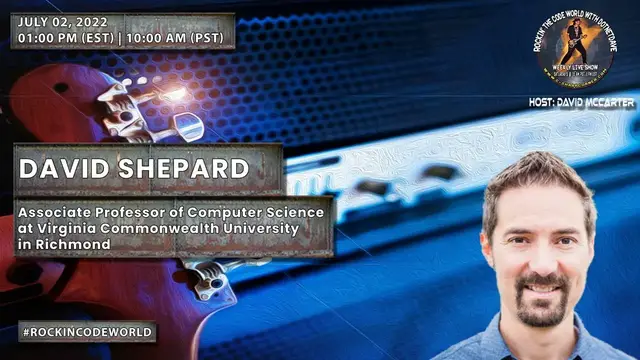
Join us on July 2 with David Shepherd for the next episode of Rockin' The Code World with dotNetDave - a weekly show to learn & live Q&A focused on .NET and other programming technologies.
AGENDA
• Introduction
• Code Beats
• CS Education
• Hip hop
• Music
• Wrap up
GUEST SPEAKER
David Shepherd is an Associate Professor in the Department of Computer Science at Virginia Commonwealth University. He earned his Ph.D. and M.S. in Computer Science at the University of Delaware, and his B.S. in Computer Science at Virginia Commonwealth University. David has since worked as a postdoctoral fellow in the Department of Computer Science at the University of British Columbia, built sweat equity as employee #9 at Tasktop Technologies, and risen to Senior Principal Scientist at ABB Corporate Research. His research has produced tools that have been used by thousands, innovations that have been featured in the popular press, and research that has received over 1.5 MUSD from NSF in funding.
Guest Profile: https://twitter.com/davidcshepherd/
C# Corner - Community of Software and Data Developers
https://www.c-sharpcorner.com
#CSharpCorner #rockinthecodeworld #live #dotnet
Show More Show Less View Video Transcript
0:00
Thank you
0:29
Thank you
0:59
Thank you
1:29
Thank you
1:59
Welcome, geeks, to another exciting episode of Rockin' the Code World with Don Ed Dave
2:06
I'm David McCarter. I'm glad you're back. We were off for a couple weeks because I was supposed to be in Australia, but that fell through
2:14
So we're back, and we've got some great shows coming up soon
2:20
And it's summertime here in San Diego. It's nice and warm and bright and cool beach weather
2:26
The gloominess of June is gone, and it's a great time to be in San Diego if you ever come here
2:36
And you see my backdrop there. I'm pre-celebrating July 4th. You all know, at least in America, that our Independence Day is on Monday, July 4th
2:49
And that's when we go and do barbecues, celebrate the independence of America
2:57
So that's why I have that backdrop today. So anyway, I'm so excited about this show
3:04
I have David Shepard on from the university in Richmond, Virginia. And he's going to talk about his program and band camp called Code Beats
3:15
and I've been really excited about this show because I can talk for a whole hour about music
3:20
and not feel bad. So I'm really excited. You all know, you know, I've been a musician
3:27
I work for, I do photography for big rock bands and I also have won some awards from that work
3:36
And so, you know, music has been a huge, huge part of my life ever since I was a little kid
3:42
doing air guitar for my brother, jumping up and down on the bed like I was playing at a concert
3:50
with a band. I used a tennis racket as my air guitar, kind of, and I would play
3:57
I would lip sync songs for my brother. So anyway, I'm super excited about this show. So let's get
4:02
it going. I want to, you know, we're entering the fifth month of the ordeal in Ukraine. So I wanted
4:11
to again take a couple minutes out and think about my friends in the Ukraine and seeing this
4:18
beautiful country that I've visited get destroyed is just awful. And unfortunately, the craziness in
4:25
America has pushed the news of the Ukraine kind of off the news cycle for the most part. But I
4:33
just wanted to make sure that we all think about what's going on there and do anything you can to
4:38
to help their cause. And because, you know, I want to go back someday before I retire and speak there
4:44
or maybe after I retire, I can speak there. But I want, ever since I visited Ukraine
4:49
I've been dying to go back. And so unfortunately, that's probably not going to be for a while now
4:55
So anyway, and also I forgot to mention at the top that, you know, our fearless leader
5:00
C-sharp corner Mahesh has got COVID. He came to San Diego last Friday and a couple of days later
5:08
actually after I saw him and he came down with COVID. So he's unfortunately been locked
5:13
in his hotel room, which really sucks. You know, his whole family is here and he's been locked in
5:20
his hotel room. So I heard he might drop in later on the show at the end. We'll see, but just give
5:26
a shout out. Give your well wishes to pass. I talked to him this morning. He's gone 24 hours
5:33
without a fever. So that's good news. I have a new article out on C Sharp Corner. This article
5:40
was actually requested by one of my followers. Every once in a while, I'll ask on Twitter
5:47
what do you want me to write about? And one of my followers said, career. So I took a section out of
5:54
my Rock Your Career, Surviving the Technical Interview book, and updated it and came out
6:02
with this article called Prepare, Prepare, and Prepare Some More for Your Next Technical Interview
6:07
And the reason I picked this subject was because this is the number one thing I see developers
6:14
not doing before they come interview in front of me is they don't prepare
6:20
There's lots of stuff that's in this article and in my book that shows you how you're
6:24
you should properly prepare before you come in for the technical interview by somebody like me
6:29
and or somebody else at a company. So I hope you check out the article. I really enjoyed updating
6:37
it and getting some input from other people that I know. And my friend, Mark Davis, helped me with
6:44
some of it too. So and Mark Davis is the lead guitar player on the video at the top of the show
6:50
So that's who he is. So anyway, I hope you can check it out. All right, with that, I'd like to bring on David Shepard is an associate professor in the Department of Computer Science at Virginia Commonwealth University
7:03
He earned his PhD and MS in Computer Science at the University of Delaware
7:07
Woohoo! That's where I was born. And his BS in Computer Science at Virginia Commonwealth University
7:13
David has since worked as a postdoctoral fellow in the Department of Computer Science at the University of British Columbia
7:21
built Suite Equity as employee number nine at Task Top Technologies and is risen to senior principal scientists at ABB Corporate Research His research has produced tools that have been used by thousands
7:37
innovations that have been featured in popular press, and research that's received over
7:42
$1.5 million in funding in the U.S. from NSF. So welcome, David
7:49
Thank you very much. Really happy to be here. I, too, love coding and music, so I think we're going to have a good time here today
7:57
Yeah, yeah. And your bio is very impressive. All I've done was teach at a university for 18 years, but your background is very impressive
8:09
So welcome to the show. How are you doing today? Doing great today. It's a holiday weekend around here, so about to go get ready to enjoy some barbecues and things like that
8:19
but happy to come talk about music and coding first. Yeah. Yeah
8:23
I appreciate you doing that on the holiday weekend. A lot of people don't like to do much of anything except for party and have
8:29
fun on the holiday weekend. So hang out at the beach like they do here
8:34
You know, actually in San Diego, I avoid the beaches at these times because, you know
8:38
it's totally insane crowds and parking problems. And so I just, I can kind of watch the fireworks from just going up the street a little bit
8:47
uh because it overlooks the fairgrounds and uh they always have fireworks there at the
8:51
fairgrounds which is right near me so wow you're right in the heart of san diego good for you well
8:57
i'm a little bit north you know del mar is uh a little bit north of san diego and uh and uh it's
9:03
about you know it's about 20 minutes from the airport if you don't have any traffic so uh so
9:08
it's a little bit north but i i like it up here and uh you know it's very uh quiet and nice and
9:14
and not a lot of crime. And so anyway, getting off topic now
9:18
we're supposed to be talking about music. So let's talk about Codebeats
9:23
So explain to everybody what Codebeats is and maybe how you came up with it and how it's going now
9:31
Yeah, so Codebeats is just kind of the way I wanted to learn programming
9:36
when I was a young person wanting to do programming. I just didn't know that it was possible
9:42
So it's just a way to learn programming. And instead of your output being something boring, like, you know, sorting list or I don't know
9:51
Calculator. Yeah, calculator, whatever the lame kind of projects you do, you know, early on, the output is a beat and like a hip hop beat in this case
10:02
So, you know, it's just like the output is fun and something people like to make and something I personally wanted to get better at making, you know, because I'm into music too
10:11
and so yes there's a different approach to to learning the program that's not super lame
10:19
that's fun right because you know learning the program can be can be very challenging and can
10:26
be very boring and that's why you know I was this morning when I was thinking about uh you know
10:32
getting ready for the show I was thinking about my uh my I probably I've said this a few times on
10:37
my show that my acupuncturist son, who is now nine, has been programming for at least two years
10:44
now, you know, and he's, he's learning stuff like unity. And I mean, he's learning stuff I don't
10:49
want to learn, you know, and, and cause I feel it's too challenging. And, and, and I've gave him
10:57
a bunch of swag from C Sharp Corner and my website and to try to encourage him, I got to meet him
11:02
once. And, and so, you know, some kids, you know, like him, you know, he's interested in games
11:11
because games are fun, and he plays games. And so he's, you know, he's written his own games
11:16
already, you know, and at nine years old, I mean, at nine years old, I was playing in the mud with
11:21
Tonka trucks. And, you know, I wasn't doing stuff like this, you know, he can't get enough
11:27
He keeps begging his mom all the time for more training from, you know, she hires these tutors and he wants more and more of it
11:34
I'm going to. Yeah. I can't wait to see what this guy does when he's older
11:39
Yeah. He's going to have a startup by the time he's 15. I know. Yeah. That's the thing that the kids, kids are learning a lot younger these days
11:48
I don't know. Have you ever heard of like MIT Scratch? Do you know that program
11:52
Okay, so this is a big one that young, young kids learn on
11:57
And this is like, it's a block-based programming language. So you know how you can kind of drag the blocks in there and they snap together kind of like Legos
12:05
Yeah, like the Lego programming stuff. Yeah, it's a lot like Lego Mindstorms
12:10
Mindstorm, yeah. Yep. And so scratch.mit.edu, that's a great program for kids learning to program
12:17
And so I used to do these like inner city camps back in Raleigh, North Carolina, when I lived there
12:22
And we used to use Scratch a lot. But if you can imagine, like the main point of Scratch is to like create little characters and get these characters to move around the screen
12:35
The main character in Scratch is like this little orange cat. and you can imagine me
12:41
like you know kind of in their eyes kind of this cheesy white guy from the
12:47
suburbs trying to teach you the inner city kids the code and then I start asking
12:51
them like hey you know do you want to like move this cat around the screen you know
12:55
it wasn't super compelling to these kids and so there that was one of the impetuses to try and start doing it
13:05
with music but you know We started trying to use music inside of Scratch
13:13
Again, for those of you that have used Scratch, it's not built for music
13:19
We could do some basic things, but as soon as you try to do something a little bit more complicated
13:24
it would get out of sync. Your one instrument will be playing right on the beat
13:30
The other one will be playing slightly off the beat. Can't have that
13:34
For a musician, it would make you crazy. right yeah yeah yeah yeah it definitely makes me crazy yeah that happened yeah things are out of
13:43
tune makes me crazy too yeah so you made your intro song i guess that was like a yeah yeah i
13:50
wrote i i wrote the song and then i i got my uh i actually wrote it when i was sick so it's not
13:55
super complicated i tried to make it sound i tried to make something like a simple acdc song but yeah
14:01
i wrote it and then i got my friends to play on it and and uh i mixed it which i'm not a very good
14:06
mixer and uh and that's the that's the song so the lead guitar go ahead good it sounded pretty
14:13
good to me yeah thanks i and then we all recorded our little video parts and i put them all together
14:19
you know and and mark uh mark the guitar the lead guitars for that um he wants to he's told
14:27
me recently he wants to redo it so maybe we will i i don't i don't know it depends on timing and
14:33
you know maybe after this episode you can do it in tune pad which is what a program i'll tell you
14:38
about in a little while yeah yeah you can tune you can tune my song in the uh tune pad and uh
14:44
and i don't remember the chord progressions now but anyway don't worry i have me i have all these
14:50
music majors that i work with here at university and these guys you throw any song at them you know they just listen to it and then they start coding away they all become programmers all these music majors become programmers because like you know they know the music and you know I okay at music
15:05
but those guys are really good at music. Yeah, yeah, yeah. And so these music majors, I give them this program
15:10
They get the music, listen to it, and then they start coding it into TunePad
15:14
and they translate, you know, what they hear into code. Yeah, yeah
15:19
Yeah, that's – I'm not that talented, you know. Yeah, me either
15:24
It would take me like a month. And I had one student who I gave him like 15 songs just like a week ago
15:31
And, you know, he's only working part time. And and then like yesterday, he's like, hey, man, I'm almost done with these songs
15:36
Like I need another songs already. Yeah. And they're like they usually have on the I don't know how familiar you are with rap songs
15:46
but they sound simple often, but they, when you get down to the
15:50
to the rhythms and all the high hats and all the extra stuff that percussion
15:54
they put in, I mean, it's probably like 10 to 15 tracks on average. Right
15:58
So it's not like just one track. It's like 15 tracks. Yeah. Yeah. Yeah. Well, you know
16:04
that's the great thing with modern recording software is you, there's no track limit really. It's, you know
16:09
the track limit is your memory right on the computer. And, And that's pretty cool because I have some pretty complicated recordings that I've done, you know, and and I really like doing it in software because, you know, it's so much easier, you know
16:27
Oh, yeah. And I was recently, in March, I went to Oregon, visited this guitar
16:33
I used to work for the number one heavy metal band here back in San Diego back in the 80s
16:38
And guitarist from that band moved up to Coos Bay, Oregon. And I spent five days, five or six days up there
16:46
And he partnered with a multimillionaire guy that lives up there, who's also a musician
16:53
And they built the first recording studio in Coos Bay. and uh i got to go in it a couple times and play around with the gear and and things like that and
17:03
uh you know and they built it like it's serious right they're double walls double paint glass you
17:10
know i went into the sound booth you know for vocals and i'm man i've never been in a room that
17:16
damp dampening right to to sound you know it doesn't go anywhere you know because there's
17:22
so much padding and whatever else they put in those rooms. Right. And, uh, uh, that was fun
17:28
There's it, I've been in recording studios before, but, um, nothing as, you know, and that
17:33
and that was back in the eighties. So there wasn't computer like they are now. And he
17:37
you know, he runs everything through his, you know, Mac, uh, tower, you know, uh, uh, computer
17:44
and yeah. Oh yeah. We had, uh, I was working with the church with their sound system the other
17:50
month and they you know they had all these crazy decks of stuff and they were basically replacing
17:55
you know a room's worth of equipment with like a computer so audio has definitely like shrunk down
18:02
you know quite well even you know um ever since the late 90s you know i my uh amplifier of choice
18:12
has been uh from this company called line six you know in line six you know they they were the
18:18
they might have been the first of a company that started modeling amplifiers and effects
18:25
you know, so you can put, so they can put it in software. And now, you know, I have this unit now
18:30
called the Helix, which I call my guitar processor spaceship because it does so much, you know, and
18:39
I mean, it's, it's endless of what you can do with this, right. With software and all that
18:44
And I can do, you know, I can set up, you know, the routing of the sound that you can't do in the physical world
18:50
Right. And so that creates some really interesting challenges. And and even my new guitar is also from line six, can also play two guitars at the same time
19:04
So like I have like when I played the intro to one of my favorite bands, the cult, Seashell Sanctuary
19:12
right um the the way that billy recorded that back in the 80s was he used guitars he used to sitar
19:20
use some uh backwards uh mass you know backwards tracking of the songs and and i basically mimicked
19:26
that in this unit i'm playing a guitar and a sitar at the same time and i'm i'm not only to
19:34
have delays and all that you know re uh delays and flange and everything on it but i also have
19:39
the backwards delay on it too so as as as much as i can you know make it uh like he did with
19:47
multiple tracks i can do it one time with software and that's you know not only is my you know
19:54
amplifiers all software driven but so is my guitar right yeah exactly yeah it's it's amazing the
20:02
replacement of all all this hardware with software you know it's really just revolutionizing music
20:08
I even have a, I think it's, I can't remember what it's called, but basically a pad that has, you know, almost like a keyboard, but for music, it has all these different buttons
20:18
You can map them to different instruments, to different drums, you know, instantly
20:22
And basically you have like the ability to record almost any instrument, you know, right there on your, just your computer desktop
20:29
It may sound pretty darn good. um but back to the programming bit i want to one thing that has really changed like kind of
20:38
along the lines of this software coming along there has been kind of an explosion i would say
20:43
of of software where you can write code that makes music lately so have you ever heard of sonic pie
20:50
no i have not okay so sonic pie is this program uh created by this guy called sam aaron
20:57
so it's sonic pie kind of like raspberry pie and it was originally created for the raspberry pie
21:04
and uh he is part of this kind of movement that's kind of live coding
21:08
so he like he does concerts where he like writes code live and it's like looping and then he changes
21:17
it live and it's like i mean it basically sounds like a dj right so sonic pie is a great tool and
21:25
that's actually what we started off with code beats. We started using Sonic Pi. Um, and we use
21:30
that for kind of our first code code camp. Um, another great piece of software, if you're into
21:35
this kind of stuff is called ear sketch and that that's ear sketch.com. I think you can visit it
21:41
there. Um, and ear sketch is a lot like the program that I use, which is called tune pad
21:48
And what it is, is it's, um, you know, a coding environment that's right there in the browser
21:54
you can mix you know mix different samples create different drum patterns all kinds of stuff again
22:02
right there in the browser and then it will uh play out to you at you know near near professional
22:09
quality i mean it's really good the guys behind that in particular are really into music right so
22:15
they yeah the output is good that's cool um so before we i think we go too much further
22:24
do you want to kind of show what the kids do with CodeBeats Yeah sure I thought it would be interesting I do have an example right up here So here kind of show what you know the kids do with code beats Yeah sure I thought it be interesting I do have an example right up here So here kind of what a typical tune pad you know
22:36
example activity looks like, right? So this is Kendrick Lamar's Humble. I'm going to just play it real quick
22:45
Can you all hear that? Yeah, we can. Sounds good, actually. Yeah, so that's code that's making that
22:54
So like here you can see a visual representation of like the bass, the kick, the snare, the closed hats, etc
23:02
Open hats. But that's not made by that. That's actually made by these tracks down here, which is like the code
23:10
Like if I were to just play this, this is the bass. And you can see, you know, very simple code
23:20
play note E flat for this long play note E flat for this long
23:25
You can imagine how that's making the track and you could play different
23:30
tracks like the kick. Let's find one. That's kind of interesting. This looks like the hats. That's always a good one
23:38
Oh, using a four loop. Yeah. Yeah. So, so four loops, some rest
23:44
And what you quickly begin to see is like, Hey, a lot of these concepts in music, like looping, like, you know, measures and looping, like map
23:54
really naturally to, you know, computer programming, right? Like you, you have a loop, a nested loop
24:01
which is, seems like a complicated thing when you're just looking at it from a coding point
24:05
of view. But when you're looking at it from a music point of view, it begins to feel a little
24:09
more natural, you know, and certainly looping just like with the regular loops feels really
24:14
natural when you're doing that music right and this is all python right yeah so this is all python
24:20
it's basically like a python notebook if you're familiar with that way of coding you know it's
24:25
similar to that and each of these tracks contribute to the overall piece which the main track yeah and
24:33
again that sounds like this now the cool thing is like we don't expect people to like just show up
24:39
and be like, hey, I'm ready to go. I totally know how to code. But we want them to be able to work with real songs
24:47
from the get-go. So here's what we would do. This is one of the first activities they'd do
24:53
So Humble, Kendrick Lamar's Humble, which is a great song, but it turns out it's a pretty simple song melodically
25:00
It only has essentially one chord. So if you write a melody over it
25:06
that matches that chord, you know basically you're good to go you don't have to worry about changing chords you know and
25:14
so all we ask them to do is you know go down here and we have we have all these directions for them
25:20
and we would explain that in class but basically we're just asking them to do things like write a
25:24
melody over top you know like play note uh with and these are the kind of notes in the in the melody
25:33
that we would recommend that they play. And so they'd play a few things like this
25:38
and they would very quickly create a melody over top of that existing beat
25:46
And so I'll create one. All right, so here's play note 71
25:53
Again, I'm just using things that are right up here because I know those are going to sound good
25:59
And I'll just do a very simple one. I'm going to make it one bar long
26:06
I'm just going to play these two notes. I mean, it's not going to be a great melody, but let's just, you know
26:10
so the melody sounds like that. And then you can hear your masterpiece over the whole track
26:23
That's pretty cool. So the thing is you're, you're always like working with real music
26:28
but the part you're doing isn't that hard, right? Like this isn't that hard, even for beginners
26:32
like play notes, you know, four notes, no big deal. Right. Right
26:36
And each, each day we have like, you know, we build it up in class. Like each day it gets a little bit harder, a little bit harder
26:42
They're doing loops, you know, they're doing harder things, but it's always
26:47
you know, we have all these supporting tracks. You just do this part and they learn the concept
26:53
It doesn't blow their minds by the end of the week. They're able to write like legit beats though. That's the thing
26:59
like so here's i'm gonna play just a couple seconds of this song this yeah i heard this
27:05
this morning yeah yeah this whole album was created by students okay these are these are
27:10
beats we just recorded what the students had made so for instance here's a beat that one of
27:15
the students had made with their code after only 10 classes of course the rapper over top is
27:24
Welcome, everybody. Please take your seats. We're at the corner where music and technology meet
27:33
Computer coding and introductions. Play a few more seconds, but you can get the idea
27:36
Musical production. Like a stove, you turn the heat up. Turn the heat up. Write the code
27:43
That's really impressive. Yeah, I mean, and that was a student, you know
27:47
Yeah, yeah. Like 10 classes. And your students are what age range
27:53
Middle schoolers. Middle schoolers, yeah. Yeah. So that student was, I believe, an eighth grader when they took it
27:59
But, you know, in general, they've been as young as like incoming sixth graders to eighth graders
28:05
That's been the age range we mainly stuck to. And by the end of the week, they're able to make their own beat
28:11
And in some cases, they sound really good. Yeah. Yeah, it does
28:15
Sounds really good. And so do you teach this? you all you teach us in classes and you teach it in the beats camp code beats camp also yeah so
28:27
those two separate things can yeah i can clarify that a little bit so we started out doing this
28:34
during covid so we had these online camps and so that was kind of the main place we started just
28:40
doing online camps but just this year we've finally been able to do in-person camps summer
28:44
camps right 100 yards behind me in the computer labs here at VCU. We've had kids coming in person
28:53
and we have big speakers. You can check it out. We got lots of big speakers
29:01
Yeah, I saw a picture with you carrying it on your shoulder or something like that. Yeah. So we bring big speakers. We play real music. We got actually the musician guy is a
29:14
in the summer. And then this coming fall, we're actually going to make a real course out of it
29:20
a university level course. It's going to be, you know, 200 university students, freshmen
29:26
coming into like an auditorium style class and we're all going to be making beats
29:32
That'd be awesome. I hope you film some of that. I think it'd be great to see what's happening
29:37
inside of these classes, maybe. You know, when I was thinking about this this morning
29:44
I was going, you know, I wish, you know, if this was around when I was in middle school
29:51
yeah, I would have been there like that, right? Because if it has to do with music, I'm doing it
29:57
I know, exactly. And imagine, like, that's exactly... me right like i was in you know school in high school i was doing band all the bands i could be
30:05
in you know yeah and just because it was super fun and if there had been something that was banned
30:10
with computers i definitely would have done that yeah yeah yeah you know and i wasn't like a good
30:16
enough musician to go and try and do that for a living and i knew that at least so i was like all
30:21
right i got to do this computer thing but if it had been both at the same time i mean man how much
30:25
better when i'd be at computers i know yeah well you know like when i was so i started uh
30:31
you know learning music and i think it was the fourth grade you know i started off as a drummer
30:37
yeah and so that's that's what i did you know in in fourth fifth sixth grade i even played drums
30:44
in the navy when i was in the navy um and uh and then in 82 i uh switched over to guitar
30:52
and I've been playing guitar ever since. And so there's a big, long story with that
30:56
but that's not why we're here. So, but as a drummer, though
31:03
I mean, I think you have a really good insight into like how mathematical, you know
31:08
this whole thing is. Cause, you know, when we're trying to explain to people
31:13
like hi-hats in particular, right? Like hi-hats is always like, we have to explain, okay, if you want them to go faster
31:20
you know they're like half a beat you want them to be half a beat long if you want to go even
31:25
faster a quarter of a beat 0.25 long and if you want to go even faster 0.125 and then there's this
31:33
whole genre of rap called trap and uh you know which i'm not personally as familiar with but it
31:41
is a whole genre and they one of the things my musician friend tells me is they use really crazy
31:48
hi-hats and they do not only really fast hi-hats but they do a lot of combinations of triplets
31:54
and like regular straight hi-hats and so it's you know you have to teach them about all right well
32:01
how are we going to do a triplet without screwing up our math right you know because if you start
32:07
thinking about floating point numbers and things like that you can very easily get just a little
32:11
bit off and after a few measures things start sounding really weird you know yeah yeah so um
32:17
there's a lot of math really behind the scenes here on the rhythmic part yeah yeah and and me
32:24
the way i you know when i'm thinking of new songs to write and things like that
32:30
um you know i usually come up with like the chord progression that i like but then
32:36
I have to go figure out a drum track that I like. Right. Because I'm one of those people that feed off the drum rhythm
32:43
Right. And maybe that's because I was a drummer in the beginning. But I really need that to help me with a song is I need a really good drum beat
32:53
And and I've you know, I use Logic Pro and GarageBand and and I've never really liked using those
33:01
And so when I was up at my friend's recording studio, what he uses in the studio is a program called Easy Drummer
33:08
So I bought that and I'm trying to learn it now so I can come up with really good drum tracks and then work on the song on top of that
33:18
Right. So everybody's different. Right. It's how people start out and come up
33:22
But usually I think most songs you got to lay to me
33:27
unless you're using a metronome, you got to lay down a drum track to keep, you know
33:31
to know what you're doing first. Right. Oh yeah. And that's, that's one of the concepts that maps really naturally to between music and
33:39
computer science. So the concept you're essentially talking about is what I would call
33:44
modularity. So each track, you know, just like each, each track you saw had a code related to the base
33:52
code related to the hi-hat. That's basically almost like classes when we're writing code
33:59
The whole beat is super complicated. If you put all 15 tracks in one place
34:06
it's a few hundred lines of code. If you look at each track individually
34:10
it's only 10 to 15 lines of code. It's very easy to understand
34:15
This whole concept of modularity is super easy to teach in music
34:20
because each track is like its own thing. And they're like, and they all run together in parallel. And so parallelism
34:26
becomes easy too. And these things that were like really complicated to teach formally in class
34:33
you know, are like super trivial. They're like, oh, runs in parallel. You mean at the same time
34:38
Okay. I get it. Yeah. Async programming, right? Yeah, exactly. And yeah, when they get all like
34:45
you know, complete async, when they're like unrelated, when they start and it sounds awful
34:50
like that's bad yeah yeah and that's the thing you know and i i and i do this sometimes too is
34:58
where i do too much right and then i have to start taking stuff out going okay yeah i went way too
35:03
far i gotta start going a little more basic you know get it back to where i really want and uh
35:09
and uh and so yeah i i could see how you know doing that especially when you're working with
35:16
you know especially something like rhythm you can have a lot of tracks just for the rhythm
35:20
part, right? And getting all those to mesh well together and sound well together. And it's not an
35:26
easy thing. Yeah. Yeah. There's a lot of, so one of the key aspects I think that we've taken
35:33
or one of the key design decisions we've taken with Codebeats is that the music is just as
35:38
important as the code. So, you know, like I'm the code teacher. Well, actually my PhD student
35:44
Douglas Krug is, he's the main code teacher. He's from Brazil and he's amazing
35:50
And then there's a music teacher, Taylor Barnett, and he is, you know, as involved as we are in this course
35:58
It's not like there's just a little music on the side. It's like, no, you know, he teaches you about how to build up a rhythm section
36:06
how to line up the kicks with the snares and how to emphasize like, you know, how to line up the bass with the kicks so that like you're emphasizing certain beats and stuff
36:16
And if you, you know, some of the kids are not as good at music. And so maybe they don't get quite as far in that aspect of it
36:23
But the kids that hear and appreciate the music end of it, like by the end of the 10 sessions, like they've definitely learned how to make a better song, you know
36:30
Yeah. Yeah. Yeah. Yeah. Even if you're not into music, you can, you can still do it. Right
36:36
Just by learning the coding and at least learning what the notes mean
36:40
And, you know, E flat, you know, D sharp, things like that. Right
36:43
And yeah, it's a it's a so how many so how many I know you haven't been doing this super long, but for example, like how big are the camps
36:52
How big are these classes? How many kids come? Yeah. So for the online camps, we could do a bunch
36:58
Like so last year we worked with Chesapeake County Schools, which is right out here in Virginia
37:04
And I don't know, we had like 100, 150, you know, in a session
37:09
So that was great, you know, because you could but it was online. and there's limited interaction there
37:14
And we know with COVID how virtual school is like not quite as cool as in person
37:19
And with music, even more so, right? So we were starting this summer to do the in classes and they like 25 to 30 per class because you know we want to be able to like give people kind of targeted instruction uh so that kind of the size we doing i have two camps in
37:38
july both about 30 people per session right now we might go up to uh 35 but that's how many
37:46
computers i have so but you have a hard limit with the number of computers yeah exactly but
37:54
But the idea, so this is actually like an NSF funded project. I don't know how much you know about academia, but, you know, NSF funds certain projects and you develop things like this whole new way of teaching code
38:06
But the idea is, you know, then you share it with the world and everybody can do it
38:10
So next summer, I'm going to be spending a lot of my time teaching the teachers
38:14
So like training teachers in Virginia, how to teach in this way and training teachers in Delaware, where my collaborators are, how to like teach code in this way
38:24
Have you gotten interest from other schools like in other parts of the country
38:28
Or is this mainly just happening like in your area right now? Yeah. So right now it's mainly in my area
38:34
I have been in touch with Dallas because I visited there just last year
38:39
And of course, Delaware, where my collaborators are. And, you know, like if we had the bandwidth to teach there, I think they would definitely take it up
38:49
Yeah. So I think this would be an awesome program for any middle school
38:53
you know, around the country. And I, you know, and now that I see it and I, you know, I've met
38:59
you and talked to you about it, I think, you know, I hope in the future that schools do do something
39:04
like this, right? Because, you know, this kind of reminds me of one of my friends who used to live
39:10
in Southern California. She started a nonprofit group to teach girls coding, right? And she first
39:19
announced it or talked about it at my user group when i used to run it and um and i asked her while
39:25
the our guest was speaking i said and i she's only targeting middle school kids right and i
39:32
and i i said why are you just targeting middle school why aren't you targeting you know high
39:37
school and things like that she goes well we feel that if we can't get kids interested in technology
39:43
in middle school by the time they hit high school it's over because of all the pressures and all the
39:47
the other stuff that happens in high schools. They got to get them in the middle school. Right
39:51
And ever since she said that, it makes a lot of sense to me is to try to get people involved
39:56
you know, in that, you know, age of their life. Yeah, that's exactly why we target. So
40:04
I mean, here's the story. I'm sure you know this about computer science, but I mean
40:07
the story of computer science, unfortunately, is that it's mainly like male and it's mainly
40:13
white and Asian, right? Unfortunately, like I want diversity because I think it makes the field a lot
40:19
more fun. My advisor, you know, was a, was a female and that lab was really fun to work in
40:25
So, you know, diversity is really important to me. And so that's why we were trying to
40:32
you know, use hip hop to get people that weren't traditionally interested in encoding
40:38
into coding and not just of course racially of course i think you know um not not just white and
40:44
asian people will be interested in hip-hop uh but also like kind of artistically right like so
40:50
traditionally people think coding is all about just like nerdy math people like like musicians
40:58
it turns out are secretly nerdy math people you know and they are like this whole uh stereotype of
41:05
coding just being for like nerdy white guys we want it to also be for artistic people and that's
41:12
in vcu we're we're a big art school there's a lot of good art and music and so it's really natural
41:17
for those type of people to be attracted to this type of programming yeah and in my experience in
41:24
in the programming world that and a lot of my friends that i've known for a long time even
41:30
since the 90s, you know, almost all of them have, you know, not only we were talking about this
41:38
before the show, not only the technical part of the ytical part of their brain, but they also
41:42
have a big creative part of their brain, whether they're doing music or art or something like that
41:49
where they're they're keeping that other half going to and I think, you know, I will say this
41:54
until I'm gone, but I will say, I think they make the best programmers because they have that
42:00
creativity going on then because that's, I mean, we dream up stuff from nothing, right? And so you
42:07
have to be creative. You have to be able to come up with that kind of stuff, right? Yeah. I mean
42:12
that, that for me, that's the big difference between I'm in the engineering school between
42:16
engineers and computer scientists, you know, like if you want to just like make things work and you
42:23
have no creativity in you like that's an engineer yeah yeah yeah but if you like art and you like
42:30
writing and you love music or any of these things it doesn't have to be all of these things but you
42:35
still like technical stuff and and you know are into math and things like that then computer
42:41
sciences to me is a lot more fun of an option because you do get to create things you get to
42:45
imagine things. Yeah. Yeah. I, I do have one question, I question for you. Well, I have one
42:54
question which you can't really answer because you've only been doing this for a few years, but I would like to follow up, you know, maybe, uh, later after you've been doing this to see
43:02
where some of these kids have gone to after like middle school and what they're, what they're doing
43:08
afterwards, right. After going through this course and what, how that changed their, uh
43:14
perspective of what they want to do, you know, in high school and maybe in their life. Right
43:19
Yeah, we're going to definitely be tracking them like that's that's definitely part of the program
43:23
that we're doing. But I want to tell you one guy that was involved in this. Just tell you one story
43:29
about this guy. So there was a student. His name was Twan. He was a, you know, kind of a computer
43:37
science student here at VCU. We have a very diverse student body here at VCU and he's African-American
43:42
And I would say he was kind of like, he was an okay student, right
43:47
Like really smart guy, but he was an okay student. And he just happened to get hooked up with Code Beats
43:54
And that was his senior project. And he got hooked. And so he was like, you know, he was like taking beats because he had a great ear
44:03
He listened to the beat. He'd code them. I mean, he coded probably like 10 or 15 songs
44:08
I can't remember how many he did in the end. but I mean, he was killing it, right
44:12
And he really got into it. And through being involved in CodeBeats
44:18
I think he took his own interest in computer science from kind of like, you know, it was like
44:22
okay, I'm doing this to like, oh, this is pretty fun. And then he got deeper and deeper into it
44:27
You know, now he makes more money than I do working for everyone
44:33
Yeah, I remember the first time one of my students came up to me
44:37
and thanked me for the course I taught him, which really launched him into a new career
44:45
And then he's making more money than I do. And I go, ah, dang it
44:50
That's not supposed to be like that. Yeah. Yeah unfortunately it the way it is If you teaching you not getting paid quite as much as much as you teaching That why I don teach anymore Yeah exactly You the smart one Maybe in a few years I go back and make some money
45:09
So I have a question for you that I've been thinking about
45:13
And one of my musician friends who I jam with here in San Diego is watching. So he'll definitely understand where I'm coming with this question
45:21
But I've been thinking about this a lot lately. and so my question to you is especially after looking at what you're doing with code beats
45:30
do you think that in the future ai will basically replace musicians oh so this is a really interesting
45:38
question and super relevant to a guest we're going to have on so i have a concert coming up in the
45:44
fall for code beats we're going to be taking some of the best beats from our students and getting
45:50
translating them into a pep band arrangement. So the pep band is going to be playing them
45:56
like the band that's at the basketball game and stuff. We're going to have a lot of fun
46:01
But we're going to have a speaker. And he's a guy from Google
46:06
He is a JMU grad. And he's a consultant by day. But he's also like a rapper and producer
46:17
And so this guy- Is he the one on your website? one of the guys on your CodeBeats website
46:23
He is not yet, but hopefully in the future he will be. Yeah, so I think you're thinking about Do Me Right
46:28
who is, he's the guy that you hear on that track that I shared earlier
46:32
He's a great guy from DC. He's also in computers and consulting
46:38
This guy, I believe his name, if I'm getting it right, is Michael Jacob, let me make sure
46:43
And he is from Google and he went to, yeah, Michael MJ Jacob
46:52
He's like a cloud engineer. But the thing about him is he just
46:56
he's about to release a tool that uses AI to produce like a basic drum track, like you said
47:05
and a basic chord progression or a basic melody, like you said. In fact, like just yesterday
47:10
he tweeted something about this. So this is Michael MJ Jacob, a guy from Google
47:15
you can find them pretty easy online if you check it out
47:20
and yeah so he's been working with like feeding in you know beats
47:26
and chord progressions from hip hop and then you know using that to automatically train
47:32
some kind of classifier that can then spit out and generate beats he's also like last year
47:38
released a album that was made kind of in this way and now he's
47:42
about to release the software that can generate these beats so it's not there yet like you know he he sees it as a way to like generate a starting point kind
47:51
of like you were saying put it into a DAW a digital audio workstation and then tweak it
47:56
but it's coming yeah yeah I uh I uh saw I think it was on uh Twitter today or something but
48:04
something um some guy has been working for two years on this something called lemonade
48:11
Yeah, no, this is the guy. Oh, so maybe I saw it on your site. Yeah
48:15
Yeah. And that seems really impressive to me, that lemonade, because it creates a melody out of AI for you, right
48:23
Exactly. So this is MJX music. I'm going to put in the comments here
48:29
Maybe I'll chat. You can put it in private chat, and then Simon can post it out to everybody
48:37
But he's posted a video right there on Twitter on something that he's releasing in just a few weeks
48:42
And yeah, I think that's super relevant. It's right here. Yeah, that's what I was looking at today
48:50
That seems really, really cool. Yeah. So, I mean, I think he's somebody we're going to feature
48:56
He's going to come and give us a talk about this software at our next event. But he's somebody that's really interested in this space
49:04
I thought maybe I could just show one more code example since it is kind of a coding show
49:08
just to give you a better idea of how this would work again
49:14
And this one's more for the older folks like me that grew up in the 90s
49:20
This is Dr. Dre, still Dre. If you've never, I understand you're into rock and roll more, right
49:26
There was this album back in the day, 2001, I think it was called
49:32
And it's by Dr. Dre. And there's a version of it that's instrumental
49:37
2001 instrumental beats and uh man you gotta if you're into hip-hop at all you gotta listen to
49:43
this album it just lays out there like you know 20 great hip-hop tracks if you're gonna learn if
49:50
you're gonna train an ai you should listen train it on those okay this is one of them i'm gonna
49:55
play it real quick one i'm sure you've heard oh yeah everybody's heard this song yeah played it
50:02
every basketball game. And again, so this is activity three. So we're getting a little bit more complicated here
50:11
but you can see we've started to do things like define variables, right
50:16
So we define variables and this MIDI number corresponds to like A6, B6, C7, D7, E7, F sharp 7
50:25
These are all keys on the keyboard, you know, like the sixth octave up the A
50:30
and all you would do again is define a melody uh that lasts about four beats
50:36
using these notes so it would be as simple as let's do let's do one real quick play note
50:44
uh what do you think a6 you have any you have any request on what i like b6 e7 i don't know
50:57
I'm just throwing things out, some of my favorite chords. All right
51:01
B6. You want to jump to an E? Yeah. And then back to the A, or you want what else
51:07
Yeah, let's go back to the A. Yeah. All right. So when we hear that, just as it is
51:16
All right. And then we got four rests. That's pretty good. That's pretty good. And then you can hear your masterpiece
51:21
Yeah. You can add it to Dr. Dre. And I like that sounds awesome
51:32
You know, in just a few seconds, we've already created something that sounds pretty decent
51:36
And that's the thing. We put these guardrails right. So the kids, even if they did nothing about music with just a few simple rules and things to follow, they can create pretty good sound of beats
51:47
Yeah, well, this is this is really awesome. I got to start winding up here
51:52
But yeah, I'm this is really impressive. And I've been like I said at the top, I'm so glad I've been able to talk about music for an entire hour without somebody getting mad at me about it
52:06
And and, you know, one thing that. Definitely, if I ever get back into your area, I would love to sit on one of these classes or one of these camps
52:16
I just love to see these kids actually doing it in real life
52:21
You know, I think that would be awesome. Oh and you love to hear what they come up with on the spot You know you be amazed Some of them are so good at music yeah yeah uh this is awesome and i i you know i i wish you know code beats and and everything you
52:38
doing with it you know all the everything you can get in the future to helping more programming to
52:44
kids when they're younger because that's we really need that you know if if we're going to make tech
52:49
you know, computer programming technology better, you know, in the future, we have to start with the
52:55
kids in middle school or even earlier. Right. And we have, I want more people in tech, you know
53:02
I want, you know, more diversity in techs, like, like you said, and, and I think this is a great
53:09
way to, to achieve that, you know, and, you know, really get some people interested in the, you know
53:14
a promising career if they want it. Exactly. Yeah. I mean, coders, even beginner coders make good money these days, right
53:22
Like I said, I have several students already making more money. More than you do
53:26
And you're beginners, right? Yeah. Yeah. And some of the crazy salaries you get at, you know, Facebook and stuff are just insane
53:33
right? But yeah, this is awesome. And you're more than welcome to come back on the show anytime you want
53:39
If you want to talk about this, we have something new to talk about. And the other thing I was thinking about when you were talking was, so Mahesh is going to be on in a minute
53:49
And him and I were talking about, so I'm doing the Code Quality Conference in August again, which was the largest one-day conference ever on C Sharp Corner
54:01
Last year, we had like 65,000 people watch. And so I know
54:07
So we're bringing it back this year. And one of the things that, you know, Mahesh has talked to me about is, you know, in which we have done it, you know, conferences on C-Street Corner before is like we have like a 10 minute break for people to, you know, do a potty break and stuff
54:22
And we like to do fun things in those 10 minutes. Like Mahesh has had people, a woman on teaching how to make drink, mix drinks
54:30
You know, we've had music people on. But I think in August, if we could get some of your students to come on and show us their beats in these 10 minute slots, that would be really, really awesome
54:40
So we could definitely hook that up. Yeah, I'm going to get in touch with you before the before the conference and see if we can hook this up for some of the students there
54:49
I think it'd be awesome to show it. You know, 65000 people watching
54:54
Oh, yeah. They'd be into it. Yeah. Well, thanks. You're welcome to hang out
54:58
if you want to talk after the show, I know Mahesh probably wants to give an update to his COVID status
55:03
And so I got to let that shit go, but thanks so much for, you know, spending some of your day with us and the holiday weekend
55:09
And I hope you have a great holiday weekend and stay safe from fireworks and
55:13
craziness like that. Thank you. It's been a pleasure. Thank you. Wow. I really liked this episode. I like all my episodes
55:24
but if I can incorporate music into it, it's I'm in heaven
55:28
All right. So let's get back to the slide. So this will be the last time I'm showing this slide, because guess what? CodeRush is now free for everybody. So you don't have to go to that URL if you don't want to. You just go to devexpress.com and download your free copy of CodeRush. CodeRush is the only refactoring tool I've ever used in Visual Studio. I love it. I use it every day I'm coding. I'm going to be using it today
55:57
and not only does it make my code better, but it actually teaches me things too
56:04
So it's a great learning tool, especially you beginners out there. You need a tool like this to help you learn
56:11
the best practices that we, us folks have been doing for a long time
56:16
So I hope you check it out. Also, don't forget to pick up a copy
56:22
of my Coding Standards for Microsoft.net, RockyCodeCodingStandardsMicrosoft.net. It's the only pure coding standards book out there
56:31
I'm always working on a new version, but I have no release date for that
56:35
So go pick this up. It'll help you be a better, your team be better at releasing quality code
56:43
which is what the conference in August is all about. Also, don't forget to help me help the kids in India
56:51
As you all know, I've been raising money for the Voice of Slum orphanage in India, Delhi, India, that I visited back in 2019
57:02
I hope to go visit them again this year when I go to India
57:08
And they've been able to restart their vocational training because of my support
57:12
So I need more support. I haven't got any donations in months
57:17
So I hope you either donate to them or go to their website directly
57:22
or you can buy a copy of my co-performance book which 100 of the profit of that goes to the voice
57:29
of slum so with that oh wait mehes is here uh sorry i forgot about mehes
57:38
hey mehes how are you feeling i'm good i'm good you don't look you don't look sick to me
57:47
i think you've been faking it yes i am yeah i i i think i think you just did that because you
57:54
didn't want to hang out with me anymore so correct that was exactly no i'm here at the top
58:00
rooftop of this place uh finally nice outside sunny it's too much sun so that's why i have
58:06
glasses on yeah it's all good um yeah great show great show love that how this you know coding and
58:15
music going together that was awesome yeah um so that'll be good yeah kids come on the on the
58:21
conference talk about some show some their work that'd be great yeah yeah i i think it'd be great
58:28
you know to promote music and coding and in a fun way you know in between the sessions right
58:33
yeah and we should talk to david maybe do a one-day conference at his university because
58:38
looks like he's already had things going on there yeah yeah yeah we could do that yeah i uh
58:44
I have relatives back there, so I can hang out with them
58:48
It's not far from me either, so you should do that. I have an uncle who lives in Virginia, and I have one that lives in Maryland
58:56
Oh, he died. Sorry. My aunt lives in Maryland. And you live there too
59:03
I definitely want to come check out one of his classes or camps one day
59:08
I think that'd be fun. Yeah, let's do that. And then you want to talk about the San Diego announcement
59:18
Well. What do you want to wait on that? Which one? Well, you know, we're going to do something together
59:27
Yeah. So we can talk about the conference. Yeah. Okay. So you all probably know that Mahesh's son has got a scholarship to a university here in San Diego
59:39
the University of San Diego. and so Madison's gonna be out here a lot
59:45
So we're planning to do a one day in-person conference on, I think it's November 12th we're spearheading
59:53
We're trying to get a date for that. So that'll be the first conference in San Diego
59:59
a long time than dealing with .NET and because we you know we don't have code camps anymore you know
1:00:06
there's no user groups are running anymore and so I think this will be a great opportunity for
1:00:11
everybody in Southern California to come day to come down for you know one fun day in San Diego
1:00:16
and learn coding and have some fun we're going to have my band my friend who's watching right now
1:00:23
band play either lunch or at one of the parties or something like that so I talked to him about
1:00:28
that the other day and uh yeah it's gonna be fun right yeah and i think all local uh u.s mvps
1:00:36
sharp corner mvps can come and we should do a mvp party uh night before or after maybe after is a
1:00:44
better idea we shouldn't do before not not before yeah you don't want to get the speakers drunk the
1:00:49
night before the conference yeah yeah we should never work that well yeah we can figure out a
1:00:55
a place where we're going to stay and mvps are allowed to come and just join the party
1:01:00
uh hang out especially if you are in the u.s you know u.s ones they can come maybe we'll announce
1:01:06
that yeah so that's good that'll be good yeah yeah and um the other thing we're trying to start
1:01:12
is we're trying to start a c-sharp corner chapter here and um so if anybody's listening in the local
1:01:19
area and they know of a space that can hold about 100 people on week on a monthly basis regularly
1:01:26
on a monthly basis please reach out to me asap because you know we we kind of wanted to start
1:01:31
this in august i don't think that's going to happen now but um we want to start one as soon
1:01:36
as possible right mahesh yeah yeah so mahesh and i and two of my friends one's watching right now
1:01:43
my musician friend, we all met Monday down in La Jolla with Mahesh and his family
1:01:50
and we all talked about doing all this stuff. So we're working on it, right
1:01:56
Yep, work in progress. Work in progress. But we really need to bring some of this back to San Diego, some of this community
1:02:03
We don't have community much in San Diego anymore as far as our world is concerned
1:02:09
So that a good part there one kid he was helping us in India and Nepal he moving to LA for a college his master I think or PhD
1:02:21
So he's going to be local in LA area. He's going to help you out with that as well
1:02:26
Okay. And he can travel. He's young, he's a student. He's going to be outside of LA
1:02:32
And I know it's hour and something from train right from there to where you live
1:02:37
It's not far. Yeah. oh and we'll have yeah we'll have more hands yeah when i when i met mahes this past weekend and uh
1:02:46
he uh mahes's son brought his friend over and from india from india he's in high school
1:02:55
he's in high school and the guy is seven foot one inch tall and i when i stood next to him and
1:03:02
you know tio leo's when we're having dinner there on sunday it was the first time i felt
1:03:08
kind of like when Mahesh stands next to me, right? Yes. I was looking up going, dang
1:03:16
Yes. His hands are huge. Yeah, he's like, I think 270 pounds, 7'1"
1:03:24
and he's 19 years old. 19 years old, 7'1". Yeah. Yeah. He does not look 19
1:03:31
He looks much older. Yeah, but do you know the great Khali? He is from India
1:03:35
he's one of the biggest tallest athlete in wwe right i didn't know that yeah his name is great
1:03:43
carly he's also from where this kid is from punjab yeah he's like the hughes there's something in the
1:03:50
water there i guess or something you know yeah you're not going to find anybody in delhi that's
1:03:55
seven one oh there are they are just not too many because the pollution is so bad there but not in
1:04:01
the tag because you only hang out with people who aren't programming in tech oh yeah but if you go
1:04:06
in like a sports and all that yeah you will find yeah yeah yeah all right well uh i'm glad you're
1:04:14
feeling better how's the family doing everybody's good everybody's good yeah that's good no one got
1:04:20
sick everybody good nope good yeah i glad good thing and you all flying back on monday right that the plan so far we gonna compete going to be coming back Do you know August probably August Okay Yeah Cool
1:04:37
Not too far. Yep. All right. Well, thanks for dropping in on us
1:04:42
I'm glad you're doing better. I felt bad for you all week because you come to San Diego and had to spend most of it in a hotel room
1:04:51
It's all right. Yeah. It could be worse places to be stuck in a hotel room, right
1:04:56
Yes. I had a friend, he went to Dubai. And he was there
1:05:01
for 10 days, got stuck there. Yeah. I wouldn't want to be stuck in Dubai
1:05:07
for 10 days. All right. Well, thanks. And I'll talk to you after the show
1:05:15
if you're hanging out. Yep. Sounds good. Okay, great. Thank you all
1:05:21
So, my next show, Mahesh, will be happy with this because I know Mahesh is looking into this framework. I'm going to have
1:05:31
the creator of Octane, Sean Walker on next week. I'm really excited about that because I've looked
1:05:36
at Octane and you guys know how picky I am with code quality and architecture and things like that
1:05:42
And I have to say the way that Sean has created Octane is pretty impressive. And so I can't wait
1:05:50
to have them on next week. If you haven't heard of Octane, Octane is basically the Blazor version
1:05:57
of .NET Nuke, if you remember .NET Nuke. So it's based off of .NET Nuke, but it's all written in
1:06:04
Blazor. And it's a great way to get a website, more of a CMS type website up and running like
1:06:11
very, very fast, all using Blazor, you know, multi, you know, multi-platforms and everything
1:06:18
So you should check it out. But come back next week and learn all about Octane when I have Sean on
1:06:25
It's going to be fun. Please be safe. As I just was talking to Mahesh, COVID's not over
1:06:32
So it's still here. It's actually, Mahesh tweeted out an article this morning about how it's becoming, more
1:06:41
people are getting it in California for some reason So please be safe Please listen to your medical professionals In the meantime please go donate blood All blood banks are in a shortage and they need your blood
1:06:54
not only because of COVID, but just for everything else. So please do that
1:07:01
And with that, thanks so much for joining today. I've had a great time talking about music and code with David Shepard
1:07:09
And if you have any requests, who you want me to be on this, who you want me to get on the show, whatever you want, please email me at rockandcrowworld at csharpcorner.com
1:07:20
And I'll see you next week. Thank you
1:08:09
We'll be right back
1:08:39
We'll see you next time
#Urban & Hip-Hop