Up next in 10



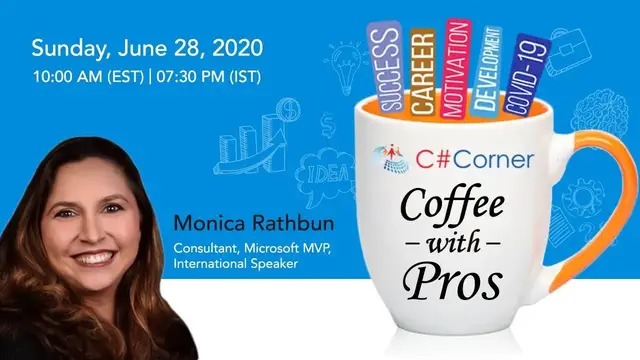
Join us today on a new episode of Coffee with Pros with one of the C# Corner MVP - Monica Rathbun as we talk about her 15 years of journey working with a wide variety of database platforms focused on SQL Server.
C# Corner - Global Community of Software and Data Developers
https://www.c-sharpcorner.com
Show More Show Less View Video Transcript
0:00
Thank you
0:29
Thank you
1:30
Thank you
1:59
Thank you
2:29
well well well good morning good afternoon good evening everyone for you joining us today
2:46
we are joining this Sunday morning from East Coast hi how are you Mahesh how are you doing
2:52
this Sunday morning good Simon good morning good morning looks like we have a good topic today in
2:58
the coffee with pros and today we are going to talk about data and databases and hopefully
3:07
learn something about community. How are you doing there? How's things? How's weather
3:16
How's everything there in Delhi? Well I'll tell you it's almost like 47 and 48 degree Celsius
3:22
here in the capital and you wouldn't believe it in past 10 days we have had around like 10 to 12
3:28
earthquakes so you don't want to be so you i mean there's a lockdown you cannot go out but again
3:34
there's an earthquake so you have to go outside so we are in delima now either to stay inside or
3:39
to stay outside so things are very challenging here but all in all this live shows that we have
3:46
been doing from past couple of months have been really amazing especially past two or three days
3:52
were really exciting for the C-Shap Corner community as we had an amazing Women in Tech
3:58
conference. Also, we launched the beta version of live shows that we have. And one of the guests
4:05
today was one of the speakers in the conference. That's great. So, okay, so let's talk about today's
4:11
show. Well, hopefully things get better there in India and here in Philadelphia. We also have same
4:17
situation you know summer is here pandemic is still going on cases are still rising so hopefully
4:23
things get better in the meantime we we shall continue these you know anything we can do to
4:30
keep people busy folks busy and learning yeah and today we're going to talk about data so if you look
4:36
at the history of data you know since this web um web world has started today we produce and consume
4:45
the most data ever, ever in a day. Like right now we're talking, we are producing data. People who
4:52
are watching, they are consuming data. This data is somewhere, somehow, in some ways being stored
4:58
on databases, right. There are about four billion people in the world. They consume data every day
5:06
and they produce data every day. So think of the amount of data we are consuming and producing
5:12
every day not only just as a human we produce data but even our cars our cell phones our any
5:22
devices you call them iot internet of things or internet of everything's every those thing is
5:29
producing data and it's somewhere somehow going from that device to somewhere on the internet
5:37
And if you look at the numbers today, every day, every day, we produce 2.5 quintillion bytes of data
5:47
It's just a lot of data. We can't even imagine how big this data is
5:51
So one of the things we want to bring this to, you know, to this show is that, you know, talk to somebody who works with data all the time
6:02
who manages people work with data and how they do things in the background and maybe ask some
6:07
questions. You know, you, our users and viewers have any questions related to data
6:15
Yeah, but I think we have been using data a lot, especially when it comes to machine learning and
6:22
AI, the importance of data has grown a lot these days. I mean, the data that was just kept, now
6:27
people have started processing it and now they're getting insights from that data. So quite an
6:32
interesting topic to talk about so shall we invite the guest of the today in this show now
6:37
yes definitely yeah all right there you go welcome everybody you caught me mid-dream with my
6:45
c-sharp corner mug love it looks nice looks great thanks for having me today yeah definitely it's
6:53
great um so well welcome to the show this um i'm sure um everybody's excited everybody who's
7:01
watching the show they're excited to have you here and then I would say you want to just go
7:08
start with your introduction a little bit talk about yourself what you do and you know we want
7:12
to learn more about as a DBA what do you do every day like when you are you know going to work or
7:18
working from home you wake up and then what you really do every day as a DBA and managing people
7:24
and you know anything else we don know about and how do you manage your day and you know get the things going on for everybody Well given your intro it sounds like I going to
7:35
be employed forever because data is everywhere, right? And I chose the right field because
7:41
we're going to have to exist as long as data exists. So it's pretty cool. I love what I do
7:47
I've been in the industry for about 20 some odd years. I'm not going to tell you how many
7:52
But straight out of college, I started with data and I got my first job with zero database experience
8:01
It was awesome. I actually got my first career based on networking, which, you know, I'm hoping we'll talk about how networking is so important
8:10
But I got a call from a sorority sister. I was in a sorority in college and she let me know that a job was opening at the port and that they needed somebody
8:19
And so I was able to get an interview and get started and off and running
8:24
I was inside the database world and I've been there ever since. Absolutely love it. It's like in my bones
8:31
Everything about data fascinates me. It's one of those things that I'm really happy that I got a career that I'm passionate about
8:37
Right. I don't dread my job. I'm absolutely passionate about. But being a DBA is hard. It's a lot of work. It's 24 seven
8:45
As you guys know, we don't get vacations, you know, unless you're on a team vacation
8:49
What's that? We always have our laptops with us. There's always some production issue that has to be taken care of
8:55
You know, it's something that becomes your baby, right? Something that these servers become become a part of you and you want to make sure they're up and running
9:02
So I've been doing data for a really long time. I spent if you watch the Women in Tech Conference earlier, what, yesterday or day before
9:11
I was a lone DBA for 16 years. I did it all myself with no help and no education in how to do SQL Server specifically
9:20
So I had to learn and grow as everything came my way for 16 years
9:26
And you were saying what life is like as a DBA, especially by yourself. You get up five o'clock in the morning, you grab your phone, you look through for any alerts or anything that broke while you're asleep because you got to get it fixed before everybody else gets in the office
9:39
Right. So you grab the phone, you grab the laptop, you're brushing your teeth
9:43
while you're running jobs and you're getting things going and then you're getting your kids
9:47
ready and breakfast while you're still working on jobs. And then you get to work and everybody's
9:52
happy because things are up and running before they had to get their morning reports, right
9:56
So then you go through your day waiting for one thing or another to fall through the cracks or
10:02
whatever project you're working on and you're juggling, trying to keep everybody else in the
10:07
company who become your customers, right? Happy and make sure they have all the data that they need
10:13
while you're trying to make sure things are working. So that's quite a job, huh
10:21
But I can imagine, right? I've been in IT industry for almost 23 years
10:27
And that's how we are, right? Data is very important. So you said you started this working with data with no experience
10:35
What are the challenges? Like, obviously, you know, we have in computer science, we have degree, right
10:40
We can go to programming degree. I did master's computer applications. That's where we learned, okay, what is compiler? What is meaning of, you know, data by storing in variables and, you know, basics, basically very, you know, little tiny things. But you, I mean, looks like you just jumped in right in there. What were the challenges when you just, you know, you were in the networking in the beginning, and then now you are now just start working with data. And I know it's been in 20 years, but it's still the same challenges
11:10
What were those challenges and how did you overcome those? Like did you get help and would you like to share something with our viewers
11:21
I have a degree in information technology. So when I said I had no experience, I had a lot of book experience, right
11:28
And you took some classes. I learned C-sharp. I learned COBOL and I learned some other programming languages and different facets of IT
11:35
So I had some IT background. And while in college, I had four years of experience working in IT, but it was just minimal, right
11:45
Administration kind of thing. So I didn't go into data until after
11:49
Challenges is you don't know anything. You don't know what you don't know. So luckily for me, I got into community
11:56
There's a community out there of SQL Server people all out there on Twitter and social media and stuff
12:03
And luckily, I landed in the right group. They started showing me where all of the free training was and all of the available tools out there for me to learn SQL Server
12:14
And I just had to be a self-starter, right? Because the challenge is you don't know what you don't know when it comes to data
12:21
And how do you find out what you don't know? Right? So it was a lot of stumbling and stuff like that
12:26
But going online and learning where everything was and learning where all the experts are, like on C Sharp
12:33
And then there's a group called PASS, Professional Association for SQL Server
12:38
And the SQL family, we call it, is out on Twitter. And they helped me get through those challenges of learning because you don't know what error means what or what the data is supposed to look like, what the best practices for the servers are supposed to be, or how to fix whatever thing that just crashed that you've never touched before, right
12:57
So luckily, out on Twitter, there's this thing called a SQL help hashtag
13:02
And we have experts in the field, like the people who wrote SQL Server watching this hashtag all the time
13:08
And they're able to answer questions. I've actually solved production issues where I didn't know anything
13:13
Right. The challenge is I didn't know anything about it online with people from Twitter who saved my butt two o'clock in the morning trying to get things up and running
13:22
Right. Because we're all working 24 seven. We're worldwide. and so some of the challenges were you know trying to fix something that you never touched before but
13:31
you only have a small amount of time to do that and with no experience or knowing what it is or
13:37
what to do and you're just you or you know whether with the team we all got to figure this stuff out
13:42
um it was tough it was tough so oh that's great so these SQL help I guess you that was that was
13:50
direct from Microsoft SQL Server team? So SQL help is actually the whole SQL Server community
13:56
that's online on Twitter. There's some people from the Microsoft teams that are watching that
14:01
There are some people like myself who is now a consultant or people who have written the books
14:06
about specific topics and experts in whatever they are. Watching that help hashtag and you can
14:11
pose your questions and they help you answer them, get answers, you know, provide this, what is this
14:17
next step and they'll tell you what to do and and what is this error and what does this mean and
14:21
and i've done this and that am i doing something wrong can you help me and that's how i survived
14:26
when i was growing up in sql server so so on c sharp corner and all our show there's a lot of
14:34
i would say majority of them are developers i would say 80 and 15 are data or database guys
14:41
If you have to give an advice to a developer, what do you think they should do besides coding from the data perspective
14:51
Anything you deal with even developers in your day-to-day job. Get rid of your bad coding habits Some people have a list of standards that they put in their code and then they put that everywhere And sometimes those standards
15:06
need to change over time. We no longer drop temp tables at the beginning of your store procedures
15:11
or at the end of store procedures. SQL Server handles that better for you. There's no reason to do that
15:16
Well, you'll find it in everybody's blocks of code because it's something they're used to doing
15:22
Taking the time to look at your variable definitions. your data types, things like that. Many times people may be using Varchar Max or Varchar 500
15:32
because they don't know what data they're going to be importing at some point in time. Well
15:36
over time, as you develop, you know what that data is. Make a change. If it is a state code and it's
15:41
a two digit state code, make it two characters, right? Don't leave it Varchar Max. All of those
15:48
things and decisions that they do, you need to be looking at that and evaluating what you're doing
15:54
from a performance perspective. I'm a more performance guru. All of those things
15:58
looking at developers code all of the time. And it's those things that I try to catch
16:04
and look at. But it's really looking at what your standards are
16:10
What you put into everything is still relevant. Once you write everything
16:13
and you start to see what your data is that's coming in, maybe you need to reevaluate
16:18
and make those changes before you go live. make be uh be cognizant of what the data is that's coming in not just making something work
16:28
yeah make something work is so important for developers right you got to get from each stage
16:33
it's so important right yeah so we are all really all the time goal is just to make it work you know
16:38
you know first thing because there's somebody asking is it done is it done right most of the
16:43
software developers and me being a programming background there's you know manager call it
16:49
manager, college lead, whatever, when you start programming and you don't have experience
16:53
you're like, okay, can you get this done in like two days? Yeah. Is it done? Is it done? So our goal
16:59
is just whatever we copy, go to Google, find code, copy, paste, put some stamp, whatever table
17:05
you know, if we need, sometimes don't write a store prox. If nobody tells us, just write in line SQL query and make it work. Yes. That's great advice. So talking about
17:16
performance right so we always see that you know when guys are you know rushing things down rushing
17:24
to pushing this code to the you know make it work and then here comes the time when you go live and
17:31
people you know users customers start using it and that's when the things happen that's when
17:36
things start failing there's like crash going on even on c sharp corner website sometimes we launch
17:42
this new control which is loading data so and things start failing because there's thousands
17:50
people now using it so is there when you look at this process of building these high performance
17:58
scalable websites or applications do you have some kind of standard or some kind of tools
18:05
to test that or is just some expert has to go look at that what are the things you do
18:10
in their day-to-day work? So, you know, when you guys are working through your platforms, right
18:18
you go from your development to your QA to your testing, and then you go to prod
18:22
A lot of people miss the QA or the user testing, and then they just jump to prod
18:29
So when you're developing, you're used to working with a small subset of data
18:32
and you may not have covered all of the examples that could be coming through. So I think it's important to have code reviewers, first of all
18:41
Right. You don't automatically put your code in because you need that second set of eyes. I know it works, but somebody else needs to look at it for performance
18:48
That's where as a consultant I come in. That's my favorite thing to do. Let me look at your stuff and performance unit and tell you, you know, different things to watch for in your next set of code that comes through
18:57
I love that. It's so much fun. But I think testing, testing, testing, testing, testing is important
19:04
And then going back through after something goes live, regression testing. Look and see if something regresses over time
19:14
Don't just push it out and say it worked. Look at it over a trend and see as the data amounts build, is there something we need to do
19:23
Is there an index that needs to be changed? Is maybe a function not working right as a function and it needs to come back as inline code
19:30
There's things that need to always be evolving. It's not a write it, push it out and don't touch it again, which happens a lot
19:38
But you can always get people. There's a lot of performance companies out there that can look and performance test your code for you
19:46
There's consultants like myself that come in and do code reviews and things like that for performance, especially on the SQL Server side
19:53
Right. When you're writing procs and things like that. There's great tools. If you're using SQL Server, there's a thing called Query Store
19:59
that goes and watches your queries and you can do, it gathers a bunch of data in the background
20:05
and it'll show you regressions of a stored proc over time. And you can figure out
20:10
and it shows you the execution plan, how to tune it and make it better. So it's knowing what tools are out there
20:15
I'm not huge on the developer side. I can't tell you, you know, the whole life cycle of your, the development tools
20:20
that are out there for you to test. But I think it's just important that it's not a write it
20:25
turn it over and don't reevaluate. which which happens a lot even if that requires you a team or one person of a code review that
20:33
that watches for that so this query store is that a third party or is it part of sql server it's
20:39
part of sql server it's built in um from 2016 a sql server 2016 and above yeah um it's there
20:46
and it's fantastic i use it all the time when i'm tuning myself i'll show the before i touched it
20:53
and after i tune it the after and i can show you this big you know it gives you a little bubble
20:57
circle and then you get the smaller bubble circle you know and you can actually show wow that's a
21:02
big difference it gives a visual people are very visual so yeah i don't think yeah i don't think
21:08
a lot of developers know are there any other tools available in latest version of sql server
21:15
say 2019 those are you know they're new and you know developers are or dbs are not used to knowing
21:22
them and they're still doing, you know, things the way they used to do always
21:27
So not necessarily tools. When it comes to things like Query Store, they're constantly building and making things better
21:34
There's X events where they're constantly building things and making things better
21:38
They're doing things more inside the engine now to automatically tune for you, to give
21:43
you more information to make things faster. If you're on 2019, there's a lot of performance things that have happened that people may not
21:50
to be aware of that could be already making your stuff faster without you knowing it
21:54
So without getting into, you know, real technical things of, you know, I could give you a two
21:59
hour session just on performance tuning inside SQL Server. But if you're able to go up to 2016, going and having the ability to have query store
22:08
world of difference, world of difference for you to be able to yze your code as a developer
22:13
Yeah. So when I was, you know, I was in college, I read this thing that data is information
22:19
how you convert from data and it becomes information. But today world data is not information Data is intelligence And as Simon said earlier data is everything now you don use applications to find out what people are using you use data to do all that right so what in the
22:38
world of intelligence you see you're doing or you see it's coming in our viewers who are watching
22:47
this, what is your advice to them when it comes to using databases or data in terms of intelligence
22:56
or AI or machine learning or BI? What do you see like where it's going to go and is there future
23:02
and should they be learning that? Oh, there's no question they should be learning that, right
23:06
Everyone wants to take advantage of the data out there and how it can get them one step ahead
23:11
Companies are looking at machine learning like crazy, things like graph databases
23:17
huge, right? Things like learning Python so you can navigate for machine learning
23:23
to be able to make forecasts and decisions on how many employees they need, how many people
23:29
do they expect for reservations for their hotel. You know, all of this stuff helps companies project
23:35
what to expect, which in turn saves them money, right? So definitely, definitely, if you are
23:42
getting into the data realm. Look at the machine learning and look at business intelligence
23:49
power BI, knowing how to show what the data is telling you in a way that your executives
23:56
and C-level can understand, right? Everybody wants pictures. Everybody wants to see what
24:01
those numbers actually mean. Take the time. It's worth learning. Our jobs are not going away and
24:06
it's just going to grow and grow and grow and grow. It's definitely worth investing your time
24:11
And regardless of what facet of data you get into, it's market gold, right
24:16
Yeah. All right. So I think you both guys really talked about that all professional stuff on how you started
24:23
your journey with. I mean, Mahesh would go and tell that he had 23 years of experience in that
24:28
Maybe something that is my age maybe around. So surely something. I am not the exact part of the show
24:36
But we have a couple of questions coming from the comments, Monica. maybe you would like to answer that
24:41
There's one from Srikan that he says, let me bring it in the light
24:45
that what's the best in performance-wise between sub-query versus joins? So you guys are going to stump me
24:55
What did we say about technical questions on a Sunday morning where I've only had one cup of coffee people
25:00
There's a bunch of questions coming now. So the answer is it depends
25:06
It really depends what it is. your joins. Joins to me are better than doing a subquery, but it depends on what you're doing
25:14
your data is, what your data is doing. Without looking at code, I cannot give you a decisive
25:19
answer because sometimes subqueries are important. Sometimes the joins are important. But the key is, is making sure you're joining on the right columns. Make sure you have enough
25:28
columns in those joins to bring your data down to the smallest facet as possible
25:33
Make sure you're not using functions within your joins that create scans that make you read every single row when you're only looking for a subset
25:41
Right. Making sure things are indexed properly. All of that makes a huge difference on performance, whether it is sub queries or joins
25:48
So that's as far as I'm going to go into for that, because I'm not looking at the code and I'm going to say it depends, which is our normal answer
25:55
All right. So, Monica, you write a lot of content on C Sharp Corner
26:00
and you have been a featured columnist, I was just going through a C Sharp Connect profile
26:05
and just look at some of the top articles that you have
26:10
And one of the very interesting articles that got my attention is
26:14
SQL Server Updates Trigged Me for Years, right? That is an article that is pretty interesting
26:21
So would you like to go ahead and talk about it? I can maybe just share my screen and then you can..
26:26
Oh my gosh, we're going into technical again. What did we say, Simon? That was a trick to get in here
26:37
So when you apply and upgrade a SQL server, you add patches and stuff
26:42
There's a safeguard, and I don't remember what version. I wrote that article quite a long time ago
26:48
And I believe that was talking about you have to kind of tell it you want to apply that update
26:53
or it really doesn't apply the update for you. you think it did because you've done the whole install
27:00
but there's a safeguard and there is an actual flag that you have to change
27:04
And I can't think of it right off the top of my head that tells it, yes, go ahead and accept those changes and pull it forward for you
27:12
So you can provide the link if you want in the chat. I can't recall, you know, exactly what it is right off hand, you know
27:18
I mean, you wrote this article a couple of years back, and this is exactly what you have written article
27:24
I've shared in the comments too. Taking you away from the technical questions
27:28
Monica, right? I'm not going to push you anything like the good comments test
27:33
There are a couple of questions here. Let's talk about the community part, right
27:36
You have said in the past that you've started this community work and speaking just like
27:40
only from past five years, right? But now you are a C-Sharp Kunder MVP
27:44
You said you have traveled to India, Thailand, across the globe. You are also a Microsoft MVP
27:49
So how did you actually start your journey into this whole community part
27:53
somebody made me. I hope it's not nice. So as far as writing and speaking, I was at my local user
28:04
group meeting for SQL Server and the person running it at the time asked me to speak. And I
28:11
said, I didn't have a topic. I have no idea. Nobody wants to hear me speak. Everybody knows everything
28:16
already. Somebody's already written about it, talked about it. What do I have to offer? And he
28:20
said, you're speaking in August. And I said, okay, it was June. So I had to come up with something
28:28
And I gave my free first presentation. And then somebody asked me, hey, maybe you should blog
28:34
about a problem you had, right, or something. So they said, you should really do this. And they
28:39
kind of pushed me in. And I wrote my first blog. And then I was hooked. I absolutely loved it. Now
28:45
I like to really put short blogs out there that are direct to the point. This is what I wish I
28:50
knew when I was looking for something, you know, growing up as that lone DBA, right? I wish somebody
28:55
had something out there. So I pretty much write a lot of my blogs and content for me so I can
29:00
remember what it was. So I started with that and then just kept building and building. And I try
29:06
to put out a blog a week. I try. With COVID, it's really gone down a lot because I'm so busy. But
29:12
I just started building with that. And then I spoke for the first time at a conference and I
29:20
got that speaker high. You get so excited when you see somebody in the audience that gets it
29:24
You're like, yes. And then I just wanted to do more and more. And now I do probably
29:29
12 to 18 events a year, normally on site when we can. And I've been able to build from that
29:40
And it's those contributions that have gotten me the C Sharp MVP and the Microsoft MVP
29:46
and what I do now is try to contribute as much as I can to help those who knew nothing or didn't
29:53
know what they didn't know and try to put some of that knowledge out there for everybody else
30:00
So you just mentioned Microsoft MVP, right? And I'm assuming obviously you are MVP in data
30:06
Yes. If somebody wants to become a Microsoft MVP, what do they have to do
30:12
Is there any criteria for that? How does that work? So there's no set list of checkoff items that you have to do
30:18
It's all about reach and some technical knowledge and your impact. And it's contributing to everybody else around you
30:28
So Microsoft has this fantastic program where we're able to work with engineers behind the scenes
30:35
We're able to contribute to the community. They help amplify us. But there's no set
30:40
It's not that you have to write 100 blogs or you have to speak 10 times. You have to write a book
30:46
It's none of that. There's just what you contribute. They look at what you've contributed over time and somebody has to nominate you
30:54
and then you get evaluated and maybe you get shot down and you don't
30:59
but you keep moving forward. Becoming an MVP is not a requirement
31:03
It's not a goal. It's a, hey, awesome, I'm really glad I have this
31:07
and I'm able to give back to the community amplified, right? What are the benefits for becoming an MVP
31:14
How did you get benefit? Is it like a bunch of money comes in a truck your way or what is this
31:20
Oh, my God, I wish there was money involved. There is not money involved. So it's more of a recognition for what you give back
31:30
It allows us to really give input to the engineers that are writing the code
31:35
And to me, that's important. You know, being able to build and help frame the next part of SQL servers and working with the engineers on that
31:43
We're given a lot of insight inside of what Microsoft is doing and the direction that they want to do and stuff like that
31:49
I think that's the most valuable thing. And we're working with a set of MVPs where we can kick, we have distribution lists and stuff
31:57
We can kick ideas and problems to each other on a higher level and kind of get information from each other
32:03
I think that's the biggest benefit. Yeah, we get a nice little plaque and trophy, which is kind of awesome
32:07
And we get some things for the recognition. But I really think the biggest thing is being able to work with Microsoft themselves and help with the path
32:19
right so now let's move a little bit switch to the jobs right a lot of guys here they probably
32:25
are interested in you know jobs when you see this uh if somebody wants to get into databases
32:33
or sql server or they're already in there uh what do you see the future of job market
32:40
and does the mvp program help you also get a better job i would think so and i want to you
32:47
see what you think on that. So I can tell you I work for a consulting group and there's six of us
32:53
and out of six of us, five of us are Microsoft MVPs. It's pretty impressive to be able to say
33:01
that we are in Microsoft MVPs. I think it gives a little credence to our knowledge base
33:09
which I think helps. I think the future in data is definitely going in the direction of the cloud
33:19
I think everybody needs to take the time and learn the cloud. It's no longer a fad. It's not going
33:24
away. Future of data is if you're not going into that direction and understanding it, you're going
33:30
to fall behind. There will always be on-premises type scenarios where people need to work on
33:37
hardware itself and stuff. But if you want to move forward, it's definitely going cloud-based
33:43
You need to be focusing on that technology. So you're saying Azure SQL is probably being
33:49
more used now or in demand from job side? Absolutely. Especially with COVID, right
33:54
Everybody is having to go virtual. They're having to scale up for things. They are having to not go
34:00
into the office, they are taking the time to get to the cloud now. And you need to be running to
34:07
the cloud as quickly as you can from a professional side. Yeah, it makes sense, right? If you look at
34:15
what we need, like even software developers or companies who are building new software or
34:22
product or innovating in different ways or even apps, looks like every software these days needs
34:29
some kind of automation they need some kind of a business intelligence they need some kind of even
34:35
machine learning right and to me if you are already using as your sql or you know any database in the
34:42
cloud i guess those tools and technologies are already there available there so they probably
34:50
you know work easy there and even look at microsoft has now teams microsoft now has office
34:57
365 and all the suites they all kind of work together in the cloud right um so that's good
35:05
i mean um simon it's up just to you now go ahead you go ahead with your questions all right so we
35:11
have one i won't ask technical questions but there's one question related to the one discussion
35:15
we're having uh that is with uh he says i'm a beginner c-sharp programmer i need a book please
35:21
tell me or share a good resource i'm not definitely with that email id but of course we can discuss in
35:26
this show. I mean, he's a beginner C-Shot programmer. So what should be his first step
35:30
to move into this database and all that? Oh, databases. If you're into books, I know
35:39
Kaylin Delaney has a really good book. I'm not much of a grab a book and read kind of person
35:47
I want to necessarily, I want to read the blog series. I want to, you know, watch the stuff
35:52
I tend to turn over to Pluralsight. There's a Pluralsight thing that has a combination of all kinds of training materials out there specific
36:03
I would definitely be looking at that. I would be definitely looking at any free training, virtual classes that you can do out there
36:10
I know there's virtual chapters with Inside Pass for new database administrators, things like that
36:17
start looking out there for what you can get. I can't give you a book recommendation because
36:22
I'm not the one that's going to sit there and stare and highlight at a book all the time. So I guess the learning path is learn online. There's so many resources out there available
36:34
online, right? You can just search anywhere. Plural site is definitely being one of them
36:40
I'm sure Microsoft SQL Server page have a lot of information there as well
36:47
Correct. Absolutely. And I believe on C Sharp Corner, we have a learn series as well, Simon
36:54
Okay. So the goal is really, I don't think reading book is a good idea these days. I think it's more
36:58
about going online and learning there. Everybody has a different learning style. So whatever works
37:05
for you, it's not exactly what works for me. So yeah. I was just looking at those 10, 15 machine
37:12
learning books that I have. It's over there. So I do read books. I mean, books are good
37:18
to put in a showcase, right? Oh my goodness. I watching all these TV shows these days So many people are online from home and everybody has a bookcase behind there Yep It right behind me
37:33
It's called obsolete or expired because this data and information and technology is changing so fast
37:42
If you have a book that's two years old, it's probably obsolete. Yes, that's correct
37:48
It changes so fast. so um so that was for beginners right so if i'm a you know dba i've been in you know doing this for
37:58
10 years uh managing databases and doing servers and back end and all that and i see this some dba
38:06
they work in these corporate environments they don't really upgrade themselves to cloud because
38:11
either their company is not migrating there or they are just working on a project client project
38:18
where it's probably an old Oracle database and or it could be one of I've been seeing some machine
38:24
you know mainframe databases there still so what is your advice to those senior database or guys or
38:33
DBAs who wants to upgrade themselves how they can get into and get motivated to get into these
38:39
you know self-learning self-motivating modes you have to so I've seen so many people that say I only
38:48
know SQL Server 2012 because we haven't been able to upgrade or we're on 2008 R2 and we can't
38:55
upgrade. So that's all I know. I'm not going to learn the other stuff because we're never going
38:59
to go there. Or I'm not going to learn the cloud because we're never going to go there. And they kind of get stuck in their current environment, current job. In order for you to move on in life
39:08
move on in your job and stay passionate about what you do, you have to take on that self-learning
39:13
You have no choice but to go and you can register for Azure free credits, right
39:19
Azure gives you, I think it's $200 that you can register for an account and get out there and start playing with it
39:25
Get out there and maybe go sign up for one of the Azure certification exams
39:29
So you push yourself into learning that new stuff. Nobody's going to spoon feed you the information
39:36
No one's going to hold your hand and say, come with me. I need you to learn all of this because you're still in a corporate environment where they're going to stay in the older versions and not move forward
39:45
In order for you to stay happy in your job and feel fulfilled and continue to grow, you have to take on that self that self learning, self motivation to learn more because nobody's going to do it for you
39:57
And Mahesh, I see that all the time. People tend to stay with what they know and what they have to work on
40:03
and they're not constantly looking for that next level. Even when you're a senior and you have mastered everything in your environment
40:10
you still have to keep going because like we're in COVID now
40:15
I see a lot of people getting laid off and then they look at their skillset now
40:18
and they're like, oh my God, I don't qualify for any of these jobs because I stayed in 2008 R2 for the last 15 years
40:25
10 years, whatever it is, right? Whatever number it is. So you've got to prepare yourself for situations
40:30
like the unknown, what we're doing now. yeah and same thing um you know i tell any anybody who's writing code right they i meet these
40:39
developers they're senior software engineers and some are architects and but they're still doing
40:43
things old ways right there's they have you know traditional applications running and they're not
40:50
learning and soon if they don't upgrade themselves they'll be out of job yeah because that's the
40:56
reality everything is moving to the cloud all the you know it's you don't just build one application
41:03
these days the application you build is even the data it has to work with others as well right
41:08
uh it has to work it has to transfer data from here and there and cloud is the best way to do
41:14
that absolutely all right t simon to you all right so i i mean that those are a couple of like
41:22
technical questions right i'll take a pretty simple one i'm not going to take from the comments because the guys are just asking about the shape of the data and all that i'm not gonna push that
41:31
to you but but here's my question to both to mahesh and monica is like uh you have been into
41:37
this community for a really really long time right so uh sometimes uh when you work full-time
41:43
as a senior you have a lot of stuff too but how do you actually keep yourself motivated i mean if
41:48
we'll talk about mahesh he has been doing this from almost like 20 years right that's a really
41:53
long time. I really not know how that matters. If I would go and talk about C Sharp Corner to anyone
41:59
people would say that why the C Sharp Corner has even been running, right? I mean, you don't
42:03
that's an entire source of knowledge, but how can you run it for 20 years? So my same question is
42:08
for you, Monica, how do you keep yourself motivated when you work as a full-time as a DPA
42:14
And what keeps you motivated? I just love what I do, right? I've turned it into my hobby
42:21
and I'm passionate about it. I don't look at it as a job
42:27
When you start looking at something as a job and just a paycheck
42:31
it becomes overwhelming and daunting and you end up hating it. So I absolutely found a niche that I love
42:38
which is performance tuning. I get excited about it. I absolutely love what I do
42:43
I write about it. I talk about it. And and I don't I don't think of the bad stuff that goes along with it
42:51
The the constant on call, the no vacations because you have your laptop with you, the the constant pressure that can come with this
43:00
I don't I'm an optimist, right? I'm a I'm a positive person
43:04
Anyways, I just had to change my mindset in the beginning. You know, you really have to start looking at it as more than just a job
43:13
It's a career. And when it's a career, you want to be the best at what you can do and you want to make it to the next level
43:19
And it's all about mindset that that's how I can do it for so long and how I can still absolutely love it
43:27
And light up when I talk about a query going from 10 seconds to three milliseconds
43:32
You know, it's fun. I love it. yeah so i agree with monica just said definitely 100 percent uh one thing i have learned over the
43:46
years is that even though you are very passionate about something you love it there'll be time where
43:52
you don't just want to do it there'll be time where like you know what that's it i can't do
43:57
today it happens all the time right because you're doing for so long things get boring
44:01
so how do you sustain this process of being contributing to the community for so long
44:09
first thing is in the beginning as monica said you have to find something you're passionate about
44:14
it can't be just it can't be forced onto you you cannot just do this as you work like
44:18
oh i want to write code and share and talk in the community but if you don't like it it's not
44:24
gonna be long run right so you have to make sure you like it now once you like it then
44:30
though it should not be a burden to you should be fun right so what I usually do and I used to write
44:38
a lot on c-sharp corner you know I was running my company I was also working full-time as a
44:43
consultant I was writing books and I was also writing on the c-sharp corner side by side
44:48
so as Monica mentioned earlier the way my writing style was if I solving I stuck in a problem problem And I solve that problem all I did is just write about it how I did it because I sure somebody else is searching for the same problem so that the easiest way
45:05
you can write number two I write is something about when I'm learning
45:10
something new yes because let's say these days you know I'm learning
45:15
quantum computing I just don't have a lot of time but that's my interest I want learn that so when you learn and write about it while you're doing it you just end up you know
45:24
learning more and trying to solve some the problems you stuck yourself right so anything you want to
45:30
learn something you start writing about it and when you write about it then you figured out oh
45:35
shoot i was wrong then when you post it on the on the website or a blog or wherever then people
45:41
ask you more questions they're like oh really let me figure this out so that then it becomes fun
45:47
because first of the thing, you're like, you're working with it. You're trying to solve a problem
45:52
And now people are engaged, giving you feedback. So that whole process becomes fun
45:58
And it's like, it's then it's not a burden anymore. And then beside that, then over the time, after doing all this
46:07
you'll also have to find a kind of, and it's very important to find a people or a group of people
46:15
or a community that motivates you from time to time when you're down because there'll be time
46:20
when you're just gonna be like not feeling good so there has to be somebody where you can reach
46:24
out to you like and then get motivated again one of the big big thing from you know i'd be i was
46:30
microsoft mvp for 14-15 years and personally it wasn't really much value to me the only value i
46:38
got from that was because i wasn't really interacting with the team of developers because
46:43
I'm doing I'm just didn't have enough time uh my value I learned from that was I meet these people
46:50
awesome people yes and I'm not even I it wasn't even learning coding I you know it was more about
46:56
learning from them how do they think so motivation and how they're like it's like it becomes that
47:02
becomes your motivation right that's where you get your energy back so everybody has different
47:08
way to do things we all have to find where do we get that energy from for example if you love pets
47:14
maybe you go and you know feed pets that's or help you know dogs and shelters and all that may give
47:20
you energy back right same thing with the when we go to these conferences when we speak at the events
47:26
they all give energy back even though they take a lot but when you come back you just get so
47:31
motivated and we go to this microsoft mvp summit we used to go you know i used to go every year
47:37
when you come back you're just like all motivated you're boosted up for one whole year
47:41
so if we don't have those events in life things will get really bad and like boring and stale
47:49
so we have to keep doing all those things and once in a while you just take breaks just shut
47:56
it off that's very important right um you just don't have to if you sometimes you don't feel
48:01
like don't do it it has to be when you feel like when you can do it and after that the last thing
48:08
is when you keep doing so long it becomes your habit so right now my habit is if I don't write
48:14
anything in a you know few days I feel like I've done nothing I could be doing a lot of projects I
48:22
could be helping clients I could be getting paid all that stuff but if I don't write or I don't do
48:27
anything community. I feel like this week was pretty bad. So once it becomes habit, then it's
48:33
fun. I totally agree with what you said, Mahesh. I have a group of, so I went to a past summit back
48:40
in 2011 and I met a group of people. We were all, you know, pretty mid-level of our careers
48:46
but I met a group of people sitting in beanbag chairs at the community zone and we just started
48:51
talking. We ended up exchanging information and now I talk to them every day. We have a Google
48:56
Hangouts. And now there's some of the biggest names inside the SQL server community right now
49:01
And we all grew up to this together. But we are, we call ourselves our SQL tribe, right
49:06
We are the same people that give each other energy. We're the ones that we can gripe to. We're the
49:10
ones we can turn to. We're the ones that can help us with other problems. We drag each other with
49:15
each other to the next step in our careers. But you're right. They are my energy. And there's no
49:21
way I could have had my career without it. Networking and doing stuff at these events
49:26
like you said, going to MVP Summit, getting that energy back from all the other people who are
49:30
like-minded with you, huge motivation. That is an excellent, excellent point. Yeah. And Simon, to add to that, even in C-Sharp Corner, we do a bunch of events at schools and
49:42
villages and helping kids and people who don't have anything. It all fuels back to you. Like
49:48
look how fortunate I am and look at these guys so I think I need to do go back and do more
49:56
uh either if we forget that route like okay and don't look at the people then you just forget and
50:03
you live in your own world that's when you kind of get you know lose focus but it's important to
50:09
go back and see okay look at this guy this their stage and look at me I think I need to do more
50:15
and that kind of keeps you you have to find a fuel right it's like we are like machines
50:19
you know i compare people as machines right any car for example you're driving a car you're going
50:25
to drive to like a long journey you have to fuel in between you have to make sure car is clean you
50:30
have to upgrade you have to get new tires otherwise what happens car is not it's gonna
50:35
you know be rusty and you know you're not flat tires and all that wow i mean yeah i want to hear
50:43
more i mean i want you both to keep there is a there is a one episode just on that just on that
50:49
like what what human can learn from machines especially computers that's amazing i think here in india i mean for one behalf of c-shef one of we have been doing a
51:01
lot of community events we go to country sites and we talk to school kids they're underprivileged
51:07
and what about the covid19 light up conference we are having i mean it's all for the same it's
51:13
for the fundraisers. I think Monica really doesn't know about this Light Up Conference, right
51:20
So there's a Light Up Conference coming on the 14th of July. It's a 24-hour conference
51:24
with over 200 speakers running in more than 10 different time zones
51:29
across the globe in English, Spanish, Hindi, and a couple of languages we are doing
51:35
And all this for free of cost, just to raise funds for those who have been affected by COVID-19
51:41
As you said, people have been laid off or because of this pandemic so if any way we could help them or
51:47
maybe help the people who have lost their jobs here in in india things are a little bad things are
51:53
uh not not as good but people may not have those skilled jobs so that is something our next key
52:00
focus is right the mahesar the 14th of july yeah so manpreet it was actually manpreet's idea manpreet
52:08
is one of our MVP, C Sharp Corner MVP's in Philadelphia. He runs Philadelphia chapter
52:14
He also Microsoft MVP for several years He runs his own user groups as well focused around Microsoft Teams and Power Platform So we were you know we were both talking and like yeah C Sharp Corner needs to do something about pandemic
52:31
He's like, we definitely need to do that. So we kind of combined with several other communities, local user groups, combined this event called Light Up event
52:42
and idea was really to make a big event 24 hours non-stop you know from you know every country
52:51
um and uh have some you know bunch of speakers have some sponsors people can also donate using
52:59
it's free event but people can donate uh and there's option their donate option and all the
53:05
We have partnered with a couple of non-profit charities. I think, which one is that we partner with, Simon
53:15
UNICEF. UNICEF is one, and we were talking to a couple of more
53:19
So the funds will go direct to UNICEF. And really, idea is, you know, we want to make it big
53:26
We want to make it everywhere and kind of, you know, help and light up some people's lives who need help
53:33
especially children. And it's on 14th, 15th July. You want to share a screen, Simon
53:41
Yeah, I'll do that. Let me just pull up the conference website
53:49
So, which again means, Monica, as you said, behind the scenes, 14th and 15th July, I'm
53:54
not sleeping. Yeah, Simon's been working. That's why we need young guys, because he has so much energy
54:01
He's like 24 hours he's working, but looks like he works 48 hours in a day
54:07
You both might have worked a lot more harder than me in this age
54:13
All right, so we have this. There you go. I mean, when you were at my age
54:20
All right. So this is the conference, Light of Virtual Conference. We started 14th of July, 9 a.m. EST
54:27
It's supported by UNICEF and all the funds could go directly to the UNICEF
54:31
We still have the speakers registration open, so you can click on this and go to session eyes
54:36
and submit your, and here's the speakers list. Guys coming from across the globe, we have
54:44
this is more of like a Microsoft stack. It may be AI, DevOps, the storage
54:51
So most of it, content is based on Microsoft technologies. And the website still needs to be updated
54:57
because there are a lot more speakers coming in. Right now, I think we have around 100 speakers on the website
55:03
We'll add a couple of more. And for now, we have one, two, three, four tracks with Spanish track two
55:11
There's Hindi and more languages coming. So it's going to be really, really interesting
55:16
And let's see how this goes. That's fantastic. I already recognize some of those names
55:24
I'll reach out to some of my friends that are speakers as well, and we'll see if we can get you a few more sessions
55:28
Yeah, it's all Microsoft focus. So that's a good thing is, you know, it's everything from coding to data to AI machine learning teams, SharePoint, pretty much everything. We just want to give everybody platform to talk. And, you know, it's a, it's for a cause. So any, you know, it's more is less
55:50
so that's another topic i have one topic just titled more is less
55:55
i have so many things coming up in this and i will be busy then
55:59
you can write a title like a book has more the title for the live shows
56:04
more is less very interesting it will say how and then one is less is more right
56:11
there's other way around right if you yeah so we will this is good
56:14
so i'm very excited about all these shows we are coming up in uh very interesting
56:21
all right i think uh we are almost like with time now with 56 minutes for the live show it
56:27
was scheduled 45 minutes anything i would really like to thank monica for coming on this sunday
56:33
morning any last but you both like to have and i'll just wrap it up um i did i wanted to address
56:41
somebody put a question about no lock in the comments. I urge all your developers to take no lock out of your standards
56:50
Please don't use no lock. It introduces dirty data into your process
56:58
If you're going to use no lock, please do all the research you can before you start putting it into your code
57:03
There's a lot of misinformation out there that people think no lock needs to be
57:08
on every line of their code, which is the first thing I take out when I look at somebody's code
57:14
So please, if you're going to use NOLOC, research, research, research, and understand exactly what it
57:20
is. Otherwise, rip it out. Do not put it in as a standard. I talked about that earlier about some
57:25
standards that have been long term used. So that's definitely one to rip out of your standard base
57:32
But that's what I wanted to address real quick. But it's been awesome to be with you guys. I think
57:37
these are really great things to have on a Sunday morning. Thank you so much for having me
57:42
If you guys have any follow-up questions, you guys know how to reach me on C Sharp Corner
57:46
All of these technical questions that you ask, feel free to always reach out to me. And Simon and Mahesh, if we ever want to do this again, just let me know. I think you guys are
57:55
doing great stuff with C Sharp Corner. I rave about C Sharp Corner all the time. The other
58:00
communities that we do that I'm in, you guys do things a little different, which I think is
58:05
fantastic. The platform that you give to all of us to speak out on is a worldwide network that we
58:11
wouldn't be able to reach if it wasn't for people like in platforms like C Sharp Corner. So thanks
58:16
so much for having me both of you. And I continue to look forward to what else I can do with C Sharp
58:21
Corner as the time goes on. Well, thank you so much, Monica. It was great. And again, our goal
58:28
is simply we want to humanize the technical people. Okay. Because when I see sometimes technical
58:34
people are so not human sometimes they live in their own world and our focus has been always in
58:41
people who are involved with the communities like come on make it fun let's be like a human people
58:45
you can be nice you don't i understand that you're expert i understand you are pro i understand you
58:51
know better coding than other guys doesn't mean you cannot be nice person right so that's our
58:57
theme is that okay we want people make sure how you can be a nice techie guy and that's uh with
59:05
that simon it's all you all right i think that's a wrap we had an amazing 60 minutes and uh this
59:11
sunday looks very interesting you guys gonna start your sunday and and hit my face it ends
59:16
so uh thank you everyone who has joined us today it was an amazing session from you monica
59:21
i stephen simon on behalf of entire c-sharp corner community and its millions of users would like to
59:26
thank you for your valuable time and your contributions to the community
59:30
We would love to have you back once again, uh, till then stay safe. Uh
59:34
have a happy Sunday and bye. Bye everyone. Okay. Uh, I need to have this too, right? Oh, my, my, my, my name, mine is spill proof
59:43
All right, guys. Thank you