Up next in 10


C# Corner Mumbai Conference 2022
Show More Show Less View Video Transcript
0:00
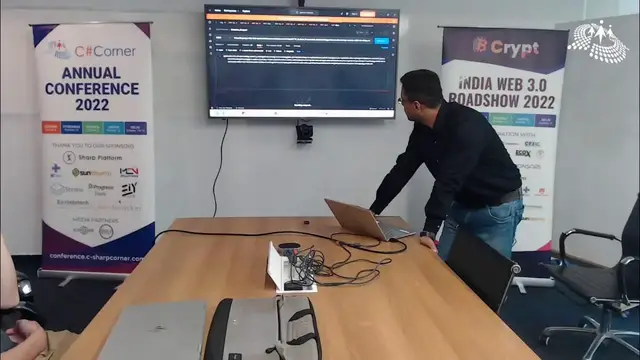
Welcome to Mumbai. Welcome to the C-sharp Corner Conference in Mumbai
0:08
I'll be your host for this meetup here and I'm going to continue building on kind of a story
0:17
that we've had from the other locations as well where my esteemed colleagues actually
0:22
sitting behind the camera. We had Alan talking about AI and data platforms and various things
0:32
including many other things. The story continued to build where Joe, also sitting behind the camera
0:39
kept talking about .NET and the direction of .NET and the relevant new technologies going on
0:45
I'm a cloud person, so I'm going to pivot towards the cloud
0:50
I said your head was in the cloud. Talking about about Asher is what I'm going to do
0:55
And you are here, present in the room, or present online hopefully
1:02
I can't see you, I'm sorry, but I hope you're there. You should be using this hashtag
1:08
CornerCon 22 to talk about this conference and mention this conference and get pause around
1:15
it of course and if you like anything in this conference let us know in social media so that
1:21
we can you know build on that and improve even more like the next event my name is Magnus I'm
1:30
Magnus Martinsson and I have been in the cloud my head has been in the cloud since the beginning of
1:35
of Azure since the very, very beginning. And I have, by this time, accumulated 11 Azure MVP titles
1:43
So, chat is kind of my domain and that's what I do
1:46
And I wanna share here today, some of the experiences from that to let you know where I see
1:55
that the industry both is going and where it is lagging behind
1:59
or where there is demand in this industry. I want to take you back to PDC. I want to take you back to PDC 2008 where this gentleman Ray
2:10
Ossie at the time was the Microsoft CTO, the technical officer in charge of everything
2:16
Microsoft technology. He's on stage at the PDC conference in Los Angeles. He's like just
2:22
walking like this, seemingly quite randomly, and he just announced, he says, announcing
2:27
a new service in the cloud, Windows Azure. That was what it was called in the beginning
2:32
Windows Azure. It's not just Windows anymore, but it certainly was back then
2:38
And so that's what it was called initially, Windows Azure. In 2008, it was announced
2:43
And I was there. I was blown away. This was sort of a secret conference content event
2:51
The last time they did like a big reveal thing on stage where they said that they opened up for a conference and they had sessions and everything put in place
3:02
But it was most, many of them were placeholders. So during the keynote while they were announcing this new platform, they ran around the conference hall outside where all the attendees were in the keynote
3:15
and they put up banners for Windows Azure and they also switched out much of the content
3:20
of the conference for that event. So to reveal the actual sessions that were supposed to be there in place
3:28
And it was kind of exciting. I was excited. I was some years younger than I am now and very excited about the cloud thing because
3:35
I was always a server person in the sense that I developed the services on the server side
3:41
UX essentially is and mostly has been through my career is an API, that's where I work
3:48
So I ran home to Sweden and I delivered this, as in Swedish right here
3:53
developed solutions on Windows Azure with ASP.NET. That was the first presentation probably presented
4:00
on cloud in Sweden or in the Nordic countries at all. And I later proceeded then to become the first Azure NDP
4:08
in the Nordic countries. Joe? Yes, sir. See that one? I know. That was alive back then
4:18
So I just wanted to see and then I have some experienced people behind the scene
4:23
That's code for old people behind the scenes here. So see if I can if they can can answer
4:29
the questions. How many Azure data center regions were there initially in the cloud
4:35
At first, at first announcement, how many were there? they were not in india they were not in india they were also not in sweden it took a long time
4:43
for us to reach sweden india got it first wave first five or seven five and seven is wrong
4:51
four is wrong two is wrong the answer is eight eight the us had four and then there were two in
5:01
in Europe and two in Asia, not in India, but in Asia
5:05
So that was the full total coverage. And how many data center regions are there now
5:11
How many Azure data center regions are there today? No Googling. The answer is nobody knows
5:21
Nobody can really say how many. And Microsoft has stopped counting. Officially they had a data center region map before
5:27
They still have it, but they don't really give a count of regions, they don't talk about it that way
5:33
They say that it's regional. They have some in the Asia region
5:37
they have some in the Africa region and so forth. So they've kind of stopped doing that
5:41
And it doesn't also really make sense because there's continuously, there are new regions under construction
5:47
Some of them are in private previews, some of them are public previews, some of them are live, others are just being constructed
5:54
So it's hard to tell. It's gone to a place where we don't really know
5:58
Let's do one more of these. How many services were there in the Azure data centers initially
6:04
How many services were there in the Azure data center Windows platform
6:09
I'm not gonna ask you guys because I'm gonna give it away
6:13
to say that there were about a handful, right? There were like, you had storage, which had tables
6:18
queues, and logs. There was a hosted service, and there was a database
6:23
And I think that's what, oh, the hosted service could have a web front end and a worker wall back end
6:28
So basically like a handful. That was it. That was the platform initially
6:33
And today, honestly, there are hundreds, hundreds, hundreds. And nobody really knows how many services there are
6:40
Plus, they also need to be available in the data center region that you are working in
6:44
But there are so many. It's crazy. So, great. Kind of getting warmed up here
6:49
Now I'm going to tell you a story. Once upon a time, there was a very successful manufacturing
6:57
company called Acne LLC here in Mumbai. In fact, you may know this company, you may know exactly who these are
7:03
They were, of course, tremendously successful because they were manufacturing chai cups
7:08
So, you know, they didn't have to have these paper cups that we have here. But you can imagine the success of a company like this. They were huge. Of course, they had a massive IT department
7:19
And with all of this success they decided that it was time to begin the journey to the cloud because that was you know what everyone seems to be doing so we gonna do do that ourselves as well Yes for sure The cloud Let go However right on the road to the cloud they found that the world was full of treacherous holes and pitfalls
7:42
kind of like any Mumbai street, really. Just joking. But really, it was hard to get to the cloud. It was difficult
7:53
They started having issues with financial control. It seemed to be that the cost was growing all the time
8:00
all the time and never coming down. And do we really get value for that money
8:05
It was hard to tell. Additionally, for example, there's a whole area about compliance
8:12
If you're working with sensitive data, sensitive information, you need to have a certain level of compliancy
8:18
in the cloud where you can prove that, yes, the things that we are running
8:22
are up to par with all the ISO standards and all the things that you need to be aligned with
8:30
And this is a huge challenge. It's very difficult to do, or to do well, I should say
8:36
Then, of course, don't even get me started on security, right? That's another big hole in the road
8:44
It's difficult to do security properly. There are many things you need to do
8:50
you need to set up and collect lots of data. And then you need to yze all of that data
8:55
and you need to use the services in the platform that can help you with that
8:59
I mean, what is Microsoft Defender anyway? Oh, what is, you know, can I use Synapse here
9:06
Is that a match? I don't know. How do I process all of this data
9:11
So there are certainly challenges, you know. They felt that there are holes in the road everywhere
9:16
They were going to the cloud, and they were getting deeper and darker and scarier
9:19
these holes and it was challenging. Of course they also had some success, right? But clearly
9:25
this stuff is not working. I'm going to leave the story here, but I wanted to sort of set
9:32
the stage and let you know that I work with a lot of companies from enterprises to small
9:37
basement companies. I kid you not, I have literally walked down a ramp into a basement
9:41
to talk to a company once. And I also work with national infrastructure critical enterprises
9:48
So common across all of these, in my experience, is that a lot of companies are struggling
9:55
In these areas, potentially a few more, but these are the really big ones that I see
10:01
And so there has to be sort of a better way. Unfortunately, in this talk, which is just a high-level overview, we're not going to
10:09
have time to delve into exactly how to approach all of these technologies
10:14
like separate talks or workshops as well but i'm going to give you the lay of the land and i'm going
10:19
to give you a map to how to proceed if you should want to learn more about this it's good to find a
10:28
survey that kind of emphasizes or aligns exactly with your experience and what you have been
10:35
talking about and so i went online and i found this one from a company called xera
10:40
I don't know who they are, but they have a state of the cloud report that they put out
10:46
You can read the respondents' stats on where are the top challenges in the cloud right now
10:53
And I don't know about you, but I would like to just scratch out software licenses there
10:58
because when someone starts talking about software licenses, I feel like I need to take
11:01
a shower or something. I feel violated. Software licenses are not my favorite cup of chai
11:08
So, let's not talk about that. But what remains if we remove software licenses
11:14
The top challenges, security, spend, which is cost, governance, compliance. Exactly what I just said
11:22
And I've been saying this for years, long before I found this thing here. This is the experience I see out there, and yes, it seems to be aligned with what people are saying
11:31
These are our challenges. And look, here's one more. The lack of resources and expertise
11:37
This is the problem, right? If we only had enough engineers with the right skills, do you ever? No, you never. But how do you challenge that or tackle this huge problem of filling the gaps so that you can start chipping away on these real problems that you have
11:56
So I'm going to show you a couple of slides, actually some screenshots, a couple of more
12:04
charts, but some screenshots from what this looks like in reality from some of my customers
12:09
I've blanked out the names to protect the innocent or the guilty, I don't know, but
12:14
I'm not going to disclose which companies these are. Self-recorded cloud cost waste
12:25
32% in this, so a third. So if somebody is spending 10 million rupee annually
12:32
on cloud cost, 3.2 million of that is just waste. Because you cannot optimize, you cannot deploy continuously
12:44
you can't do infrastructure scope, whatever it is that you need to do
12:48
you'll wind up in scenarios like this. And this is real. In this case, it's a little over 6 million rupee of waste
12:56
And that's just from, there's more waste, but this is just from the advisories
13:01
in the Azure platform. Showing like if you do this, if you do this high level, high impact
13:07
and cross optimizations, if you do these things, you can save 6 million rupee
13:15
But how do I do that? right this stuff is already there you can anyone can find this anyone can click
13:22
and see these advisories but I don't know what to do that's the challenge if
13:28
you can go into a company if you can learn about this and go into a company
13:32
say hey I can cut your Asher spend by a third you're hired you're hired
13:39
immediately and compliance again we talked about compliance before and what is compliance well it turns out in Azure you can measure compliance you can say okay how many of
13:52
my deployments how many of much of my infrastructure my databases servers all the things I'm using how
13:58
many of them are compliant following standards that they you know they're set up in a way that
14:02
is optimal this in this case this company they were at 12% 12% compliance which meant that they
14:10
had 874 actual resources that are non-compliant. And it's challenging to even begin to understand
14:18
what to do about that. It boggles the mind and it's so hard. And even if you take, if
14:24
you have many, many teams, each team needs to solve the same problems over again. And
14:29
the next time they deploy, some of the problems will come back. And it is hard. And one big
14:35
reason why it is challenging even if you do come on in this one in even if you are
14:40
somewhat successful in battling this number to push it up towards a hundred
14:45
and you're getting there big other challenge with with the cloud is that
14:49
compliancy in chat in cloud always changes constantly changes so this is a site called AZ advertiser it it operated by Microsoft employee but it not in any way an official Microsoft tool It not It just like a hobby project
15:08
But I kind of like it. It's cute because what he's doing is that he is pulling from the Azure platform which policies are there, which ADS initiatives and roles and other things are in the Azure platform that Microsoft put in place
15:21
And then he just reads that data over time and he just shows the delta, he shows the
15:26
change rate. How fast is the cloud changing in terms of, in this case, compliance
15:32
Compliance is connected to something called policy, it's very small on the screen, but
15:36
it says policy here, and there's time, and here are some changes
15:40
And when I took this screenshot, the changes were 341 changes to Azure policy, to Azure
15:48
compliance in something less than two weeks. So it seems unclimbable, this mounting up towards the cloud
15:58
You can't climb it because it always gets higher, I don't know, and it changes
16:03
And that's super challenging to wrap your head around how to approach a beast like that
16:09
It's like it's metamorphosis, right? So security again. A secure score is also something
16:17
you can get inside of Microsoft Defender to see how secure are we, are all of our endpoints
16:24
protected, do we have the latest security patches deployed and so on and so forth
16:29
Maybe we have hundreds or maybe we have thousands of resources so Microsoft can count for you
16:37
and collect and show you here is your secure score right now
16:42
This is 51% of a secure score. It's not, it's actually, it sounds worse than it is probably because those of us who work
16:51
with security in Azure, we know that just fixing one thing can be 25%
16:57
So it's not necessarily that bad, but I love this picture. I called, how's your security
17:02
That's about half secure. I call this picture, it's not half secure, that's probably where we are right now
17:08
And you'll find things like this, 611 active alerts, security alerts, and some of them are high alerts
17:17
like root force attacks, all the other things. And how do I even, how do I respond to this
17:23
What do I do? I don't know. So this is a challenge
17:27
And when faced with these challenges, to sort of wrap up this segment
17:34
you'll find something like this. This is also from the advisory section in Azure
17:39
What's interesting here is that there is some, they're doing well in certain areas here
17:43
according to the advisories, but there is also like cost savings and some security places where this company
17:49
could seriously improve and do better. And the platform is telling them
17:54
here's room for improvement. But what you see here is this secure score history
18:00
You'll notice that there is really no change over time. So months go by, months and months and months go by
18:07
and there is no change. Money is, I wouldn't say pouring out
18:11
but it's being wasted. And security is not where it needs to be
18:15
Maybe the customers are happy because the service is running, and that means that your manager is probably happy
18:20
because hey, if the customers are happy, the manager is happy, right? Brilliant
18:25
But as an engineer, you may look at that and go, oh, wait
18:30
Security is probably a priority. So how do we make it a priority
18:37
And how do we move that needle? And how do we motivate a manager who's got happy customers that the next iteration you're going to have to spend a lot of focus on security to increase security
18:50
How are you going to get someone to approve this? This is hard. Constantly, constantly we are bombarded by recommendations, which is what we asked for
18:59
because seriously I've been again in the cloud since it was called Windows right
19:04
and back then we were much more in the dark than we are now now the platform is
19:12
giving us everything or lots I don't know about everything but it's giving us a lot
19:17
of information a lot and there's lots that we can do and improve and fix and
19:21
change if we knew how if we had the people who knew how then we could fix
19:27
and there's always new more things so an expert on fixing these things most
19:34
certainly will have a job so that's why I think that finding a couple of things
19:41
I don't know if this is small on the camera here but it's working you're working to improve your mastery in the cloud in the areas of cloud migration
19:49
most certainly optimization and innovation how to make the cost less while keeping the customers still happy and innovating in the architecture area
20:00
to fix things. Management and operations that's a huge thing because when you're
20:06
running the services in the cloud you have to have people who knows how to operate that 24 seven because it's not going to be you if you're a developer
20:13
maybe there's a whole operations team you need to build. Compliance, security, we've
20:18
already been there so how do you then do that that's the natural progression to
20:27
the question where the situation is there's a need there are problems there
20:33
are areas where you could improve or how what do I do well I'm going to tell you
20:38
of course a little bit about community as well because this is a community meetup after all but you would go you need to understand the question or the
20:48
answer to the question where do I start to learn Azure and learn is is deliberately
20:55
with a capital L there because obviously for Microsoft you would probably start
21:00
on learn.microsoft.com on the website so I'm going to do this see if I can do
21:10
that yes all right that works brilliant so learn Microsoft learn you recently
21:17
got a makeover and now looks like this and they are doing a commercial for a ignite conference
21:24
that is actually going on right now but what microsoft has done is that they've taken documentation
21:29
and everything and and certifications and code samples and a bunch of things here and put them
21:35
in the same resource because i believe before it was spread out all over the place and it was kind
21:41
of challenging you where the event do something and then you wanted to understand or maybe
21:47
read the documentation well that meant you had to go to a different place a
21:50
different site with a different look and feel and everything but now everything
21:54
is here so let's say you want to become a cloud architect let's say you want to
21:59
become really proficient at using the cloud and therefore being a valuable
22:06
employee to your company maybe getting a ways maybe getting a good job all right
22:11
well how do you approach a beast like that because you're now standing in front
22:14
in front of all the documentation, all the learnings about cloud in the world
22:19
And there is so much. How do I even break that down
22:24
And honestly I did a similar thing myself very recently I kind of tend to start in certifications To find the Microsoft certifications you can get what do I want to become
22:36
A security engineer, data scientist, who would be an AI engineer? What is it that I want to do as a career
22:45
What interests me? What triggers my curiosity? Where do I want to work
22:50
So let's go for solution architects because that's me, I'm a solution architect
22:55
Your journey can be different but mine is there. So, okay, do I want to do Microsoft 365 or Azure or whatever
23:05
Let's say Azure and let's look for certifications. Okay, so here are some certifications you could get
23:14
Azure Cosmos DB developer speciality. Okay, that sounds interesting actually. SAP, certified SAP workload speciality, not my cover child
23:25
So, okay, I want to be a Microsoft Azure solutions expert. Yes, architecture, that's sexy, let's do it
23:33
So I go into it and then I'll see which certification and exam are part of this path, part of this journey
23:40
to become a certified expert. Because, hmm, it's not really about the end goal
23:48
Though if you don't have any titles or certifications, that's maybe good to put on your resume
23:54
But I think the journey is to go to learn on the road
23:59
to becoming an expert. That's the real goal. So if you go into any exam, here's how I do it
24:05
And I literally do it this way. Just scroll down and you see learning items
24:10
in this collection. OK, so there are plenty of them. And I'm not going to dive into them in detail
24:16
But you see there's even more. but wait, there's more. So there's all these learning paths
24:23
They're literally called a learning path to learn something. Design infrastructure solutions
24:29
I don't know how to design infrastructure solutions, but I'm heard that if you know how to do that
24:34
you can optimize the cost of infrastructure in Hampshire. So that would be good
24:39
How do I design a data storage solution? How can I get into that
24:44
Well, you follow these learning paths at least in the beginning because these paths are built in such a way that they give you a scope out of everything
24:52
You now have a box, a little tiny slicer or piece of that huge box
24:58
Please come on in. And now you have an idea of where you are looking
25:05
Now it's getting useful to you because from everything you're down to
25:10
okay, follow this path and then see if that helps you. So that's how I break it down and that's what I would recommend
25:17
Now I'm going to click the wrong slide. That's my kind of pitch, if you will
25:30
And again, maybe you already know this, but what I wanted to give was from reality with
25:36
evidence, where are the challenges? Well, in these areas. And then as a young professional or whoever you are, just maybe want to have a career change
25:47
Maybe just want to get onto the cloud train. Maybe you haven't been going there because you've been dealing with the on-premises infrastructure, the old stuff
25:55
Maybe you want to join the future of the cloud with your company, maybe
25:59
So you might need to learn some, right? So, enough about that
26:07
Before I go, we're going to talk about community. I am very, very much a community
26:15
passionate person. I love community. I have been involved in community activities
26:20
for longer than I care to admit. It is a long time and I love doing it. And just
26:26
recently I was pleased that a person said to me, I'm actually a little moved right
26:34
He said to me that, you know, thank you for being with our company, thank you for teaching me things
26:43
I was like, we didn't really interact very much. I don't know, what was it that I taught you
26:49
Please share with me. What I learned from you is how I can be passionate about IT
26:57
And I thought that that was such a wonderful comment to get. It warmed my heart a lot
27:03
and it means that I project who I am. I am technology, I am this, I can't do it any other way
27:11
And that passion, finding that, finding that purpose and that passion is what you find mostly with your peers
27:19
with your other people in the community. It really is. Because these people in your community
27:27
they speak the same language. I'm not talking about programming languages here
27:31
I'm talking about how they speak technology, right? You know how in the world if we're going to make a Harry Potter reference that there are normal people and there are muggles, right
27:42
Oh, sorry, muggles are normal people and there are magical people. That's what I was going to say
27:46
So magical people are like technologists, right? They say that any advanced enough technology is indistinguishable from magic
27:53
And that's the language we speak. The muggles, the non-technical folks, they don't understand that
27:57
So you can't go home and talk to your boyfriend, your girlfriend, or your mother about technology details
28:03
They don't speak this language. You find that with your peers who are as nerdy as you and as beautiful and gorgeous as you in the community
28:13
That's where you get it. And honestly, it's the only way, mostly, only way that I learned today is from my peers
28:23
I used to learn resources and stuff that I showed you before. I literally did it just last month
28:28
But meeting with people of like minds who are as passionate about geekery as I am is how you learn
28:38
Some of my very good friends are sitting behind the camera that I have known for many years in this industry
28:44
And it's great. So speaking about communities, obviously, let's mention the C Sharp Corner community
28:52
I'm sure you know it. And it is a good place to start and be involved with peers, with people of your same background
29:01
people who are passionate about the same things. That's exactly where you need to be
29:05
And we are here today in Mumbai and we're going to be in G for actually tomorrow
29:09
So that's interesting. We're bouncing around. But then the big conference happens in Delhi and that's going to be very large with many
29:17
different tracks and different sessions going on. So if you are in Delhi, or if you know someone who is in Delhi, or if you can get to Delhi
29:25
you should get to this conference for sure. But from this conference, and also from this event here today, what can you get
29:35
What can you do? Maybe you are a young professional starting out
29:40
You want to get going somewhere, unclear where. You're trying. But how do I do that
29:49
Well, you stay here and talk to the experts and network and communicate and start building some bridges
29:57
with finding some peers in creating a little bit the community consider joining existing communities wherever you find them other
30:06
communities each other as well but here as well you will have some sessions from
30:11
some speakers sitting here behind today where you can learn a bit about certain
30:17
technologies and I urge you to like immerse yourself and then ask them
30:21
questions after be don't be afraid they're friendly people they don't look
30:26
like they bite very hard maybe maybe just nibble but they're they're friendly people and ask them
30:32
questions challenge them after and say where can we learn more how can i how can i get more
30:37
because that's what it's all about learning all the time continuously through life
30:42
and together as a community of people that's it folks i'm done thank you for having me
30:56
And now we're going to have the next speaker coming up. You're going to start the setup. I'm going to get out of your way
31:06
This thing works really well. I'm going to move my teeth. Can you hold the cords there
31:17
Thank you. We need to have this actually before we start any project
32:22
The very first thing that I do for my organization or for my customers is to build a landing zone
32:28
or rather a cloud foundation. And from there we will start. We will be talking about the landing zone for the next 50 to 20 minutes
32:40
So a brief introduction on me, I have 17 plus years of experience in the industry
33:13
So we will discuss a bit about the Brown Foundation. So then I will talk about the Brown Adoption Framework because without talking about the
33:23
Brown Adoption Framework, we can't get into the landing zone because it is a part of that
33:28
We get to know that. And then I will tell you how to get started with, a few of the technology stuff from where
33:35
then pull in the templates, what is available and what are the various options available
33:42
to like pull in those templates and build my writing stuff. Okay
33:50
So, before we get into this, one question for the audience, I think most of us work on Azure
33:57
How do you start your Azure journey? Let's suppose you have a SW sign, you have a win
34:02
So normally what you do next? Is it like you go to the portal and spin the resources or like you do something more interesting
34:10
We start with some interesting intentions. Okay. So how do we approach a software development
34:21
So what we do? So let's talk about when I'm building a software
34:26
So what is the first thing I do? I build some common assets right
34:31
some logging component. So how to collect the data list, let me have some reusable component
34:37
that I can reuse across. So why do we do that? The very first thing, the advantage I get
34:44
is like it accelerates my journey. So I can build my software first because developers
34:53
can start using those former assets and they can actually build the things out very fast
34:59
And the second thing is like I bring in strict governance of how this application is getting
35:05
very good. So in the same lines we have the cloud foundation
35:12
So off late during the migration journey, so I have been helping my customers from last
35:17
let us say 8 years, 8 to 9 years in this cloud journey
35:21
So what I have seen is earlier like services were less. so like in 2014 like we just had a few couple of services and not much of choices
35:34
So no much brainstorming and we used to get it easy. But off late we could see that it took a lot of time for enterprises and not of new projects
35:46
and enterprises consist of lot of projects. So as an enterprise architect you see like stitching the cloud story for all the projects
35:54
the departments in the enterprise takes a lot of time that's what we see and this that was again
36:00
one of the need for like when we need a cloud foundation let's have the foundation set up
36:05
let's have the logging component there maybe i can say it's something that let's have some common
36:11
assets which can help me spin out the resources let me have some governance components like i can
36:17
have some cool dashboards from where you can see the governance and the momentary capabilities so
36:24
all these were like inspiration for this cloud foundation and what makes i have many like
36:31
unique mobility at once i have i'm like with the cloud foundation i'm able to
36:36
deploy faster in cloud but uh one more important thing is ease of operations once you have built
36:42
your application your cloud application your your enterprise is in cloud you are now like a cloud
36:49
organization saying that we are cloud ready so and we have delivered all the projects what
36:55
these are operations how it can smoothly run the next journey like that is in the cloud
37:03
foundation will come into play and the most important thing is the cloud continue i would
37:07
like to stress on this so when you like suppose you are in this cloud journey from a long time
37:13
customer has started adopting cloud from say like 2014 or 2015 and now their cloud mature
37:21
They say we are already on cloud we have already migrated we know what cloud is we don need a service How will this IT services company can bring in their story to the cloud continuum
37:35
What we try to do is, we go beyond the migration, beyond the cloud developments and all
37:42
We say we are going to build a continuum where we can bring in a channel of more values using
37:50
the existing services for the customers. one example i can take is a patient remote monitoring system where i can have a ioth application
38:01
something running on the edge is computing happening and collecting the patient uh it's
38:07
a healthcare example like a patient providers and that will ingest to the idea and i have an ytics
38:13
dashboard from where i can yze so these are like the continuum stories or even the metaverse
38:19
metaverse is a kind of continuum that can be built on cloud but there are other players involved like blockchain, AI in India
38:27
so many things are there. So that is how the cloud foundation came in and this is how the cloud
38:35
adhesion framework looks like. So basically when we talk about cloud adhesion framework it consists of three things
38:41
So one is the tools that is going to make your life easy like I will talk about the stages
38:50
So when we move through these stages, so like you need to know strategy, what I am going
38:55
to do with strategies, how I am going to do strategies. You will be able to do using like either the tools or the documentation that is available
39:03
or the best practices. So your crowd ambition framework is a combination of tools, documentation and best practices
39:10
that actually you can use and get on to the cloud adoption framework or help your enterprise
39:17
adopt cloud. Okay, and the best part is that it has all those tricks, formulas and all the necessary
39:27
things to make sure that you accelerate the cloud journey for your customer in a safe
39:34
and secure and compliant way. So to start with I just quickly rushed through these six pointers I have here
39:43
So first in strategies, definitely when you are going to get into a cloud your bosses will ask like suppose I am going and putting a proposal in front of my CTO and saying that boss I need to go take the enterprise to cloud
39:58
Then you ask what is the rational behind it. So you need to have a strong business reason like you need to come up with a business outcome
40:04
how will your transformed enterprise will look like and what is the return of investment you'll
40:09
be getting from the entire like activity from the entire spend like the budget that the organization
40:15
is going through next so you can come up with a strategy like come up with the business outcomes
40:22
the return of investment the next thing is a plan you need planning basically what is an enterprise
40:28
It consists of three things, right? First is the people to make the life of people
40:34
You see we have processes and then we have technologies that actually augment the processes
40:39
and further gives the people like an enhanced experience. So you need to plan in all these areas
40:48
When you say people like when you are going in cloud, are they ready to get into the cloud
40:54
to the cloud. When you say ready like first of all do they have the necessary skills to build the application on cloud
41:00
Do I need to skill them up? Do I need to teach them like what cloud is, what I do is, what data use is, so all those things
41:07
Then like the processes, are those processes mature enough to be managed on cloud
41:12
And also the technology, are those technologies are competitive with the cloud
41:16
If not you need to plan and make them like plan it out so that it can go to the next step that is the ready step
41:23
you need to be ready to launch the cloud journey. Okay, so here actually the landing zone will come into place
41:33
I will talk in a while. Then once you are ready, then you adopt it, like be ready to execute on the cloud
41:40
This is the actual execution phase where you adopt your cloud journey, you do the actual
41:48
migration build your software on cloud and next the two things, government manage once
41:55
you are on cloud then you need to like have the lights on right, you need to have the
42:01
lights on like it should not be going down, your services will not be going down, your
42:06
acquisition will be up and running, for that you need to monitor, check for the compliance
42:10
like for example in the last session we saw Azure advisor from there you can see the compliance
42:16
You can have that confidence, you can have audits, then the manage
42:21
The last one is like, it's totally an operational aspect where we can integrate our application
42:28
with IDSM tools and see like whenever there is a defect, then I should be able to see
42:36
or like there can also be some orthohymic aspects for your software
42:42
So all the management aspects will come down there. Then the next thing is the Azure landing zone. I already told you the Azure landing zone will come in the ready state where you are trying to get ready for your job adoption in the third step
43:01
So what is Azure Adding Zone? So normally all of you are a lot of Azure policies right
43:11
So like I will tell you the brief what policies is because Azure Adding Zone is a combination
43:17
of Azure policies, couple of foundational Azure services and some automation when you
43:22
buy search there of all Azure DevOps. So when you say policies, so it's something like some rules to define like for example
43:30
i can write the azure policy and i can associate it with a substitution or a management group or
43:36
a resource group we create the resources inside the resource group and say that hey like this
43:41
policy will make sure that any of the resources that are created without tags because normally we
43:47
use tags for managing the cost right or like keeping the staff of the azure resources so like
43:54
I have written a policy and this policy will keep a tab on all the resources which doesn't
44:03
have a tag and it doesn't have a tag then delete it. So that is one of the examples
44:08
So like that you can defend a lot of the governance. Like your cloud governance is in the policies like this set of folks should not be able
44:18
to create a set of services. like say like Sentinel or like maybe iZero or the security folks would have access to
44:25
Sentinel so all these things like even you are using policies and iam roads then you have a
44:31
bunch of Azure services like Azure monitor or like for our application insights or like some
44:39
some of the basic building components like for example i told you like when you're building an
44:43
application so you have the logs you need to build a logger you need to build something
44:48
to interact with the database so similarly you can see those Azure services are those common set of services
44:53
that will be already like that you will build beforehand and also the automation the third one where actually you can create maybe Azure DevOps SpiteLine or like some Terraform or PySubscripts
45:08
that will create those infrastructure for the applications. So now once you have the
45:14
this foundation of the landing zone ready now what happens is your applications are ready to take off
45:19
You can bring in those applications and what you can do is now that you need not worry about
45:27
those governments or like security issues and all or auditing the application that tend to be running on the cloud
45:35
or managing the logs and all. Everything will be taken care of by the landing zone and also like
45:39
creation of those resources like for example I won't go shittered by that. Okay. So what I can do is
45:45
So what I can do is I can spin up over that using my foundational component or the landing zone component and it's a bicep script
45:52
I can use that and it's already there. So it's an acceleration for me and I can quickly like go and create a service like sorry, spin up all the necessary services very quickly and go on like cloud very quickly
46:06
And these are the design principles, like first is like we use the network services to build the landing zone
46:15
Like for example, we need to have the billet and subnet so that we define the network boundaries
46:20
We need to set identity rules like IAM rules like who can access it and who can't access it
46:26
So those rules, IAM rules you need to define. and once you have this one or two met then you can start finding your low risk workloads
46:36
But if you have some mission critical workloads, you need to have governance, you need to manage the environment and do all these things
46:44
So for that you need to follow this 345 step, you need to govern the environment
46:49
that we should need to bring in Azure monitor or like after this insights you need to have
46:55
some dashboards Azure dashboards and the fourth part is the security controls like you need
47:03
to have some security related stuff like integration with the sentinel and all showing the security
47:12
and content resources in the dashboard then the victim is to manage the environment because
47:18
we need to end of the day we need to manage everything in the one stop when we are dealing
47:24
with the visual video what it looks and this is the last slide the presentation so like
47:37
when we say as your landing zone there are two options there are two approaches to delay
47:41
One is that you use the Azure landing zone accelerator that is already there, there are so many accelerators available for Azure landing zone
47:49
You can pick one of them, meeting the requirement, modify it and start using it
47:54
Or you can use it to custom edge and build a landing zone or Azure foundation from scratch
48:03
So there are two approaches. this and this is an example of one of those landing zones accelerated so
48:12
whether it's a custom template that can be deployed a group in basically that
48:17
can be deployed and you can actually create your landing zones as you're
48:25
I am good at? So, I went a bit fast so that you can have some more sessions, interesting sessions on the way
48:37
But any questions? I am just a leader, I am not a fellow of your other, I do some other automations, but seeing
48:56
like I am just like, my experience, how my learning would be in this
49:03
So basically so when the project will come to the organization like maybe some big customer project we are getting
49:12
we will be taking their enterprise to the cloud. First you will need to see like whether we really need a landing job
49:20
That's where the enterprise architect will step in and see. If it's a single project then why to waste so much of time building this landing job
49:30
So what if there is a need, there are multiple projects, then your role as a developer would be like building this landing on landing, creating those policies and your journey would be like at the same time you should at least know az9 and network concepts like azure fundamental concepts and azure infrastructure, az104 or az2004
49:54
So those things you should be familiar with. And with that, it can start building the Azure policies, you should be the right, you said
50:02
you already do automation first, so you can build that automation there. That is how you will achieve it
50:09
And once the foundation is done, then you are the part of, normally the folks who build
50:14
the foundation, they are the four down rows. They say, like how I structure my organization is, when I do a contract with any of my customers
50:23
for my organization, so like what I do is I build a set of team, I call them as the core guys
50:31
and those four guys, they are responsible for actually building this hub, this landing zone
50:39
then like there will be teams that will co-work with the customer team
50:44
like there is a co-creation model that we bring in and start doing this
50:50
So you will play either a role in the portal or in that actually
50:57
I also want to know in the landing zone, are you considering the cost? Yes
51:07
Because cost is the main part in the markets. And what about the infrastructure
51:12
company has their own infrastructure so how services should we use and set cost
51:20
how do you decide that okay so i'm into the infrastructure so like uh it depends like if
51:26
it can be taken to the cloud so then take it because in the long term like you will get the
51:31
benefits and lower the infrastructure but i've seen organizations who still want to live without
51:37
infrastructure because they have invested very recently so what you can do is you can go to
51:42
the hybrid model you can have express and take the benefits of your investment that you have done
51:50
and gradually move it to the club because someday your infrastructure will grow
51:56
normally your infrastructure that you procure they have a lifespan of three to four days and for managing the cost we have you need to build a dashboard
52:08
maybe in the government first step you need to build a dashboard if you're total cost of ownership
53:22
So in my session, we will understand the basic overview of Microsoft Standard Logic App
53:33
So before that, this is about me. I am Microsoft Q&A Committee Champion
53:39
I am a community moderator on Microsoft Q&A platform as well. I am a Technic Vicky Nijak Council member
53:47
I work with Keith Price, Ronan, and then I am a tech-med-wiki ninja author and I am a sub-owner
53:56
We lost. We have a freak. Important one. Let's move to the next one
54:05
So today we will end up with what is the Azure Logic App syndrome, we will understand
54:09
Then we will know what is the difference between single talent, multi-talent and ISC
54:15
So IAC stands for Integration Submission Environment, then we will understand the feature of Azure Logic App standards
54:22
and then what is Stateful and State-based Workflows, and then we will see a live demo
54:30
So what is a standard logic app or Azure Logic App standard
54:34
So before that, first we need to understand what is Azure Logic App
54:38
So if you have worked on Azure Logic App, then you might know what is Azure Logic App
54:43
But if you are not familiar with the Azure Logic App, then let me tell you Azure Logic App is a fully managed IPaaS platform by Microsoft
54:52
So IPaaS stands for integration platform managed service, where we can create a workflow, we can integrate with multiple systems
54:59
So again here in Azure Logic App, there are two types of flavors, standard Logic App and consumption Logic App
55:06
So in conjunction logic app, you don't have to worry about the hosting or availability or management, it teaches serverless and you don't need to worry about the resources
55:18
So everything will be managed by Microsoft, you just have to create your workflow and you can integrate between the systems
55:26
On 27th July 2016, Microsoft Logic App was generally available by Microsoft
55:36
It was available for public to use the Microsoft Logic App. Then on 29th May of 2019, ISC, that is, Integration Supplies Environment, which was generally available
55:49
And then in 2021, the standard logic app was available in a GA form
55:56
So this is the journey of logic app. And one more announcement, day for starting, Microsoft is going to duplicate the IEC environment
56:08
like the Intication Service environment. So going forward, after 1st November, you will not be able to create the Intication Service environment
56:16
If any company or any IST is using that, then they can use till September 2014
56:27
So before that they have to migrate everything to standard logic app
56:31
So they have already shared the blog post about that, how you can migrate your standard IST logic app to standard logic app
56:38
They have already mentioned everything there. Ok, so let's understand what is the difference between single-talent, multi-talent and the IAC
56:49
So in single-talent, there are no dependency in integration account. So if you know about the integration account, integration account generally is used to store
56:58
the maps, schemas. In B2B scenario, whenever we are doing any integration between the systems, ok
57:04
So we create a schema, we create a map. So when we store that, we store it in the integration account
57:09
So in single tenant there are no dependencies of your integration account, you can directly
57:15
import or export the maps in single tenant. I will show you the demo
57:21
Then it is a single based hosting plan with selected pricing here
57:25
So you don't have to like in Cajemson or CAC whatever you will use you have to pay for that
57:32
But in single tenant, it is based on the hosting plan, which hosting plan you want to use
57:37
Based on that, you have to select the pricing here. Then you will get the integrated support for the virtual network, vNet network, and you
57:46
can also integrate with the private endpoint. Then development and testing can be done locally
57:53
Using the standard logic app, using the VS code, you can do the development and you can
57:57
perform the testing as well. In multi-tenant, that is another way we can call condenser logic app
58:04
This one is easy to get started because we just have to select the condenser logic app
58:10
and we can provide the logic app name and we can start it. And it is pay for what we use
58:15
Okay, so suppose if you use for 100 tonics and 100 flows, you have to pay only for that
58:20
much of uses. It is fully managed. And so here the difference between in multi-talent single logic app you can have only one workflow
58:31
But in single talent you can have like one to an relation
58:36
So like you can get one single talent and you can get multiple workflows in a single talent
58:41
And this is a condensual logic app, pay-assport distribution. Here in development is done locally but testing is not supported in the locally local environment
58:52
in the multi-level logic cap. Now coming to the ISE. So ISE is basically used for the enterprise scale
58:59
if you have a large number of TANDA integration then you can go to the ISE. Because ISE is
59:04
confusing to extended logic cap or multi-level logic cap, ISE is much costly. Also in ISE you
59:10
will get 20 plus ISE is basically connectors that will connect to the different environments
59:15
You can have the predictable price including the users. And it is again, it is staying in the same region where you deploy your IAC environment
59:24
So IAC basically you can understand like a virtual network. When you create a virtual network in the virtual machine you have to manage everything
59:35
But here in IAC everything will be managed by Microsoft but you will get a dedicated server where you can host your logic app
59:45
Then next, what are the features in Srinogic app? So I said this is a single channel, it can run anywhere, so it can have multiple workflows
59:55
that I said we can have multiple workflows in a single single channel, then there is no
59:59
So basically this integration account is very much costly if you go along with the
1:00:05
Kajamsa Logic App and integration account, so integration account is very much costly but in standard logic app you will not have to
1:00:12
integrate, it is not required to go with integration between integration account
1:00:17
Then in standard logic app it will support state-less and stateful workflows, I will show you the difference between stateful and stateless
1:00:26
state-less. Then it supports the local requirement and debugging, we can locally develop it and
1:00:32
you can debug it. You will get the storage account and also data residing in the same
1:00:36
reason and you can predict the cost. You can calculate the cost, how much cost it will be
1:00:40
if I have to build anything in standard of secure. Next move to see what is the difference between
1:00:50
stateless and stateful workflows. So stateful workflows where it will store the run history
1:00:58
it will store the input and output. So whenever we execute the flow you can see the history
1:01:03
like because success or fail even you can open the instances and you can view the data
1:01:08
Okay? We have a managed character trigger available and allowed in stateful. We have
1:01:13
this support the chunking like if you want to process the large masses of data using the
1:01:18
in chunking we can use that in stateful. It supports the asynchronous operations and also
1:01:25
it handles the large messages. But in stateless it does not support the run history or input
1:01:31
by default. So by default in the sense if you want to enable it you can do that but by default
1:01:35
it will be disabled in the stateless workflow. Then manage character and triggers are not
1:01:41
available as of today. There is no support of chunky and if you have like this status workflow is maximum it is based for maximum duration of under 5 minutes If your tarnation is completely under 5 minutes then you can use and you can go with the ShadingSport Pro And also it is based for handling the small number of messages
1:02:05
Small size of messages. Okay, so let's move to the demo and I'll show you quickly
1:02:11
So, what is this one I have already created. So this is my standard logic app
1:02:33
Ok. So this is my standard logic app that I have created
1:02:37
And in the standard logic app, if you can see we have this section word flows
1:02:41
And inside the word flows we have connections, parameters, artifacts, schema and maps
1:02:46
So if you create a standard Bajam-saat Watticap, you will not see these options
1:02:51
You will not see the wordflows option, you will not see the schema and ramp option. Ok, so if I go inside the wordflows
1:02:57
So I have already created two types of wordflows, one is stateful and another is stateless wordflow
1:03:03
So if I open the stateful wordflow, and in the stateful wordflow you will see all the run history
1:03:10
You can see these are the run history that I have tested
1:03:14
But if I go and I will show you the stateless workflow
1:03:18
Even for stateless workflow also I have tested but you cannot see any run history here
1:03:24
You can see we don't have any run history. If you want to see the run history in the stateless what we can do by default this debug mode will be disabled
1:03:32
Ok, so if you enable it then we can review the run history about this one also
1:03:37
So I will show you to read. I am just going to enable it
1:04:14
to the system. Now let's go here and refresh this. Alright, so now we can see, now I can see the workflow information about this one
1:04:26
Okay, so let's open it and consider what we are doing here. So it's a very simple logic here that we have created. We are getting a message using the HTTP connector
1:04:37
Okay, we are just decoding that message because we are receiving that message in base64 in coded format
1:04:42
format this is the message that we are using. So I am decoding here that message, I am just defining the file name and uploading that
1:04:54
file to Azure Power Stories just archiving that request and after that I am checking
1:05:00
the condition if message is not empty, message empty after I am reading here, if message
1:05:05
is not empty I am doing a flight file decoding so here basically I am getting a flight file
1:05:10
and I want to process that file file into XML format. Okay, so I am recording here and doing this validation
1:05:16
and then I am transforming that XML into XML and after that I am uploading that file to Azure Blog Stories
1:05:22
And once it is uploaded I am sending the success response back
1:05:27
like this is successfully uploaded. In case I have any failure it will go to the catch block
1:05:32
and in catch block it will again upload that file to the failure folder
1:05:36
and it will send a response like your message has been a smart process in the system
1:05:42
Okay and then we will update that process So this is the entire flow So if you can see I have just pushed one message I will show you on the blog So first I will see the message request here So we should have one message
1:05:59
So, yeah, so see this one, 1135. This one is the message that we have triggered and
1:06:07
and the outward message should be in the XML format, so we have this message in XML format
1:06:24
And after transformation we are... So this is the message that I am sending to the destination system
1:06:40
This is the XML that I am sending and this was my input
1:06:45
So input is the basic point important if I decode it. I will show you it is a flat file message
1:06:50
If you can see it is a comma separated flat file message
1:06:54
So I am processing this message and I am writing this message to an XML port end
1:07:01
So this is the flow about my logic app. So here, now I will go back again, I will show you here
1:07:10
So here if you can see we have this schema and map section. In the schema section we have two schemas, one is the flat file schema and the other is the XML schema
1:07:20
So with flat file schema, the input message we are getting the flat file
1:07:24
So that's why we have this flat file schema and the output we are generating XML format
1:07:28
So we have created this XML schema. Then we have a map between flat file and XML
1:07:34
So map file is this SSLV and we have wrote this SSLV also
1:07:38
How we have created these maps? So using Visual Studio, you can