Up next in 10

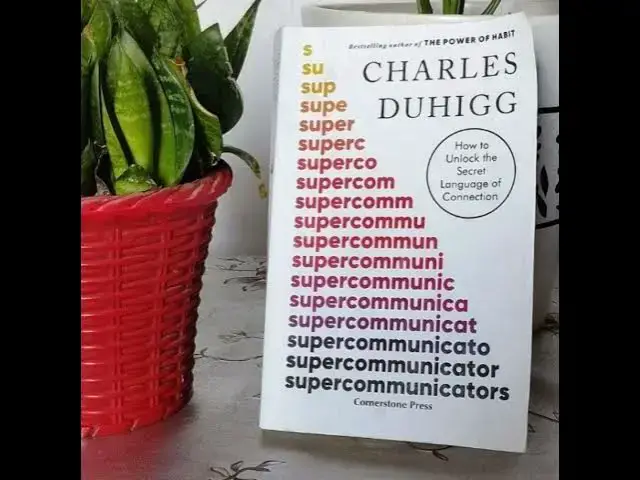
Ready to become a communication powerhouse? 🎯 Join me in exploring Charles Duhigg's "Supercommunicators".
Ever feel like the traditional business rule book is holding you back? Like there’s a better, more exciting way to do things? Well, you’re not alone.
And that’s exactly why I want to introduce you to a game-changing book called Rework by Jason Fried and David Heinemeier Hansson.
Now, don’t let the title scare you—this isn’t about tearing down your hard work. It’s about rethinking it, challenging those outdated assumptions, and embracing fresh perspectives that can truly revolutionize your business.
This book is packed with insights that can change the game for you, whether you’re just dreaming of starting your venture, are already dipping your toes into the entrepreneurial waters, or are looking to scale your existing business to new heights.
Discover the secrets of those who connect effortlessly, from mastering casual chats to nailing high-stakes conversations.
Learn the art of empathy, active listening, and storytelling that makes people lean in. No fancy jargon, just real talk about transforming your conversations into meaningful connections.
Let's level up your communication game together! 💫 #SupercommunicatorPodcast
Show More Show Less View Video Transcript
0:00
welcome to another deep dive everybody
0:01
today we'll be looking at the secrets of
0:03
super communicators oh yeah I love this
0:06
stuff we're diving into Charles dooh
0:07
Hicks book super communicators um have
0:10
you heard of this one absolutely it's a
0:12
fantastic read really insightful look at
0:14
how we communicate yeah and I love that
0:16
it's not just about understanding others
0:18
it's about becoming understood yourself
0:21
right that's what makes it so powerful
0:22
so much communication advice focuses on
0:26
just listening but this is about both
0:28
sides exactly and speaking of both sides
0:31
one of the first things that really
0:33
grabbed my attention was this concept of
0:35
neural alignment oh yeah the matching
0:38
principle it's fascinating so is this
0:40
like when you feel like you're totally
0:41
on the same wavelength with someone yes
0:43
it's like your brains are sinking up
0:45
almost like a dance and doig explains
0:47
that it's not just a feeling there's
0:49
actual science behind it okay so how do
0:51
we know this is actually happening it
0:53
sounds a little woo woo to be honest
0:55
well there was this study where people
0:57
watch a confusing movie clip together at
0:59
first their brain activity was all over
1:01
the place but after discussing the clip
1:03
their brain scans started to align isn't
1:06
that wild wait really just from talking
1:08
about it y so it really does seem like
1:10
the very Act of communicating like
1:12
sharing perspectives and engaging in
1:14
dialogue creates a shared understanding
1:16
both in your minds and amazingly in your
1:19
brain waves that's pretty mind-blowing
1:22
but what does this actually mean for us
1:24
in our everyday conversations well I
1:25
think it shows us that even if we start
1:27
a conversation with totally different
1:29
viewpoints that back and forth that
1:31
genuine effort to communicate can help
1:33
bridge that Gap so even if we don't
1:35
agree at first the active communicating
1:38
itself can bring us closer to
1:40
understanding exactly and it makes me
1:42
think about another important Point doig
1:44
makes that every conversation is
1:45
actually a negotiation a negotiation I
1:49
don't usually think of it like that
1:50
right we often think of negotiation as
1:52
this formal thing like when you're
1:54
hammering out a business deal or
1:55
something but dooh hiig says that even
1:58
our casual conversations in involve
2:00
these subtle negotiations about what
2:02
we'll talk about how we'll interact and
2:04
what we each want to get out of the
2:06
conversation so how do these
2:07
negotiations play out in real life doig
2:10
uses a really great example of this
2:12
surgeon Dr bear ad he was incredibly
2:16
skilled but he struggled to connect with
2:18
his patients a surgeon struggling with
2:20
communication that's so interesting
2:22
right and for the longest time he
2:24
couldn't figure out why he was giving
2:27
them all the right information but they
2:28
often left feeling confused and unheard
2:31
so what was the missing piece he
2:33
realized he wasn't asking them a crucial
2:35
question what do you want from this
2:37
conversation it was only when he shifted
2:39
the focus to understanding his patients
2:41
needs and perspectives that things
2:43
really changed so it wasn't about the
2:46
information itself but about
2:48
understanding what the other person was
2:49
hoping to get out of the interaction
2:52
exactly and I think we can all relate to
2:53
that right we get so caught up in our
2:55
own heads our own agendas that we forget
2:58
to consider what the other person might
3:00
want that's so true it's like we're both
3:02
trying to steer the conversation in
3:04
different directions without even
3:06
realizing it precisely so next time
3:08
you're about to launch into a
3:10
conversation take a moment to pause and
3:12
think about those unspoken goals what
3:15
are you hoping to achieve what might the
3:18
other person be hoping for it's like
3:20
checking in with yourself and the other
3:21
person before you even start talking
3:23
exactly it can prevent so many
3:25
misunderstandings and frustrations down
3:27
the line this makes me think about how
3:28
important listening is and not just
3:31
hearing the words but really trying to
3:33
understand what's behind them oh
3:35
absolutely that's what doig calls the
3:37
listening cure and it's all about paying
3:39
attention not just to the words but to
3:41
the emotions behind them because
3:43
emotions are always there right even if
3:45
we're not explicitly talking about them
3:47
yes emotions are like the undercurrent
3:50
of every conversation they color how we
3:52
say things how we hear things and how we
3:54
interpret what's being said it's like
3:56
there's this whole other conversation
3:58
happening beneath the surface it's so
4:00
true and it reminds me of that story
4:02
dooh Higg tells about Nick Epley who
4:04
considered himself a terrible listener
4:07
until he met this counselor who really
4:09
turned things around for him oh yes what
4:12
was it about that counselor that made
4:14
such a difference well instead of
4:15
jumping in with advice or Solutions the
4:17
counselor just asked really insightful
4:19
questions questions that made Nick
4:21
reflect on his own emotions and how they
4:23
were impacting his interactions it was
4:26
that shift in perspective that ability
4:28
to tune into his own feelings and
4:30
motivations that made him a better
4:32
listener that's such a great example of
4:34
perspective taking it's about trying to
4:36
see the world through the other person's
4:37
eyes even if you don't agree with them
4:39
and that's so crucial for communication
4:41
right because it's not just about
4:42
getting your point across it's about
4:44
understanding where the other person's
4:45
coming from absolutely and if you want
4:47
to become a better listener it starts
4:49
with becoming more aware of your own
4:51
emotions what are you feeling why are
4:53
you feeling that way and how might those
4:55
emotions be influencing how you're
4:57
hearing the other person it's like
4:58
checking in with yourself before you can
5:00
truly check in with someone else exactly
5:02
and then once you're tuned into your own
5:04
emotions you can start paying attention
5:05
to those subtle cues in the other person
5:08
their tone of voice their body language
5:10
these are all Clues to what's going on
5:12
beneath the surface it's like that
5:13
saying it's not what you say but how you
5:16
say it all those non-verbal cues add so
5:19
much meaning to our words they really do
5:22
and speaking of unspoken communication
5:25
dog actually dives into the world of
5:27
body language and emotional intelligence
5:29
in the next chap
5:30
he even tells this fascinating story
5:32
about the NASA astronaut selection
5:35
process did you know that emotional
5:37
intelligence was a key factor in
5:39
choosing who went to space NASA really
5:42
that's so surprising yeah what does
5:44
space travel have to do with
5:45
communication well back in the 1980s
5:47
NASA realized that sending people on
5:49
long duration missions required a
5:50
certain level of emotional intelligence
5:53
imagine being stuck in a tiny capsule
5:55
with someone who can't read emotional
5:56
cues or handle conflict oh wow yeah that
5:59
could be disastrous yeah so how did they
6:01
test for emotional intelligence there
6:03
was this one candidate who looked
6:05
perfect on paper all the right
6:07
qualifications but during his interview
6:09
he didn't ask any questions about the
6:11
interviewer's own experience it was like
6:13
he was completely missing that emotional
6:16
layer so he was missing that empathy
6:18
piece yeah he wasn't showing any real
6:20
interest in connecting on a human level
6:22
that's fascinating so they actually
6:24
chose someone else who might not have
6:25
been as technically skilled but had
6:28
higher emotional intelligence exactly
6:30
NASA understood that in a high pressure
6:32
environment like space emotional
6:34
intelligence was just as important as
6:36
technical expertise wow that's a
6:38
powerful story so if even astronauts
6:41
need emotional intelligence to succeed
6:43
how can we you know regular people
6:45
develop our own you know it's not as
6:48
complicated as it sounds it starts with
6:50
practicing
6:51
self-awareness pay attention to how you
6:53
react in different situations and try to
6:55
understand why make a conscious effort
6:58
to see things from other other people's
7:00
perspectives and most importantly go
7:02
into conversations with the intention of
7:04
truly connecting with the other person
7:06
so it's not just about exchanging
7:08
information it's about building that
7:10
connection that shared understanding
7:11
exactly and you know speaking of
7:13
connections our next topic is one that
7:15
can either make or break those
7:17
connections conflict oh boy conflict
7:20
yeah it's something we all try to avoid
7:22
but do Higg suggests that we can
7:23
actually learn to navigate it
7:25
effectively and even turn disagreements
7:27
into opportunities for growth we'll
7:29
explore that more in the next part of
7:30
our deep dive looking forward to it
7:32
welcome back so are you ready to tackle
7:34
conflict because that's where we're
7:36
headed next in du's book oh I don't know
7:39
about ready but I am definitely
7:41
intrigued because you know conflict is
7:42
something most of us try to avoid at all
7:44
costs oh I totally get it it can be so
7:47
uncomfortable and stressful but what if
7:49
we looked at it a little differently
7:51
okay how so I'm allers well dooh hiig
7:54
presents this really fascinating
7:56
research on couples and conflict and you
7:59
know what found happy couples don't
8:01
necessarily fight less they just handle
8:03
it differently really I would thought
8:06
the secret to a happy relationship was
8:07
just avoiding disagreements altogether
8:10
but that's not what the research says
8:12
nope it's more about how you navigate
8:14
those disagreements those inevitable
8:17
bumps in the road so it's less about
8:19
avoiding conflict and more about
8:21
weathering the storm how do these happy
8:23
couples do that well one of the key
8:25
takeaways is they focus on controlling
8:27
what they can control what do you mean
8:29
it's about managing your own emotions
8:31
choosing the right environment for those
8:33
difficult conversations and setting
8:34
clear boundaries for the conflict itself
8:36
like you're battening down the hatches
8:38
before a storm you know that's a great
8:40
analogy so instead of just letting the
8:42
conflict sweep you away you're taking
8:44
steps to manage it to make sure it
8:46
doesn't get out of control exactly and
8:48
one of the things these couples do
8:50
really well is taking breaks when things
8:52
start to get heated oh yeah that's so
8:54
important I know I've definitely said
8:56
things I regret In the Heat of the
8:57
Moment we all have so so they recognize
9:00
that when emotions are running high it's
9:02
not the best time to try and resolve the
9:03
conflict so they step away cool off and
9:06
come back when they're both feeling a
9:08
bit more levelheaded that makes so much
9:09
sense it's like hitting the pause button
9:11
before things escalate exactly and I
9:13
think that's something we can all try to
9:14
do more of not just in our personal
9:16
relationships but in all areas of our
9:18
lives so we've talked about navigating
9:20
conflict in our personal relationships
9:22
but how does this apply to say
9:25
disagreements at work or even those
9:28
broader societal conversations that can
9:30
get so heated well that brings us to
9:32
another fascinating aspect of
9:33
communication that doig explores social
9:36
identities it's this idea that the
9:39
groups we belong to our profession our
9:41
political views even our Hobbies can
9:44
really shape how we see the world and
9:46
how we communicate with others oh
9:48
absolutely we all have those groups we
9:50
identify with those tribes we feel a
9:52
sense of belonging to right and those
9:55
identities can be a powerful force both
9:57
for good and for bad they can help us
9:59
build strong connections with people who
10:01
share our values but they can also
10:03
create barriers when we encounter people
10:06
from different tribes this reminds me of
10:08
that story doig tells about Dr Jay Rosen
10:10
Bloom he was a pediatrician who was
10:12
trying to convince parents to vaccinate
10:14
their kids but he ran into so much
10:16
resistance even though he was coming
10:18
from a place of expertise and concern
10:20
that story is a great illustration of
10:22
how our social identities can sometimes
10:25
blind us to information that challenges
10:27
our existing beliefs even Dr Dr Rosen
10:29
bloom a medical professional initially
10:31
had some doubts about the covid-19
10:33
vaccine because of what he was hearing
10:35
within certain social groups he
10:36
identified with it's so interesting
10:38
isn't it even someone with scientific
10:40
training can be influenced by the social
10:42
dynamics within their own tribe so how
10:45
do we navigate this complex world of
10:48
social identities in our own
10:49
communication it seems like a mindfield
10:51
out there it definitely can be but I
10:54
think the first step is awareness just
10:56
recognizing how social identities
10:58
influence both our own communication and
11:00
the way we perceive others and when we
11:03
encounter those differing viewpoints
11:05
instead of immediately shutting down or
11:06
getting defensive try to get curious
11:09
curious what do you mean ask yourself
11:11
what are the values and beliefs that
11:13
might be shaping this person's
11:14
perspective why do they see the world
11:16
this way is there any Common Ground we
11:18
can find so instead of focusing on the
11:20
differences we try to find those points
11:21
of connection those shared values that
11:23
can bridge the gap between our different
11:25
tribes exactly it's about moving beyond
11:27
those US versus them mentalities and
11:30
trying to build Bridges instead of walls
11:32
I love that it's a powerful reminder
11:34
that even when we disagree there's
11:36
usually more that unites us then divides
11:39
us and speaking of finding ways to
11:41
bridge those gaps doig also offers some
11:43
great advice on how to make those really
11:46
difficult conversations a little less
11:48
well difficult yes and he uses a really
11:51
interesting example Netflix they're
11:54
known for having this no rules radical
11:57
honesty culture which sounds a bit
12:00
intimidating but it actually works
12:02
wonders for creating a safe space for
12:04
open communication wait Netflix the
12:06
company we all know and love for binge
12:09
watching what do they know about having
12:10
tough conversations it might seem
12:12
counterintuitive but they've found that
12:14
this kind of transparency and openness
12:17
actually leads to Stronger relationships
12:19
and better decisionmaking so how does
12:21
this radical honesty actually work
12:23
impact us while they encourage employees
12:25
to disagree openly even with the CEO and
12:28
they expect everyone to be transparent
12:30
about their mistakes which can be pretty
12:32
scary but it also creates a culture
12:34
where people feel safe to learn and grow
12:36
so it's about creating an environment
12:38
where people feel comfortable speaking
12:39
their minds even if they're not sure
12:41
they're right exactly and that kind of
12:43
open dialogue leads to better ideas and
12:46
more innovative solutions because
12:48
everyone feels like they're part of the
12:49
conversation it's so interesting how
12:51
that works so if we're not all working
12:53
at Netflix can we actually apply any of
12:55
these principles to our own lives
12:57
absolutely while while we might not be
12:59
able to adopt their culture wholesale we
13:02
can certainly borrow some key principles
13:04
like being more direct and honest in our
13:06
feedback focusing on specific behaviors
13:09
rather than making things personal and
13:11
creating spaces where people feel safe
13:13
to express dissenting opinions without
13:15
fear of judgment so it's about creating
13:18
that psychological safety net so people
13:20
feel comfortable taking risks and
13:22
sharing their ideas which makes me think
13:24
back to what we were talking about
13:25
earlier about how emotions play such a
13:27
big role in communication especially
13:29
when it comes to conflict right as duick
13:32
points out emotions can either fuel the
13:34
fire or help douse the Flames it all
13:37
comes down to how we manage them so how
13:39
do we get better at controlling our
13:40
emotions especially in those heated
13:42
moments it's like I turn into a
13:44
different person when I'm stressed or
13:46
angry I think it starts with
13:48
self-awareness recognizing those
13:50
emotional triggers and developing some
13:52
strategies to deal with them in a
13:54
healthy way some people find it helpful
13:56
to practice mindfulness or breathing
13:58
techniques others might need to step
14:00
away from the situation for a few
14:01
minutes to gather their thoughts and
14:03
calm down right it's about finding what
14:05
works for you yeah and also remembering
14:07
that we can't control other people's
14:10
emotions but we can control how we react
14:12
to them exactly and sometimes the best
14:15
way to deescalate a situation is simply
14:17
to acknowledge the other person's
14:19
feelings even a simple statement like I
14:21
hear that you're upset can go a long way
14:24
in diffusing tension just acknowledging
14:26
those feelings can make such a
14:28
difference there's been such an
14:29
insightful conversation we've covered so
14:31
much ground from neural alignment to
14:33
emotional listening conflict management
14:36
and even those complex social dynamics
14:37
that shape our interaction it really is
14:39
amazing how all these different aspects
14:41
of communication fit together isn't it
14:43
and you know what thinking about all of
14:44
this makes me wonder about the impact
14:46
technology has on our communication
14:48
these days oh that's a great point it's
14:50
like we're living in this constantly
14:51
connected World communicating through
14:53
screens more than ever before I wonder
14:56
are we losing some of that human touch
14:58
those subtle cues the tone of voice the
15:00
body language are they getting Lost in
15:02
Translation it's something we all need
15:04
to be thinking about and I think it's a
15:06
perfect topic to explore in the final
15:08
part of our Deep dive welcome back to
15:11
our Deep dive into Super
15:13
communicators we've covered so much
15:15
ground already but there's one more big
15:17
piece of the puzzle we need to talk
15:19
about
15:21
technology yeah it's impossible to
15:23
ignore right I mean think about how much
15:25
of your communication happens online or
15:27
through text messages these days it's a
15:29
whole different landscape it really is
15:31
and it makes me wonder if we're losing
15:33
some of that human touch in our
15:35
communication you know those subtle cues
15:37
we talked about earlier the tone of
15:38
voice the body language oh absolutely
15:41
it's so easy to misinterpret things when
15:42
you're just reading text on a screen you
15:45
miss all those nuances that give you a
15:47
better sense of what the other person is
15:48
really feeling and meaning oh tell me
15:51
about it I can't even count how many
15:53
times I've read a text and thought wait
15:55
are they being sarcastic or are they mad
15:57
at me it's like you need a coder ring
15:59
right and then there's the whole
16:01
challenge of building trust and
16:02
connection in Virtual spaces it's one
16:04
thing to have a heart-to-heart with
16:06
someone fa to face where you can really
16:08
feel their presence but it's so much
16:10
harder to create that same level of
16:13
intimacy online it's almost like we need
16:15
to develop a whole new set of
16:17
communication skills specifically for
16:19
the digital world like emojis for
16:21
emotional intelligence or something M
16:24
maybe that's doig's next book but
16:26
seriously it's a challenge we all need
16:28
to think about how can we apply those
16:30
Timeless principles of connection and
16:32
empathy in a world that's increasingly
16:34
mediated by technology it's like we need
16:36
to be more intentional about our
16:38
communication online instead of just
16:40
firing off quick messages we need to
16:42
take a moment to really think about how
16:44
our words might be received and how we
16:46
can make sure our true intentions are
16:48
coming through yes it's about being
16:50
mindful of the limitations of technology
16:52
and finding ways to bridge those gaps
16:55
maybe that means picking up the phone or
16:57
hopping on a video call instead of
16:59
relying on textt when you need to have a
17:00
sensitive conversation or maybe it means
17:03
being more explicit about your emotions
17:05
and your written communication even if
17:06
it feels a bit awkward at first right
17:08
it's like we have to put in a bit more
17:09
effort to make sure we're really
17:11
connecting to make up for those missing
17:13
non-verbal cues exactly and just like
17:16
with any form of communication it's
17:18
important to think about your audience
17:19
and the context what's appropriate for a
17:21
casual text message to a friend might
17:23
not be okay for a work email or a social
17:26
media post this whole conversation just
17:28
makes makes me realize that
17:30
communication is this constantly
17:31
evolving art form there's always
17:33
something new to learn but I think the
17:35
most important thing is to remember that
17:36
it's all about connecting with other
17:38
human beings and trying to create
17:41
understanding no matter what tools we're
17:43
using well said and on that note I think
17:46
it's time to wrap up our Deep dive into
17:48
Super communicators yes it's been a
17:50
fascinating Journey so many great
17:52
insights from du hig's book we talked
17:54
about neural alignment the power of
17:56
emotional listening navigating conflict
17:59
and understanding how our social
18:01
identities shape our communication and
18:04
of course the challenges and
18:05
opportunities of communicating in our
18:07
digital world it's a lot to think about
18:09
it is but I think the key takeaway is
18:11
that we all have the potential to become
18:13
better communicators it takes practice
18:16
it takes effort but it's a skill worth
18:18
developing absolutely because at the end
18:20
of the day communication is the
18:21
foundation of all our relationships both
18:23
personal and professional so true so as
18:26
you go out into the world remember to be
18:27
mindful intentional be empathetic and
18:31
maybe just maybe we could all become
18:33
super communicators in the process
18:35
thanks for joining us on this deep dive
18:37
we'll see you next time until then
#Business Education