Up next in 10

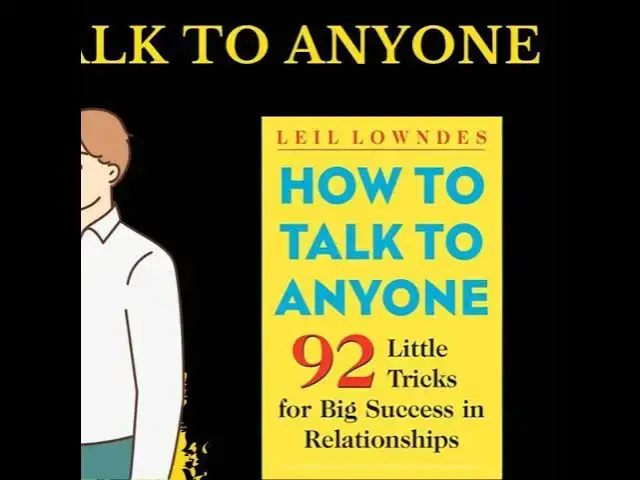
Okay you beautiful awkward souls, grab your comfort blankets because we're diving into Leil Lowndes' "How to Talk to Anyone" - a book that promises to transform us from stammering disasters into functional human beings who can actually maintain eye contact for more than 0.5 seconds.
If you want to improve your communication skills and ability to talk to people, this book is for you. It will help you develop this quality.
Listen, I've spent approximately 47% of my life overthinking every social interaction I've ever had, so trust me when I say this episode is going to be... therapeutic?
Enlightening? A shared trauma bond? All of the above?
We're going to unpack 92 little tricks that Lowndes swears will make people like you, which honestly sounds like witchcraft, but I'm here for it.
We'll explore everything from the "Flooding Smile" (which is NOT as terrifying as it sounds) to something called the "Sticky Eyes" technique (which is exactly as creepy as it sounds but apparently works?).
In this episode, I will guide you through social situations. I will share my embarrassing experiences with these techniques and explain why they work and why they don't work.
Plus, we'll discuss the fascinating psychology behind why nodding like a bobblehead doll might make people think you're a better conversationalist.
I know, I know - it sounds ridiculous, but SCIENCE, people!
So join me, your equally uncomfortable host, as we try to figure out how to talk to other humans without immediately wanting to hide under our beds afterward. Bring snacks. We're going to need them. 🎧💭
Show More Show Less View Video Transcript
0:00
ever feel like sometimes uh you're just
0:02
fumbling through conversations you know
0:04
especially with people you'd really like
0:05
to connect with oh yeah well today we're
0:08
diving deep into some like really proven
0:10
tactics to help you totally nail those
0:13
interactions make a fantastic first
0:16
impression right and genuinely connect
0:18
with just about anyone yeah we'll be
0:20
looking at some key takeaways from a
0:22
popular book cool how to talk to anyone
0:24
by Leo louns it's full of practical tips
0:27
and some really surprising insights I
0:29
think totally change how you approach
0:32
conversations this deep dive is perfect
0:34
for anyone who wants to feel more
0:35
confident and engaging whether you're at
0:37
a networking event or on a first date or
0:39
even just chatting with someone new at
0:41
the coffee shop what if simply holding
0:43
someone's gaze a little longer could
0:45
spark a connection that's actually
0:47
backed by science louns talks about a
0:50
study in Boston where strangers who
0:52
maintained prolonged eye contact oh wow
0:54
actually began to develop feelings of
0:57
respect and even attraction interest it
1:00
might sound crazy but deep eye contact
1:03
yeah triggers a release of
1:04
neuropen a neurotransmitter tied to
1:07
excitement and yes even attraction so
1:11
it's not just a pickup artist trick then
1:13
no it makes sense though when someone
1:15
really looks at you it makes you feel
1:16
seen and acknowledged right and isn't
1:19
that a basic human need we all have to
1:22
be recognized and to feel important
1:25
absolutely oh loun even shares a story
1:28
about how a woman's gaze across a
1:30
seminar room totally captivated her oh
1:33
wow and it led to a coffee date she
1:35
calls this technique sticky eyes which
1:38
basically means holding eye contact for
1:40
a couple of extra seconds after someone
1:42
finishes speaking sticky eyes huh I get
1:45
the idea behind it but maybe engaged
1:47
gaze would sound a little less well
1:49
intense uh point taken but it's about
1:51
that feeling of truly being present and
1:53
attentive though right those extra
1:56
seconds can make the other person feel
1:58
heard and appreciated mhm which lays the
2:00
foundation for a much more positive
2:02
interaction yeah louns even tells a
2:04
story about a Salesman named Samy Sammy
2:06
saw his sales double just by employing
2:08
this technique think about it if
2:10
someone's trying to sell you something
2:12
wouldn't you be more likely to buy from
2:16
the person who made you feel seen and
2:18
valued absolutely it goes beyond sales
2:20
though this applies to any interaction
2:23
where you want to establish Rapport
2:25
build trust right or simply make someone
2:28
feel comfortable it's like you're saying
2:30
I'm here I'm listening and what you have
2:32
to say matters to me so we've nailed the
2:35
importance of eye contact right but what
2:37
about the actual words we use how do we
2:39
keep people engaged and wanting more
2:41
well loun suggests that we should think
2:43
less about what we want to say and more
2:46
about what we can learn about the other
2:47
person so make them the star of the show
2:49
exactly it's about making them the star
2:51
of the show oh okay focusing on their
2:53
interests and passions instead of
2:56
defaulting to one-word answers right try
2:59
offering a little glimpse into your
3:00
world something that might spark their
3:02
curiosity and invite further
3:03
conversation okay I like that you know
3:06
go beyond just saying Chicago when
3:08
someone asks where you're from yeah yeah
3:11
what's a specific memory or interesting
3:13
fact about your hometown that you could
3:15
share instead okay that's a great Point
3:17
loun even talks about tailoring her
3:20
responses based on the audience but how
3:23
do you actually do that effectively it's
3:25
all about reading the room and being
3:28
aware of the social context
3:30
if you're at a political
3:32
event you could drop in a thoughtful
3:34
observation about current events at an
3:37
art gallery MH maybe mention your
3:39
favorite artist oh I see or something
3:41
that struck you about a particular piece
3:43
so it shows you're present and engaged
3:46
and not just running through a script in
3:47
your head yeah it also makes me realize
3:49
how important it is to do your research
3:51
beforehand right you know think about
3:52
who you'll be interacting with what
3:54
their interests might be and what's
3:56
going on in the world that might be
3:57
relevant to the conversation exactly a
4:00
little preparation can go a long way in
4:02
making you a more engaging and informed
4:05
conversationalist which in turn helps
4:07
build that sense of connection okay now
4:10
are you ready for a technique yes that
4:12
might sound a little strange at first
4:14
bring it on our listeners are ready to
4:17
level up their conversation game let's
4:19
hear it lounce calls it
4:21
parting and when it's done right it can
4:25
be amazingly effective it involves
4:26
repeating the last few words of what
4:29
someone says okay but not in a way that
4:32
feels like you're mocking them I can see
4:34
how that could go very wrong if you're
4:36
not careful definitely it's all about
4:39
subtlety the idea is to encourage the
4:42
other person to elaborate and to delve
4:44
deeper into what they're saying think of
4:46
it like you're gently prompting them to
4:48
share more so like you're saying tell me
4:50
more I'm genuinely interested in what
4:52
you have to say and we all want to feel
4:54
heard and understood exactly and there's
4:57
actually a psychological reason why this
4:58
works so well oh cool mirroring
5:00
someone's language creates a
5:02
subconscious Rapport mhm making them
5:04
feel more connected to you right and
5:06
more open to sharing loun even gives an
5:08
example of a car salesman who sold a
5:10
Lamborghini using this technique hold on
5:13
he sold a Lamborghini by just repeating
5:15
what the customer said how did that even
5:17
happen so the customer initially
5:19
hesitated saying the car was out of his
5:22
budget okay but instead of pushing a
5:26
cheaper model right the salesman simply
5:28
repeated M out of your budget wow that
5:32
simple repetition prompted the customer
5:35
to open up about his aspirations oh okay
5:38
his desire for a luxury car that is
5:41
fascinating just by making the customer
5:43
feel heard the salesman created an
5:45
opportunity to connect on a deeper level
5:47
which ultimately led to the sale so
5:49
maybe paring is the secret to getting
5:51
that dream car after all well it
5:53
definitely highlights the power of
5:55
making people feel heard and understood
5:57
yeah and that can lead to all sorts of
5:58
unexpected outcomes but remember it's
6:00
all about being genuine and respectful
6:02
in your approach Okay so we've talked
6:04
about eye contact focusing on the other
6:06
person and this paring technique but
6:08
what about our body language I mean our
6:10
words are only part of the equation
6:12
right absolutely our non-verbal cues
6:15
things like posture hand gestures Even
6:18
Silence can speak volumes yeah louns
6:22
stresses The Importance of Being mindful
6:24
of these signals both the ones we're
6:26
sending and the ones we're receiving
6:28
it's about ensuring that our body
6:29
language aligns with our message okay we
6:32
don't want to be saying one thing while
6:35
our posture screams something completely
6:37
different right like if you're telling
6:38
someone you're excited about their
6:40
project but you're slouched over and
6:42
avoiding eye contact they're not going
6:43
to believe you exactly it's about
6:45
congruence yeah and it also works the
6:47
other way around okay paying attention
6:49
to the other person's non-verbal cues
6:52
okay can give you valuable insights
6:54
right into how they're feeling and help
6:56
you adjust your approach accordingly MH
6:58
are they leaning in eager to hear more
7:01
or subtly pulling away feeling
7:03
uncomfortable oh interesting these
7:05
subtle signs can make a huge difference
7:07
in how the conversation flows Lans
7:09
offers a lot of great tips on improving
7:11
non-verbal communication and one that
7:13
stuck with me is about avoiding empty
7:15
thanku instead of just saying thank you
7:17
complete the thought thank you for
7:19
asking thank you for your help and so on
7:21
it feels so much more sincere right it
7:24
really does it adds a layer of intention
7:26
and appreciation that makes people feel
7:29
genuinely valued you're not just going
7:30
through the motions right you're truly
7:33
present and engaged in the
7:35
interaction this is all so eye opening
7:38
yeah so we've covered eye contact
7:40
focusing on the other person parroting
7:43
and non-verbal
7:45
Brilliance Where Do We Go From Here on
7:48
our journey to becoming Master
7:50
connectors well one of those powerful
7:52
ways to connect with people is by making
7:53
them feel special and Lou suggests that
7:55
expanding your horizons is a great way
7:57
to do this you know if you're always
7:58
trying new things learning different
8:00
cultur stepping outside of your comfort
8:02
zone doesn't that make you a more
8:03
interesting person to talk to it makes
8:05
so much sense you're adding new chapters
8:07
to your story and those stories become
8:10
conversation starters exactly it's about
8:12
being curious about the world around you
8:15
yeah that Curiosity translates into how
8:17
you interact with others you become more
8:19
engaging and relatable right and then
8:21
there's the simple power of making
8:23
people feel appreciated yeah a warm
8:25
smile a genuine compliment a shared joke
8:28
mhm those small gestures can really
8:31
Forge lasting connections speaking of
8:33
compliments yes louns has some really
8:36
interesting insights on how to give
8:39
compliments that truly resonate right
8:41
compliments that make people feel seen
8:42
and appreciated how do we avoid those
8:45
generic compliments that just feel empty
8:48
and insincere it's about being specific
8:51
and showing that you've been paying
8:53
attention instead of just saying you
8:55
look nice try something like that color
8:57
really complement your eyes oh okay it's
9:00
is a warm and inviting smile you're
9:02
going Beyond The Superficial and
9:04
noticing something unique and genuine
9:05
about the other person and it's not just
9:07
about the words themselves either right
9:09
it's about your tone of voice your eye
9:11
contact those nonverbal cues that
9:14
amplify the impact of your words it's
9:17
exactly you want to convey genuine
9:19
warmth and
9:20
appreciation think about the last time
9:22
you received a compliment that truly
9:24
made your day what made it so special
9:26
mhm it's likely that the person who gave
9:28
you the compliment was fully present
9:31
yeah and their sincerity shown through
9:33
so we've mastered the art of compliments
9:36
what about asking for favors I always
9:38
feel so awkward doing that LW offers
9:41
some really helpful advice on this too
9:43
okay she suggests framing the favor as
9:47
something that benefits both parties oh
9:49
you know it's not about taking advantage
9:51
of someone's generosity but about
9:53
creating a win-win situation okay let's
9:55
say you need help moving instead of just
9:58
asking a friend to H boxes you could say
10:00
something like hey I'm moving next
10:02
weekend and I'd love your help I'm
10:03
ordering pizza and beer afterward and it
10:05
would be great to catch up so you're not
10:07
just asking for help you're offering
10:09
something in return Good Food Company a
10:12
chance to connect exactly it's about
10:14
acknowledging the value of their time
10:16
and effort and just as important be
10:19
really clear and specific about what you
10:21
need people are much more likely to help
10:24
if they understand exactly what you're
10:25
asking of them don't be vague or beat
10:28
around the brsh and don't be afraid to
10:30
follow up sometimes things slip people's
10:32
minds so a gentle reminder can go a long
10:34
way those are really helpful tips what
10:36
about delivering bad news those
10:38
conversations can be so tough does louns
10:40
offer any advice on how to handle those
10:42
situations with Grace and empathy she
10:44
does first and foremost choose the right
10:46
time and place don't Ambush someone with
10:49
bad news in public or when they're
10:51
already stressed yeah of course find a
10:54
private quiet space where you can have a
10:56
calm and focused conversation
10:59
and be direct but compassionate don't
11:02
sugarcoat or try to downplay the
11:05
situation people appreciate honesty even
11:07
when it's difficult to hear so find that
11:09
balance between being truthful and being
11:12
sensitive right and your nonverbal
11:14
communication is really crucial here
11:16
your tone of voice your facial
11:18
expressions your body language all of
11:20
these convey empathy and support it's
11:22
like you're saying I'm here for you even
11:24
in the midst of this be prepared to
11:27
listen too the other person might need
11:29
to vent process their emotions right or
11:32
ask questions give them the space to do
11:35
so without interrupting or offering
11:37
unsolicited advice sometimes just being
11:40
a sounding board is the most helpful
11:41
thing you can do absolutely it's about
11:43
providing a safe space for someone to
11:45
work through their feelings and remember
11:48
even in challenging conversations yeah
11:50
it's essential to maintain respect mhm
11:53
avoid blaming shaming or making personal
11:56
attacks focus on the facts and on
11:59
finding a constructive way forward all
12:02
of this great advice applies to
12:04
in-person conversations right but what
12:06
about those tricky phone conversations
12:08
oh yeah we've all had those awkward
12:09
moments where the conversation kind of
12:11
drags or you get interrupted or you just
12:13
struggle to stay focused when you're not
12:15
face to face yeah phone conversations
12:17
definitely have their own unique set of
12:19
challenges right LS offers some really
12:21
clever strategies for navigating those
12:24
for example she suggests using the
12:26
person's name at the beginning of the
12:27
call to capture their attention okay but
12:30
then avoiding overuse of their name
12:33
throughout the conversation because it
12:34
can become distracting oh that's a great
12:36
tip I've definitely been on calls where
12:38
the person keeps repeating my name and
12:40
it starts to feel really unnatural yeah
12:42
it's all about finding that sweet spot
12:44
right acknowledge their presence and
12:46
then let the conversation flow more
12:47
naturally okay and here's another
12:49
essential tip I always ask is this a
12:52
good time to talk before launching into
12:55
a lengthy conversation you'd be
12:57
surprised how many people skipped that
12:58
step we know it's such a simple courtesy
13:00
yeah but it shows respect for the other
13:03
person's time and ensures that they're
13:05
actually available and engaged right and
13:07
if you do happen to reach their
13:08
voicemail keep your message concise
13:11
state your name your number and the
13:14
reason for your call don't ramble or
13:16
leave a long drawn out message right
13:19
respect their time and make it easy for
13:20
them to call you back yeah great advice
13:23
yeah we've talked a lot about verbal
13:24
communication but let's Circle back to
13:26
body language for a moment we touched on
13:27
it earlier right but Lis really
13:30
emphasizes its importance throughout the
13:32
book it's such a crucial part of
13:34
communication right she encourages us to
13:36
be mindful of our posture our hand
13:40
gestures our overall demeanor you know
13:42
if you're slouched over yeah with your
13:45
arms crossed you're likely to be
13:48
perceived as closed off or disinterested
13:51
right even if you're genuinely
13:52
interested in what the other person has
13:54
to say our body language can completely
13:56
contradict our words exactly so it's all
13:58
about about projecting confidence and
14:01
approachability Standing Tall making eye
14:03
contact right using open hand gestures
14:07
these all convey a sense of warmth and
14:09
openness it's like you're inviting the
14:12
other person into your space making them
14:14
feel comfortable and welcome we've
14:16
covered a lot of ground here we've
14:17
explored everything from the power of
14:19
eye contact and paring to giving killer
14:22
compliments and navigating difficult
14:24
conversations but before we move on is
14:26
there anything else that stands out to
14:28
you from
14:29
how to talk to anyone anything you found
14:31
particularly insightful or surprising
14:34
you know one thing that really stuck
14:35
with me is Lou's emphasis on the power
14:38
of listening sounds so simple right but
14:42
truly listening with the intent to
14:44
understand yeah rather than just waiting
14:47
for your turn to speak mhm is a skill
14:49
that takes practice and intention it's
14:52
so true we often get so caught up in
14:54
what we're going to say that we miss out
14:55
on truly hearing what the other person's
14:57
communicating exactly when we're fully
15:00
and attentive it not only makes the
15:02
other person feel valued but also allows
15:05
us to learn and grow from their
15:08
experiences and perspectives think about
15:10
it every conversation is an opportunity
15:13
to expand our understanding of the world
15:15
and to connect with another human being
15:18
on a deeper level that's a beautiful way
15:20
to put it and it reminds me of another
15:22
important Point Lance makes The
15:23
Importance of Being authentic we don't
15:26
have to pretend to be someone we're not
15:27
to have meaningful conversations in fact
15:29
when we try to force it it often comes
15:31
across us insincere and inauthentic I
15:34
completely agree people can sense when
15:36
you're being genuine and that
15:38
authenticity is what creates real
15:41
connections like you're giving each
15:42
other permission to be yourselves yeah
15:45
flaws and all and that vulnerability can
15:47
be incredibly powerful so as we wrap up
15:50
this deep dive yeah I think the key
15:52
takeaway is this mastering the art of
15:55
conversation is less about memorizing
15:58
technique
15:59
and more about culating a mindset of
16:03
curiosity empathy and genuine interest
16:06
in the people we interact with you know
16:09
it's interesting to think about how
16:10
often we go through conversations on
16:11
autopilot we're so caught up in our own
16:14
thoughts and worries that we miss out on
16:16
the opportunity to truly connect with
16:19
the people around us it's like we're
16:20
physically present right but mentally
16:22
checked out and that's a shame because
16:24
every conversation has the potential to
16:26
be something special something
16:27
meaningful L's book really challenges us
16:30
to be more intentional in our
16:32
conversations to approach them with a
16:35
sense of purpose and presence and when
16:37
we do that when we truly show up and
16:40
engage with the people we're talking to
16:42
yeah amazing things can happen
16:43
absolutely we can forge deeper
16:46
connections learn from different
16:47
perspectives and even create positive
16:49
change in the world around us think
16:51
about it what if everyone approach
16:54
conversations with the level of
16:55
intention and skill that we've been
16:57
discussing today yeah what kind of
17:00
impact could that have on our
17:01
relationships our communities even our
17:04
society as a whole that's a powerful
17:05
thought it makes me realize that
17:07
mastering the art of conversation isn't
17:09
just about improving our social skills
17:12
it's about tapping into our human
17:14
potential for connection and
17:16
understanding it's about creating a
17:18
world where people feel seen heard and
17:22
valued exactly and it starts with each
17:24
of us making a conscious effort to be
17:26
more present more engaged and more
17:28
intentional in our conversations so as
17:31
we wrap up our deep dive into how to
17:34
talk to anyone I want to leave you with
17:36
a challenge think about one technique
17:38
we've discussed today that really
17:40
resonated with you it could be sticky
17:42
eyes right paring giving specific
17:45
compliments or maybe just the idea of
17:47
being a more active listener pick one
17:49
thing yeah and commit to trying it out
17:51
in your next conversation observe what
17:54
happens notice how people respond you
17:56
might be surprised by the subtle shifts
17:58
and energy energy the deeper connections
18:00
you forge and the unexpected doors that
18:02
open remember this is a journey not a
18:05
destination there's always more to learn
18:07
more to explore and more ways to connect
18:09
with the amazing people around us so
18:12
keep practicing keep experimenting and
18:14
keep those conversations flowing because
18:16
in a world that's increasingly
18:17
disconnected the ability to connect to
18:19
communicate to truly see and hear each
18:21
other is more valuable than ever and who
18:24
knows maybe you'll even sell a
18:25
Lamborghini along the way well on that
18:27
note we'll sign off for today until next
18:30
time keep diving deep and keep those
18:31
conversations strong
#Books & Literature
#Self-Help & Motivational