live_tv
Livestream Starting Soon
00
Hours
:
00
Minutes
:
00
Seconds
Up next in 10


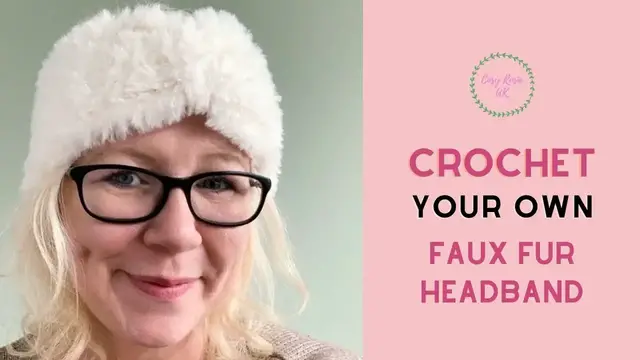
Easy Faux Fur Crochet Headband Pattern
This super easy faux fur crochet pattern creates a stylish headband and is written for 5 different sizes from age 6 months through to large adult.
This tutorial details the pattern for the adult size - for the stitch counts for the other sizes, click the link below for the full written pattern.
View the full written pattern here: https://www.cosyrosieuk.co.uk/faux-fur-free-crochet-headband-pattern
Materials Required This pattern uses size 5/bulky yarn and
In this pattern tutorial, I used PaintBox Yarns Simply Chunky Stormy Grey and Sidar Alpine shade Seal (402)
- 8mm Crochet Hook
- Scissors
JOIN THE COMMUNITY: https://www.facebook.com/groups/CosyRosieCrochetCommunity
JOIN THE NEWSLETTER - and get updates when the next square design is released: https://landing.mailerlite.com/webforms/landing/y7s4x3
NEED MORE CROCHET INSPO?
Find me here:
Website: https://www.cosyrosieuk.co.uk/
Show More Show Less View Video Transcript
0:00
So welcome to another crochet tutorial with CozyRosyUK. Today I am so excited to be sharing
0:05
with you the Elizabeth faux fur headband. This little cinched headband creates a wonderful
0:10
wintry look depending on which colour you make it with. Now this is a really easy way to work
0:16
with faux fur yarn, the easiest way that I've found and I'm excited to share this technique
0:20
with you. Now before we get started don't forget to hit that subscribe button and of course the
0:24
the notification bell so you never miss out another one of my crochet tutorials again
0:29
Let's find out the materials we need to make our very own faux fur headband. Now you can use any
0:35
faux fur that you have to hand. Some of mine is old as you can see. These are the updated labels
0:39
and I am a bit of a fan of the Sirdar Alpine. The reason that I like this faux fur is that it comes
0:45
in a smaller ball of yarn. Some of the, I think it's the chinchilla that you can get in the UK at
0:51
least is a lot bigger and it's just a bit too much for me. For this faux fur headband you only need
0:57
25 grams which I think yeah is literally 15 meters of faux fur. In fact with one of these balls of
1:05
yarn you can make not only the faux fur headband you can make the corresponding mittens, the
1:11
fingerless gloves too. So alongside your faux fur yarn I'll tell you a little bit more about this
1:16
because they're all different this is classed as a super chunky yarn so the recommended hook size
1:24
here is a 10 millimeter we're not going to be using a 10 millimeter with this because we don't
1:27
quite need it um but that's because it is i'll get a different color you'll be able to see
1:31
when it's worked up it works up as a super bulky or a super chunky yarn so you need something that
1:37
has a similar kind of recommended hook size for this pattern to achieve the same size
1:42
so this one comes in like a 50 gram ball so 33 meters 36 yards you're only going to need
1:48
probably less than half a ball of this to create this headband because we're going to use another
1:53
yarn with it now i'd recommend any chunky or bulky weight yarn so this is a size 5 i can't read today
2:01
so it's a size 5 yarn i'm using my good old standard paint box yarns simply chunky and what
2:09
I'd recommend is that you pick a base colour that matches your faux fur so it's not quite so obvious
2:15
so for instance here I used the white fur which is always quite hard to get hold of because Christmas
2:20
is coming once I'm filming this and I paired it with the champagne white in the chunky and today
2:26
I think this is seal yeah I'm going to be using seal with the stormy grey which is shade number
2:33
304 and they match really well. So I'm going to be using in this tutorial these two colours
2:39
together. So the Serdar Alpine in the shade Seal and the Paintbox yarns Simply Chunky which is a
2:46
size 5 yarn together but we're going to start with our chunky. You're going to need an 8mm crochet
2:54
hook. I'm using a Furls one because it's the first one I had to hand and it will show up quite nicely
2:58
against this yarn so you can see what I'm doing. Even though the recommended hook size for this
3:02
chunky yarn is a 6mm. We're going up to an 8mm hook to keep the stitches nice and loose
3:08
because we're going to work back into them with the faux fur. You will need a pair of scissors
3:13
If you want, grab a couple of stitch markers. You could mark your stitches when we start and finish
3:16
and of course get your faux fur to hand. But first and foremost, we're going to need this chunky
3:23
This pattern is actually written for five different sizes and today I'm going to be showing you how to make the adult size but it is written for six months to 12 months, one to three
3:32
years, three to ten adult and large adult. The way that I make the biggest adjustment between the
3:38
sizes is that the smaller children's sizes are kind of less rows and then the adult sizes get a
3:44
little bit wider and you can make it as wide as you want. I'll explain more of that for you later
3:48
but I'm going to be talking you through the adult size which is a head size of 21 inches
3:53
and that's worn on kind of from the forehead around the back of the head but the large adult
3:59
goes up for 23 inches for those that are blessed with that extra hair I'm not one of those I'm quite
4:04
fine haired should we say so if you want to check out the other sizes you'll find all the information
4:10
in the linked in the description box below so you can go and check out what you need to do for your
4:15
starting chains so once we've got our yarn we're going to start by making a slip knot and placing
4:21
that onto our hook and we're starting this of course with our normal chunky yarn or a bulky
4:31
weight yarn. So we're going to start by making a chain so we yarn over the hook and bring our hook
4:37
through that loop on the hook and for the adult size we're going to make a starting chain of 56
4:44
While I'm chaining I'll tell you the other sizes as well so age 6 to 12 months will be 48 chains
4:51
one to two years will be a chain of 50 three to 10 years would be a chain of 53 the adult that
4:59
I'm making is a chain of 56 and then the large adult is a chain of 60 so make your chain and
5:07
I'll meet you back in a moment so once we've made our chain we're actually going to join it to make
5:12
one large ring so I tend to do this on a flat surface just to make sure and I run my fingers
5:18
down my chain, making sure that it's not twisted, because we don't want a twisted chain to start
5:24
this off. As it gets to the end, that's where it really untwists. And what we're going to do is join
5:30
to that first chain that we made. So I'm going to bring this end and turn it, so I've got my tail
5:38
towards my hook, and then just go underneath that first chain that we made
5:44
I'm going to bring my working yarn over my hook pull through that first chain and that last loop
5:54
on the hook and that creates a ring and we're simply going to work around this ring once you've
6:02
got your chain established we're going to go into round one and we're going to make our starting
6:08
chain of one now this chain one does not count as a stitch here and throughout the pattern
6:13
We're then going to work one single crochet into that same chain that we just slip stitched into
6:20
so we just insert the hook, bring the loop up, yarn over and pull through two and our tailor's
6:27
stand is there at the bottom for us. Don't need to worry about that, we'll weave that in later
6:32
So obviously this is a US single crochet which is a UK double crochet in case you're following
6:37
of uk terms and we're going to continue around working one single crochet into each chain so
6:44
we're going just underneath that first loop of the chain, bring our loop through
6:51
yarn over and pull through two and we're going to repeat that all the way around so work into the
6:57
next chain, yarn over, pull through both loops on your hook and we just continue working one single
7:05
crochet into each chain around back to where we started. If you wanted to this is a good time to
7:13
put your stitch marker into your first stitch so that you don't get tripped up by that little chain
7:20
there. Let me grab my stitch marker, for some reason I only have a huge one so let's hope that stays in
7:26
There we go. So that's my first stitch and there's that chain or that slip stitch that
7:36
we made before which we're not counting as a stitch. So we're going to continue working
7:42
one single crochet into each stitch around all the way back to where we started. So continue
7:50
working around, working one single crochet into that top loop of each of the chain around
7:56
and I meet you in a moment for the end of round one As you approaching those last few chains it really important just to take a moment just to lie your ring or your circle flat
8:10
Make sure that your tail is coming out towards you and that the actual band lays flat
8:18
Because if it's twisted at this point just before we join, we're going to struggle
8:23
Well, it won't work. If I'm honest, it just won't work. Once you've double checked that your band lays flat and is not twisted, your tail is coming out at the bottom, you are ready to join
8:33
So if you've popped a stitch marker in, you can just remove that and slip stitch to that first single crochet that we made
8:40
And that is the end of round one. If, like me, you're making the adult size, you should have a stitch count of 56 at the end of round one
8:51
That'd be 56 single or UK double crochets. Going into round two, we're going to start by making a chain of one. Again, this does not count as a stitch
9:01
And for this round, we're going to work into the back loops of our stitches
9:05
If you've never worked into your back loops before, I promise you it's super easy
9:09
If we take, for instance, this stitch here, not the one we're going to work into in a moment, but the second stitch around
9:15
you can see that you've got two loops to your stitch. And what we're going to do is insert our hook underneath the back loop only
9:24
So you'll see the abbreviation sometimes B-L-O, and that means work into the back loop of your stitch only
9:31
This is a really good way to create ribbing, and that's kind of what we're going to be doing for this base of this headband
9:37
So we're going to work half double crochet into the back loop only, which is a UK half treble crochet
9:43
So we start by yarning over. Now we need to work into this stitch we've just slip stitched into
9:48
and it's going to be a little bit tight because we have already slip stitched there. and we're going to kind of aim our hook into the center of that stitch just to pick up
9:58
there we go just that back loop so instead of having what we would normally see which is both
10:05
loops of that stitch on our hook we're aiming for the middle of the stitch you can see like there's
10:09
a tiny hole there that's the best place to aim your hook insert your hook just pick up that back
10:14
loop yarn over bring your loop up yarn over and pull through all three loops in your hook
10:21
We're going to repeat that all the way around. So we yarn over the hook, tilt your work towards you and you'll see your whole stitch
10:29
And we're going to aim for kind of the middle of the stitch, picking up just that back loop
10:35
Yarn over, bring your third loop up, yarn over and pull through all three loops on your hook
10:41
Going to repeat that again. So we yarn over the hook, aim, instead of underneath both the loops
10:47
we're going straight down the middle and aiming just for that back loop, yarn over
10:52
bring your third loop up, yarn over and pull through three. Yarn over, aim for the middle
10:59
of that stitch, insert your hook, yarn over, bring your third loop up, yarn over and pull
11:07
through all three loops and you can see that that's leaving a loop behind and we're going
11:13
to use those later with our faux fur. So continue to work all the way around back to where we started
11:19
this round, working one US half double crochet, one US UK half treble crochet into the back loop
11:28
only of each stitch around and I'll meet you back at the beginning where this chain one is ready to
11:36
slip stitch to join and I'll meet you there at the end of round two in a moment
11:43
So at the end of round two, again just to make sure, I'm going to be placing my start of my headband flat just to make sure that it's not twisted in any way
11:52
So we've got this slip stitch here where we joined, there is our chain one and this is the top of that first half double crochet that we made and that's where we're going to slip stitch to join our two rows together
12:04
So we insert our hook through both loops of that stitch, yarn over, and bring that loop straight through the loop on your hook
12:16
So at the end of round two, your stitch count should still be the same
12:20
So for the adult sizes, we should still have a stitch count of 56. Going into round three, we're going to chain one
12:28
And again, we're just going to repeat round two, working into that back loop only
12:32
So remembering that we need to work into that stitch we slip stitched into, that's the tight one, just inserting the hook down the middle of the stitch, yarn over, bring that loop up, yarn over and pull through all three loops
12:46
And we continue to work that all the way around, working one half double crochet into each stitch around, but working into that back loop only
12:55
Because we want to work into these stitches when we're attaching our fur
12:59
if you're just creating a narrow width headband for a child size either the age 6 to 12 months
13:05
1 to 2 years even the 3 to 10 and you just want a narrow width band you just need to repeat round
13:12
two two more times for a total of four rounds if you're making the 3 to 10 adult or large adult size
13:20
and you want to make a really nice squishy headband I'd recommend doing round two for a total of six
13:26
rounds so three more times so complete this round round three and then repeat it twice more
13:33
so you have a total of six rounds and then meet me back for the final round so keep working and
13:39
I'll meet you in a moment for our final round so I've joined my sixth round so I've got one two
13:46
three four five and six and you can really see these front stitches here ready for us to work
13:54
our faux fur onto them. So for the final round, regardless of which width you've done
14:00
we're going to work the same round. So we start by making a chain of one, we just yarn over and
14:05
pull through and then we're still going to work into this back loop only but this time we're going
14:10
to work a single crochet. So we're still aiming for the middle of that stitch but we don't yarn
14:16
over beforehand and we're making a US single crochet or a UK double crochet
14:21
And we're going to repeat that all the way around. We're just working one single crochet
14:29
into the back loop of each stitch around. So continue to work that and I'll meet you at
14:35
the end of our final round ready to fasten off and move on to adding our faux fur
14:41
So I've just worked my final single crochet, there's my slip stitch, my chain one and I'm
14:50
just going to insert my hook under both loops of that last stitch and create a slip stitch
14:56
I'm going to make a tiny little chain one because that's going to create a knot for us
15:01
and then we're going to fasten off leaving quite a long tail because this is how we're
15:06
going to cinch our headband and sew it all up at the end. So once you've snipped your
15:12
yarn, just use your hook to bring through that long tail. Keep it out of the way for
15:18
a moment because we are not done yet. Obviously, this is not a very furry headband. So what
15:24
we're going to do is we're going to grab our faux fur. So we can move our chunky yarn out
15:31
of the way and get ready to work with our faux fur. It doesn't often happen you get that first
15:40
time does it? So I'm going to find my end and I'm going to show you this really really easy technique
15:47
for working with faux fur. I'm sure you've seen lots of tutorials where people are like oh you
15:51
just feel for your stitches and it's all fine. Some of us that's not as easy if we're not that
15:56
kind of dexterity or we not kind of familiar with what we looking for So this is a much easier way of doing your faux fur yarn So we going to start where our tail yarn is
16:13
We're looking for this first front loop here. So you can see you've got your joins here and then
16:20
just to the side of it you'll have your first front loop. And what we're going to do is grab
16:27
our crochet hook and just insert it underneath that front loop just to the
16:33
side of our joins. Grab your tail of your faux fur and just like we would join for
16:43
any other colour change we're just going to place that over the hook with the
16:47
tail away from us and then use our hook to bring it through and we're going to
16:55
wrap the yarn around the hook and bring it through to make a slip stitch. Pull it on the tail and that
17:03
will just tighten that nicely for you. We'll sew that in later so don't make that tail too short
17:09
and what I've done is I just fold that first row down. All I'm left to look at are those front
17:17
stitches that we've not yet worked into and very simply we're going to insert our hook
17:23
under that next front loop that's unworked, yarn over our hook, pull through and straight
17:33
through that loop on the hook. Yep, we are just going to use a slip stitch to attach this faux
17:40
fur. So we go under that front loop, you can see it's just, if you look at it flat, you can see
17:47
it's just there. So we go underneath the flat loop, yarn over, bring that faux fur through
17:53
through the loop on your hook. I'm just going to repeat that all the way around
17:59
back to where we joined this yarn. Try and see if I can do it flat for you. You can
18:07
see that we've worked into this one, you see how that stitch is moving with our faux fur. So this is the next one, yarn over, pull it through, straight through
18:16
the loop on your hook. Through that front loop, yarn over, through and straight through
18:25
the loop on your hook. So it will look, it just covers up all of those stitches because
18:31
it's so big and chunky. It's going to hide that underneath colour all the way around
18:36
and you can already see that these are the next stitches we're going to work into. We're not covering up what we're going to work into next. When we do our second round, it will
18:43
hide the grey underneath. So there's our next front loop, just go underneath, pull through
18:52
straight through the loop on your hook. This is why it doesn't need very much faux fur yarn to
18:58
complete this project because we're just working what's known as surface crochet or slip stitching
19:06
slip stitch crochet across the top of our project. So it's just simply recognising those front loops
19:13
so you can see that I've got some yarn coming out of this one so here's the next one to work into
19:19
and we're just going to work all the way around back to where we joined and then I'm going to
19:26
show you how to move up to the next round I can bring that tail down out of the way
19:31
so I'll meet you back here when we've worked this final front loop ready to go into the second round
19:37
of our faux fur. So I just have one final front loop to work through
19:43
and then I've joined the faux fur all the way for the first row. What we need to do next is to locate
19:55
the next slip stitch next to our join and we're going to just move my yarn out of the way
20:02
Then I need to locate that next front loop. So if I move this fur out of the way, you can see here's our join and there's that front
20:10
loop that we need to work into. I'm just going to insert my hook underneath that
20:15
I'm ready to yarn over, pull through, through the loop on the hook and we can continue
20:21
just slip stitching and attaching that faux fur all the way round
20:28
you can see that once we've worked this round you really can't you really can't see in between
20:35
those two rows of faux fur. I think it's a combination of the looser stitches on the headband
20:44
base and using a slightly smaller hook than recommended for the faux fur so that it makes
20:51
the slip stitches a little bit tighter without us working tightly which is really important
20:56
We don't want to be slip stitching too tightly because that will make the headband fit smaller once it's finished
21:04
So I'm keeping my project folded so that I can clearly see the next front loop from the side
21:11
If you're working from the top, depending on how you do your slip stitching, you can still see that next slip stitch or the next front loop to work into
21:21
i've done a little video about or a reel should i say over instagram about my reasons for
21:28
taking the time to work the headband base rather than just try and work with faux fur and this is
21:35
the reason because if i'm honest i don't want i wouldn't want that against my head um i don't
21:42
know about you but sometimes when i wrap up for the cold weather i get a little bit warm still
21:46
but um and i don't want to my head gets a little bit warm i'm a bit of a sweaty betty so i wouldn't
21:52
want to sweat all over this um the biggest challenge i have and i can share a little
21:57
secret with you is with my white one is obviously where i wear makeup this tends to go a little bit
22:03
orange um i'm just giving you away how we're going to cinch it but the outside remains the
22:09
same color there's a clear right and wrong side easy for any age to wear and to kind of put on
22:15
themselves as well. Anywho, I digress. Continue to work all the way around and work up each round
22:24
as you reach it. So as we did at the beginning here, where on earth's the beginning? Oh wow
22:30
I did that quick. Once you've reached your last front loop, find that join and just move up over
22:37
to the next front loop all the way around. And we are going to work into this round here as well
22:45
that's where I'm going to meet you. So once you've finished this final round I'm going to show you how to fasten off and ensure that you leave a long enough
22:52
tail so that we can work and cinch our project using the faux fur itself so that
23:00
you can't see how we've made it that bow shaped. You don't have to do the bow
23:05
shape I just like it for me because I've quite a big forehead so it breaks it up
23:10
So keep adding your faux fur and I will see you at the end of your faux fur adding ready
23:17
to cinch in and create the shape of our headband. I feel like it looks like I have an animal on my desk right now
23:27
I can assure you that I don't. As you can see there's the other colour
23:31
I'm just going to kind of say I'm going to work one little slip stitch through the slip
23:39
stitch that I made just before oh if I can catch this yarn there we go just so that I know there's
23:45
no chance of anything ever being seen I'm going to make sure that my tail is free and then I'm
23:51
just going to put my hook through underneath where we fastened off so if you can see that
24:00
just because I want to secure this faux fur literally lost it there is um so what i going to to do as you can see it kind of through that stitch the gap in the stitch there Just going to bring it through and slip stitch one final time
24:20
You can see that it's there. And then we're going to fasten off with quite a long-ish tail
24:25
of faux fur I would say 18 to 24 inches long because we are going to use this tail
24:35
to complete the cinch of our headband so I'm going to bring that faux fur through that final
24:45
slip knot that I made and that's that all knotted and then this is what our current finished project
24:53
so from when it's when it's just laid here you can't see the color coming through mainly because
25:02
it's a really good color match so there is the stitches and because of the light color in this
25:07
yarn you can't actually see them there's still lots of stretch and you can see how stretchy that
25:13
project is either way it's all movable because all we've done is slip stitch into those stitches
25:20
So we're going to need our darning needles. I am going to use my chunky needle so it's a little bit
25:26
longer, a little bit wider and we're going to get ready to use that in a moment. So what I do
25:32
to cinch my headband the easiest way is kind of put my hand through and grab my long tails
25:41
place my fingers kind of over it and wrap it down, making sure that it's kind of straight top to bottom bring it back over
25:53
back to the top and then pull on it gently making sure that the yarn at the bottom isn't visible
26:03
you don't have to make it super tight then once that's secure i'm going to pop that
26:09
yarn out of the way and continue to wrap around the middle
26:14
with my longer faux fur a few times it's not really visible but I don't want
26:24
this to be visible either so I'll move that out of the way and just wrap it a few times until your
26:31
tail gets a bit shorter once you're happy with where it is I'm just going to place mine flat so
26:36
I can see the wrong side so now you can see you've got a tiny bit of faux fur in the middle
26:41
I've got these ends are kind of pulled in together and we're ready to secure our tails
26:48
so the first tail I'm going to deal with is of course my lighter colour yarn I'm just going to
26:54
place that onto my darning needle make sure that it's this side of my project and doesn't matter
27:01
where you insert the hook because as long as you don't come through the front no one is going to
27:08
see it I'm just going to bring that through one way I'm going to loop it back over through that
27:14
faux fur again making sure the needle hasn't come through the front and then I'm just going to
27:22
probably what a lot of people would call cheat and I'm simply going to secure this tail underneath
27:30
a couple of stitches by making a knot I know we're not supposed to knot things
27:36
but I'm going to gift this to somebody and I don't want it to come undone
27:40
I don't want it for them to be uncomfortable wearing it, thinking that it might come undone
27:45
So a couple of knots there is not going to hurt anybody. You can then weave that in through your stitches a few times if you want to
27:54
and bury that completely. making sure that you're not pulling the stitches too much and then we can fasten that end off
28:10
and we have the little tail from the beginning and we need to do the same as well
28:17
we need to bury this end into our grey yarn we already have a knot from where we slip knotted
28:24
to start so I'm just going to kind of stick to these stitches up here not into that bottom row
28:30
that we had and bury this end in as well and once that is securely buried again I can just remove
28:44
that tail and then all we have left are our two faux fur tails this one's trying to come undone
28:50
let's bring that back around now because this faux fur is notoriously slippy it's like
28:58
if you've ever worked with the chenille type yarns they can kind of come undone because they
29:06
are a bit slippy so i am going to suggest you tie your two ends together without kind of changing
29:13
this front shape just loosely make one knot bring it to the middle of the inside and then you can
29:22
make another knot we are going to weave these in properly but for me i don't want that middle bit
29:28
shifting so i just make a little double knot it's not exceptionally tight there's a bit of movement
29:35
there because i want to be able to make sure that that's all lovely from the front which i think you
29:41
agree it's a nice little cinch nothing major just a little bit to give it a bit of shape
29:46
and then we can weave or bury these ends in and the easiest way of doing this is just being aware
29:54
of where they might come out so I am going to go underneath all of that middle clump where I've
30:02
wound around I'm not going to go I'm just going to go backwards and forwards through these stitches
30:08
because no one's going to see these ends. I can pull it through
30:16
There we go. It doesn't change the front because it is the same as the front
30:21
And we're just going to do that a few times, kind of weaving through it and securing it as much as we can
30:27
And then when you're happy that it's quite well buried, I'm still not going to fasten it off yet
30:33
I'm going to weave in the other end first. just doing the same kind of through the knot that we've created back out the other side
30:47
just a couple of times and then if you're happy with them give it a stretch so that the ends are
30:54
not tight in and then we can simply snip them off if you are really worried about these ends poking
31:03
through at any point, they're not at the moment, you can just use a dab of fabric glue just to hold
31:09
them in place. But that is your completed faux fur headband. It's stretchy on both ends because
31:19
of how we worked our chain. It's stretchy in the width and it's just super comfy. Thank you so much
31:27
for joining me and making your very own faux fur headband. I really hope you've enjoyed learning
31:31
this easy technique for working with faux fur. I certainly enjoy using it this technique myself
31:37
and it's been an absolute pleasure showing you how it's worked up and of course using a different
31:42
colour for me. If you have enjoyed this tutorial make sure you hit that subscribe button
31:47
hit the notification bell as well because there is another video coming soon
31:51
using faux fur and it's the corresponding fingerless mittens pattern. I always like to
31:57
see people's finished projects so if you get the chance snap a picture of you wearing your headband
32:01
and share it with me on social media and you can tag me using at CozyRosieUK
32:07
Thank you so much for joining me and I'll see you again soon
#Fiber & Textile Arts
#Apparel
#Headwear