Up next in 10


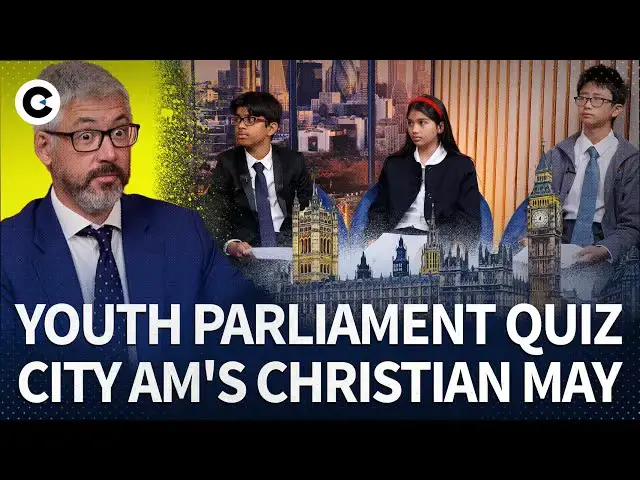
The Prime Minister, Chancellor and business secretary all visited the City AM studio - but they're not exactly the Cabinet ministers you might be familiar with.
That's because these were senior representatives of the Children's Parliament, who visited to grill City AM's editor-in-chief Christian May about tax, finance services and more.
Read more at the link in the bio 🔗
#finance #economics #news #london #city
Show More Show Less View Video Transcript
0:00
Well, this hasn't happened before. We are joined probably for a broadcasting first in the City AM studio. Certainly,
0:07
we have the prime minister, we have the Chancellor of the Excheer, and we have the business secretary of, I'm pleased
0:13
to say, the Sir David Amos Children's Parliament, and they're no less impressive for that. So, I welcome all
0:20
three of you to City AM. Could you introduce yourselves? Uh, tell us your name and indeed your job in the cabinet.
0:28
Oh, I'm Arian Sha and I'm the chancellor of the excheer. I'm Neil Sittita and I'm the prime minister.
0:33
I'm Johnny Leu and I'm the business secretary. There you have it. Well, I think today
0:39
you're going to ask me questions. Um, I'm going to do my best to answer questions about finance, about the city
0:46
of London, maybe about City AM. Um, and also about financial literacy and the
0:52
economy. And I might ask you some questions as well because I'm sure you didn't get to the top of politics into
0:59
the cabinet without knowing a thing or two as well. So we'll make it a conversation I'm sure. But chancellor,
1:05
you have an introduction for us. Good morning everyone. So I'm Arian Shaker and I'm the chancellor of the
1:10
excheer and it is an honor to be part of the sad David Amos' UK children's partner. I have with me today Nyla Sele
1:18
the prime minister and Johnny the secretary for business and trade. Together, we formed the top team of the
1:25
UK Children's Parliament. It is our mission today to explain the
1:30
most complex financial instruments to every child in the UK and
1:37
we will quiz Mr. Christian May on these uh complex topics and I hope he can
1:44
answer. Well, let us start. Quy. All right.
1:51
Ready when you are. How do different financial instruments i.e. equities, debt, securities, ETFs,
1:57
mutual funds affect the flow of money in the economy and why would they seem so sophisticated to layman?
2:04
Well, that is by some way one of the most interesting questions that I have
2:09
been asked uh for quite a long time. You're asking about different financial
2:14
instruments and what we mean by that I suppose are all the different products and services
2:22
that make up what we refer to as the city of London which is the beating
2:29
heart of the financial infrastructure of the British economy but it spreads out
2:35
far and wide across the country. It's one of the biggest parts of the whole British economy.
2:41
It employs millions of people and it manages an extraordinary amount of
2:47
money. And some of the ways it manages that money you've just referred to. So it could be something as simple as a
2:53
savings account, which I'm sure most of us have, if not all of us have. Um, all
2:59
the way through to some of the most complicated instruments that very few people actually understand and that
3:05
somehow some people uh make quite a lot of money out of. So some of the more
3:11
common ones for example we've mentioned a savings account obviously you can have your current account your bank account
3:17
you have a savings account the government will support some people in different ways of saving money in things
3:23
like ISIS and junior ISIS which is a way of saving money without having to pay
3:28
tax on it. Now you haven't directly started paying taxes yet. I'm sure you'll form strong opinions on that when
3:35
you do and you can come back and we can talk about tax in financial services in
3:41
the banking sector. There are all sorts of other products as well. So you talked about stocks and shares. Well, I'm sure
3:48
you know the basics of stocks and shares. If I wanted to start a company
3:53
and I figured out that it's going to cost me £100 to start this company for everything I need to get it up and
4:00
trading, but I don't have £100. Well, I could go and borrow it from a bank and they would expect interest on that loan.
4:07
They would expect me to pay back £100 plus a bit more. It's fine. I could sell some shares in my business. I could sell
4:13
shares at a pound each. I could sell a 100 shares and people would be then investors and shareholders in that
4:19
company. and you would hope that as my company grew and did well, the value of
4:25
your one pound share would grow and that you would make money off the back of that. You've also talked about all the
4:31
different ways in which those shares could be traded, different parts of the financial markets. Another big part that
4:37
we talk about a lot uh is the bond market. And a bond is basically someone
4:43
writing I owe you on a piece of paper and you shake hands on it. I'm gonna borrow from you and I'm going to expect
4:51
that you'll pay me back and you'll pay me back plus a bit more down the line. Um, and so all of these very kind of big
4:58
complicated financial instruments actually if you boil it down, we kind of
5:05
see very similar ways of dealing with money in our own lives. We lend money to people. We trust they'll pay it back. We
5:11
borrow a Fiverr from someone. maybe you don't ask them for interest on that, but you could now that you know a bit about
5:17
it. So, there are all sorts of different ways that that money moves around the economy. And I don't think it's ever too
5:24
early to start trying to think about um trying to understand that. Um my question is how do equities and
5:31
bonds work differently to accumulate wealth and why should some opt for one over the other? Well, now you're getting
5:38
into the details of really particular parts of the financial services sector.
5:44
Now, I am not an expert on um what you call the equity markets, which is the
5:50
shares in businesses that we just talked about. I'm certainly not an expert in the bond markets. Um but I do think that
5:57
we can start to talk a little bit about how people um behave in those markets. So here in
6:04
London for example we have the London Stock Exchange um which is really one of
6:10
the world's most important markets where people could be individuals could be big
6:16
institutions could be big funds that are looking after other people's money will
6:22
buy and sell shares in companies and people will do that all the time and it
6:28
happens lightning fast and it can people can make decisions about selling their shares in this company uh and buying
6:35
some more shares in this company and trying to build uh what they might call a portfolio
6:41
um that will over time increase in value and that's how people can perhaps save
6:47
over the long term. Some people can make money quite quickly um by being really smart or really fast in how they trade
6:55
the shares in those businesses. And the bond market is a different kind of market and that's actually one that a
7:02
lot of governments um are very active in because governments just like businesses and people need to borrow money and you
7:11
know there's a big debate there about how much money governments should borrow, how much it costs them uh and
7:17
who exactly out there in the world is lending this money to governments and why would they do it? Well, they would
7:23
do it because they expect to be paid back over a very long time with
7:28
interest. Interest is the most important part really of all the financial
7:34
markets, some people would argue. How do derivatives allow people to manage in financial risk? And why are
7:40
they at risk of becoming a menace if mism used? Gosh, I really hoped no one was going to ask me about derivatives today. They
7:48
really are one of the more complicated parts of financial markets as far as I'm concerned. Um, but again, it's something
7:54
that a lot of people understand well enough to make a living, make some money from a derivative trade, unlike a trade
8:01
in a share of a company, which you could say is a real thing. A derivative trade
8:07
is people basically making a bet on something happening or not happening in
8:13
the future. So I might sell shares in my company to you and you might sell them
8:18
to your friends or colleagues and those real assets if you like pass around. Um
8:23
and somebody else might come along and say hang on a minute chancellor I'm going to place a bet with you that the
8:30
value of that share is going to go up over time or might place a bet that it's
8:36
going to go down over time or it might not be placing a bet on the value of shares. It might be placing a bet on the
8:43
price of something, coffee or copper or oil, all these real assets that are also
8:51
part of the financial services system. So, derivatives trade means placing a
8:57
bet on something that might happen in the future. And if you find somebody willing to take that bet, one of you is
9:03
going to make some money on it. Um, but I suppose some people might say that the more complicated these trades get and
9:11
the further away from a real asset that they get, the higher the risk. And the
9:18
entire financial system is based on risk. People spend their entire lives trying to balance risk, avoid risk, play
9:26
a bit of risk, make some money off it. And sometimes this goes very wrong. And
9:31
sometimes systems get too complicated. Sometimes people don't pay enough
9:37
attention. Uh and problems can build up and that risk can build up to such an
9:44
extent that something collapses and that has happened in my lifetime. Um and it's
9:52
almost certain to happen again in your lifetimes as well. Um because no system is perfect. And so you mentioned about
10:00
betting against and for stocks. So how do these like call and put options work
10:06
and where can you call and put option them? Well, you're really getting into the nitty-gritty now of the mechanics of of
10:13
trading. Uh I mean the city of London, let me take it back a bit. There has been trading of some sort in the city of
10:20
London for a thousand years. And a lot of the financial instruments that you
10:27
started talking about can be traced back all the way back hundreds and hundreds
10:32
of years if not further to markets, physical markets, people buying and
10:38
selling goods, wheat, wool. And indeed, you know, you could have a situation
10:44
even hundreds of years ago. You would have had a market where somebody was placing bets on the future price of next
10:50
year's harvest, etc. So, you can trace the origins of some of the most complex financial systems today, right the way
10:57
back hundreds and hundreds and hundreds and hundreds of years, including in things like the insurance market, which
11:03
really took off in the city of London. Now you're talking about some of the particular mechanics of making trades
11:09
when it comes to shares, equities. The system of how people do that uh has
11:16
changed quite a lot even in in my lifetime. So 30 years ago there were
11:21
particular offices, particular jobs, particular people who all had a very very particular role to play in how
11:29
shares, bonds and other assets were traded. and you had stock brokers and you had different messengers and you had
11:35
people running around and people wearing different colored jackets and everyone knew what role they had to play.
11:42
Huge changes since then. Nowadays, I can take out my phone from my pocket and I
11:48
can open one of a hundred different apps that allow me to buy and sell shares in
11:55
businesses or in many other markets um including riskier markets, much riskier
12:01
markets and indeed new markets like in uh cryptocurrencies etc. So some people
12:08
can do that on their own. they're called retail investors, individuals who are managing their own little portfolios,
12:15
their own savings accounts, their own uh little pot of money. Uh and then there will be other parts in the city of
12:21
London and elsewhere and indeed all over the world um that are huge what's called institutional investors. So these are
12:28
people that can manage sometimes trillions of pounds worth of money um
12:34
and that is an awesome responsibility that they have. they could be looking after people's pensions, people's
12:40
savings. Um, so uh there are all sorts of different ways in which people
12:45
interact with the market. Uh but I think one of the good things about uh these
12:51
days is that it's very easy to do it. Now, um I do think you have to be 18 and
12:57
over, but I think it's generally a good thing that the technology now exists for people to be able to um trade in
13:05
financial markets on their own. How do banks use financial innovations to grow the economy and how can the same
13:12
products cause crisis like in 2008? Well, Prime Minister, that's a really good question because at the heart of
13:18
all of this uh and the sort of financial institution that most people will interact with in most of their lives are
13:25
the banks. And I'm thinking of all the banks you see on the high street and the banks where most people's money goes and
13:32
where most people's wages are paid and their current accounts. Um and the banks
13:38
that most people will use to borrow money to buy a house. Um these are what
13:43
we call the high street banks. Now they are innovating uh is the word you use.
13:49
They are looking for new ways to encourage people to put put people's money with that bank. So they might say
13:56
look you've got £10,000. Um if you put it in a savings account with that bank
14:02
over there, they're only going to pay you this much interest. But if you put it in an account here, we are going to
14:08
pay you this much more interest. And what's more, we'll give you £200 for
14:13
moving your money into our account. Well, that's just one of the many examples of ways in which banks are
14:19
trying to get uh people get customers to put their money with them. And then there will be different ways that they
14:26
can help people at different stages of their life. So, banks will say, well, if
14:31
you're saving with us, it makes sense for you to get a mortgage with us and we can help you buy a house or we could
14:36
give you a loan. Um, so there are all sorts of ways that the high street banks
14:42
in particular are trying to um, look after their customers and keep their customers and keep their customers money
14:49
in their banks. Um, but banking is a really interesting part of the economy because it's also changed so much even
14:56
in the last five years, the last two years what we call neo banks. Okay, so
15:02
we're talking about a new wave of digital online only new banks. Banks
15:09
that only exist on your phone. Um that are every bit as real as the ones you
15:15
see on the high street that you go walk down there on a Saturday morning. Um and that's great because there's new
15:20
competition. Uh and if there's more competition in a sector, in this case banking, then it makes everybody stood
15:27
up and try and be more attractive to win more customers. So the more competition there is in a sector, the more
15:35
innovation there will be, the more new ideas there will be. Um, you also asked about some of the risks that come with
15:42
that. Uh, banking is a very tightly regulated part of the economy as you
15:48
would expect. In fact, as you would all know as prime minister, business secretary and chancellor, financial
15:54
regulation is a big debate. Um, but mostly the banking sector is more
16:00
regulated now than it was when I was your age. Um, and a little after I was
16:06
your age, there was some big problems in the banking sector. Um, and there are new rules now to try and make sure that
16:12
doesn't happen again. Why does financial understanding protect individuals from scams and what warning
16:18
sites should children be taught to recognize? So at Cityam, we spend a lot of time thinking about financial
16:26
literacy and we do a lot of work with a number of different groups who
16:31
specialize in working with young people to talk about financial literacy and a
16:37
big part of that will be about financial security and safety. Uh and a big part of that will be about scams and fraud.
16:45
Now unfortunately it's not just something you need to talk to young people about. Billions and billions of
16:51
pounds, more money than we can imagine every year goes to criminals, scammers,
16:58
hackers, fraudsters. And one thing that stands out for me is when I read about
17:03
or when we write about somebody who's lost thousands of pounds or lost their life savings to a scammer, these people
17:11
feel so ashamed because they say, "I'm not an idiot. you know, I I I work in
17:18
financial services or I thought I was smart or I would never fall for a scam
17:23
and yet it happens. Um, and that's because scammers and fraudsters can be very very clever and they can be, you
17:31
know, very manipulative. So that's at the real kind of criminal end of things. But just as I was
17:38
explaining how I think it's great that through technology and through certain apps on your devices, people a little
17:45
bit older than than you guys are now, but people can be much more plugged into financial um mechanisms and financial
17:52
opportunities. I think that's great. Um but alongside things like social media, it really does mean that there's a lot
18:00
now of risk. Um, you know, there's a huge amount of investment fraud and fake
18:06
influencers and scammers and people that are trying to get you to sign up to this. And you know, I I I know somebody
18:14
from my own family who probably aged about um 12 was convinced through an
18:20
advert on that they'd seen on their phone um that they only had to pay a
18:26
little bit of money and they'd be given a certain amount of uh cryptocurrency
18:31
which they could then trade. Um, and this thing was going around the school and they were convinced and I had to
18:37
say, look, if something seems too good to be true, it is. And in this case,
18:44
that's definitely far too good to be true. And so these things can take off like wildfire and thousands of people
18:50
can get the same messages and people can think, well, that sounds great and I'll do that. I'll give you my bank details
18:56
or I'll buy that. Um, and you know, if you're sending out that message to a
19:01
hundred thousand people and just two or three people say yes, then
19:06
you're in. So, it's a really important part of thinking about money, your money, um, thinking about um, finance in
19:15
particular, is being safe and understanding um, the security that is
19:22
put in place. And I have to say I think banks uh now are really good. Uh you know I can't take my phone out of my
19:29
pocket and move some money around without about you know six times being asked am I absolutely sure about this?
19:36
Um and so I just think you need constant education. Um but not just for young people as I said um because there's an
19:43
awful lot of people who think they're old and smart and seen it all before who do get into trouble.
19:48
Continuing on from why kids should learn about this. How do you think
19:53
crypto scams like Amit Bardwatch could still stay hidden and still make money?
19:59
Well, crypto is an area that a lot of people are interested in and uh not
20:06
quite all of them will understand it. And in any new market, in any new
20:12
product, there will be opportunities for people to exploit
20:18
um the small amount of understanding that people have for something combined with the large amount of enthusiasm or
20:25
appetite they have for something. And if people are excited about something but they don't really understand it, that's
20:30
an opportunity for someone to exploit it. So it's also true that
20:36
um financial regulators, what we call the watchd dogs, are quite often late to
20:42
the party. You know, quite often they don't start thinking about a problem until the problem has reared its head.
20:48
Uh and things move so fast in finance in particular and particularly in crypto that um you know quite often the
20:56
authorities whether that's the police or the serious fraud office or uh the
21:01
financial watchdogs have got to catch up and then try and make sure it doesn't happen again. So, I'm not surprised and
21:07
we will continue to see um scams, some of them really sophisticated
21:14
um and large and some of them, you know, really just kind of cheap and dirty. Um
21:20
but there will always be those kind of scams and you know anybody who's
21:26
thinking about uh you know either for now or in the future what they want to do with their money or what the
21:31
opportunities are or what kind of career they want to have it's not too early to start thinking about um making sure you
21:40
understand those worlds. not just understand the risk um because risk is a good thing but understand um the dangers
21:48
of fraud scams um because there are always going to be people out there who
21:54
are trying to do that. Um my next question is what are your opinions on whether or not financial education should make compulsory in
22:00
schools. I think financial education should be absolutely compulsory in schools. Um,
22:06
I'm amazed that it isn't and I know that there's a real patchwork of some schools that do it, some that do it well, some
22:12
that don't do it. Um, I think that there's some really good, really good work being done to try and make it much
22:18
more available to schools. We work with some of those charities and organizations here and I know some of
22:23
the banks in particular um, do really good work as well. Um and then there are some uh some businesses like Go Henry um
22:31
and others which are specifically aimed at at helping young people look after their money and those are really
22:38
important as well. Um so I think that that financial literacy, financial education should be part of school but
22:46
not just school. I think it should be part of what you talk about at home. I think it shouldn't be a mystery. Um, you
22:52
know, my kids are five and eight, and they've got little see-through money boxes. Um, and they're quite obsessed
23:00
about the number of pounds and pennies and sometimes even a note that they can see in that. Um, and you know, my son
23:07
will ask for something and I'll say, "Well, you've got six pound50 over there. If you want that ice cream, you can pay for it." And he might go,
23:13
"Actually, I don't want it that much." So, he's already starting to think about not whittling down his six pound50. Um,
23:21
so you know, he's only eight years old. Um, and uh, his sister's got looks like she's got more money because most of
23:27
it's kind of, you know, notes from foreign countries that aren't worth very much in this country, but she doesn't
23:33
know that. So, I think something you can do at home. And if you think about it, you know, when you're younger, when I was younger and my kids' age, what do
23:39
they love to do? They like to play shops, constantly playing shops, you know, um, and they've got little toy
23:45
money, toy coins, toy car machines. So, it can start there. It should absolutely be in schools. Um, and then I think
23:52
people will realize as they get a bit older and you go to college or university, you got a bit more control over your finances, you'll be much
23:59
better equipped um to then go on in your careers. And based on that, if every child was
24:05
brought up financially literate, how could that change economies and societies in the next generation? Well,
24:10
I mean, if every child left school being financially literate, I suppose that
24:17
would be fairly remarkable because not every adult is financially literate. I mean, that's just fact. Um, and listen,
24:23
it's, you know, some people don't want to have to think about it more than they have to. As long as you can pay your
24:28
bills and you understand and you don't get into debt and you're in control, that's really for most people the best
24:34
you can ask and best most people going to want to uh experience. Um but
24:40
certainly we would be better as a society. Our politics would probably be better if everybody understood not just
24:48
about their own money but about the nation's finances. Yeah. How the economy
24:53
works. But of course, look, your business secretary, prime minister, chancellor, I'm sure you will have a
24:59
view that if people had more of an understanding, more of an interest in
25:05
how our whole economy works, that might change the way they think about politics, uh, and and indeed politics
25:11
might then have to change the way it works. Uh, if people understand a little more um, you know, what's at stake. So
25:18
the more education we have, the more conversation we have, the more we demystify all of the financial and
25:25
economic ideas that that we have to deal with, the better. And how can online tools such as apps
25:32
and AI be used to make financial education more interactive and customized for kids?
25:38
I'm sure there are all sorts of different ways that financial education can be taught to young people. I know
25:45
that there's, you know, an awful lot of uh of of games designed around this. Um,
25:51
and you know, I don't think there's any problem in starting quite young the idea of people looking after, you know, an
25:59
imaginary pool of a,000 pounds. Uh, and maybe by the end of the school term, you
26:04
got to see whose decisions have led to that th,000 pounds going up or down. You know, lots of schools have these little
26:10
investment clubs. Um, and I think that, you know, those are really important and really useful things. So, you know,
26:16
alongside that, you're absolutely going to have an explosion of new apps that help people either look after their real
26:22
money or indeed, you know, imaginary money. Uh, I think these are, you know, I think as long as these are being used
26:28
in the right way, I think they're pretty cool. I think they're pretty sensible things as well. You talk about AI, I
26:33
mean I mean I can barely keep up with it, but that is one of the many things that is being changed right now is of
26:40
course the way people access information, the way people uh search for information is changing. And a and a
26:46
huge amount of what people search for will be financial advice. You know, where should I put this money? Who's got
26:52
the best savings account? What should I do with this? You know, what would make a good decision? Um, and AI is going to
26:58
be a big part of the way people, not just young people, but everybody interacts with uh, financial services in
27:06
the future. And how do banks decide who they should give loans to and who they shouldn't?
27:11
Good question. There might be time in your life when you want to ask the bank for some money. Um, might be a lot of
27:16
money for a house or it might not be such a huge amount of money. Might be for something else, some building work or a car. I mean, banks will lend money
27:24
for all sorts of things, you know. Um, most of the cars you see driving around on the roads are not owned by the people
27:30
driving them. People have taken a loan or a finance agreement to to get that car. Um, and most people living in a
27:37
house they own will have a mortgage on that. So, banks will lend money, but they will have decisions that they have
27:43
to make as to whether you're a good bet. So, prime minister, you want to go to the bank and you want to borrow£10,000.
27:49
And the bank will say, "Well, okay, let's have a look at this. So, how much money do you earn?" and you'll say,
27:54
"Well, I might, you know, my salary is this." And they'll say, "Okay, it's interesting, but but what are your commitments?" Because I can see here
27:59
you've already got to pay this much every month, you know, for your mortgage, and you're already paying this much every month to get around, and
28:06
you're paying this much every month, uh, you know, to the gym. So, I'm going to add all this up, and I'm going to say,
28:11
"Doesn't look like you could afford to pay back this money, so sorry, not going to happen." Or they might say, "Yeah,
28:18
this all looks fine. You can definitely afford it. There you go. There's your loan." And then of course, you know,
28:24
that's a very small and silly example. Right at the top of that, you got people who want to borrow, you know, millions
28:30
of pounds and the same questions are asked. And you got people who just want to borrow a couple hundred quid to get
28:36
through to the next payday. And that's a really difficult position to be in. And uh not long ago, that was quite a wild
28:43
west market. People were were being charged and taken advantage of to borrow quite small amounts of money. That still
28:50
happens. Um, but it's a slightly more regulated market. So, you want to make sure when you're borrowing money that
28:56
you can afford it. You can afford to pay it back um and not get into trouble, not get into debt.
29:02
How do money skills open doors to career opportunities in business, finance or entrepreneurship? Well, look, um, I
29:11
think whatever kind of career people want to have, it's sensible to, you know, be smart with money and to
29:17
understand a bit about how the economy works and understand a bit about where your money goes and what you can do with it and what choices you've got. That's
29:24
true whether you're going to be a doctor or a teacher or a lawyer or indeed a
29:29
banker. Now, if you want to run your own business, if you want to be an entrepreneur, if you want to start
29:35
something, then you really need to understand this stuff. Uh, chances are because when you're just starting out,
29:41
it'll just be you. So, you look at a big business today, they're going to have chief financial officer and a chief
29:48
product officer and a chief executive and a chief operations officer and a chief people officer and a chief
29:53
marketing officer. If you're an entrepreneur and you're launching your own business, you're all of those things. So, you've got to know enough to
30:00
get you through how you going to raise some money, how you going to pay your bills, how you going to, you know, invest this money, how you going to
30:06
borrow it, can you pay it back, is this business plan going to work, am I going to sell enough of these things? So, if you're going to be an entrepreneur, you
30:12
really got to start understanding this stuff now. And luckily, there are lots of ways that you can do that uh at home,
30:19
at school, online. So yeah, the more you understand about this, the better it
30:24
will be for whatever career you want to have because not just about your job, but it's about financial security when
30:30
you're older. I mean, I tell you this, I'm going to be 40 years old next year.
30:36
And if I could talk to myself, age 20, I would grab myself like this and I would
30:41
say, "Start putting money in your pension." When you're 20 years old, you're not thinking about a pension.
30:46
Pension is for when you're old. I tell you, start putting money in your pension from the minute you start
30:53
earning it. That's my financial advice for you. And how does financial independence
30:59
allow people to make their own decisions without depending on other people? Financial independence well I guess you
31:07
know for a lot of people financial independence is the dream. Uh and it will mean different things to different people. So for some somebody will say to
31:14
be financially independent will mean that I own my own house. I've paid off
31:21
the mortgage. I own it. This is my house. No one can take it away from me for as long as I live. This is what I've
31:27
got. And then I just need enough to do what I want to do. And that could be financial independence. Some people
31:33
financial independence means I want to have, you know, a big I want to build a
31:38
big uh business or I want to build, you know, big income streams and I want to
31:43
make sure that every year I've got money coming in and it's always more than the money that goes out. That could be
31:49
someone's definition of financial independence. Some people can feel financially independent just because
31:55
they got a good job and they feel secure in it. So it'll mean different things to people, but it is certainly a very good
32:01
thing to think about and to aspire to because of course what's the opposite of
32:07
financial independence? It's not good, is it? So I think financial independence
32:12
is something a lot of people start to think about maybe too late in life and it's a bit like what I just said about a
32:18
pension. You know, if you decide age 16 that you want to be financially independent by the time you're 35,
32:26
good stuff. Good luck. Now, shall I ask a couple of questions because I want to know a little bit more about Sir David
32:33
Amos UK Children's Parliament and how you got your jobs? And I'd like to know
32:40
what you would do if your jobs were real. So, that's going to be my first question and I'm going to start with the
32:46
prime minister is if you were actually prime minister, even just for a day, have you thought about what you'd like
32:52
to do with that power? Um,
32:57
obviously you could do a lot of good things, but I'm not sure. Probably I'd want to help with like lots of charities
33:03
and within the day I I would be the actual prime minister, I'd want to help with charities and organizations to help
33:10
people because even though you get to be the child prime minister, I feel like if you were the actual prime minister, of
33:15
course, you'd have a lot more influence. You could definitely do a lot more good and a lot more help just with everyone around the world. I think that's a good
33:22
answer because if you are prime minister actually you know it can take quite a long time to get things done in terms of
33:28
changing policies but just by being prime minister you could turn up somewhere and bring a huge amount of
33:34
support to a charity or an issue or a particular cause. What sort of charities
33:39
or causes are important to you prime minister? Well, like global warming and
33:45
helping animals, but also helping people who are like less privileged than all of us and maybe who are in poverty. So, we
33:51
could help all of those and even if it's just like starting something within the one day, it can still make a lot of
33:56
difference to them. Absolutely right. Good answer. Business Secretary, do you want to run your own
34:03
business one day? Possibly. Yes. Okay. Well, I think it would be good if this country had a business secretary
34:10
who has run their own business because it's not something we have at the moment. Um, okay. So, have you thought
34:16
about what being business secretary would be like? What would be important to you as business secretary?
34:21
I think it'd be cool to adapt businesses to what is currently going for example
34:26
AI, the current technologies that is rising rapidly and improving rapidly and
34:32
how to adapt and make use of that. Definitely huge responsibility for
34:37
business secretary to try and help businesses adapt to new technology. And
34:43
finally, chancellor, you're in charge of our entire economy. Have you thought
34:48
about what that would be like? It would be overwhelming, but I don't think it would be too much to handle.
34:55
The first things I would do is make the tax go down because it's a bit too much
35:00
currently. And perhaps even though the tax is going down and
35:06
the but the footsie is still rising very rapidly and energy prices are
35:12
increasing. So I would also uh perhaps provide aid for Ukraine and other places
35:20
that need aid and distribute money equally.
35:26
All right. Well, I'll vote for you. I think I'd vote for all three of you. I think you've asked really important
35:32
questions. I hope it's been interesting. I think it's been really interesting to meet you. So, thank you very much for
35:38
coming into City AM and good luck with the rest of your time in office.
35:43
Thank you. Thank you. Thank you.
35:50
[Music]
Stocks & Bonds
News
Politics