Up next in 10


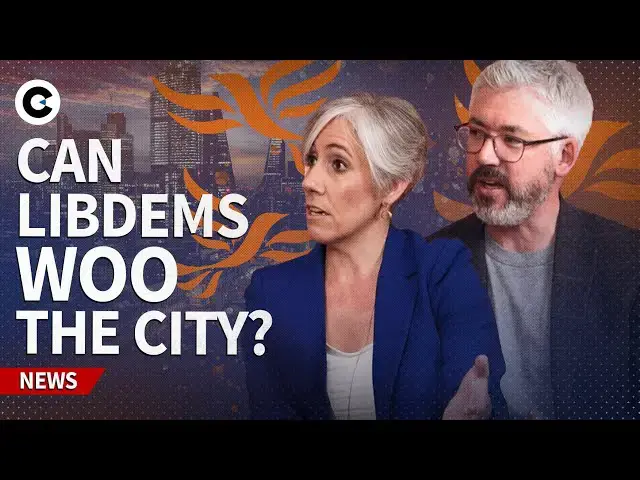
City AM's Christian May speaks to Daisy Cooper MP, Deputy Leader of the Liberal Democrats and Treasury spokesperson, about the party's new initiative to directly engage with the financial and professional services sectors: the Lib Dem City eXchange (LDCX).
The UK economy is at a critical juncture, facing persistent challenges that demand fresh policy thinking.
Subscribe to City AM's YouTube channel for more in-depth interviews and breaking City news.
#LibDems #LDCX #UKEconomy #FinancialServices #CityofLondon #ProductivityCrisis #UKRegulation #DigitalAssets #Investment #UKFinanceNews
Get more of City AM 👇
🌐 http://www.cityam.com
X(formerly Twitter): http://twitter.com/CityAM
Facebook: http://www.facebook.com/cityam
Instagram: http://www.instagram.com/city_am
LinkedIn: http://www.linkedin.com/company/cityam
Show More Show Less View Video Transcript
0:00
I'm joined by Daisy Cooper, deputy
0:01
leader of the Liberal Democrats and
0:03
Treasury spokesperson. Critical time,
0:05
just a few days ahead of the budget, but
0:07
we're here to talk about how the Lib
0:09
Dems want to understand the city of
0:11
London. Uh launched a new initiative to
0:13
hear from people who work in the square
0:14
mile and uh Daisy's going to talk me
0:16
through that. Daisy, thank you very much
0:18
for joining us here.
0:18
Pleasure. Thanks for having me.
0:20
So, I heard about this initiative and I
0:22
thought, what a good idea. Um I think
0:25
politicians of all stripes can take for
0:27
granted certain sectors. they often
0:29
aren't very good at at talking about or
0:31
admitting to what they don't know. Um
0:33
and so any effort to sort of understand
0:35
the issues that people actually work in
0:37
a key sector and it is a key sector um I
0:40
think are to be welcomed. So how did it
0:41
come about?
0:42
So I became treasury spokesperson for
0:44
the dems just over a year ago and for
0:47
the first six months I just um met as
0:50
many different people as I possibly
0:51
could both people working um for
0:53
particular organizations but also for
0:55
sort of industry bodies as well. Um, and
0:58
the same themes kept coming up time and
1:00
time again. One, there was a kind of
1:02
enormous frustration that I guess some
1:04
of the bigger parties weren't really
1:06
listening and weren't really engaging as
1:08
much as business and finance would
1:10
really want them to. I guess the second
1:12
frustration was this sense that um they
1:14
weren't really understood uh as a
1:17
sector. And the third was that they were
1:19
very curious about us as a political
1:20
party but didn't really know what our
1:22
instincts were, what we believed in or
1:25
um or what were the kind of things that
1:27
we were interested in. And it just
1:29
occurred to me that after all these
1:30
meetings, this same sentiment kept
1:32
coming up coming up time and time again.
1:34
And I thought, you know what, I really
1:36
want us as a political party to be able
1:38
to communicate at large with people who
1:40
work in financial and professional
1:41
services, not just here in the city, but
1:43
right across the UK. And I want to be
1:45
able to hear back from those people at
1:47
the same time. Um, and wouldn't it be
1:49
great if we could have an exchange of
1:50
ideas and exchange of views because
1:52
obviously, you know, there isn't a
1:53
homogeneous kind of single view on every
1:55
single topic. Um, and wouldn't it be
1:57
great if we could take the temperature
1:58
on issues in real time and hear from
2:00
people directly. Um, and so um, based on
2:03
that um, thought, I spoke to uh, a
2:06
couple of people and said, "Look, I want
2:07
to get this thing set up. Um, I need to
2:09
fund raise some money to employ somebody
2:11
to run it. Um, how about we get it going
2:12
and launch it and see how it goes?" So,
2:14
we've launched this new initiative
2:15
called Libdem City Exchange. Uh, it's um
2:18
ldcx.org.uk for anybody who wants to
2:20
look it up. Um, and we're going to be
2:22
doing two things. The first is for
2:24
anybody who signs up, they don't have to
2:26
be a Liberal Democrat party member, they
2:27
don't even have to support the Lib Dems.
2:29
If they just want to hear from us, they
2:30
can sign up to it. We'll be sending out
2:32
bulletins about the things that we're
2:33
working on in parliament and then asking
2:34
people for feedback on that um in terms
2:37
of whether they like what we're saying,
2:38
whether they think we're saying the
2:39
right things, whether they have other
2:40
ideas as well. But we'll also have some
2:43
high level roundts with particular
2:45
experts often experts who have different
2:47
points of view so that we can tease out
2:48
the sort of different views uh that
2:50
exist within the city so that we can
2:52
come to an informed view ourselves on a
2:54
whole range of different issues.
2:55
So it's interesting that you said that
2:56
you're aware that one of the views uh in
3:00
the city or in the sector is that they
3:03
didn't really associate the Liberal
3:04
Democrats with financial services,
3:07
professional services. Um the Labour
3:10
Party made a big play about being in
3:12
their own words the most pro business
3:14
government ever. Um and we can unpick
3:17
that. Um but actually it's quite often
3:20
felt to me like they're probably more at
3:21
home in the city than they are in in
3:23
many sort of market towns and high
3:25
streets for various reasons. Actually a
3:27
lot of their agenda around long-term
3:28
finance and deploying capital kind of
3:31
sits quite nicely with some of the
3:32
financial institutions here who also
3:34
like pulling big levers and moving big
3:36
money around. So I think Labour kind of
3:38
feel like they've got their their um
3:40
relationship with the city and the tries
3:42
for lots of reasons. I mean frankly a
3:43
lot of them used to work in the city. Um
3:45
also feel perhaps instinctively that
3:47
they're in touch but people haven't
3:49
always associated the Liberal Democrats
3:50
with it. And it's interesting Zion is I
3:52
think it was in some phrasing might have
3:54
been phrasing to do with this initiative
3:55
or it might have just been in your most
3:56
recent manifesto. You say very clearly
3:58
that private enterprise is the principal
4:00
engine of growth and prosperity in the
4:02
UK. Well that's you know music to my
4:04
ears. I'm sure music ears of CCM readers
4:07
etc. Why is it do you think that that
4:09
sort of
4:11
robust kind of pro- enterprise promarket
4:14
um sentiment is not something that
4:16
people have associated with the Lib
4:17
Dems?
4:18
Honestly, I think it's because we've
4:19
been a small party for a decade um and
4:23
now we're a much bigger party. We want
4:25
to use the platform that we have to
4:26
speak very clearly about the values that
4:28
we have. So um I often say to people the
4:31
values that we have today are completely
4:33
unwavering. They kind of go back deep
4:34
into our roots as a party. So, we like
4:37
to consider ourselves the inheritors of
4:39
200 years of liberal economic thinking.
4:41
You know, we are the party that fought
4:43
the corn laws. We're the party that
4:44
fought Brexit. We are a party of open
4:47
markets.
4:47
We did see we did used to see that. We
4:49
used to see that in the kind of old
4:50
orange book school of liberal thinking
4:52
and some uh people who have fallen uh by
4:55
the wayside from your party, the likes
4:57
of Jeremy Brown. Um what people like me
5:00
might have thought of as classical
5:01
liberals. Um, and I think it's fair to
5:04
say that somewhere along the way, there
5:05
is a sense now that the Liberal
5:07
Democrats are just another kind of
5:09
center-left,
5:11
you know, kind of offshoot of of of
5:13
mainstream labor thinking, just
5:15
generally that kind of territory. Are
5:17
you up for a bit more of a kind of
5:19
energetic relationship with enterprise?
5:22
Yeah, absolutely. And look, we consider
5:24
ourselves to occupy a very distinctive
5:27
political space. I completely reject the
5:29
kind of even the framing of the question
5:31
are we center left or center right. We
5:33
are distinctly liberal. So we have sort
5:35
of one strand of our history which is
5:37
fighting the corn laws fighting Brexit
5:39
being very pro-enterprise. Um seeing the
5:42
relationship between uh you know
5:43
government and private sector hand in
5:45
hand. We saw that in coalition when uh
5:47
in government when Ed Davyy was you know
5:49
launching the green investment bank and
5:50
the British business bank as well. But
5:52
there is another strand to our history
5:53
as well. you know, we are the party that
5:56
rolled out the old age pension. We are
5:58
the party that um created the idea of
6:00
free school meals and we are the party
6:02
that conceived of the idea of the
6:04
national health service then later
6:05
rolled out by a labor government. So we
6:07
do have these two strands in our liberal
6:09
history and I think they can coexist
6:11
side by side. So we are fiercely pro-
6:14
enterprise. We are uh fiercely uh pro uh
6:18
entrepreneurship and open markets but at
6:21
the same time we also are pro- social
6:23
justice. And I think if you ask most
6:25
people in the city if they identified
6:26
with both of both of those strands I
6:28
think they would say yes.
6:29
So it's probably the case that um not to
6:32
put words in your mouth but your your
6:34
most sort of robust example of pursuing
6:36
that that open market um approach is
6:39
your position on Brexit. Um but we don't
6:42
have time to get into Brexit today. So
6:43
we might invite you back to talk about
6:44
that. Um but putting Brexit to one side
6:46
in that case looking through some of the
6:49
positions of your previous manifesto and
6:51
I appreciate you probably on a process
6:53
underway to think about the next
6:54
manifesto. You can tell me if these
6:56
things still stand for example um you
6:59
pledged to reverse the reduction in the
7:02
additional bank levy and bank taxes that
7:04
came in. Do you still stand by that?
7:05
So our policy on that has evolved. So um
7:08
we did have that in our manifesto. What
7:09
we've said most recently is that given
7:12
the real crisis and the public finances
7:15
we um have said rather than having that
7:17
uh rather than reversing the sir charge
7:19
and the levy instead we have called
7:21
instead for a windfall tax uh on the big
7:24
banks. Now um I've spoken to the big
7:26
banks about this. I've spoken to people
7:27
uh in the city and what they say to me
7:29
is that they don't like the idea of the
7:31
tax but they do like the way in which we
7:32
want to spend it. So what we've said is
7:35
that of all the money that that could
7:36
raise 30 billion over the next five
7:38
years, we would use just under half of
7:40
it for two or three different things,
7:42
the first is to try and reduce people's
7:44
energy bills. Um because, you know, we
7:46
know that households are really
7:47
struggling with that right now. Um the
7:49
second is to give a VAT cut for
7:51
hospitality because we think it's really
7:53
important. That would be a progrowth
7:55
measure that would save jobs on the high
7:57
street in communities up and down the
7:58
country. I think that's really
7:59
important. And the third initiative
8:01
which I announced at our conference was
8:03
the creation of an energy security bank
8:05
which would be working handinhand with
8:07
the banks high street banks in this
8:09
country to roll out um affordable
8:11
lowinterest loans for households and
8:14
small businesses to take energy security
8:16
measures um to improve their energy
8:18
security at home. So um as I say I've
8:20
done roundts with people in the city.
8:22
They say they don't like the tax but
8:23
they like what we want to do with it.
8:24
And as far as I'm concerned as a
8:26
politician, it's my responsibility to be
8:28
honest about our choices and to explain
8:30
why we want to take them.
8:31
I suppose you're halfway there. Um, so I
8:35
mean last night, uh, in the city, the
8:37
banking industry had its big annual,
8:39
didn't it? You were probably there.
8:40
I was. Yeah.
8:40
Um, so you would have heard the case
8:42
made quite clearly that the sector
8:45
considers itself to be pretty highly
8:46
taxed. And when you tot it all up, the
8:48
cumulative impact of the corporation
8:50
tax, the additional search charge, the
8:52
levy and all the other taxes that they
8:53
pay like any other business puts them at
8:55
about 46%.
8:57
Which is far higher than the US, far
8:59
higher than much of Europe. So
9:01
they would say, and I hear this argument
9:02
also from the likes of supermarkets who
9:05
people look at the kind of, you know, on
9:07
paper the billions of profit being made
9:09
etc. And the supermarkets would probably
9:11
advance the same argument which is looks
9:14
can be deceiving. We're actually very
9:16
highly taxed. Um I think margins in
9:19
financial institutions probably better
9:20
than they are in supermarkets, but they
9:22
would probably agree on the principle
9:23
that we are a very highly taxed sector
9:26
and that there must be other places to
9:27
look because you know they are also
9:29
quite a mobile sector. There's no
9:30
god-given right why they all choose to
9:32
be in the UK and as you say not just
9:34
London but across the country. There is
9:35
a risk that you know there will there
9:38
will come a straw that breaks that
9:39
camel's back.
9:40
Yeah. No and I absolutely get that.
9:42
Look, um the cost of doing business in
9:44
this country is crazy. Like it is super
9:46
super high. Um some of that is taxes,
9:49
some of it is energy costs. Um for some
9:50
industries it's, you know, food costs.
9:52
There are lots of different costs.
9:53
There's the cost of regulation and cost
9:54
of compliance as well, right? So there's
9:56
lots of different costs. Um and we know
9:58
as a political party that um we want to
10:02
drive down the cost of living and drive
10:04
down the cost of doing business in this
10:05
country. And we haven't got all the
10:06
answers to that yet, but those are two
10:08
really significant priorities for us.
10:11
And so when we've talked about, for
10:12
example, raising a windfall tax on the
10:14
big banks and using it to ease the
10:15
pressure of doing business for high
10:17
street businesses and for households,
10:19
that gives you a sense of our kind of
10:20
direction. But what I would say about
10:22
the banks in particular is that if you
10:24
had a Liberal Democrat government, we
10:25
wouldn't just take that one measure on
10:27
its own. I mentioned earlier we occupy a
10:29
distinctive political space. We are
10:31
calling for a customs union, a bespoke
10:34
customs union with the EU, which would
10:36
boost growth uh in this country. We want
10:38
to see um you know improved EU adequacy
10:41
rules. We want to see mutual recognition
10:43
of qualifications. All of these kind of
10:46
measures would really massively boost
10:48
growth not just for the country as a
10:49
whole but particularly for the city as
10:52
well. And so we can't just do tax and
10:54
spend. We know as a party that as a
10:56
country we cannot tax our way to
10:58
prosperity. We have to invest our way to
11:00
prosperity and we get growth by working
11:02
with our neighbors. So this wouldn't be
11:04
your sort of one measure on its own. it
11:05
be part of a broader package where we
11:06
pursue a closer relationship with
11:08
Europe.
11:08
Okay. One final area I'd like to get
11:10
your thoughts on and also your sort of
11:13
expectations as to how your new exchange
11:16
project um might feed into the way you
11:19
and your party and your colleagues think
11:20
about the issue is this sort of state of
11:22
our public markets. Yeah.
11:23
Um and some of the issues that uh come
11:26
up time and time again. And it can be
11:28
quite confusing to some people to say
11:30
constantly hear that the footsie is at
11:31
an all-time high and that it's an
11:33
all-time high again. And those things
11:35
can be true. At the same time, that can
11:36
mask some some quite deeper problems
11:38
about liquidity and about u companies
11:41
coming to market in the first place.
11:43
Are you hoping that this this this
11:45
program of of of engaging with people in
11:47
the sector is going to enlighten you on
11:49
that? And what do you think about the
11:51
current state of public markets in this
11:53
country? Yeah. So, we've identified that
11:55
as one of the issues we want to discuss
11:56
in our first three um events that we're
11:59
going to organize these roundts. This is
12:01
one of our top three issues to to get
12:02
the exchange going. So, um part of it is
12:05
about having a retail culture in this
12:07
country. Um and I sort of feel quite
12:09
conflicted on this. So, I think on the
12:11
one hand we're a small island nation
12:12
with a housing crisis. Is it surprising
12:14
that people invest in bricks and mortar
12:16
rather than uh inequity for example? On
12:19
the other hand, we know that even by
12:20
other comparisons, similar comparisons,
12:22
we're not we don't have the confidence
12:23
as a nation to invest um you know all
12:25
the time as retail investors. Part of
12:28
that uh I think is around um education,
12:31
financial education and literacy. I
12:33
think that that's one thing. Um the
12:35
second thing is about um companies
12:38
having that confidence as to when to
12:39
list and whether to list and uh getting
12:42
access um access to capital in this
12:45
country. There's lots of questions. Um I
12:47
don't think we have all the answers yet
12:48
but we are very very keen to hear from
12:50
people in the city because we are
12:51
hearing different things about why
12:52
people think it is an issue whether it's
12:55
because valuations are higher in other
12:57
countries whether it's because you know
12:58
because there's more capital there
12:59
whether it's because people are listing
13:00
too quickly there's lots of different
13:02
things so we're very keen to tease that
13:03
out but that's kind of gives you a
13:05
general sort of sense of our direction
13:06
and our thinking at the moment
13:07
and how creative are you prepared to be
13:09
when you think about solutions for
13:10
example something we hear a lot from
13:12
people in the city um is the negative
13:16
impact of the way in which we tax shared
13:18
transactions in this country. So you
13:20
know this government and previous
13:21
governments have talked about wanting to
13:22
boost sort of retailer participation in
13:24
the market. Um but at the same time
13:26
they'll say but actually you know one of
13:28
the ways you could really put some
13:30
rockets under that would be to get rid
13:31
of the stamp duty on shares. Is that
13:33
something you're prepared to consider?
13:35
Yeah absolutely. I mean, I've been
13:36
looking at this issue recently. Um, and
13:39
uh, what I've seen is some of the
13:40
arguments saying if you I think the
13:43
estimates are that if you were to do
13:44
that, um, it could either be a detriment
13:47
to the Treasury, it could be a big boost
13:49
to the Treasury. And there's a whole
13:50
range of different modeling that shows
13:52
whether it could work or not.
13:53
The Treasury would just say that's four
13:54
billion quid a year, you know, and we
13:56
want it. And the argument would then go,
13:58
well, okay, maybe that's a direct line
14:00
item for you, but actually consider the
14:02
upside to the act the activity that
14:04
would emerge and to the sort of boost to
14:05
the markets.
14:06
Absolutely. So, I think it's definitely
14:08
worth trying. There are rumors the
14:09
government might do something on this uh
14:11
in the budget. Um, and they might
14:13
What else have you heard about them?
14:13
Give us all your budget rumors.
14:15
Oh, I haven't got time. Come on. Have
14:17
you seen the news?
14:18
All right. Over the last couple of
14:19
weeks, you know, we've been collecting
14:20
all the budget rumors and we've got
14:22
about 30 different items on our list of
14:24
things that we've been tracking.
14:25
What about income tax? Do you think that
14:26
they should raise income tax at all?
14:29
So we have said as a party that we don't
14:31
think that you should be taxing
14:33
struggling households and small
14:35
businesses at this time when you have
14:37
got a cost of living and a cost of doing
14:39
business crisis. We have given examples
14:41
of other ways that the government could
14:43
raise revenue but we've also said they
14:44
have got to go for growth. You know,
14:46
there is this elephant in the room which
14:48
is our relationship with Europe. And it
14:50
is so frustrating, so frustrating to us
14:53
as Liberal Democrats to hear the Labor
14:54
government say Brexit's been a bit of a
14:56
disaster, but we're not prepared to do
14:57
anything.
14:57
I can see I know that I know that it is
15:00
for Liberal Democrats. Do you feel like
15:01
you might be sort of wasting energies on
15:03
that? I appreciate there's a sort of
15:04
campaigning, you know, permanent
15:06
campaigning effort around the issue for
15:07
you and your many of your supporters,
15:09
but to to many people, you know, it's
15:11
settled until it isn't. It might change
15:13
down the line, but at the moment to coin
15:15
a phrase the chancellor uses about
15:17
living in the world that we're in, not
15:18
the one we want to see. If kind of
15:21
talking about Brexit and, you know,
15:23
improving our relationship with the
15:24
European Union, is your kind of trump
15:26
card in the growth debate, it actually
15:28
makes you a little bit irrelevant to the
15:30
current conversation, don't you think?
15:32
No, I don't think so. Because the Labor
15:34
government have absolutely squandered
15:35
the last 15 months. They could have had
15:37
a fullyfledged youth mobility scheme by
15:39
now. They could have had all sorts of
15:41
adequacy arrangements. They could have
15:43
ripped up red tape for uh exporters. Um
15:46
and they haven't. So, um this isn't, you
15:48
know, everything that we're suggesting
15:51
could be within the government's own red
15:52
lines, right? We want to go further. We
15:54
want to have a bespoke customs union,
15:56
but even within the government's own red
15:58
lines on their relationship with Europe,
16:00
if they completely max that out, uh the
16:03
estimates that we've had from the House
16:04
of Commons Library Research is that
16:06
could bring in about 25 billion pounds
16:08
per year into the public purse within
16:10
the Labor government's own red lines.
16:12
They just need to have more ambition.
16:14
They need to go uh act with more
16:16
urgency. Um and fundamentally I just
16:19
kind of of of of course the chancellor
16:22
being in power has to um meet the world
16:26
where it is. But as an opposition party
16:28
we want the country to be in a very
16:30
different place. We want a country that
16:31
is genuinely growing. And yes we're
16:33
talking about our relationship with
16:34
Europe. But there are other things we
16:36
can do as well for growth. Investing in
16:38
our skills uh reforming business rates
16:41
um you know uh giving a boost to small
16:43
businesses. There's lots of other things
16:44
we can do as well. But for as long as
16:46
Europe remains, you know, the elephant
16:48
in the room, we're going to be the party
16:50
that keeps banging that drum.
16:51
All right. If you want to bang on some
16:53
other drums, uh, alongside the Liberal
16:55
Democrats, um, then get involved, I
16:58
suppose, with their, um, uh, what do you
17:00
call it? City of London Exchange.
17:01
Libd Dem City Exchange.
17:02
Libd Dem City Exchange. All right. Um,
17:04
well, I think it is a welcome initiative
17:06
and I hope it goes well and you can come
17:07
back and tell us about um, all the
17:09
things that city workers have have told
17:11
you. So, Daisy Cooper, thank you very
17:12
much for coming in.
17:13
Thank you very much for having me.
News
Public Policy