live_tv
Livestream Starting Soon
00
Hours
:
00
Minutes
:
00
Seconds
Up next in 10


⚠️ Don't Let a Dead Battery or Electrical Issue Strand You! Whether it's extreme heat or freezing cold, electrical failures happen when you least expect them. Be prepared with the right tools:
🔋 Must-Have Emergency Jump Starter: (Start a dead car instantly - No second car needed)
➤ NOCO Boost GB40: https://amzn.to/4aUH0hI
⚡ Test Your Battery Health at Home: (Is it the alternator or the battery? Find out now)
➤ ANCEL BA101 Tester: https://amzn.to/3LGnOK6
🛠️ Check Engine Light On? Read the Code:
➤ ANCEL AD310 Scanner: https://amzn.to/4sx9u7g
As an Amazon Associate, I earn from qualifying purchases.
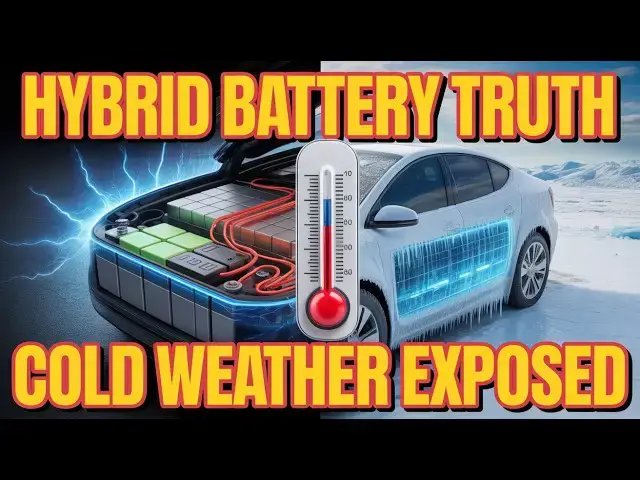
Ever wondered why your hybrid car's battery seems to lose its edge when the temperatures plunge into negative territory?
In this video from Car Justify, we uncover the real truth about how sub-zero and freezing conditions affect your hybrid vehicle's high-voltage battery pack—whether it's a Toyota Prius, Honda Accord hybrid, Ford Escape hybrid, or any other model.
Discover the surprising ways cold weather impacts battery chemistry, leading to noticeable changes in performance, electric-only range, acceleration feel, and overall fuel efficiency right from your car's dashboard.
Show More Show Less View Video Transcript
0:00
Hey, if your hybrid car's battery is
0:02
struggling in these sub-zero temps,
0:04
you're not alone. It's a common headache
0:06
when the mercury drops below freezing.
0:08
The fix is straightforward. Keep your
0:10
car's high voltage battery warm through
0:12
preheating, garage parking, and regular
0:14
drives, and you'll maintain solid
0:16
performance without major drama.
0:18
Ignoring this could lead to faster
0:20
battery degradation over time, hitting
0:22
you with repair bills over $1,000 for a
0:25
new pack or related fixes. Okay, so
0:28
let's dive right in. I'm Tom from Car
0:31
Justify, and I've seen plenty of hybrids
0:33
roll into the shop during winter blasts.
0:36
You know that feeling when you hop in
0:37
your Toyota Prius or Honda Accord
0:39
hybrid, turn the key, and it just
0:41
doesn't have the pep it usually does?
0:43
That's the cold messing with your car's
0:45
battery chemistry. The thing is,
0:48
batteries and hybrids, like those nickel
0:50
metal hydride or lithium ion packs
0:52
tucked under the rear seat or in the
0:54
trunk, rely on chemical reactions to
0:56
store and release power. When temps hit
0:59
negative degrees, those reactions slow
1:01
way down. Your car's electric motor
1:03
can't pull as much juice, so the gas
1:05
engine kicks in more often to help out.
1:08
Well, um, this means your fuel economy
1:10
takes a hit. In mild weather, you might
1:13
get 50 m per gallon easy, but below
1:15
freezing, it could drop to 30 or 40. Not
1:17
the end of the world, but annoying if
1:19
you're counting on that hybrid
1:20
efficiency to save on gas. Now, don't
1:23
panic. It's not like your batteries
1:24
freezing solid or anything. Modern
1:26
hybrid batteries are built tough with
1:28
insulation and cooling systems that
1:30
double as warmers in cold. But if it's
1:33
sitting outside overnight at -10°, it'll
1:36
start cold and need time to warm up. All
1:39
right, then. One quick tip to beat this
1:41
is preheating your car while it's
1:43
plugged in if your model allows it. For
1:45
plug-in hybrids like the Chevy Volt, use
1:48
the app or remote start to get the cabin
1:50
and battery toasty before you drive.
1:52
That way, you're not draining the
1:54
battery just to heat things up on the
1:56
road. I mean, even for non-plugins,
1:58
letting the engine idle for a minute or
2:00
two helps circulate warm coolant around
2:02
the battery pack. It's all about getting
2:05
that internal temp up to around 59 to
2:07
95° F. That's the sweet spot for peak
2:10
performance. So, picture this. You're in
2:13
your Ford Escape Hybrid and acceleration
2:16
feels sluggish at first. That's because
2:18
the cold battery can't deliver full
2:19
power right away. The car's computer
2:22
limits output to protect the cells until
2:24
they warm. Give it 5 to 10 minutes of
2:26
driving and it smooths out. Honestly,
2:29
hybrids handle cold better than full
2:31
electrics since they've got that gas
2:32
engine backup. But still in extreme
2:35
negatives like minus20, you might notice
2:37
the EVON mode doesn't engage as much.
2:41
The system prioritizes warming the
2:43
battery over pure electric driving.
2:45
Okay, so let's talk prevention. First
2:47
off, park your hybrid in a garage
2:49
whenever you can. That shields the whole
2:52
vehicle from wind chill and keeps the
2:54
battery from dipping too low overnight.
2:56
If no garage, consider a car cover or
2:58
even a battery blanket. Those plug-in
3:00
warmers wrap around the pack and
3:02
maintain temp. Driving your hybrid
3:04
regularly, is key, too. If it sits for
3:07
days in the cold, the battery can lose
3:09
charge slowly, and cold amps up
3:11
self-discharge. Aim to take it out every
3:14
couple days, even for a short spin to
3:16
keep things cycled. Tire pressure drops
3:19
in cold weather, which adds drag and
3:21
makes your hybrid work harder. Check
3:23
those tires on your vehicle. Keep them
3:25
at the recommended PSI, usually around
3:27
32 to 35. Low pressure means more
3:30
resistance, burning extra fuel and
3:33
stressing the battery. If you're in a
3:35
really frigid spot, like up north, think
3:37
about winter grade fluids. Your hybrid's
3:40
coolant should be a good anti-reeze mix
3:42
to handle negatives without freezing
3:44
lines that cool, or in this case, warm
3:46
the battery. Another pro move is
3:48
monitoring your car's diagnostics. Grab
3:51
an OBD2 scanner and plug it into the
3:53
port under your dashboard. It can read
3:55
codes from the ECU module, telling you
3:58
if the battery's temp sensor is flagging
4:00
issues. Codes like P080 for battery
4:03
performance or something related to
4:04
thermal management pop up if colds
4:07
causing glitches. Catching them early
4:09
saves big bucks. Replacing a hybrid
4:11
battery pack can run $2 to $5,000
4:14
depending on the model. Let's bust some
4:16
myths here. Folks say hybrids die in
4:19
cold, but that's overblown. Sure, range
4:21
drops, maybe 10 to 40% in sub-zero, but
4:24
the gas side picks up slack. In tests, a
4:26
Toyota Camry hybrid lost about 20%
4:28
efficiency at 0 degrees, but still beat
4:30
a regular gas car on mileage. Repeated
4:33
cold starts without warming can wear
4:35
cells faster over years, shortening life
4:38
from 10 to 15 years down a bit. But with
4:40
care, like I said, you avoid that. For
4:43
plug-in hybrids, charging in cold needs
4:45
attention. If your battery is frozen
4:48
cold, it might charge slower or limit
4:51
amps to prevent damage. Preheat first
4:53
and use a level two charger at home.
4:55
Keeps the pack conditioned. Cabin
4:58
heating pulls from the battery, too. In
5:00
non-hybrids, heat comes free from the
5:02
engine, but your hybrid might use
5:04
electric heaters if the engine's off.
5:06
So, bundle up or use seat warmers to
5:08
save power. They're more efficient. In
5:11
places like Norway, where it's freezing
5:13
half the year, hybrids thrive because
5:15
folks prep right. They garage, preheat,
5:17
and drive smart. No big issues. Okay.
5:21
So, if your hybrid's throwing warnings
5:23
like power reduced or check hybrid
5:25
system, that's often cold related. For
5:27
example, in a Honda CRV hybrid, the
5:30
display might say the battery temps low,
5:32
limiting acceleration. Just drive gently
5:34
till it warms. Well, um, battery
5:37
degradation from cold isn't instant.
5:39
It's cumulative. One winter won't kill
5:42
it, but five without care. Yeah.
5:44
capacity fades, meaning less EV range
5:46
and more gas use. I mean, to test your
5:49
battery's health, use that OBD scanner
5:51
again. Look for voltage readings on each
5:54
cell. Should be even, around 3.7 volts
5:57
for lithium. Uneven means potential cold
6:00
damage building up. Anyway, upgrading to
6:03
winter tires helps, too. Your hybrid's
6:06
regenerative braking, where it captures
6:08
energy from slowing down, works better
6:10
with good grip. Slippery roads mean less
6:12
region, so less free charge back to the
6:15
battery. You know, for older hybrids
6:17
like a 10-year-old Prius, cold hits
6:19
harder because batteries age naturally.
6:22
If yours is pushing 150,000 mi, consider
6:25
a health check at the shop. We use tools
6:27
to measure capacity. Okay, then let's
6:29
wrap the basics. Warm your car, park
6:32
smart, drive often, check tires and
6:34
fluids. Do that and negative temps won't
6:36
phase your hybrid much. The thing is,
6:38
some models shine in cold. Toyota's
6:40
systems recirculate engine heat to the
6:42
battery fast. Fords might need more
6:45
idling. Know your ride. Check the manual
6:47
for cold tips. Honestly, if you're
6:49
towing or hauling in winter, ease up.
6:51
Extra weight plus cold battery means
6:53
more strain. Could overheat cells once
6:55
warm. Okay, so real talk from the shop.
6:58
I fixed hybrids where owners ignored
7:00
cold warnings leading to failed modules.
7:03
One guy in a Chevy Tahoe hybrid let it
7:05
sit all winter. Battery dropped to low
7:07
charge. Cells imbalanced. cost him 1,500
7:10
to recondition. Well, um, but most
7:13
folks, they just need these tweaks. Your
7:15
hybrid's designed for this. Engineers
7:17
test them in arctic conditions. I mean,
7:19
regenerative braking in cold. It's less
7:21
effective at first because cold
7:23
batteries accept charge slower. But as
7:25
you drive, it improves, putting energy
7:28
back into your car's pack. For extreme
7:30
cold, like minus30, block heaters help
7:33
if your hybrid has one. plugs into the
7:36
wall, warms the engine block, indirectly
7:38
helping the battery. Fuel quality
7:40
matters, too. Winter blend gas in your
7:43
hybrid's tank burns cleaner in cold,
7:46
reducing engine strain that could affect
7:48
hybrid synergy. If you're shopping
7:50
hybrids for cold climates, look for ones
7:52
with battery preconditioning, like the
7:54
Hyundai Tucson Hybrid. Apps let you warm
7:57
it remotely. Cold also affects your
7:59
car's 12vt battery, the small one for
8:01
accessories. If it dies, the whole
8:03
hybrid system won't start. Keep it
8:05
charged. Cold saps it fast. In snow,
8:08
your hybrid's traction control and ABS
8:11
work with the electric motors for better
8:13
grip. But battery cold means less
8:15
instant torque at takeoff. Drive smooth.
8:18
Let's say your dashboard shows battery
8:20
bars dropping quicker. That's normal in
8:22
negatives. The gauge accounts for
8:24
reduced capacity till warm. To extend
8:27
life, avoid full discharges in cold.
8:30
Hybrids manage this automatically, but
8:32
don't push EV mode hard when freezing.
8:34
User stories I've heard. Guy in
8:36
Minnesota with a Ford Fusion Hybrid
8:38
swears by garage parking. Keeps his
8:40
mileage steady through blizzards. If
8:42
issues persist, scan for codes. That OBD
8:46
tools a gamecher. Grabs data from your
8:48
car's ECU. Spots temp related faults.
8:52
End of the day, hybrids beat pure gas
8:54
cars in winter efficiency, even with
8:56
battery dips. Less idling waste,
8:59
smoother power. One last tip, clean snow
9:02
from vents. Your hybrid battery has air
9:04
intakes. Blocked ones mean poor cooling
9:07
or heating. With these steps, you'll
9:09
cruise through negatives. No sweat. Save
9:12
gas. Avoid breakdowns. If your hybrid's
9:15
SRS or other systems tie into the
9:17
battery, cold glitches could trigger
9:19
lights. Scan them. That's the truth on
9:22
hybrid batteries and freezing temps. Not
9:24
as scary as folks say, right? Grab that
9:27
OBD scanner from the link below. Great
9:29
for DIY checks. Hit like if this helped.
9:32
Subscribe for more car tips and drop a
9:34
comment on your winter hybrid wos. Stay
9:37
warm out there. Talk soon.
#Hybrid & Alternative Vehicles