Up next in 10



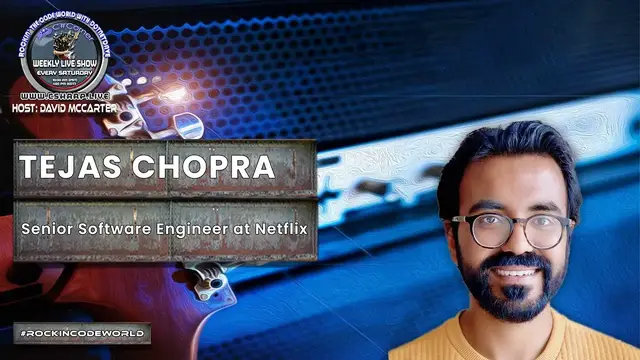
Join us on July 3 with Tejas Chopra on Rockin' The Code World with dotNetDave - a weekly show to learn & live Q&A on .NET and other programming technologies.
AGENDA
• Upskilling for a multi-cloud world: Understanding the nuances of Cloud Computing, how do you prepare yourself for it, and also covering some of the basics concepts of Cloud: Storage, Compute, etc.
• Increasing community engagement: How to start speaking about software, and create a potential speaker profile in the community to benefit everyone. Being a software developer & an introvert by nature, I can talk about my journey into speaking.
GUEST SPEAKER
Tejas Chopra is a Senior Software Engineer, working in the Data Storage Platform team at Netflix, where he is responsible for architecting storage solutions to support Netflix Studios and Netflix Streaming platform. Prior to Netflix, Tejas was working on designing and implementing the storage infrastructure at Box, Inc. to support a cloud content management platform that scales to petabytes of storage & millions of users. Tejas has worked on distributed file systems & backend architectures, both in on-premise and cloud environments as part of several startups in his career. Tejas is an International Keynote Speaker and periodically conducts seminars on Microservices, NFTs, Software Development & Cloud Computing and has a Masters Degree in Electrical & Computer Engineering from Carnegie Mellon University.
Speaker Profile: https://twitter.com/chopra_tejas
All Episodes: https://www.c-sharpcorner.com/live/rockin-the-code-world-with-dotnetdave
C# Corner - Community of Software and Data Developers
https://www.c-sharpcorner.com
#CSharpCorner #rockinthecodeworls #live #dotnet
Show More Show Less View Video Transcript
0:00
The End
0:29
Thank you
0:59
Thank you
1:29
Thank you
1:59
Welcome, geeks, to another Rockin' the Code World with .NET Dave. I'm David McCarter, and I'm glad you're all here today on, at least in America, a long holiday weekend
2:13
And I'm really excited to have, you know, one of the speakers from the Code Quality Conference, Tejas Chopra, on the show today from Netflix
2:23
And I've been really excited to have him back on, you know, talking to him again
2:27
And, you know, I think, you know, I Facebooked this a couple of days ago
2:31
I think I'm excited just because Netflix is my favorite streaming service. You know, I'm not saying that because he's on the show
2:38
I'm saying it because that's what it is. And I watch it every night pretty much
2:43
So I'm excited to hear more about, you know, how they architect things in the cloud up there at Netflix up in San Jose
2:51
So, and if you didn't know, tomorrow is July 4th in America
2:57
This is our Independence Day, you know, in 1776 on July 4th, we declared independence from the mean old British Empire
3:07
And sorry, all my friends in the UK. And we celebrate by going out and, you know, having barbecues and parties and fireworks
3:17
I'm not sure how much the fireworks are going to work this year because of all the bad fire dangers that we have in America right now
3:25
but it's a chance for us to celebrate. And, you know, between you and me, I'm, I'm
3:32
this July 4th seems a little bit different. It's not only because, you know, we're, we're coming
3:37
out of the COVID pandemic. We're not out, but we're coming out of it. But, you know, to me
3:42
it also represents, you know, the first time in four and a half years that, you know, I feel just
3:47
better about America. And, you know, I'm sure those of you who follow politics know it's exactly
3:54
what I'm talking about. So anyway, I'm glad you're all here. Unfortunately, I still have to bring up
4:03
to try to get your help to help support the people in India dealing with the COVID crisis
4:11
right now. They still don't have vaccine. I don't know where these millions of doses
4:18
that America is sending out, but it doesn't seem like it's getting to India
4:22
so they're still in a pretty bad mess there so I'm challenging all software developers
4:29
not in India to meet my challenge that I made about a month and a half or more ago
4:34
to donate at least $100 or more to this link so we can get support for the people in India
4:43
that are really, really having a bad time right now and speaking of that
4:49
unfortunately in America You know, our COVID cases has risen 10% in the last week because the new variant came from India
5:00
And so there's already cities in America locking down again, you know, and so we're not over this, people
5:07
And so please be careful. Please be safe. And if you have access to the vaccine, go freaking get it
5:15
Because if you don't, this is never going to end. And so I don't know what to say to plead with you to go do it
5:22
If you have access to the vaccine and you don't have some medical condition that prevents you from taking it, please go get it
5:30
This is a world pandemic. It's not an India pandemic or a United States pandemic
5:35
It's a world pandemic. The world has to come together and fix this
5:39
And we're not doing a very good job. So the only thing you can really do is go get the vaccine
5:45
I have my vaccine. I feel so much better. so much safer at least in my city right now i can walk around the stores without a mask on that
5:54
might change but you know it's it just makes you feel a lot better i had absolutely zero
5:59
side effects from the vaccines so please go get it um i want to plug my open source project again
6:08
um spar gene and you can go to spar gene.net it's all for my new open source project is all all.net5
6:14
I have an older one for .net core. And if you want to go check it out, please do
6:20
I'm working really hard on it right now. I'm doing a lot of work to speed up
6:25
the performance of SparGene. So that's what I've been working on since the last release last month
6:33
So I hope you'll go check it out. And if you want to contribute code to it, please do
6:39
Let me know. I can add you as a contributor. And you can help me out with the project and get your name in lights with Donna Dave, I guess
6:47
So I'd be very grateful if you helped out. Also, I've been thinking a lot about my book this week because yesterday I finished a very, very long article where I reviewed some company's code base
7:04
And I didn't have to go back to my coding standards because it's all in my head
7:09
But, you know, wait till the article comes out next week. It's pretty sad, unfortunately
7:15
and all the problems in this quote face that I reviewed. But anyway, if you aren't using coding standards at work
7:23
or your team isn please go pick up a copy of my book It a great start for your own coding standards And it not like I make money off these books I do these books out of love to help you guys to write better code quality
7:38
So I'll help you check it out. I have a brand new article on C Sharp Corner
7:45
It's actually based off of an interview I had a week ago, over a week ago, with a company
7:51
and I keep running into these same issues when I talk to companies
7:55
Luckily, I know what kind of questions to ask, but I hope you go check it out
8:01
It's getting a lot of buzz. When are companies going to learn how software development works
8:06
Yeah. Software development has been around since 1948, but some companies haven't figured it out how to do it properly
8:15
Sorry, I'm laughing. I have to laugh because it's just so sad in my book
8:19
But anyway, I hope you go check it out. make a comment. Even Mahesa said, you know, do you agree or disagree with Dave? And make a comment
8:26
I've gotten some pretty long comments on this one. So as of this morning, it's already up to 1.5
8:32
reads. I think it was released on Thursday. So I hope you go check it out
8:39
And with that, I want to bring on my guest. Tejas Chopra is a senior software engineer working in
8:46
data storage platform team at netflix where he's responsible for architecting storage solutions to
8:52
support netflix studios netflix streaming platform and prior to netflix he was working on designing
8:59
and implementing storage infrastructure at box incorporated to support cloud content management
9:05
platform scales to petabytes of storage and millions of users so if anybody knows about data
9:12
storage it's this guy and um and uh i'd love if you can share how much uh uh total storage
9:20
netflix uses that would be interesting so anyway welcome hi i'm very happy to be here and uh happy
9:28
fourth of july to everyone um and hope everyone is safe and sound and you know taking in the newly
9:36
found independence from COVID as well. And hopefully the world also gets there quickly
9:41
Yeah. Thank you. I think we still, I know that it's kind of not on the news much anymore
9:47
but I think we still need to, you know, keep pounding at it until we get rid of this thing
9:53
you know? So absolutely go get your vaccinations people. Yes. Yes. You know, that's how we solve
10:00
this problem you know it's putting your head in the sand isn't going to fix this right absolutely
10:07
absolutely yep yep so how are you doing doing great it's a beautiful day out there so out in
10:14
san jose where i'm based uh so it's it's it's pretty good um and the weekend is long and nice
10:20
so yeah excited to be part of the show and excited to share some of my learnings from my career about
10:26
multi-cloud, how to go about developing software for this new world that we find ourselves in
10:32
And also as an engineer, how do you increase and improve your scope in general
10:37
Yeah. Yeah. This is going to be great. So I'm really, I want to thank you again for being on
10:42
the, you know, the code and quality, code quality and performance conference. I really appreciated
10:47
it. You know, it's, I think to date, Simon can correct me if I'm wrong. To date, it's the largest
10:52
conference C Sharp Corner is done. So we had over 65,000 viewers
11:00
So yep, it's the largest conference C Sharp Corner has done. And so I'm really, really happy with the numbers
11:08
And I can't wait to do it next year. Maybe if we do a conference with C Sharp Corner in person
11:17
we can have like a whole track just dedicated to code quality
11:21
I'll have to talk to Mahesh about that. Absolutely. Yeah. Yeah. Yeah
11:26
I think it's a big, I think it's an important subject that conferences seem to miss
11:30
And I talked about that, you know, last week in my new code rules, I'm going to be complaining about conferences again this week and new code rules
11:39
Nice. But, but yeah, it's a, you helped make it successful. So I'm really
11:46
oh, and Simon is telling me you had the most traffic. on your session
11:54
Oh, I'm very happy to know about that. Yeah, I think it's the most popular
11:59
I'm very happy that, you know, I could provide information and learnings from my experiences
12:04
And it's mostly bad experiences that teach you a lot more than good experiences
12:09
I'm very happy that it worked out well. So thank you for having me on the conference and thank you for having me on
12:16
this show as well. Yeah. Well, you're welcome back anytime. we haven't even done the interview and you're welcome back anytime you want to come so uh
12:22
sure and next time i go to san jose i want to hang out with you absolutely absolutely that'd be
12:28
that'd be fun i was there like two months ago but i didn't know you then so yeah um yeah so it'll
12:35
be fun to hang out next time yes when i go visit my friends uh from uh from vietnam uh that's two
12:42
months ago yeah one of my co-workers uh you know her family's from vietnam and she invited me up
12:48
she invited me to san jose to spend a weekend with her family and i had my first uh
12:53
100 vietnamese meal which was really awesome you know um her mom cooked for me for two weeks
13:01
oh wow nice that that's cool yeah yeah i stayed right downtown uh san jose and that was kind of
13:09
fun and and uh uh but it's kind of gloomy down here you know san diego we haven't summer hasn't
13:16
really hit here yet so oh wow yeah it's pretty warm pretty sunny yeah well you're a little more
13:21
inland you know i live by the coast so it's always kind of yeah gloomy in in may and june here so
13:28
um yeah so far it's not really clearing up i don't think it's going to clear up too much today
13:33
i'm going to uh one of my best friends uh barbecues today this afternoon um so
13:38
So, looking forward to that. Yes. So, anyway, let's get into upskilling for a multi-cloud world
13:46
understanding the nuances of cloud computing. So, what do you want to talk about that
13:53
Sure. I think what I have seen in my career is that many companies have been traditionally on-premise
14:00
They have software that is written in a particular way. but with this cloud coming in companies are trying to scramble and find ways in which they want to
14:10
adopt cloud and there is no right way to do it and because there are so many cloud providers
14:17
it really helps to you know understand some of the concepts of cloud computing that apply across
14:23
these providers and then there are nuances in each of them so I was just thinking I'll just like
14:27
briefly talk about my journey what i think cloud is and how i feel the best way to move towards cloud
14:34
would be for any company or any engineer and how they can upskill themselves do you know for develop
14:39
skills that can help them live in this new world of software development so one thing i've seen is
14:48
that when when you talk about cloud right many people think that oh it's just manageability done
14:54
by someone else But it not just restricted to that It is not just that the hardware is owned by someone else and managed by someone else It is also the fact that a lot of other benefits of security auto scaling where if your traffic increases or reduces
15:10
you just scale and like scale down and scale up your services accordingly and your hardware accordingly
15:16
Those are some of the positives that cloud computing gives you, which means that you focus on the business problems and not on actually fixing the hardware
15:25
and that is a big win when you go to cloud yes but with everything you know there is no sweet
15:31
spot that comes with cloud computing because cloud can get very expensive as well i have been
15:37
in places where we started we bootstrapped using aws and cloud and for the first month when you have
15:43
aws credits life is good you don't pay much but as your traffic increases you just pay a lot more
15:50
for services. So it's become very difficult to, you know, and there are companies that do this
15:55
cloud cost ysis and stuff, but it is very difficult to move away from cloud once you've
16:01
already invested in it. In fact, I was just reading an article by Andreessen Horowitz saying that
16:08
there is an opportunity cost and the cost of moving away from cloud back to on-premise
16:14
is very difficult and sometimes that is what is killing a lot of businesses and i've seen that at
16:22
my previous employer box as well they started off with on-premise then they moved completely to cloud
16:28
and now they are stuck with hybrid where you have something on-premise something on cloud and
16:32
that was one of the learnings that i had that you know you should not always fully put all your eggs
16:37
in the basket of cloud computing you need to like sit stand back and look at what your problem is
16:43
and what your business requires in terms of latency, in terms of performance, and then design systems around it
16:49
When it comes to cloud, there are three major components to it
16:53
One is the compute that it provides, which is raw CPU power. The other is storage
16:58
And the third one is networking. And to design any system efficiently, you need to have some idea about all three
17:06
When it comes to storage, which I've had experience with, what I've seen in all the cloud providers is that you do not pay to put data in you pay when you
17:17
want to take data out and that complicates matters because every time someone reads the same document
17:24
again and again you're paying even though you that document is stored once you're paying every
17:29
time someone tries to read it right so what as as an engineer what you can do is you can actually
17:35
cache it outside of cloud and serve your reads from there. And then you have to then see if there
17:42
are concurrent accesses or if someone is mutating content while you're reading it, all of those
17:47
things. So designing systems around that becomes very critical. So I'll try to break this down
17:52
in multiple parts. And Dave, feel free to ask me questions and we can keep it like an interview
17:58
format. But I wanted to first talk about storage and how that is different in different cloud
18:04
providers and how you pay for storage also right you get paid for taking it down and you get paid
18:10
for storage and so the the quick question i had is there since uh you know i never heard of the
18:16
the caching thing which i'm really big into caching most people don't really think about
18:20
it too much but um are there any frameworks out there right now that kind of help you
18:25
cache things you know instead of just yanking it from aws all the time uh yes there are there are
18:31
many frameworks you can have a redis cache on cloud as well and you can also have an on-premise
18:38
cache for content that you are getting from cloud so you can have an on-premise system
18:42
and you have many providers you have cef which is a distributed storage infrastructure that you can
18:48
deploy on machines on-premise and it has a gateway towards the cloud so every time you read content
18:54
from the cloud you can put it in your local cluster and your reads can first try to hit your
18:57
local cluster and if you can't find content there it'll go pick it up from cloud and hydrate itself
19:02
so uh i think i found cef and redis to be really good alternatives uh to caching content from the
19:10
cloud um and uh there are again like content sometimes you need to also uh like see if your
19:17
content is deduplicatable like dedupe deduplication means that uh if two users are writing the same
19:23
file, do you store two copies of the file or do you store one copy of the file and hand them both
19:28
a reference to the same file? And that becomes, again, very critical because it will increase the
19:35
footprint of your storage in cloud if you have two copies or multiple copies of data. At the same
19:40
time, you need to also take security into consideration. You need to have reference
19:45
counting and that can get tricky when you're developing software. So it does come with its
19:51
own set of challenges, but the implications of not doing it are, it's more expensive for any
19:56
organization. So yeah, so that was, I hope I answered your question around the frameworks that
20:03
are generally used. Yeah. And then everybody out there, please, please send in your comments if you
20:09
have any questions so we can get them answered. This is an expert, so take advantage of it. You
20:14
You got 40 more minutes. Yes, please feel free to ask me questions around this topic
20:23
So yeah, when you have some data, you want to get it into cloud or you want to store that data, right
20:29
There are multiple things you do with that data. First is you check whether the data is compressible or not
20:35
So compression, encryption, and deduplication are three techniques that companies use to reduce the cloud footprint
20:43
and to secure their data in cloud. But the order in which they are applied is very critical
20:48
If you encrypt data right when it is generated, you cannot compress it or deduplicate it
20:55
because by encrypting it, you're losing, like it's just garbled information and encryptable data is very rarely compressible
21:03
So the ideal strategy is to compress the data using a compression algorithm
21:09
knowing that your compression algorithm will stay the same then deduplicate the data and this cannot be done on cloud so this has to be done on premise
21:18
you take when the data comes in when you're streaming the file in you compute the hash of
21:23
that file and you store it in a global hash table or a pool of fingerprints let's say and then when
21:30
another file is coming you just check whether the same fingerprint exists in that pool if so you know
21:35
that it is the same file so you need to just increase the reference count so that's what i
21:39
mean by deduplication. And encryption, again, has different things you could do there. So you can
21:45
encrypt before sending it over the network to cloud, or you can encrypt using server-side
21:50
encryption, which is encryption done at the cloud provider. So you can send data as clear text
21:57
but it will be encrypted on the wire using PLS, and it will be encrypted by the storage
22:02
which is the cloud storage, S3 or other storage providers that they provide
22:07
S3 will automatically encrypt things for you? Yes. Yes. So you turn the switch on, it's a configuration option, and it will encrypt any content that
22:17
is coming in. So that's techniques that I have used at Box to reduce the cloud footprint by compressing
22:24
the data and deduplicating it before it goes to cloud And it can have significant impact because think about it a company shares a document let say best coding practices for engineers
22:36
Every engineer tries to download it or tries to like read it, right
22:40
And there can be thousands of engineers. Do you want it to hit your cloud storage every single time
22:45
And also every, and an engineer may make an edit in the document
22:50
Do you want to store the entire copy of the new document again
22:54
or would you rather deduplicate and just store that delta that has changed right that's what
22:59
deduplication caching encryption and compression enable and a lot of text documents are naturally
23:07
compressible so you get benefits because the space the time stamps everything are very easily
23:12
compressed so you get like 2x 3x compression ratios easily by text documents but again at
23:20
Netflix uh the content generated uh and Dave you had this question earlier so Netflix has content
23:26
in exabytes not in petabytes so um it's I can't even imagine that it's a crazy amount of content
23:34
and a lot of content is not compressible because it's movies um it's images and they are they it's
23:41
just difficult to compress them but it is easier to deduplicate them if you chunk them so given
23:46
that you have a one gigabyte file you do not need to compute the hash of the entire gigabyte file
23:52
and see if some other file matched it you can just take a hundred kilobyte each create separate
23:58
hashes for different chunks of the file and some other file may have 90 percent of the chunks that
24:03
match this file so that involves more it's more nuanced it's not at the granularity of a file
24:10
anymore it's at the granularity of a chunk and that allows you know you to get benefits
24:17
around i think 20 30 savings just by deduplicating content and we have we have scenarios where we
24:25
just need encryption before we put data in just for security reasons so at that point all bets
24:30
are off you just put the content as is and storage is such a critical component because
24:36
so this is one part like we are talking about the client side things where clients do things
24:41
around storing content on the server side which is the storage provider side also there are funny
24:48
things you could do wherein many storage providers allow you to have tiers of storage it's not just
24:56
one hot storage bucket you can have some data that is hot today and you can think of a very
25:03
good ogy of a netflix show when a show comes out for the first week or two weeks it's very
25:07
active people view i'm watching a lot okay yeah yes absolutely yeah uh but over a period of time
25:15
let's say a year or two years uh it the hits reduce and there's a natural slowdown right it's
25:20
the pareto's principle of 80 20 uh and so what do you do do you still pay the cost for storing data
25:26
in the hot tier or you do you move it to cold tier so those are some of the challenges that you know
25:31
you have to solve as an engineer. Recognizing when the data gets cold
25:37
and moving it into appropriate tiers in the cloud, but also having the ability to predict
25:42
that it will get hotter soon. When there's a friends reunion episode happening
25:48
a lot of people will start watching friends again. So those are some of the learning techniques
25:52
you can use on cloud, which will really, again, have a great impact on your bottom line
25:59
At Box, we developed systems which use machine learning to predict when a file would grow old and move it appropriately
26:06
in different tiers. That saved millions of dollars per quarter per box. One more important
26:12
thing to note is, again, it's not Amazon provides intelligent tiering where they say and they claim
26:20
that they'll move the content for you in these tiers. But it's again more nuanced because
26:26
there is a concept called availability of data which means you have a file that you've stored in
26:31
the system but when you try to read it it's not available or it gives you like the your post
26:37
request fails or your get request fails generally availability is four nines which is 99.99 percent
26:44
so 99 out of every thousand ten thousand requests one request will fail is what the general
26:51
availability guarantees are by Amazon. And you would want that to be the case, even if you move
26:58
data across tiers. But with Amazon's provided intelligent tiering, that drops to 99.9%
27:05
Instead of four nines, it becomes three nines, which means that your every thousand requests
27:11
there'll be a failure instead of every 10,000 requests. Now, that is something that as an
27:16
engineer, you need to realize that if you leave the tiering to Amazon, you may actually run into
27:22
availability issues. So it makes more sense for you to do the heavy lifting and do the tiering
27:27
and use machine learning on your end to move the data around different tiers. And Amazon provides
27:33
an easy way out, but it is not always the best way for different organizations, for especially
27:39
organizations that have critical health or financial data. Availability is really important
27:45
So you can't go that way. For Netflix, we err on the side of, we do not, I wouldn't say care so much about availability, but we try to give artistic freedom more value than availability. So even if some data is not available right away, but if that means that the flow for artists to generate and create content is faster, we would go to the other side. And that is very different from Vox, where availability was more critical
28:13
So it's like balancing these different things out when you're at different organizations and seeing what business really cares about
28:22
So, like I said, this was one aspect of storage. And please feel free to ask me any question if anyone has around it
28:29
Yeah, well, we have a couple of questions. Simon asked one. Each cloud provider has a database, APIs
28:36
if an organization wants to use multi-cloud as an option for business community
28:41
then do they have to design code for each cloud differently? Yeah, this is an interesting question
28:47
I have an idea about this, but I'd rather you answer it. And I would love to hear your idea as well
28:52
But what I think is, yes, you are right, that there are different databases and APIs
28:58
And at this point, as an organization, you make some decisions wherein would you want to go
29:05
with a NoSQL database or a relational database because all these cloud providers have different types of databases as
29:10
well. Once you've narrowed down what kind of database you need and once it comes to APIs
29:15
you have this interface and implementation model where you define interfaces and you have
29:20
pluggable adapters, which are just implementations of these interfaces. So you may just say that
29:26
you know, I need a put request in a database and that's your interface. Now, a DynamoDB adapter
29:31
would translate that interface's implementation to DynamoDB APIs. Right. And there will be a separate one for HBase
29:39
which Google provides, and that will translate it. So I think that would be the right way to go about it
29:43
where you have different plug and play models and you have different adapters for the backend
29:48
so that the APIs are hidden from the actual consumers of this data. Right
29:53
And Dave, I would like to know your thoughts on this. Well, mine's very similar to that
29:57
And for me, it just always gets back to the Architecture and where, you know, I always code this way anyway
30:04
I don't care if it's in the cloud or not. But, you know, for example, if I'm writing a Windows service or even a microservice, right, you know, the service itself does very little work, right
30:17
I mean, it grabs the data that's being sent in and it sends it off somewhere else to do it
30:22
And then it returns something back, right? But if you, because, you know, I knew this was going to happen
30:28
And I see this in microservices where people are putting all the code in the microservice
30:34
Yeah. And that's just, you can't do that. Right. It's to me, it's just, like I said, it's kind of going back to the Windows service days
30:42
The same thing. And when I would teach people how to write a Windows service, I said, the only thing that service should be doing is starting and stopping
30:50
You know, that's pretty much it. You know, everything else should be in a different DLL so you can reuse it as in some other kind of service platform. Right. And cloud is pretty much the same thing. So the provider model, you know, is a really good, really good thing for that
31:05
And one thing I've been talking about a long time, at least when it comes to database assignment, is that, you know, you should always code that you can easily swap out the database
31:14
Right. Yes. Because this has happened to me in the past where, you know, I was working at this contract for this big cell phone company, Curacera here
31:21
And they used to be here in San Diego. And, you know, I was working on this portal and it was all using SQL Server
31:28
And then one day, you know, my boss comes in and goes, oh, they've decided they hate Microsoft
31:34
So now we have to switch to Oracle. Right. And I was literally done in a day, you know, because I hardly had to do any changes to it because of the way I separated things out
31:45
I mean, I all I had to do was change the connection string, a couple other little weirdo things with Oracle
31:50
And I was done, you know, and that's the way you should always architect things
31:54
but yeah absolutely and i have a very good example of this as well right now i'm working on a project
32:00
called netflix drive which you can think of as a google drive but for media applications so you
32:07
have a lot of media workflows animators animating things rendering content and you need a globally
32:12
distributed storage for it so that animators in bombay can or in mumbai can edit something and
32:18
then you can have people in brazil pick it up next day um so uh for that now you have multi-cloud
32:25
environments you have different cloud providers you have on-premise system cloud systems so the
32:29
way uh we wrote it is we wrote a framework which we will soon open source um and we'll have different
32:34
cloud providers implement their pluggable adapters so if someone wants to use that framework they'll
32:40
just have to write their own adapter and everything will just work right so that's like the right i
32:45
I wouldn't say it's the perfect way to do it, but that's a good way to develop in advance, knowing that you may not always stick to the same cloud provider
32:53
You may just get a better deal one day from Amazon and another day you may get a better deal from Google
32:58
Yeah, and that's, you know, in .NET land, at least, you know, that's exactly how they implemented any of the framework
33:05
And that's exactly how they implemented link in .NET, right? The same exact thing
33:10
It's just a provider. You use the same query language on different providers that take that query language and turn it into whatever that underlying data store needs
33:18
And so, yeah, this has been around for a long time. And, yeah, it's a great model to use for situations like this
33:27
So let's take the next question. What are the uses of multi-cloud? Does multi-cloud differ from hybrid cloud
33:34
Good question. Hybrid is, when people talk about hybrid cloud, they generally mean something that
33:43
something is there on-premise. By on-premise, I mean you own the hardware
33:47
You have systems like banks. They actually own the storage that they have
33:52
They actually have a physical machine or a data center. And then some parts of it move to cloud
33:57
wherein they are managed by Amazon or Google. And then they manage what data lives within their data centers
34:02
versus what goes to cloud. And multi-cloud is generally, they own nothing
34:07
It's either Amazon or Google or Azure. So the data can live in these different cloud providers
34:14
A lot of organizations use multi-cloud for backups. So they want the entire stack to be in a separate cloud environment
34:22
So if Amazon goes down one day, they can still serve requests from Google. And that has happened with Netflix
34:27
Amazon briefly went down in 2014, I believe, December time or 2012
34:32
and Netflix was out for some time and December and Christmas time yes I'm sure a lot of people
34:39
remember that that moment and it was a moment for of reckoning for Netflix and we decided that you
34:45
know we need to not just we need to have a fallback plan to not just be tied to one cloud provider
34:51
but also have some form of way of having our own content delivery networks that can serve content
34:58
even if the backend cloud provider dies. And that's when we invested in CDNs
35:03
and agile development practices and having some services be hybrid in nature
35:08
So I hope that answers your question, Arjun. Well, that makes a lot of sense
35:12
I haven't thought about the backup failover situation, but yeah, that's totally makes sense
35:19
And you have to prepare for these things because unfortunately, the day that it happened with Netflix
35:24
is too late to worry about it, right? You know, this has to be built into the system from the beginning
35:31
Yes, absolutely. And, yeah, that's a good use of having multi-clouds. Especially, you know, a company as freaking huge as Netflix, right
35:39
I mean, they serve the whole world, basically, you know. And so that's got to be a huge challenge for Netflix to orchestrate
35:49
Yes, yes. And, I mean, you touched upon a great point about microservices
35:53
microservices. And it is very critical that when you're developing for multi-cloud
35:58
you have separation of concerns and you have separate microservices. And sometimes there is
36:03
this problem of too many microservices that I've also seen. You have each service doing a tiny
36:09
thing and you have thousands of them. And the problem there is when you want to serve a request
36:15
to the user, you will just contact tens of thousands of microservices on the backend
36:19
and there will be an additional hop of latency when each microservice talks to another microservice
36:26
So I feel that it's a very tight balance. Do you have many microservices
36:32
Do you have macroservices instead where you have a logical components living together
36:38
that scale together that are logically related to each other? So that's always has been a tough balance
36:44
and it's more of an art than a science, I would say, how to put these components together
36:49
but it is extremely critical if you want to develop for cloud and scale because today you
36:54
may have just tens of users you will soon hit a thousand of users and your service will break
36:58
because you just had one dynamo db backend and dynamo db read and write throughput is maybe
37:05
configured to 100 per second but you have suddenly thousand users hitting you so each one will see an
37:10
increased latency you will run into x like high builds with dynamo db so those are some of the
37:16
things that, you know, challenges that come with scaling on cloud as well. Yeah. Yeah. And that's, you know, those of you who haven't used the cloud too much yet, you know
37:24
that one of the great things about the cloud is that you know you don have to pay for a ton of things if there not a lot of requests and then it will automatically scale up And you know I don know if you remember this and I haven paid attention in the last couple of years but you know pretty much every year Comic Con website goes down the day they start selling tickets
37:46
Right. Every year and every year I reply, they should have been using Azure, you know, or something
37:53
Because this is what happens when you don't use the cloud or at least use it improperly
37:59
And you only have one really big traffic day of the year. You have to implement something like this
38:06
Absolutely. And I've seen lately a trend for two things in cloud
38:10
One of them is having some form of a service mesh, which is when these different microservices in cloud try to talk to each other
38:19
you can either just make REST calls to each of the other microservices
38:23
or you have some form of a service mesh such as envoy or haproxy what that allows is your
38:30
microservices are absolved of you know trying to make rest calls the service mesh infrastructure
38:35
and framework takes care of communicating between microservices and it gives you insights about
38:41
which microservice is talking to which other microservice on a user request now that helps you
38:47
prepare it helps for debuggability traceability of requests because a lot of time when a request
38:54
fails you don't know which service it failed in you have to rely on logs but with such a service
38:59
mesh you can easily pinpoint that there were these five microservices that were concurrently
39:04
being called and this was the data that i got and you can have a lot of metrics generated out of it
39:10
so that is one trend that you know is catching up and the other bigger one is serverless
39:14
where you think of owning servers or having servers in the cloud
39:19
and you make a request and you get back a response and those servers are always running
39:25
But what if your requests are, let's say, not that frequent or for asynchronous tasks
39:30
do you want to pay the cost of having that service running is the question
39:35
And so came the concept of lambdas and serverless where what that means is you don't even know
39:41
that there is a machine running. All you give the provider is a function that you want to execute
39:47
The provider figures out where to execute it, which hardware it should execute on, and you just pay for the lifecycle of that function
39:56
Of course, there are more things to it. Like you can only use so much memory or you pay for the CPU cost or the memory cost for that function
40:03
But for a lot of asynchronous workflows, such as validating content, running a checksum that you do every evening, let's say, or doing garbage collection on your data or throwing away copies that have been deleted by the user, moving them to a trash folder
40:20
Those things can be done using Lambdas. The trick is that Lambdas, at least when I started exploring them, they were slow to start up because there's a warm up time for them
40:30
With a server, you have a server running, you make a request, you get a response
40:34
With Lambda, you wait for it to get hydrated. Yeah. The first one always takes a little bit longer
40:40
Yes, yes. And so it's a problem of the cold start. And that means that you have to design your services around it and be mindful of that
40:48
So that's another trend that's picking up. You don't own any servers
40:52
You make your code server less. And the third thing I'm seeing is also instead of it's more like event-driven programming
41:00
and more reactive frameworks that people are using in cloud. So what that means is all your servers are
41:09
what they're doing is they're just looping and trying to look at the next request from a queue
41:13
And you put in requests from the client side in a global queue and servers pick up the request and they execute it
41:19
And that has its own set of advantages. Kafka is a very great example of something
41:24
that can enable such workflows. And that's, it has its own advantages
41:29
when you're developing, like when you really need extremely fast software, reactive frameworks are often employed for that use case
41:39
Yeah. Most of the microservices that I've architected and coded, almost all of them, almost 100%, it's all using queues, right
41:49
And that's basically one company that hired me. You know, that's how I got there, you know, 7 to 70 seconds ingestion of 600K payload, which is the worst performing thing I've ever seen
42:02
You know, that's just using lambdas and cues and a couple other things
42:05
And, you know, the eventing in AWS, I was able to get that down to 250 milliseconds or less, you know, just by using those techniques
42:15
Right. And so that's the power of the cloud if you do it correctly
42:20
Right. But yes. But cues are are essential for microservices to me
42:26
Yes, absolutely. I think having an event driven framework like, for example, a file is uploaded and when the upload is complete, you need to inform the user that, hey, your file is fine and it is there
42:37
it's stored. Things like these just are, they provide better user experience. And also when a
42:43
file gets uploaded, you need to have some workflows generated that, you know, maybe move the file to a
42:48
different tier or create a backup copy of the file. All of these can be automated if you use
42:53
queues and event-driven frameworks. So that's what this new world opens up. And for a multi-cloud
43:00
environment, I believe containerization is another big challenge. The world initially had
43:09
software written for different platforms. Then we came to virtual machines where you had hypervisors
43:16
hide a lot of the intricacies of the hardware. Now we are moving to containers where you write
43:21
containerized apps and you still have the security models to some extent, but you can have sidecars
43:28
and other things that can talk to each other. But developing cloud apps as containerized apps
43:34
also opens up a new world of orchestration and of auto-scaling that is enabled by Kubernetes and Docker
43:42
So I think that it may be worthwhile for folks that are listening in
43:46
to invest some time in learning about these basic technologies of serverless containerization, event-driven frameworks
43:54
and these will help develop cloud native microservices. So that would hold you in good stead
44:01
to contribute to any cloud project for any other cloud provider. It doesn't have to be just AWS, Google or Azure
44:09
Yeah. And you were talking about serverless before and I want to throw this out there
44:15
for some DevOps people that might not understand what serverless means like at the last company I just left
44:21
Serverless doesn't mean virtual machines, people. Come on. You know, that's what my last company thought is they said, yeah, we'll just set up a virtual machine
44:29
No, that's not serverless. Yes. It's a huge difference, you know. So, yeah, that's not serverless
44:39
It's exactly what you explained. Yeah. Yep. It's function as a service
44:43
Right. Right. Yep. Yep. And I'm happy to take any questions regarding multi-cloud development
44:50
Yeah. So we have one. If multi-cloud were used, how are your tracking financials for licensing and any tips to choose between cloud providers Oh good question I think if multi is used you actually use
45:07
you have deals with different cloud providers for the amount of data that you store in
45:12
And these are deals that are specifically done with companies. Like Amazon will have some rates that they've specified
45:18
on their website for data. But companies actually communicate with Amazon and try to say that, you know, if in the next five years
45:24
I have a hundred petabytes of data on your platform. That is my commitment to Amazon
45:30
What are the rates that you can provide me? So that's how they, you know, negotiate deals
45:35
And as regards financials for licensing, I think what you mean is how are you tracking costs
45:43
for cloud storing content on these different cloud providers? Because licensing is really a function of the client
45:50
not the cloud provider, because as far as they're concerned, they're agnostic of what data is stored on them. And Amazon or Google will not care if you create
45:59
a backup copy on their different cloud provider. That's your call. So I think the bigger challenge
46:05
comes when you have to calculate the cost for data on these different platforms. There are
46:09
frameworks, there are companies that do that for you. And it's about learning, you control how much
46:15
data you have, you have the per data cost, and you have the number of puts and gets that you do
46:19
every day. So it's easy to extrapolate for the given set of users. We have these costs in different
46:26
months. And this is the rate at which it is growing. This is the rate at which our data is
46:30
growing with users. So I think there are a lot of functions that come into play here. And there are
46:36
people and there are organizations within a company that are just responsible, trying to
46:41
deal with finances and trying to strike a better deal with Amazon or Google or Azure
46:46
Yeah, yeah. Do you want to take the next question, Simon? I'm not going to read the whole thing because it's kind of long
46:51
but do you want to answer this one? I find it interesting. I'll just read that
46:58
Multi-cloud deployment requires an IT staff to have multiple kinds of cloud platform
47:02
or provider expertise. Workload or app management in multi-cloud can also be challenged
47:06
Any feedback on these? That is true. I think generally companies haven't found the right way to do this
47:14
and I agree that it requires IT staff to know about these different cloud providers
47:21
but you do not need to have some concepts are applied to all
47:26
For example, having different storage tiers, having different security models. So as long as you're aware of those, that can be a good starting point
47:33
And then you go into nuances of what are some of the availability guarantees of these different tiers
47:40
What are some of the timing guarantees? So Amazon, for example, the Glacier tier, you can just retrieve data after a day or so
47:48
But in Google, you can do it even in the coldest tier, get data in minutes. So if your workflows are such that you still need the data in minutes, but not in days
47:57
you go with Google to store that content and have the backup on Amazon
48:01
What I have seen is companies do not generally go more than two clouds. They generally stick to two clouds
48:07
And I think it's not too difficult to have some understanding of how they work, these two different clouds
48:15
So I hope that answers that question. The next one is what are the security laws which are implemented to secure data in multiple clouds
48:24
Yes. You know anything about the security laws? I mean, by security laws, I mean, for example, if you're in Europe, you need to have GDPR where your data should be only secured and stored in European countries
48:38
Right. Yeah, Canada is like that, too. the gist of GDPR is yes so I think there are free there are these certifications and these
48:47
different laws and these cloud providers take that into consideration when you are storing
48:53
data with them because they always say that we are GDPR compliant or something like that
48:57
so I think when you're storing the data it's taken care of by the cloud providers that they
49:03
are cognizant of the different laws of where they want to store the content
49:07
Also, different cloud providers have different regions. So Amazon has US East 1, US West 2
49:13
They have EU, EU West 1, EU West 2. So you can pick the region where you want to store that data
49:20
And that can be a call that can be made at the app layer, choosing which storage location to store that data on
49:27
That's how you can implement these security laws. Next one is, and I don't know how easy it's going to be yet to do
49:36
is how are costs calculated? Is there any unique framework or component
49:40
used for all three clouds to calculate costs? Yeah, I don't think so, right? No, I don't think so
49:45
And there are many companies that are making a big buck just by trying to sell this
49:49
And it's a very, you know, easily understandable problem, but very difficult to solve problem
49:57
And at Netflix, we have our own, like, folks that, you know, work with Amazon
50:04
work with Google, and figure out the cloud costs every year and project
50:08
So for example, our storage costs will go to a billion dollars very soon
50:13
just the cost of storing the data. So I think that will give you an idea
50:17
of how critical it is to get a good deal from Amazon or Google
50:22
I'm sure Netflix has an awesome deal because they have so much freaking traffic
50:28
They've got to have an awesome deal. Yes, yes. At Box as well
50:31
we had different storage vendors and we had deals with them. And every now and then
50:39
we had to project how much cost it would cost box. What would it cost the bottom line
50:44
So a lot of projects around reducing like tiering of storage or having deduplication or compression
50:50
they really hit the bottom line. Every million dollars saved contributes to the revenue of the company
50:55
and the bottom line of the company. And that translates into dollars for everyone
50:59
So that's why there's a lot of focus on that in every company
51:04
Yeah. There's one about security. Security related to HIPAA. This is a big deal
51:10
Healthcare, any thoughts on multiple clouds, how to take a call while considering cloud providers
51:16
Yeah, HIPAA is a big deal. Yes, yes. And at Vox, at least, I have seen that HIPAA compliance is another blue tick that these different cloud providers provide
51:29
and I think it's data can be of so many forms. HIPAA compliant data can be tagged
51:39
like it's generated from healthcare services. So that data can go and live in a particular tier
51:46
in a particular cloud, whereas other data could live in these different other clouds
51:51
that are probably not HIPAA compliant. So I think, again, these are things that can be done on the client side
51:57
to decide what is the nature and the attributes of data and what could be the cloud backends that
52:03
that data can live in and be compliant and a lot of companies have policy engines that determine
52:09
these policies so when an incoming request comes in you query the engine a policy engine you put in
52:14
the parameters this is the nature of my data what are some of the backends that i can store this
52:19
data and it responds with hey you can create a primary copy in azure you can create a backup
52:23
copy in Amazon in these regions And then you can actually issue a post request to those backends So I think that may be another good way of abstracting this logic out of the main path into a separate policy engine
52:35
and that can evolve as different compliance requirements come in. Yeah. How about the pros and cons of multi-cloud? We kind of talked about the pros a little bit
52:46
but what are some of the cons, I guess? The cons are, again, like it's
52:51
It's being tied to a cloud provider. You kind of understand all the
52:57
you can directly call APS for that cloud provider. Debugability becomes easier. You log into the console
53:01
debug the problem there. When multi-cloud happens, you don't know exactly, especially if your data is split
53:06
across different clouds, let's say. A file has some chunks on Amazon, some chunks on Google or Azure
53:12
How do you debug problems? How do you determine what is where? There was a networking issue in Amazon
53:17
but there was a disk failure in Google. So it just convolutes and increases the permutations of failures
53:24
So debuggability is a challenge. And then these different cloud providers keep changing every day
53:29
Every day they have different new things that come out. Keeping a track of these and trying to best employ them in your workflows is, again, a challenge
53:36
So it requires a constant knowledge and being up to date with all the latest and greatest software that they make
53:45
So those are some of the cons of multi-cloud. Yeah. Yeah, everything's a challenge, right
53:51
Everything new, everybody goes, oh, this is going to solve so many problems
53:55
but yeah, it causes problems too. So yeah, everything's a challenge and you always have to find the right way
54:00
where how it kind of fits with your company, right? Yep, yep, absolutely
54:04
Yeah. So we're actually running really short on time. Unfortunately, this went by so dang fast
54:11
I can't believe it, but it looks like a lot of people really had some really great questions
54:18
And, you know, I'd like to say one thing because it's been a rally in my head just because of some things I've had to deal with different companies, you know, using cloud
54:29
And that is, you know, especially with Amazon, AWS, you know, if you're going to move to the cloud or you're moving or you're there, you have to hire basically a full time person to at least one full time person to administer the cloud
54:44
Right. Because trying to get developers to also administer your cloud is not a good idea
54:51
You know, we're not that we're not the same type of people. And yes, and I see a lot of job postings and I see a lot of companies trying to do this
54:59
And and Azure to me is a little bit more easier to administer
55:04
AWS to me is harder. So if you're especially if you're using AWS, you have to hire somebody
55:09
Don't even think about it until you hire an expert that doesn't think of virtual machines as serverless, you know, when you decide to go to the cloud, because they'll be worth every penny, right
55:23
Yes. That you pay for them, right? And that's like something that solution architects generally do, where they take a problem and they provide you a solution, tying together different components of the cloud and seeing what best works for you
55:37
And I think one of the things also is that there are just so many services in cloud
55:41
Like if you log into the AWS console, five years back, it's overwhelming
55:47
You have no idea what is like so many databases. What do they do? How do they differ from each other
55:52
Why do I need to go with one versus the other? So the job of the solution architect is to educate you on these different databases
55:59
But you still own the business problems. And the job of an engineer is to translate what business problems are into what these solution architects are selling and see if there can be a common ground reach and how they can then build on iteratively on these solutions
56:15
Yeah. Now I forgot. Oh, I was going to plug. I think it's in September, Simon
56:21
Correct me if I'm wrong. But in September, C Sharp Corner Live is going to have a seven-day cloud conference on Azure
56:29
And so all of you that are watching me now or watching me later
56:34
at September 13th or 19th, azuresummit.live. If you want to learn a lot about the cloud
56:41
this is seven straight days of cloud virtual session. So make sure you go check it out
56:48
And I don't know if you can register, but go register so you don't forget. But I'm looking forward to that, you know, just because seven days
56:56
Wow, that's a crazy amount of time. Anyway, Simon is telling me to wrap up
57:02
I think he wants to go to bed. So, you know, the last two questions I ask all my guests that come on the show is, what do you do for fun besides coding and cloud
57:15
At this point, I am actually invested in blockchain and non-fungible tokens
57:20
So I'm learning about those and seeing how they can disrupt different industries
57:25
and so that's something and the other thing that I do for fun is I paint in my feet oh do you paint
57:32
yeah that's great yeah yeah yeah I've done that too it's uh well everybody knows I'm pretty artistic
57:37
and so um yeah I I love doing art this afternoon I'm going to play guitar you know that's what I do
57:43
every weekend and uh uh so do you have anything to plug I know I put up your LinkedIn uh link at
57:50
the beginning but is there anything else you want to plug while you're here yes yes uh for folks that
57:55
are looking for opportunities in storage, infrastructure, and just distributed systems. And for folks that are based in the US, Netflix is hiring. So please reach out to me on my LinkedIn
58:10
or my Twitter and send me your resume. And if you have any feedback on this content
58:16
and if you want to just like know more about cloud, about speaking, how to get into speaking
58:22
please reach out to me on LinkedIn or on my Twitter. And it's been a pleasure to be here with David
58:28
Thank you for having me here. You're welcome. And I don't know if you have plans to speak at the Azure Summit
58:32
but I think you should. I mean, you are a wealth of knowledge, you know
58:36
just by not bringing up Azure, right? I mean, you are an expert, you know
58:41
and you make me feel like I know nothing about the cloud, you know
58:45
Oh, I would be more than happy to come there and speak
58:49
and I'll be more than happy if someone can benefit from my experience
58:53
because I've learned from a lot of people and it's just better to pass that knowledge on
59:02
It's just the right thing to do. I agree. So thanks for all the help you do to help the community
59:08
and thanks for being at the conference for me and thanks for being on the show
59:12
I really appreciate it. And like I said, you're welcome back anytime you want to come on and speak
59:16
I mean, talk to me or, you know, share whatever you know. Just let me know and I'll set you up
59:22
Thank you so much, David. Thanks. Thank you so much, Simon. Yeah, thank you
59:26
And have a great weekend. Long weekend. You too. Yes, you too. Thank you so much
59:30
Thank you. Wow, that went by so quick, but most of my shows go by pretty quick because I learned a lot today and I can't wait to learn some more from him
59:43
Hopefully he'll be on the Azure Summit in September. So everybody wins, as usual, a copy of CodeRush from DevExpress
59:53
And so if you love refactoring, which you should, and you don't have a refactoring tool
59:59
Please download a real licensed copy of CodeRest, my favorite refactoring tool
1:00:06
Just go to devexpress.com slash dotnet Dave and get your own very own dotnet Dave version of CodeRest
1:00:13
I use it every day that I code, so use it too. Here's some geek humor I found today
1:00:21
I had to sit around on my file storage. We'll ask for estimates and then treat them as deadlines. Yeah
1:00:30
Oh, estimates. The bane of my existence most of the time. All right
1:00:37
So let's do new code rules. I'm going to try to get through to this fast
1:00:41
Not too many stories. So new code rules for today. And again, like I said at the beginning of the hour that I'm going to be picking on conferences again
1:00:50
And so, you know, last week, you all saw me talk about new code rules, about, you know, what conferences must also provide, not only what software engineers want to learn, but what they need to learn
1:01:08
So I talked about that last week. So this week, this is what I'm talking about
1:01:14
American for-profit conferences are taking advantage of speakers, right? And before you say, well, Dave, you're just saying this because they're not accepting your sessions
1:01:24
I've given up on American conferences anyway. But why I'm saying this is because I'm trying to watch out for you guys
1:01:32
And so let's go through this quick. So, you know, some of the American conferences that have been announced for 2021
1:01:40
on Devin there's section and BS live, you know, are charging, you know, you know, anywhere from
1:01:46
you know, 2000 to over $3,000 to attend a conference. And it's not even a whole week
1:01:52
I don't think. It's a lot of money, you know, these, you know, these companies
1:01:57
are taking in millions of dollars per conference, right? They're, they're a big business in America
1:02:05
and other countries too, but I'm picking on American conferences because I don't see foreign
1:02:09
doing this at this point. I looked at a couple of foreign conferences
1:02:13
And so I'm not talking about that. I'm talking about the American conferences
1:02:17
So these conferences make a lot of money But even in the past they haven really especially paid the speakers what they worth That for sure the last time that i spoke at a big american conference was six years ago and i only
1:02:35
got five hundred dollars for speaking which i think i calculated to be two dollars an hour for
1:02:40
my work on that presentation uh so um this has been happening but you know now after pandemic
1:02:47
It seems like things are worse. And so let me say why they're worse
1:02:53
They are not offering at all, no American conferences, reimbursement for travel or a speaking fee at all
1:03:01
So even the $500, which was pennies really, they're not even getting that anymore
1:03:07
And so I don't know what's going on with American conferences. European, you know, other countries aren't doing this
1:03:13
American conferences are. And so I'm not sure what they're doing. And they're taking in a lot of money and they're not certainly giving none of it back to the speakers
1:03:26
That's for sure. And that's not a good thing in my book
1:03:30
I think this way of doing it and America, like I said, American conferences have been, you know, not taking care of speakers for a long time
1:03:37
Maybe that's why I really love speaking in other countries because they do take care of the speakers, but not here
1:03:42
So, you know, even when I started seeing this, when the conferences started putting up calls for papers, I feared this
1:03:54
And my fear is that these conferences are going to be full of CEOs, CIOs, vice presidents, project managers
1:04:05
Oh, that's it. I thought I had another one. And project managers
1:04:09
and if you go look at like VS Live and Dev Intersection
1:04:14
that's exactly who they are pretty much. And I'm not saying these aren't great people to listen to
1:04:22
I've listened to a lot. I've gone to a lot of conferences and had some really great talks from people like this
1:04:29
I still remember back in the 90s when Bill Gates couldn't come to a conference I was at
1:04:35
and they sent the guy who ran Microsoft Word back then And I thought he had the best session of the conference
1:04:41
But the meat of the conference should not be these people. It should be
1:04:50
Oh, I'm getting ahead of myself. So you know the reason you know we getting these type of speakers is because they going there to sell or market something to you That their goal in life is to market something to you
1:05:04
And I'm not sure that's a great idea for the majority of the speakers to be this way at a conference
1:05:14
Because me personally, and you can let me know what you think by putting something in the chat or tweeting at me
1:05:20
I prefer hearing speakers that are just like you and me. We live in the coding trenches every day, and we're solving really hard problems every day
1:05:31
And me personally, that's who I like to hear from mostly at these conferences, really hardcore technical sessions by people just like you and me
1:05:43
I don't know if you agree with me, but that's what I think
1:05:48
So my call to action really is the same. It was last week
1:05:56
And that is, if you want this to change, conferences don't listen to me because I've already ed at them and they don't listen to me, .NET Dave
1:06:05
But they will listen to you because you're the ones going to pay $3,000 to go to a conference
1:06:11
So email conferences demand that they pay for travel and give big speaking fees to speakers
1:06:17
So you can get a better variety of speakers. These are the great conferences to go to
1:06:24
is a wide variety of speakers. And so in the meantime, at least in America
1:06:30
again, like I said last week, search out local community conferences because most of the speakers at local community conferences
1:06:38
are people just like you and me. Yeah, they might not be as polished and as fancy
1:06:43
as listening to Scott Guthrie or somebody like that, but they're not only run by people like you and me
1:06:51
but the speakers are just like you and me for the most part. So there's my new code rules for this week
1:07:00
All right, thanks everybody. I'm really glad you're here. I hope everybody in the US has a great safe July 4th
1:07:08
Don't drink too much. And next week I have Vitaly from the Ukraine
1:07:12
who is also on the Code Quality Conference. So I'm really looking forward to speaking with him for a full hour. That'll be great
1:07:20
Again the pandemic not over Please go get your vaccination and please donate blood I actually donating blood in a five hour session on Wednesday I take pictures and show you guys next week
1:07:36
But so please go to your local blood donation center, no matter where you are in the world and donate blood
1:07:42
because all the blood banks have a shortage right now and it's free
1:07:46
It's easy and makes you feel better because you've got to help someone else in the tribe we call human
1:07:54
All right. Also, don't forget to email me with any kind of suggestions, comments, pros, cons, whatever
1:08:02
Please email me so far. I've only gotten one email since Simon set this up
1:08:07
I'm feeling lonely. So email me and I'll see you back here next week on Rocking the Code World with Donate Dave
1:08:24
Thank you
1:08:54
Thank you
1:09:24
Thank you
1:09:54
Thank you
Arts & Entertainment
Distance Learning
Computer Education