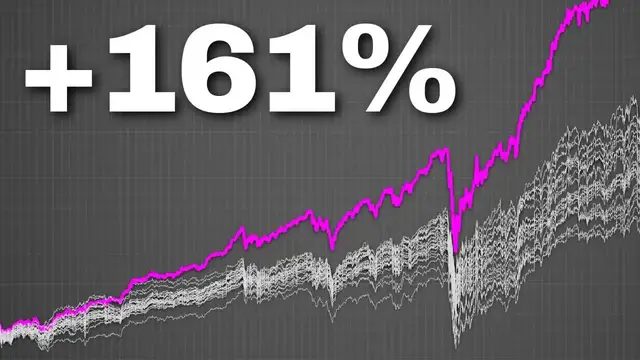

Investing in Market Lows: S&P 500, Nasdaq 100, and Russell 2000 ETFs
Apr 29, 2025


Check out this video's sponsor Solo:
----------------------------------------------------------------------------------------
Market Crash: In this video we are talking about which investments perform the best during a market crash. Specifically, when you look at the Market indexes, the S&P 500, the NASDAQ 100 and the Russell 2000, which one is best to use right after the market goes down to a market low?
----------------------------------------------------------------------------------------
JOIN THE PATREON COMMUNITY!
WANT ACCESS TO ALL OF MY SPREADSHEETS I USE ON THE CHANNEL ALONG WITH THE MONTHLY DIVIDEND STOCK SPREADSHEET AND INSTANT AWARENESS OF CHANGES TO MY PORTFOLIO? JOIN THE PATREON COMMUNITY!
----------------------------------------------------------------------------------------
You can also Work with Joe 1 ON 1!
Want to increase your option selling knowledge and get started!
----------------------------------------------------------------------------------------
Partner With Me - [email protected]
----------------------------------------------------------------------------------------
Need a GREAT Dividend Tracker for your portfolio? Here is what I use and it is EXCELLENT:
The Dividend Tracker:
----------------------------------------------------------------------------------------
Which Market Index Performs Best After a Market Crash?
Summary:
After a market crash, broad-based U.S. equity indices like the S&P 500 have historically shown strong recoveries, often outperforming other major indices in the years following a downturn. However, the speed and strength of the rebound can vary depending on the nature of the crash and the economic environment.
S&P 500 Performance After Crashes
The S&P 500, which tracks 500 of the largest U.S. companies, has consistently delivered robust long-term returns even after significant downturns. For example, between 2003 and 2023, the S&P 500 averaged just over 10% annual returns, despite several bear markets and corrections.
After the 2020 COVID-19 crash, the S&P 500 returned to its pre-crash highs by mid-August 2020, marking one of the fastest recoveries in history.
Following the 2008 financial crisis, the S&P 500 took almost six years to fully recover, but it eventually resumed its long-term upward trajectory.
Dow Jones Industrial Average (DJIA) and Other Indices
The Dow Jones Industrial Average also recovered strongly after crashes, but its recovery times have sometimes lagged the S&P 500. For instance, after the 1987 "Black Monday" crash, it took nearly two years for the Dow to reach new highs.
The S&P/TSX Composite Index (Canada) has also shown resilience, with an annualized return of 9.1% since 1956, but this is slightly lower than the S&P 500’s long-term average.
Key Insights from Historical Recoveries
One year after each of the S&P 500’s 10 worst one-day drops, the index posted double-digit positive returns in all but one instance and remained positive three and five years later.
The speed of recovery can differ: The COVID-19 crash saw a full recovery in just four months, while the 2008 and 2000 crashes took nearly six years.
The market as a whole has always grown in value over the long term, rewarding investors who remain invested during downturns.
Comparative Table: Index Recovery After Major Crashes
Index Typical Recovery Time Long-Term Annual Return Notable Post-Crash Performance
S&P 500 4 months – 6 years ~10% Fastest recovery post-2020; strong long-term
Dow Jones Industrial 2 years – 25 years Similar to S&P 500 Slower after 1987, very long after 1929
S&P/TSX Composite Similar to S&P 500 ~9.1% Resilient but slightly lower than S&P 500
Conclusion
The S&P 500 has historically performed the best among major indices after a market crash, both in terms of speed of recovery and long-term returns. Its broad diversification and inclusion of leading U.S. companies contribute to its resilience and strong post-crash rebounds. While other indices like the Dow Jones and S&P/TSX also recover, the S&P 500’s performance and recovery track record stand out, especially for long-term investors.
Show More Show Less