Up next in 10

Video: What is PigPen Theatre Co.? Meet the Creators of WATER FOR ELEPHANTS
Mar 8, 2024

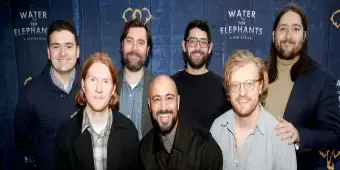
Who are the seven composers who made Water For Elephants sing? Meet the men of PigPen Theatre Co.! Watch in this video.
Show More Show Less View Video Transcript
0:00
I mean, really, when we started the first workshop, I think everybody, you know, because you have the whole book to jump into
0:06
we all just sort of dove in to the parts of the, either the world or the textures or the sounds that we were most interested in
0:12
Like, somebody wrote, like, sort of a soft shoe song, and somebody wrote more of like a folk, dustbowl acoustic ballad
0:18
And we really started with just, like, what are the textures of this world? And we sort of came up with, like, there's, like, the Dust Bowl sound
0:24
There's sort of, like, the jazz sound of the 30s. There's obviously, like, a circus sort of big top sound, but it's during the Depression
0:29
so it's not big and shiny like other circus shows or other circus musicals
0:34
And then there's also a human story to tell between, you know, it's sort of a love triangle
0:38
and so there's sort of an emotional intimacy that is told mostly through like contemporary folk
0:43
which is our sort of calling card, I guess. And we wanted to sort of mel the whole show
0:49
sort of between those sounds, right? Yeah. Yeah. What was your initial music inspiration
0:55
for if there was an artist, if there was a song, if there was a time period
0:59
What was it that originally had your mind jump into the show
1:05
Well we all got to do well most of us I just going to say we all got to do a production of the grapes of wrath while we were in school together in Pittsburgh And that was a show that was built around music which was mostly you know the music of the time
1:24
So there was a lot of Woody Guthrie songs and, you know, the kind of music that you would hear
1:29
if you were traveling across the country during the Depression. So that was our first kind of in, I think
1:36
and that's the kind of music that we're more familiar with and more comfortable with. But the cool thing about this show is that it is a massive
1:43
tapestry of American music. So we get to cover all kinds of stuff
1:50
And because it's a memory play that's set, you know, closer to the present
1:54
we also get to write music that's more in our like contemporary folk style
1:58
When we were in college, there was an album that we all listened to quite a bit. And we all thought that there was something really special going on there
2:05
And that album was called Hitties Town by Aeneas Mitchell. And I remember thinking the way that Anas Mitchell
2:13
particularly on the first album, pre-Broadway. The way that she was world-building on that album
2:17
was so fast, obviously the Broadway version is phenomenal as well. But I just remember being a college sophomore
2:23
listening to Hades Town being like, I wanna make music like this. And it's been really lovely because we've met Anais
2:29
we've become friends. To see what she got to do with Hades Town was such an inspiration while we were also kind of building this world and some of our other world sonically So we always wanted to approach our music from a storytelling perspective
2:42
So Hitties Town and Young Man in America, which is another one of her albums, has been like very special to me
2:48
Yeah, I mean, I think over the, I remember over the pandemic sitting down and watching Ken Burns country music
2:56
And so the first sort of like four episodes of that are like just like early folk music
3:02
music in America and like what that, how that has like turned into what country music is today
3:08
And he talks so much about people like the Carter family and sort of these collectors of songs and this sort of American, very American version of like what it is to pass down musical tradition and oral tradition and stuff
3:21
So maybe that's part part of my inspiration. Yeah. I, you know, I think for me, I was so inspired
3:32
by everything that these guys have mentioned. The contemporary artists and the artists
3:37
that have been making music that made music a long time before us
3:43
Getting to connect those threads together into the melting pot of America the American sound and this circus of that time It was so special So there seven of you in this band and as you kind of pointed out each of you took and started from a different place What was it like to then bring it all together and kind of make this collaborative concise
4:08
story through music? I mean, I think it's, I don't want to use the word easy because it's not
4:13
easy to collaborate, but I think we've strengthened our ability to collaborate from working
4:18
with each other for so long. And there is this moment of like
4:23
you have a safety net underneath you. Matt said this recently where, you know
4:27
somebody could take a song as far as they can go, but then eventually they might run out of steam
4:32
And it's so wonderful. Then you have six other partners, writing partners then to come and be like
4:37
hey, actually, I'm going to pick up that and continue and carry that ball for you
4:41
And it's been really wonderful to be able to rely and extrapolate upon each other's ideas
4:47
because, you know, strength and numbers. And if seven heads can take this idea and chew it up
4:52
and then, you know, digest it, it probably actually will have been filtered more
4:58
than you would if only one person had that idea and then has to sit alone in a room and bang their head around
5:03
and figure that idea out. So we're really lucky in that way. And it's difficult, right, to work together
5:09
But that filtering system has been really beneficial, I think, in our process
#Entertainment Industry
#Music & Audio
#Country Music
#Jazz & Blues
#Religious Music
#Folk & Traditional Music
#Vocals & Show Tunes
#Broadway & Musical Theater