Up next in 10

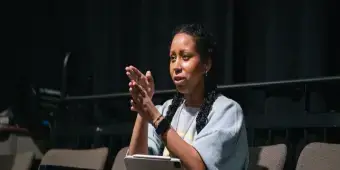
Video: Sasha Maya Ada Unpacks PRIMARY TRUST at Dallas Theater Center
Mar 14, 2025


A Pulitzer Prize-winning play is now onstage at Dallas Theater Center! Eboni Booth's Primary Trust -a story of friendship, healing, and small chances- is now in performances at Bryant Hall. At the helm is Sasha Maya Ada, who just checked in with BroadwayWorld's Richard Ridge to tell us all about the production.
Show More Show Less View Video Transcript
0:00
Welcome to Backstage with Richard Ridge
0:10
My guest is one of the most sought-after directors in the Dallas Fort Worth
0:14
Theater Industry. She's currently directed the 2024 Pulitzer Prize winning drama Primary Trust by Ebony Booth
0:23
which is a co-production of Dallas Theatre Center and Stage West Theater of Fort Worth
0:29
This critically acclaimed production is running now through March 23rd at Bryant Hall on campus of Kalita Humphrey's Theater
0:37
Please welcome Sasha Maya Adab. Hi. Thank you. How are you? Well, listen, this is so great to catch up with you
0:46
Like I said, I've had friends who are huge fans of yours in the Dallas-Fort Worth area
0:52
And I've had friends already go see your beautiful production of Primary Trust
0:57
Thank you, thank you. So I want to ask you, first of all, thank you for joining me
1:01
I love this play. How exciting is it bringing this play to a Dallas audience
1:06
Ooh. I mean, I imagine it's as exciting to bring it to any of the audiences across the country
1:11
It's one of the most produced plays this season. But I think it's deeply needed
1:16
I think we are overwhelmed and oversaturated with a lot that's going on right now
1:20
And that's, I mean, the world has always been very loud. But I think Ebony has created quite a musical piece, actually, about being able to
1:28
to find some stillness and some grace and has somehow encapsulated what it is to be seen
1:36
and to be accepted in a really beautiful way. I had friends who have come to see the show and they were
1:41
like, we did not know what we were coming into. They were expecting the worst and there's something
1:46
really beautiful about it being like a breath of fresh air at the end. So I think that's
1:53
probably the most exciting part being able to work on this piece here in Dallas. Yeah
1:57
So when you first reread the play, like, now I'm going to direct this
2:01
Like, what went through your mind? It's such a beautifully written play. It takes the audience on such a beautiful journey with the characters
2:08
But what was it specifically for you as a director that you said, I want to direct this
2:13
I want to direct it now. Yeah, yeah. I don't say yes to a script until I understand what I don't know about the script
2:20
A new skill or a new something that, like, I haven't quite gotten an experience of working with
2:25
So for this show, it was the deans, the 91 dings that Ebony has scripted throughout that symbolize a passage of time
2:33
And then the rapid, not repeated, rapid shifts that specifically won after, Tiana K. Blair, who plays the Karina and bank customers and Wally Waiter tracks
2:46
That sort of agility to be able to shift from one character to the next to the next to the next
2:53
That was very exciting. I had no idea how we were going to do it. And that's where I wanted to start off with the piece
3:00
Well, let's talk about the audience's reaction. How wonderful how it's been already for you
3:04
What's it like as a director sitting in the house, watching how effective theater changes people's lives
3:11
and how they're being affected by this play? Yeah. You know, there's a hard balance between the technique and the mechanics of directing
3:21
things like sight lines and prop, tracking and, you know, making sure that the full story is there, that it's sometimes difficult to
3:28
it can be difficult for me to be able to find and maintain the heart of the thing
3:33
Because I'm zooming in and zooming out so much throughout the process, sitting with an audience
3:39
full of people watching the show grounds me and not being able to watch the show and give myself notes
3:45
To be able to experience it with a bunch of other folks is really exciting. They are completely on breath with the actors
3:51
They are into the story. reacting to the story. We have audiences who've joined in and gone wallies with the cast
3:58
Like they are, what's really said, they're invited to engage with this. And I have an incredible
4:03
cast of actors that sort of inherently have that welcoming energy to them of yes, be with us
4:10
be in space with us It is a wild experience to be in a space where folks are having such an emotional response a beautiful response a really kind and really lovely response to the work
4:28
It's re-grounding. It's helpful when, you know, you're so in technical world sometimes
4:32
you get grounded in the humanness of it. So I love that
4:36
I love to ask directors, like once the audience comes in, it's like you have to sort of give your baby away
4:41
and you've got to sit there and be like, wow, we made this cake. You know, it's like, I always say it's really good
4:46
cake baking. It's like you put all these ingredients in and you hope that when, you know
4:51
it rises or whatever else, that, you know, it lifts an audience and you have definitely
4:55
done that with this piece. Thank you. Thank you. And I love that ogy. Now, let's talk about
5:01
your incredible cast. What I love about like this theater and everything else, there's a beautiful
5:07
breadth of actors all across the country and in the Dallas area, right? Yeah, we've had actors who
5:13
worked across the country. Jamal Sterling has traveled a bit. I believe Brian Mathis and Tiana have
5:18
also, they all come from different backgrounds. Tiana works a lot in soul work. She is leading that
5:26
brigade over at SMU right now. Lee George is a phenomenal voiceover director and Jamal Sterling and
5:32
Brian Mathis are also voiceover actors as well. What we found in the room actually, funny enough
5:38
is that all five of us are educators. We have some sort of affinity towards
5:43
towards arts and education. So especially when the teens come in to watch the show
5:49
it's exciting, it adds another breath of fresh air, it's unpredictable because you don't know
5:54
how they're gonna respond. Some nights they turn on Karina, and that's also a fascinating experience
6:00
because they are in it. The four of them work incredibly well together
6:07
And I think with such a, it's in the round, the audience is right there with them
6:12
that it can be very easy for an hour, to pop out and go, oh, this person's right over there, you know, fiddling with a program or this person just sneezed
6:20
But to be that close, and I saw it last night, actually, again, I was really keyed into how they were tuning into each other
6:28
They lock in. They are there to support if something goes wrong. If something goes haywire, it's live theater
6:35
So things will fall, you know, that they are an incredible quad to watch work together
6:43
You know, the other wonderful thing about the combination between the Dallas Theatre Center and Stage West Theater of Fort Worth, this is a co-production
6:51
And I know this is something they've joined together for a multi-year contract or multi-year contract, might have coming together
6:58
Talk about the importance of them working together and bring the young audience to the theater, which you have done at this theater
7:05
Oh, yeah. Well, one, I think just being able to create community between the two cities
7:12
It's funny, I've lived here for 12 years, I think I'm doing math correctly
7:17
12 years and the distance between the two cities, you know, it kind of feels like they can operate in their own bubbles
7:24
To be able to have two theaters across two cities collaborate like that
7:29
it brings the full theater community together and then the audience space together. We have folks who's gone and seen it in Fort Worth and go
7:35
oh, I'm really excited to see it in Dallas. And the same space that we're performing in is where Second Thought Theater is hosted
7:41
Soul rep has also then chosen that space. And so they're getting a new breath of like
7:46
oh, this is what Dallas Theater has to offer. And that's great
7:50
That's how we keep the arts alive. That's how we keep DFW on the map of national theater making
7:55
We've got incredible original works that are also happening in this city
7:59
So whatever we can do to uplift that talent and that work is signing up for it
8:05
No, I love it because when you came here, I mean, I looked at your resume
8:09
you work with so many incredible theaters across the country, but a lot in
8:13
that area there, and you sort of uplifted the theater. That was something
8:17
you always wanted to do once you moved there, right? Was bring theater higher
8:22
I think so. I, you know, I was a little lost when I moved here in all transparency. I moved here
8:27
to study directing, had an incredible directing teacher, but did not feel ready for it
8:33
I needed a different window in. And so I focused in on acting and I did some model coaching and some teaching for about a decade The pandemic hit I was doing restorative work with juveniles in the juvenile detention center
8:49
creating devised work with them and finding that really lovely intersection between restorative practices and artistic practices
8:57
And it was through that that made me go, oh, I think I understand what my window into directing is
9:03
And now three and a half years later, I think, I can't imagine doing anything else with my life
9:08
It is the thing that brings me the most joy in my life. And it's a thing that also feels like it can have deep impact
9:16
Yeah, I don't know how I ended up here, but I'm very, very grateful for it
9:20
Did you start out as an actress or as an actor? Yeah, yeah, yeah
9:26
Because I think I read that you started singing Disney songs in your car, in your mom
9:30
Oh, yes. Well, that was because my grandfather got pulled over for a ticket in Charleston
9:34
And my mom was like, she's so dramatic. Yeah, I mean, I loved singing
9:39
My mom was really a proponent of letting me try everything. I took martial arts as a kid
9:45
I took piano as a kid. I took figure skating as a kid. And all of those things have absolutely influenced the art that I get to make now
9:52
There's a thing about movement, about how bodies move and how they interact with one another
9:57
the combat about things, attention about things. And then I can look at a play and start to find the musicality of it
10:03
even if there isn't, even if it isn't a musical. And that's my favorite thing now
10:07
That's sort of what I'm rounding my process in is finding the ebbs and flows
10:12
the crescendos, the day crescendos, all the moments that happen in the piece is
10:16
it's like putting a puzzle together. Well, listen, Ebony writes like a musical
10:21
That's what I love about her plays too, and especially this one. And this is a 2024 Pulitzer Prize winning play
10:28
I think it's one of the most sought after plays across America. Why do you think that is why everyone wants to do this play or to see this play and be a part of it
10:38
I think it's gentle. That's a first word that comes up into mind
10:42
It is gentle. It is accountable. It's deeply human. Kenneth is a flawed character and he is approachable
10:50
And you can see little bits of yourself in him, even as he talks about his imaginary friend
10:55
And she has created characters that feel like they hold truth to all the folks that we interact with in our day to day
11:08
And then makes us go, well, why don't we engage with them a little bit more? What happens if we do engage with the folks that we pass at the, you know, the bank teller that you go and, you know, get your rent check or the woman who's checking out at the grocery line
11:20
Like, I think there is something about, especially, I don't know her full process with this play
11:27
but I know that she was developing it while she was at Juilliard during the pandemic. And that being a time of loneliness, of isolation
11:34
And so to welcome us out of it, I know we've been operating for a couple of years in live theater
11:39
but we're still getting our grounding. We're still figuring out what the new age of theater is now
11:45
How do we respond to the things that are happening in the world? and what do we want to offer our audiences
11:50
when we ask them to engage with us, when we ask them to spend money
11:54
that's not at a movie theater or not your Netflix subscription, you are investing in your local art scene
12:01
What can we then offer the community to say thank you? To say, this is how we move forward
12:07
to embrace what we can do and nourish the folks, the individual folks that make up our cities
12:14
That's what I think this theater company does. I mean, this theater center does
12:18
I mean, talk about the beautiful theater you're performing in. How big is the space
12:22
You told me it's in the round. Yeah, yeah, yeah. It's actually a smaller space
12:26
It's one of the small spaces that Dallas Theater Center has. And I think it's kind of perfect for this
12:31
There's no escaping. I think as a director, I'm always looking for
12:36
I want everyone in the room to feel safe, but comfortable is another conversation
12:42
And when you have an actor start off a show with direct address, and they look at you in the eye
12:47
and you're that close up. There's something about not being able to escape. And that's
12:53
excited. You're in a collective space with other people that are going, oh, we're all in this
12:57
roller coaster together I think that the cool thing about this space It transformable because it a black box but it a fairly simple space which is kind of lovely
13:10
It uplifts the text that Ebony has written, it uplifts the work that they're doing, and then to have designers who have sort of amplified these moments
13:16
with what we call it in the process, small magic, what are the little pieces of small magic that we can include
13:22
to keep the space unpredictable was really a cool part of the process
13:27
You know, it's funny, you know, there was before the pandemic, during the pandemic
13:31
and so many theater companies and theaters across the country during the pandemic and right after closed down
13:38
And I think it's so wonderful that Dallas Theater Center and Stage West Theater of Fort Worth sort of came together
13:45
and merged together to present a lot of stuff. It's so important, you know, there were so many theaters lost
13:51
And I just thought, you know, as you've come back out of the pandemic and starting to direct all over again
13:57
and everyone finding their audience back, what you've been enjoying the most
14:01
about having people back and curtains going up, you know? You know, I don't think it's ever been a conscious decision
14:12
but I realize, and you asking it, there's a magic, I think is the only word I can think of
14:18
a magic that comes with an audience having a collective experience, a collective, a collective laugh
14:24
a collective anything that feels, at the heart of what we do
14:29
This is such a ritualistic art form. It has been around since the beginning of time storytelling
14:36
And so as we continue to find ways of how it evolves, I think the thing I've been most excited about in directing
14:42
is finding new ways to tell the stories, new techniques, new ideas
14:49
I've never been a sports fan. Sorry, that's awful. But I've never watched football just to watch football
14:55
and I was looking at highlights of some season, some team, they were great
15:01
But my brain looked at it for the first time and went, oh, the way that bodies interact
15:06
the way that they collide, the way that they defend or avoid
15:13
that's also something I can include in the blocking of my shows. That's been very cool to look around the world and go, oh, this is little piece I can take from here
15:23
And this is a little piece I can influence here. Yeah. So my final question is
15:29
what do you hope audiences take away after seeing primary trust? And what have you enjoyed the most
15:34
about directing this piece? I hope audiences take away a permission, a freedom, a freedom
15:43
to ask a genuine, how are you? To somebody, to anybody. I think that's the first step
15:52
I always think in front of, steps or another show I worked on Marjorie Prime. There was one where I went, I hope that the audience
15:58
walks away and they call somebody they haven't talked to in a moment. As far as my favorite thing
16:04
about working on this piece, this team, both cast and creatives, have in one way or another
16:12
impacted me in my own artistic journey. I'm working with folks that I've admired, that I've
16:16
collaborated with before, that I've gone to school with, that I share language with, and it has been
16:22
an incredible pleasure, a deep honor truly to be able to rally us all together and
16:31
sort of muck about, play around, move through this story and figure out how we wanted to tell it
16:39
It's a big thing to have friends in the space to collaborate and feel challenged by and feel
16:47
pushed by and feel supported by. There's nothing better than live theater
16:52
You and me both. We're all on the same page of this and so many of millions of others
16:57
Well, once again, Ebony Booth's Pulitzer Prize winning play, Primary Trust is playing now through March 23rd at Bryant Hall
17:05
on campus of Kalita Humphreys Theater. For details and tickets, go to dallastheatercenter.org
17:12
I have had such a great time catching up with you and meeting you today. Thank you. Ditto. Ditto, ditto. You're lovely
17:18
Thank you. We'll see you at the theater. And if you're in the Dallas Theater area, go see Primary Trust
17:24
Take care, everyone
Events & Listings
Movies
Performing Arts
Acting & Theater
Drama Films
Musical Films
Broadway & Musical Theater