Up next in 10

Video: Mr. Joe Iconis Is Riding the Wave of 'Wavesong'
Nov 16, 2024

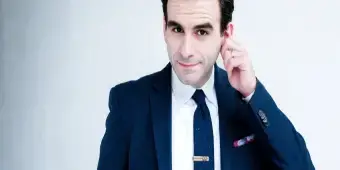
In this video, we welcome welcome Broadway composer, singer, writer- He Does It All- Mr. Joe Iconis! This is his first time swinging by the Roundtable, and we had a lot to talk about, including his new single, 'Wavesong'.
Show More Show Less View Video Transcript
0:00
Are you ready
0:11
It's the Roundtable with me, Robert Bannon. Welcome to the Roundtable, everybody
0:16
My name is Robert Bannon. You're listening to us on Broadway World. I hope you're here every Friday
0:20
We have an exclusive chat with some of our favorite theater people. And our next guest is a Tony nominee
0:26
See, I'm from Jersey. So I like Joe because Joe's, One of his show, the show, y'all, has some Jersey roots to it
0:34
So I have to give props to Joe. And he should win the award for best use of, I want to dance with somebody because he did
0:41
the best, it's the best use of the lyric. Come on, people
0:45
Well, he's a new single. He has a show coming out. He's coming to 54 below for his famous yearly traditional Christmas extravaganza
0:53
And we're excited to be, we're going to class it up because he could write a damn song, y'all
0:57
So Iconist, welcome to the show. Hey, thanks for having me. I remember doing rent in a little bad community theater production in New Jersey
1:07
and hearing about a show that was going on in Jersey and hearing the cast sing this song
1:13
and it spread like wildfire. When you look back to your career, when you look back to be more chill and Michael in the bathroom
1:21
and how it exploded, what do you think? How does it feel? What, how do you sum it up
1:26
It's, I mean, it's kind of hard to sum it up because it's, It was the whole journey of B. Moore-Chill was, it's something that was so unexpected
1:36
And, you know, the way that that show got to off-Broadway and Broadway and beyond is something that I never could have foreseen happening
1:46
You know, I mean, every show I've ever written, the hope and dream is that it does all the things, you know, that it goes to Broadway and it goes beyond
1:54
I'm not a writer who's like, I don't care if my show ever goes to Broadway
1:58
I'm perfectly happy having my show run for two weeks in a black box in Indiana
2:02
I love black boxes in Indiana, but I always want my shows to reach the largest number of people possible
2:08
And in today's day and age, that means having the shows play on Broadway
2:12
And so it's just, it's so wild to me that it ever happened
2:16
And the thing that I'm the most proud of and the thing that I think that, you know, sort of like history sort of filters
2:23
the thing that remains about the B.M.R. Chill experience is the fact that it got
2:28
where it got because actual human beings liked it. Like it's a show that, you know
2:35
it was able to get as far as it got because of the enthusiasm of actual people
2:42
A lot of those people were young people, which makes me particularly happy
2:46
but not just young people. And I'm really proud of that, you know
2:50
I think, like, a lot of times shows get where they are because there's a big corporation behind them
2:54
or because they're based on popular IP or because someone famous is in them
2:58
or because a smart critic tells people that it's good and so everyone thinks it's good
3:03
And our show had none of that for sure. And so I'm really proud
3:09
It got where it got solely because people dug it. And that's what I love about it
3:13
Because IP musical, no shade, no shade to all of the things you said
3:17
but what is great about it is its original, it's a story we related to, and it caught on and just spread through the theater community
3:23
And I'm here for it. While we're talking to you, people can follow you on Instagram and they could go to your website as well for more information
3:29
and get all that scoop about what you're doing. So you have written a bunch of musicals
3:34
You've written for television like Smash and things like that. And we know, and we had George Salazar on not too long ago
3:40
And we talked about this show that was being done on the West Coast
3:44
And now you are coming to the East Coast with the signature
3:49
Tell us what is this show and about this surprise single that you just dropped on us all
3:55
This show is the untitled, unauthorized Hunter S. Thompson musical, and it's a musical about Hunter S. Thompson, who was a counterculture hero
4:06
He was a writer, a journalist. He rose to prominence in the 1960s
4:11
And his most famous work is probably Fear and Loathing in Las Vegas
4:16
But he wrote many, many books, many, many articles. He was a really insane character, a renegade, a rebel
4:23
if you've seen the Fair and Loading in Las Vegas movie, Johnny Depp is essentially playing a heightened version of Hunter S. Thompson
4:32
And he was just this really amazing sort of galvanizing presence who, you know, was never not interesting
4:41
was never not outspoken up until his death in 2004. And yeah, and it's a, it's a bio-musical about his life
4:52
but it is, I think, about a lot more. You know, it's, like, really a show that feels like it's about the America of today
5:00
kind of is filtered through the lens of America in, you know, the 60s and 70s
5:04
and it asks a lot of, like, big, important questions, I think
5:09
but also is just kind of an entertaining wild ride, you know
5:14
I've always said, like, if, you know, in, like, the, in the sort of, like, you know
5:19
high school, if, like, if musical theater was high school and, like, you know, and we're
5:23
talking about, like, you know, bio-musical class, if, like, Hamilton is, like, the head of the
5:28
class, then the Hunter S. Thompson musical is, like, the kid throwing stink bombs in the back
5:34
because, like, not paying attention in terms of bio-musicals. Yeah, yeah. I'm here for that
5:41
Is it hard for you when you take some of the stuff that you've made? Like, we could go through
5:45
like, love and hate nation, all of which you could stream that recording. out all of your music and people that like love your music and follow your music
5:52
musical theater fans out here. Writing about original characters or creating characters
5:56
or storylines is very different, I'm assuming, than writing for a actual person. So how did you
6:02
research Hunter S. Thompson? How did you, and then how does that inspire you to write music
6:08
Yeah, yeah. It's, you know, it's crazy because whether I've, you know
6:14
whether I've, I'm working on a show where the characters are wholly original, like
6:19
Love and Hate Nation or Broadway Bounty Hunter or Blood Song of Love
6:23
or a show where it an adaptation like Bermichill or many other things I done I have to be able to relate to the characters in a really specific way I a writer who writes 100 from himself
6:39
Every character I've ever written is me. Some of them are more autobiographical on the surface
6:45
but they all come from a piece of myself, right? And so in order to write something
6:50
I have to be able to find the commonality in the character
6:55
that I'm writing about. And so in some ways, you know, writing a character
7:00
is based on a real person, you know, versus a character I'm just making up
7:05
It kind of feels like the same thing, you know, because I, you know, I love Hunter S. Thompson
7:11
and I want this musical to honor who he was as a writer
7:16
and as a man, but it's a musical, you know? It's like, and the character of Hunter S. Thompson
7:21
it's not, I'm not saying, like, this is a, you know, this is like a documentary, you know, pure truth version of who Hunter
7:32
Has Thompson was. It's not. It's the idea of Hunter S. Thompson. And, you know, it can't help
7:36
but be a character. I'm so of the belief that like any, any, the moment that someone hits a stage
7:42
even if, even if the person is playing themselves, even if it's a, it's a, you know, a cabaret and it's
7:47
like, you know, myself behind a piano or, or Marilyn May or whoever, that on that stage
7:54
they are like the character version of Marilyn May or Joy Connus or whatever
7:58
And so, you know, for me, it's like that's both like kind of scary and liberating
8:03
where I don't feel like I need to be 100% factual and I don't need to be like
8:09
oh, well, you know, Hunter S. Thompson would never, you know, would never use a Dixon Ticconderoga pencil
8:14
He would only use, you know, graphite pencil. I feel like that kind of stuff doesn't really matter
8:19
And it's more about like capturing the essence, you know? And as I worked on the show, I've realized that the thing that I'm trying to do is rather than try to make the character of Hunter S. Thompson be 100% faithful to who Hunter S. Thompson was, I'm trying to make this show itself faithful to the spirit of Hunter S. Thompson. You know
8:40
So cool. I'm obsessed. And I just love, you know, reading about some of your other work, like I know, Be More Chill as a graphic novel and then you've got inspiration to write a musical. When you talk about Hunter
8:51
As Thompson, was there someday? Was there a moment? Were you in the airport bookstore? Like
8:56
like Hamilton? Like, what was it that made you say, hey, Hunter S. Thompson is a musical. There's a
9:02
musical in there. It's a, you know, it's kind of like a long, a long, brand-blue story. But I
9:07
I first got interested in Hunter as Thompson, kind of around the time when he died. And so I
9:15
you know, I had a familiarity with him. I had seen the Fair and Loebuck movie when I was in high
9:20
school that came out. My grandparents took me to see the movie because it was an R-rated film and I
9:25
couldn't get him by myself. My grandparents were very cool, obviously. They did not like the film
9:29
but they still were very cool. And I, and so I, you know, I kind of knew of him, but I wasn't
9:36
like a Hunterst Thompson obsessive, right? And so then when he died, there were all of these
9:40
like, firsthand accounts coming out from people who really knew him. And the thing that struck me
9:45
was that, you know, his public persona was this, like, you know, sort of
9:50
cartoon madman who's like running around and, you know, throwing, you know, fireworks into offices and, you know, and this guy who lives with, like, a fleet of peacocks running around his house and, and this man who's, like, consuming more drugs than anyone could ever consume and drinking more than anyone could ever drink
10:10
And so that was sort of like what I knew of him. And I was so taken with, like, these personal accounts by people who knew him, so many of them kind of felt like they were
10:20
were at odds with that public persona. And they painted this picture of this man
10:25
who took his writing so seriously, who was so passionate about the things that he wrote about
10:31
who was such a moralist and so committed to this idea that America had the opportunity to be great
10:44
that America could be a place that would embrace people who felt like outsiders
10:49
that could support people who were, you know, quote unquote different. And these things were so, so, you know, unbelievably, like, intrinsic to who he was, right
11:00
So it's like a lot of these stories sort of painted that picture. And then the other stories not only supported this idea of who I thought he was
11:10
of this, like, wild, you know, like drug-consumed, destructive madman, but it, like, brought it even further
11:16
And it was like, oh, my God, the things that this man actually did, are so much more insane and disruptive than like the cartoon version of him
11:25
And so I really loved that these two sides of him felt like they coexisted in this man
11:30
And so then I was like, oh, maybe he'd be an interesting, you know, subject for something. Then the more I read about his life and who he was as a person, the more I realized, oh, my gosh
11:41
like this guy's life story is so sloppy. It's just like it does not fit neatly into a narrative
11:48
there was lots of ups and downs. There is not any kind of redemption arc whatsoever
11:54
Like this was a really, really challenging guy. He did a lot of good things
11:58
He did a lot of bad things. And I realized like, oh my gosh, this is like, you know
12:04
this is a really terrible, terrible idea for a musical because of like all it has going against it
12:13
And because he himself, like even the way that he spoke, because of years of drug use
12:19
his speech patterns were insane. And sort of very unmusical, right? So it was just like everything about it felt like Red Flag City
12:27
like, do not follow your impulse and make a musical about this man
12:32
And as soon as I really, like, as soon as I really let that sit with me
12:36
and as soon as I really felt like no one should ever make a musical about Hunter S. Thompson
12:41
that's when I felt like I must make a musical about Hunter S. Thompson
12:45
And, you know, I, like, I had the idea to write this musical as long as I've been in the business, right
12:54
So I was commissioned to write this show by La Jolla Playhouse in 2006 And you know I have not been writing it ever since then There been a lot of ups and downs and a lot of different collaborators
13:07
And it's been like a whole sort of crazy thing over the years. But, you know, when I first started working on this and I would tell people that I was doing it
13:15
you know, I always remember the reaction of Will Rowland, my friend Will Rowland, who's in Gimertill
13:20
and all my shit. He, he, when I told him that I'm writing a musical about how
13:25
Hunter S. Thompson, he was like, oh, God, how much money are they giving you to write that
13:29
Like, because he just assumed that it was some, like, corporate musical that was like this
13:34
terrible. Like, he assumed it was like a sellout thing. And I was like, no, no, no, no, no money
13:38
because it's my idea. I think it's a good idea. And he's like, oh, okay. Sure
13:43
My favorite thing is you said, no one should make a musical about this or now I have to make a
13:47
musical about this. That's something, I think that's a very Hunter S. Thompson thing to do
13:51
I think so, too. I think so too. And, you know, it's like
13:55
I wanted to make a show that felt like it was talking about all of these big ideas
14:04
And I wanted to make a show that felt really political. And I wanted to make a show that felt like it had something to say about the future of America
14:12
and hope for America in the midst of darkness. But I wanted to make a show that felt entertaining and didn't feel like if you went to see it
14:21
you were being forced to eat your oatmeal. I didn't want to make a show that felt like a book report
14:25
It was so important to me to make something that was like alive and exciting
14:30
And like my touchstones for it were hair and Pippin and the movie, all that jazz
14:36
And, you know, it's like these, you know, sort of portraits of people of a time that feel
14:42
that feel so connected to the era with which they were, which they were born, but also feel timeless
14:52
You know, that was the thing that I was going for, timely and timeless. I'm obsessed and I'm here for the whole thing
14:57
and we're going to follow it as we go along and we need this like you talk about hope in a dark time
15:03
I think your timing is pretty incredible Wave song which is out now
15:09
Wave song is wherever music is heard you could stream it so tell us what made you pick
15:14
this is the single what is who's singing you're singing I'm singing look at me
15:20
I designed the cover too I love the cover too I love the cover. Tell us about it. What does the song mean
15:27
You know, the song is the Act 1 closer of the Hunter's Thompson musical
15:35
And, you know, the history of the song is that for a long time, the act ended with a song called Wave
15:42
And it was essentially a musical interpretation of this passage that Hunter wrote
15:50
fourth through in living in Las Vegas that this really famous piece of writing. It's a few paragraphs
15:54
long and he sort of uses imagery of a way of to talk about the idealism of the 60s and
16:00
what happened with that. And so I always thought, oh, this is how this act is going to end. And then
16:06
as we got into rehearsals and as we got into working on the show a couple years ago
16:13
I started realizing two things, one of which was that the song was sort of very fokey and very
16:19
solemn and it was the idea was like after this wild crazy first act the act is going to end with this like
16:26
you know like delicate sweet subdued folk song and I think in theory that was a great idea
16:34
we realized quickly that the act actually needed something that felt like a call to arms
16:43
something that felt rousing and that took all of these ideas that Hunter S Thompson had
16:49
about using writing to affect change and put these ideas in motion and was like a rallying cry, right
16:58
And so that was sort of this one thing we realized. The other thing that I realized was that, you know, I had like a bunch of copyright lawyers look at the script because, you know, it is an unauthorized musical of someone who existed
17:15
and, you know, I like, one of my main motivations in life is to not get sued
17:21
And so they, you know, looked at the script and they looked at this moment and they were like
17:25
maybe you should, maybe you should not have all these lyrics in here for this one song
17:31
because you might get sued. And so I was like, great motivation for rewriting my act one closer, you know
17:39
And now it's out. And now it's out. And now you can listen to it
17:44
And the song is out. And it's going to be the, Joe, in the history of this time, you will look back and say it was the right choice
17:51
Oh, yeah. Yeah. And it's like, I joke about the getting sued thing. Like, it really was. It was a, you know, a dramaturgical reason. But I also like, you know, I wanted to write something that was like that totally exists in the time. You know, when Hunter sings this song, it's, it's 1968, right? It's after the riots at the Democratic National Convention. And it is, it's
18:15
It's him, you know, it's him really speaking to this hope that he has for the country and this idea that like, that, you know, that no matter how much progress we make, we keep getting knocked back
18:28
And why would we continue to go on when it feels like every, you know, every foot forward is like 10 steps back
18:39
And, you know, and I think the answer to why is the song
18:46
It's like it is, it is, you know, trying, it's the like, it's the thing in you that prevents you from giving up, you know, and I think it's like both a very personal thing and a universal thing
18:56
And so I wanted to make this song that, you know, all the things that are mentioned in the song, you know, because the idea of the song is like Hunter is Thompson kind of saying the nation that he wants to see, you know, it's like it's what he wants to see
19:08
really specific things that he wants to see. And all of those things are things that Hunter talked
19:15
about, you know, in 1968, 1970, and throughout his career. And it's so wild because they feel like
19:21
I mean they feel like they they applicable only to 2024 But it both heartbreaking and I think kind of empowering to to know a lot of the same things that we are screaming about right now People have been screaming about for 30 40 50 60 years the exact same things you know
19:42
And I wanted to put that to music. And I feel like a lot of times songs about things like hope, songs about things like carrying on and all that
19:56
can be kind of general and I love songs like that. I love songs that feel amphemic in a general way
20:00
but I wanted to read a song that felt emphemic in a really, really specific way
20:06
where it wasn't about like hopes and dreams, it was about literal things, like cops without guns
20:13
and open borders and specific things. And I hope that in the specificity of that
20:19
it feels like it can apply to any number of circumstances. It does, and you gotta stream it
20:25
And if you're feeling hopeless or you're feeling like you need a rally and cry, or you are wondering why we keep going on when we keep getting sent back 10 steps
20:33
This might be the song for you this past few weeks have not been easy. So listen to Joe's song
20:37
It's going to, it's very inspiring. And then this show, you know, coming in 2025 over the signature in D.C
20:43
And it's life and living on and where it's going to go from here. I'm excited for you
20:47
I'm excited for people to check it out. I am too. And I can't, I can't believe that we're going to be in Washington, D.C
20:53
You know, it feels like talk about. about like belly of the beast
20:58
For real, right then and there, sing this song in act one with that monster every single night
21:03
talking about what you're talking about is, you're doing the work. I am excited
21:08
So stream the album, follow Joe, go to Joe's website. And then before I let you go
21:12
you are yearly. It's your shows or live shows have become legendary
21:17
You have, you know, 8,000 people show up and sing with you
21:21
So tell me about the, this year's version of the 14th annual Christmas extravaganza
21:28
We're backs. Yes, girl, Slay. What can you tell us about it
21:32
You know, it is a show that I've done every year since 2008
21:38
except for the years when stupid COVID was preventing us from gathering in basements with
21:43
70 people in the cast. And it's, you know, the whole idea of the show is like, it's like a really twisted version
21:49
of the Radio City Christmas spectacular mixed with the Pewies Playhouse Christmas special
21:55
You know, I'm someone who unabashedly loves Christmas. It's not an ironic love
22:00
I really do love it. And I, since I was a kid
22:05
I always wanted to have my own holiday special. And this is, I really just feel like it's, you know
22:10
it's probably the most selfish show that's ever been produced in New York City
22:14
because it's just what I've always wanted as a kid. And it's like, I look around and it's like, I've done this
22:18
I've made everyone sit in the theater and just like, you know
22:22
clap for, and then clap for these like things, these specific things that I'm, you know, obsessed with
22:28
These, like bits of Christmas ephemera that I've collected over the years, like Emmett Otter and, you know, and the Alf Christmas special
22:35
And it's, there's lots of, lots of, you know, homages and love letters to Christmas specials of the, you know
22:42
the 50s, 60s, 70s and 80s. And, yeah, there's characters that exist only in the world of the Christmas show
22:49
So, like, there's Mr. McAvey, the old-timey bar keep that pops up behind the bar
22:52
54 below. There's the, our burlesque version of the Virgin Mary. There's, you know, Santa and Mrs
23:01
Claus, of course, who in our show are alcoholics, kind of a la who's afraid of Virginia
23:07
Wolf. We have a fancy tree. That's a really, just like a really fancy tree who feels very beautiful
23:16
Mr. Chestnut and Cyril von Meisorthorpe. And so all of your favorite characters will be
23:22
returning for this insane Christmas spectacular. And the, like, you know, the ethos is like
23:28
how do you cram the most show you possibly can in the smallest space
23:34
That's always been the goal. And that's what I try to do with, I think, all of my shows
23:38
whether they're, you know, concerts or theater pieces, I really, you know, feel like people should get some bang for their buck
23:46
And so it's like, it's the, you know, more is better always, you know
23:50
And just like how much can we throw at people figuratively and literally
23:55
Like we literally throw things. And I at the audience, not in a, you know, violent way, soft things like marshmallows and snow
24:04
Well, go get your tickets. Go to Broadway's living room. Go down in the basement
24:09
Go to 55.org. Get yourself a Caesar salad and a martini and have a moment
24:15
He'll be like four feet away from you. You'll get a marshmallow right in the face. There's like two, the ratio is nuts
24:23
I think it's like two cast members for every person in the theater
24:27
It's like private show. The thing I'm most proud of is like, if you go to the bathroom during our show
24:34
there will likely be a cast member in the bathroom stinging to you
24:38
If you think you're safe at a urinal, you are sorely mistaken. It's like it is shows say that they're immersive and they have nothing on the 14th annual
24:48
Joe Iconis Christmas extravaganza. Well, that sold me. Everybody, listen. Yeah. You got to get yourself
24:55
So if you're in D.C., you're going to get tickets for next summer, and you're going to go see the Hunter's Thompson musical
25:00
You're going to everybody, no matter where you are in the world, you're going to listen to Wave Song and get your rally cry on and feel good and motivated to go get it together
25:08
And then New York City, everybody, Joe's iconist Christmas extravaganza, 14th annual
25:14
It's coming. 54 below. We're so excited to talk. you for, look, he's talented, he sings, he writes musicals, he made me feel so insecure about
25:23
my hair because his is sitting so perched and so lovely. Mine is just like a dead bird on a branch
25:28
Oh, no. No, no, I don't say that. I like it. It's how good it is. Come on. Yours is so full
25:33
I'm so much a hater. No, no, no, absolutely not. It's, it's what it is
25:38
That's Broadway composer hair right there. Yeah. Yes, that's right. My hair was, I had
25:44
I had scraggly, I had scragly like tepid hair until my show ran for six months on Broadway
25:52
That's what I'm saying, people. That's right. Thank you. We appreciate you so much for being here
25:56
And thank you for all the work and all the music. And we look forward to what's next. Of course
26:00
Thanks for having me
#Entertainment Industry
#Music & Audio
#Musical Films
#Vocals & Show Tunes
#Broadway & Musical Theater