Up next in 10

Video: Michael Mayer Is Digging Into a New Kind of AIDA at the Met
Jan 24, 2025

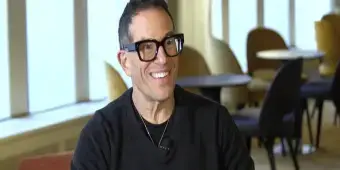
Michael Mayer grew up with a fascination with ancient Egypt, and it's an interest he is putting to good use this winter. Following his acclaimed work just last year on Broadway's Swept Away, Mayer has moved uptown to bring new life to Verdi's Aida at the Metropolitan Opera. He explains in this video!
Show More Show Less View Video Transcript
0:00
Welcome to backstage with Richard Ridge
0:10
The latest from Tony Award winning director, Michael Mayer, is his stunning state-of-the-art take on Verdi's monumental drama
0:18
IEDA for the Metropolitan Opera, which is running through May 9th. And I caught up with Michael here at The Legendary Met
0:27
We'll tell you, I fell madly in love with your production. of Iida. I want to go back to the beginning. Where did your love for Egypt begin? My love for Egypt
0:35
began when I was a kid and we would study it, you know, in elementary school. And the little
0:41
library that we had at farmland elementary had a whole history section. And in the history
0:48
section, there were these unbelievable books all about ancient Egypt and King Tut and the tombs
0:57
and all of that. So I was fascinated from a very early age
1:01
My mother had a scarab bracelet that was very popular in the 60s and 70s
1:07
that I used to play with. I had this whole rich inner life
1:14
where I decided that one of my former lives was in ancient Egypt
1:21
I didn't know exactly who I was, but I figured I was important enough
1:25
that I could hobnob, with the pharaohs and the princesses and all of the priests and everything
1:32
and that I could be part of those rituals. So I really, you know, I went deep
1:38
Yeah. How proud are you of your AIDA? I love it. I really do
1:43
It's been a long time coming. We've worked on it for many years, even prior to when it was originally supposed to open in 2020
1:52
And then, you know, COVID happened and so we kept putting it off and putting it off
1:57
putting it off, it's finally here. And when I was there opening night and watching it all sort of play out and all of our
2:05
ideas that I had really, watching them really fulfilled by all of our amazing designers and
2:13
our choreographer and that phenomenal company of performers is really exciting. And I felt like, okay, we actually finally did it, you know
2:24
So what did you want to bring to your IEDA that had not been brought to IEDA before? What was some of the things you wanted to do? Well, I certainly have
2:31
not seen every production of Aida throughout history, but I, you know, I had seen and really admired
2:38
the one that had been here for over three decades now. I'd seen it a number of times
2:44
and I've seen other productions that were, I've seen modern productions that were not set
2:50
in ancient Egypt, which never really worked for me because I feel like the text is so specific
2:57
about that period. And it would always bump against me somehow. So I knew I wanted to do an ancient Egypt
3:06
But I also wanted to acknowledge that our history with the opera and with Egypt
3:12
So I had this idea to allow the audience to have some little critical distance between the actual
3:22
story itself and the way that we tell that story historically. So I thought if we're excavating this tomb in the same way that we're excavating the story
3:33
that we could all be in it together and it could feel contemporary and also honor the deep history of the piece itself
3:44
and the inspiration for the piece, which came from an archaeologist in France in the early 19th century who had this concept and brought it to Verdi
3:55
And Verde went with it. So there's, it's like layers of history that we are acknowledging
4:02
What I love what you done is you created an IEDA for an older audience who appreciates opera And you also created one for a younger audience which is going to be the future of opera who might not have gone and will continue going There was this family of kids
4:16
They were all over the place. I mean, you know, teenagers and a little younger
4:20
who were fascinated by this. Oh, that's such great, great news, because that was my dream
4:26
I really wanted this to be a production that could last for quite some time
4:31
and encourage young people who maybe theater people, who might want to see something
4:35
because me and my designers all work in the theater and a lot of musical theater people know my work and our work
4:45
and might come to the Met maybe for the first time and see something that they could relate to
4:50
from an aesthetic perspective, but also really appreciate the gorgeous brilliance of Verdi's opera
4:58
So I really wanted, if you're feeling like both things are happening
5:02
for you when you come and see this, that's the best news I could hear
5:05
You know, let's talk about your incredible team. You've worked with this team before
5:10
I mean, you've assembled the very, very best. I mean, let's start with Christine Jones on sets
5:15
And 59 for projections, which is, is it Mark Grimmer? Mark Grimmer, yeah
5:18
All right, because you worked with him on Hedvig, right? We did Hedvig together, and we also did Marnie, the Nico Muley opera that I did at the Met in 2018
5:28
So I've had a great experience with him and his team really creating amazing visual
5:35
that enhance and deeply fulfill all the promise of Christine's set. It's very exciting to watch the two of them work together
5:47
and bring this to life. Because she designed the most amazing sets
5:50
You actually feel like you're in the tombs in Egypt. They're massive. Yeah, they're huge
5:55
They're mysterious. And then when Mark and his team bring them to life
6:00
through that astonishing video and color and richness and texture. That all feels like it's just
6:09
you watch it come to life. And you feel like you're in Egypt with those people
6:14
that it's a living place. It's not a sandstone ruin that living people
6:20
are somehow functioning within, which I feel like happens a lot when you're looking at
6:25
ancient Egypt productions of AIDA. Throughout history, you see a lot of
6:30
it looks like they were already ruins, and so why were the people still alive
6:35
in it, you know. We have to talk about Susan Hilfordy, your costume designer, who you've worked with before
6:39
and Kevin Adams for lighting. I mean, how many costumes did she designed for this
6:44
I think this has, if I'm not mistaken. Over 300 costumes, for sure
6:51
And we have over 200 people on stage by the end of the big first break that we take
6:58
It's the end of the second act, as Verdi wrote it. there are 210 people, I think, on that stage
7:07
It's really like jaw-dropping. And they're all beautiful. And Susan made such stunning costumes for them
7:14
And if you looked at any one costume up close, you can't believe the detail and the patina
7:21
and the richness of the colors and the fabrics. And then you put them all on stage together
7:26
is quite overwhelming. And Kevin's lighting. Well, as always, you know, he's
7:31
He's the best, and it's intuitive and wildly inventive, but by the same token, you're still focused on the story
7:42
and you're able to really climb inside it. But the lighting shifts, like when the tombs come in and everything else
7:47
That's incredible. You mentioned 210 people on this stage, the closing of Act 2, right before the intermission
7:54
to me reminded me of like Ben Hur meets the Ten Commandments. Exactly
7:58
So I said to ask you, how do you rehearse something that big? There's so much going on in that scene
8:03
It's on, that scene has been sort of the thing that keeps me up at night for, you know, years now
8:10
is how are we gonna do it? And we really, I have to say
8:16
I have to give so much credit to Stephen Pickover who is the sort of consulting director on this He part of the directing team here at the Met and he is the real expert on Aida
8:32
And without him, I would have been totally, totally lost. So he really kept me honest and true, and he absolutely got behind this production and the concepts
8:46
within it. And with him, we carved out a schedule where we could figure out how with all the unions
8:56
all the weird breaks, you know, the chorus takes different breaks than the dancers, they can work
9:01
different hours. And so we've got actors, we've got dancers, and we have chorus in addition to
9:07
the principles. So everyone is on slightly different schedules. So it was a real challenge. We never had
9:14
everyone in the actual room other than, I think, one time. So you pieced it all together
9:24
Bit by bit by bit. And all through rehearsals, we would keep revisiting scene 22 is what we call it
9:31
Scene 22 is in your mind forever now, right? Act 2, scene 2. And that's the triumphal scene
9:37
And so we would layer in bit by bit. We started with the actors, then we brought the dancers in
9:44
Then we brought the chorus in, and then we put the principals in
9:48
And sometimes we would have rehearsals with no chorus, sometimes with no dancers
9:53
sometimes with no principles, and eventually we'd layer it all on top
9:58
Yeah. You have to give a big shout out to your choreographer. Oleg Glushkov is someone that I've known for many years
10:06
We were working on a project together that was meant to happen in New York
10:10
but for any number of reasons that sadly fell apart. But during that process is when I was first approached to do this AIDA
10:19
and it was going to be a co-production with the Bolshoi, right? That was the first idea
10:24
And I thought when I went to Moscow, I should call Oleg up
10:29
and see if he would be interested in taking this on because he'd worked at the Bolshoi before
10:36
And he said he would. And so all during this whole process between the election in 2016
10:44
where Russia was problematic, to say the least. And then into COVID, and then with the Ukraine war
10:52
the one thing I kept, and I knew that the Bolshoi part of this was going away
10:59
which that was okay, but I didn't want to lose Oleg. And so we managed to maintain him throughout, which has been great
11:05
I think his choreo is beautiful. I love how fresh and modern it is and how completely true to the
11:14
the spirit of the music and the story of what those scenes are all about, where there is
11:20
choreography. I think he's done a brilliant job. Now, you have worked here before creating beautiful operas. You've done, what, three others
11:27
This is four others. This is my fifth, yeah. Does it make it easier? It makes certain things easier. It makes, you know, it's never easy, right? Each opera
11:38
whether it's a new opera or a classic repertory opera, each one poses a, it's a
11:44
It poses its own set of challenges and problems to solve. And part of that is that's part of the fun, right
11:52
Solving these problems. But it's not, you know, there's also the headache of the scheduling
11:58
and the figuring out how you're going to get to do everything within a short amount of time
12:04
that you have with them. So there's a lot of pre-planning that needs to happen
12:08
And that's not always where I live. I like to live when I'm making new shows
12:14
I like to be spontaneous in the room and figure it out with everyone
12:19
With the opera, it's harder to do because you really do have a limited amount of time with everyone. Yeah
12:26
Another great thing that happens here at the opera is the Met Live in HD and your IEDA is going to be running on Saturday January 25th at 1230 on the big screen Oh I mean how exciting is that for you knowing that if people can get here
12:40
I mean, it runs through May 9th, and it's selling incredibly your Iita
12:45
But it must be great for you as a creator that people around the world or around the country
12:50
can watch this beautifully done. I have to say that the HD Live is positive
12:58
possibly the most revolutionary thing that Peter Gelb brought to the Met
13:05
And I think he's, I love Peter. I think he's great. I love what he's done here
13:10
If he did nothing else, as we say at Passover, Dianu, right
13:15
It would have been sufficient. The HD gets the opera looking fantastic
13:23
The guys who shoot this are amazing. And this sends the opera all over the world, as you were saying
13:32
and ultimately onto PBS, often. And people can watch this in a theater full of other opera lovers
13:40
and it's like they're there. And in some ways, it's almost better because all of these shots
13:47
you get these close-ups, and you can really see some of the beautiful acting
13:52
that these incredible singers are doing. up close and you really, really get to appreciate elements of the production from different
14:04
perspectives. When you come to the Met and it's the greatest thing, right, and you sit in your seat
14:09
and you see the chandeliers go up and it gets dark and the maestro comes out and the applause
14:16
all those rituals, you're still just in your seat, though. You have one perspective all night long
14:22
The HD gives you, you're in every part of the house. You get absolutely
14:26
access to that. And then they do that great backstage during the interval. You get these
14:32
interviews with the creative teams and with the singers. And they're usually done by other singers
14:40
who are going to be participating in the rest of the season at the Met. So this great
14:45
confluence of artists talking about the work. And it gives an audience in Des Moines or Honolulu or Brussels
14:56
they have an opportunity to be part of that. And it feels so intimate and connected and immediate, I think
15:05
It's a very special thing. So my final question for you, Michael, is what is it like working here at the Met
15:11
and what do you hope audiences take away after leaving your gorgeous production of Aida
15:17
What I love about working at the Met is that I get to bring the tools that I have
15:26
from different walks of creative life to the Met. And I can meet the Met artists in the middle
15:38
And so we can collaborate together and take these great masterpieces from the past
15:46
or new masterpieces that are written today and bring both sort of
15:54
both currents of creativity that come from the Met and from the theater
16:01
and come together to make something that feels fresh and new and brings lots of great vitamins from both departments, you know
16:11
to make something sturdy and something that can be alive for quite some time
16:18
And I guess what I hope, people will take away from this who come to see it
16:22
especially people who are first-time opera goers. You know, if they come walk away from this and say
16:29
wow, that was really amazing. I never knew I could love opera before
16:36
I would feel like we had a great success. And so that's what I'm hoping for
#Events & Listings
#Performing Arts
#Opera
#Broadway & Musical Theater