Up next in 10

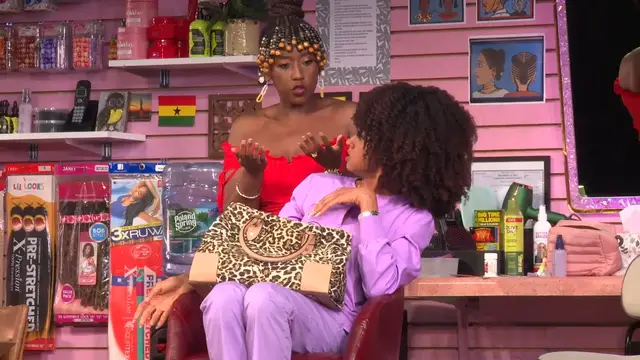
Video: JAJA'S AFRICAN HAIR BRAIDING's Nana Mensah Is On the Rise!
May 16, 2024


An incredible ensemble of actors makes up the cast of Broadway's most exciting new play- Jocelyn Bioh's Jaja's African Hair Braiding. One of them is Nana Mensah. In this video, watch as she checks in with BroadwayWorld's Candace Cordelia to chat about bringing Bioh's incredible new work to Broadway.
Show More Show Less View Video Transcript
0:00
Oh my god, what are you doing? That's too much oil. You want me to break out
0:07
I didn't put too much. It feels like you poured the whole bottle. It's hella expensive and I don't need you wasting it
0:12
Sorry. Sure. Could not be me. Hey. Thank you, Marie. Um, can I see the pack please
0:30
Because sometimes folks be trying to use the cheap shit and that will damage your hair. Oh no, my mother selects this hair herself
0:35
Your mother? Yeah, she owns this shop. And she has a direct source in both China and Malaysia
0:39
Okay. And can you not make the parts too big? Yeah, sure, no problem
0:43
And please don't be braiding it all tight. I am not trying to lose all my damn hair, all my edges
0:48
I don't braid tight. It's fine. You better not. Oh, I am so tired today
1:00
Hello, everyone. Welcome to Broadway World. This is Candace Cordelia, and I am so excited for us to talk about one of the best shows that I've seen all year and to talk with a very fantastic actress who is in the show. It is called Jaja's African Hair Braiding, and I'm here with Nana Mensa. How are you
1:20
Great. How are you, Candace? I'm doing really good. It's getting colder outside. This is my favorite time of year, so I'm doing good. How about you
1:30
Layers. It's so exciting to layer. I love it. Exactly. So first and foremost, you were absolutely
1:37
wonderful in Jaja's African hair braiding. And there's so much that I personally saw myself reflected in
1:45
in the show. It took me back to a lot of personal experiences that I had getting my hair braided
1:51
even now going to the hair salon, the conversations that we have with strangers and with loved ones
1:57
and it's a whole experience. So congratulations for your performance and for being a part of this
2:03
what I think is just a groundbreaking show that we have on Broadway today
2:08
Thank you. Yeah, it feels that way on the inside, I will say. It feels like a really special thing
2:15
that we're up there doing on stage eight shows a week. Absolutely
2:20
So I understand you're Ghanaian-American. My first question for you, Nana, is
2:26
what was it like? you know, what is it like, rather, being a part of this show and having the background that you have as a Ghanaian American and immersing yourself in the role as Aminato
2:37
Yeah, I think it is really special. I mean, my parents came to see the show a couple weeks ago. They immigrated from Ghana in the 80s
2:48
And I think, like, they are really, I think they were stunned. Like, they were really, like, stunned. And I think that's the word that kind of
2:56
kind of keeps coming up a lot when people approach me after the show or, you know, they'll say like, you know
3:02
somebody on Sunday was like a Nigerian American man and he was like, I know every single one of
3:08
those women on stage. I know them. And that was, and he had like tears in his eyes and we'd never
3:13
met before. We were, and so there's something so powerful that's going on, something that is obviously
3:19
so much bigger than me and I'm just, you know, a cog in the in the wheel of and a cog in the machine
3:26
of. But I think I just feel really privileged to be able to be a part of this, right? Because
3:34
immigration is obviously a common theme, a common denominator in a lot of my parents' story
3:40
a lot of their generation. You know, it affects my cousins, me, my sibling. Like, I think there's a
3:46
lot of, it's just kind of always in the ether, right? And in the same way that just kind of
3:53
lightly permeates the play and then obviously saturates it later. But I think I love
4:00
I love this. I'm so, I'm so excited to marry these two things that I'm so passionate about
4:05
which is, of course, my experience as an African in America and then also theater
4:12
And you mentioned the word theme. And of course, there's a lot of different themes within
4:17
Jaja's African hair braiding. One of those themes that really popped out even today when I was
4:22
looking more into my own research, the theme of rebellion. And you also mentioned immigration
4:28
I'm really curious to know from your perspective what your thoughts are on the form of rebellion when
4:34
it comes to the way that black women wear their hair, because that seems to be a current
4:39
conversation, especially in 2023, about the hairstyles that we have in the workplace. Sometimes
4:45
that can be a contentious situation. I would love to know your thoughts on that and how that also
4:51
intersects with Jaja's African hair braiding. Yeah, I think, you know, I think there's like a lot of far more intelligent women than me
5:04
who have kind of written on this topic. I'm thinking like, Audrey Lord and, you know, Tony Morrison and just talking about like what a
5:11
political act it is to be a black woman and to live the full expression of your humanity
5:19
even when it makes people uncomfortable, even when, you know, yeah, people don't want you to
5:26
And so I do think that there is something very political about black women's hair
5:31
And it's been like that since, you know, since the first European landed on an African shore
5:37
and had an opinion about like what it was that a black woman could or couldn't do with her hair
5:42
And in the Caribbean and the, what are they called? The laws that they had
5:46
It starts with a T. I'm blanking on what it was. But it was like the laws about a black woman having to happen
5:51
head wrapped, you know, having to cover her head, you know, in the sweltering heat, the sweltering
5:56
tropical heat and stuff like that. So it's like, it is very beautiful to be a part of something
6:03
that really rips the tape off of that, the red tape off of that conversation. It's like, oh, no
6:10
you're going to come in here and we're going to celebrate what is on your head and we're going
6:14
to make you feel as beautiful as you feel in the inside and make your hair match, you know
6:18
I think there's something about that that's like very, um, somefragile. And you're right, like in 2020, in 2023
6:25
So I'm just, again, I know this sounds so cheesy, but I'm just so delighted to be a part of it
6:32
And you absolutely should be because it's a revelation to even witness up close and personal from the set design to the actual act of braiding the hair
6:42
And I definitely wanted to ask you about that because I, my best, one of my best friends and I, we went together to watch
6:48
And we were just blown away by the fact that there's so much going. on, but you're also braiding here
6:53
You're actually. So how was that for you and the rest of your cast meets in terms
6:59
of being able to master, you know, doing the acting and also performing
7:04
with the hair braiding and the direction and the cues and all of that
7:07
happening at once? Yeah, it was crazy because I have been getting my hair braided my entire
7:13
life, but I'm not a very proficient braider. Then we have someone like Zemzie Williams who
7:19
plays B, who who, you know, was doing her cousins, like, opened a salon and she was, like, training under them
7:28
Like, she knows how to do all the styles. She can, like, she's really deft, like, when it comes to braiding
7:33
So we were coming into the experience with varying degrees of proficiency, which, and I was at the bottom
7:41
Actually, no, Michael Oloyade was worse than me. Okay. There was the one person, the one man of the cast
7:47
He was worse than me. Everybody else better than me. And so we basically went to, like
7:51
braiding boot camp and nobody assumed anything and we just started from the bottom And even some people were learning oh the way that they braided in the salon which is like an over construction is different than they have They been braiding it which was an underhanded construction
8:05
So little things like that. So we were like, you know, really learning how they do it in the salon and getting proficient
8:11
with a couple of like workshops days, like on Saturdays where Susie Oloia Day
8:16
sorry, Oludelae was coming. She is hair by Susie. She's an amazing, amazing braider
8:24
Very famously did Beyonce's lemonade braids. And so she came in and taught us how to hold your hands, how to whatever
8:34
And this is, again, all hats off to Nakas, who was our wig designer and, you know
8:40
basically the head of our hair department. And she is a genius
8:44
I mean, like literally the way that she was able to take her knowledge of stagecraft and take her knowledge of hair and blend those things
8:51
that it becomes like, it's like Harry Potter, but for black women's hair
8:55
It's like the tricks that are going on, I mean literally and truly
9:00
I will take them to my grave, but they are so astounding and so clever and elegant
9:06
you know, like slights of hand and things like that. So, again, so grateful
9:12
That's what's really hard. That's such an awesome ogy, Harry Potter, because throughout the entire time that I was watching
9:19
I'm thinking, how are they doing that? How are they making the changes so swiftly? I don't understand what's it
9:25
It's so wild. Did you find yourself for any extensive research going to different hair salons
9:34
different African hair braiding salons and just sitting there and just taking in the atmosphere and conversation
9:40
I didn't, but I also have logged. I've logged so many hours
9:46
Like I didn't necessarily have to. I think my main thing was that I'm Ghanaian
9:52
I'm also West African. But being Senegalese and being Ghanaian are two very different things
9:59
It's like being French and being German. So like I needed to kind of immerse myself in like Senegalese life and culture and, you know, things like that
10:08
So in that way, I was listening to like a lot of music. I actually made contact on Instagram
10:13
God bless Instagram. I just put out a kind of call to my followers
10:18
if anybody knew anybody who was Senegalese, like of our generation, like living in Senegal
10:24
And I found a woman. And so she helped me with some accent stuff, with some language stuff
10:30
So, and this was all this summer, June, July. So that when we started rehearsals in August, I had like, you know, a sense of grounding in
10:38
terms of who she was. And then that was like a nice baseline that then like working with Whitney White, who is also
10:45
a magician in another way, an emotional. magician, an emotional, technical master, she was able to kind of help me and work with me
10:54
to uncover and peel back and really get to the heart of who this woman was as a person
11:00
Lovely. And I mean, Aminata, I'm rooting for everyone in the show. The audience is just rooting for
11:06
everyone and all the characters are going through their own different trials. Aminata is special
11:12
because I found myself specifically seeing just everything that was happening and you're observing
11:18
especially when there's all of the things happening with B and there's all the time
11:23
And we're cracking out because we're like, how could B say those things? And Aminata standing there like
11:29
and you just seem like a very loyal, your character is very loyal and believes in friendship
11:34
and always seems to be there to help others. Were there any other similarities that you felt going in
11:41
and reading Aminata that you just said, okay, this is a person that I gel with because of X, Y, Z
11:48
honestly aminata and i could not be more different we are absolutely polar opposites and the funny thing is
11:58
is that if you put a camera on me and zanzi back like in in the dressing room or back stage or in life
12:05
i'm me and she's aminata like we are we are like our personalities are like whereas like i'm harder
12:13
like be and she's softer like aminata so there's been such a wonderful exercise where we get to be these people, be who we are offstage, and then come
12:23
on stage and basically like, you know, body swap or something, you know, just like personality swap
12:30
And I get to tap into my softness, which I have armored up over the years. And she gets to soldier
12:35
up and kind of put her armor on, which is not the way that she walks through the world
12:39
She's a very tender woman. And so, and I'm a little bit more cynical, a little bit more sarcastic
12:45
So that has been really wonderful. And Zenzhen and I have never worked together before
12:50
So it's just been so, like, delightful to get to know her
12:55
Because we really are this Lucy, I mean, Whitney would say we were Lucy and Ethel
12:59
We really do have this kind of like banter on stage that's very, like, precise and specific
13:08
So I think exploring my character through our relationship has been really rewarding
13:15
But no, in terms of me and Aminata, I mean, and also, you know, I think that's one of the things that's been delightful about diving into this role because, you know, obviously there are some other roles that I've done in film and television and those characters are very put together and they're very, you know, very well educated and like, you know, prized for their intelligence and like whatnot
13:35
And Aminata's not that, you know, she's a little bit chaotic. She's got kind of a scratch-off ticket addiction. She's in a messy relationship
13:42
You know, there are all these things about her that are a little bit like, you know, like the characters that I've played before are all Virgo's
13:49
Like she's like Pisces or an Aquarius, if that's your back. Okay, that does sense, actually
13:55
That definitely makes sense. You know, and this is your Broadway debut. So it's really just amazing that for your Broadway debut
14:03
this is a show that you get to portray such a cool character in
14:08
You know, what was that process like for you ahead of getting the role
14:12
What did that look like? Ahead of getting the role, I did one reading of the play in 2021
14:19
and where I had already been working on Nollywood Dreams with Jocelyn at MCC
14:24
And so this is our second time working together. And I was so bold over by this play
14:37
even just reading it on music stands. And I think I've done a lot of developmental readings in my career
14:44
And this was the only one where at the end of the reading, I got a stand
14:50
We got a standing ovation. I've never seen that happen before in a reading with music stands like ever
14:57
So it was, I think it was in the air. We could like feel it that there was something very special about this one
15:04
And very quickly MTC committed to doing it straight to Broadway. And I was just like, oh my God
15:14
Like it was really, really stunning. And immediately you're like screaming in the street when the offer comes in
15:22
But then very quickly after that, you're like, oh, my gosh, this is heavy
15:26
Like this is like, you know, this is really important. And I can't mess this up
15:34
And so that's when I dove into research. And that's when I dove into really getting a sense of who this character was
15:40
because like, especially Jocelyn, as a friend and as a collaborator, I don't want to let her down
15:46
You know, I want to make sure that like I'm really bringing my A game. And so yeah, it's been, it's been fantastic
15:52
It been fantastic but it was it also terrifying But as an artist isn that what we looking for You know what I mean Like I don necessarily want to go in and do the same job every single day and play the safer
16:04
Like, this is a real stretch for me, and I'm really delighting in the stretch. What's some advice that Jocelyn Beyo, the playwright, gave to you ahead of diving into
16:15
Java's African hair breeding? I think there was a lot of, there were many things
16:22
but the thing that comes to mind the most, like, it's right in the front of my mind was like the rhythm of the shop
16:28
the whitt the humming rhythm of the shop and the dialogue and the way we interact with each other and the mundanity of it
16:34
And that through that mundanity, there's actually like a familiarity, there's a quickness
16:38
There's a, you know, like these are not people who are kind of like staring off into the middle distance
16:42
and then coming, but, you know, like we are right on it, you know, because we're so comfortable with each other
16:47
we work side by side every day. And when you work with your hands, like it's the same
16:52
kind of like rhythm as if we were all on a factory line or something. Like you're working with your hand so your mouth can be doing whatever, you know
16:59
And so you're sharing and you're talking and you're teasing and you're whatever
17:03
And so she very quickly was like the way I hear it in my head is like
17:07
and she kind of gave like a like a demonstration, like a rhythmic demonstration. And I've really held on to that
17:14
It's a show that is incredibly fast-paced. It's 90 minutes, no intermission
17:18
And you cannot sit back for a moment as an actor inside
17:22
of it. Like so the whole time my like antenna are up, you know, and just like I'm listening really
17:29
intently and to what's going on and how we're interacting with each other because there's
17:35
not a second to kind of relax into anything. This is not, you know, a very syrupy, languid
17:41
Tennessee Williams situation, you know, it is, it's like, you know, it's like, you know, it's like
17:44
p-parr-pap-pah-pah-pah-pah, you know. And so that has been really a delightful challenge
17:50
I love that ogy in terms of it sounds like it was a dance, like it was a 90-minute workout because you're working everything, your brain, your hands, your full body, to just emit this performance
18:02
But it comes out beautiful in the end. And speaking of the end, it leaves such a cliffhanger
18:08
It took my breath away in terms of the ending. And I kept thinking, what would the next chapter look like for everyone
18:16
In your opinion, what would that look like specifically for Aminata? That's a really good question
18:26
I don't think I've ever thought about that. I think it's like what happens to like Masha or like, you know, like the three, like you
18:40
know what I mean? Like I feel like it's like if you look at Chekhov because I do find this play in its
18:45
structure and in its intent kind of ogous to some of Chekhov's works. And like they end
18:53
somewhat abruptly or the characters are delta blow and then have to kind of pick themselves up and
19:00
then we leave them. And I feel like that's by design. So like you know that they're going to be
19:06
okay even if they're not. Do you know what I mean? They're going to endure. They're going to
19:11
persevere. So like I don't I don't think I've actually ever really crystallized what that looks like
19:16
I mean, not to judge her relationship, but I hope she leaves her husband
19:22
I'm like out of all the things. That's my hope. And for at least that. No. And I hope she finds a
19:31
beautiful lover to take care of her and her son and just loutishes of tension and praise upon her
19:39
every day of her natural black life. Absolutely. That was one of the scenes where everyone was just like
19:45
oh my gosh, here we go. But we all, I could tell we all felt for you
19:50
but we understood. Because we know an aminata or we are an aminata
19:55
So it was so relatable, but we're just thinking, girl, come on, you got to get on a situation
20:02
It's hard. And some nights or some performances, it's harder than others because there are some where
20:08
I don't know which night you came, which day you came, but there are some performances where people are screaming at Aminata
20:16
like literally vocalizing being like, girl, you better don't like to yell
20:24
And just like, oh no, like the groans are so audible that I have to up my volume to make sure they can hear the lines
20:32
Like people have a very visceral reaction to that relationship. So if I were to kind of like turn the page and see scene too, my hope is that she would, you know, she would find like genuine sincere love in her life
20:46
Absolutely. One thousand percent. I was not there for those audible. I mean, we were groaning, but that sounds like it was a completely different
20:54
Were you anticipating you and the cast to have or to hear those type of reactions from the audience and thinking this show is really going to bring out those emotions so powerful
21:06
powerfully night after night. You know, I hadn't considered it. I think I've really got to, you know
21:14
kind of doff my hat to MTC and the producers, Taraji P. Henson, Lashon, Madison Wells Live
21:21
for building out an audience that really responds to this type of thing
21:26
because MTC has a really loyal and very robust subscriber base, but I think the demographic of that subscriber base
21:32
is not necessarily the type of person that would be vocally responding
21:36
in the same way or feels invited to vocally respond in that way
21:40
And so I love there are so many first-time ticket buyers to MTC that are coming to see
21:48
this show because the marketing has been so great. And I think that that has also given permission to maybe the more seasoned MTC subscriber
21:59
to participate as well. So it kind of has this like amplifying effect where sometimes I just have to pause and let them
22:06
get it out of their system before I continue talking. Yeah, it's been a long time since I've been to a show where the audience was, it was
22:15
interactive and people were shouting and yelling. And I love that and I miss that because it doesn't happen every day
22:22
So it must feel really good. Especially not on Broadway. Especially not on Broadway
22:27
Yeah. So that feels really special. It does. It feels great. Yeah
22:31
I mean, after the show that I saw, there was a Q&A. And I love, our audience was diverse
22:36
first and foremost. And there were a lot of very profound reactions and questions in terms of
22:42
just the culture and the experience from people who are not African, who are not African-American
22:48
who have never stepped foot inside of an African-haireding shop, much less a black hair salon
22:54
Have you received any feedback from others in your world who are not African or African-American
23:01
And what did those questions look like in your responses to that? Yeah, I mean, my old boss who has become a friend
23:07
I mean, her daughter is my age. So like, but we're, you know, she's become a friend and she's, I adore her
23:15
She's lived in Harlem almost the entire time that I've known her
23:18
So probably like 15 years, maybe longer. And she basically was like, I've lived in Harlem for all this time
23:28
And I've never stopped to consider what goes on in those hair salons
23:32
I've walked by them for years and years. And I was like, yeah
23:37
So that was like really, maybe a little bit surprising. But second to that, it was really, sorry, and just to be clear, she's a white Jewish woman
23:49
So she never had a need to enter these salons Sure She doesn need to get her hair done there But like so it was really that was really profound to me And I was like wow we have 600 650 seats in this theater at the Friedman
24:04
And if half of the people who walk out of here stop to consider the dynamism of the lives
24:12
that are lived inside these shops, then we will have done a real, like, we will have really
24:21
pulled off some magic. That's a really profound response. And you don't think about it because we're all living our lives on a day-to-day basis
24:29
and doing our thing. And sometimes we're just so wrapped up in our bubble
24:33
We don't consider the lived-in experiences of other people. So that is a profound response to this
24:42
And on the heels of that, what have you learned or relearned being in this show and playing
24:48
the role of Aminata as a Ghanaian American? person. You know, there is one of the things that I think that Jocelyn does so well in the script
25:00
is really layering the, you know, oftentimes we say, oh, black people, we are not a monolith
25:06
And I really think she does such a great job of carving out the very specific different kinds
25:13
of identities of black women that all come in and leave that shop
25:16
Like, obviously, you can't do all of them. But she does really bring a life to a lot of different kinds of black women that we know and who feel familiar to us
25:26
And I think one of the things that I love about that is one of the things that I was reminded of was the privilege was my privilege as a Ghanaian American, right
25:41
Like I was born here and I have a blue passport and some of my cousins and some of my, you know
25:48
aunts and uncles did not have that privilege. And that was never a part of my story trying to
25:53
figure out how to get my papers. That was something that, like, I'm very lucky to have not had
25:59
to deal with. And so I think that this play has kind of shown a light on that for me, personally
26:04
And then also for my parents who did have to worry about that and how they were able to navigate
26:10
a system that was designed to shut them out, frankly, you know, and how they persevered. And the
26:17
tenacity that they demonstrated it. I think made me, you know, just like a newfound
26:23
appreciation and newfound respect for what they did, you know, moving to this country that
26:27
didn't really want them and saying, no, we're going to make a way. We're going to find a way
26:32
Like, I think it's so beautiful. And it's like there is a poetry to the way that they've lived
26:36
their lives, even if I don't agree with all of their choices as children and parents, often
26:40
you know, kind of, you know, butt heads. But I think that like, I just respect so much
26:47
what they have done and what they were able to accomplish. Yeah, again, against the system that didn't necessarily welcome them
26:56
So I think it's, that has been something that's really on the forefront of my mind
27:00
Also, I have not set foot in an African braiding shop in Harlem in quite a few years
27:07
because I would always have this, I had my own psychological situation of like
27:13
you know, sometimes like they would do the style and it's not what I showed them, It was what they wanted to do or like, you know, or they would do it too tight or they wouldn't like necessarily take me into consideration
27:23
So I would kind of always need feeling a little bit like a little bit ripped off, a little bit, you know, dissatisfied and whatever
27:30
And then a lot of the little shadings that Jocelyn built into the play, little things about like, you know, about the arthritis in your hands and like blisters on your fingers and things like that
27:42
It gave me a whole, I don't know, I might try going into a Harlem
27:47
hairbraiding salon again. And with a newfound empathy for these women who are on their feet for hours and hours
27:53
and hours, who are, you know, breaking their fingers to make, you know
27:59
to make this, make this art on our heads, you know. Yeah
28:03
It's a delicate situation and a delicate relationship that unless you've been in it
28:08
you don't quite understand. I relate to that, to going into a shop or having someone come into my parents' home to do my hair and you're
28:16
just thinking, okay, I know what I want, but I'm just hoping it's not too tight. I'm tenderheaded
28:21
I hope it comes out of six and you're sitting in the chair for hours. I mean, I can remember
28:26
the day sitting in the chair for six hours, seven hours to get my hair braided as a kid
28:31
And you're just like, it's an emotional experience. So I'm glad that this show exists for people
28:38
to understand and see that. Truly. And also just like, yeah, we are so patient and we are so
28:45
delicious, like to sit there to do this thing to make ourselves feel beautiful and like, you know
28:52
to kind of walk out with like our heads held high and to feel really good about ourselves
28:57
We are willing to endure for hours and hours and hours and hours
29:01
And I think there's something that like does shift. There's like an alchemy
29:06
Like there's something that shifts in your personality when you are able to do that
29:10
When you are able to endure pain or endure like sitting in one spot
29:15
moving for hours on end in order to reach a desired outcome, I think we're special
29:22
Yeah. We are. Hang on for you thought about it like that, but that makes all the sense
29:27
It really does. So if we're able to endure that experience, both sitting in the chair and also standing for
29:33
hours to braid air, I mean, there's nothing we can't do, I feel
29:38
That part. That part. Honestly, this was such a lovely conversation, Nana
29:44
And I know we talked about so many things, and there should be no reason for anyone to not go see
29:50
Jaja's African hair braiding. But I'm going to leave our conversation asking you
29:55
why should people run at the MTC to go see this show
30:00
People should run to MTC to come and see Jhajah's African hair braiding
30:03
because it is a spectacular play. It is geniusly constructed. It is hilarious
30:12
And you will come out. out being a better person than how you enter
30:18
Love it. Absolutely love it. I can't argue with that. And thank you so much
30:23
thank you so much, Nana. And thank you everyone for watching. This is Broadway World on the rise with Candace Cordelia
30:32
This is Nana Mensa. It's her Broadway debut. So please support her and the rest of her lovely cast needs at Jaja's African hair braiding
30:39
It's at the MTC. See it while you can. I mean, it's from what I understand
30:43
It's a pact. every night so it's not going to last forever but while it is here go see it thank you all
30:50
for watching and stay tuned for the next installment
#Events & Listings
#Acting & Theater
#Broadway & Musical Theater