Up next in 10

Video: How to Spend a Theatre-Filled Day at the New York Public Library for the Performing Arts
May 28, 2024

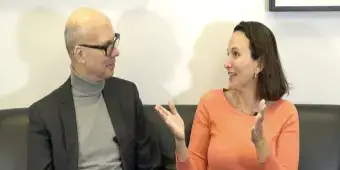
Are you a theatre lover who is looking for something new to do in New York City? All you need is a library card! In this video, watch as Roberta Pereira chats more about how any New Yorker can get in on the action at the Library for the Performing Arts.
Show More Show Less View Video Transcript
0:00
Welcome to Backstage with Richard Ridge
0:10
I am once again at the New York Public Library for the Performing Arts
0:14
to introduce you to their new executive director. Please welcome, Roberta Pereira
0:21
Well, first of all, I'm thrilled to be sitting with you here in your brand new office here
0:25
I'm excited. Thank you so much for coming to visit us today. Okay, congratulations
0:29
and being the new executive director. How exciting is this? It is literally a dream come true
0:35
I'm a lifelong library fan and a lifelong performing arts fan. So to find a job that brings the two together
0:42
is wonderful. Because I would say this has to be the dream job
0:46
with the kind of career you had beforehand. Yeah, it really is
0:49
As I said, when I read this job description, when they were looking for the position
0:55
I looked at it and I texted a friend and I said, Did somebody write a job for me
0:59
Because this is it. This is it. And so, yeah, it felt very from the moment
1:05
I saw that. It felt like the right time and it felt like the right fit
1:09
Yeah. So I was to ask you, how did it all come about? They were doing the search for this position
1:15
And I at the time was executive director of the playwrights realm, which is an off-Broadway theater company and artist service organization here in New York
1:23
And I had been there for about eight years. So I was already thinking, I was very, very
1:28
happy at the realm, but I was thinking about what was next. What was the next step? And this job
1:36
description landed on my desk. And as I read it, I said, somebody wrote a job for me
1:42
And let's go through this process. And so it was a very long process. It was a four-month
1:47
search process, you know, through New York Public Library, interviews with a lot of the stakeholders
1:53
during the whole time. And then finally in October, I was announced as a new executive director
2:01
but I actually started only about a month ago. A lot of people don't know that
2:05
but I only started mid-January. So I've actually been doing this job for about five weeks now
2:10
It's got to be really exciting, just to throw yourself into the whole thing, right
2:14
It is because for so long, during the whole interview process, and then, you know, afterwards during the transition
2:20
I've been imagining it, right? I started a Google Doc that's like a Library for the Performing Arts ideas
2:27
and it's just have all these ideas. And now to be here and actually start seeing those things come to life
2:33
and learning more about the process, it is also my first time working at a library, right
2:39
And so although I have been an avid fan of libraries and have used New York Public Library for many years
2:45
this is the first time that I'm seeing all the rest of it, like how it really works, right
2:49
And also, we are also a museum, right? exhibitions as well. So also learning that part of it, which is very different from putting on
2:57
productions, which is what I've done for the past 15 years. So what's also been amazing, it's the
3:03
learning opportunities in this. And I love learning. So sometimes I'll just sit in meetings and I was
3:08
like, tell me more. How does this work? Right? And so getting that, the learning opportunities
3:13
with bringing all of my background that I have in publishing, in theater, in public
3:21
programming and bringing all of that here, it's been the perfect marriage
3:26
You know, researching your career, something you've always strive for is accessibility. And that's something the library has always
3:34
offered, right? Talk about accessibility. Yeah. So that was one of the things that
3:37
really attracted me about this job because one of the core principles of the
3:41
library is that the library is for all and that's accessible for all. So
3:45
looking at the library for the performing arts, we have these world-class exhibitions, all free. We have this, we have this
3:51
this incredible programming every day, sometimes more than one program in the day
3:56
Everything is free as well. And then you have our incredible research and archive collection
4:02
which anybody can access. All you need is a library card and you can make a reservation
4:07
You can go see a film at Toft, you know, which is the archive of a lot of like the
4:13
Broadway off-Broadway shows from a long time. Or you can also see a lot of the things we have in our
4:19
archive that will be pulled for you. And so for, for, For me, that was really exciting
4:23
That's a level of access that is exciting to me. And as a Latin ex-theater practitioner and as an immigrant as well, having that accessibility
4:34
was really important. Okay, speaking about this is the first time a Latino person has held this position, what
4:41
that means to personally and professionally? Well I think that that is one of the exciting things as well because I think that my lived the experience that I bring to the table will make the experience of the library richer right And so we doing a lot of exciting programs around that as well
4:59
Monday, for example, we have a Latinx spring preview for theater and we're partnering with some local theaters here in New York
5:08
Latinx theaters. There's some other projects that we're in the starting stages of planning as well
5:16
Because what's exciting about theater, actually all of the performing arts, what's exciting about the performing arts is that it's better when more people can participate
5:26
So for me, it's like how can we open that door, right? How can we reduce those barriers, whatever they are, and open the door so more people can participate in the performing arts
5:37
And this is what has been one of my core values as a performing arts practitioner
5:43
And this is a perfect marriage with what the library for the performing arts is about. Let's talk about the vast collection here
5:49
I mean, is it like 8 million items or something of that number
5:53
It's an incredible number, as you know, as a user of our collection. Yes
5:58
And what's great about is that there's a lot of different ways you can access it. So there's a lot of things that are digitized
6:03
You can go from home. You can find these incredible prints that you can download
6:08
You can even get a print, you know, sent to your home if you wanted to
6:12
And so there's a lot of that. Then they're obviously like special collection items
6:16
that you have to access in the building. But once again, you can make an appointment
6:21
You come to our third floor. A librarian will sit with you
6:25
will help you sort through it, and everything. You know, we have films, we have clippings
6:32
we have photographs, we have digital, and so there's a little bit of everything
6:37
See, I was telling you before we started, I loved the clippings. Those incredible folders for all of you watching
6:43
who spent many, many times here researching, you would find the things two or three folders on these shows or stars and you'd lay it all out and you'd find all
6:52
these little treasures in there but even the creators forgot about you know so i just it's magical the
6:58
third floor here right every floor here is magical but the third floor is those magic doors you walk into
7:03
the the billy rose collection everything else now i learned from you earlier there's all magic here
7:08
speaking of magic yeah i mean i didn't even know that i thought i'd do everything here yeah and so this is
7:14
what's exciting every day is is is a new, I learned something new, right
7:19
And so for example, as you mentioned, part of our theater collection
7:22
we actually have quite a robust magic collection, and that includes letters, pamphlets
7:29
we have Houdini letters, I found out. And so some very exciting, we also have a lot of things on circus
7:35
And so all of these things are being discovered, and we're digitizing more and more every day
7:40
So it's also more has become available to the greatest number of people, which is our goal
7:46
See, I like that because now people can go on their iPhone or their computer or a tablet
7:50
and just type in the New York Public Library or the New York Public Library for the Performing Arts. Yeah
7:56
And all these beautiful digitized, is that the word? Yeah. Digitized. Digitized
8:02
Digitized. Photographs and all these incredible collections. You can just view at home and study
8:08
You've made it even more accessible now than just having to come in. You can do it at home
8:12
Absolutely. And there will be more and more of this as well. I think that, you know, the years that we have with COVID, it showed that
8:19
I think accessibility is, as I said, you have to think about all the barriers, right
8:23
So like price can be a barrier. Okay, we'll do everything for free
8:27
But also the ability to come here. You might physically not live in New York, right
8:32
You might not be able to come. Or you might also have a disability or something that makes it hard for you to leave your home
8:38
And so we want to try to think of different ways that we can make these things accessible
8:43
And it's something we're thinking also with our live programming and how, you know
8:48
and we already, we record a lot of things and make it available online as well
8:53
but we're thinking about doing more streaming and things like that. So, like, we're always thinking, like, what's next
8:59
How we can make it even more accessible to people. Yeah. And I'd love you just said earlier that all anybody really needs is a library card to come here
9:06
That's all you do, and you can get that very easy. Yes, and you don't need to be. In fact, you can get it here if you go to a circulating desk
9:13
We are also a circulating library, which a lot of people don't know, which means we have books that can be checked out
9:19
A lot of our books are based on the performing arts, of course
9:23
And so when you walk in through the Lincoln Center Plaza, that's our circulating desk
9:27
Our circulating staff is lovely, and they can help you get a library card
9:31
And with a library card, you can access the research collection as well online
9:35
Their instructions there you can email somebody here to make an appointment And it very easy We make it very easy Okay I want to go back to Playwright Realm which was the company that you worked for eight and a half years at by the time you left I love what you did with that company
9:51
When I was reading all about it, I was like, boy, you took this to someplace
9:55
Accessibility, what, you know, for caregiving. Talk about what you wanted to achieve when you were there and what you did
10:01
Yeah, I mean, as I said, it all connects, right? It's the same thing that I want to bring here as well
10:08
I just thought that the company had such great services, and I wanted more people to be able to use them, right
10:14
And so together with Catherine Covner, who's our founding artistic director, we really worked in a really close partnership
10:21
And once again, we looked at every single piece and we're like, this is a barrier
10:25
How can we make this easier, right? So you mentioned the caretaking. So we did this big project called the Radical Parent Inclusion Project
10:32
And the idea is that it is very hard to work in the performing arts
10:37
and be a caretaker, right? Either of a child or of a grown
10:42
it could be a parent or another adult in your family. And I know that very well as a solo mom of a six-year-old
10:52
And so, you know, so things, for example, to go to an audition cost money for somebody who's a caretaker
10:57
because they literally have to pay somebody to stay with their child or other dependent
11:02
while they go to this audition. So we really looked at ways we could, you know
11:07
reduce those barriers. We worked with PAL, Parents, Artists Advocacy League and Broadway
11:13
babysitters to do one of the first, even pre-pendemic, a child care matinee. So it meant that
11:22
we had a matinee of the show. And then in the same building, there was a child care room
11:27
It was free for parents. So you just had to sign up. And now we've been seeing more and more
11:31
of those popping up with a lot of other partners. We've seen them on Broadway. We've seen them off
11:35
Broadway too. And I think that that's the way forward and also giving stipends to artists who have
11:41
child care responsibilities. So really thinking once again about those barriers, right? And so with the
11:49
playwrights around, we were really focused on early career playwrights, right? And the idea was that we
11:54
wanted to jumpstart their career. And we have some amazing examples. We worked on The Play the Wolves
12:01
with Sarah DeLap, which was a huge hit, of course, and Sarah
12:05
when she started with us, she had never had a play produced, and by the time, you know, at the end of her time with us
12:11
she was a Pulitzer Prize finalist. So that's kind of what we were about
12:15
We were really looking at those artists and seeing what kind of help they need
12:19
but not just artistic help, right? It was also about the human help
12:24
So, like, we provided things like health insurance to artists. We provided them an office space
12:29
so they could have a professional space to have meetings. We provided them with their favorite snacks
12:33
because sometimes it's nice to have your favorite snacks in your office. So we really looked at all our writers, all our artists holistically, and we saw how we
12:42
could help them fully. I just love how she went from never having a play done when she started with you
12:47
to becoming a Pulitzer Prize finalist. That was a journey, and now this play's produced everywhere
12:52
People come up to me all the time and say, I did The Wolves because, you know, my name's still in
12:57
the program as being one of the originating producers. And so people come up to me all the time and talk
13:02
about this. That is great. You're also in 20, 2017, you co-founded the artist anti-racist coalition
13:08
Tell me about that organization. Yeah, so this was a grassroots organization
13:13
and it was the idea of starting to discuss anti-racist principles within specifically like the theater
13:21
the off-Broadway theater community. So it was a group of us that started, it was four of us
13:26
and then we brought a lot of colleagues together, and this is both black indigenous people of color
13:30
and white colleagues as well, white allies, and sort of learning together
13:35
And so we did some trainings. We had some specific trainings that we did
13:39
But it was also just about what kind of advocacy we could find we could do within ourselves
13:45
and within our groups. And very exciting, like for many years, like this group was still meeting
13:50
and there's still a lot of projects that are happening today that came from that
13:54
So I also very much believe in grassroots organizing. And I think sometimes, you know
14:01
when people are seeing a lot of adversity, is easy to say, well, I don't have any power. I can't do anything to change it. But I believe that we all have power
14:10
to change things. So we have to look at where we sit. We have to look at all the levers we can
14:15
pull to produce change. And it doesn't need to be the entire thing. You don't need to change the whole
14:20
system, but maybe you can change a piece of it. Right. So for me, I believe in that. I believe that we are
14:25
all change makers and we have to take that on Beautiful I glad you did that Going back to you know with the state and city budgets being cut one of the first things is always gets cuts are the arts and libraries So how do you deal with all of that and how can
14:41
people who come here want to donate? Yeah. How can they help the library? Absolutely. Thank you for
14:46
asking that. Yeah, that is very tough because, you know, I am used to it from the arts world
14:53
Because as you said, like the arts is one of the first big cuts, but then also with the libraries
14:58
I feel like a lot of times the libraries are almost used as a pawn, right
15:01
And they're cut because people know there will be an outcry and then they can be reversed and they can use that and cut other things
15:07
So there's all of these political things. But at the end of the day, they're real people that are not having these services that they need
15:16
Right. And in terms of like how people can help, first of all, there's a lot of advocacy that's done around, you know
15:23
if you don't follow New York Public Library and a lot of social media and also the Library for the Performer
15:28
There's a lot of things that we will share in terms of actions, things that people can sign and all of that
15:33
But also, donations help immensely. And we have a great program called Friends of the Library for the Performing Arts
15:42
And it's basically you will donate to become a member of this kind of society of our closest friends
15:48
And what's great about that is that this goes directly to the Library of the Performing Arts, so it helps us continuing doing our programs
15:55
But also, we have some very exciting things. that we are planning for our members
16:00
So since I started here, I'm very interested because in a way, these are our closest supporters, right
16:05
And a lot of the members are even volunteers with the library. They interact with us in many ways
16:10
So we are planning a lot of very exciting things that I can't talk about yet
16:15
But if you join and you become a member of the Library for the Performing Arts
16:19
a friend of the Library for the Performing Arts, you will be invited to these special things
16:24
that we are cooking up. I love that. Yeah. What is one of your biggest goals now
16:29
that you're at the library for the performing arts? Well, my staff will laugh at this
16:34
because I talk about this all the time. So pre-pendemic, we used to have a cafe upstairs
16:40
and it has closed and we've had trouble bringing it back. But my biggest goal for my first year
16:48
is to bring back the cafe because food and coffee brings people together
16:55
And this is an area that is, that is very expensive. So to have a place where you can grab a coffee
17:02
you can sit down, you can bring your laptop, you know, like I look at library as community spaces, right
17:09
So I look at libraries as places that are active, that are vibrant. And so I think that this, as silly as it sounds
17:15
you know, it's not just about the cafe, I think the cafe means something
17:19
Like I want to activate the space in a different way. So this is the first part of it
17:25
I love that. Yeah. So there are some very exciting theater exhibits coming up here
17:31
Tell us about some of them. Absolutely. So what a lot of people don't know is that we actually have the archives
17:37
for some of the main photographers that photographed Broadway for a very long time
17:41
So we're actually having two exciting theater exhibits this spring. And one of them, we are actually showing a lot of the Friedman-Abel's pictures
17:50
that photographed everything from West Side Story to Bye By Birdie. We also have some surprises
17:57
the way we're showing these pictures, so you have to come up and check it in person
18:01
And then the other very exciting exhibition we have is an exhibition of images from Joan Marcus and Carol Roseg
18:08
who, as you know, are two of the great photographers of Broadway as well
18:13
And they never have an exhibition just really highlighting their work. So we're showing a lot of, like, some key moments from their career
18:22
their long careers. And then we are also showing there's some videos
18:26
highlighting other things. So they're very exciting exhibitions that we have here this spring
18:30
You can come and see both of them in one day. So I really encourage it for a must-see for any theater fan
18:37
I just love that there's always something going on here. There's always a program and people can just go online
18:42
and see what's happening here, right? Absolutely. And what I would encourage is like
18:46
if you really want to make a day of it, you know, come see one of the exhibitions, go to the third floor
18:52
check out something up there, and then maybe see a program at our Bruno Walter
18:56
our auditorium. You know, you could spend literally the whole day here and not pay anything
19:01
which is something very rare in New York. It's all free. It's all free. All it takes is a library
19:07
card. All it takes is a library card, which you can sign up for it right here as well
19:12
Well, I want to thank you for sitting with me today at Broadway World. And for everybody watching
19:16
come here, discover the treasures that you will find only here at the New York Public Library
19:21
for the Performing Arts. Thank you. Thank you
#Events & Listings
#Performing Arts
#Acting & Theater
#Vocals & Show Tunes
#Broadway & Musical Theater