Up next in 10

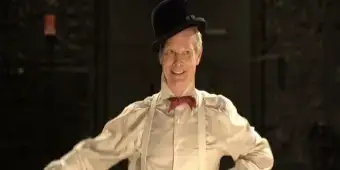
Video: Bill Irwin Is Taking on Beckett at the Irish Rep
Aug 2, 2024

In this video, watch as Bill Irwin chats with BroadwayWorld's Richard Ridge about the brilliance of Beckett, the joy of being back at the Rep, and so much more!
Show More Show Less View Video Transcript
0:00
Some on Samuel Beckett language, something like I let the backbone slip or let the knee bone wobble
0:13
What this evening is, is my attempt to share with an audience the place that these writings occupy inside of me
0:22
Welcome to Backstage with Richard Ridge. My guest is one of the greatest artists of his generation. He is a master clown
0:30
a Tony Award-winning actor and a MacArthur Fellow to name just a few
0:34
He has spent a lifetime captivated by the language of Nobel Prize winner Samuel Beckett
0:41
He has appeared on stage in such Beckett works as Waiting for Godot and End Game
0:45
Well, now his award-winning intimate 90-minute evening called On Beckett that he conceived and performs in
0:52
is back at the Irish Rep this summer. Please welcome my friend Bill Irwin
0:58
Hi, Richie. So where are you, Bill? I'm just off of Roe C in the house here at the Irish Repertory Theater
1:09
We don't have any Wi-Fi downstairs in the men's dressing room, so I'm sitting here in the house, which is a space I love to be in during showtime
1:18
but between showtime. I'm having a bad hair day, but I'm enjoying being here
1:23
And great speaking to you always. Well, first of all, I wish I could have a bad hair day
1:27
just so you know. But second of all, listen, how wonderful and how excited are you to be back
1:33
at the glorious Irish rep with this show? You know, this is just a great little joint
1:39
140 seats, beautiful, narrow house, but steep rake here and balcony. And they weathered
1:47
this is a small theater in New York that has weathered the pandemic travails
1:51
that have taken a harder toll on some other theaters. it's a very tricky time still in the theater
1:59
and this is just a great joint to be working in and I love doing this on Beckett evening
2:05
Changes every night. It's driving the stage manager crazy but I just love doing it
2:12
Okay, well let's talk about this because I've seen your show numerous times and every time like you said it's a little different
2:17
it's so wonderful the journey you take us on and the interconnection we have with the artist
2:23
which is you and the audience. How do you describe this show of what it actually is
2:29
I try not to get trapped into trying to describe it because, well, I'm just not very good at it
2:35
It's a personal evening that I started putting together probably almost a decade ago
2:40
Just thinking about how can I, first of all, make use of all this Beckett material that
2:46
stays in my head. What could I offer an audience? And that has become an ongoing sort of cycle of things
2:55
So the evening, we did an evening under this title six years ago, 2018, pre-pandemic here at the Irish Rep
3:05
In my mind, it's almost a totally different animal. The audiences could choose for themselves
3:11
But I just love doing it because, like I said, it's a personal evening
3:16
It goes back and forth between my doing my best to honor these texts, word for word that Mr. Beckett wrote in his
3:25
writing life, and then interpolating that with some thoughts that change nightly
3:32
from an actor on what it is like to work with this material
3:39
Because since the initial run was in 2018, how has your relationship and feelings about Beckett
3:46
evolved since that initial run? I'm older. Actor friends have come to
3:55
see the show. It's very gratified. John Torturo was here the other night, and we agreed
4:00
this writing, you don't really fully get it. It doesn't really resonate fully until you're
4:07
older, but you have to have started with it younger because it is not a language that
4:14
jumps necessary, for this actor anyway. Other actors may be luckier, but doesn't jump
4:19
immediately into clarity. So I've taken the years that I've worked with Mr. Beckett's writing to get a handle on some of the pieces that are now I feel really ready to share with an audience
4:34
You actually met him, didn't you? I did meet him very briefly toward the end of his life
4:41
People ask, you know, what was it like? What do you say? I almost can't remember. I was so shy. My eyes never came off the table
4:48
I do remember Mr. Beckett was also very reserved and I think shy man as well
4:55
even though when you read his biographies, it was a party animal
5:00
I mean, Samuel Beckett was one wild character, and then apparently after nights in the cafes in Paris
5:09
he would do a day's writing and leave us this incredible work that he's left us
5:16
My memory, Richie, my strongest memory, I'm sorry if I bored you with this before, but it is true
5:22
Mr. Beckett's hands were. really gnarled. He had a combination of arthritis and there's another, there's another syndrome that
5:33
has a name. Northern European men are often given to this kind of gnarled hands. And so I looked at that
5:40
and I thought, wow, those are Samuel Beckett's hands. Only later did I learn in talking to people
5:46
about him reading biographies. He was quite a pianist in his youth. He could really play the piano
5:51
Now these hands are gnarled, thick glasses. But, but, you know, he was quite a pianist. He was quite a pianist. He was But when you ask him something, boom, right there
6:00
Have you used any of his physicality that you saw that day or remember
6:06
Have you used that when you've done some of his work on stage or any of it in your show
6:11
I'm fascinated by this. Yes. Yes. This notion of an intensely physical man, you know, he was quite an athlete, Beckett was
6:20
and a war hero served with the French resistance. He was an interesting blend of, like, guy all in his head and action man
6:33
And that's the battering back and forth of that is part of what's exciting in his writing
6:40
War hero, complete intellectual. But yes, I've used this notion of a highly physical man, lots of energy
6:48
into these gnarled hands with which he would gesture and sometimes be impatient
6:56
It's part of the ongoing rumination for an actor on what aging is
7:02
And this writing will take you on that adventure. And as you get older that just that the deal It trying to figure out what is this You know when we babies this is like first you learn your hands and then they say there a certain number of weeks
7:20
Kids learn their feet, and then they start, you know, it's the same thing at the other end of life
7:26
This happens, this happens, this happens. The writing is not only about that
7:31
It's also about youth and power, sexuality, through the lens of this particular writer's way of looking
7:39
at the world. But there is a lot to be looked at when you're wondering about the diminishment that is
7:50
part of aging. Also, you get smarter in some way. You do things as an actor. God, I couldn't have
7:58
done that 15 years ago. I wouldn't have had the capacity. Now, I can't run and fall down like I used to
8:05
or do with Charleston like I used to, but I can now do things
8:10
offer things to an audience or share things with an audience as an act that I wasn't able to do 15 years ago
8:16
You live with what you got. So I was going to ask you
8:21
when did Beckett first come into your life? When were you first aware of
8:25
oh my gosh, I'm reading this and you fell in love with this writing
8:30
You fell in love with this man. I did, although kind of gradually
8:34
as I say at one point, in the evening, I was a terribly pretentious young actor
8:38
I didn't even finish reading the play. I read part of it, but I just carried around this idea that's
8:43
oh, it's a really cool play. I'd probably be really cool in it, you know. Young Californian actor, it takes a while to settle into this writing
8:52
I'll tell you, this is, Richie, we lived for some years up in Rockland County
8:56
up in the town of Nyack. I miss it greatly. I miss people up there. We live only in the city now
9:03
There was a neighbor across the street who said, I understand you're, I heard you on the radio
9:07
You're talking about Samuel Beckett. And I'd like to read those pieces there
9:11
particular prose pieces called Texts for Nothing that I was performing then at classic stage down on 13th Street
9:19
And I said, well, Fred, let me put this book in your mailbox
9:23
so you can take it within the hour. It was back in my mailbox
9:27
I said, Bill, I can't read this. This is just a wall of words. I can't get anything
9:32
And sometimes I pick it up and feel the same. but over time with an actor's hunger, many of us who are addicted to this man's work
9:42
you do find your way in it. It does start to reveal shapes and really interesting things about the division of self
9:50
me, myself, and I, the way the brain and the mind operate
9:56
Also, like I say, just young person's stuff like, what is sexuality
10:01
What is life force? why do I feel like an old man one minute and seething with energy the next
10:08
And a question that he often brings up to you. He's like, when you're, if you do feel anything akin to despair, how do you climb up out of that hell
10:20
It's a big old question. Because I was going to ask you, what unlocked Beckett for you as an actor
10:27
And I'm sure it keeps getting unlocked over the years. Yes. You talk about, like you said, a young actor
10:33
Everybody was like, oh, my God, I'm an actor. I'm going to start doing a Beckett play. You know, so why
10:40
What was it? Well, what is it that keeps unlocking it? I'm sure it's like Shakespeare, too, to a certain, you know
10:46
certain actors, they're like, it's the rhythm of his words. But what is it about Beckett
10:50
Because it's also so intellectual at the same time. So intellectual and physical, both at the same time
10:55
And that's the accomplishment, that's one of the accomplishments of this writer. It's an Irish voice
11:00
and that speaks to me, you know, it's heritage and identity in my family life
11:05
I went to school in Northern Ireland. And in fact, when a wonderful guy named Joe Chacon of the New York Theater sat me down at his kitchen table
11:15
and had me read these fairly obscure texts for nothing pieces, they're not even within Beckett's work
11:22
as well known as like Waiting Forgado and Endgame and other of his writings
11:27
But as I read them, they're deeply mysterious. They will stump you
11:34
But it also sounds like somebody walking the hills around Belfast, which I did when I was 17, 18 years old, because I didn't know what I was doing there
11:44
I was a California kid in Belfast, Northern Ireland. It was really good for me
11:48
I am so glad I had that opportunity. But at the time, I was kind of lonely and whacked out
11:54
the pieces that he wrote called Texts for Nothing are often feel like they're written
12:01
walking around the hills of Dublin. These two cities are less than 100 miles apart
12:06
but historically have been such different cities. But it really spoke to me
12:11
It's like, oh, I know that feeling. Walking down sheep tracks and there's quag up to your knee
12:17
and heath and troughs scooped deep by the rain, as Mr. Beckett says
12:22
So that notion of, looking down on a hillside, looking toward the city you live in
12:28
but then the mist covers it up and there, you know, where you are. That really spoke to me from experience
12:34
And I think from a sort of genetic memory of being Irish
12:39
he's an Irish writer so thoroughly, even though he wrote a lot of his work first in French and then translated it
12:48
I mean, he's just so mysterious. You can barely hang on for dear life
12:51
what came first for you verbally or physically or did you find them both the same time well the first thing
13:00
i ever read of beckett's was a complete happenstance as a freshman at UCLA sitting with my new
13:09
expensive textbooks that you you know i'd just gone and spent like forty nine dollars of my parents money
13:16
to be able to do the coursework for that. And I had, it was just the year after I'd spent time in Northern Ireland as a student
13:26
So I'm looking through and there's words worth and there's a, you know, it's just, it's a dense anthology stuff
13:33
What does this guy, Samuel Beckett? The only thing in that year, be 1968, 7, 8, no, but in 1968, the only year, the only thing they had of
13:46
Beckett's was a play called Act Without Words. It's actually Act Without Words number one because he wrote two of them
13:54
But this has stayed with me. There is no dialogue. This is strictly a mime play, so it's all stage directions
14:02
And the way he described physical action, I mean, your question is a really good one
14:07
And like the beginning of that play is he's thrown violently on stage
14:14
He brushes himself off and he walks off stage. as if, well, perhaps that was a mistake
14:18
and then immediately thrown back onto stage again. It a really physical piece of writing Then he got novels and other bits of writing that are so completely cerebral that I can only barely scrape the surface So he was just a really interesting writer
14:39
across the board. I love that. And of course, you know, you being a master cloud or whatever
14:45
I'm sure, you know, that played into all of us. We're going to get into some of the roles and
14:49
stuff. But what has it been like taking this show across the country and interesting
14:53
introducing a brand new audience to Beckett. I mean, I look at some of the places you play and said
14:58
wow, he's taking this everywhere. Yeah, we've been whistle-stopping. Interestingly, I did a version
15:08
and like I say, it feels so different to me now. Six years ago, here in this theater, the Irish rep
15:13
then went to L.A. It was a very successful run in 2019
15:17
We didn't know that the pandemic was like this close, but we Blithely did
15:21
And I thought, oh, gosh, let's tour this around and do a lot
15:26
The pandemic came out of the pandemic, this wonderful outfit. I have many, but I have particularly right in this moment in time, two wonderful theater forces in my life
15:38
One is the Irish Repertory Theater, where I'm sitting now. The other is Octopus Theatricals, a really great group of producers
15:46
They produce Hades Town, and they produce a wonderful one-person show that Patrick Page does
15:52
called All the Devils Are Here. That tells you about octopus. And Octopus managed coming out of the pandemic when people were saying, I don't think there
16:03
is a theater anymore. They managed to get a little bookie. We went to Savannah, Georgia for four performances
16:09
We went to Virginia for three performances. We did, I was just recently in Minneapolis at the wonderful Guthrie Theater
16:17
But you're right. Taking it all over the place, San Diego, San Francisco
16:21
we didn't quite get to Portland, that booking fell through. And I loved do it
16:28
It's financially disastrous for the producers and for the actor. But I just loved
16:34
It was like being on a whistle stop tour. And yeah, you'd show up and people say
16:38
now, what is it? You're doing? God bless them, they had booked it
16:44
And I think one of the things I'm proud about this evening called On Beckett
16:48
that has been a personal piece of mind. It is a good, I like to think it's a good entree to this writer, if you've never had anything to do with him
16:57
It's also a good continuing conversation with the writer. If he's been, you know, on your radar for a long time, either way, I think it works well
17:08
And that has been a joy. I am, I must say, I'm mighty glad to be doing it a six-walk, six-minute walk from my own house, my own apartment here in Manhattan
17:20
That makes a big difference, doesn't it? I'm sorry, basically. That makes a big difference, doesn't it
17:27
When you walk six minutes to the theater where you are. Oh, it is such a joy
17:32
It is such a true. And to walk into the Irish rep, people in the theater call it
17:37
oh, you know, it's a mom and pop store, which isn't true, but in a metaphoric sense, it is
17:44
It feels like you're coming to work in a little corner deli or something
17:49
be in the neighborhood. And people know it in the neighborhood. And I, you know, I think other places have been spray painted, not the Irish rep
18:00
I think it's just known to be a neighborhood place. And really great stuff gets done here
18:05
I'm proud to be on this stage. There it is right there. And along with the work they do, Brian Friels, Sean O'Casey's work
18:17
It's great to be part of that. Yeah. Well, I know this is one of my favorite theaters in New York
18:23
When people say, what should I see when I come to New York? I said, please go see something at the Irish Rep
18:28
because you will have the time of your life experiencing theater at its very best
18:33
I know it was one of Harold Prince's favorite theaters. Yeah, right. I didn't know that
18:37
Oh, yeah. This is one of Hal's favorite theaters. But now you've got to do a few Beckett plays themselves
18:43
especially you did Endgame in that glorious production here at the Irish Rep
18:47
Yes. And waiting for Goddow. What is it like living in those plays
18:51
Let's start with endgame first. Favorite memory of doing end game at the Irish wrap
18:56
Favorite memory being this far from John Douglas Thompson and playing jazz with him
19:02
You know, the Beckett's writing is so musical, as you alluded to a while ago
19:08
And when we started that, I thought, okay, Karen O'Reilly directed. John Douglas Thompson was Joe Grafazi and Patrice Johnson, excuse me, and the four of us
19:17
I said, I don't know. we'll give it a go, but I don't know. By the middle of the run, not night one, I must say, we weren't
19:24
that good on night one, but by the middle of the run, it felt like having a gig as a musician
19:32
And so I just have a memory of John right off to my right shoulder. I'm negotiating the stage
19:39
within the physical, well, physical characterization that Beckett gives you for this character
19:47
that I played. His physical characterization is he can't get up out of this chair
19:51
so I have to wheel him around. It is a weird, wonderful play
19:56
I miss that play. I hope we return to it. So that's that favorite experience being here in this house
20:05
I love that production. Four of you up there were just like, wow
20:10
and the way it was staged and everything else, I fell madly in love with that play
20:14
Now let's talk about waiting for Godot. I mean, taking on that. Well, that one I've done a bunch of times with a lot of different people
20:23
And like I say in the evening, I've actually lived inside this play a lot
20:28
That play feels in some ways so akin to end game and in some ways so different
20:37
He wrote them, I don't know how many years apart, but I think a lot of development as a dramatist took place between 19
20:47
153 or so. It's hard to say when he wrote Waiting for Godo
20:51
but its first production was 1953 when I was three years old
20:57
Then some 12, 18 years later, maybe I think he wrote Endgame
21:02
They're very different plays, but clearly the same writer. I have some great memories of being part of Waiting for Gotto
21:10
It is a hard play. You don't know whether you're doing it justice or not. You just go out and do your best
21:15
Robin Williams, like flying in the air above me, coming down on me
21:19
Also, Robin, there is a little stretch in the play where the stage direction, to speak of stage directions, reads general outcry
21:31
Well between Mike Nichols directing and Robin playing the character of Estragon that allowed him to go Robin Williams wild Many people said oh well all he did was improvised the whole play He didn He only went wild and did his Robinism within this one or two stretches where this stage
21:53
direction fully allowed it. Mr. Beckett was still alive then. He was known to come down hard if he didn't think something was being done
22:03
And the word he got, apparently, from New Yorkers, was, no, it's all
22:08
exactly per text, and then Mr. Williams goes off when he's allowed to within the stage director
22:14
So I have some great memories of Robin. Also, Robin was a sort of warrior comedian
22:23
So if people weren't laughing, and, you know, we had some elderly subscribers who sometimes
22:28
in the middle of waiting for the play with just nod slightly, Robin went, oh, nuts
22:35
then, you know, just like three feet from Robin is Steve Martin
22:40
one of the smartest, riest of our comic persona of the 20 and 21st century
22:51
And Steve would often be sort of watching Robin work and then manage to, I don't know what's undercut or overlay his own
23:04
take on the role of Vladimir. It was pure heaven. I don't know how well we did the play
23:10
but we did really take it on faithfully. And then, of course, I was at the other end of a rope
23:17
from Murray Abraham, who is one of the quietest, but most subtly sarcastic actors
23:30
you're ever going to work with. So I would sometimes be just very, yeah
23:34
biting my lip from something he'd said just off stage. I remember it very fondly, and Mike Nichols, as a director
23:43
revered the work, really revered Beckett's work, and I think was absolutely faithful to it
23:51
But you did it again, too. Again and again and again and again. I've stood next to Nathan Lane, you know
23:59
and Nathan would go on. Again, Nathan was absolutely faith. to the text because he reveres this writing. But when there was a chance for some, let's say
24:10
whip-plotsie, off Nathan would go. I was on stage with John Goodman, John Glover, Nathan Lane
24:21
and two wonderful young actors who played the boy. That was heaven. The play is a great play
24:29
It's not an easy play, and you're always struggling, wondering, okay, are we doing it justice in this way
24:34
And if I get to do it again, I will take some wildly different swings, I think, than I have in the past
24:42
So which roles haven't you played in Godot? I have not played Pato and I have not played Estragon
24:51
And both of them are challenges that I think I would love to take on
24:57
Pazzo, interestingly, is, I don't know if it's the most difficult role, but it's a certain kind of
25:04
There's a key, tentful aspect to that role. So that you realize, oh, oh, we're all in the actor's hands who's playing pato
25:13
And that is Murray Abraham, John Goodman, a wonderful actor named John Aylward out in Seattle
25:20
who's no longer with us. Lots of patsos. And, yeah, I wouldn't even try to name them all
25:27
But that is a role. Maybe I will take on. And it's full of dialect questions
25:33
how should Pazzo speak? What is the physical... I mean, is Beckett an intellectual writer
25:41
or is he a physical writer? Well, you make the argument for both
25:45
because in the play, maybe 15, 18 minutes in, two characters have been
25:52
in a kind of a metaphysical vaudeville dialogue, and two other characters enter
25:58
and one of them is driving the other at the end of a rope. So you have a really
26:03
stark theater image. And that's one of the reasons this play stays
26:07
with us. It's a deeply, I'm going to use the word cartoon in the sense of
26:13
political cartoon, where the writer has found these deeply etched physical images
26:21
to be part of his story. He's also got a lot of incredible language
26:29
These lines will stay with me for the rest of my life and stay with actors
26:33
for centuries, I think. Was I sleeping while the others suffered? Am I sleeping now
26:43
Oh, I can't wait. You've got your whole future ahead of you to play those other roles, just so you know
26:48
I hope to do them justice. Oh, you will. Bill, what do you hope audiences leave
26:52
after seeing on Beckett? Let's tell our friends to buy tickets. You know, that's the old actor's response
27:01
It's so interesting, Richie, when I've done some teaching, and I'm honored to do some teaching
27:08
with master classes in various training programs. The big, one big obstacle for actors is to always look for what the character you're playing wants
27:21
That's got to be your key. If it isn't, what you'll fall back on is what I want as an actor
27:27
I want them to like me. I want them to think I'm really cool actor
27:31
and you will just get trapped in that no man's land. So if you can invest in the responsibility of what I want right now
27:42
as Vladimir, Estragon, Pazzo, Lucky, or the boy, there is a huge story to be told with this play
27:53
And I watch young actors sort of get a hold of that
27:59
and it's thrilling. Like, oh, I see what my responsibility to this craft is
28:07
It's really thrilling because there are better young actors now than in my day by a factor of 500
28:16
The young actors are so good, so well-trained. They've seen such good work
28:23
It's like the old ballplayers used to say, you know, boy, they weren't this good when I was a kid
28:29
It's the other way around. Yeah. Well, like I said, your show is a masterclass
28:34
just to watch you make magic up there. Once again, Bill Irwin is back at the Irish Rep this summer
28:40
with his critically acclaimed award-winning 90-minute evening called On Beckett for tickets go to irishrep.org
28:47
Bill, it is always a pleasure to catch up with you, my friend. Oh, great to speak to you, Richie
28:50
Thank you so much. Have a great show tonight. Everybody will see you at the theater
28:55
Take care, everyone
#Entertainment Industry
#Events & Listings
#Performing Arts
#Acting & Theater
#Live Comedy
#Broadway & Musical Theater