Up next in 10

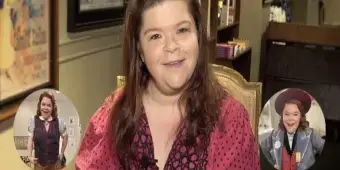
Video: A Declassified Understudy Survival Guide from Marissa Rosen
Aug 16, 2024


In this video, Water For Elephants understudy extraordinaire Marissa Rosen, who is usually onstage eight times a week as Sue, breaks down how she manages her gender-bent understudy track of Walter Wallis the clown.
Show More Show Less View Video Transcript
0:00
You saw nothing. It was so good to talk to you
0:11
So in the show, it's a gender bend for my coverage. The character on stage every evening is Walter, the clown
0:17
And when I play it, I am Wallace, the clown, who is a more feminized version of the character, just however I wanted to play it
0:25
They really left it open for me to interpret. If I wanted to be more masculine in the role, great
0:29
If I want to be more feminine in the role, great. They really allowed me to explore what I looked like in this role
0:36
And he's kind of the lead clown in the circus. He does knife juggling
0:41
He kind of takes care of everyone that's in, we call our patch
0:45
like our circle of circus. He's a little questioning of our new pal Jacob
0:49
that comes to join the circus at the last minute. But he's fun and funny and feisty
0:56
and I just love getting to take on this role every once in a while
1:01
Skills that are essential would have to be listening, an organization, and patience
1:06
especially when you're doing a new show where things are ever changing, and you're used to kind of getting the information and writing it down and being like
1:13
got it, that's not this. You have to be open-minded and organized and kind of calm
1:20
but with a knack for specificity, because you're not going to quite get as much time as everyone else to learn the track as the person who's playing it does
1:29
So my notebooks and my audio recordings were my best friend during this
1:35
First thing you should do is an understudy when learning the track is get off book. It is the easiest way for you to be able to take in all of the new information
1:43
to be better with the changes, because once you know it, it's easier to change it than learning something new
1:49
unlearning something and then learning something else new. So I found that when I had the foundation for how the show went
1:55
I was really able to be more malleable as the new character that I was playing
2:00
But it's definitely stressful. As an onstage cover rehearsals look kind of the same but a little bit different from swings or covers that are offstage So an on cover would be someone like I said who gets to do the show every evening
2:19
whether it be in the ensemble, in a role, it usually wouldn't be in a principal role because their job is already
2:26
But basically, you get to do the show every evening as another character. We have a couple of, we have an on-stage swing who kind of has his own track
2:35
and is able to kind of swing into any other track on stage as well
2:39
but he does the show every night. And an off-stage cover or an off-stage swing
2:44
would be someone who is literally hired to be in the building in case something goes wrong
2:49
or be in the building in case someone goes on vacation or isn't there for the evening, and then those rock stars come and save us every single night
2:57
As an on-stage cover, rehearsals look kind of the same, but a little bit different from swings or covers that are off-stage
3:05
For us, we are on stage all the time. I do the show every single evening as my own character
3:10
Hey, Sue. And so I have to do her and remember her every night
3:15
But our understudy rehearsals, we get to rehearse with on stage covers and offstage covers and swings
3:21
But the swings I get a little jealous of because they do have a little time during the show where they get to like, you know, take a listen
3:27
But their jobs are much harder than mine in my brain. So we can't live without swings
3:32
But yeah, we have understudy rehearsal, sometimes once a week, sometimes once every two weeks
3:37
where we get to run it with the multiple people that get to play the characters and kind of just brush up on everything in case we have to go on
3:45
Strategies to memorize or differentiate tracks. Again, with organization, I love labels
3:50
You know, those little label things that you used to use in like your high school and middle school days that you just mark on pages
3:55
I love those. They're color-coded. I am a planner-aholic. So anything that's color-coded, anything that's categorized
4:02
count me in. I need all of the memory on my phone for audio recordings because I probably know all of my parts and everyone else's parts because I'm OCD like that
4:13
But just keeping a really strict specific organizational binder I call it my Bible That what we call it our dance captain Bible too Just a Bible of everything that I could possibly know whether it be from watching videos being in rehearsal or getting to swing out and watch the show I need to know all of the
4:30
information. That way, when I have questions or we do go into rehearsal, I can be like, hey
4:35
this is the thing that I saw. Am I crazy? And then they'll be like, yes, or no, you know
4:40
that kind of thing, but just having my own organization is detrimental to my mental health
4:48
One of the last things I do before I go on stage for me is I juggle a knife
4:55
You have to come see the show if you want to know why. That's just for me to go, I tried
5:00
which again you'll see in the show, and absolutely go over the first scene that I am in
5:06
in my script, just to make sure that I don't mess up the show from the moment I step on stage
5:10
And then I make sure to hug my cast members because that is a tradition I can't live without
5:16
So the first time I got to go on as Wallace was probably one of the scariest nights of my life
5:23
That's a lie. It was a scary night of my life. The cast is so supportive
5:29
Everyone had supported me. My directors, my choreographers, my music directors had given me all the tools that I needed to go on stage
5:35
It was truly up to me. But the second I got to put on that costume, I kind of felt like I really
5:40
got to turn into Wallace and I got to turn into this different version of myself that wasn't
5:46
Sue every night and the cast guided me every step of the way we call it shoving with love
5:51
if someone's in the wrong place you go go over there I'm like thanks I'll go over there and it
5:58
kind of I called it the Broadway blackout you should never black out on stage you should always
6:02
remember what you're doing and savor every moment but I definitely blacked out and then
6:07
all of a sudden it was the end of the show and I did it and no one on fire and I still have a job. So success. So I was doing a show called Priscilla
6:17
Queen of the Desert, which if you're familiar with, we all love. It's a jukebox
6:21
musical and there are these three characters called The Divas and they are so glamorous and they fly They flying from the stage and they live above the scenes and they sing their way through the storyline and so I was one of the divas and there there three there the point the Beyonce and then there the
6:38
Kelly and the Michelle and I was I'll be the Calate I don't know I'm not
6:44
sure I was non Beyonce and one evening about 15 minutes before the show our
6:50
middle diva went down sickness you can't help it she just went down we were I
6:56
I think maybe early on in the contract where I don't know that we were all ready to have coverage yet
7:02
And our person who was designated to cover all of us knew my track better at that moment
7:09
It was just the wheelhouse was my track and the middle one was not. And I was like, I don't want you to fail
7:15
No one wants you to fail. We want you to feel comfortable. I was also the vocal captain
7:19
So it might have been a little bit easier for me to jump into the vocal stuff for that particular role
7:24
and she was a gorgeous giant black woman, which was my dream
7:28
So I was like, let's go! So I sat for 15 minutes, and I learned all of her harmonies and all of her movement
7:35
because it was a little bit different than ours, because we kind of did that, like, you know, lead echo effect
7:39
where she would do something and we would follow, so I didn't quite know her choreography yet. So in 15 minutes, we learned it
7:45
The girls with me came on for the first scene. Then we realized that things weren't going to work that way
7:51
so I had to go on for a few in my own, and I had a lot of friends at that show. It was like New Year's Eve
7:56
And all of a sudden we were doing this song called Girls Just Want to Have Fun, Cindy Lauper
8:00
and all three girls were supposed to come down, but there was just a costume issue. Things weren't ready yet
8:04
And I came down by myself in my solo Beyonce moment, singing it all by myself
8:10
and my friends are just screaming. And the thing that I remember the most is after the show, I had the Broadway blackout
8:15
It wasn't on Broadway, but it was still the Broadway blackout. And I came off stage, and I fell to the ground face down
8:21
And there's this epic picture, which maybe I'll share with you, of me just face down this giant cone wig and this huge diva dress
8:29
And the first thing that happened was my wardrobe people called me. And they were like, I know you're not laying on the ground in that dress
8:34
And I said, you saw nothing. It was so good to talk to you. And that's it
Events & Listings
Performing Arts
Acting & Theater
Circus
Magic
Broadway & Musical Theater