Up next in 10



#blackhistorymonth #police #blackexcellence
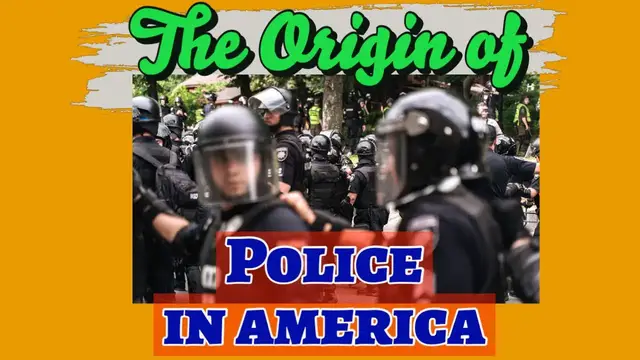
How and when did policing start in the United States? And how has it evolved over the decades?
Black Origins examines original stories in Black culture and society.
___________________________________________________________________________
BlackExcellence.com is a digital platform dedicated to empowering excellence everyday through sharing thought provoking, informative, entertaining, and noteworthy stories in the Black community.
All content provided by Black Excellence Media, LLC is for entertainment purposes only. None of the information or advice provided is to replace professional advice.
Website: https://blackexcellence.com
Twitter: https://twitter.com/BExcelOnline
Instagram: https://www.instagram.com/blackexcell...
FB: https://www.facebook.com/BExcelOnline
Show More Show Less View Video Transcript
0:00
Policing is one of the biggest topics that has split up America
0:04
especially in the last decade, as police brutality is getting caught on camera more often
0:10
But how did law enforcement start in America, and how did it get so big and powerful
0:24
The history of law enforcement in America dates back to colonial times
0:28
with each colony having its own system for maintaining order. Policing as a concept arrived in America from England
0:35
and it was associated with monarchy as there was a force in charge of keeping the king's peace
0:42
However, it wasn't until the 1840s that the first professional police department was established
0:49
Before then, cities and towns relied on watchmen that served as essentially neighborhood watches
0:56
In the south, policing was established, as slave patrol. It began in the colonies of Carolina in 1704. As the name applies, the main job of these patrols was to chase down and hunt escaped slaves. They terrorized slave communities and work to prevent riots
1:14
Slave patrols have their roots in armed Spanish bands. These bands hunted runaway slaves in Cuba beginning in the 1530s. This practice was adapted by the English and Barbados decades
1:28
later. New Orleans, a French city at the time, had paid armed guards who wore military-style
1:36
uniforms and were named La Police. By the mid-1800, Boston, New York, Cincinnati, Philadelphia
1:45
Chicago, Baltimore, and New Orleans established official police departments. The early American
1:53
police were modeled after the London Metro Police, which was established in 1829
1:58
But like their British counterparts, early American police officers were armed with guns, initially their own guns
2:06
That because the general American population was also armed for various reasons During the 19th century police departments in America evolved to meet the needs of rapidly growing and industrializing country In cities police officers
2:21
were tasked with maintaining order and preventing crime, while also dealing with issues
2:25
related to mass immigration from Europe. In the south, the slave patrol was disbanded by the end
2:32
of the Civil War, but evolved to become the KKK. Vigilante groups also grew across the country
2:41
These groups killed indigenous people, black people, Mexican-Americans, and Chinese immigrants. As America continued to grow and change, so did the role of police
2:53
In the late 19th and early 20th centuries, police departments were faced with the challenge of urbanization and organized crime
3:02
Modern American policing began in 1909 and very early. Berkeley, California. The chief of police in Berkeley, August Palmer, evolved his police force to resemble a military force
3:14
He once said, quote, for years ever since Spanish-American War days, I've studied military tactics and used them to good effect and rounding up crooks
3:24
After all, we're conducting a war, a war against the enemies of society. Indeed, military-like weapons and tactics were brought to the Berkeley Police Department
3:34
This approach to policing spread across the country, especially because police departments were often led by veterans
3:42
In the South, this approach coupled with Jim Crow laws meant that the black population was constantly harassed and abused by law enforcement
3:50
The harassment by law enforcement, however, was not exclusive to the South
3:55
Police were using the same tactics to patrol and intimidate black communities in the North, arresting black people disproportionately
4:02
the 20th century brought with it a number of major events that would shape the future of law enforcement in America
4:10
The prohibition era saw the rise of organized crime and the growth of police corruption
4:16
In response the FBI was established in 1909 to enforce federal law and combat organized crime The 1960s and 70s were marked by social political upheaval including the civil rights movement and the anti protests
4:33
This led to increased tension between police and communities of color and resulted in a number
4:38
of high-profile incidents of police brutality. Who can forget images of police dogs hounding down peaceful protesters
4:47
In 1965, President Lyndon Johnson declared a war on crime and the federal
4:52
government supplied local police with military-grade weapons. During the Watts uprising, police killed
4:59
31 people and arrested more than 4,000. Over the decades, the number of black people in prisons
5:06
grew explicitly. Studies like the Kansas City Preventative Patrol Experiment, conducted in 1974
5:14
found that patrolling police cars and neighborhoods did not help reduce crime. In response to these
5:20
studies, some police departments turned to community policing. Community policing, which emphasized
5:26
partnerships between the police and the community, was seen as a way to improve relationships
5:31
between law enforcement and the communities they served. The community policing approach became so
5:38
popular that by the early 2000s, two-thirds of police departments in the U.S. implemented it
5:44
But tensions between law enforcement and black communities across the country did not die down
5:50
In the 1980s, the frustration of the community was being voiced loudly through a fairly new music genre, hip-hop
5:57
At recent years, the police in America have been the focus of increased Courtney in criticism
6:04
High-profile incidents of police brutality and the use of excessive force have led to protests and the calls for reform
6:11
The Black Lives Matter movement, which was formed in 2013, has been at the forefront of the push for police reform
6:18
Although the call to abolish the police dates back to the early 1980s
6:23
the renewed focus on it by activists has been a hot button issue in recent national elections
6:29
There won't be defunding, there won't be dismantling of our police. That is apparently now their new battle cry
6:36
They want to abolish police officers According to the Mapping Police Violence Project in 2022 1 people were killed by the police in the United States
6:49
Black people are 2.9 times more likely to be killed by police than white people in the U.S
6:55
Native American, Native Hawaiian and Pacific Islander, and Hispanic people all have higher chances of being killed by the police than white people
7:04
A study by a record university looked into how law enforcement training and violence in the U.S. compares to other countries
7:13
According to the data, the U.S. fatal police shootings rate in 2019 was five times higher than Australia's and 22 times higher than France's
7:22
The study suggests that the amount of police training of fatal police violence outcomes are closely related
7:29
The police in France attend school for 10 months, while training is eight months
7:34
in Belgium. In comparison, the U.S. average training lane or police officers is around five months
7:41
but not all longer training of good training. In countries like Brazil and Venezuela
7:47
the police receive extended training, but police violence rates there are extraordinarily high
7:54
There are several factors contributing to the high police-related fatalities in America
7:58
one of those being gun culture. About half of the world's civilian-held part
8:04
firearms are located in the U.S. America makes up only 5% of the world's population
8:10
Just imagine that. Looking at the data, it's easy to conclude that race is also a factor in how likely a person is to have a violent and even fatal encounter with the police in America
8:23
As we have seen in the case of Tyree Nichols, even having black police officers in a majority black city with a black police chief can cure police brutality
8:32
Just like it's a combination of multiple factors that leads to high police-related fatality rates
8:39
the solution will likely have to be a combination of multiple reforms
Law & Government
Public Safety
Crime & Justice
Law Enforcement
People & Society