Up next in 10

What is The Pork Tapeworm?
Website: https://biologynotesonline.com/
Facebook: https://www.facebook.com/biologynotesonline
Instagram: https://www.instagram.com/biologynotesonline/?hl=en
Show More Show Less View Video Transcript
0:00
Hello everyone. Welcome to our
0:01
exploration of paracettology. Today
0:04
we're going to learn about a fascinating
0:05
but dangerous parasite called Tania.
0:09
Commonly known as the pork tapeworm.
0:11
Tania is much more than just a simple
0:14
parasite. It's a complex organism that
0:17
affects millions of people worldwide and
0:19
can cause serious health problems
0:21
including severe neurological
0:23
complications. Let me show you what this
0:25
parasite actually looks like. This is a
0:28
diagram showing the structure of
0:29
tenosolium.
0:31
Here's what the parasite looks like
0:33
under microscopic examination. Notice
0:35
the distinctive head region called the
0:37
skollex which has hooks and suckers that
0:40
help it attach to the intestinal wall.
0:43
Understanding tenosolium is crucial
0:45
because this parasite causes two
0:47
different types of infections in humans.
0:50
It can live in our intestines as an
0:52
adult worm or its larve can form cysts
0:54
in our tissues including the brain.
0:57
Throughout this series, we'll explore
0:59
every aspect of this parasite from its
1:01
complex life cycle to how we can prevent
1:03
and treat infections.
1:05
By the end, you'll have a comprehensive
1:07
understanding of tenosolum and how to
1:10
protect yourself and your community.
1:13
Tenia is a parasitic flatworm that has a
1:16
complex relationship with both pigs and
1:19
humans. Understanding what this parasite
1:21
is and how it affects us is crucial for
1:24
recognizing its global health impact.
1:26
This parasite is unique because humans
1:28
can serve as both definitive hosts and
1:31
intermediate hosts leading to two very
1:33
different types of infections with
1:35
distinct health consequences. The
1:38
parasite has a distinctive head
1:39
structure called a skollex equipped with
1:42
hooks and suckers that allow it to
1:44
attach firmly to the intestinal wall of
1:46
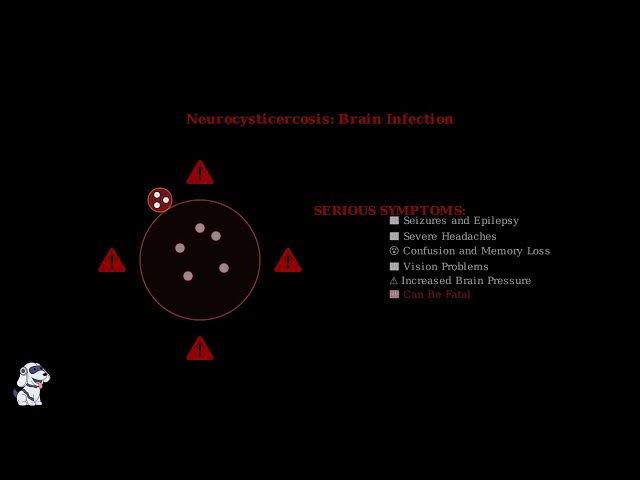
its host. When cytosircosis affects the
1:49
brain called neurocytocosis, it can
1:51
cause seizures and other serious
1:53
neurological problems. This brain scan
1:56
shows the characteristic lesions caused
1:58
by laral cysts. Taniaolium is considered
2:01
one of the most important food born
2:03
parasites globally. It causes
2:05
significant health problems and economic
2:07
losses particularly affecting
2:09
communities in lower inome countries
2:11
with poor sanitation.
2:14
Understanding tenosolium is essential
2:16
because it represents a perfect example
2:18
of how parasites can exploit multiple
2:21
hosts and cause different diseases. This
2:24
knowledge forms the foundation for
2:26
prevention and treatment strategies. Now
2:29
we'll examine the fascinating structure
2:30
of tenosolium, the pork tapeworm.
2:33
Understanding its anatomy helps us see
2:36
how this parasite has evolved to survive
2:38
in its host. The adult tenia tapeworm
2:41
has a distinctive ribbon-like structure
2:43
that can grow several meters long inside
2:45
the human intestine. The tapeworm
2:47
consists of three main parts. The
2:49
skollex or head for attachment, the
2:52
strobula or segmented body and
2:54
individual segments called proglottids.
2:57
The skollex is the attachment organ of
2:59
the tapeworm. This small head region is
3:02
crucial for the parasitees survival in
3:04
the host intestine. The skollex has four
3:06
powerful muscular suckers and a crown of
3:09
hooks called a rostellum. These
3:11
structures work together like anchors
3:14
firmly attaching the worm to the
3:15
intestinal wall. This attachment is
3:17
critical. Without it, the tapeworm would
3:20
be swept away by the flow of intestinal
3:23
contents.
3:24
Behind the skollex is the strobula, the
3:27
long segmented body of the tapeworm.
3:29
This ribbon-like structure can contain
3:31
hundreds of segments. The strobila is
3:34
composed of individual segments called
3:36
prolatids. A mature tapeworm can reach 2
3:39
to 7 m in length with 800 to 1,000
3:42
segments.
3:44
Proglottids mature as they move away
3:46
from the skollex. They start as immature
3:49
segments, develop into mature
3:51
reproductive segments, and finally
3:53
become gravid segments filled with eggs.
3:55
Each mature prolotted contains both male
3:58
and female reproductive organs. Gravid
4:01
segments can contain up to 50,000 eggs
4:03
and eventually detach to spread the
4:05
parasite.
4:08
The structure of tinyolium is perfectly
4:10
adapted for its parasitic lifestyle. The
4:13
skollex provides secure attachment. The
4:15
segmented body maximizes reproductive
4:18
output and the prolotted system ensures
4:20
widespread egg distribution. This
4:22
remarkable anatomy makes teniaolium one
4:25
of the most successful human parasites
4:27
capable of surviving and reproducing
4:29
effectively within its host.
4:32
Understanding the classification of
4:34
tenius helps us see where this parasite
4:37
fits in the tree of life and how it
4:39
relates to other organisms.
4:41
Let's build the taxonomic hierarchy for
4:43
tenosolium. Starting from the broadest
4:45
category and working our way down to the
4:47
most specific within the animal kingdom.
4:49
Tanosolium belongs to the phylm
4:51
platyhelmthus commonly known as
4:54
flatworms. These are simple flattened
4:56
worms with bilateral symmetry. Moving
4:59
down the hierarchy, we reach the class
5:01
sysda. This class includes all
5:03
tapeworms, parasitic flatworms that live
5:05
in the intestines of vertebrate hosts.
5:08
The order tane idea contains tapeworms
5:10
that have a specific type of life cycle
5:13
typically involving mammals as both
5:15
intermediate and definitive hosts.
5:17
Finally, we reach the family tenidday,
5:20
which includes the genus Tania and
5:22
closely related tapeworm species that
5:24
share similar characteristics and life
5:26
cycle patterns. This classification
5:29
system helps scientists understand
5:31
evolutionary relationships. Tenia shares
5:34
common ancestors with other flatworms
5:37
and its classification reveals how it
5:39
evolved its parasitic lifestyle.
5:41
Understanding where tenosolium fits in
5:43
the biological classification system
5:46
gives us insight into its nature as a
5:48
parasitic flatworm and helps researchers
5:51
study its biology and develop better
5:53
treatments. Tenius doesn't exist
5:56
everywhere equally. Understanding where
5:59
this parasite thrives helps us
6:01
understand why certain populations are
6:03
at higher risk than others. Tinyolium is
6:06
found worldwide, but it's not evenly
6:08
distributed. The parasite is most common
6:11
in three main regions, parts of Asia,
6:13
Africa, and Latin America. These areas
6:16
share certain characteristics that make
6:18
them ideal habitats for the pork
6:20
tapeworm. But what makes these regions
6:22
perfect habitats for tenia?
6:24
The answer lies in specific
6:26
environmental and social conditions.
6:28
Several environmental factors create the
6:31
perfect conditions for tenia
6:33
transmission. Poor sanitation allows
6:36
parasite eggs to contaminate the
6:37
environment.
6:39
Cultural practices involving raw or
6:41
undercooked pork consumption provide
6:43
direct transmission routes. When pigs
6:46
and humans live in close proximity, the
6:48
cycle becomes easier to maintain. Now,
6:50
let's look at a real example of these
6:52
conditions. This image shows a typical
6:55
pig farming setup in an endemic area.
6:58
This image shows typical pig farming
7:00
conditions in areas where tanolium is
7:02
endemic. Notice the close quarters,
7:05
muddy conditions, and basic
7:07
infrastructure. These conditions make it
7:09
easy for parasite eggs to contaminate
7:11
the environment and for pigs to become
7:13
infected. The life cycle diagram helps
7:16
us understand how these habitat
7:18
conditions facilitate transmission. This
7:21
life cycle diagram shows how habitat
7:23
conditions enable transmission. Poor
7:25
sanitation allows eggs to contaminate
7:27
pig feed and water. Pigs become infected
7:30
and develop cytosers in their muscles.
7:33
When humans consume undercooked pork
7:35
from these infected pigs, the cycle
7:37
continues. Understanding these habitat
7:40
requirements is crucial for prevention
7:42
and control efforts. To summarize, Tania
7:45
thrives in specific habitats
7:47
characterized by poor sanitation, close
7:50
pig human contact and cultural practices
7:52
involving undercooked pork consumption.
7:55
These conditions are most commonly found
7:57
in parts of Asia, Africa, and Latin
8:00
America, making these regions endemic
8:02
for the parasite. The life cycle of
8:04
teniaolium is a fascinating but complex
8:06
journey that involves both pigs and
8:09
humans. Understanding this cycle is
8:11
crucial for preventing infection and
8:13
breaking the transmission chain. The
8:16
cycle begins when humans infected with
8:18
adult tapeworms pass eggs in their
8:20
feces. These microscopic eggs
8:22
contaminate the environment,
8:24
particularly in areas with poor
8:26
sanitation. Pigs then ingest these eggs
8:28
while foraging or eating contaminated
8:31
food. Once inside the pig, the eggs
8:33
hatch and develop into laral cysts
8:35
called cycers in the pig's muscle
8:37
tissue. Now we can see what these cysts
8:40
actually look like. Here are microscopic
8:42
images showing cycers, the laral stage
8:46
that develops in pig muscle tissue.
8:48
Humans become infected when they eat raw
8:50
or undercooked pork containing these
8:52
cytoers.
8:53
This is how tenasis the intestinal
8:55
tapeworm infection begins. Once inside
8:58
the human digestive system, the cytoers
9:01
develop into adult tapeworms. These can
9:03
grow several meters long and attach to
9:05
the intestinal wall using their
9:07
specialized head structure called a
9:09
skollex. The adult tapeworm produces
9:12
segments called proglottids filled with
9:14
eggs. These are passed in human feces
9:17
completing the cycle and potentially
9:19
starting the process all over again.
9:22
There's also an alternative pathway
9:24
where humans can directly ingest the
9:26
eggs leading to a different condition
9:27
called cytocosis.
9:30
This occurs when humans accidentally
9:32
consume contaminated food or water
9:34
containing the eggs. Understanding this
9:37
complex life cycle helps us see why both
9:40
proper pork cooking and good sanitation
9:43
are essential for preventing tenosolium
9:45
infections. The cycle can be broken at
9:48
multiple points through proper
9:49
prevention measures. Now we explore what
9:52
happens when humans accidentally become
9:54
intermediate hosts for tanosolium.
9:57
This occurs when people ingest the
9:59
parasite eggs leading to a condition
10:01
called cytocosis. Human cystoscosis
10:04
begins when a person accidentally
10:06
ingests teniaolium eggs. These
10:08
microscopic eggs can contaminate food,
10:11
water or surfaces through poor
10:12
sanitation. Once ingested, these eggs
10:15
hatch in the human digestive system. The
10:18
released larve called enkospheres
10:20
penetrate the intestinal wall and enter
10:22
the bloodstream. The larae travel
10:24
through the bloodstream and can settle
10:26
in various tissues throughout the body.
10:28
They develop into cysts which are
10:30
fluid-filled sacks containing the laral
10:33
stage called cytoers. Cysts can form in
10:37
many different organs including muscles,
10:39
skin, eyes, and most importantly the
10:41
central nervous system. When cysts
10:43
develop in the brain or spinal cord,
10:45
this condition is called
10:47
neuroscytoscosis.
10:48
Neuroscystocosis is the most serious
10:51
form of cytocosis because cysts in the
10:53
brain can cause severe neurological
10:55
problems. These brain cysts can be
10:58
clearly seen on medical imaging like MRI
11:00
scans. The symptoms of neurocytosis can
11:04
be severe and life-threatening. Patients
11:06
may experience seizures, headaches,
11:08
confusion, and other neurological
11:10
problems depending on where the cysts
11:12
are located in the brain. Understanding
11:15
human cytocosis is crucial because it
11:18
represents the most dangerous outcome of
11:20
tenosolium infection. Unlike tenis from
11:23
eating infected pork, cystocosis occurs
11:26
from ingesting eggs and can affect
11:28
anyone in contaminated environments.
11:31
Tania has a fascinating reproductive
11:33
system that allows it to maximize its
11:35
chances of survival and transmission.
11:38
Understanding how these tapeworms
11:40
reproduce helps us comprehend their
11:42
success as parasites. Each segment of
11:44
the tapeworm called a proglotted
11:47
contains a complete set of reproductive
11:49
organs. This is what makes tapeworms so
11:52
efficient at reproduction. Every segment
11:54
is essentially a reproductive factory.
11:57
What makes tapeworms truly remarkable is
11:59
that they are hermaphroditic.
12:01
This means each proglotted contains both
12:03
male and female reproductive organs in
12:06
the same segment. The male reproductive
12:08
organs include multiple testes that
12:10
produce sperm while the female organs
12:13
include an ovary that produces eggs.
12:15
Both sets of organs are connected to a
12:17
common genital pore. This hermaphroditic
12:20
design gives tapeworms two reproductive
12:22
advantages. They can self-fertilize when
12:25
alone or cross-fertilize with other
12:27
tapeworms when multiple worms are
12:29
present in the same host. After
12:32
fertilization occurs, the eggs develop
12:34
within the prolotted. As the eggs
12:36
mature, the prolotted becomes what we
12:38
call a gravid prolotted. Essentially a
12:41
segment packed full of thousands of
12:43
fertilized eggs. These gravid proladids,
12:46
now heavy with eggs, detach from the
12:48
main body of the tapeworm and are passed
12:50
out of the host in the feces.
12:53
This is how the tapeworm ensures its
12:55
eggs reach the environment to continue
12:57
the life cycle. This reproductive
12:59
strategy is incredibly effective. A
13:01
single tapeworm can produce hundreds of
13:03
thousands of eggs throughout its
13:05
lifetime, ensuring that even if most
13:07
eggs don't survive, enough will find new
13:10
hosts to continue the species. The
13:13
excretory system of tenia is a
13:16
specialized network designed to remove
13:18
metabolic waste products from the
13:19
tapeworm's body. This system is crucial
13:22
for maintaining the parasites internal
13:24
environment and overall survival.
13:27
Looking at this cross-section of a
13:29
tapeworm, we can see the longitudinal
13:31
excretory vessels running through the
13:33
body. These vessels are part of a
13:35
complex network that spans the entire
13:37
length of the parasite. The excretoryy
13:40
system is built around specialized cells
13:42
called flame cells, also known as
13:44
protonaphridia.
13:46
These cells contain beating cyia that
13:48
create a flickering motion resembling a
13:51
candle flame which gives them their
13:53
name. The beating psyia create a current
13:55
that draws waste products and excess
13:57
water into the flame cell. From there,
14:00
the filtered waste flows into collecting
14:02
tubules that form an extensive network
14:05
throughout the tapeworm's body.
14:08
The excretoryy canal system consists of
14:10
two main longitudinal canals that run
14:13
the entire length of the tapeworm. These
14:15
canals are connected by transverse
14:17
canals, creating a network that collects
14:20
waste from flame cells throughout the
14:21
body. Flame cells are distributed
14:24
throughout the tapeworm's body and
14:26
connect to this canal system. Each flame
14:29
cell filters waste products from the
14:31
surrounding tissues and channels them
14:33
into the excretory network for
14:34
elimination.
14:37
The excretory system serves several
14:39
critical functions for the tapeworm
14:40
survival. It removes metabolic waste
14:43
products, maintains proper water balance
14:46
through osmo regulation, filters harmful
14:48
toxins from body fluids, and is
14:50
absolutely essential for the parasite's
14:52
continued existence in its host.
14:55
Understanding the excratory system helps
14:57
us comprehend how tenosolum maintains
15:00
its internal environment and survives
15:02
within its host. This knowledge is
15:05
fundamental to understanding the
15:06
parasite's overall physiology and can
15:09
inform treatment strategies.
15:12
The nervous system of tenia is
15:14
surprisingly simple yet perfectly
15:16
adapted for its parasitic lifestyle.
15:19
Unlike complex organisms with elaborate
15:21
brains, the pork tapeworm has a basic
15:23
but effective nervous system. At the
15:26
head region called the skollex, we find
15:28
the cerebral ganglen essentially the
15:30
tapeworm's brain. This small cluster of
15:33
nerve cells coordinates the basic
15:35
functions needed for survival. From this
15:38
central ganglen, two main longitudinal
15:40
nerve cords extend down the entire
15:42
length of the tapeworm's body. These
15:45
nerve cords act like highways, carrying
15:47
signals throughout the organism.
15:50
Connecting these main nerve cords are
15:51
smaller transverse nerves that form a
15:53
ladder-like network. This arrangement
15:56
ensures that nerve signals can reach
15:58
every part of the tapeworm's body. Let's
16:01
examine the actual anatomy of a tapeworm
16:03
segment to see how these nerves appear
16:05
in real tissue. This cross-section shows
16:08
the internal structure of a prolotted.
16:11
In this anatomical diagram, you can
16:13
clearly see the longitudinal nerve
16:15
running along the prolotted.
16:17
Notice how it's positioned alongside
16:19
other vital structures like the
16:21
excratory vessels and reproductive
16:23
organs. But what does this simple
16:25
nervous system actually do? Despite its
16:28
basic structure, it performs several
16:30
crucial functions that help the tapeworm
16:33
survive in its host environment. First,
16:35
the nervous system helps the tapeworm
16:37
respond to chemical stimuli. It can
16:40
detect nutrients in the host's intestine
16:42
and position itself in the best location
16:44
for absorption. Second, the nervous
16:47
system coordinates muscle contractions
16:49
for movement. The tapeworm can contract
16:51
and extend its body segments to maintain
16:54
its position or move to better locations
16:56
within the intestine. Let's summarize
16:58
the key points about Tania's nervous
17:01
system. These are the essential facts
17:04
you should remember. Key takeaway number
17:06
one, the nervous system is simple but
17:08
effective, consisting of a cerebral
17:10
ganglion and longitudinal nerve cords
17:13
connected by transverse nerves. Key
17:15
takeaway number two, this system enables
17:17
essential survival functions, including
17:19
detecting chemical stimuli, coordinating
17:22
movement, and maintaining optimal
17:24
positioning within the host.
17:26
Understanding the nervous system helps
17:28
us appreciate how even simple parasites
17:31
are perfectly adapted to their
17:32
environment. This basic neural network
17:35
is all tenosolium needs to thrive as a
17:38
successful parasite. Tanosolium is a
17:41
dangerous parasite because it causes
17:43
disease in humans through two distinct
17:45
mechanisms. Understanding how this
17:47
parasite makes people sick is crucial
17:49
for recognizing and treating infections.
17:52
Teniaolium causes two completely
17:55
different types of infections. Teniais
17:58
occurs when the adult tapeworm lives in
18:00
the intestines while cycosis happens
18:02
when laral cysts develop in body
18:05
tissues. Let's examine each disease in
18:07
detail to understand why cysarcosis is
18:10
considered much more dangerous than
18:11
tanasis.
18:13
Tenasis occurs when an adult tapeworm
18:16
establishes itself in the small
18:17
intestine. Most people with tenasis have
18:20
no symptoms at all. When symptoms do
18:22
occur, they are usually mild and
18:24
includes stomach discomfort or nausea.
18:27
While tenasis is relatively harmless,
18:29
cytocosis tells a very different and
18:31
much more serious story. Cytosircosis
18:34
occurs when tapeworm larve form cysts in
18:37
body tissues. These cysts can develop in
18:39
muscles, eyes, and most dangerously in
18:41
the brain. When cysts form in the brain,
18:44
the condition is called
18:45
neuroscytoscosis.
18:47
Neuroscytoscosis is the most serious
18:50
form of the disease. When cysts develop
18:53
in the brain, they can cause seizures,
18:55
severe headaches, and neurological
18:57
problems that can be life-threatening.
18:59
Neuroscystosis
19:00
is a leading cause of acquired epilepsy
19:03
worldwide. The cysts in the brain can
19:05
cause seizures, severe headaches,
19:07
confusion, and increased pressure inside
19:09
the skull. Without proper treatment,
19:12
neuroscytoscosis can be fatal.
19:14
Understanding the pathogenicity of
19:16
tenosolum helps us recognize why
19:18
prevention and early treatment are so
19:20
important for protecting human health.
19:23
Remember these key points. Tenia causes
19:26
two very different diseases. Tenosis is
19:29
usually mild but cystocosis can be
19:32
severe and life-threatening especially
19:34
when it affects the brain. This is why
19:36
understanding and preventing tenosolium
19:39
infections is so important for global
19:41
health. When someone has tenasis, which
19:44
is an adult tapeworm living in their
19:45
intestine, the symptoms can vary greatly
19:48
from person to person. Many people may
19:51
not even realize they have an infection.
19:54
The most important thing to understand
19:55
about tenis is that many people who have
19:58
the adult tapeworm in their intestine
20:00
experience no symptoms whatsoever. They
20:03
may carry the parasite for months or
20:05
even years without knowing it.
20:08
However, when symptoms do appear, they
20:10
are usually mild and related to the
20:12
digestive system. Let's look at the most
20:15
common symptoms people experience. The
20:17
most common symptoms include abdominal
20:20
discomfort or pain, which may feel like
20:22
cramping or a dull ache in the stomach
20:24
area. People may also experience nausea
20:27
and general upset stomach, making them
20:29
feel queasy or uncomfortable after
20:31
eating. Diarrhea or loose stools can
20:34
occur as the tapeworm interferes with
20:36
normal digestion in the small intestine.
20:39
Some people may notice unexplained
20:41
weight loss as the tapeworm competes for
20:44
nutrients from the food they eat. The
20:47
most distinctive and important sign of
20:48
tenasis is finding proglottids in the
20:51
stool. These are white flat rectangular
20:54
segments of the tapeworm that break off
20:57
and are passed in bowel movements. These
20:59
segments may look like grains of rice or
21:01
flat noodles and may even move slightly
21:03
when fresh. This is often the first and
21:06
only sign that alerts people to their
21:08
infection. If you suspect you might have
21:11
a tapeworm infection, especially if you
21:13
see prolotteds in your stool, it's
21:16
crucial to seek medical attention
21:18
promptly. A health care provider can
21:20
properly diagnose the infection and
21:22
prescribe appropriate treatment.
21:25
If possible, bring a stool sample or
21:27
photograph of any segments you found.
21:30
Don't attempt to treat the infection
21:32
yourself. Remember, tanasis symptoms are
21:34
often mild or absent, but the presence
21:37
of proladeds in stool is a clear sign
21:39
that requires medical evaluation and
21:41
treatment. Cytoscosis symptoms depend
21:44
entirely on where the cysts develop in
21:47
your body. Different locations cause
21:49
completely different problems, making
21:51
this infection particularly challenging
21:54
to diagnose. When cysts form in muscles,
21:56
patients may experience localized pain
21:59
and tenderness. However, many people
22:01
with muscle cytosircosis have no
22:03
symptoms at all, making it a silent
22:05
infection that often goes unnoticed.
22:08
Ocular cytocosis affects the eyes and
22:10
can cause serious vision problems.
22:13
Patients may experience blurred vision,
22:15
eye pain, and in severe cases, retinal
22:18
detachment that can lead to permanent
22:20
vision loss. Neuroscytoscosis is the
22:22
most serious form occurring when cysts
22:25
develop in the brain or spinal cord.
22:27
This can cause seizures, severe
22:29
headaches, confusion, and even
22:31
psychiatric symptoms like depression or
22:33
behavioral changes. Early diagnosis is
22:36
absolutely crucial for successful
22:38
treatment. The longer cytoscosis goes
22:41
undetected, especially neuroscysosis,
22:43
the more damage can occur and the harder
22:46
it becomes to treat effectively.
22:48
Remember these key takeaways. Muscle
22:50
cysts may be silent. Eye cysts threaten
22:53
vision. Brain cysts cause neurological
22:55
symptoms and early detection saves
22:58
lives. If you experience unexplained
23:00
seizures, vision problems, or persistent
23:02
headaches in endemic areas, seek medical
23:05
attention immediately. Diagnosing
23:07
tenosolium infections requires different
23:09
laboratory approaches depending on
23:11
whether we're looking for tenasis or
23:14
cytocosis.
23:15
Each condition presents unique
23:17
diagnostic challenges that medical
23:19
professionals must navigate carefully.
23:22
For tenasis, the adult tapeworm lives in
23:24
the intestine. So we examine stool
23:26
samples. There are two main approaches.
23:29
Microscopic examination of eggs and
23:31
identification of pglottids or tapeworm
23:33
segments. Under the microscope, we look
23:36
for characteristic thickshelled eggs
23:38
that are virtually identical to other
23:40
tenia species. We also examine stool
23:43
samples for proglottids. These are the
23:45
egg fil segments that break off from the
23:48
adult worm. A major challenge is that
23:51
tania eggs are morphologically identical
23:54
to tenia saginata eggs under standard
23:56
microscopy. This is why proglotted
23:59
examination and molecular methods are
24:00
often needed for species identification.
24:05
Cytosircosis diagnosis relies heavily on
24:07
medical imaging because the cysts can
24:10
develop in various tissues throughout
24:11
the body. MRI and CT scans are the
24:14
primary diagnostic tools used to
24:16
visualize these cysts. Here we see
24:18
examples of cytocosis imaging. The brain
24:21
MRI shows multiple cysts characteristic
24:24
of neuroscystocosis
24:26
which can cause seizures and
24:27
neurological symptoms. The CT scan
24:30
reveals cysts distributed throughout
24:32
muscle tissue. Medical imaging not only
24:34
confirms the presence of cysts but also
24:37
reveals their exact location, size, and
24:40
the surrounding inflammatory response.
24:42
This information is crucial for
24:44
determining treatment strategies.
24:47
Cerological tests detect antibodies that
24:49
the immune system produces in response
24:51
to tenia infection. Modern point of care
24:55
tests can provide results in just 15 to
24:58
20 minutes, making them valuable for
25:00
screening programs and supporting
25:02
imaging based diagnosis. However,
25:05
cerological tests have limitations. They
25:07
indicate exposure to the parasite but
25:09
cannot distinguish between active and
25:11
past infections. This is why they're
25:14
typically used alongside imaging and
25:16
clinical assessment.
25:19
To summarize, diagnosing tenosolium
25:21
infections requires different approaches
25:24
for different manifestations.
25:26
Tenis is diagnosed through stool
25:28
examination while cytoerosis requires
25:31
imaging techniques supported by
25:33
cerological testing. Accurate diagnosis
25:35
is essential because it guides
25:37
appropriate treatment and helps prevent
25:39
serious complications. When someone is
25:42
diagnosed with tenis, the good news is
25:45
that effective treatments are available.
25:47
The adult tapeworm living in the
25:49
intestine can be eliminated using
25:51
specific medications that target the
25:53
parasite. There are two main medications
25:55
used to treat tenasis. Prazaquantel is
25:58
typically the first line treatment while
26:00
niclosomide serves as an effective
26:02
alternative. Both drugs work by killing
26:05
the adult tapeworm in the intestine.
26:08
Prozaquentel commonly known by the brand
26:11
name built is the most widely used
26:13
treatment for teniosis. It works by
26:16
disrupting calcium channels in the
26:18
tapeworm's muscle cells causing
26:20
paralysis and ultimately death of the
26:22
parasite. The typical dosage is a single
26:25
dose of 5 to 10 mg per kilogram of body
26:28
weight. It should be taken with food to
26:30
improve absorption and reduce stomach
26:33
upset.
26:35
Niclosomide is an alternative treatment
26:37
that works differently from
26:38
prozaquentel.
26:40
It uncouples oxidative phosphorilation
26:42
in the tapeworm, essentially disrupting
26:45
the parasites energy production and
26:47
killing it. An important consideration
26:49
with niclosomide is that a laxative must
26:52
be given to prevent the release of
26:53
tapeworm eggs. Common side effects
26:56
include abdominal pain, nausea, and
26:58
diarrhea.
27:00
The treatment process follows a clear
27:02
sequence. After diagnosis is confirmed,
27:05
your doctor will prescribe the
27:07
appropriate medication. It's crucial to
27:09
take the full course as prescribed, even
27:12
if symptoms improve. Follow-up testing
27:14
is essential to confirm the treatment
27:16
was successful. Remember these important
27:19
guidelines. Complete the full course of
27:21
medication. Schedule follow-up stool
27:24
examination after 3 months. Inform
27:27
household members so they can be
27:28
screened and maintain good hygiene
27:30
practices during treatment.
27:33
The key takeaways for tenasis treatment
27:35
are clear. This infection is highly
27:38
treatable with the right medication.
27:40
Whether using praza or nlossomide,
27:43
following your doctor's instructions
27:45
completely and attending follow-up
27:47
appointments ensures the best outcome
27:49
for your health. Treating cytocosis is
27:52
significantly more complex than treating
27:54
simple tenasis. Unlike intestinal
27:57
tapeworm infections, cytocosis involves
28:00
laral cysts that have embedded
28:02
themselves in various tissues throughout
28:04
the body.
28:05
Cysts can develop in critical locations
28:07
like the brain, eyes, and muscles. Each
28:11
location requires different treatment
28:12
approaches and careful consideration of
28:15
potential complications.
28:17
The two main antiparasitic drugs used
28:19
for cytosis are alendazol and prozza.
28:23
Albendazole is typically the first line
28:25
treatment because it effectively crosses
28:27
the bloodb brain barrier making it ideal
28:29
for neuroscytoscosis cases. Prozaquantel
28:32
serves as an alternative treatment
28:34
option with broadspectctrum activity
28:36
against various parasites. The choice
28:39
between these drugs depends on the
28:40
specific case and patient factors.
28:44
Cortica steroids play a crucial role in
28:46
cytocosis treatment by reducing
28:49
inflammation around the cysts. This is
28:51
especially important in neurocytoscosis
28:54
where brain swelling can cause seizures
28:56
and other serious complications.
28:59
Corticosteroids help reduce brain
29:01
swelling, prevent seizures, minimize
29:03
tissue damage, and can even improve the
29:05
penetration of antiparasitic drugs to
29:08
the cysts.
29:09
Here we see a real case of ocular
29:12
cytocosis. The left image shows the
29:14
surgical view of cysts in the eye while
29:17
the right shows an ultrasound revealing
29:19
the cystic lesion. Cases like this often
29:22
require surgical intervention due to the
29:24
sensitive location.
29:26
Surgery becomes necessary in several
29:28
situations. When large brain cysts cause
29:31
dangerous pressure, when eye cysts
29:33
threaten vision, or when cysts don't
29:36
respond to drug treatment. Treatment
29:38
decisions depend on multiple factors.
29:41
The location of cysts determines
29:43
accessibility and risk. The number of
29:45
cysts affects treatment duration. Cyst
29:47
size influences the choice between
29:49
medical and surgical approaches. And
29:52
patient symptoms guide the urgency and
29:54
type of intervention needed.
29:57
This diagram shows how antiparasitic
29:59
drugs work at the molecular level. The
30:02
drug must be properly converted to its
30:04
active form to bind to the parasites DNA
30:07
and macroolelecules,
30:09
ultimately leading to the death of the
30:10
cyst. Understanding this mechanism helps
30:13
explain why some treatments are more
30:15
effective than others.
30:18
Remember these key principles. Treatment
30:20
complexity depends on where cysts are
30:22
located. Albendazole is the preferred
30:25
drug for brain infections. Cortica
30:27
steroids are essential to prevent
30:28
dangerous swelling. Surgery may be
30:31
necessary for critical locations. And
30:34
each case requires individual assessment
30:36
to determine the best approach.
30:38
Prevention is absolutely key when it
30:41
comes to protecting yourself from tenia
30:43
infection. By following simple but
30:46
crucial steps, you can dramatically
30:48
reduce your risk of contracting this
30:50
dangerous parasite. The first and most
30:53
important prevention method is cooking
30:54
pork thoroughly. Heat is the enemy of
30:57
teniaolium cysts. When pork reaches an
31:00
internal temperature of 145° F or 63° C,
31:06
it completely destroys any cysts that
31:08
might be present in the meat.
31:11
Hand hygiene is absolutely critical
31:14
because teniaolium eggs can be
31:16
transmitted through the fecal oral root.
31:18
This means contaminated hands can carry
31:20
eggs from infected individuals to your
31:23
mouth. Washing your hands thoroughly
31:25
with soap and water, especially after
31:27
using the toilet and before handling
31:29
food, breaks this transmission chain. In
31:33
areas where tania is common, it's
31:35
especially important to avoid eating raw
31:37
or undercooked pork. This includes
31:40
traditional dishes, street food, or any
31:43
pork that hasn't been properly
31:44
inspected. The risk is highest with
31:47
homes slaughtered pork or meat from
31:49
unregulated sources where cysts might
31:51
not be detected.
31:53
Remember, preventing tenia infection
31:56
comes down to three simple but essential
31:58
practices. Cook your pork thoroughly to
32:00
kill any cysts. Maintain excellent hand
32:03
hygiene to prevent fecal oral
32:05
transmission. And avoid eating raw or
32:08
undercooked pork, especially in areas
32:10
where the parasite is common. These
32:13
prevention strategies are your best
32:15
defense against this serious parasitic
32:17
infection. Controlling tenia effectively
32:20
requires more than just treating
32:22
individual patients. We need a
32:24
comprehensive onealth approach that
32:26
recognizes the interconnection between
32:28
human health, animal health, and
32:31
environmental factors. The onealth
32:33
approach acknowledges that human health,
32:35
animal health, and environmental health
32:38
are interconnected. When we address all
32:40
three areas together, we can break the
32:43
transmission cycle of teniaolium more
32:45
effectively than targeting just one area
32:48
alone.
32:49
The one health approach for tenia
32:52
control focuses on four key intervention
32:55
areas. Each area addresses a different
32:57
part of the transmission cycle and
32:59
together they create a comprehensive
33:01
prevention strategy.
33:04
First, we vaccinate pigs to prevent
33:06
cycosis.
33:07
When pigs are protected from developing
33:09
laral cysts in their muscles, humans
33:11
cannot become infected by eating
33:13
contaminated pork. This breaks a crucial
33:16
link in the transmission chain.
33:19
Second, we identify and treat humans who
33:21
carry adult tapeworms. These individuals
33:24
shed eggs in their feces which can
33:26
contaminate the environment. By treating
33:29
them with medications like praza, we
33:31
eliminate the source of new infections.
33:34
Third, we improve sanitation
33:36
infrastructure. Proper sewage treatment
33:39
prevents tapeworm eggs from
33:40
contaminating soil and water. Safe waste
33:43
disposal and pig confinement systems
33:46
ensure that pigs cannot access human
33:48
feces, which is how they become
33:49
infected.
33:51
Fourth, we promote hygiene education.
33:54
Teaching proper handwashing, safe food
33:56
preparation, and thorough cooking of
33:58
pork helps prevent both tanasis and
34:00
cytoscosis.
34:02
Community awareness programs ensure
34:04
these practices become routine. When we
34:07
integrate all four approaches, pig
34:09
vaccination, human treatment, improved
34:11
sanitation, and hygiene education, we
34:14
create a comprehensive barrier against
34:16
tenius transmission. This one health
34:19
strategy is far more effective than any
34:21
single intervention alone, protecting
34:24
both human and animal populations while
34:26
improving overall community health.
34:29
Recent years have brought significant
34:31
advances in preventing tenosolium
34:33
infections.
34:34
International health organizations have
34:36
developed new guidelines and strategies
34:39
to combat this neglected tropical
34:41
disease. The World Health Organization
34:43
and the Pan-American Health Organization
34:45
have released comprehensive guidelines
34:47
for preventive chemotherapy to control
34:50
tenia tenasis in endemic areas.
34:53
These guidelines recommend three key
34:55
medications for preventive chemotherapy.
34:58
Niclosomide, prozza and alendazole. Each
35:02
drug has specific advantages in
35:03
different treatment scenarios. Beyond
35:05
human treatment, major advances have
35:07
been made in pig pig vaccination. The
35:10
tsl18 vaccine also known as cisvax has
35:13
shown remarkable success in field trials
35:15
for preventing porsign cytocosis. The
35:18
vaccine works by stimulating both
35:20
cellular and hummeral immune responses
35:22
in pigs. This creates antibodies that
35:25
prevent the parasite larve from
35:27
establishing infection in pig tissues.
35:29
Despite these promising advances,
35:31
several challenges remain. The pig
35:34
vaccine is not yet widely used due to
35:36
lack of awareness among farmers,
35:38
economic constraints, and limited
35:40
accessibility in rural endemic areas.
35:43
The future of teniaolium prevention lies
35:45
in combining these advances,
35:47
implementing WHO guidelines for human
35:50
treatment while expanding pig
35:51
vaccination programs through improved
35:53
education, funding, and distribution
35:56
networks. Now that we've explored
35:58
tenosolium in detail, let's review the
36:00
most important points you need to
36:02
remember about this significant
36:03
parasitic infection.
36:06
First and most importantly, teniaolium
36:09
is a parasitic tapeworm, also known as
36:11
the pork tapeworm. This parasite is
36:13
responsible for two distinct but related
36:16
diseases in humans. The tapeworm causes
36:18
tenasis when the adult worm lives in
36:20
your intestine and cytocosis when the
36:23
laral cysts develop in your tissues
36:26
including the brain where they can cause
36:27
seizures. Understanding transmission is
36:30
crucial for prevention. You can get
36:33
tenosis by eating undercooked pork
36:35
containing cysts and cysarcosis by
36:38
ingesting tapeworm eggs through poor
36:39
hygiene or contaminated food and water.
36:42
Prevention is your best defense against
36:44
this parasite. Always cook pork
36:47
thoroughly. Practice good hygiene. Wash
36:49
your hands frequently and ensure access
36:51
to clean water and proper sanitation.
36:54
The good news is that both tenasis and
36:56
cytocosis are treatable. Medications
36:59
like prazaquantel and albendazole are
37:02
effective but early detection and proper
37:05
medical care are essential for the best
37:07
outcomes. Remember teniaolium is a
37:10
serious global health concern especially
37:12
in developing countries. Understanding
37:14
its life cycle, transmission routes and
37:17
prevention methods is essential for
37:19
protecting yourself and your community
37:21
from this preventable infection.
37:24
Tanosolium is not just a medical concern
37:26
for individual patients. It represents a
37:29
massive global health challenge that
37:31
affects millions of people worldwide,
37:34
particularly in developing nations.
37:37
This world map reveals the stark reality
37:39
of neglected tropical diseases
37:41
distribution. The darker regions,
37:44
particularly in Africa, Asia, and parts
37:46
of Latin America show where multiple
37:48
neglected tropical diseases including
37:50
tenius create the heaviest burden on
37:53
communities. Subsaharan Africa and parts
37:56
of Asia bear the heaviest burden with
37:59
some countries dealing with seven or
38:01
more neglected tropical diseases
38:03
simultaneously creating complex health
38:05
challenges for already vulnerable
38:07
populations.
38:09
Tenia disproportionately affects the
38:12
world's most vulnerable populations.
38:15
Rural communities with limited
38:16
resources, poor sanitation
38:18
infrastructure, and restricted access to
38:21
health care face the greatest risk and
38:23
burden from this parasitic infection.
38:26
The World Health Organization has set
38:28
ambitious but achievable goals for tenia
38:31
control. By 2030, the WHO aims to have
38:35
30% of endemic countries achieve
38:38
intensified control measures in their
38:40
most heavily affected areas.
38:43
Addressing tenia is fundamentally about
38:46
global health equity. While developed
38:49
nations have largely eliminated this
38:50
parasite through improved sanitation and
38:53
food safety, developing countries
38:55
continue to bear a disproportionate
38:57
burden creating significant health
39:00
disparities worldwide. Controlling tenia
39:03
is not just about treating a parasitic
39:06
infection. It represents our commitment
39:08
to ensuring that geography and economic
39:10
status do not determine a person's right
39:13
to health and freedom from preventable
39:15
diseases. Research intoolium is
39:18
advancing rapidly across multiple
39:20
fronts. Scientists worldwide are working
39:23
to develop better tools for prevention,
39:26
diagnosis, and treatment of this
39:28
neglected tropical disease. Vaccine
39:31
development represents one of the most
39:32
promising areas of research. While a pig
39:35
vaccine called TS18 already exists and
39:39
has shown success in field trials, it's
39:41
not widely used due to economic and
39:43
accessibility challenges. The holy grail
39:46
of tenia research is developing a safe
39:49
and effective vaccine for human use.
39:52
This would be a gamecher for prevention
39:54
especially in endemic areas where other
39:57
control measures are difficult to
39:58
implement.
40:00
Diagnostic improvements are crucial for
40:02
effective control programs. Current
40:04
methods have limitations in sensitivity
40:06
and species identification. Researchers
40:09
are developing PCRbased tests that can
40:12
specifically identify tenia DNA. Future
40:15
diagnostics will include point of care
40:17
tests that can be used in remote areas,
40:20
improved cerological tests using
40:22
recombinant antigens, and better imaging
40:24
techniques for detecting cytocosis.
40:28
The future of teniaolium control lies in
40:31
integrated onehealth approaches that
40:33
address human health, animal health and
40:35
environmental factors simultaneously.
40:38
This coordinated strategy is more
40:40
effective than targeting any single
40:42
component alone. The timeline for
40:45
tanosolium research is ambitious but
40:47
achievable. In the next few years, we
40:50
expect to see improved diagnostic tools
40:52
and expanded surveillance programs in
40:54
endemic areas. By the end of this
40:56
decade, human vaccine trials should be
40:59
underway and integrated control programs
41:01
will be piloted in multiple countries.
41:03
The WHO has set ambitious targets for
41:06
elimination by 2030 and beyond. The
41:09
future is bright for tenia control. With
41:12
continued research, investment, and
41:14
international cooperation, we can look
41:16
forward to a world where this
41:18
preventable disease no longer threatens
41:20
human health and livelihoods. Throughout
41:23
this series, we've explored teniaolium,
41:25
the pork tapeworm, and learned how this
41:28
parasite affects both humans and
41:30
communities worldwide. Now, let's focus
41:33
on the practical steps we can all take
41:35
to protect ourselves and our loved ones.
41:38
The first and most important step is
41:40
cooking pork thoroughly. Raw or
41:42
undercooked pork can contain cytoers,
41:45
the laral stage that causes infection.
41:47
Always ensure pork reaches safe internal
41:50
temperatures. Good hygiene practices are
41:52
essential for preventing the spread of
41:54
tapeworm eggs. Proper handashing,
41:57
especially after using the bathroom and
42:00
before eating, can break the
42:01
transmission cycle and protect you from
42:03
cycosis. Protecting our communities
42:06
requires collective action. Support
42:08
public health initiatives, proper
42:10
sanitation systems, and education
42:12
programs. When we work together, we can
42:15
significantly reduce the burden of tenia
42:17
infections. Remember, knowledge is
42:20
power. When it comes to preventing
42:21
parasitic infections, by understanding
42:24
tenia, practicing food safety,
42:27
maintaining good hygiene, and supporting
42:29
community health efforts, we can protect
42:32
ourselves and help eliminate this
42:33
neglected tropical disease. Thank you
42:36
for joining us on this educational
42:37
journey about teniaolium. Together, we
42:41
can make a difference in preventing
42:42
parasitic infections and protecting
42:44
public health. Stay informed, stay safe,
42:48
and help spread awareness in your
#Infectious Diseases
#Neurological Conditions
#Public Health