live_tv
Livestream Starting Soon
00
Hours
:
00
Minutes
:
00
Seconds
Up next in 10


Physical Sterilization Methods Explained
Study Note: https://biologynotesonline.com/physical-methods-of-sterilization/
In this informative video, we delve into the various physical sterilization methods utilized in both medical and laboratory settings. From heat-based techniques such as autoclaving to filtration and radiation methods, we provide a comprehensive overview of how these processes effectively eliminate microorganisms and ensure the safety of sterile environments. Join us as we explore the principles behind each method, their applications, and the advantages and limitations associated with them. Whether you are a student, a healthcare professional, or simply curious about sterilization techniques, this video will enhance your understanding of this critical aspect of infection control. #SterilizationMethods #InfectionControl #Microbiology
Website: https://biologynotesonline.com/
Facebook: https://www.facebook.com/biologynotesonline
Instagram: https://www.instagram.com/biologynotesonline/?hl=en
physical methods of sterilization,physical method of sterilization,sterilization methods,methods of sterilization,method of sterilization,chemical methods of sterilization,sterilization,moist heat sterilization,chemical method of sterilization,physical sterilization methods,physical + chemical method of sterilization,mechanical method of sterilization,dry heat sterilization,method of sterilization microbiology,method of sterilization of lab equipment
Show More Show Less View Video Transcript
0:00
introduction to sterilization
0:02
sterilization is defined as the complete
0:04
elimination of all forms of microbial
0:06
life this includes bacteria viruses
0:09
fungi and bacterial
0:11
spores it's important to understand the
0:13
difference between sterilization and
0:16
disinfection sterilization completely
0:18
eliminates all microorganisms while
0:21
disinfection only reduces the number of
0:23
pathogens to a safe
0:25
level sterilization is crucial across
0:28
multiple industries in healthcare it
0:30
prevents infections during surgeries and
0:33
medical procedures in laboratory
0:35
settings it ensures experimental
0:37
accuracy by eliminating contamination
0:39
and in food processing it extends shelf
0:42
life and ensures consumer
0:44
safety let's visualize the sterilization
0:47
process during sterilization all
0:50
microorganisms including resistant
0:51
bacterial spores are completely
0:53
destroyed
0:55
in this course we will explore seven
0:58
major physical sterilization methods
1:00
used across different industries each
1:02
method has specific applications
1:04
advantages and limitations that we'll
1:07
explore in the following
1:10
sections moist heat sterilization is one
1:12
of the most widely used methods for
1:14
eliminating microorganisms from
1:16
equipment and materials the primary
1:19
mechanism of action is protein
1:21
dennaturation when exposed to moist heat
1:24
the proteins within microorganisms
1:26
unfold and coagulate destroying cellular
1:28
structures and enzyatic functions as
1:31
temperature rises hydrogen bonds break
1:33
tertiary structures collapse and
1:35
proteins lose their functional
1:37
configuration leading to cell
1:40
death the autoclave is the primary
1:43
equipment used for moist heat
1:44
sterilization it operates at 121° C
1:48
under 15 lb per square in of pressure
1:51
for 15 to 20 minutes inside the
1:54
autoclave saturated steam under pressure
1:57
creates an environment where water boils
1:59
at higher temperatures than normal
2:01
atmospheric
2:03
conditions the steam penetration process
2:05
is what makes moist heat sterilization
2:07
so effective steam easily penetrates
2:10
wrapped materials and hollow instruments
2:13
ensuring complete contact with all
2:16
surfaces moist heat sterilization is
2:18
widely used for various applications
2:21
including medical equipment laboratory
2:23
media surgical instruments and
2:25
pharmaceutical
2:27
products the advantages of moist heat
2:29
sterilization include high reliability
2:32
absence of toxic residues ability to
2:34
penetrate wrapped materials and
2:36
wellestablished protocols
2:38
however this method has limitations it's
2:41
not suitable for heat sensitive
2:43
materials cannot effectively sterilize
2:45
oils or powders requires expensive
2:47
equipment and needs trained
2:53
operators dry heat sterilization is a
2:56
method that utilizes high temperatures
2:58
in the absence of moisture to eliminate
3:00
all forms of microbial life
3:04
dry heat sterilization works through the
3:06
oxidation of cell components this
3:08
process denatures proteins disrupts cell
3:11
membranes and damages DNA and RNA
3:14
ultimately leading to cell
3:15
death when exposed to dry heat bacterial
3:18
cells begin to break
3:22
down there are two main methods of dry
3:25
heat sterilization hot air ovens operate
3:28
at temperatures between 160 and 180° C
3:32
for 2 to four hours providing slow but
3:35
thorough sterilization incineration on
3:37
the other hand uses direct flame
3:39
exposure at temperatures exceeding 800°
3:42
C resulting in immediate destruction of
3:45
all
3:47
microorganisms dry heat sterilization is
3:49
particularly suitable for several types
3:51
of materials these include laboratory
3:54
glassware metal instruments powders
3:56
non-acquous substances heat stable oils
3:59
and petroleum products incineration is
4:02
commonly used for disposable items like
4:04
surgical sharps and
4:06
needles when compared to moist heat
4:08
sterilization dry heat requires higher
4:11
temperatures of 160 to 180° and longer
4:15
exposure times of 2 to 4 hours it works
4:18
through oxidation rather than protein
4:21
coagulation
4:22
in contrast moist heat operates at lower
4:25
temperatures of 121 to 134° C for just
4:29
15 to 30 minutes while moist heat offers
4:32
more efficient penetration dry heat is
4:34
better suited for moisture sensitive
4:38
items dry heat sterilization has several
4:41
limitations it can potentially damage
4:43
heat sensitive materials and is a
4:45
timeconuming process when using hot air
4:48
ovens it offers poor penetration into
4:51
dense materials and consumes more energy
4:53
than moist heat sterilization
4:55
additionally dry heat is not suitable
4:57
for most plastics rubber or textile
5:00
materials due to the high temperatures
5:02
required for effective
5:04
sterilization in summary dry heat
5:07
sterilization is an effective method for
5:09
heat stable moisture sensitive items but
5:12
it requires higher temperatures and
5:14
longer exposure times compared to moist
5:16
heat methods
5:23
radiation sterilization employs
5:24
different types of radiation to
5:26
eliminate
5:27
microorganisms gamma rays from cobalt 60
5:30
are high energy photons that penetrate
5:32
deeply into materials electron beam uses
5:35
accelerated electrons while UV radiation
5:38
is effective for surface sterilization
5:44
ionizing radiation damages the DNA of
5:47
microorganisms through direct and
5:49
indirect mechanisms when gamma radiation
5:51
from cobalt 60 interacts with cells it
5:54
creates free radicals and directly
5:56
breaks chemical bonds in the DNA these
5:59
DNA breaks prevent microbial
6:01
reproduction and cause cell death
6:03
effectively sterilizing the material
6:08
radiation sterilization is widely used
6:11
for medical supplies including syringes
6:13
implants and surgical tools in the
6:16
pharmaceutical industry it's used for
6:18
raw materials and some finished products
6:20
for food preservation radiation extends
6:22
shelf life of spices fruits and certain
6:25
meat
6:28
products radiation sterilization offers
6:31
several advantages and has some
6:33
limitations to consider advantages
6:35
include deep penetration ability no
6:37
temperature increase the ability to
6:39
sterilize sealed packages and no
6:41
chemical residues limitations include
6:44
potential material degradation
6:46
specialized equipment requirements high
6:48
initial costs and incompatibility with
6:51
certain
6:54
materials for medical devices the
6:57
typical sterilization dose is 25 kg
7:00
which provides a sterility assurance
7:02
level of 10 the minus 6 various
7:05
equipment is used for radiation
7:07
sterilization including gamma
7:08
irradiation chambers using cobalt 60
7:11
electron beam accelerators x-ray
7:14
conversion systems and UV sterilization
7:16
cabinets
7:18
radiation sterilization is highly
7:20
effective and widely used for terminal
7:22
sterilization of many products in
7:24
healthcare and food industries high
7:27
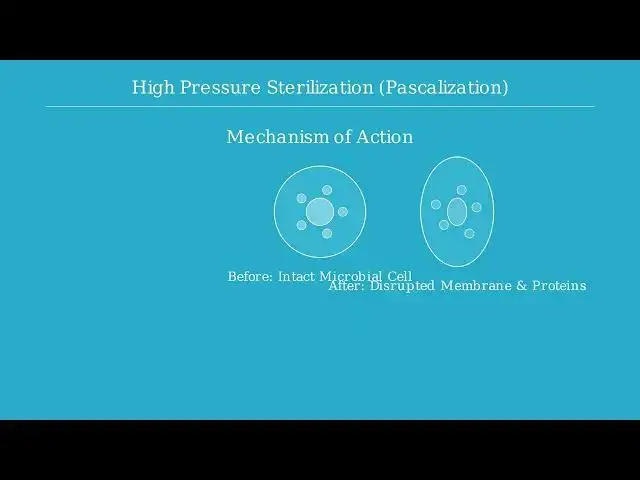
pressure sterilization also known as
7:29
pascalization is a non-therrmal food
7:32
preservation method that uses extremely
7:34
high pressures to inactivate
7:36
microorganisms this method applies
7:38
pressures of 400 to 800 megapascals
7:42
which is approximately 4,000 to 8,000
7:45
times atmospheric pressure
7:48
high pressure disrupts cellular
7:50
structures in microorganisms the intense
7:53
pressure disrupts cell membranes and
7:55
denatures proteins which inactivates the
8:01
microorganisms high pressure
8:03
sterilization is primarily used in food
8:05
processing for items like fruit juices
8:07
ready to eat meats and seafood products
8:12
high pressure sterilization offers
8:14
significant advantages including minimal
8:16
effect on nutritional value flavor and
8:19
appearance it eliminates the need for
8:22
chemical additives and can be performed
8:24
at room temperature however this method
8:26
has limitations the equipment is
8:28
expensive and the process is ineffective
8:31
against bacterial spores it's currently
8:33
limited to batch processing and not all
8:36
food products are suitable for this
8:37
treatment
8:40
a key limitation of high pressure
8:42
sterilization is its ineffectiveness
8:44
against bacterial spores these spores
8:47
have multiple protective layers and low
8:49
water content making them resistant to
8:51
pressure
8:54
treatment filtration is a physical
8:57
method of sterilization that separates
8:59
microorganisms from liquids and gases by
9:02
passing them through specialized
9:03
membrane filters membrane filters
9:06
typically have pore sizes ranging from 2
9:09
to 0.45 micrometers these microscopic
9:12
openings are small enough to trap
9:14
bacteria and other microorganisms when
9:17
liquids or gases pass through these
9:18
filters microorganisms like bacteria are
9:21
trapped on the filter surface while the
9:23
filtered fluid passes through however
9:27
standard filters with
9:28
0.2.45 micrometer pores cannot trap
9:31
viruses which are typically much smaller
9:35
filtration methods are widely used
9:37
across various fields particularly for
9:39
sterilizing heat sensitive materials in
9:42
pharmaceutical manufacturing filtration
9:44
sterilizes injectable solutions
9:47
biological products and culture media
9:50
laboratories use it for cell culture
9:51
media and buffer solutions while
9:54
hospitals rely on filtration for IV
9:56
fluids and water purification
9:59
filtration sterilization offers several
10:01
advantages and has some important
10:03
limitations to consider among its
10:05
advantages filtration is ideal for heat
10:07
sensitive materials leaves no chemical
10:10
residues and preserves the properties of
10:12
the filtered product however limitations
10:15
include filter clogging that requires
10:17
replacement the inability to remove
10:19
viruses with standard filters and
10:22
limited volume
10:23
capacity hepa filters which stands for
10:26
high efficiency particulate air filters
10:29
are specially designed for air
10:30
filtration in critical environments
10:33
these filters can remove
10:36
99.97% of particles that are 0.3
10:39
micrometers or larger from the air
10:41
making them essential for clean rooms
10:43
operating theaters and other controlled
10:45
environments hepoiltration is critical
10:48
in pharmaceutical clean rooms operating
10:50
theaters biological safety cabinets and
10:53
industries requiring high purity air
10:55
such as aerospace and micro electronics
10:59
manufacturing sonic and ultrasonic
11:01
sterilization harnesses the power of
11:03
sound waves to destroy microorganisms
11:06
sound waves exist across a spectrum of
11:09
frequencies we can use both audible
11:11
sound ranging from 20 herz to 20 kHz as
11:14
well as ultrasonic
11:18
frequency
11:20
human the key mechanism of ultrasonic
11:22
sterilization is a process called
11:28
[Music]
11:30
cavitation in the low pressure regions
11:33
microscopic bubbles form as the liquid
11:35
temporarily vaporizes these bubbles
11:38
rapidly collapse when they enter high
11:40
pressure regions creating powerful shock
11:42
waves these shock waves damage cell
11:44
membranes disrupt cellular function and
11:47
ultimately kill
11:50
microorganisms ultrasonic sterilization
11:52
systems operate within specific
11:54
technical
11:55
parameters frequencies typically range
11:58
from 20 kHz to 2 m with higher
12:01
frequencies providing more precision but
12:03
less power power density varies from 100
12:06
to 1,000 watts per liter adjusted based
12:10
on the specific application and required
12:12
level of sterilization treatment time
12:15
can vary significantly from just seconds
12:17
to 30 minutes depending on the
12:19
microorganism type and the degree of
12:21
sterilization
12:24
needed ultrasonic sterilization has
12:27
several important applications across
12:29
different industries in food processing
12:32
ultrasonic treatments can inactivate
12:34
enzymes and microorganisms while
12:35
preserving nutrients and extending shelf
12:37
life all with minimal heat
12:40
damage for medical devices ultrasonic
12:43
cleaners are particularly effective at
12:46
removing contaminants from complex
12:48
instruments reaching crevices that are
12:50
difficult to clean through other methods
12:52
in water treatment ultrasonic waves can
12:55
break down contaminants disrupt
12:57
bacterial aggregates and enhance
12:59
chemical treatments for both industrial
13:01
and municipal
13:04
applications let's examine the
13:06
advantages and limitations of sonic and
13:08
ultrasonic sterilization methods the
13:10
advantages include low temperature
13:12
operation which preserves heat sensitive
13:15
materials no chemical residues ability
13:17
to penetrate complex shapes
13:20
environmental friendliness and
13:22
compatibility with other sterilization
13:23
methods however there are important
13:26
limitations to consider effectiveness
13:28
can be inconsistent making it typically
13:31
used as a supplementary rather than
13:33
standalone method it has limited
13:35
penetration in dense materials may not
13:37
eliminate all bacterial spores and the
13:40
equipment can be
13:45
costly solar disinfection or sodus is a
13:49
water treatment method that uses UVA
13:51
radiation and thermal effects from
13:53
sunlight to inactivate pathogenic
13:56
microorganisms the Sodus process is
13:58
straightforward first fill clear plastic
14:01
or glass bottles with water next expose
14:04
these bottles to direct sunlight for at
14:05
least 6 hours ideally on a reflective
14:08
surface during exposure UVA radiation
14:11
penetrates the water while solar heat
14:13
raises the temperature working together
14:15
to inactivate
14:17
pathogens at a microscopic level sodas
14:20
works through two main mechanisms uva
14:22
radiation damages the DNA and proteins
14:24
of microorganisms as exposure time
14:27
increases pathogens gradually become
14:29
inactivated the process may be slow but
14:32
after 6 hours a significant reduction in
14:34
viable microorganisms is
14:37
achieved sodus offers several
14:39
significant advantages it's low cost
14:42
simple to implement requires no
14:44
chemicals is widely accessible and
14:46
provides a sustainable solution for
14:48
water treatment however Sodus also has
14:51
important limitations it's weather
14:53
dependent has limited volume capacity
14:56
requires at least 6 hours of sunlight is
14:58
less effective on cloudy days and
15:01
doesn't work against all types of
15:03
pathogens sodus is particularly valuable
15:06
in resource limited settings it serves
15:09
rural communities where conventional
15:10
water treatment is unavailable provides
15:13
relief during humanitarian crisis and
15:15
offers a solution during emergency
15:17
situations it's important to note that
15:20
sodus is primarily a disinfection method
15:22
rather than complete sterilization it
15:25
significantly reduces microbial load but
15:27
does not eliminate all
15:29
microorganisms some pathogens
15:31
particularly certain prozzoa and
15:33
bacterial spores may show resistance to
15:36
this
15:37
treatment sodus can achieve up to 99.9%
15:41
reduction of certain bacteria like ecoli
15:44
salmonella and vibriocalerie however
15:47
it's less effective against some viruses
15:49
and prozzoa and is not recommended for
15:51
heavily contaminated water for best
15:53
results use clear not colored bottles
15:56
place them on reflective surfaces to
15:58
maximize exposure pre-filter turbid
16:00
water to improve light penetration and
16:03
double the exposure time on cloudy days
#Health Education & Medical Training
#Public Health
#Biological Sciences